Author: Dong Jing
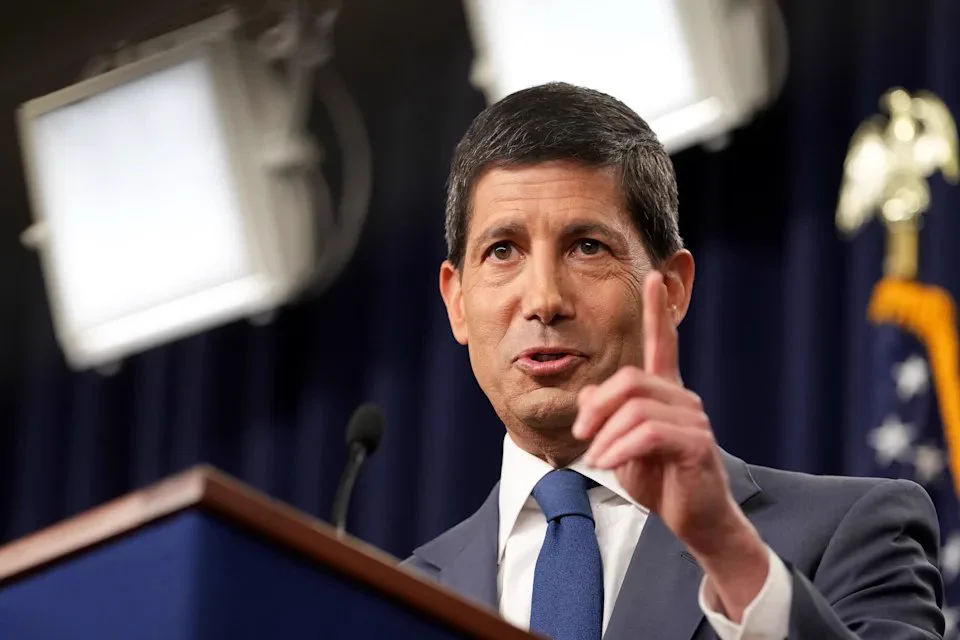
The Federal Reserve's annual Jackson Hole Economic Symposium has concluded. In addition to the hawkish debut of Fed Chair Kevin Warsh, several global central bank officials also released key signals, and the political turmoil has not subsided.
According to a Wall Street Journal article, Warsh explicitly stated in his keynote speech that controlling inflation is the Fed's top priority and warned that inflation has not shown a substantial slowdown. If it cannot be confirmed that inflation is moving toward its target at a sufficient pace, the Fed "still has work to do." This statement immediately raised market expectations for a recent rate hike, and attention quickly shifted to the consumer inflation data to be released on September 11, and the subsequent Federal Reserve policy meeting on September 15-16.
Meanwhile, European Central Bank officials issued inflation warnings during the symposium, leaning towards a rate hike in September; the Governor of the Bank of England, Andrew Bailey, took a relatively dovish stance, suggesting there is no urgency to act. Furthermore, the political turmoil regarding the Trump administration's attempt to dismiss Fed Governor Lisa Cook heated up just before the conference, adding additional uncertainties to this year's gathering.
Notably, European Central Bank President Christine Lagarde and Bank of Japan Governor Kazuo Ueda were absent from this meeting, and former Fed Chairman Jerome Powell also did not attend.
Warsh's Debut "Hawkish": Inflation is the Top Priority
Warsh used this keynote speech at Jackson Hole to deliver the most substantial policy statement since his appointment as Fed chair.
He made it clear that the 2% inflation target — measured by the Personal Consumption Expenditures (PCE) price index — is a "firm and fixed target," dispelling concerns about his potential adjustments to the inflation target. He also pointed out that current financial conditions are not constraining the economy and characterized interest rates as the "primary tool" for the Fed to achieve its mission. Warsh stated in his speech:
"My standard is: We must be confident that core inflation is clearly moving toward our target at a sufficient pace. Otherwise, we still have work to do. This is our duty."
Although Warsh did not explicitly express support for a rate hike, his wording was sufficient to prompt the market to reprice expectations. After the speech, expectations for a rate increase rose significantly, with the focus immediately shifting to the CPI data on September 11 and the September policy meeting.
It is worth noting that Warsh had previously consistently avoided providing the market with guidance on the interest rate path. Although this speech still did not provide explicit forward guidance, it did somewhat relieve investors' thirst for information and added suspense to the September meeting.
European Central Bank: Inflation Pressure Not Alleviated, September Rate Hike Expectations Rise
During the sessions, central bank officials from the Eurozone also released hawkish signals.
According to Bloomberg, ECB Governing Council member and President of the Bank of Slovenia, Primoz Dolenc, stated that the resilience of the Eurozone economy and ongoing conflicts in the Middle East both indicate that a rate hike in September is necessary, which aligns with the general market expectations.
"Based on new data, the inflation situation has not resolved itself."
Martin Kocher, Governor of the Austrian National Bank and also a rate setter at the ECB, pointed out that there is "more momentum" in the economy. Analysts estimate that the Eurozone inflation rate reached 3.3% in August, to which Kocher remarked that authorities remain "vigilant, not complacent."
Bank of England: Observing the Situation, Not in a Rush to Hike Rates
In contrast to the hawkish tone from continental European officials, Bank of England Governor Bailey transmitted a more cautious signal.
Bailey stated that there is a fairly mild second-round inflation effect in the UK, and the labor market has softened for some time, "I believe we can continue to observe this situation for now."
This is Bailey's first public comment on monetary policy since July 30. At that time, he and most committee members voted 6 to 3 to keep the interest rate unchanged.
Technical Challenges: Tokenization and the Future of Monetary Policy
Besides policy signals, Jackson Hole is also an important platform for high-level economic research discussions. This year's symposium focused on financial innovation and its impact on payment systems and monetary policy.
Economists and policymakers discussed how tokenization is revolutionizing the holding and transfer of financial assets and engaged in in-depth debates on the regulatory challenges posed by this trend. Relevant papers reveal that central banks are still under considerable pressure in responding to the challenges brought by technological transformation.
Political Turmoil: Trump Again Pressures Cook
Just before the conference began, political turmoil added additional context to this year's Jackson Hole gathering.
Reports indicate that the White House has recently restarted efforts to dismiss Fed Governor Cook, citing allegations of mortgage fraud against her. On August 26, Cook's lawyer issued a statement claiming that the allegations are "baseless and false." The White House has not responded immediately to this.
Previously, Trump narrowly lost in the Supreme Court when he first attempted to oust Cook, partly due to procedural issues.
Analysts believe that this incident reminds the public that despite Warsh now leading the Fed, the White House's political pressure on the Fed has not completely ceased.
Absentees: Lagarde, Ueda, and Powell
This year's Jackson Hole meeting saw several notable absentees.
European Central Bank President Lagarde and Bank of Japan Governor Ueda both did not attend, as they planned to participate in the G20 Finance Ministers and Central Bank Governors meeting held in North Carolina from Monday (August 31) to Tuesday (September 1).
From the Fed side, the only absent policymaker was former Chair Powell. Powell broke with tradition by choosing to remain a member of the Fed Board after his term ended in May this year, but as he previously promised, he has largely faded from the public eye.
免责声明:本文章仅代表作者个人观点,不代表本平台的立场和观点。本文章仅供信息分享,不构成对任何人的任何投资建议。用户与作者之间的任何争议,与本平台无关。如网页中刊载的文章或图片涉及侵权,请提供相关的权利证明和身份证明发送邮件到support@aicoin.com,本平台相关工作人员将会进行核查。


