Written by: Non-Small Number
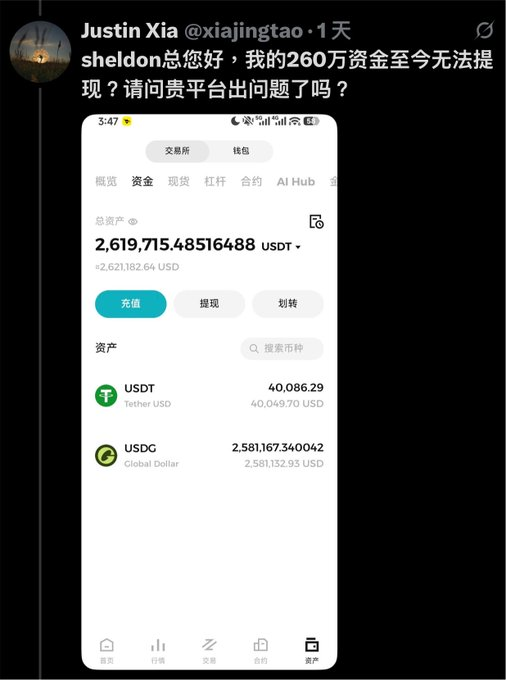
On August 17, 2026, BitMart once again became the focus of attention in the cryptocurrency market.
This time, the reason is no longer as simple as "the exchange is about to close." With only 9 days left until BitMart stops trading, a controversy surrounding user withdrawals, platform assets, employee salaries, and reserve transparency suddenly came to the forefront.
According to public reports, a group claiming to represent BitMart users and employees has publicly demanded that BitMart management disclose the platform's assets, liabilities, wallets, and reserves available for user withdrawals, while also requesting explanations for the issues with some users' withdrawal restrictions and proposing a user repayment plan and third-party independent audit, among other demands. The relevant parties have set August 19 as the deadline for a response and stated that if satisfactory replies cannot be obtained, they may further submit materials to regulatory agencies and law enforcement.

Meanwhile, BitMart CEO Sheldon Lee denied the related claims, stating that some accusations against the platform are false or fabricated information. In other words, it cannot be concluded solely based on accusations on social media that BitMart is insolvent or unable to repay user assets.
But this precisely makes the situation even more worthy of attention.
Because when an exchange that has already announced its market exit starts being asked by users "where are your assets," the nature of the situation has fundamentally changed.
This is no longer just a story of business exit.
It is beginning to transform into a story about the core issue of centralized exchanges: when all users want to withdraw their money, does the platform have the ability to let them exit safely?
From normal closure to today's asset dispute
To understand today's controversy, one must first lay out the timeline.
On July 26, BitMart announced that it would gradually cease platform operations. Based on the officially announced arrangements, this should have been an orderly exit. The platform stopped new user registrations, gradually halted deposits and new businesses, and required users to close relevant positions, complete identity verification, and handle asset withdrawals before trading stops.
According to BitMart's plan, it will stop spot, contract, and other trading services on August 26, and the platform ultimately plans to end operations before January 31, 2027.

Simply looking at this timeline, it is not hard to understand that an exchange operating for many years has decided to exit the market.
Internet companies can shut down products, financial institutions can exit certain businesses, and trading platforms can also cease operations. As long as user assets can be fully liquidated and the platform can follow the established process to exit, then "closing" itself does not necessarily indicate serious issues.
What is truly concerning is that as users begin to concentrate on withdrawals, the questions in the market have gradually shifted from "Why is BitMart closing" to "When can BitMart users get their money out."
These two questions are separated by a very important divide.
The former relates to business issues.
The latter belongs to the issue of asset safety.
And the most dangerous moment for a centralized exchange is often when these two issues begin to overlap.
A true stress test for an exchange is when everyone withdraws simultaneously
When exchanges are operating normally, users rarely take the time to seriously think about where their assets actually are.
Users deposit 10,000 USDT, and their account shows 10,000 USDT; users purchase BTC, and the account shows BTC balance; when users need it, they click withdrawal, and the assets move from the platform wallet to their own address.
The whole process seems very natural.
Over time, people develop a very strong psychological perception: the numbers in their accounts represent their money.
However, from a technical and asset control perspective, the two are not entirely the same.

What truly exists on the blockchain are the assets in wallet addresses. The balance that users see in their centralized exchange accounts is essentially a record of user credit or account balance in the exchange's internal database.
As long as the exchange can process withdrawals normally, ordinary users will hardly feel the difference between these two states.
But once the exchange announces its closure, everything changes completely.
At this point, users no longer consider "when is a convenient time to withdraw," but rather start to think "should I withdraw all my assets right now."
The normal flow of funds that happens every day suddenly turns into a mass exit.
This is also why the most dangerous time for an exchange is not necessarily when the market crashes; sometimes it is after it announces its exit.
Because a crash only affects asset prices, while an exit directly changes the behavior of all users.
When more and more people withdraw simultaneously, the platform's true liquidity begins to undergo a stress test.
If the platform has sufficient available assets, then the withdrawals are merely a normal transfer of funds.
If the platform's asset structure is complex, with a significant amount of assets that cannot be quickly liquidated, or if the platform's actual liabilities exceed market perception, then mass withdrawals could potentially expose past hidden problems.
So the real question has never been "Does BitMart still have assets?"
The real question should be:
How much can BitMart immediately use to repay users? What is the relationship between these assets and the actual user credits?
Is the 10,000 USDT in your account truly your 10,000 USDT?
This is the key to understanding the entire CEX industry.
When many people first encounter cryptocurrency, the easiest concept to grasp is "private keys."
Whoever holds the private keys controls the assets on the chain.
But once users deposit their assets into a centralized exchange, the situation changes.
Users entrust their assets to the exchange's custody, which is responsible for recording balances, facilitating transactions, and processing withdrawals. Users receive the balance in the exchange’s internal account rather than directly controlling the corresponding wallet's private keys.
This is also why the crypto industry has long emphasized "Not your keys, not your coins."
This statement does not imply that centralized exchanges are necessarily unsafe, nor does it mean that all users should transfer all assets into their own cold wallets.
The value of centralized exchanges is very evident. They provide higher trading efficiency, better liquidity, a wider array of financial products, and a simpler operational experience.
The problem is, convenience itself means trust.
You no longer need to manage private keys yourself, but at the same time, you must trust that the exchange can return the corresponding assets to you when needed.
Thus, centralized exchanges effectively form a very unique structure: the blockchain attempts to make asset ownership trustless, while exchanges, to provide convenience, re-establish a layer of trust between themselves and users.
Under normal circumstances, this layer of trust is almost unnoticed.
It is only when a platform exits that it suddenly becomes critically important.
Because users will start to realize that there is actually a platform between the numbers in their accounts and the assets in their wallets.
And if this platform encounters issues, users cannot directly bypass it to recover their assets.
Why users are no longer just asking for a "we're fine"
This is also the most worthy aspect of today's BitMart controversy to delve into.
According to public reports, the party raising questions has demanded BitMart disclose its assets, liabilities, wallets, and available reserves, and further requested user repayment arrangements and third-party independent audit.
On the surface, this merely demands that the exchange publish proof of assets.
But if the question is pursued further, it becomes clear that the situation is far more complex than "just showing a few wallet addresses."
Suppose an exchange publicly reveals $1 billion in on-chain reserves.
What does this prove?
At the very least, it can prove that at a certain point in time, there exists approximately $1 billion worth of assets in these disclosed wallets.
But this does not automatically prove that user assets are safe.
Because there is another more important question:
How much does this exchange owe users?
If the total user assets are $1.2 billion, then $1 billion in reserves clearly cannot fully cover user credits.
If part of that $1 billion in assets is borrowed or has already been pledged to other entities, then the actual assets available for repayment could be even less.
Thus, Proof of Reserves, or reserve proof, cannot completely resolve the issue of transparency in exchange assets.
Proof of reserves answers the question of "what do I have."
Whereas what really determines whether users can get their money back is the relationship between "what I have" and "how much I owe."
This is why a truly mature asset transparency system should simultaneously focus on assets, liabilities, user credits, wallet control, related transactions, borrowing, pledging, and independent audits.
If the market is only told "we have $1 billion in our wallets" without being informed "how much we owe," then that number alone cannot constitute a complete proof of security.
How much assets do you really have, and how much do you owe?
Why is the credit of an exchange most fragile when exiting?
When operating normally, an exchange can continuously absorb new users and funds.
Every day, some deposit, some withdraw, some trade.
In such an environment, the platform's funds are in a constant dynamic cycle.
But once the exchange announces its cessation of operations, that cycle will change.
New users will cease to enter, new funds will gradually diminish, while existing users will begin to focus on withdrawals.
At this point, the platform faces a completely different environment.
It no longer needs to prove "can I continue to grow," but rather has to prove "can I process all the accumulated assets cleanly."
This is actually two completely different capabilities.
An exchange may have a very large trading volume and many users, but this does not necessarily mean it possesses good exit capacity.
Because expansion and liquidation are inherently two opposing directions.
Expansion means continually absorbing new liquidity.
Liquidation means distributing the already existing liquidity.
If you consider the exchange as a massive reservoir, then during normal operations, both water intake and outflow are ongoing. The real danger comes when everyone suddenly opens the drain; can the reservoir withstand it?
That is why "concentrated user withdrawals" is one of the most important stress tests for centralized exchanges.
It assesses not the trading matching capability, but the ultimate repayment capability.
Behind the BitMart incident is actually an old problem of the entire CEX industry
If we broaden our view, BitMart is actually not an isolated story.
In recent years, the crypto industry has repeatedly encountered risks associated with centralized platforms, prompting the market to reflect on one question:
What should users actually trust?
Should they trust the brand of the exchange?
Should they trust the founders?
Should they trust trading volume?
Should they trust the duration of the platform's existence?
Or should they trust a verified set of asset-liability data?
In recent years, Proof of Reserves has garnered increasing attention, essentially attempting to transform "trust me" into "let me prove it to you."
This is a very important advancement.
However, if we take a step further, what the industry truly needs may not be merely a reserve proof, but a more comprehensive asset-liability transparency mechanism.
Because the true credit of financial institutions has never been established on a simple assertion of "I have money."
Instead, it is built on a complete system that can be examined, audited, and verified.
How much assets you have, how much debt you owe, whether customer assets are segregated, where assets are held, who is responsible for custody, who has priority in the event of a risk—these factors collectively form a true credit system.
For centralized exchanges, this aspect is particularly important.
Because they also bear the roles of both trading platforms and asset custodians.
No matter how well trading is conducted, if it cannot ultimately prove that customer assets are safe, then the most crucial value of the trading platform loses its foundation.
A more worthy discussion: CEX has "opening mechanisms" but rarely discusses "closing mechanisms"
This might be the most reflective aspect of the entire industry regarding the BitMart incident.
Over the past decade, the crypto industry has studied a multitude of things about how exchanges develop.
How to list new assets, how to acquire users, how to increase liquidity, how to boost trading volume, how to enter different markets, how to launch new financial products.
But very few people seriously discuss:
If an exchange decides to cease operations, how should it actually end?
This is actually a more complicated question than opening.
Because when an exchange ends its operations, it involves much more than just shutting down a website.
It needs to handle user assets, settle platform debts, deal with employees, address partners, manage institutional clients, handle wallets, manage data, and fulfill various historical trading records and compliance requirements.

Especially with regard to user assets.
If the exchange can easily return assets to users, then closing is merely an operational issue.
But if users cannot smoothly retrieve their assets, then the platform's "exit" becomes a financial liquidation issue.
Therefore, in the future, truly mature centralized exchanges may need not only to prove they "can open" but also to demonstrate they "can exit safely."
This may sound pessimistic, but it is precisely a sign of maturity.
Banks need to have bankruptcy and liquidation mechanisms.
Securities companies need to have client asset protection mechanisms.
Funds need to have liquidation mechanisms.
Thus, exchanges, as financial infrastructures managing a vast amount of customer assets, also need to consider their ending.
The true credit of an exchange is the moment the last user successfully withdraws
It is still too early to judge what the eventual outcome for BitMart will be.
Currently, there are public doubts raised by users and employees, along with BitMart management's denials of the allegations. There are significant differences between the statements from both sides, and what can ultimately resolve the controversy is not who has more voice on social media, but whether sufficient transparent and verifiable information can be presented in the future.
If BitMart can eventually complete the withdrawals successfully, resolve disputes with users and employees, and complete platform liquidation according to the established plan, then this may simply turn out to be a contentious business exit.
But if asset transparency, withdrawal, and repayment issues continue to worsen, then the significance of this matter will be completely different.
Because it will serve as another reminder to the entire crypto industry:
The true credit of an exchange is not established when users deposit funds, but is tested when all users simultaneously demand withdrawals.
The time when an exchange is most trustworthy is not measured by how many users it has, how much trading volume it generates daily, nor how splendid it appears during a bull market.
Rather, it is when it decides to leave this market that it can still clearly inform users: where my assets are, how much I owe you, when you can get your money back, and who can prove that what I say is true.
This is what constitutes the true meaning of credit for a financial institution.
BitMart has already entered the final countdown.
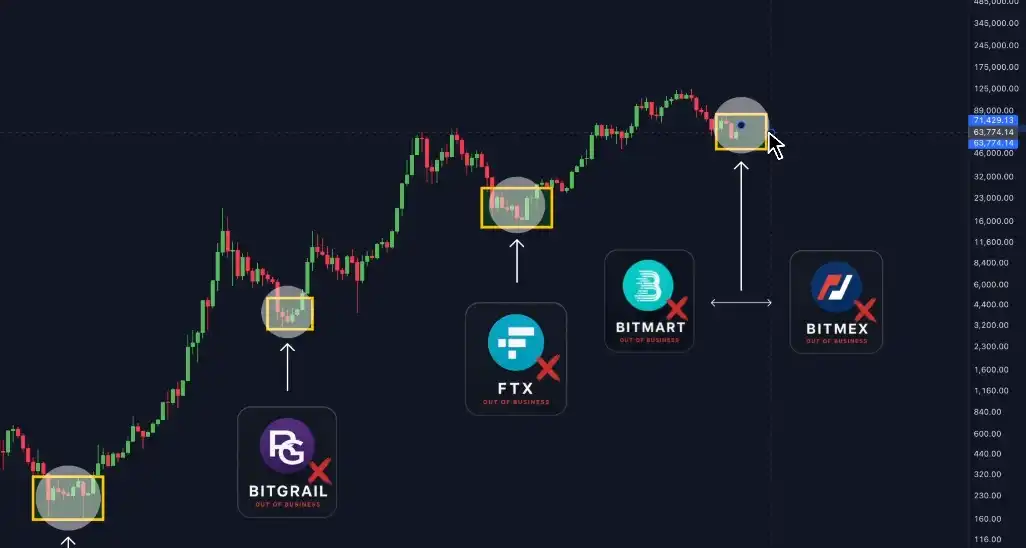
August 19 is currently the most noteworthy point in this controversy; August 26 is the key date when the platform will cease trading.
But what truly decides the final nature of this event may not be a specific announcement nor a singular statement.
Instead, it is whether the last user's money can genuinely leave the exchange.
Because for centralized exchanges, the number of users at the opening does not represent their strength; what genuinely proves their strength is whether they can send every user out the door when closing.
免责声明:本文章仅代表作者个人观点,不代表本平台的立场和观点。本文章仅供信息分享,不构成对任何人的任何投资建议。用户与作者之间的任何争议,与本平台无关。如网页中刊载的文章或图片涉及侵权,请提供相关的权利证明和身份证明发送邮件到support@aicoin.com,本平台相关工作人员将会进行核查。