Compiled & Edited by: Shen Chao TechFlow
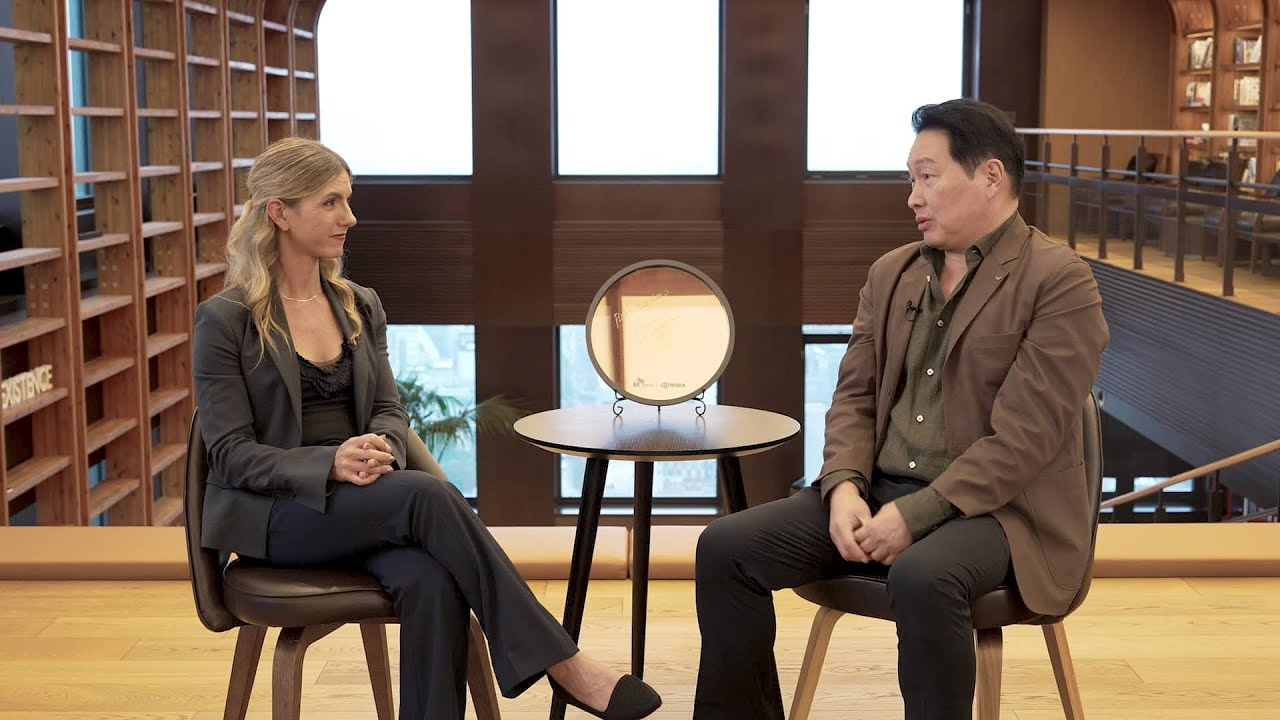
Guest: Chey Tae-won, Chairman of SK Group
Host: Katie Tarasov, CNBC
Podcast Source: CNBC Television
Original Title: SK Group Chairman Chey Tae-won on SK Hynix's massive memory expansion — full interview
Broadcast Date: August 13, 2026
Disclosure: This episode's guest, Chey Tae-won, is the chairman of SK Group and the top decision-maker of SK Hynix's parent company. The interview directly revolves around the group's expansion strategy and company stock price, representing the internal perspective of a stakeholder rather than an independent analysis.
Key Summary
SK Group, led by Chey Tae-won, has more than 100 subsidiaries, with the largest being SK Hynix. Having started in the textile industry, the company nearly went bankrupt during the Asian financial crisis in 1997 and spent over a decade under creditor management. Now, it is a core player in global AI memory supply, with its market value increasing more than five times in a year, surpassing one trillion dollars. In 2012, he bet the group's future on semiconductors, calling it "the most successful adventure of my life." Now, he is making another bet: a $720 billion expansion plan to triple production capacity by 2034.
The core conflict of the interview is the age-old question: in the decades-long boom-bust cycle of the storage industry, every round of aggressive expansion has ended in overcapacity and collapse. Why should this time be different? Chey Tae-won’s answer is that AI has changed the underlying logic of demand. In the past, storage demand was capped by "one device per person," as one person typically buys only one phone each year; now, in the AI era, an individual may have ten agents, each consuming memory. The cycle won’t disappear but will elongate. He also admits another side of the reality: memory prices have risen by 40% to 50%, forcing even Apple to increase prices for flagship products, which he calls "chip inflation." He candidly acknowledges that there is no short-term solution and that next year will see the worst shortages.
Highlights
AI needs memory, just as humans need brains
- “AI is like a four-year-old child. As it grows up, it will need more functions, experiences, and knowledge, and you have to store this knowledge somewhere, just like humans.”
- “In the past, we produced products; now AI creates intelligence. Intelligence is different.”
The 2012 Gamble
- “At that time, I couldn’t see AI, but I believed that a digital society would definitely require massive memory. You have to put knowledge and data somewhere, which means storage chips.”
- “It was a very risky bet, but looking back now, it was one of the most successful bets of my life.”
Chip inflation and shortages
- “We call this chip inflation. Chips are too expensive; even Apple has to raise prices, and then prices across the whole society go up. This is really not a good thing, but it’s happened, and I have no solution in the short term.”
- “Customer demand has doubled this year, and everyone is asking for nearly twice the amount of chips. Next year will be the worst year for memory shortages.”
Why this cycle is different
- “In the past, the memory business depended on population numbers, as one person only buys one phone each year. In the AI era, you will have ten different agents helping you, each requiring more memory.”
- “I don’t want to say there is no cycle, but the form of the cycle has to change; it will become longer. This is not the type of memory business we were familiar with in the past; it’s a turning point, a structural change.”
The relationship with Nvidia and TSMC
- “Nvidia is now our largest customer, launching new products every year at a speed I have always admired. We are also advancing new chips and new technologies alongside him.”
- “Without Nvidia, there’s no AI ecosystem. Even if TSMC has a lot of capacity, if there isn’t enough HBM, the GPU is useless; we must collaborate.”
Building factories in the US and going public
- “Behind a large memory wafer factory, there are about 600 to 700 companies supporting materials, chemicals, and services; without them, the factory cannot survive. So the problem is not just power and water; it’s whether we can move the entire ecological chain together.”
- “Customers want us to build factories in the US, and I’m willing to do it, but I’m still looking for the right place. I haven’t spoken directly with the government yet.”
Main Body
Memory is the most important part of SK Group
Katie Tarasov: You manage far more than just this company; SK has more than 100 subsidiaries. But why is memory such a critical business for SK Hynix?
We are now in the AI era, and there is a huge demand for memory; AI itself also requires it. I often think of AI as a small child that is only four years old, but as it grows, it will need more functions, experiences, and knowledge, which have to be stored somewhere, just like in humans. A child's brain is small and cannot hold much memory; as a person matures, they accumulate more experiences, leading to memory and wisdom. AI is almost the same, which is why we need so many storage chips.
Hynix is currently the largest subsidiary in the group, which is not surprising. But for AI, we also need energy and networks; the group has energy companies and telecom companies that will build AI data centers in the future, which is a natural match in our portfolio. You are right, SK Hynix is now the most important part of the entire portfolio.
The 2012 Gamble: From Textiles to Semiconductors
Katie Tarasov: You started in the textile industry; I visited the museum yesterday. Was it your decision to turn it into a semiconductor company? When was this?
It was in 2012. At that time, the group already had a combination of energy, chemicals, and telecommunications, but I felt we needed a truly global business. The trend of digitization was already very clear at that time; I didn’t see AI coming, but I believed that a digital society would definitely require massive amounts of memory. You have to put knowledge and data somewhere, and that’s naturally storage chips. I went after these companies, feeling this could be the future. At that time, it was a very risky bet, but looking back now, it is one of the most successful bets of my life.
A $720 Billion Bet: The Reality of Demand and Capacity
Katie Tarasov: You are now making another huge bet, a $720 billion expansion. How do you convince others that this long-term sustainable business can support such an investment?
Look at the forecasts for demand. In the future, people will use more AI agents; I believe that compared to 2025, in the next five years, the number of AI agents will grow by an order of magnitude, spread across the entire world, which will require massive amounts of memory. My judgment is that total demand for storage will increase to nearly five times current capacity within ten years; the demand is enormous. To meet global needs, we must expand production very quickly, and that’s why I made the decision to expand.
Katie Tarasov: Will the capacity you are building be enough to meet customer demands?
Customers are always asking for more chips; current demand is almost explosive. This demand only appeared last year, and expanding capacity requires a long delivery cycle, at least four to five years. Next year will probably be the hardest year because all memory companies are still unprepared for expansion, but demand keeps rising. This year, demand has actually doubled; the quantity my customers are requesting is nearly twice that of last year. In the next few years, they will want more chips, but supply cannot keep up. It’s a bit like a war; everyone wants more memory chips. Without them, they can't produce AI computations and AI chips.
Chip Inflation: Even Apple Can't Bear It
Katie Tarasov: Memory prices have already risen by 40% to 50%. Apple, one of your customers, has had to raise prices for flagship products. Will this situation continue?
We call this chip inflation. Chips are too expensive; even Apple has to raise prices, and then prices in society rise. This is really not a good thing; I don’t want it to be this way, but it has happened, and I have no solutions in the short term. That’s why I invested heavily in expansion, and I’ve announced plans to double capacity within five years, but this is still not enough for most customers; we need more. However, there are physical limits to what can be done; this is our current problem, which we call the AI bottleneck. Right now, memory chips are the bottleneck for AI.
Katie Tarasov: HBM and DRAM account for about three-quarters of your revenue. Some are trying to do AI with other chip architectures that don’t require DRAM; is this a risk for you?
Technology is just evolution; it happens all the time. DRAM is fundamental; we stack HBM on top of it, and in the future, solutions like CXL will emerge, providing various technologies to support AI data centers. But I believe our goal is to expand production in every possible way, with the ultimate aim of reducing the token cost of AI. The current token prices are too high; we must lower them; otherwise, people will spend too much on tokens.
The Relationship with Nvidia and TSMC
Katie Tarasov: Do you have a signed wafer in your office, is it from Jensen Huang? Are you friends? Who else in the AI circle is your friend?
Mainly the large cloud vendors: Satya from Microsoft, Sundar from Google, Mark from Meta; they are basically all my customers and also most of my friends. I occasionally meet them. TSMC, of course, is another one; just a month ago, I had dinner with C. C. Wei in Taiwan, exchanging a lot of information and predictions for the future. He also believes that AI is real technology, and we are all expanding production on a large scale. Moreover, the two sides constrain each other: even if TSMC has extensive capacity, without enough HBM, the GPU is useless; it’s the same the other way around, so we must collaborate.
Katie Tarasov: How important is Nvidia as a customer? Is your business too concentrated on this one customer?
Nvidia is currently our largest customer, launching new products every year at a speed that I have always admired. We are also advancing new chips and new technologies alongside them. Without Nvidia, there is no AI ecosystem; they have created a lot of AI infrastructure solutions, and I must support him as much as possible. But he is not my only customer; I also have other customers, like Google, Microsoft, and other large cloud vendors, some of whom are making chips themselves. However, right now, Nvidia is the largest in scale. I’m not solely relying on one customer; I just want to solve problems for the world's biggest customers.
Why this cycle is different
Katie Tarasov: 2023 has been a tough year for you, but you’ve made it through. In 1997, the company nearly went bankrupt. What will be different this time?
I don’t really believe in the saying "this time is different," but there is indeed one thing that is different: we have to face a new thing, the newborn AI. AI has already changed our society; it consumes vast amounts of resources, energy, power, materials, silicon wafers, and even water. But it creates intelligence, which is different from the past. We used to just produce products; now AI generates intelligence. We can become smarter and happier, and of course, there are dangers; we must keep an eye on those dangers. Overall, AI can liberate people from labor, narrowing the gap between individuals, leading to a more relaxed society; that’s the real benefit of AI that I believe in.
Katie Tarasov: Then why can this investment be sustainable this time, rather than just another round of boom-bust?
Look at the demand side. In past cycles, the memory business depended on population numbers because it depended on the number of hardware devices. A person can only use one phone at a time; you wouldn’t buy ten phones in a day, so population numbers set a cap on the entire market. But the AI era is different; you will have ten different AI agents helping you, each needing more memory; this expands the market. I don’t want to say there is no cycle, but the form of the cycle must change; it will become longer. I can’t definitively tell you what the future will look like, but I can be certain that this is not the type of memory business we were familiar with in the past; it’s a turning point, a structural change. There will definitely be strong momentum on the demand side in the near future.
Building factories in the US: The ecological chain is more troublesome than water and electricity
Katie Tarasov: You have mentioned that when choosing a location, electricity and water are more important than geographical location. Does the US have enough resources to support an HBM production facility?
Look at the ecosystem of storage chips. Any large storage wafer factory in the world is supported by about 600 to 700 companies providing materials, chemicals, and services. Without them, the factory cannot survive. That’s the biggest problem. Every country wants to build storage factories on its territory, but if they can provide water, power, and land, and also bring the entire ecological chain over, I would be willing to build anywhere, including the US and anywhere else in the world. Our research team is investigating where there are real opportunities, how quickly new factories can be built, and how to alleviate memory shortages.
Katie Tarasov: You have plans to build a factory in Indiana. In July, the US Secretary of Commerce pressured you and Samsung to bring the complete memory production line to the US. What are your plans?
I can only tell you about what we are researching. I cannot directly announce “we are going to build a factory somewhere.” We need to decide where, when, how to build, and what is needed; these require a lot of details and a whole bunch of contracts to come together, and we are moving forward with that. Not just in the US, I am looking at the whole world. I’m willing to do it, but I need to find the right place first. To be honest, we have been researching for more than a month; the US is researching, and other places are also researching. US customers want us to build factories on American soil; I actually haven’t directly talked to the government about this yet; it’s more about business. If customers want it, I’m willing to seize this opportunity together.
Katie Tarasov: You went public in the US; how did the first day perform?
That is a big step; although it’s just the first step, it is the entry into the global financial market. We have new shareholders and new financial supporters, which is a great opportunity for us. At the financial and market level, we now have many options. I can even use better incentives to attract American engineers, which is also the reason we decided to open a new R&D center in the US and build a factory in Indiana. We also established an AI company in the US with an investment of about $1 billion to connect with American technology: combining our own memory technology with systems, simulation, and other AI technologies to provide better solutions for AI data centers and infrastructure. Software must be connected with hardware; the US has good software engineers and a software industry, while Korea, Taiwan, and Japan are more advantageous in manufacturing, which is the reason for establishing this company.
免责声明:本文章仅代表作者个人观点,不代表本平台的立场和观点。本文章仅供信息分享,不构成对任何人的任何投资建议。用户与作者之间的任何争议,与本平台无关。如网页中刊载的文章或图片涉及侵权,请提供相关的权利证明和身份证明发送邮件到support@aicoin.com,本平台相关工作人员将会进行核查。


