Author: Tiger Research Reports
Translation: Deep Tide TechFlow
Deep Tide Introduction: As the global cryptocurrency market has long moved beyond spot trading into the vast realms of derivatives, payments, and on-chain services, South Korean investors find themselves surrounded by an invisible wall. This powerful data report in collaboration with Chainalysis tracks approximately 120,000 wallets associated with Korea, revealing how up to 700 trillion won in capital has circumvented local restrictions to create an extremely active new continent overseas. For practitioners, this is not just a capital flow chart, but also a warning of the loss of local market competitiveness.
The global digital asset market has expanded into derivatives, payments, and on-chain services, while Korea remains centered around spot trading. South Korean investors have shifted their unmet demand overseas. Tiger Research partnered with Chainalysis to track around 120,000 wallets associated with Korea, analyzing the outflow of approximately 700 trillion won from 2021 to 2026.
Core Viewpoints
South Korean investors are transferring funds overseas to obtain products that are unavailable domestically. Between 2021 and 2026, about 700 trillion won flowed out of South Korean exchanges.
The funds did not stop at overseas exchanges. South Korean investors are also trading derivatives on decentralized exchanges, participating in prediction markets, and using crypto cards to spend stablecoins.
Overseas exchanges are not just earning trading fees. They have also acquired customers, data, and operational experience from the demands of South Korean investors.
1. The Global Market is Thriving, While the Korean Market is Stagnating
The global digital asset market is displaying different forms. Institutional capital is entering a market that has grown around retail spot trading, while blockchain has extended throughout the entire financial value chain. The types of capital attracted to the market and the ways investors utilize digital assets are both changing.
Spot ETFs for Bitcoin and Ethereum have broadened the channels for institutional entry into the market, and the derivatives market for perpetual futures and options is also growing rapidly. The function of stablecoins has transcended the medium of crypto trading, extending to payments and remittances, while the tokenization of real-world assets is changing the way issuers create and distribute assets. The global market is far surpassing trading itself and extending into a broader financial domain.
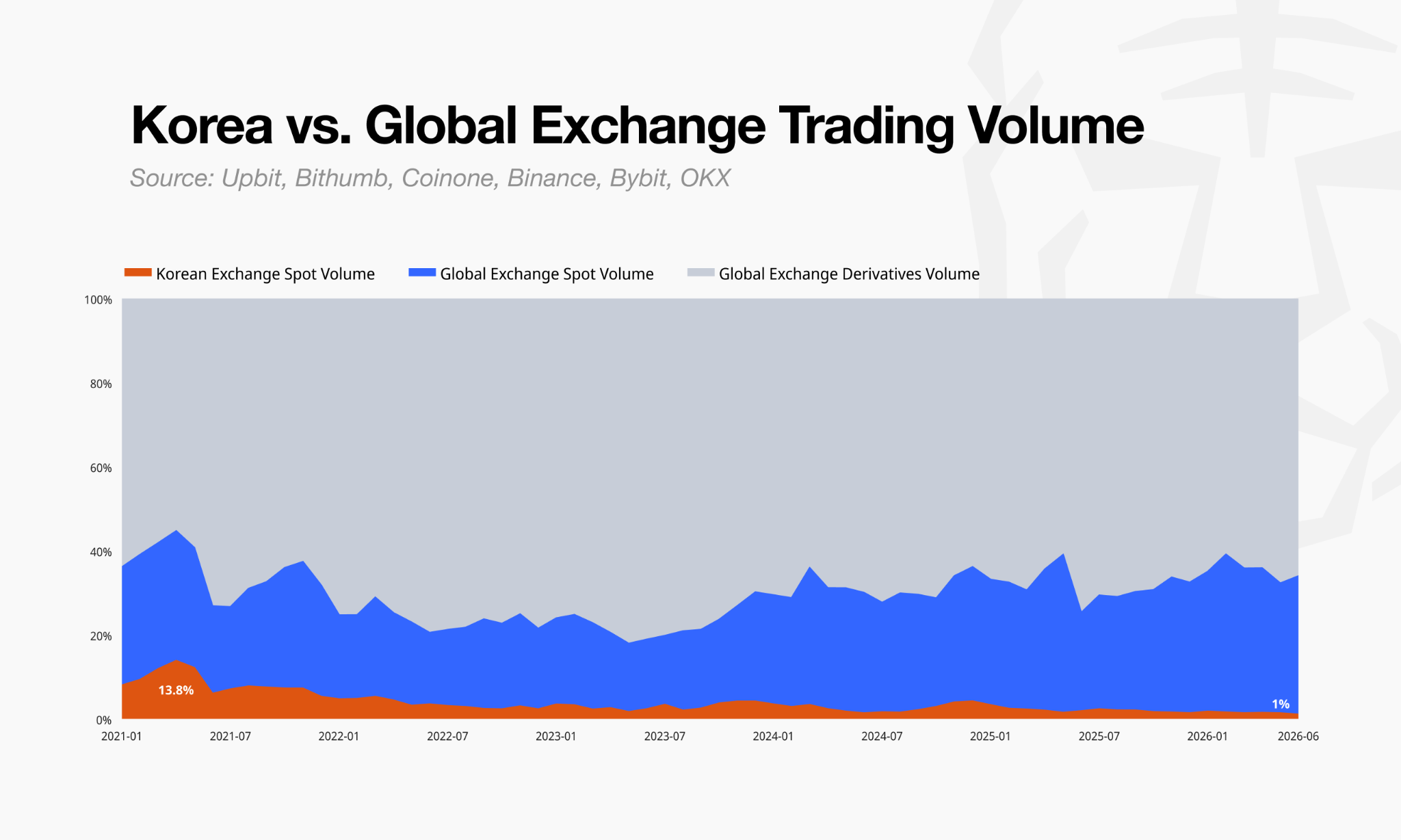
These changes are not occurring at the same speed everywhere. The Korean market still centers around retail spot trading, with limited institutional participation. The growing derivatives and novel financial services in the global market have yet to form a scaled market in Korea. As the global market landscape expands, the structural gap between Korea and overseas is widening.
This gap is also evident in trading volumes. Global exchanges have expanded their businesses into perpetual futures and other products, while trading in Korea still mainly focuses on spot. Consequently, the proportion of South Korean exchanges in the total trading volume between Korea and major overseas exchanges continues to decline. Volume is just one dimension to measure the market, but it indicates that as the global market expands, the South Korean market is losing its influence.
2. Supply and Demand Mismatch, Investors Seek Opportunities Overseas
The decline of the Korean market share does not mean that South Korean investors have lost interest. Products and services that are hard to access domestically are rapidly developing overseas, leading investors to flock to overseas exchanges and on-chain services. The unmet demand within Korea has not vanished; instead, it is now manifested as actual trading and service usage overseas.
The scale is quite substantial. Tiger Research partnered with Chainalysis to analyze on-chain data tracking cryptocurrency flows from Korean exchanges to overseas exchanges. It is estimated that from 2021 to 2026, about $530 billion flowed overseas through these channels. The outflow reached approximately $120 billion in 2025 and is expected to be around $52 billion in 2026. These figures only cover identifiable capital flows, and the actual scale may be larger.
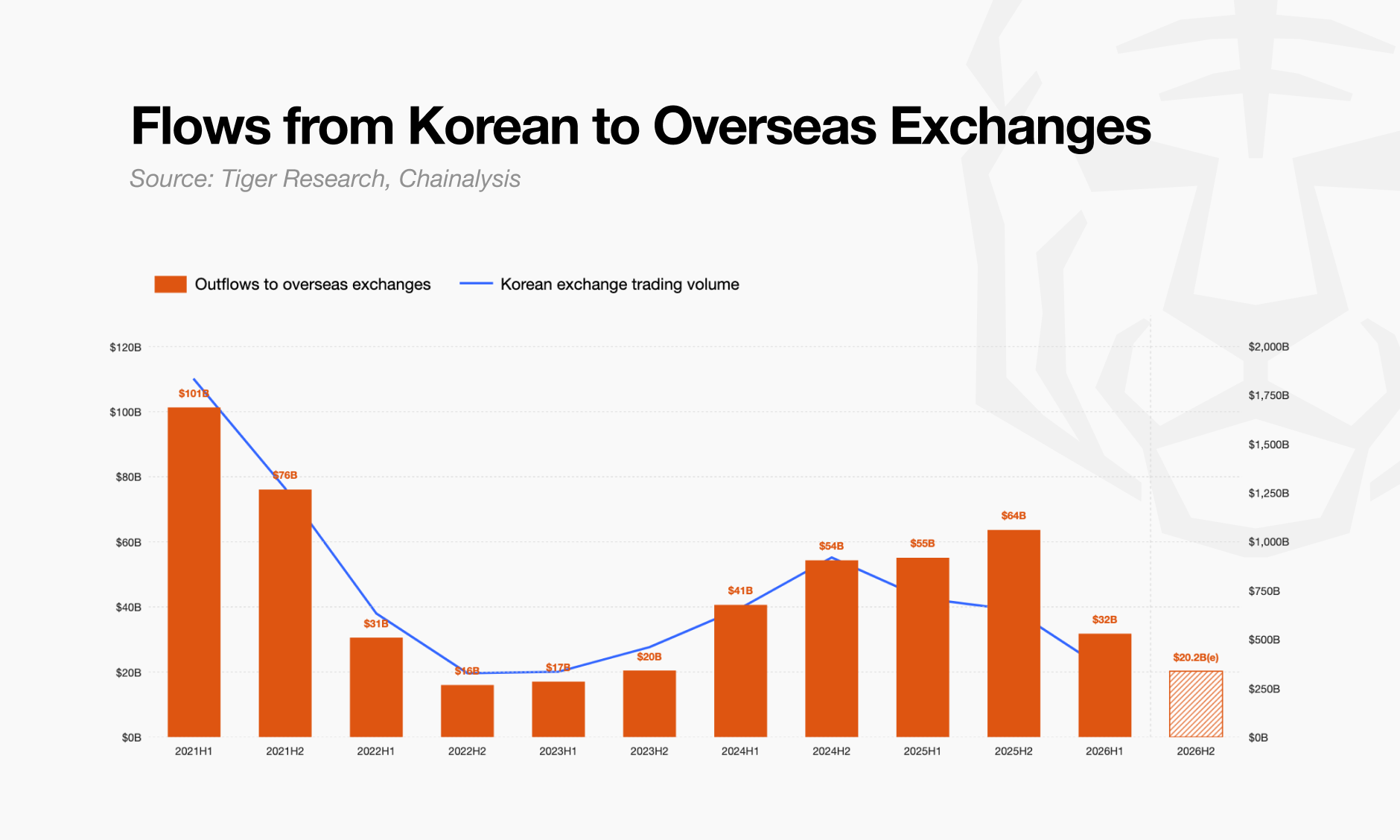
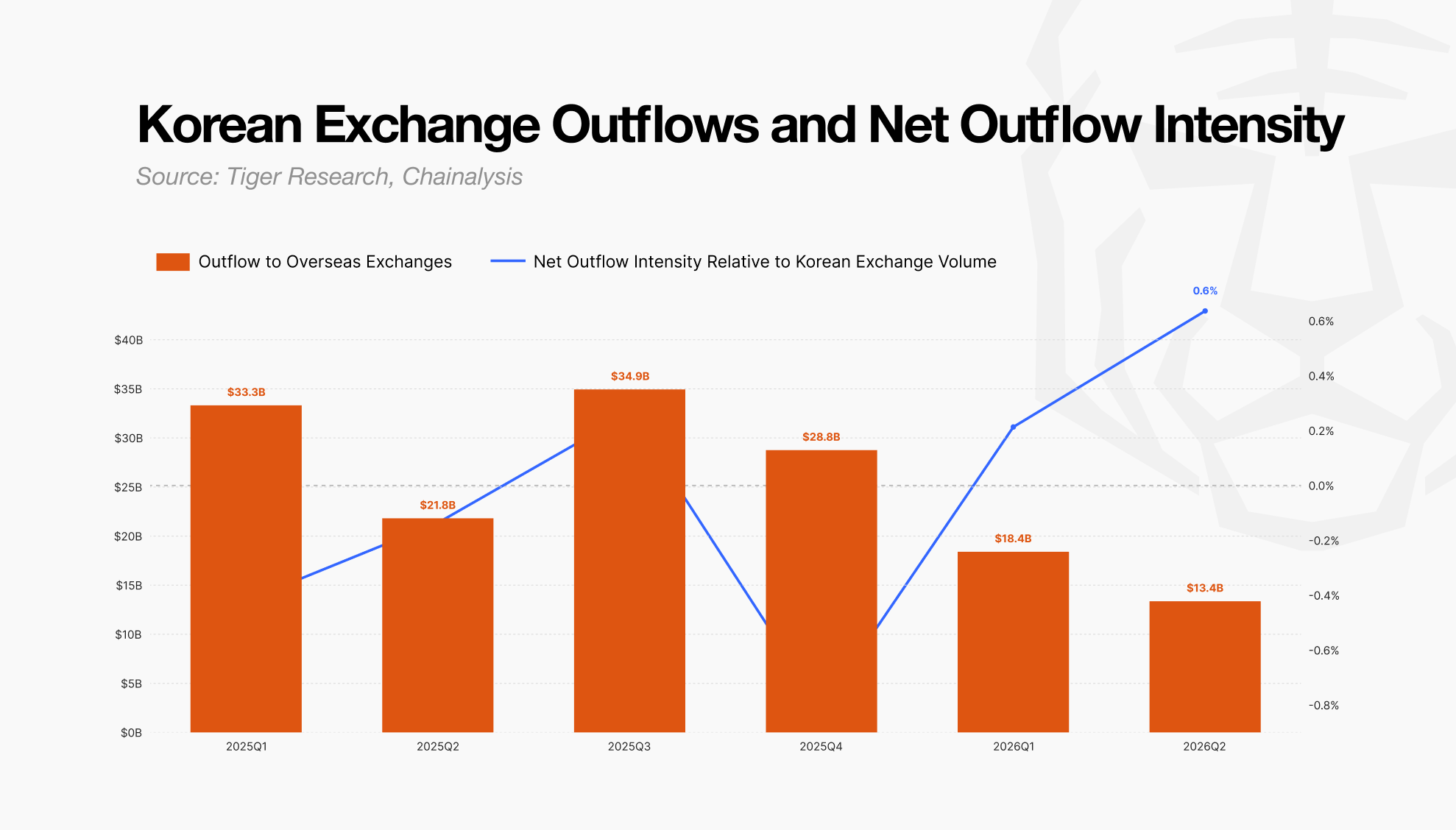
Looking solely at the absolute outflow figures might create the illusion that capital outflow has slowed. The overall contraction of the market has simultaneously lowered trading volumes and capital outflows in Korea, making it difficult for absolute values to reflect the real intensity of capital outflow. To measure this more accurately, the analysis introduced a net outflow rate. This rate divides the net outflow to overseas exchanges by the total spot trading volumes of the three major South Korean exchanges, Upbit, Bithumb, and Coinone. While absolute outflow amounts have decreased, the net outflow rate has been rising. This means the pace at which capital is leaving is faster than that at which the Korean market is shrinking.
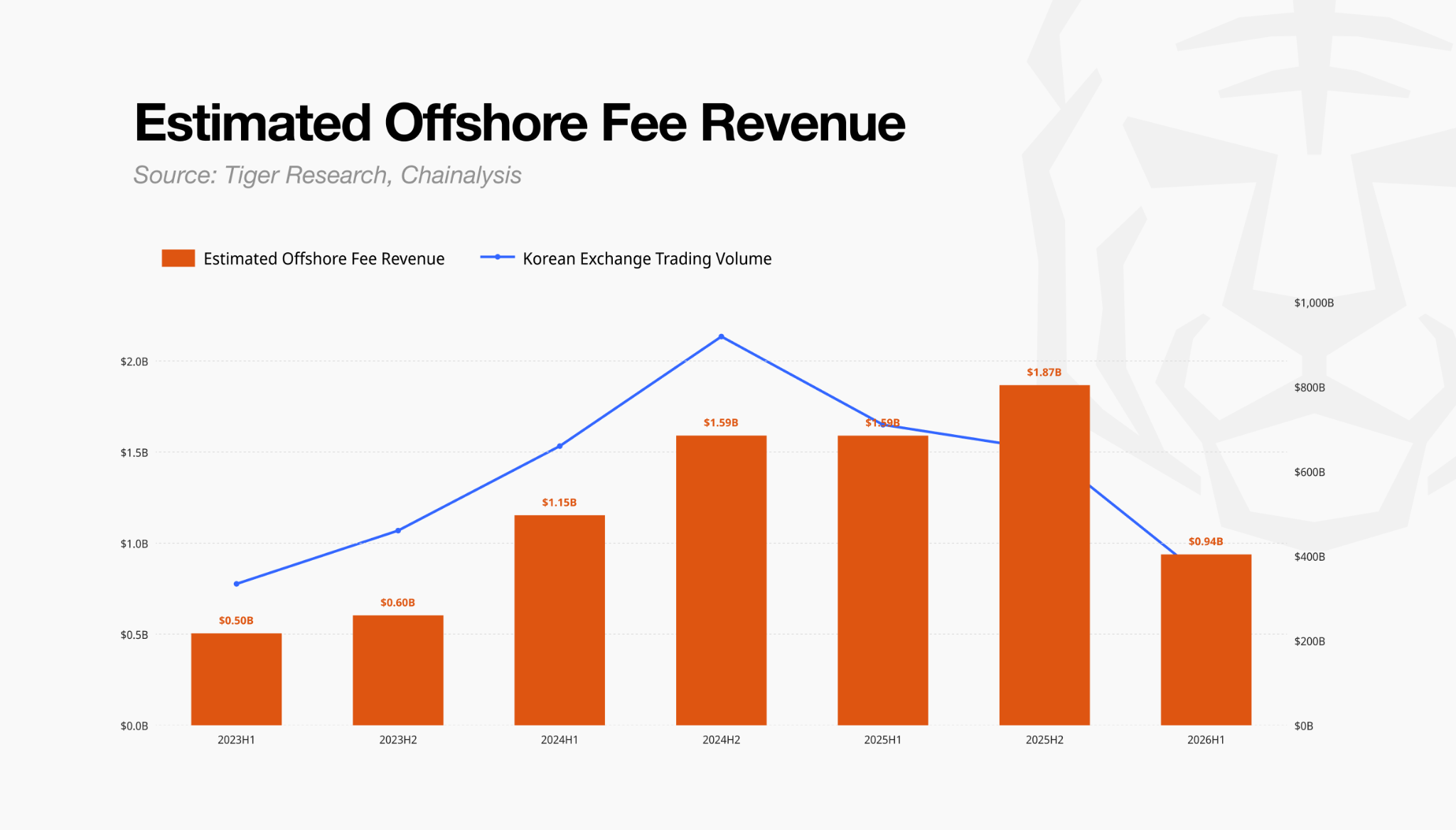
As unmet demand flows overseas, economic value also shifts. Trading fees are the most direct example. Using its methodology, Tiger Research estimates that in 2025, South Korean investors generated approximately $3.5 billion in trading fee revenue for overseas exchanges, with another $900 million contributed in the first half of 2026. Demand originating from Korea is turning into revenue for overseas operators.
The accumulation of value overseas has far-reaching consequences beyond just trading fee revenue. The more South Korean investors engage in trading and service usage overseas, the more client relationships and trading data accumulate for overseas operators. Based on this, these operators can more accurately interpret the needs of South Korean investors and establish the capacity to design and operate new products. Unmet demand not only earns overseas profits but also helps overseas operators build the competitive strength necessary to create and expand new businesses.
3. Beyond Overseas Exchanges: Investment Demand Surges to On-Chain
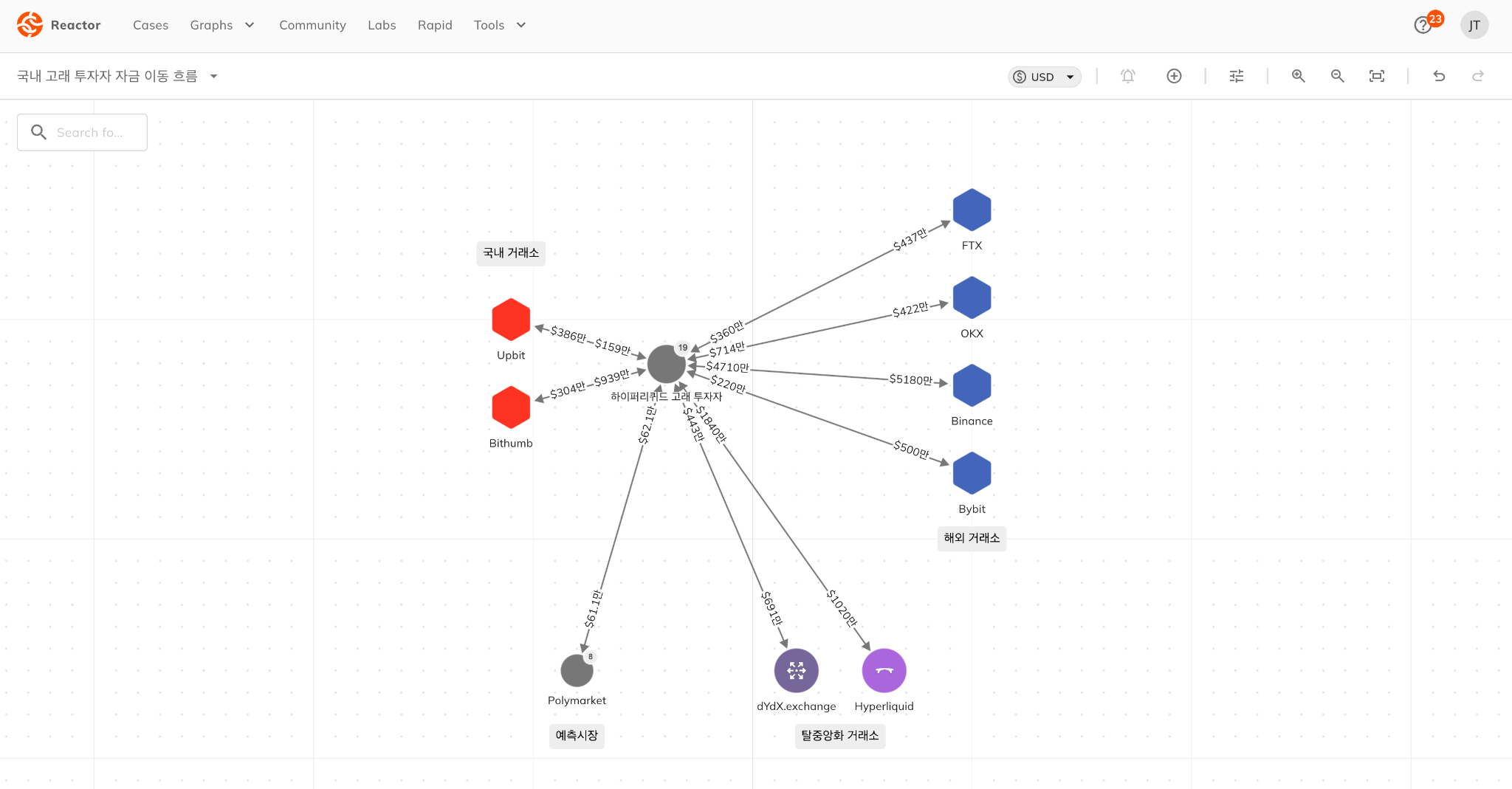
The capital fleeing from South Korean exchanges has not stopped at overseas exchanges. Tiger Research used Chainalysis' capital tracking tool, Reactor, to track the flow of funds identified as held by Korean users. The outflowing funds do not remain at overseas exchanges; they move through personal wallets and enter on-chain services, including decentralized exchanges and prediction markets.
To confirm this pattern is not limited to a few wallets, the analysis expanded to include around 120,000 wallet addresses identified as South Korean investors by Tiger Research. The results show significant investment activity outside of overseas exchanges, including leveraged trading through decentralized exchanges and participation in prediction markets. Unmet demand from Korea has now extended beyond overseas exchanges to on-chain markets.
3.1. Derivatives Demand Surges to Decentralized Exchanges
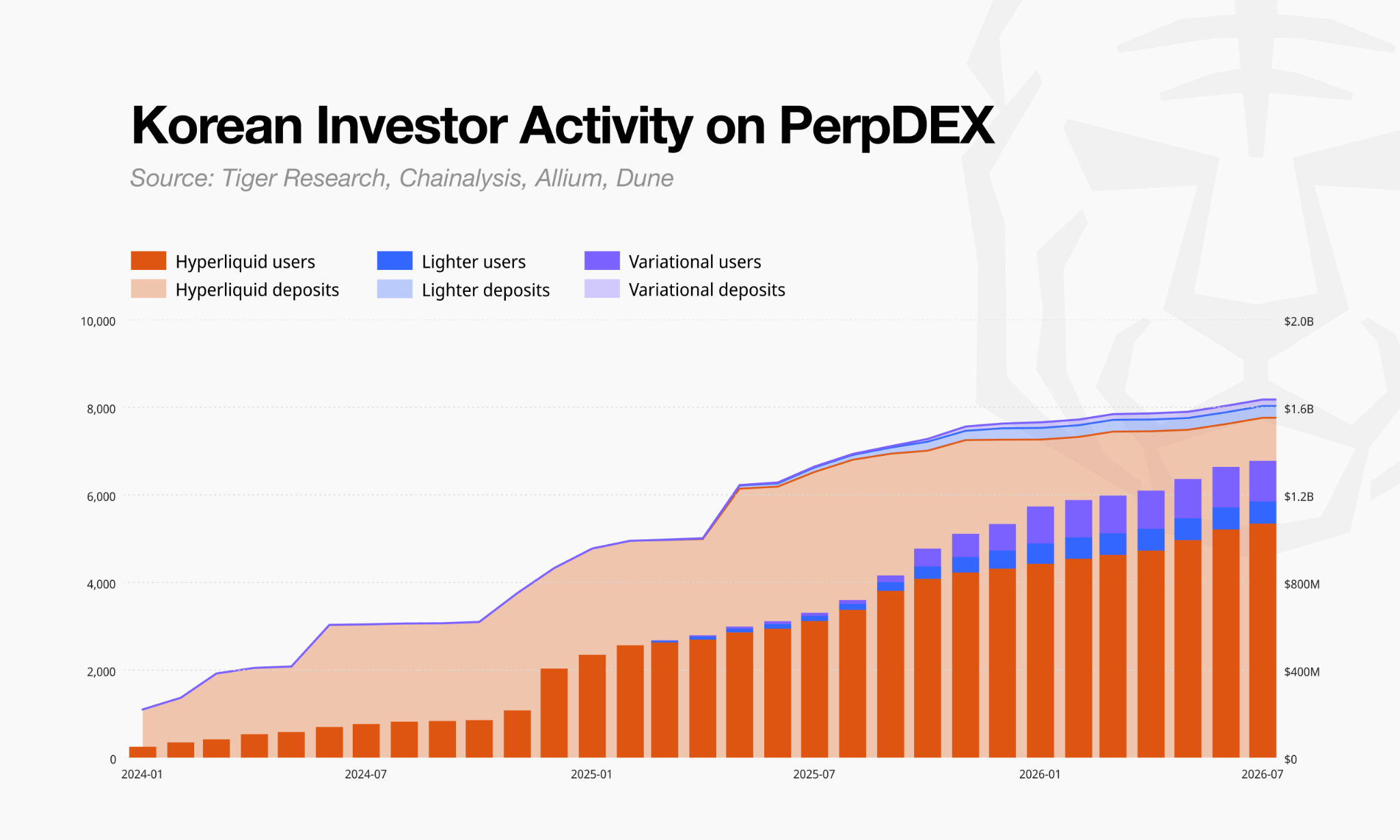
The unmet demand for derivatives trading is flooding into decentralized exchanges. On-chain analysis covering January 2024 to July 2026 found that wallets marked as Korean deposited a total of about $1.64 billion into three decentralized exchanges: Hyperliquid, Lighter, and Variational. These platforms actively engage in leveraged trading around perpetual futures, satisfying South Korean investors' demand for derivatives that are hard to access domestically.
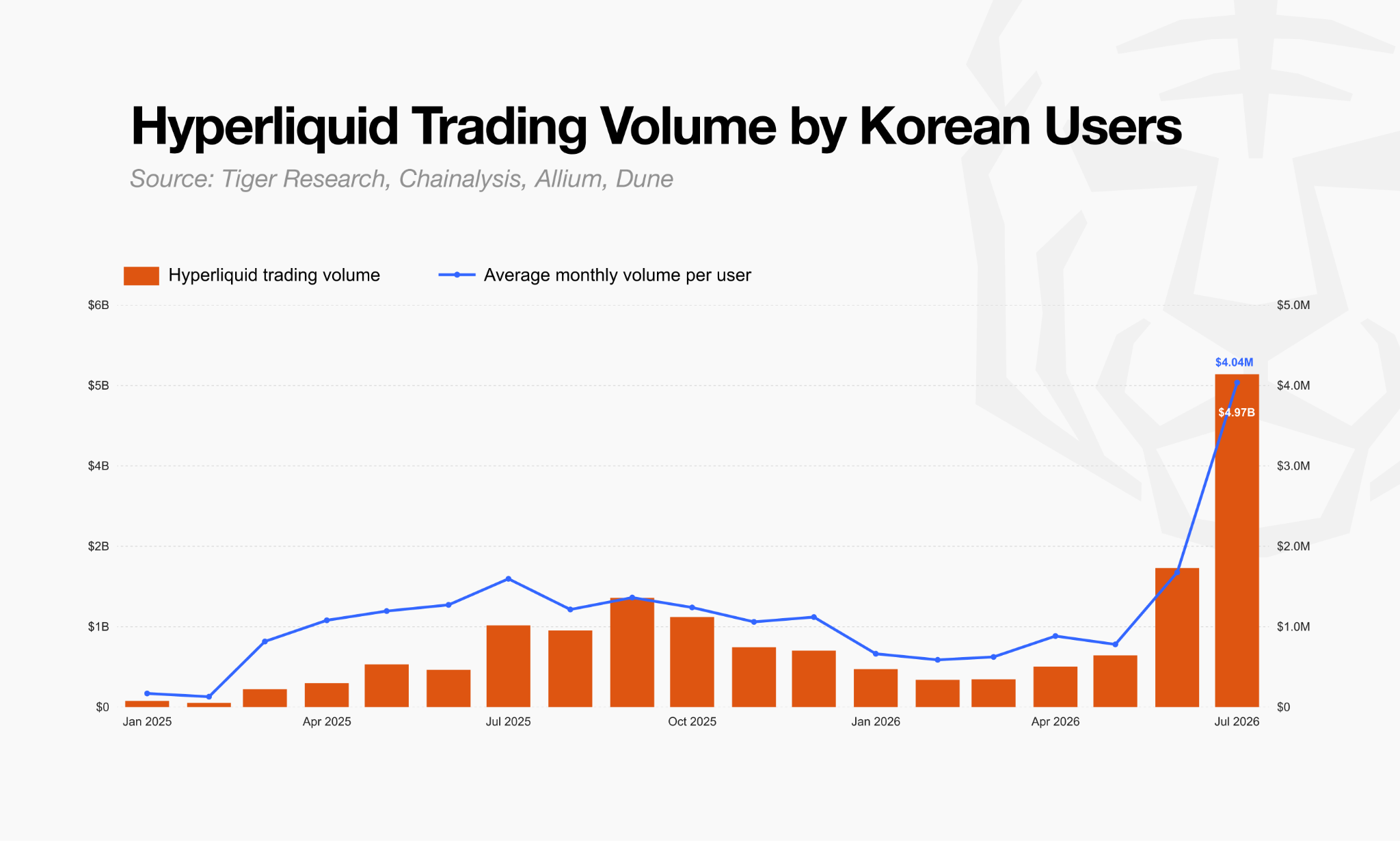
Leverage can transform deposited capital into trading volumes far exceeding the principal. In July 2026 alone, around 1,200 South Korean-related wallets generated a nominal trading volume of $4.97 billion on Hyperliquid. While leverage amplifies nominal figures, a monthly trading volume of nearly $5 billion indicates that South Korean investors' on-chain derivatives trading has reached considerable scale.
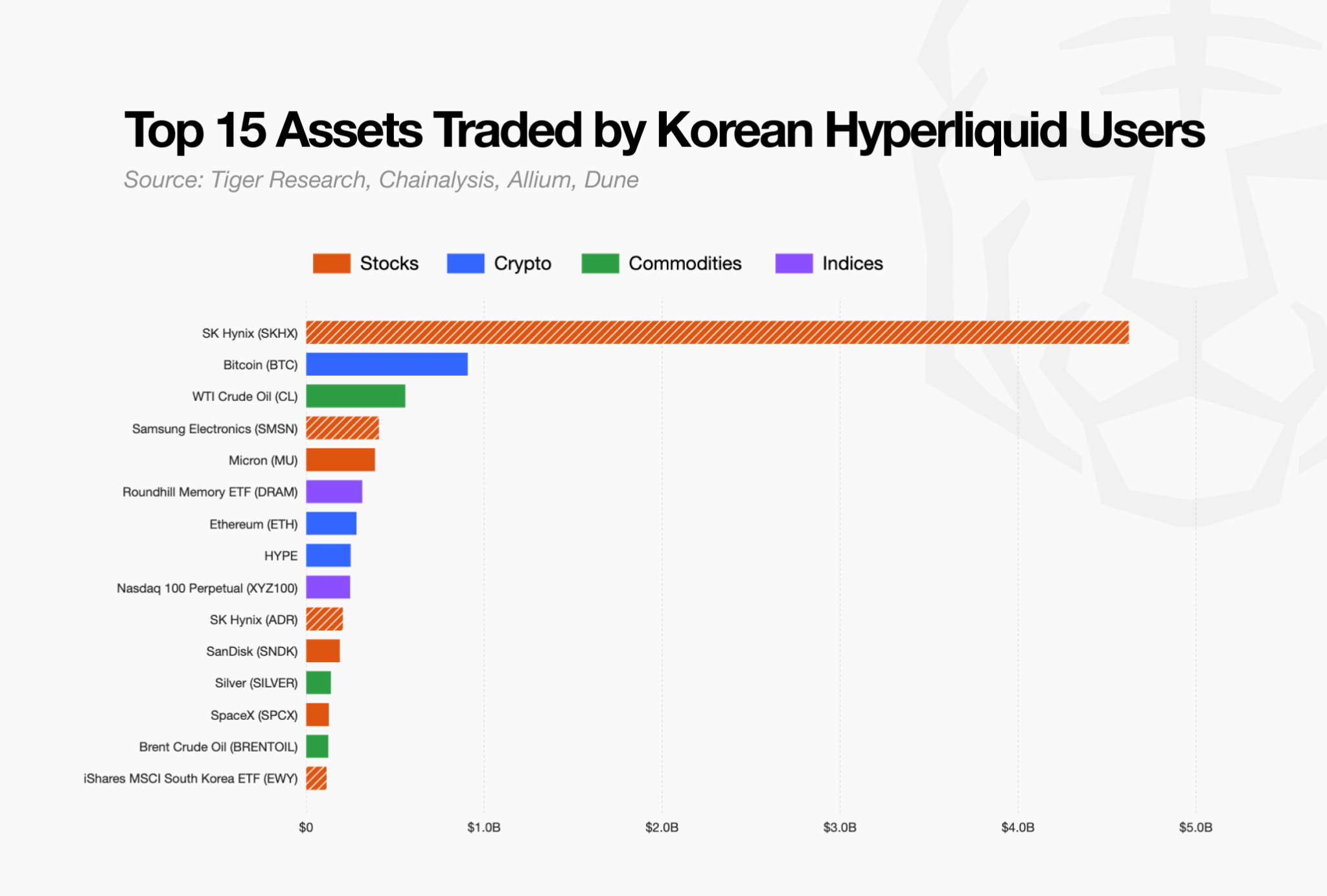
Trading on Hyperliquid extends beyond cryptocurrencies and into traditional assets. Between January and July 2026, products traded by wallets identified as Korean included contracts based on SK Hynix, Samsung Electronics, and crude oil. High leverage and demand for trading outside conventional market hours seem to drive this portion of demand. Investors are looking to trade traditional assets in ways that existing markets cannot provide, and this demand is finding its way on-chain.
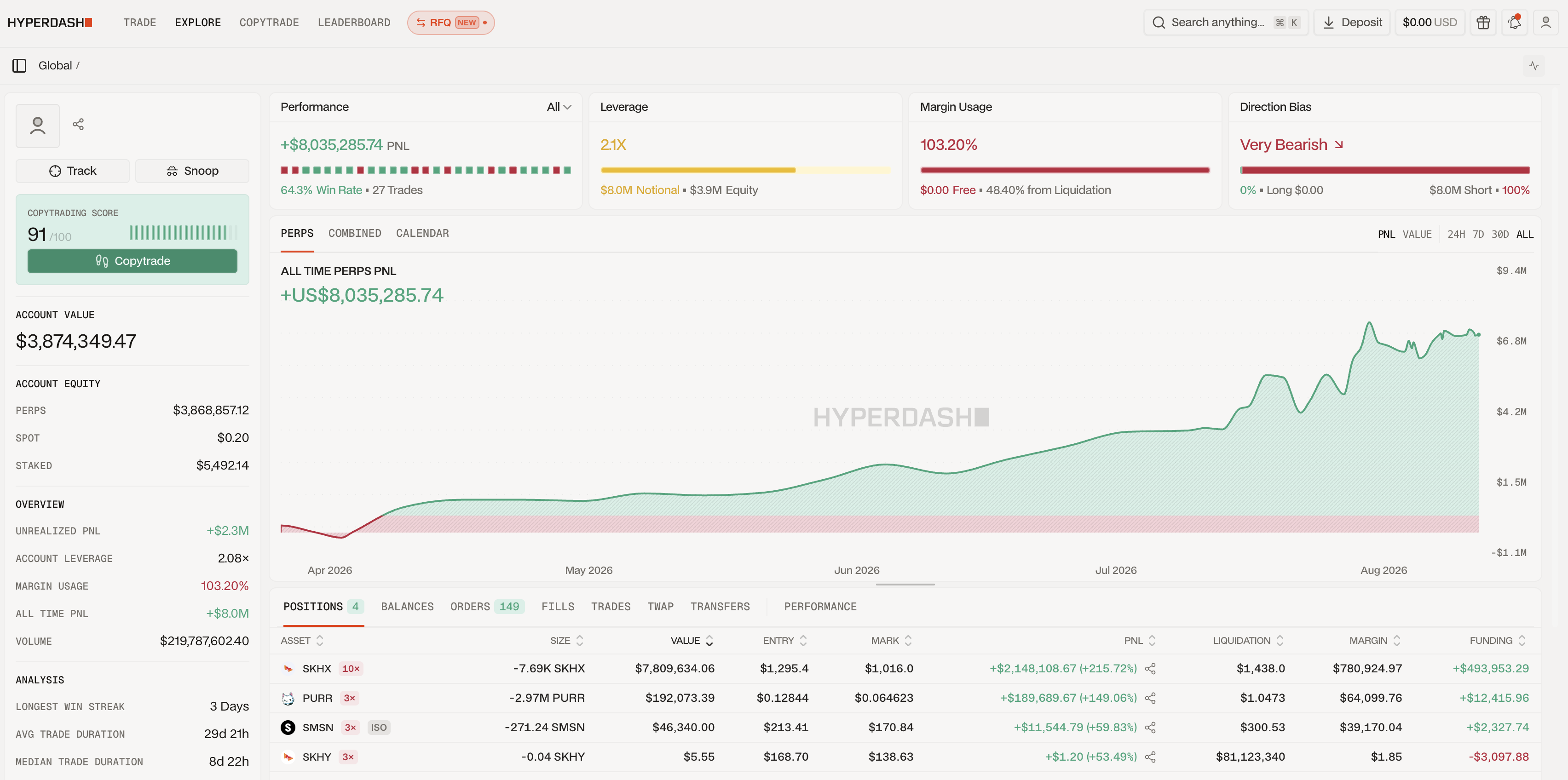
The involved capital scales vary widely. During the analysis period, the research team identified about 7,000 South Korean-related wallets, some managing substantial funds. In July 2026, a South Korean-related wallet deposited approximately $780,000 as margin for a perpetual contract based on SK Hynix, opening a 10x leveraged short position. The trading scales of these wallets are widely distributed, and large funds are also actively participating in the on-chain derivatives market.
3.2. Prediction Markets: Another Choice for South Korean Investors
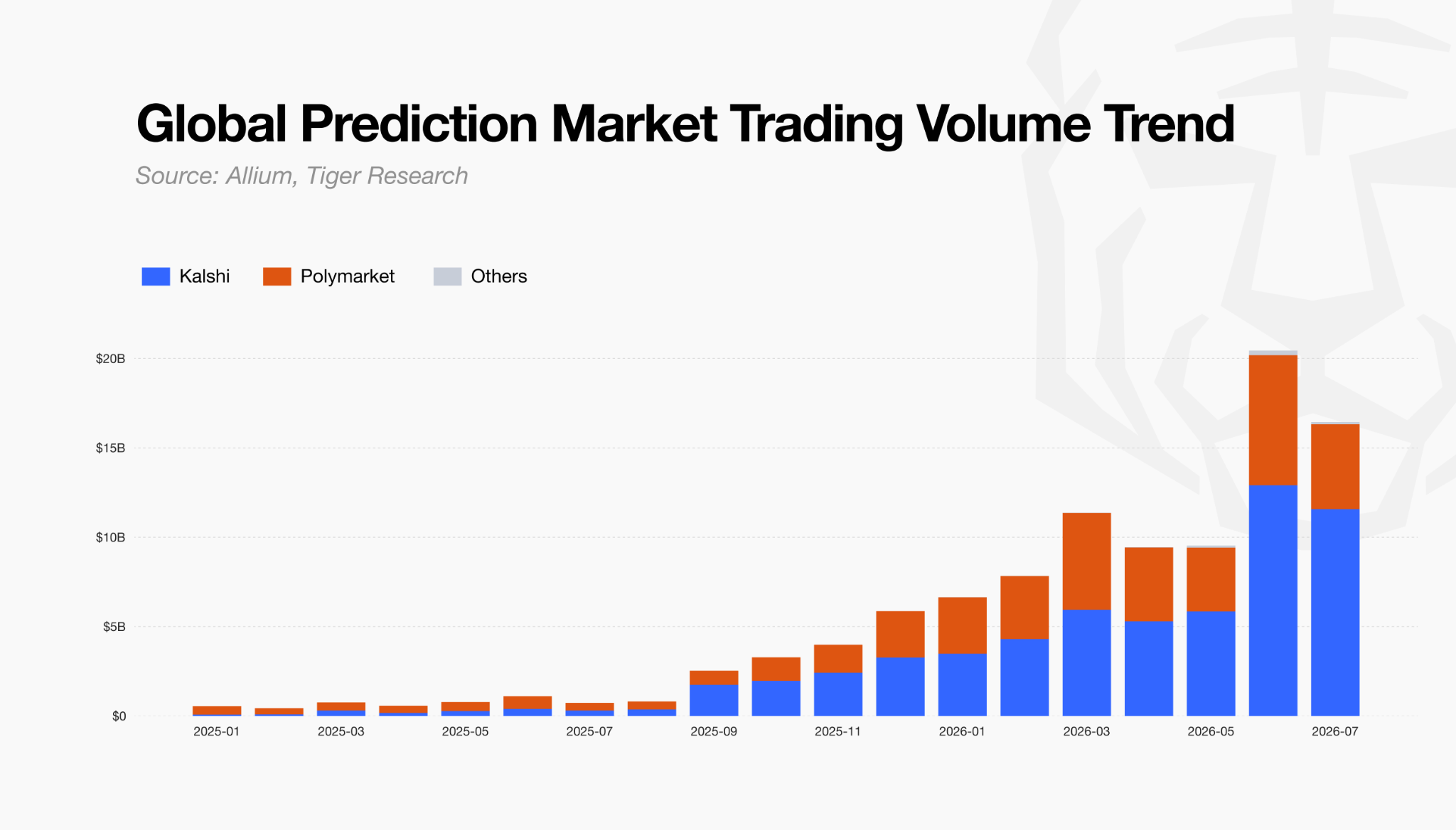
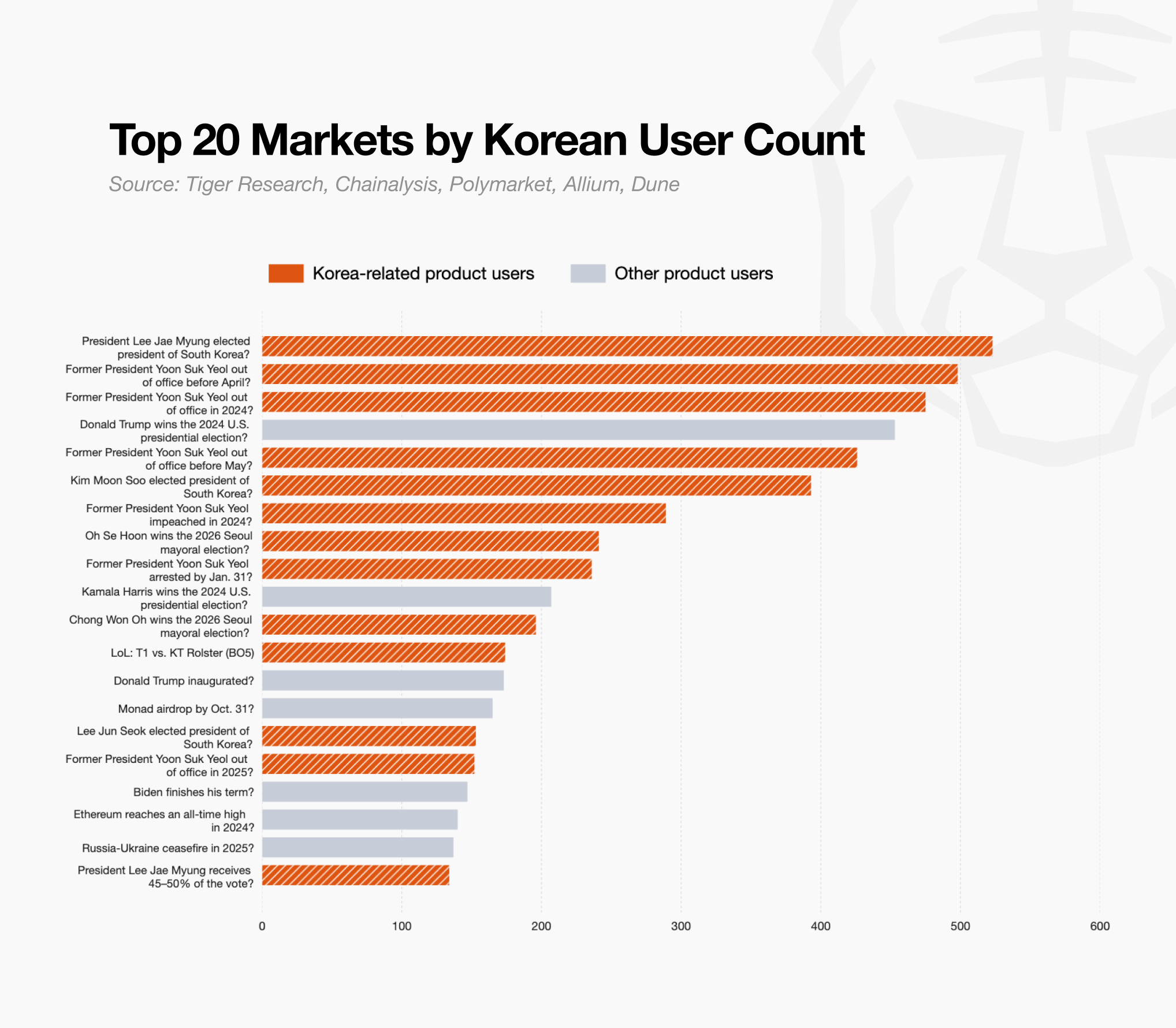
South Korean investors are also active in one of the fastest-growing segments of the global digital asset market—the prediction markets. These markets allow participants to trade on the outcomes of future events in politics, economics, and sports. While Korea restricts such trading, South Korean investors are active on Polymarket. On-chain analysis covering January 2024 to July 2026 identified around 3,700 South Korean-related wallets on Polymarket, with a cumulative trading volume of about $438 million.
Trading volumes surged sharply with significant political events in Korea. From March to June 2025, impeachment proceedings and presidential elections followed one after another, during which trading volumes related to Korea accounted for over half of the total trading volume of South Korean-related wallets. Throughout the analysis period, the cumulative trading volume of Korea-related markets reached approximately $62 million.
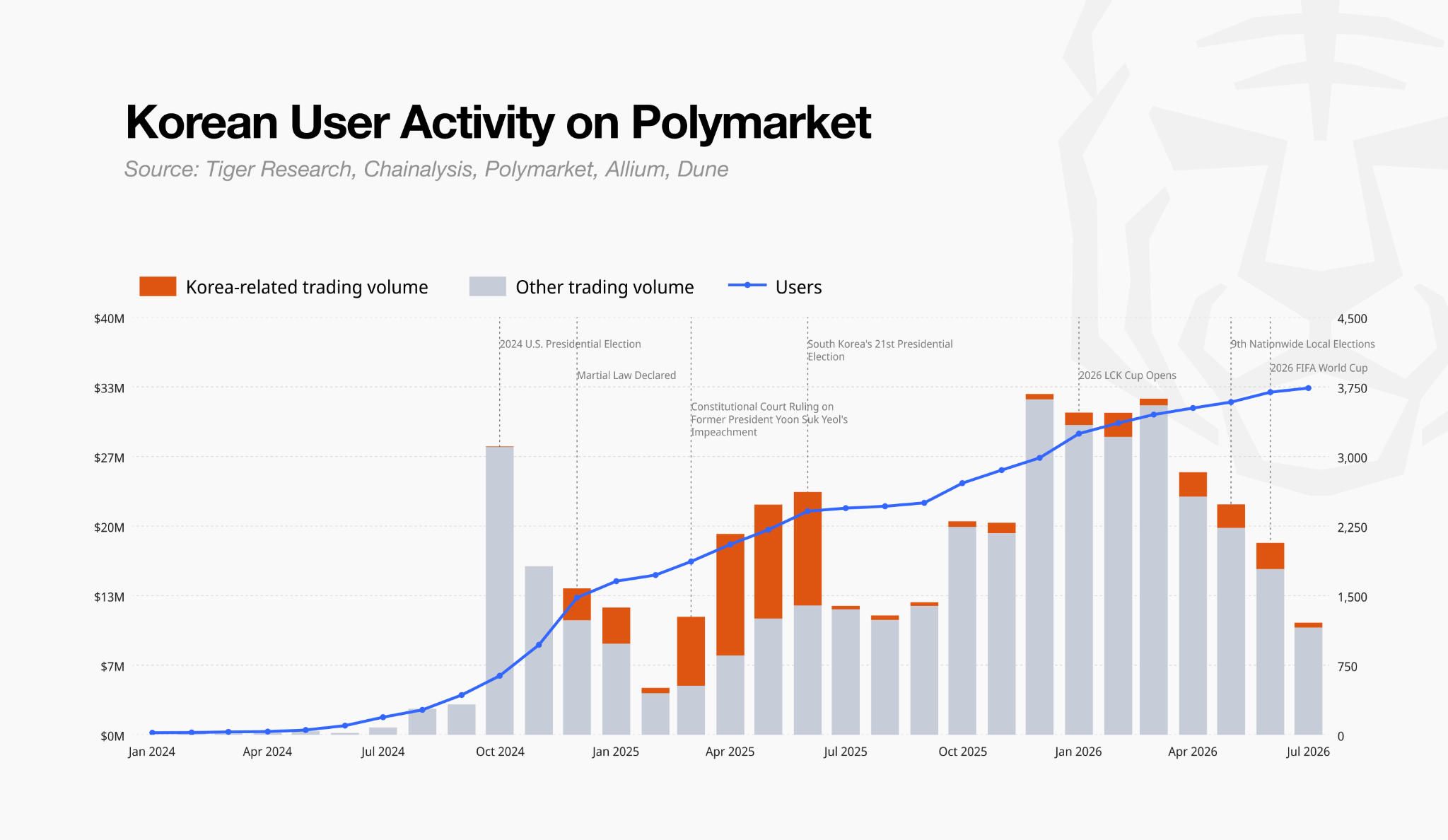
After the presidential election, the share of Korean political markets quickly declined, but trading continued in a wide range of topics, covering global affairs, the World Cup, KBO League, LCK League, and even the weather forecast in Seoul. Trading that was once concentrated on Korean political events has dispersed into other markets, indicating that South Korean investors' activity in prediction markets is not limited to specific political events.
Segment data illustrates the areas of focus for South Korean investors. Global issues like the U.S. presidential election dominate trading volumes, while the Korean political market, including Lee Jae-myung's election as president, also attracted substantial trading volumes. South Korean investors are both trading on major global issues and making substantial bets on Korean-related markets.
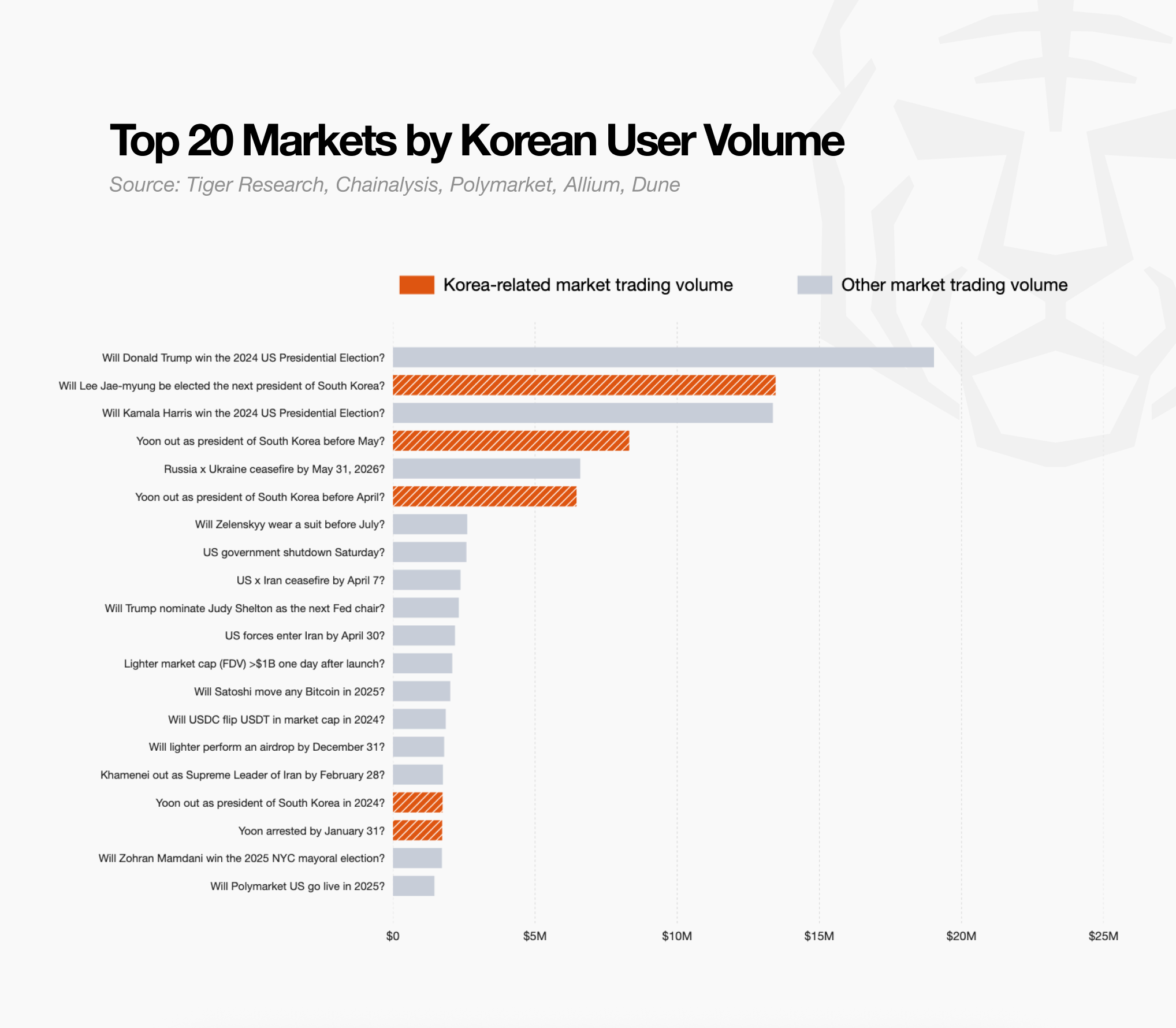
The number of wallets provides a clearer picture of the characteristics of Korea-related markets. The Korean political market, including Lee Jae-myung's election as president and the impeachment of former president Yoon Suk-yeol, attracted more South Korean-related wallets than even the U.S. election market. Global issues and Korea-related markets rank high in trading volumes, but in terms of the number of participating wallets, the Korean political market attracted broader public participation.
3.3. Payment Demand Flows into Overseas Crypto Cards
Crypto cards are rapidly gaining popularity globally, and the consumption market for digital assets is likewise growing. Crypto cards connect digital assets to existing bank card payment networks, allowing users to make payments as if they were using traditional cards. Users can issue virtual cards via applications for online and mobile payments, and some services also offer physical cards for use by offline merchants. Digital assets are transitioning from transactions and investments to everyday payments.
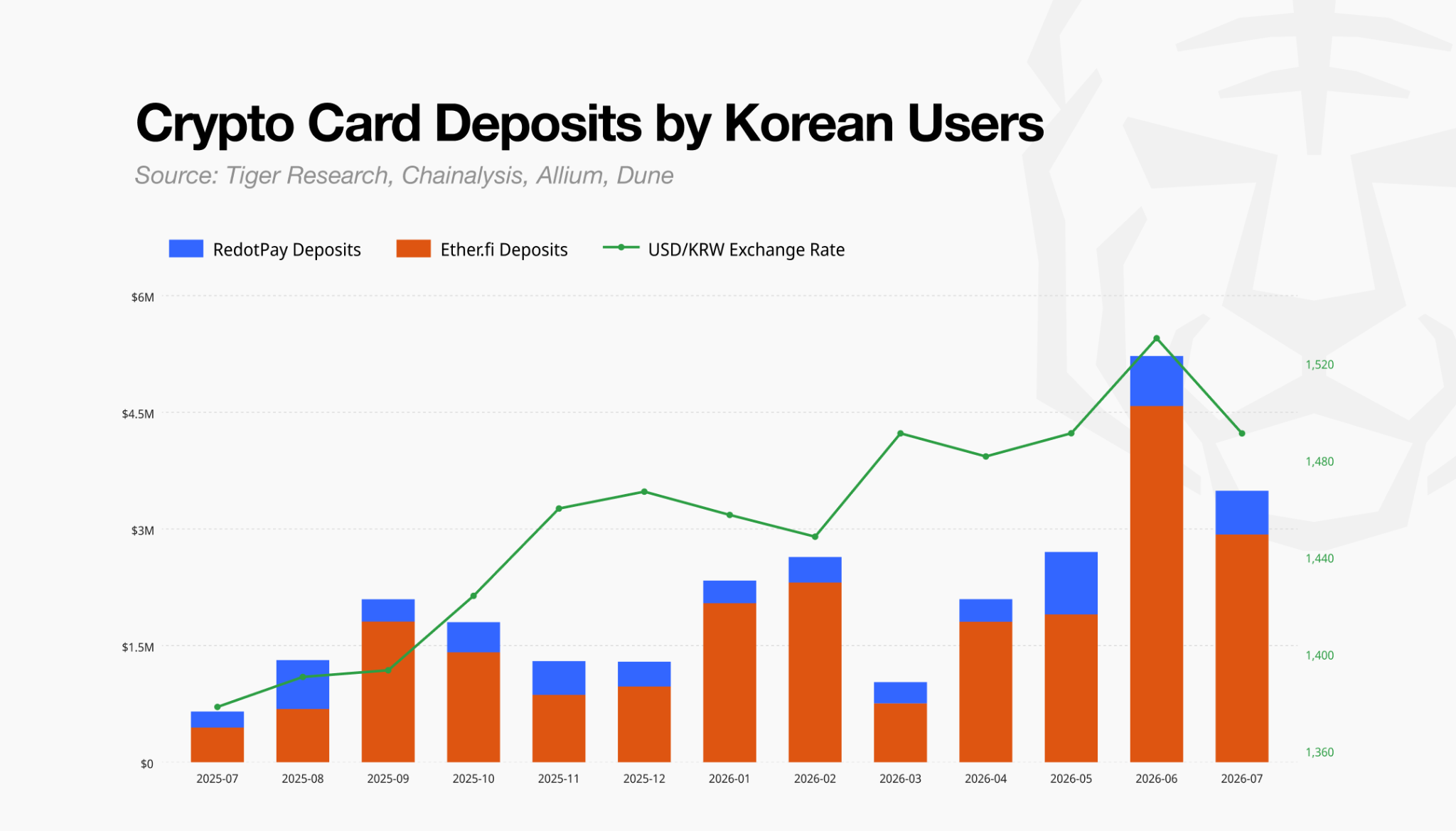
South Korea's demand for overseas crypto cards is also increasing. As of late July 2026, the cumulative downloads of major crypto card applications, including RedotPay, KAST, ether.fi, Tria, and Plasma, in Korea are estimated to reach 38,000. On-chain analysis of RedotPay and ether.fi identified about 1,000 South Korean-related wallets within both services.
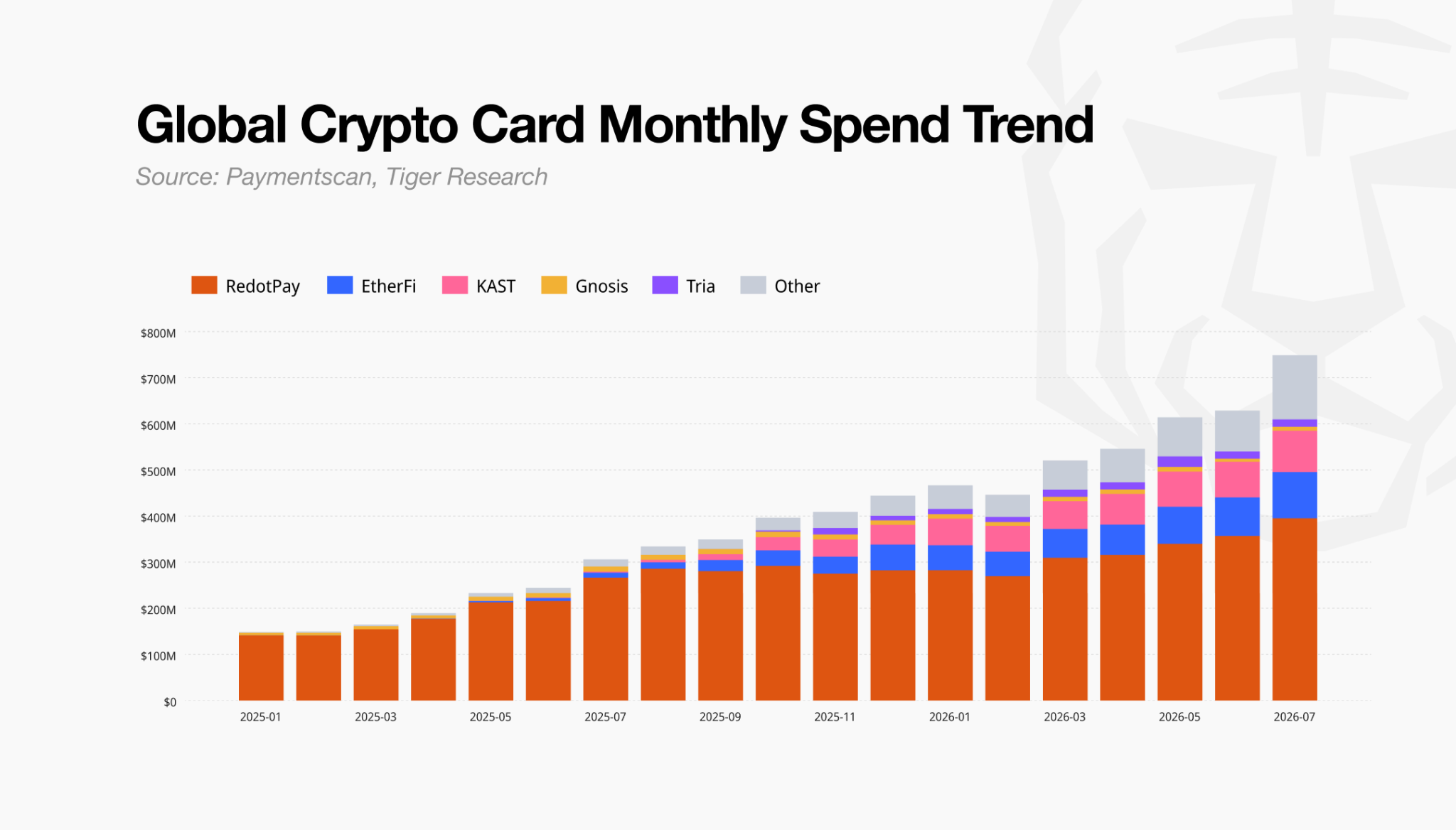
Funds flowing from these wallets into crypto cards show an upward trend. Since July 2026, when the won-to-dollar exchange rate remains high, the monthly recharge amounts for RedotPay and ether.fi have significantly increased. The data did not confirm a direct causal relationship between the exchange rate and recharge volume, but this pattern suggests that some users hold stablecoins pegged to the dollar, not only as a store of value but also for card payments. Digital assets that have moved overseas are now also serving as funds for consumption.
The importance of crypto cards lies in the possibility that capital transferred overseas may never return but instead be converted into consumption expenditures. Individual wallets have demonstrated this pattern. A high-net-worth South Korean wallet tracked by Tiger Research transferred funds from a Korean exchange to a personal wallet, traded on Hyperliquid and Polymarket, and subsequently moved a portion of funds to an ether.fi card for payments. Funds leaving South Korean exchanges continue to operate overseas and on-chain, transitioning from investment to consumption.
4. A Window to Reverse the Capital Flow
The scale of capital that has moved overseas is already substantial, but there is still room for changing its direction. As the above analysis shows, South Korean investors' demand has not diminished but has converted into trading and usage in overseas exchanges and on-chain services. If Korea can build a market that can absorb this demand, future capital flows will present a different picture.
The key is a dual approach: creating an environment that retains domestic capital and paving the way for repatriating outbound capital. Broadening the range of demands that Korea can meet will slow down new outflows; reducing institutional friction in the capital repatriation process will attract capital that has already moved overseas. Both aspects are indispensable for reversing capital flows.
4.1. Creating Reasons for Capital to Stay
To keep capital in Korea, South Korean enterprises must absorb the evolving investment demands in the Korean market. The global digital asset market has expanded from spot trading to derivatives and various services, while traditional assets are being traded in new forms through perpetual contracts and tokenized stocks. Korea has yet to establish the rules and standards necessary for these products, with exchange operations still concentrated on spot trading. The demand in Korea exists. However, the current structure makes it difficult for Korean businesses to connect this demand with new products and markets.
As the market evolves, global operators have broadened their lines of business. Major global exchanges like Coinbase and Binance have expanded into adjacent areas such as derivatives and institutional services, acquiring the necessary technology and infrastructure either through self-building or acquisition. When new demands arise, they connect them with existing operations and nurture them into new markets. In contrast, Korean operators face challenges in expanding new businesses in the digital asset market and are thus compelled to look for growth in other sectors. This disparity is less about the ambition of the operators than about whether they can transform new demands into business under a regulatory foundation.
The perpetual contracts for stocks indicate why South Korean companies need the capacity to respond to new investment demands. As analyzed above, South Korean wallets are trading perpetual contracts based on stocks like SK Hynix on overseas platforms. SK Hynix perpetual contracts closely track South Korean stock prices and continue trading during evenings and weekends after the South Korean market closes. They reflect the underlying asset with reasonable fidelity and establish prices outside regular trading hours, indicating that they can serve as pricing signals complementary to the South Korean spot market. The unmet demand in Korea has not only transformed into overseas trading but has also spawned market functionalities available to Korea.
To absorb such demands in the Korean market, it is not enough to approve products one by one. Regulatory agencies need to establish standards that allow businesses to commercialize new products and services within a regulatory framework. Rather than approving all products at once, it would be more effective to clarify requirements for investor protection and risk management. Businesses meeting these requirements should be able to expand their operations as demand evolves. Only in this way can Korea change the structure whereby domestic demand creates markets overseas before it develops locally, enabling companies to retain the commercial experience and competitive capabilities accumulated in this process domestically.
4.2. Broadening the Path for Capital Repatriation
Even if investment opportunities in Korea increase, the capital that has moved overseas will not return on its own. Bringing funds back requires multiple verifications, and vague reporting and tax standards exacerbate the burden. While creating an environment to retain domestic capital, Korea also needs to reduce the burdens on repatriating capital that has gone overseas.
Amendments to the Enforcement Ordinance of the Specific Financial Transaction Information Reporting and Usage Act are tightening anti-money laundering controls on the transfer of virtual assets. Travel rules will apply to all transaction sizes, and transactions with overseas exchanges and personal wallets will face risk-based controls. Anti-money laundering controls are still necessary, but vague verification requirements may complicate the process for capital to return to Korea. Regulatory agencies should establish clear standards to reduce unnecessary friction in legitimate transfers.
Once taxation is implemented, investors bringing overseas assets back to Korea will face additional considerations. Assets flowing between overseas exchanges, personal wallets, and on-chain services must confirm acquisition costs and past trading histories, but the standards for handling complex transactions and accepting proof documents remain insufficiently specific. The issue is not the tax itself, but the burden and uncertainty investors face when reconstructing and reporting past transactions before regulatory frameworks are fully established. Capital outflows from South Korean exchanges often increase during periods of heightened interest in tax filing, so this uncertainty's impact on capital flows deserves attention.
Therefore, capital repatriation needs to achieve two objectives. Korea must amend unreasonable regulations that restrict legitimate capital flows and clarify the necessary standards and procedures for regulation. While anti-money laundering controls and taxation have their objectives, reinforcing verification and reporting obligations without foundational standards can even hinder legitimate capital repatriation. Only by maintaining necessary controls while reducing the current unnecessary burdens on capital flows can capital previously moved overseas have the potential to return.
5. When Capital Returns, Opportunities Arise
The analysis reveals more than just capital outflow. As unmet demands from Korea transform into overseas trading and service usage, overseas operators are capturing the revenues and new business opportunities generated by these demands. The key lies in building a market in Korea capable of absorbing these demands, thereby redirecting some of the revenues and opportunities currently generated overseas back to the domestic market.
Just in trading fees alone, the scale is already quite substantial. In 2025, South Korean investors paid about $3.5 billion in trading fees to overseas exchanges. Assuming trading activity and fee rates remain unchanged, if 10% of the trading volume is completed through South Korean operators, it would generate about $357 million in revenue; 25% would yield about $893 million; and 50% would amount to about $1.79 billion. Korea does not need to create new demands to achieve these numbers, but rather just needs to bring back some of the activities South Korean investors are already conducting overseas.
The value that Korea can create goes far beyond trading fees. Coinbase started with spot trading and expanded into custody, institutional services, and stablecoins, and by the first quarter of 2026, nearly half of its total revenue came from non-trading activities. In contrast, most of Dunamu's revenue comes from won spot trading fees. The same digital asset demand could result in vastly different market scales depending on whether operators can connect it with a broad range of products and services.
Before this gap widens further, Korea needs to lay the groundwork for operators to transform new demands into business. The global market is rapidly expanding, but Korea has yet to establish a regulatory foundation for commercializing new products and services. Korea can still broaden market space before the gap solidifies, making now a critical window for the digital asset industry in Korea. In building this foundation, Korea must also give current overseas trading and capital a reason to choose the Korean market.
Tax policies are one way to create this reason. Thailand exempts personal capital gains tax on digital asset trades conducted through licensed domestic operators from 2025 to 2029, guiding investors into regulated markets. Korea can view taxes not only as a source of revenue but also as a policy tool to draw trading and capital into the Korean market.
Even if only a portion of the demand and capital currently flowing overseas is brought back, the effect will surpass trading fees. This will widen the market for South Korean operators to build new products and services, transforming into corporate growth and industrial competitiveness. The growth of the market and its internal enterprises will create long-term economic value for Korea and broaden the tax base. This critical window requires not only formulating regulations but creating conditions for the growth of a new market in Korea.
免责声明:本文章仅代表作者个人观点,不代表本平台的立场和观点。本文章仅供信息分享,不构成对任何人的任何投资建议。用户与作者之间的任何争议,与本平台无关。如网页中刊载的文章或图片涉及侵权,请提供相关的权利证明和身份证明发送邮件到support@aicoin.com,本平台相关工作人员将会进行核查。


