Author: Zen, PANews
Over the past year, robotics/Physical AI data has quickly transformed from a relatively obscure aspect of infrastructure into a fiercely competitive new track, with capital pouring in at an astonishing rate into this sector known for embodied intelligence, often referred to as the "shovel sellers" of the industry.
This surge is particularly evident domestically. In just the first half of 2026, 25 Chinese embodied intelligence data startups collectively secured over 17 billion yuan in funding. Among them, Guanglun Intelligence completed multiple rounds of significant financing within the year; data company Mifeng Technology, incubated by Zhiyuan Robotics, also rapidly raised several hundred million yuan shortly after its establishment.
In overseas markets, a number of startups focused specifically on robotics training data have begun to emerge. XDOF announced the completion of a $70 million financing round in June this year; by the end of July, Axis Robotics completed a $12 million seed round led by Hack VC.
Axis positions itself as a "Physical AI data engine," currently using a distributed contributor network and web-based simulation data collection as important entry points, and continues to expand into first-person perspectives, post-training models, and other data formats. It has already collected over 2.2 million robotic trajectory data through browser remote operation, accumulating a total data duration of 28,000 hours.
However, despite the influx of capital, robotics data remains a rapidly changing and far from fully formed market. Key questions are still in the exploratory stage, such as the ultimate scale of data demand, how to balance different approaches like physical machines, simulation, and first-person perspectives, and whether data companies can form sustainable business models.
In light of these questions, as well as Axis's own data production model, technical route, and future development plans, PANews engaged in a dialogue with Chris Feng, founder of Axis Robotics.
The Data Gap in the Era of Physical AI
Chris did not start from robotics or algorithms but entered the robotics data track from consulting, investment, and data infrastructure.
The real reason that compelled him to enter the robotics field was the substantial data gap revealed after entering the era of Physical AI.
"Using GPT-3 as a reference, its training requires about 15 million hours of human internet data," Chris stated. The physical world that robots need to process is far more complex than the digital world, requiring not only recognition and logical capabilities but also an understanding of space, actions, object states, and what changes will occur after actions are taken.
Therefore, if the robotics field is to encounter its own "GPT moment," the required data may reach 100 million hours or even higher. Beyond the obvious differences in data scale, the data foundations of the two are completely incomparable.
Before the advent of large language models, the internet had developed over decades. Various web pages, books, forums, code repositories, and a wealth of digital content created natural data resources over the long term.
In contrast, human behavior in the real world has not undergone a similar systematic recording process. People cook, organize items, and operate tools daily, but these behaviors are rarely recorded continuously, let alone transformed on a large scale into standardized data that can be directly used for robot training.
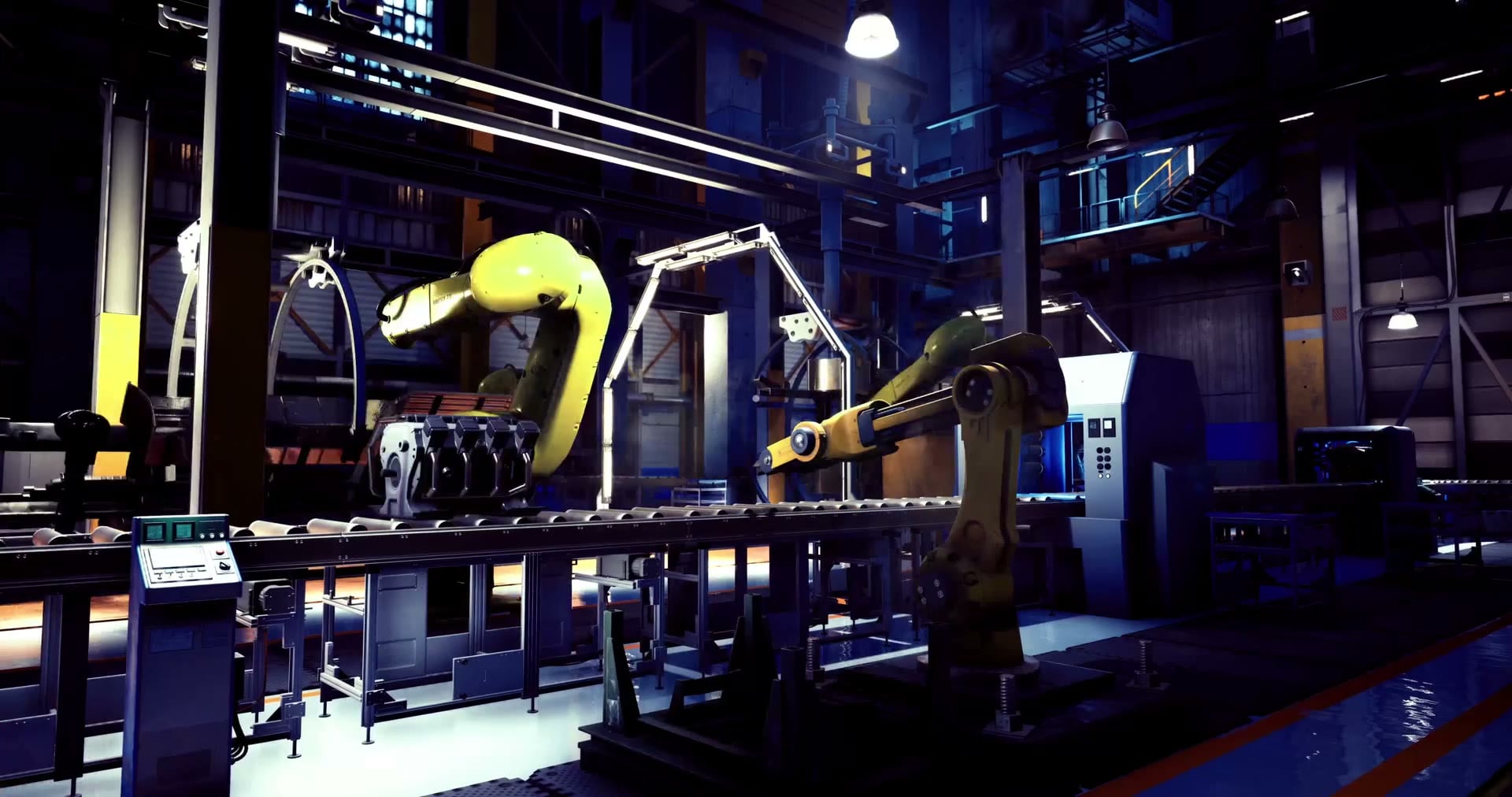
With the development of technologies such as VLA models and world models, robotics model companies have started to become the most direct demand side for this type of data, and some robotics companies are simultaneously building modeling and data capabilities. At the same time, the forms of robotics themselves are rapidly differentiating, from humanoid robots and robotic arms to specialized devices designed for industrial and service scenarios, creating differentiated data demands among different models and entities.
As the demand scale continues to expand, traditional data production methods quickly reveal their limitations.
Early robotics companies typically relied on real machine remote operation, where humans directly controlled robots to complete tasks and then recorded action trajectories. This type of data is closest to real robots but is produced slowly and at a high cost, while also being restricted by the number of robots, sites, and operators.
More importantly, the real world possesses a high degree of complexity and diversity. Relying solely on the limited robots and data collection scenes within a company makes it difficult to cover the environments that models might encounter in the future. If foundational models require tens of millions of hours of data, it is difficult to achieve economically effective linear scaling solely by continually increasing the number of robots, sites, and remote operators.
Thus, how to continuously produce sufficiently diverse data that can truly improve model performance at controllable costs and in a scalable manner has become one of the core challenges faced by the Physical AI data industry, constituting the commercial opportunity that independent robotics data companies are vying for.
The "Pyramid" of Robotics Data: Balancing Accuracy, Scale, and Generalization
There is another more complex issue with robotics data: different sources of data show significant differences in authenticity, cost, scalability, and the capability for cross-entity reuse.
Chris roughly categorizes the current main routes into real machine remote operation, simulation, and human first-person perspective data. If viewed by the degree of direct matching between data and robot entities, it can roughly form a "pyramid."
At the top of the pyramid is real machine remote operation.
Operators directly control a real robot to complete tasks such as grasping, placing, and moving, while sensors simultaneously record the robot's joints, end effectors, vision, and action signals. The greatest advantage of this type of data is that its training data comes directly from real robots, thus the physical information is the most complete, with the least difference from the target entity.
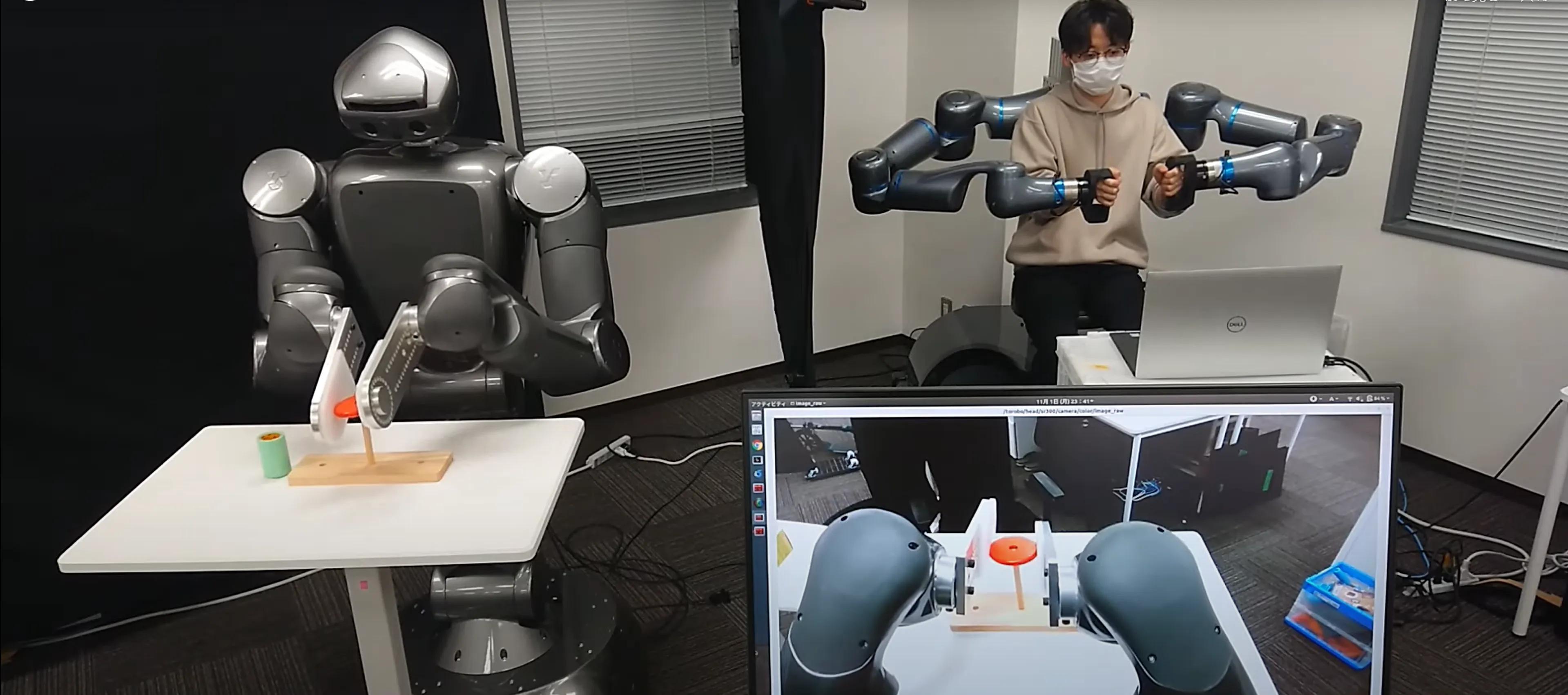
However, the cost and scale issues of real machine data are equally prominent. According to industry data, the comprehensive cost of one hour of high-quality real machine remote operation data can reach $200. Even more importantly, this type of data is usually highly bound to specific robot entities, with limited cross-entity reuse capability. For example, action trajectories collected on the Unitree G1 cannot be directly adapted to robots of different forms.
In the middle of the pyramid is simulation data.
Robot simulation attempts to restore the dimensions, joints, action ranges, and task environments of real robots as closely as possible to a virtual space, allowing operators or programs to control virtual robots to complete tasks. Current commonly used simulation platforms in robotics research and development include Isaac Sim, MuJoCo, and others.
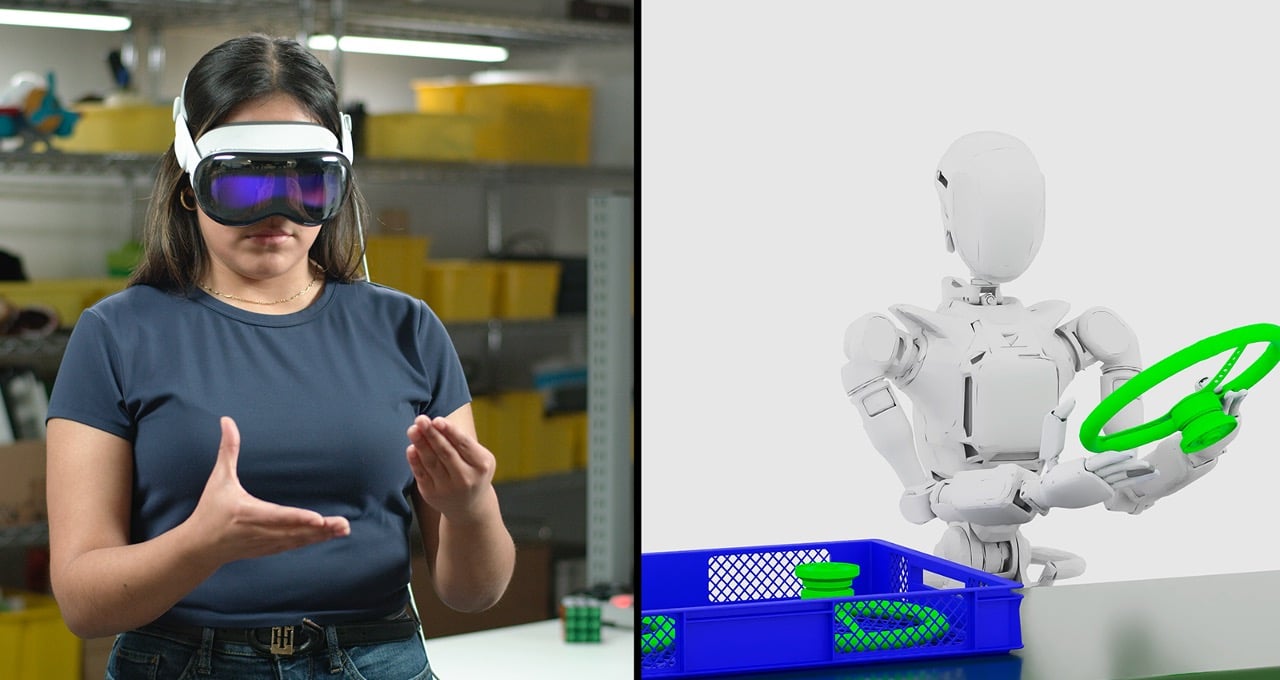
Compared to the real world, the prominent advantages of simulation are scalability and controllability. It is impractical in reality to build thousands of kitchens, warehouses, or factories to collect data, but in a virtual environment, similar scenes can be quickly replicated and run in parallel. Existing trajectories can also be expanded to more different environments by altering parameters such as lighting, material, camera positions, object types, and spatial layouts.
At the same time, the task status in a simulated environment is also easier to read accurately. For example, whether a task is completed, whether a robotic arm collides, and where objects ultimately end up can all be directly obtained from the environment, making data validation and screening much easier.
However, the limitations of simulated data are also clear: virtual environments always struggle to fully replicate the real world. Friction, object deformation, contact states, sensor noise, and a multitude of uncontrollable factors can lead to models performing well in simulation but experiencing performance declines when transitioned to real robots. How to narrow this gap of "simulation to reality" has also remained a core issue in robotics research.
Another route that has clearly gained traction in the last two years is human first-person perspective data, which sits at the bottom of the pyramid.
This method attempts to reduce dependence on expensive robot entities, allowing data contributors to wear head cameras, GoPros, or simply use smartphones to record real behaviors such as cooking, folding clothes, organizing rooms, and operating tools.
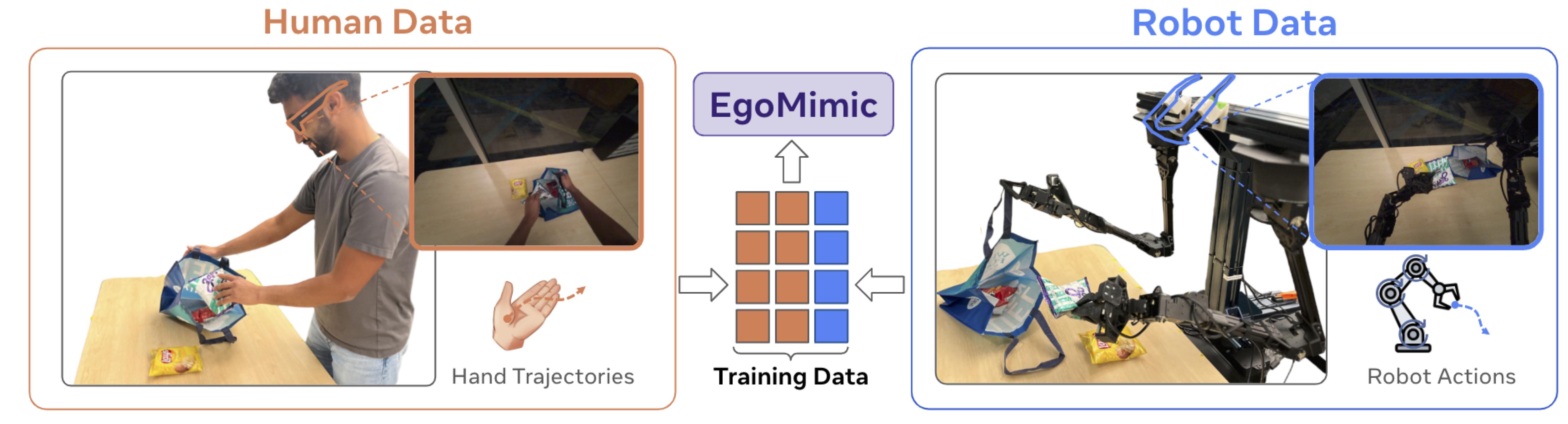
The underlying logic is that if future robot visual and action logic closely resembles that of humans, then recording "how humans interact with the world" on a large scale can theoretically provide an extremely rich dataset for foundational robot models.
The most attractive aspect of first-person perspective data lies in its potential scale and environmental diversity. Compared to deploying numerous robots for remote operation, having ordinary people record behaviors in real scenes such as homes, factories, and shopping malls involves lower collection costs and participation thresholds and can more easily cover a wide variety of different environments.
However, Chris also points out a significant uncertainty with human first-person data: its training value largely depends on the physical form of future robots.
If robots adopt non-humanoid designs such as wheeled chassis, robotic arms, or specialized grippers, the direct transfer value of human operation data at the action level will be noticeably reduced. Even if humanoid robots become mainstream, human actions cannot be copied directly by robots, as hand and body movements still need to go through action redirection to convert into trajectories that robotic joints and mechanical hands can execute.
Another often-overlooked issue is the visual perspective. Ideally, first-person data should closely align with human visual positions, but different collection devices may be mounted on the head, chest, or other locations. The change in perspective can significantly alter the spatial relationships between hands, objects, and the camera, presenting a considerable challenge for robot models that need to learn three-dimensional space and operational relations.
Therefore, in Chris's view, there is no simple substitute relationship among real machines, simulations, and first-person data. Each addresses different issues: real machines guarantee accuracy, simulations are responsible for scaling, and human videos provide the diversity of real-world scenes. The future robotics data system is more likely to be a combination and complementarity of different data sources.
Moreover, some recent studies have begun to downplay the singular pursuit of "optimal data." Dyna Robotics' newly released Dyna-2 relies solely on over 1 million hours of human first-person video for pre-training, observing scale effects from human behavior data transfer to robotic capabilities. Research from Axis also indicates that filtered and processed simulation trajectories can likewise continue to improve model performance as the data scale expands.
Becoming a Data Producer, Building a Physical AI Data Engine
Compared to simply pursuing a high degree of match between a single data point and its target entity, scale, diversity, and the ability to genuinely translate into model capabilities are becoming critical metrics. Thus, robotics data companies find it hard to meet the continuously changing demands of models through a single collection method. This also points to a more core question: should data companies merely fulfill data collection and processing as per client demands, or should they participate more deeply in the design and production of data required for model training?
Axis chooses the latter and positions itself as a "Physical AI data engine." In Chris's view, "data annotation" and "data production" are not on the same operational level.
Data annotation deals with already existing data, where clients decide what and how to annotate, and the service provider is responsible for executing according to the rules; data production, however, requires going further, where data companies not only need to carry out collection and processing but also participate in judging what data the model actually lacks, design tasks around training objectives, organize collections, and adjust the next round of data based on model performance.
For instance, if a robotic model is to learn kitchen operations, the data company needs to further determine which tasks to design, how to combine basic actions such as grasping, pushing, pulling, opening, and closing, whether depth information is needed, how cameras should be arranged, and which failure cases are worth being collected in detail.
Chris stated that Axis's commercial collaborations with clients like Booster Robotics and Qingyu Technology have upgraded from mere data delivery to "customized data production plans around model training objectives." For example, in collaboration with Booster Robotics, Axis created a foundation model tailored to the visual input and action space of the Booster T1. This model supports rapid transfer and iteration of specific tasks with very few samples, greatly reducing the threshold and engineering adaptation costs for developing embodied intelligence.
This is also the reason Axis emphasizes being a "data engine" rather than a "data factory." According to Chris's description, commercial clients can first propose target scenarios and capability demands, and Axis then designs tasks based on these and accomplishes data collection through a distributed contributor network.
"In addition to delivering data to clients, AXIS is also engaged in academic research for developing datasets and model validation," Chris said. The AXIS Franka dataset released by the Axis team in the first half of the year is currently one of the largest open-source robotics operation datasets targeting the Franka Research 3 robotic arm, containing 207 diverse manipulation tasks, over 50,000 human demonstration trajectories, and more than 60,000 task scene variations.
During the evaluation phase of training results, the research team utilized this dataset for sustained pre-training of the state-of-the-art VLA model π 0.5. Experimental results showed that models trained with AXIS-100% data snapshots achieved excellent performance in the LIBERO-Plus robustness benchmark test, with an overall success rate reaching 88.8%.
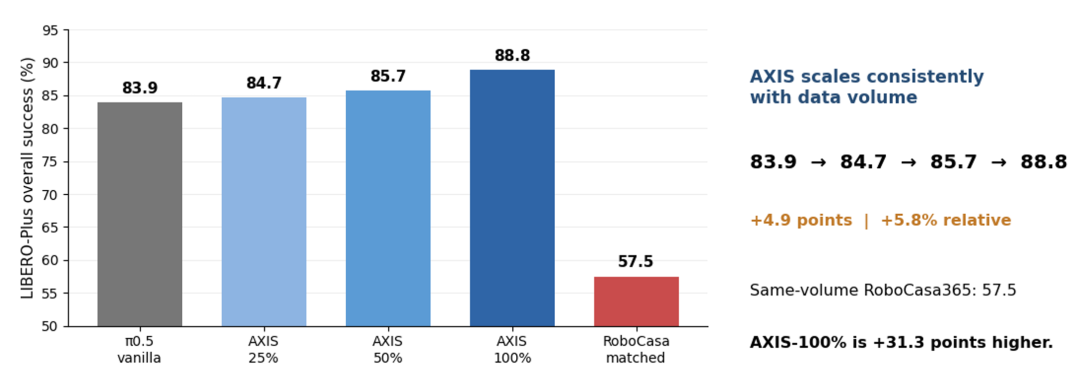
Chris also noted the significant effect of the AXIS Franka dataset in enhancing model responsiveness to real-world disturbances: under challenges such as sensor noise and camera perspective shifts, the model's robustness improved by 13.7% and 11.3% respectively. The study confirmed that as the dataset snapshot scaled from 25% to 100%, the manipulatory generalization capability of the models exhibited a stable expanding trend, demonstrating a positive correlation between data scale and downstream task generalization capability.
Not Betting on a Single Data Form, Aiming to be "The Surge AI of the Robotics Field"
Robotics data remains a rapidly changing market that has yet to establish a stable paradigm.
Recently, industry focus has gradually expanded from real machine remote operation to simulation, first-person perspectives, and other data sources. As foundational models enter deeper post-training phases, how to collect failure states, error correction processes, and recovery trajectories has also begun to emerge as new data demands.
"If today the market needs first-person perspective data most, then I will only do first-person perspective; but what if in six months everyone no longer needs it?" Therefore, Chris is reluctant to define Axis as a company focused solely on a specific type of data.
His idea is to separate relatively stable foundational capabilities from constantly changing data collection methods. The foundation consists of infrastructures such as a distributed contributor network, task management, data validation, cleansing, augmentation, and processing pipelines; the upper layer connects different data products and collection methods according to model and client needs.
Currently, Axis has begun with web-based simulation data collection and is gradually expanding into first-person perspective data and model post-training. Chris mentioned that the latest products have incorporated error correction data collection aimed at model biases and failure states, and the team is advancing data collection and processing for post-training methods such as DAgger, planning to release the first large-scale Human-Gated DAgger post-training dataset by the end of the year.
In his view, as robotic models continually iterate, the value of data partners will also change. The capability of a data company should not only be assessed by how much data it can deliver at once but also its ability to consistently produce high-quality data, whether it possesses a sustainably operated contributor network and data processing tools, and whether it can timely adjust the content and structure of the next round of data based on model performance.
This thinking somewhat draws from the developmental pathways of Scale AI and Surge AI, with Chris particularly focusing on Surge AI. He hopes Axis can eventually become "the Surge AI of the robotics field."

In Chris's view, the strength of Surge AI lies not just in having vast data annotation resources but in its business always keeping pace with changes in model demand, extending from large model post-training further to new segments like intelligent agent training environments.
This ability to not bind itself to a specific data form but to continuously adjust the data and tools provided in accordance with changes in Physical AI model training methods is exactly what Axis hopes to replicate.
Using Blockchain for Contribution Incentives and Data Tracking
Unlike other competitors, Axis bears a relatively unique label—blockchain.
The process of producing robotics data does not inherently require blockchain; simulation still runs in traditional robotic environments, and model training is no different than that of other AI companies. Blockchain truly plays a role post data generation: Axis establishes data IDs for verified data trajectories and records the relationships among tasks, data, and contributors on the Base.
Chris states that blockchain technology primarily addresses two issues.
The first is contribution incentives. When data is produced by globally distributed users, the quantity and quality of data completed by different users vary. The platform needs to know who contributed what, and whether the data truly meets the requirements. For contributors, the core concern is not about how much they do but who provides genuinely effective data.
The second is source tracking. The current AI model training process resembles a black box. The outside world usually only sees the final model but struggles to know where specific capabilities truly come from or who produced that data. If the relationships among tasks, trajectories, and contributors can be continuously recorded, when a piece of data is eventually purchased by a client, a relatively complete source record can at least be retained.
Axis has now launched a points system to record and measure user contributions. Chris also mentioned that if tokens are issued in the future, contribution points may serve as a basis for incentives; if a contributor's data is ultimately commercialized, the company is also considering allowing them to participate in revenue sharing.
However, these mechanisms are still in the design and refinement stages. Rather than initially building a token economy and then seeking application scenarios for it, Chris emphasizes determining what actual problems blockchain can solve first.
"I have never considered myself a crypto robotics company."
In his definition, Axis is primarily a robotics data company, and if blockchain can help solve contribution incentives and data source tracking, then it will be used in those areas; if it cannot generate actual value, there is no need to introduce it just for the sake of a "Crypto+AI" narrative.
The Next Phase: Expanding Data Coverage to Enter the Top Model Company Supplier List
For the developments in the next 6 to 12 months, Axis's roadmap mainly focuses on three directions: product, community growth, and commercialization.
On the product front, Axis plans to continue to expand the collection scale of first-person perspective data, and add UMI data and remote operation data for mobile tasks, further broadening the types of data and task coverage of the platform.
In addition to data collection entry points for ordinary users, Axis also plans to provide task generation APIs and data processing tools to corporate clients and developers, further productizing parts of its underlying data production capabilities.
Community growth is another focus. Chris stated that Axis hopes to expand the community size to three times its current level in the next six months, and further extend into different regional markets. Participants will no longer be limited to ordinary data contributors, but Axis aims to attract more developers, researchers, and industry practitioners to gradually expand the platform into an open ecosystem around Physical AI data production.
In terms of commercialization, Axis has already gained benchmark clients in some niche areas, and simulation data and first-person perspective data have begun to generate paid orders. In the next six months, the company's target is to raise annual recurring revenue (ARR) to between $500,000 and $1 million and to enter the supplier list of top robotics model companies.
Compared to the revenue numbers themselves, entering the supplier systems of leading model companies may better test Axis's current model.
免责声明:本文章仅代表作者个人观点,不代表本平台的立场和观点。本文章仅供信息分享,不构成对任何人的任何投资建议。用户与作者之间的任何争议,与本平台无关。如网页中刊载的文章或图片涉及侵权,请提供相关的权利证明和身份证明发送邮件到support@aicoin.com,本平台相关工作人员将会进行核查。


