Author: Josh Kale
Translated by: Deep Tide TechFlow
Deep Tide Introduction: The ranks of Google engineers range from L1 to L10, and above L10, the "L11 Senior Fellow" title has only been awarded to two people in a full twenty-seven years—Jeff Dean and Sanjay Ghemawat. This Wednesday, both of them resigned at the same time; hours later, Nobel laureate Demis Hassabis also announced he would no longer be responsible for the daily management of the Google AI lab. On that day, Alphabet's market value evaporated by about $16 billion, but the real question raised by the article is: what exactly has Google lost?
From OpenAI, Anthropic to Discovery Loop, the departure of top talents from Google has become a "Fairchild Semiconductor-type" talent exodus, but this time, Google has written itself into the cap table of almost all "defector" companies—it holds about 14% of Anthropic, spent $2.7 billion to buy back Noam Shazeer, and is also the founding investor and exclusive cloud service provider for Discovery Loop. The final conclusion is: the top spot in cutting-edge models rotates every few months, but distribution, infrastructure, and equity are permanent compounding; what changed on Wednesday was merely the organizational structure, while the underlying "machine" remained untouched.
Who Left, Why They Left
Google engineers' ranks range from L1 to L10. The highest level is Google Fellow: the company says this honor follows you for life.
Above it is a level that almost no one reaches: L11, Senior Fellow.
In twenty-seven years, only two people have held this title: Jeff Dean and Sanjay Ghemawat. This Wednesday, both resigned simultaneously.
Hours later, Nobel laureate Demis Hassabis announced that he would no longer be responsible for the daily management of the Google AI lab.
By the close of the market, $16 billion had been knocked off Alphabet's market value. But this raises a strange question: what exactly has Google lost?
Jeff Dean joined Google in 1999 and was one of the first thirty employees. At that time, the whole company was crammed into an upstairs space in Palo Alto that is now a T-Mobile store. He and Sanjay became the industry's most famous pair programming duo, and the foundational software they wrote expanded Google from a search engine on cheap hardware into a global computing platform.
The paper they published in 2004 essentially launched the entire big data industry. Dean later co-founded Google Brain and promoted the TPU—a chip designed for AI workloads. He once estimated that if every Android user did three minutes of voice search daily, Google's data center capacity would have to roughly double. So they designed this chip within fifteen months. This chip's lifeblood now drives Gemini and has begun shipping to external clients, competing with NVIDIA.
Demis Hassabis became an international chess master at thirteen, co-designed the game "Theme Park" at seventeen, and received the 2024 Nobel Prize in Chemistry for AlphaFold. He is currently the chairman of Google DeepMind and Alphabet's chief scientist, freed to focus on his area of expertise at the highest company levels. Koray Kavukcuoglu—DeepMind's CTO for over a decade—has taken over daily operations, responsible for Gemini 4.
Joining Dean and Sanjay in their departure is Oriol Vinyals, a former top StarCraft player from Spain who built AlphaStar and co-led the technical development of Gemini; and Quoc Le, who grew up in a village in Vietnam without electricity and later co-founded Google Brain. These four individuals have worked together for as long as thirty years. Their new company, Discovery Loop, is a public-benefit organization with the mission of "automating experimental cycles": proposing hypotheses, running experiments, evaluating, iterating... thousands of parallel times, initially focusing on automating machine learning research itself.
The most brilliant move is: Google is the founding investor of Discovery Loop and also its exclusive cloud service provider.
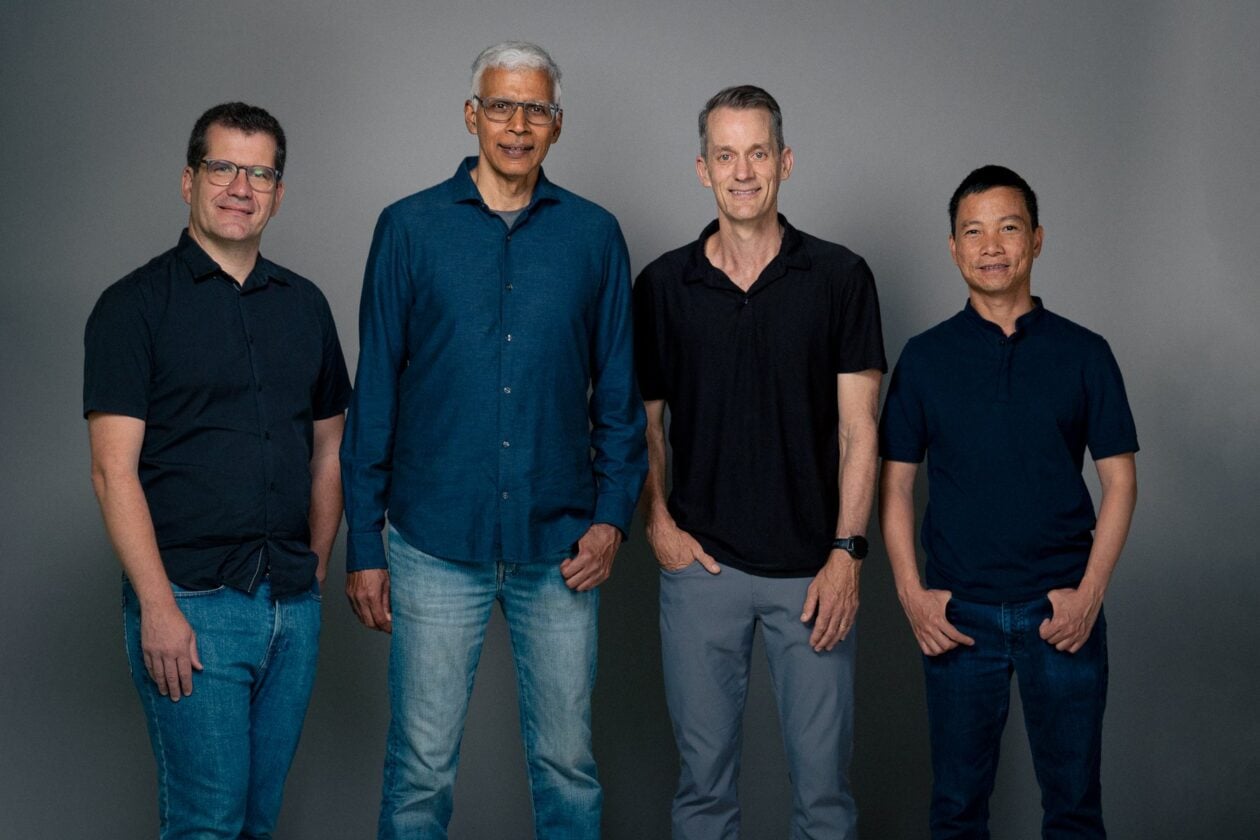
Image: From left to right Oriol Vinyals, Sanjay Ghemawat, Jeff Dean, Quoc Le
Source: Discovery Loop / Limitless
"Attention" Was Once Written by Google, but All the Authors Have Left
In 2017, Google published "Attention Is All You Need," a transformer paper that made modern AI possible. However, all eight authors ultimately left.
Former Google talents have nurtured OpenAI, Anthropic, and others. Over the years, people have often compared Google to Fairchild Semiconductor: it constantly cultivates legendary defectors, then watch helplessly as they create trillions of dollars in value outside.
This time, Google has written itself into the cap table. It spent $2.7 billion to license Character.AI and brought Noam Shazeer back as co-head of Gemini. It holds about 14% of Anthropic, valued at approximately $124 billion according to July SEC filings. It is still the founding investor of Discovery Loop—every dollar of computing burned by Dean's new company will convert into revenue for Google Cloud. At least Google is collecting the kids’ rent.
But all of this does not come without a cost. Shazeer left again this June, this time to OpenAI. Nobel laureate John Jumper switched to Anthropic the next day. Gemini 3.5 Pro was postponed in July due to coding performance issues.
On Polymarket, the probability of Google launching the top-ranked AI model this year is only about 7.6%. On various lists, Google appears quite "cooked."
What is Truly Important to Google
But beneath these surface appearances, Google's business is approaching $500 billion in annual revenue and is still accelerating. During the era of AI Overviews, the search business has grown—which analysts had been saying for three years would self-cannibalize. The cloud business is the fastest-growing segment among all hyperscalers, with a backlog of signed contracts exceeding $500 billion.
Google has search distribution, a mobile operating system, a video platform, cloud infrastructure, custom chips, and now an equity stake in every major company founded by its top talents.
The top spot in cutting-edge models rotates every few months... but distribution, infrastructure, and equity stakes will compound permanently. What changed on Wednesday was just the org chart, while the underlying "machines" remained unchanged; there are no signs in the financial reports indicating it is about to slow down.
免责声明:本文章仅代表作者个人观点,不代表本平台的立场和观点。本文章仅供信息分享,不构成对任何人的任何投资建议。用户与作者之间的任何争议,与本平台无关。如网页中刊载的文章或图片涉及侵权,请提供相关的权利证明和身份证明发送邮件到support@aicoin.com,本平台相关工作人员将会进行核查。


