Written by: Long Yue, Wall Street Insights
The US and Japan jointly intervened with nearly $100 billion to support the yen, but the market has already voted with its actions: the yen's rebound is rapidly fading.
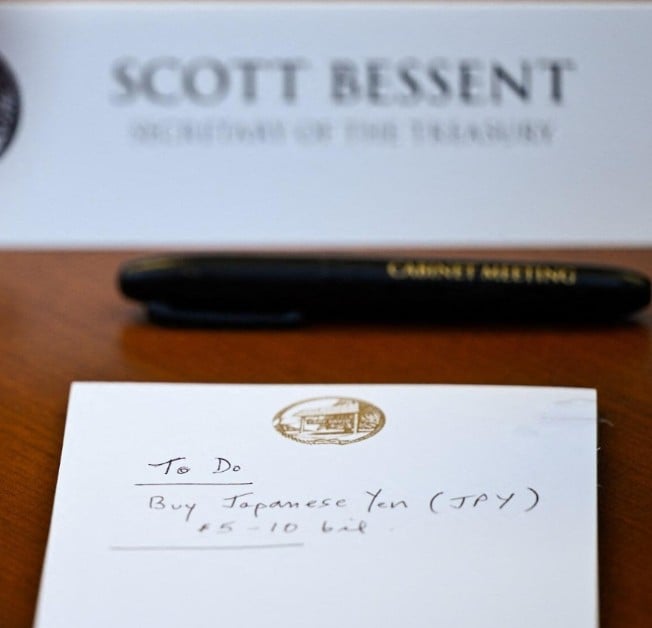
On August 3, the Japanese Ministry of Finance confirmed that it had collaborated with the US Treasury, using nearly $100 billion to buy yen within two days, setting a historical record for the scale of intervention, and warned that it would not hesitate to act again if necessary. This marks the first joint intervention by the US and Japan in the currency market since the Fukushima nuclear disaster in 2011.
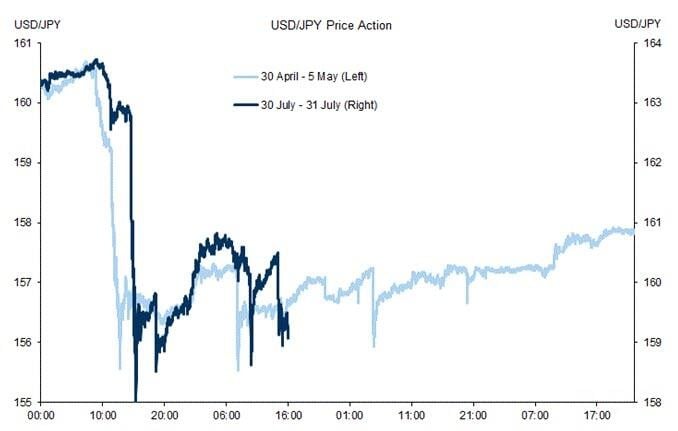
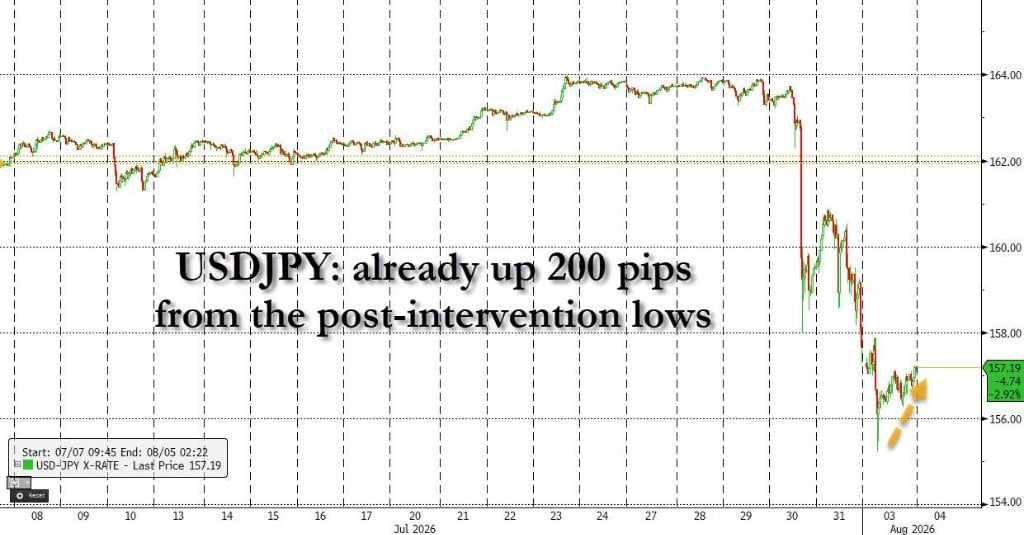
After the news, the yen initially strengthened significantly. However, the sustainability of the rebound is in doubt, as the yen has quickly fallen over 200 points from its peak after the intervention, with its price movement mirroring the trajectory after the intervention on April 30 this year—soaring briefly before being swiftly reversed by the market.
The core issue lies not in the intervention itself, but in the Bank of Japan. As long as the interest rate differential between the US and Japan does not narrow, there is insufficient reason for the yen to rebound. Goldman Sachs’ economists currently expect that the next interest rate hike by the Bank of Japan will be in January 2027, which means the short-term interest rate differential of over 200 basis points between the US and Japan will likely be maintained for a long time, "the yen is highly likely to continue weakening"—the time bought by intervention is merely temporary.
In other words, as long as the Bank of Japan does not raise interest rates, intervention is like firing limited bullets in a battle you cannot win. On August 3, the US dollar index ended nearly unchanged that day, with the yen closing at 156.99, up only 0.3%.
Why is intervention difficult to effect?
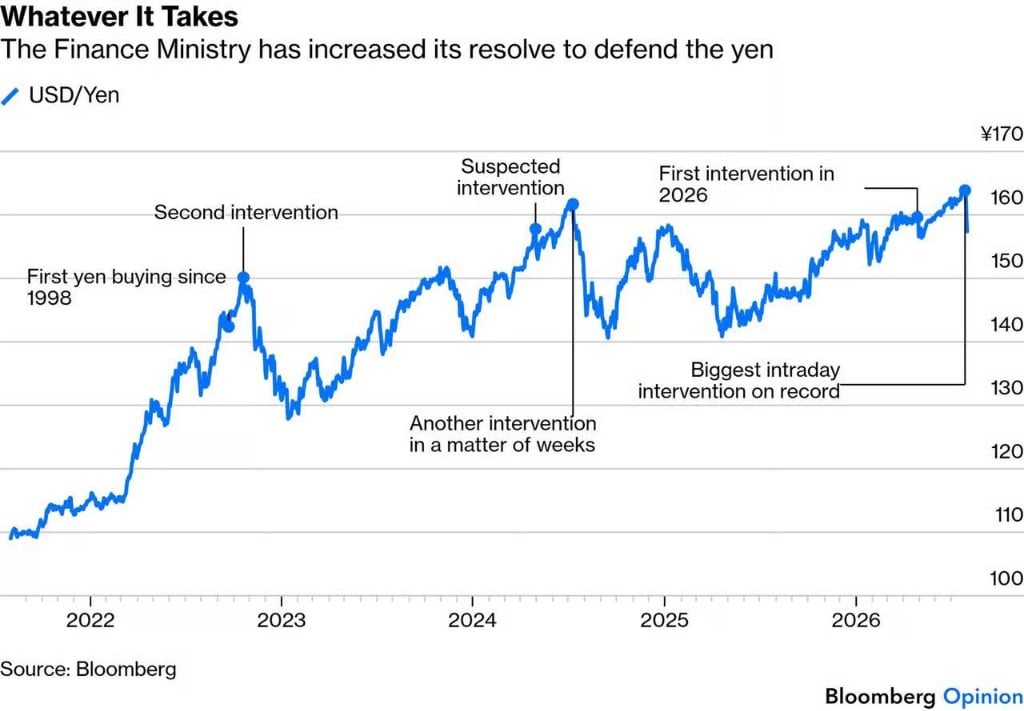
This round of intervention is unprecedented in scale. According to data from the Bank of Japan, on July 31 (Thursday), the single-day intervention was approximately 8.45 trillion yen (about $53 billion), setting a record for the largest single-day intervention; on Friday, another intervention of about 5.3 trillion yen (about $33 billion) was made. The two-day total was nearly $100 billion. Following the intervention, the dollar-yen exchange rate briefly fell to 155.20, but then rebounded over 200 points. Since September 2022, the Japanese Ministry of Finance has cumulatively intervened over $255 billion but has consistently failed to stop the long-term depreciation trend of the yen.
Despite the record scale, the Goldman Sachs research team (led by Mike Cahill) pointed out in a recent report that "the market reaction is in the historically low range for interventions, indicating that when the depreciation of the yen aligns with macro and market fundamentals, the marginal effect of interventions is diminishing—although still having some effect."
Why is intervention difficult to effect? Analysts believe the fundamental logic of yen depreciation is the interest rate differential.
The US federal funds rate is much higher than the policy rate of the Bank of Japan, and the differential of over 200 basis points means that shorting the yen and holding dollar-denominated assets make profits every day. As long as this differential exists, carry trades will be incentivized to continue.
Bloomberg columnist John Authers pointed out that the increasing frequency of interventions by the Japanese Ministry of Finance precisely indicates that the effectiveness of each intervention is becoming worse. The market knows the Ministry of Finance has limited ammunition, is aware of Japan’s poor fiscal condition, and knows that the only reliable means to truly reverse the yen's downward trend—significant interest rate hikes—would require an increase of about 100 basis points, which is nearly impossible in the foreseeable future.
Why is the Bank of Japan reluctant to raise interest rates?
Intervention can buy time but cannot change direction. The Bank of Japan is the true variable.
Currently, the policy rate of the Bank of Japan is 1%, the highest since 1995, but shortly after the intervention occurred last week, the Bank of Japan chose to stand still and did not raise rates.
Jesper Koll, a long-term investment banker in Tokyo, directly asked:
Bank of Japan Governor Kazuo Ueda confidently told us that he expects Japanese inflation to accelerate back above 2% in the second half of the fiscal year, but then he chose not to act. So, why not raise rates? Is it because Japan's financial system is too fragile, and speeding up rate hikes would trigger a banking crisis?
The answer is almost laid out on the table. More than half of the debts in the Japanese government bond market are held by the Bank of Japan—because there are not enough other buyers. Once interest rates rise rapidly, the prices of Japanese government bonds will fall sharply, posing a risk of collapse for the entire fiscal structure.
Robin Brooks, former Goldman Sachs foreign exchange strategist and current Brookings Institution researcher, stated more plainly:
The yen is falling because Japan's high public debt prevents the country from allowing yields to rise freely.
He believes the depreciation of the yen is essentially "a symptom of a concealed debt crisis."
Suppressed bonds make the yen the most direct symptom of a concealed debt crisis.
Without an interest rate hike, everything is temporary
Goldman Sachs' overall conclusion is: in the short term, the asymmetric risk of the dollar/yuan points to further downside; if the exchange rate breaks above 158 again, authorities are likely to intervene once more; technically, if 155 breaches effectively, the next important support is around 152.
However, in the medium term, the Goldman Sachs research team (led by Mike Cahill) believes that
unless there is a substantive change in the policy mix or the global growth outlook, encouraging repatriation of capital will be the most powerful long-term policy tool to affect the yen's exchange rate.
Implied is that both intervention and gradual interest rate hikes are insufficient to sustainably strengthen the yen.
Praneet Shah, global head of foreign exchange options trading at Goldman Sachs, similarly warned that "in the medium term, the policy backdrop of loose monetary and loose fiscal remains bearish for the yen unless Japan genuinely raises its policy rate and achieves substantial foreign direct investment inflows. Additionally, as intervention reserves deplete, Japan's future ammunition for exchange rate defense will be reduced, possibly accumulating risks for larger-scale yen depreciation."
Jesper Koll, a long-term investment banker in Tokyo, although he considers himself an optimistic observer of the Japanese economy, also admitted: "The yen weakening remains a high-probability path. The Bank of Japan's inaction is driven by concerns of the secondary banking system; while new fiscal policy will almost certainly ultimately lead to inflation, the risks still asymmetrically favor a weaker yen."
In other words, intervention can buy time, but cannot purchase a trend. Without an interest rate hike by the Bank of Japan, any intervention will eventually be digested by the market.
The greatest tail risk: the collapse of carry trades
The reason why yen intervention stirs the nerves of global markets also lies in a deeper reason: the massive carry trades in yen.
Over the past five years, the strategy of borrowing low-interest yen to invest in high-yield assets has returned even more than the total return of the S&P 500. The premise of this trade is the slow and predictable depreciation of the yen.
Once the yen appreciates rapidly, forced liquidation of carry trades will shock global risk assets. Two years ago (August 2024), carry trades had already been partially liquidated in a "chaotic manner," causing severe turbulence in global markets.
This round of intervention has clearly shaken carry trades out of the previously stable upward trend.
Goldman Sachs trader Jia Wen Tuea pointed out that this is also one of the practical logics for US involvement in the intervention: "Japan is the largest foreign holder of US Treasury debt. If Japan intervenes alone, it would need to sell US Treasuries in exchange for dollars to buy yen, pushing US yields higher—which is also a headache for Washington."
Goldman Sachs: the next interest rate hike may be in January 2027
Goldman Sachs economists are counter-cyclical in their judgment: the inflation data is insufficient to support the Bank of Japan in raising interest rates in September, maintaining the baseline forecast— the next interest rate hike will be in January 2027.
If this prediction comes true, it means that the US-Japan interest rate differential will maintain the status quo for a considerable period, the logic of carry trades will remain valid, and the structural depreciation pressure on the yen will not disappear.
The more direct consequence is that the US Treasury's joint intervention this time will face significant losses—yen bought with real cash may depreciate considerably with the yen's renewed decline.
Koll concluded that although he has an optimistic view of the Japanese economy, he also admitted that "the yen is highly likely to continue weakening," and the risks still asymmetrically favor further depreciation of the yen.
免责声明:本文章仅代表作者个人观点,不代表本平台的立场和观点。本文章仅供信息分享,不构成对任何人的任何投资建议。用户与作者之间的任何争议,与本平台无关。如网页中刊载的文章或图片涉及侵权,请提供相关的权利证明和身份证明发送邮件到support@aicoin.com,本平台相关工作人员将会进行核查。


