Author: Matt Crosby
Translation: Blockchain in Plain Language
The overall Bitcoin network hash rate has been declining for several months, and miner difficulty has just recorded one of the steepest declines in history. Generally speaking, this story is not complicated: miners are shutting down their machines due to economic pressures. However, this time is different in that the stocks of listed mining companies are experiencing one of the strongest performances in years, while BTC itself has been severely hit. In every previous round of miner capitulation, miner pressure and price pressure often occurred simultaneously; now the two are beginning to diverge, and the market seems not to have truly factored in what this divergence means for long-term hash power.
If you are in a hurry, here are a few key points:
The overall network hash rate is signaling one of the longest miner capitulation signals in Bitcoin's history.
Miner difficulty has dropped 19.9% from its peak, marking the third-deepest retracement since the advent of dedicated mining hardware.
Despite miners selling thousands of Bitcoins, mining company stocks have significantly outperformed BTC over the past year.
The block reward income in BTC has just hit the lowest single-day level on record.
The average daily transaction fee income over the past 28 days is even insufficient to cover the subsidy for one block.
Miner capitulation is indeed happening
In Bitcoin's history, there are very few instances where the hash rate retracement lasted longer than this round. Miner difficulty is also trending downwards, which precisely indicates that the protocol mechanism is functioning as designed: every 2,016 blocks, or approximately every two weeks, the network resets its target difficulty to ensure blocks are still produced approximately every ten minutes. With fewer machines participating in hash computations, the target difficulty naturally decreases. Currently, miner difficulty has fallen 19.9% from its peak; since ASICs replaced GPUs as the mainstream mining machines, only twice before has there been a deeper retracement than this.
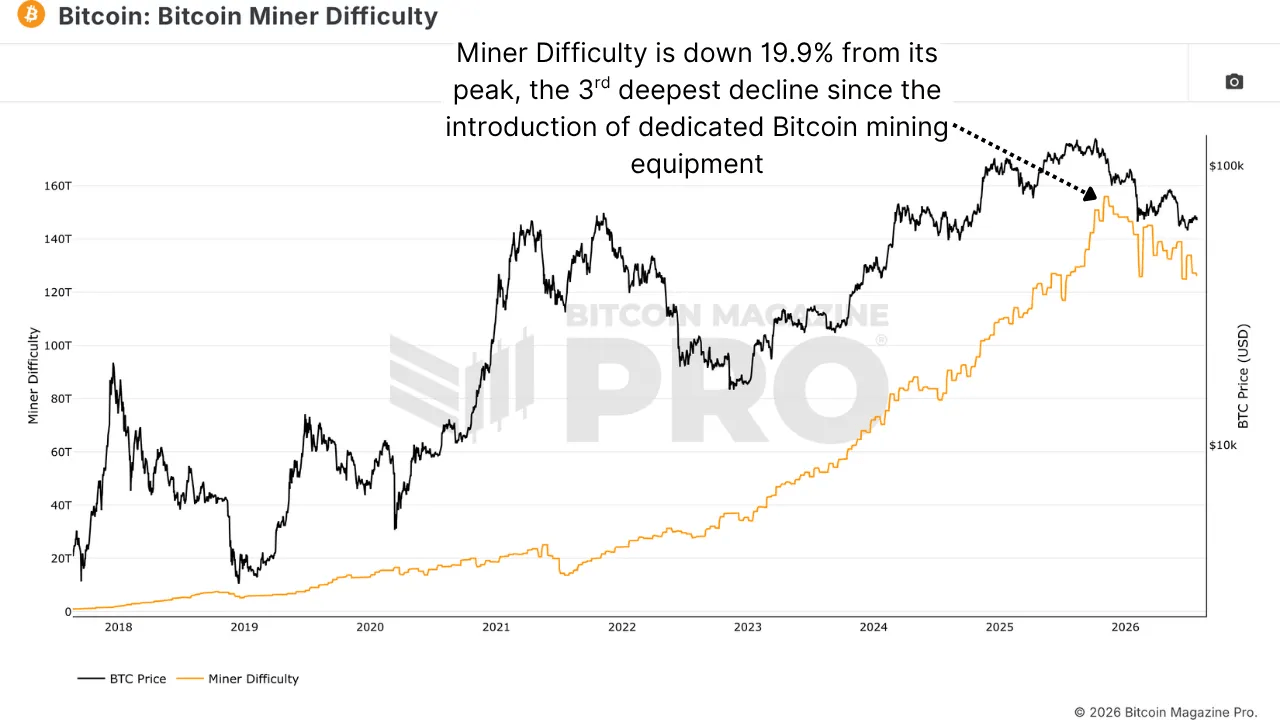
Figure 1: Miner difficulty has dropped 19.9% from historical peak.
The only other two comparable periods lasted about as long as this one. The deeper one occurred after China fully cracked down on Bitcoin mining, which was one of the easiest types of events to understand: policy directly forced miners to shut down, causing hash power to collapse instantly, and any observer could extrapolate the next step—those machines would seek cheaper electricity and reconnect to the network elsewhere.
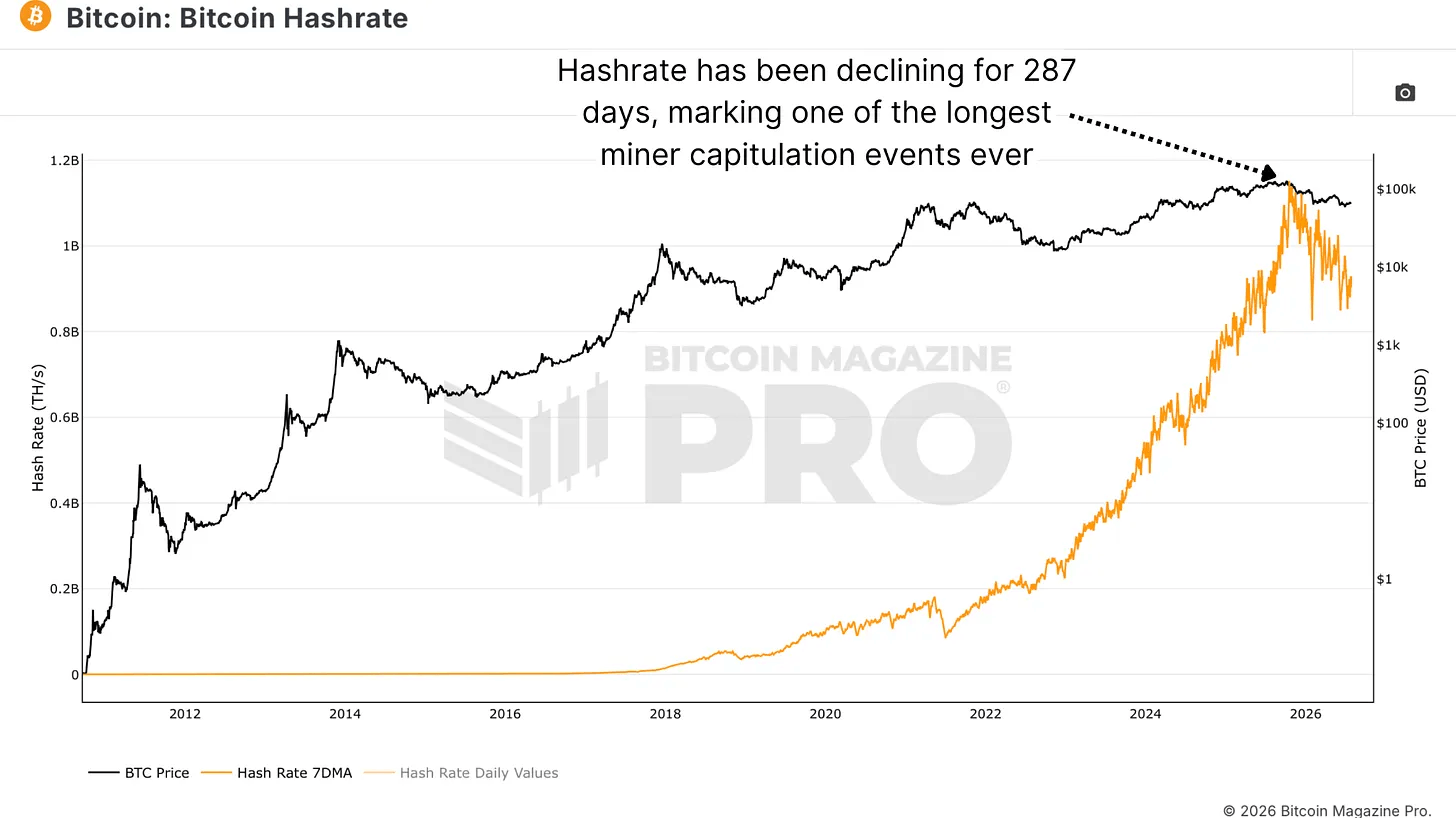
Figure 2: Bitcoin network hash rate has been declining for 287 days.
Why are mining company stocks rising instead?
Over the past year, BTC has cumulatively fallen about 46%. However, the largest listed mining companies have significantly risen during the same period, with the strongest performer gaining even over 430%. This is not the typical behavior of this group of assets. Historically, mining company equities are often viewed as "leveraged Bitcoin," meaning that when the market drops, they tend to drop harder, and when the market rises, they often rise more sharply. Therefore, such a significant divergence as this is quite rare.
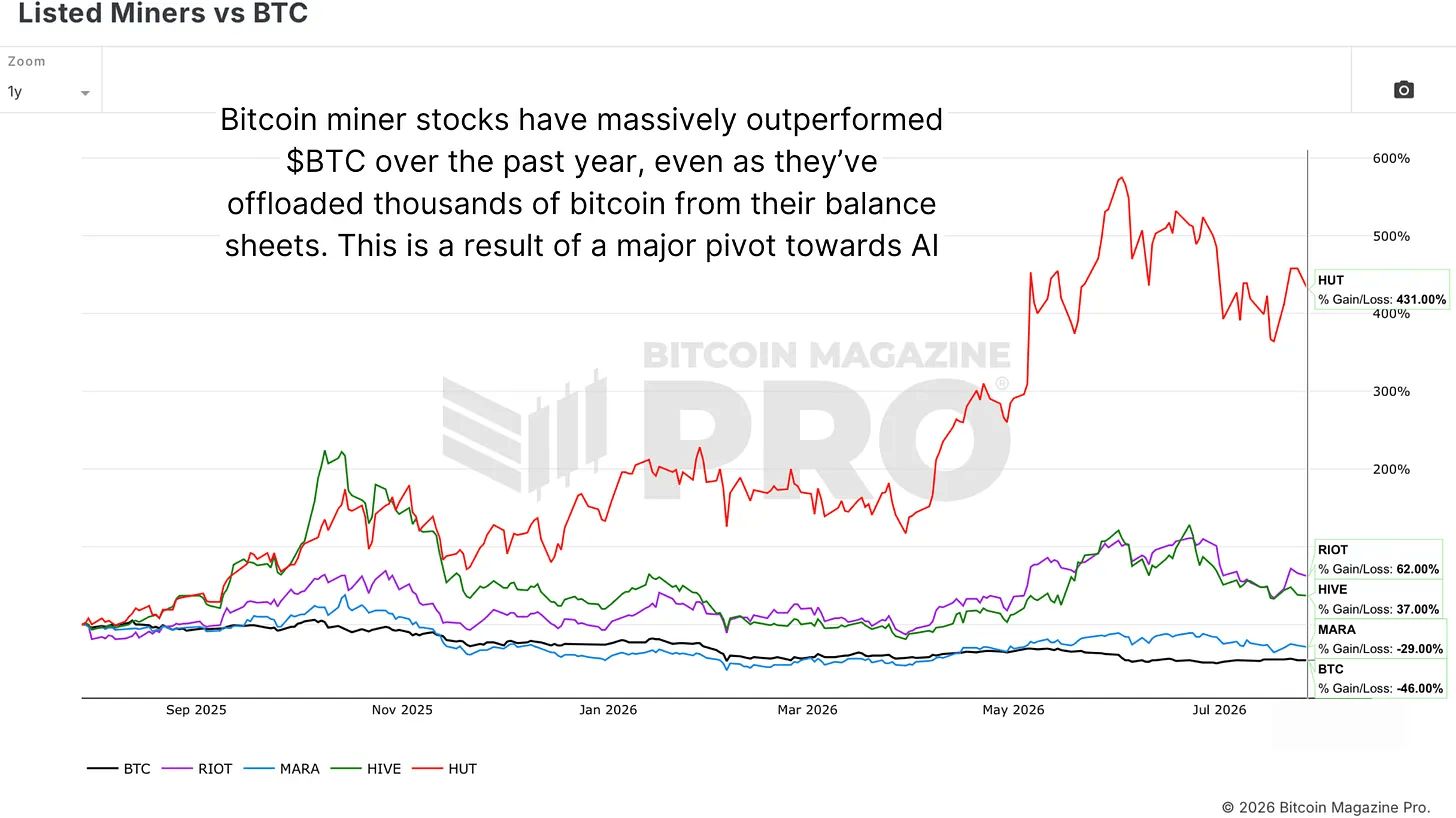
Figure 3: Relative performance of listed mining companies versus BTC over the past year.
What truly drives all of this is the AI narrative. For years, Bitcoin and the largest AI ETFs have shown correlated movements, with certain phases reaching a correlation of 0.8 to 0.9. However, this relationship has now reversed: AI continues to rise, while Bitcoin is weakening.
Block subsidies are thinning
Miners recently recorded a historical low in daily income from block rewards (in BTC). Part of this is due to the decline in hash rate—block generation speed will be slower than ten minutes until difficulty adjustments catch up; but the main reason is simply that the protocol is operating according to established rules. Block subsidies are halved every four years and will continue to be halved until no new coins can be issued.
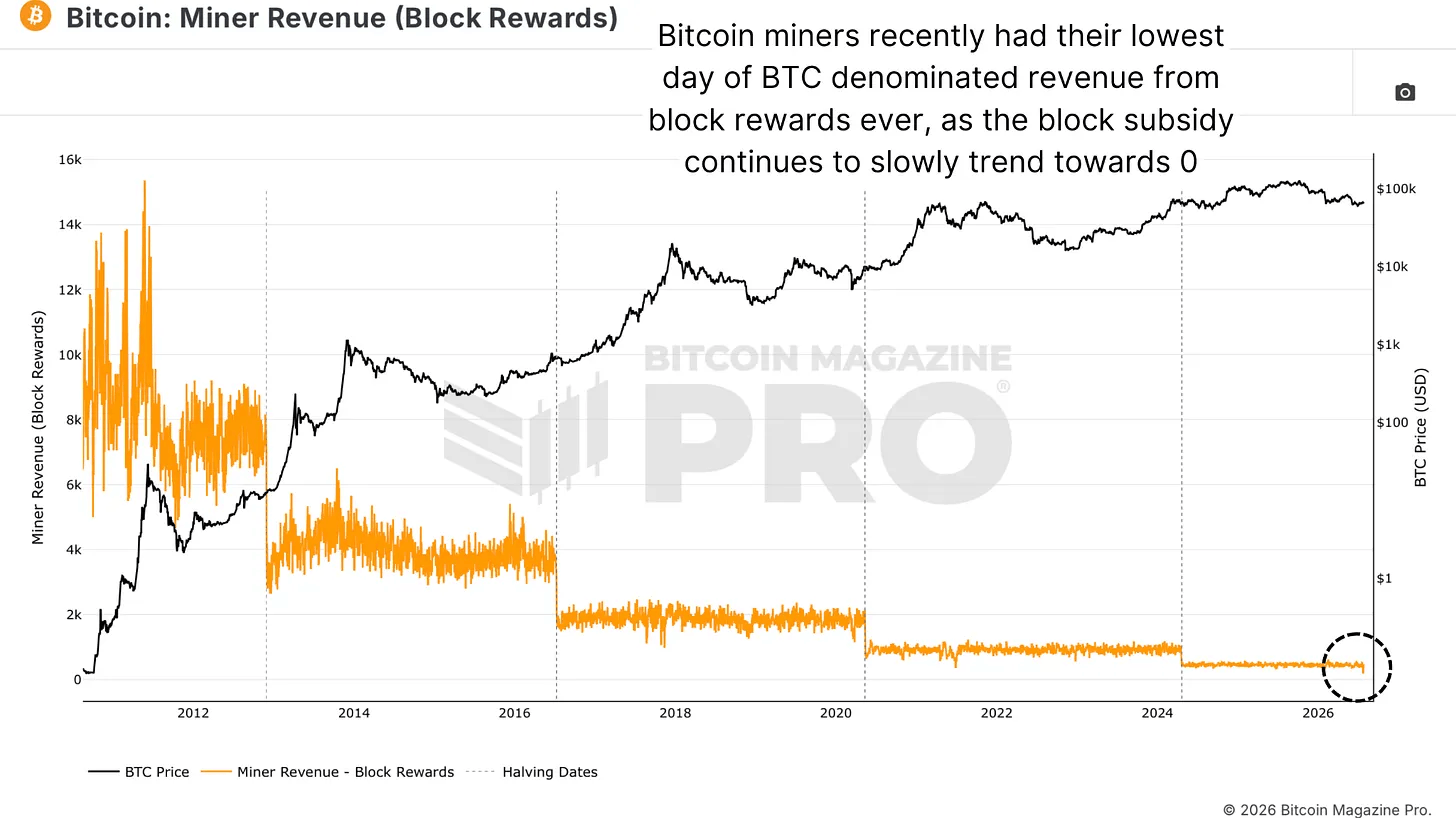
Figure 4: Miner block reward income in BTC has fallen to a new historical low.
Since the first halving, every cycle has seen similar counterarguments raised: the price will compensate. In other words, although there are fewer coins generated per block, as long as each coin is worth more, income in USD can still be maintained. This logic has indeed held so far. The Puell Multiple, which measures miner income prosperity, is currently around 0.75, meaning miners' current income is about three-quarters of the average level over the past year. In translation, this roughly corresponds to current daily income of about 30 million USD, while the longer-term average is close to 40 million USD.
Who will fill this gap?
Another answer has always been transaction fees, and it has been since the very beginning. One day, block subsidies will drop to zero; at that point, the network's security budget must be independently supported by transaction fees, otherwise, as subsidies disappear, the security budget will shrink as well.
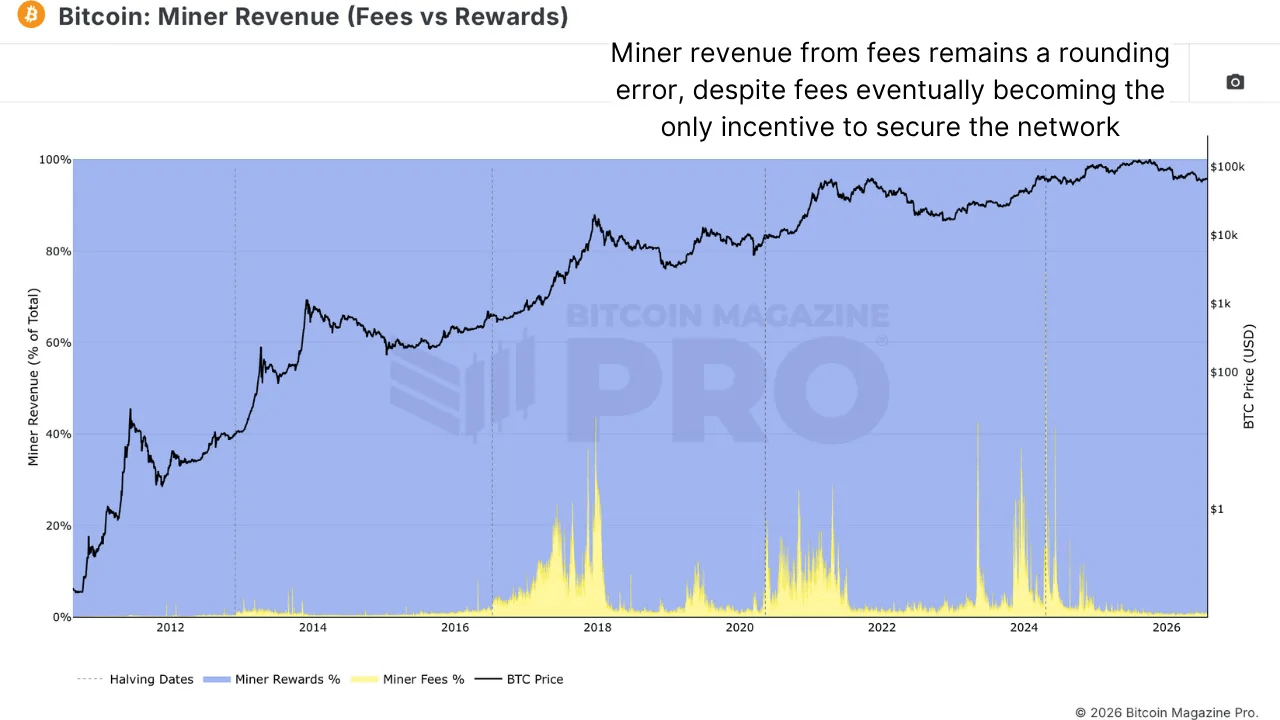
Figure 5: The proportion of miner transaction fee income in total miner income.
But the reality is still far from that point. Currently, miners earn about 30 million USD daily, of which transaction fees contribute only about 200,000 USD. In other words, the average transaction fee income over the last 28 days does not even cover the subsidy for a single block, while the Bitcoin network generates about 144 blocks each day. Regardless of how the transaction fee market evolves in the future, at least for now, its coverage of the network's security budget is only enough to support about ten minutes.
What does this mean?
Today's Bitcoin is certainly far from any security risks, and this article does not directly judge the price. However, the shape of this round of capitulation is clearly different from that of previous rounds. Miners have simply found a more profitable hardware use than mining, and this change is occurring simultaneously with falling coin prices, shrinking block subsidies, and almost stagnant transaction fee income.
In a bear market, no one wants to hear a new pessimistic narrative, and I know this article reads roughly like that. But conversely, the real problems that need to be addressed are often only seriously faced during bear markets. In the long term, the miner incentive mechanism will either be consciously designed and repaired, or it will have to continue to rely on higher coin prices to temporarily mask the issue.
免责声明:本文章仅代表作者个人观点,不代表本平台的立场和观点。本文章仅供信息分享,不构成对任何人的任何投资建议。用户与作者之间的任何争议,与本平台无关。如网页中刊载的文章或图片涉及侵权,请提供相关的权利证明和身份证明发送邮件到support@aicoin.com,本平台相关工作人员将会进行核查。


