Author: Digital Life Kazik
If you're going to talk about the most heated and discussed topic in the AI industry recently, it must be a story woven together by a few seemingly unrelated words: Old Huang, Anthropic, kimi, and open source.The story goes like this.A few days ago, on July 24, Huang Renxun posted his first message on X.
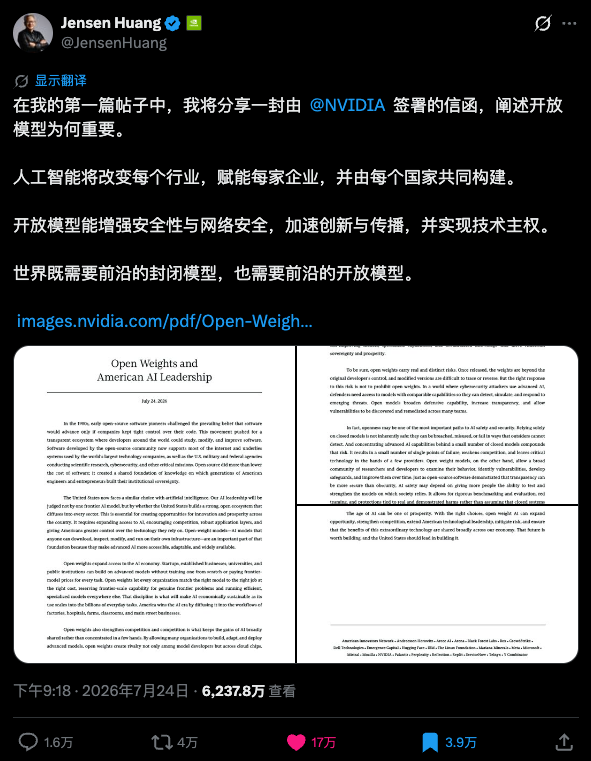
This man, who might be the hottest in the AI circle, even registered for X to publish this open letter.The letter is titled “Open Weights and American AI Leadership,” referring to the opening weights and the leadership of AI in the United States.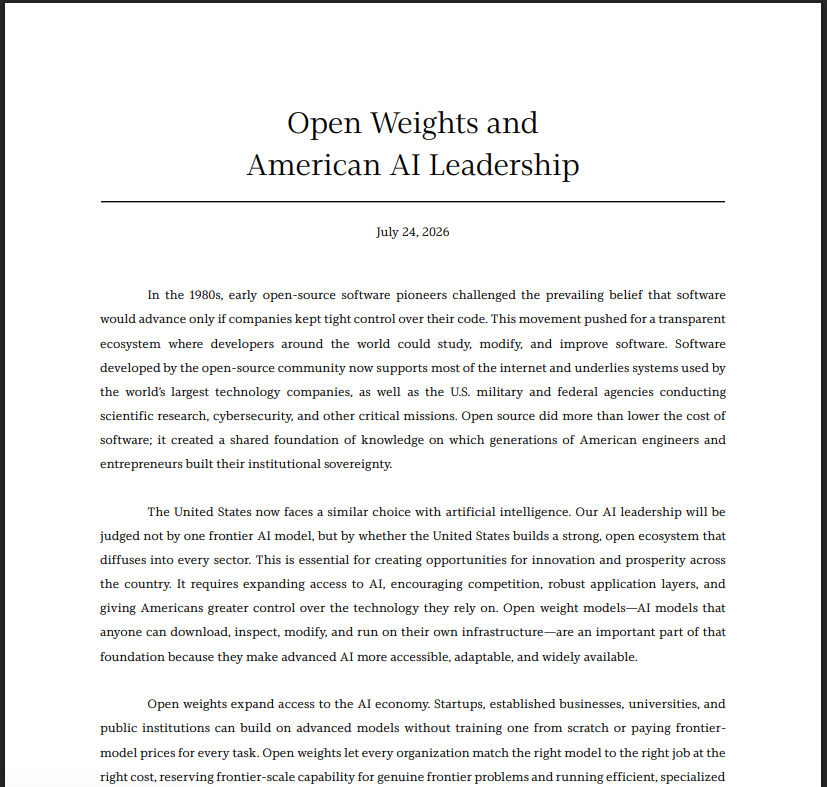
The gist is that AI will transform every industry, drive every company, and be built by every country.Open models can enhance safety, accelerate innovation, and also bring about technological sovereignty.This world needs both the most advanced closed-source models and the most advanced open-source models.We cannot sanction open-source models.The reason Old Huang is so anxious is actually due to prior context.Let’s rewind to 11 days ago when a landmark event occurred.In the early hours of July 17,Kimi K3was officially released.
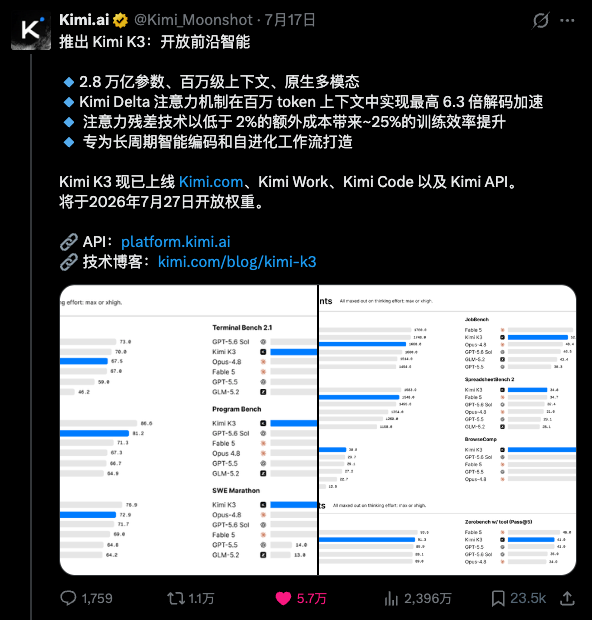
With 28 trillion total parameters, 104 billion activation parameters, native visual capabilities, and a context of 1 million tokens.
The key point is that Kimi promised at the time that the model weights would officially be open-sourced on July 27 (last night).
This is the world’s first open-source 3T-level model. A Chinese team, with far less computing power, created something that nearly approaches the capabilities of the world’s strongest closed-source model and plans to hand over the weights to the whole world.
This changed the atmosphere in the U.S. significantly.On July 22, Michael Kratsios, head of the White House Office of Science and Technology Policy, publicly accused Shadows of the Moon, claiming that the development of Kimi K3 used extensive distillation of Claude Fable 5.
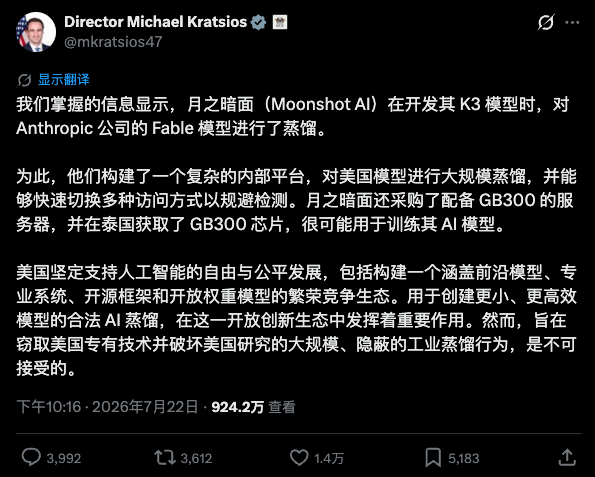
Interestingly, check out the comments section. Everyone can see the voice of the crowd.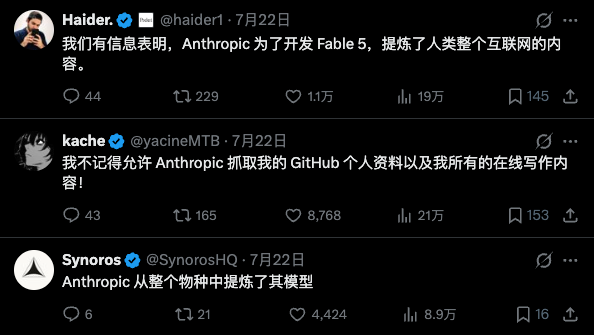
Then, the U.S. Secretary of the Treasury, unfortunately, added fuel to the fire by mentioning trade blacklist and sanctions.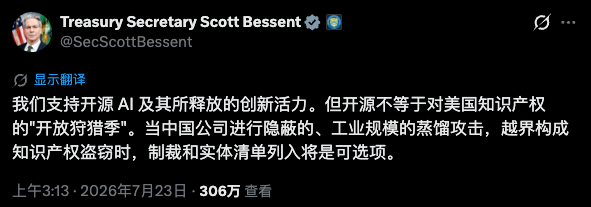
The comments section was completely overrun.
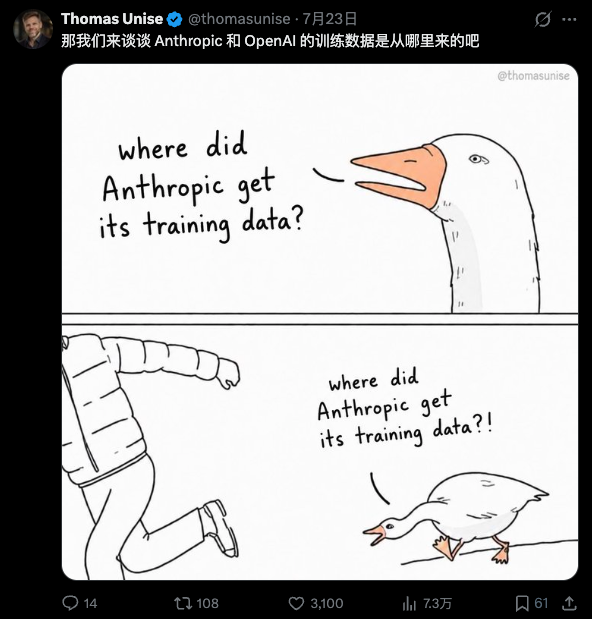
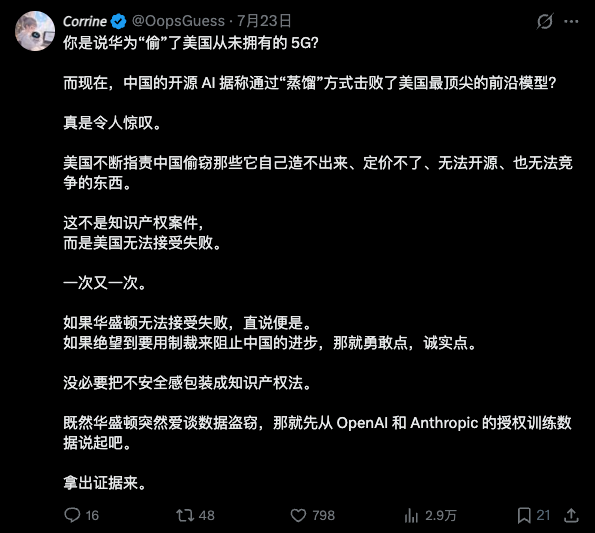
This matter escalated rapidly; what was originally a competition about model capabilities and open-source approaches was swiftly dragged into issues of intellectual property, national security, export controls, and Sino-U.S. technological competition.At this juncture, Huang Renxun stepped up.
He gave an interview, openly opposing the ban on Chinese open-source models.
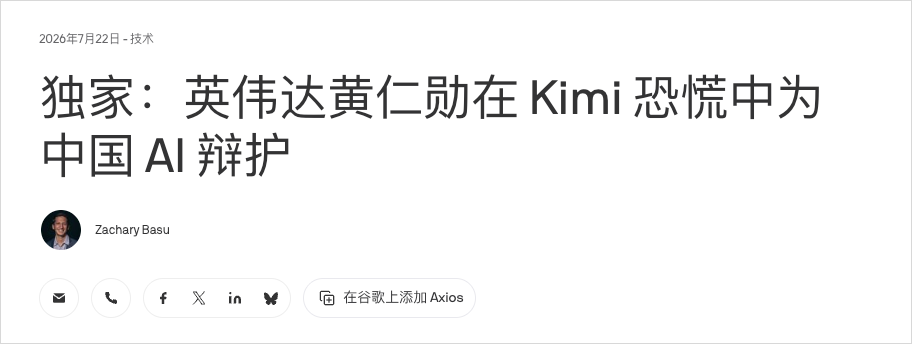
Two days later, he posted his first message on X, using an open letter to convey to Washington that open models are vital to American innovation, competition, security, and technological sovereignty; you cannot ban them, you cannot sanction them, we must encourage open-source.
Truthfully, Old Huang is genuinely concerned for his card sales.Then, at the bottom, a long wall of logos appeared, with the entire tech industry starting to line up to sign the open letter.When the open letter was first published, there were 25 companies and organizations that signed.
NVIDIA, Microsoft, Meta, IBM, Dell, Palantir, Mistral,Hugging Face, and so on.
By the weekend, the list began to grow wildly.
OpenAI showed up, Google showed up, SpaceX showed up, AMD, Cisco, Cloudflare, GitHub, Linux Foundation, Mozilla, Vercel, Y Combinator, OpenClaw, and others joined in as well.
By the time I was writing this article, there were already 77 signatories.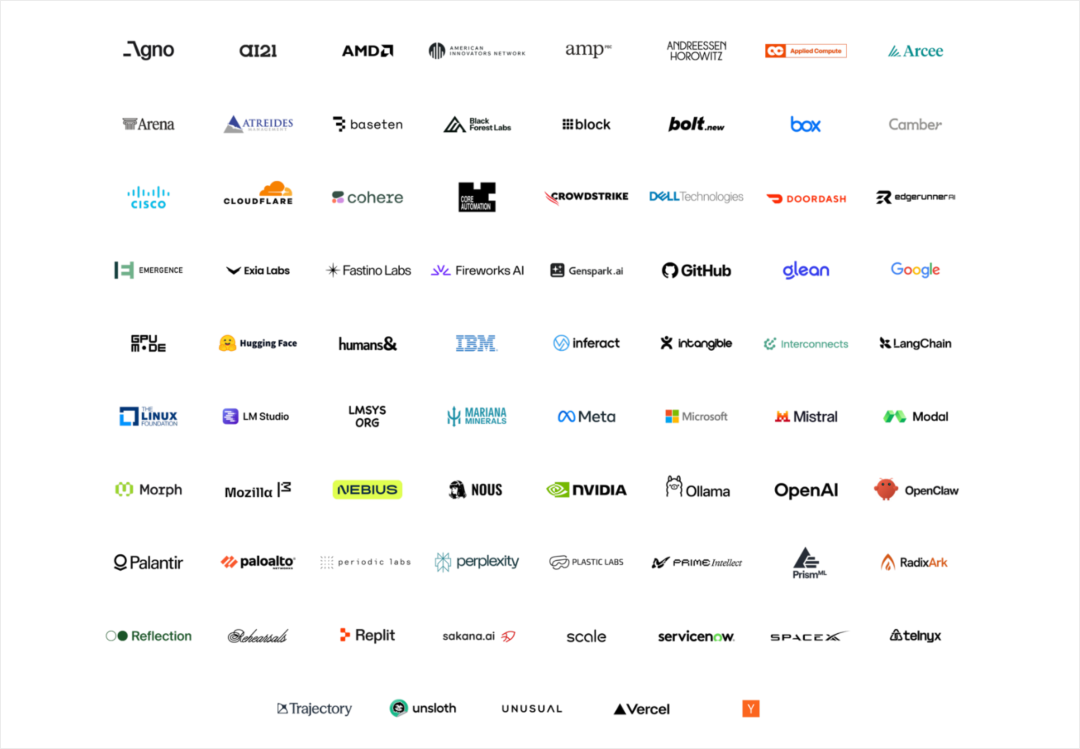
Numerous big names were also fervently supporting the cause.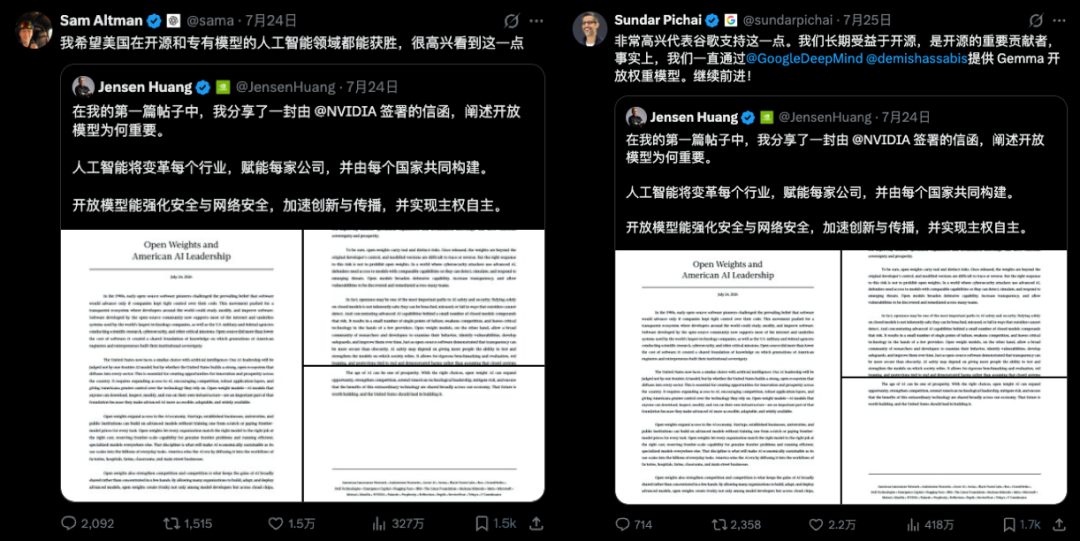
It has been a long time since I’ve seen such a gathering rise up together, united in purpose.However, the attentive might notice that the logo wall above is almost gathering most of the cutting-edge tech companies in the U.S.; even NVIDIA and AMD are shown together, but you will find a mysteriously absent familiar name.Anthropic.I feel this world-renowned painting could be renamed “Where is Anthropic?”Some internet users even humorously created a video about it; I laughed hard, and I must show everyone. Already followed
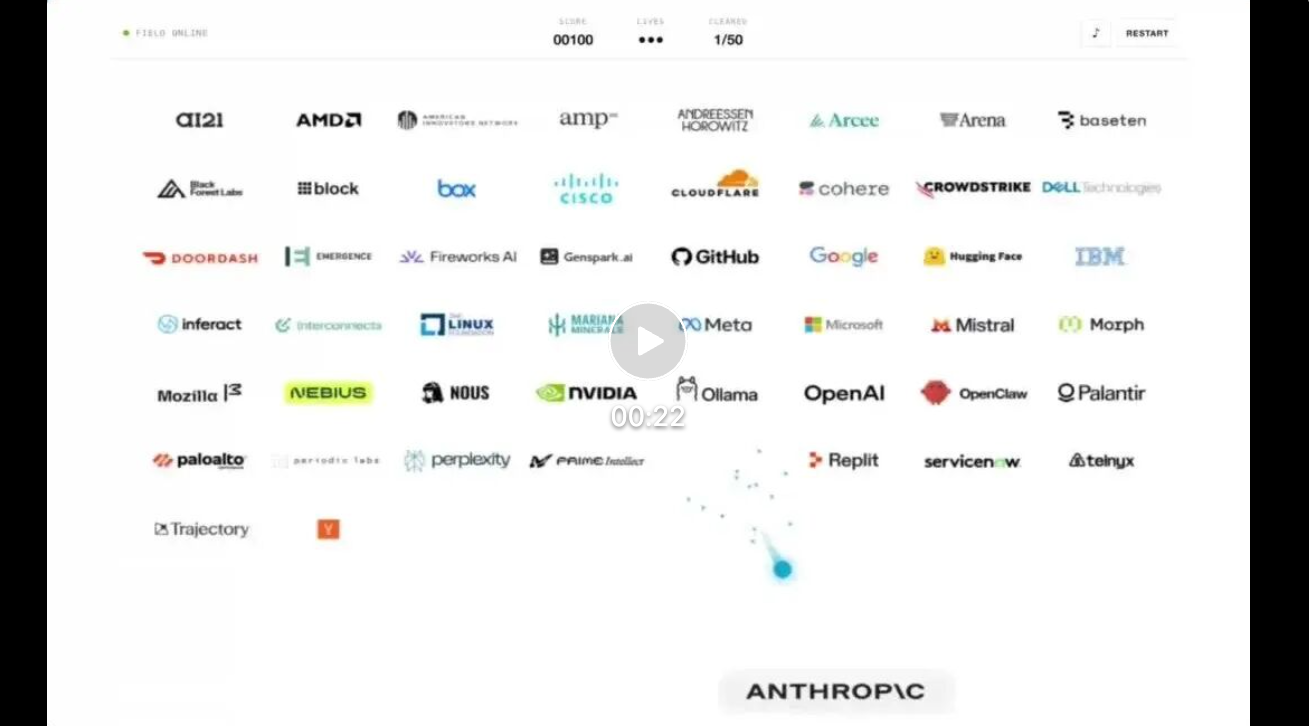
And while Anthropic played dead, the American tech giants joined forces and launched a rebel letter on Twitter.The trigger for this event happened last night, at 23:13 on July 27, when Kimi K3 was officially announced to be open-sourced.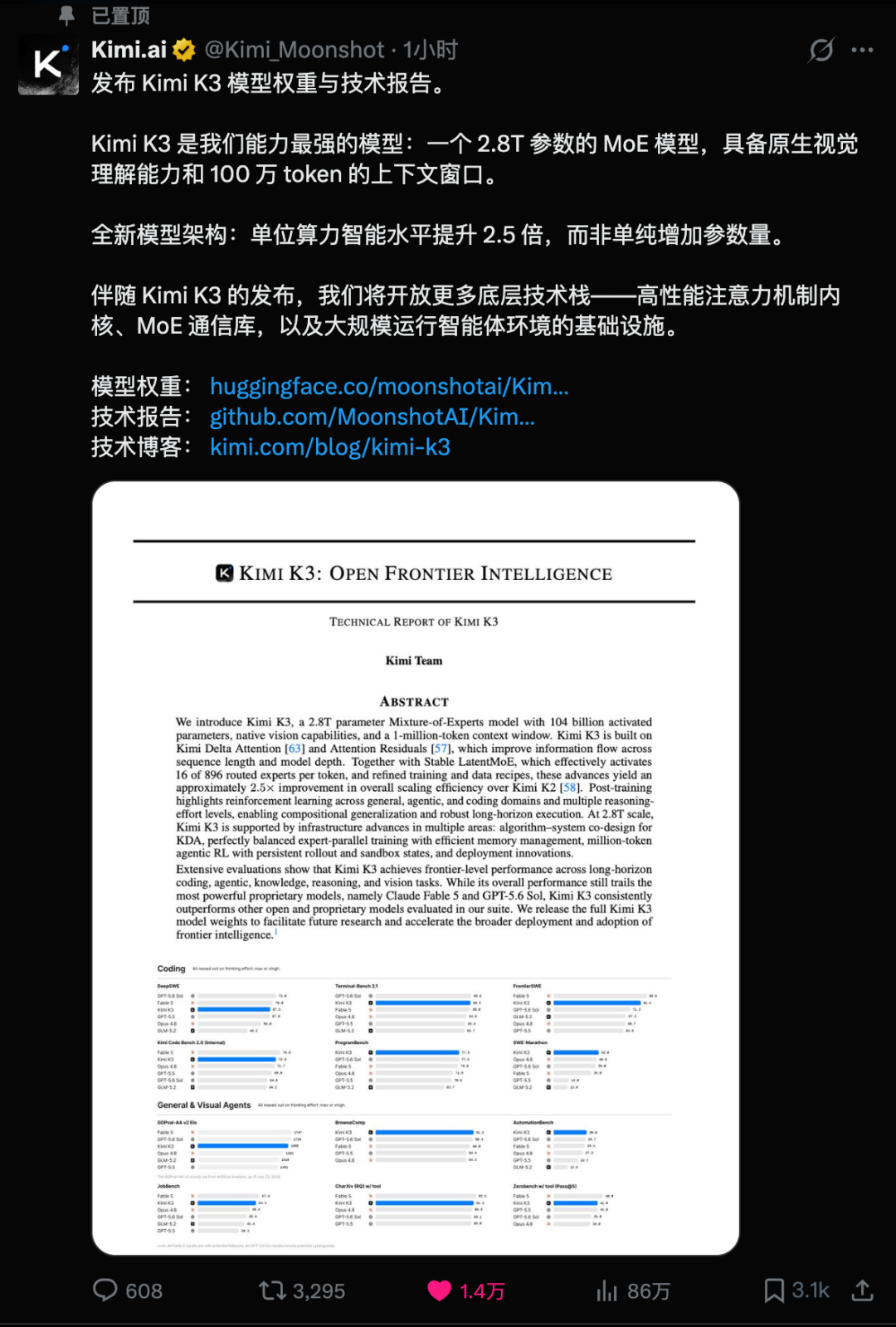
Moreover, the level of open-sourcing far exceeded my expectations.I initially thought it was just the model weights that would be open-sourced.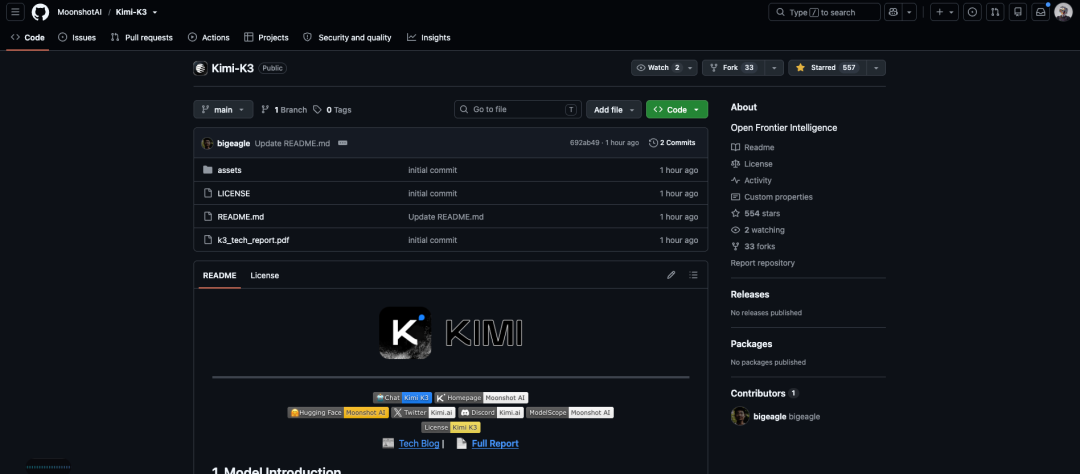
As it turns out...
Model weights, open-sourced.
A detailed technical report was also released.
The keyInfra used to train K3 was also open-sourced.
Everything is open...
Let me list a few things.
Kimi K3 model weights, a 28 trillion parameters MoE model, has a total of 896 experts, with 16 activated per token.
Then there is the complete technical report for K3, spanning 47 pages.
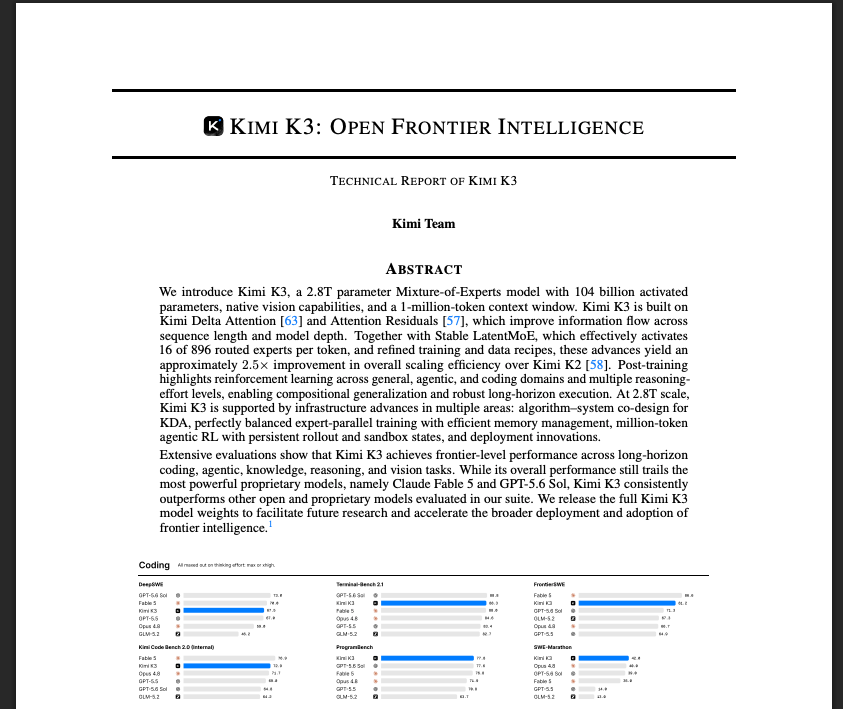
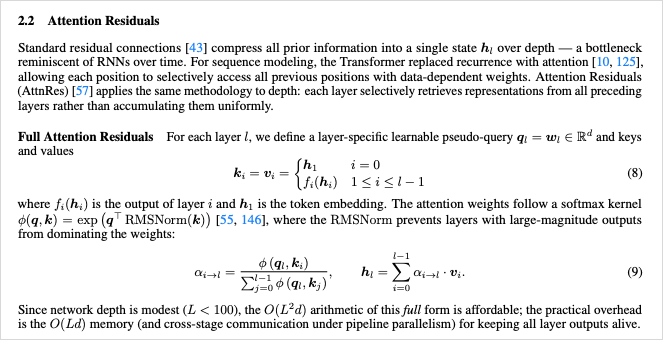
This includes the architectural details of KDA and Attention Residuals, explaining how they mixed KDA and Gated MLA in a 3 to 1 ratio and how to allow information to flow across dozens of layers.
There’s also Stable LatentMoE.
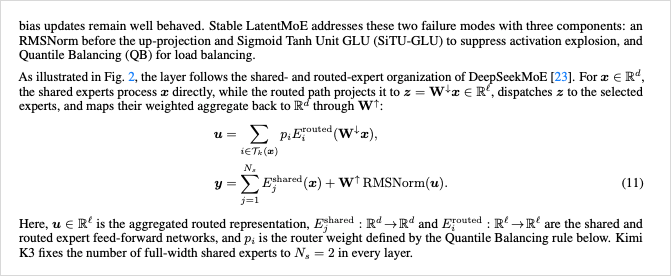
With 896 experts activating only 16, the level of sparsity is absurd; Kimi used SiTU GLU and Quantile Balancing to keep this extreme sparse training stable.
 There’s also MoonViT V2, a reinforcement learning infrastructure with a million-token context, large-scale task synthesis, post-training methods, and nearly 20 complete results from internal evaluation sets are also released.
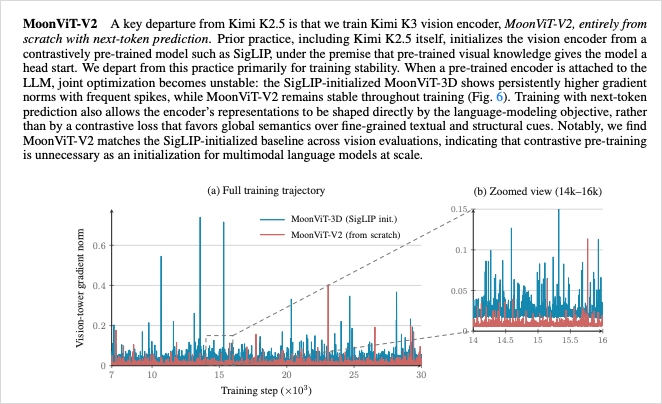
This technical report is very detailed and solid; I highly recommend reading it.
In addition to the technical report, there are also open-sourced key infra technologies.
MoonEP, a communication library specially designed for ultra-large-scale MoE expert parallelism.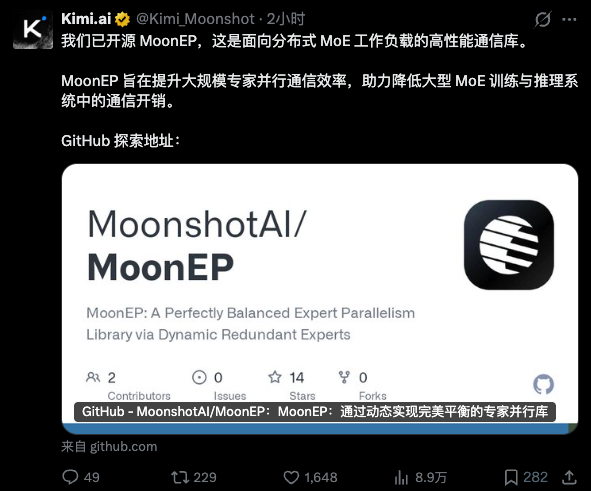
During MoE training, it often happens that some experts are overworked while others are underutilized, causing all GPUs to wait for the busiest card.
MoonEP dynamically replicates a small number of popular experts based on the current routing results, ensuring that each card receives the same amount of tokens while maintaining static memory shape, avoiding fragmentation in training that leads to OOM.
This already falls into very foundational and valuable assets in ultra-large model training.
FlashKDA, a high-performance operator for Kimi Delta Attention.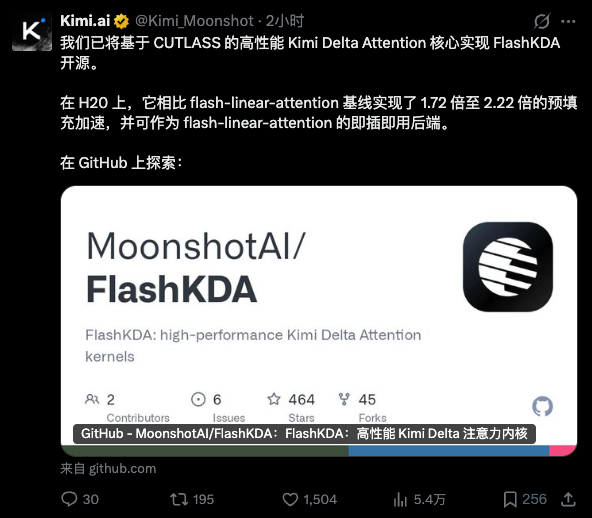 It is implemented using CUTLASS on NVIDIA H20, and compared to the baseline of flash linear attention, the pre-fill speed increases from 1.85 to 2.31 times, and it can be directly connected to existing flash linear attention backends.
Next, there’s AgentENV.
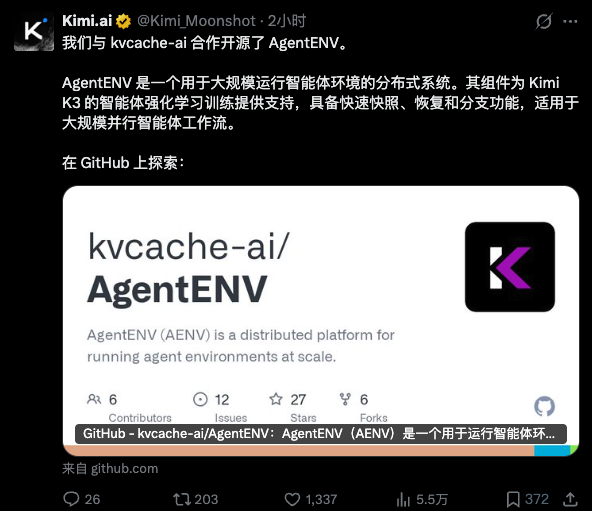
This is a distributed agent sandbox system created by Kimi and KVCache.ai, and it serves as the foundational layer for K3 to conduct large-scale agent reinforcement learning.
It can simultaneously launch massive Firecracker micro-VMs across numerous machines, with environment recovery time under 50 milliseconds and pause time under 100 milliseconds, and it natively supports snapshots, recovery, and forking.
Once an agent reaches a critical node, it can directly branch into dozens of non-interfering trajectories to continue parallel exploration.
Although I am not very familiar with foundational technologies and only possess some shallow knowledge, from these technologies alone, I already feel the effectiveness.
It indeed feels like they have laid everything bare.
MoonEP addresses communication and load balancing for ultra-large MoE models.
FlashKDA tackles operator efficiency for the new attention architecture.
AgentENV meets the need for countless real environments required in agent reinforcement learning.
The open-source community is about to take off.
Now, I am willing to name Kimi and DeepSeek as the “Two Saints of Open Source.”
I also read the license for Kimi K3 this time.
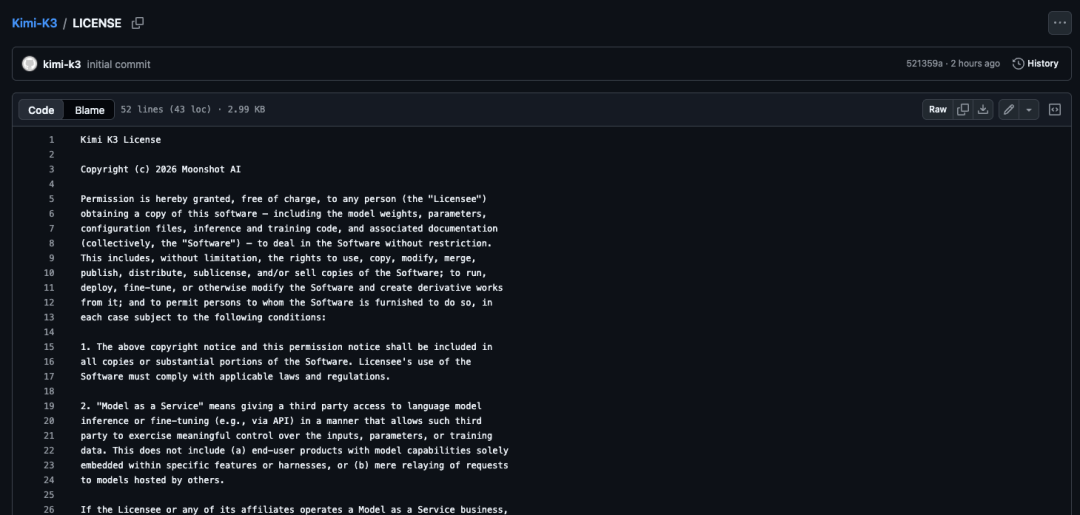
Ordinary researchers, developers, and companies can freely use, copy, modify, deploy, fine-tune, and distribute, as well as create derivative products and commercialize.
It only leaves two thresholds for ultra-large commercial use.
If you operate a model service business and your company and affiliates have a total income exceeding 20 million USD for 12 consecutive months, you need to sign an agreement with Shadows of the Moon.
If the commercial product using K3 has more than 100 million monthly active users, or monthly income exceeding 20 million USD, the product interface needs to prominently display Kimi K3.
Yes, it just needs to prominently display Kimi K3.
Buddha...
People have already said that if Kimi K3 can bring them 20 million USD in a single month, they wouldn’t just display Kimi K3’s brand logo; they could tattoo Kimi’s logo on their butt, or even get two tattoos.
On this evening, with the open-sourcing of Kimi K3, I feel like the entire event has reached its climax, with public opinion overwhelmingly one-sided.
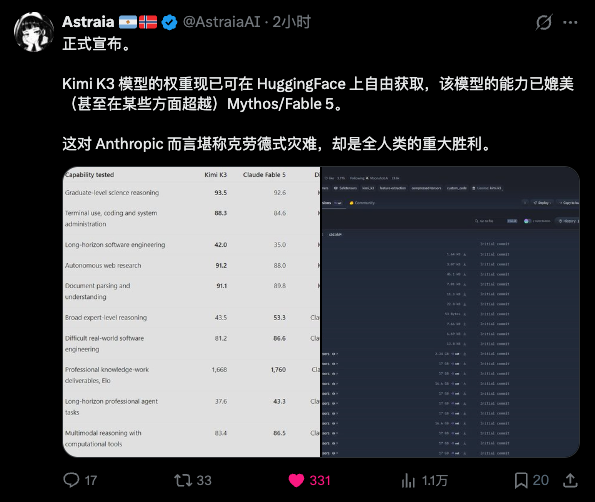 It has also made history on Hugging Face.
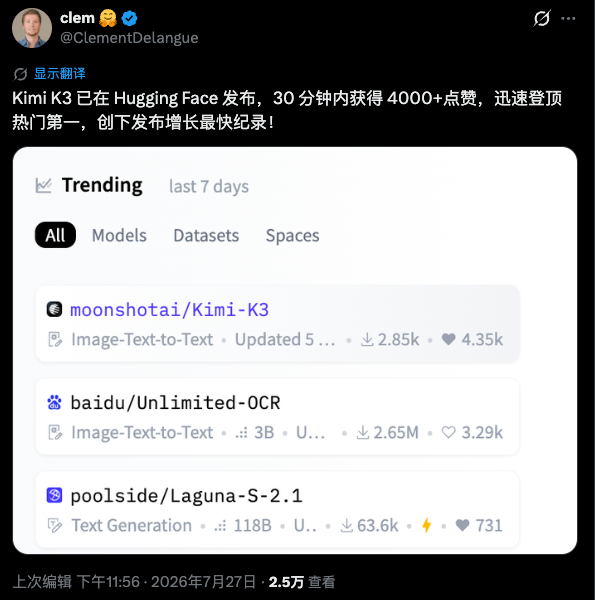
At this moment, the attitude of the United States and the open-sourcing of Kimi K3 have produced a magical chemical reaction.
In the future, this incident may be referred to as:
The Sarajevo incident of the AI industry.
This world needs open source.
Old Huang and the others embrace open source, and, aside from ideals, there is also a lot of financial motive.
In 2002, Joel Spolsky wrote a classic business principle called Commoditize Your Complements, turning your complements into commodities.The cheaper the complements of something, the greater the demand for that thing.
NVIDIA sells GPUs.
The more open-source models there are, the more companies worldwide are willing to deploy, fine-tune, and train themselves, leading to a greater demand for GPUs.
AMD, Dell, cloud computing companies, and inference service providers follow similar logic.
Development tools and application platforms like GitHub, Vercel, Replit, LangChain, OpenClaw also inherently hope for more models at lower costs that are easier to replace.
Because for every dollar the model cost decreases, the application layer gains an additional dollar of space.
Old Huang firmly believes in open source, and he is one of the biggest beneficiaries of open-source models; these two facts do not conflict.However, I firmly believe in and embrace open source. The reason is very simple because I am an ordinary person.In my lifetime, I may never afford to train models like K3; I don’t have tens of thousands of cards, I know nothing, and I can barely understand the formulas in the technical report with the assistance of AI.But it doesn’t prevent me today, standing on the countless works, frameworks, and models open-sourced by predecessors, from creating my own work.Ordinary people can participate in every technological revolution, relying on those pioneers who are willing to leave the finish line for those who come later as a starting point.We don’t suddenly become geniuses.
We are just not having to walk the same road from scratch again.
The true power of open source lies here.
What a team spends immense computing power to obtain, something that numerous big names toil for a long time to get, once made public, will become a common starting point for countless ordinary people around the world the next day.
I believe this is the compound interest of civilization.
In the end, I extend my highest respect to all the big names contributing to the human world, open-source world, and AI world.
Thank you.
免责声明:本文章仅代表作者个人观点,不代表本平台的立场和观点。本文章仅供信息分享,不构成对任何人的任何投资建议。用户与作者之间的任何争议,与本平台无关。如网页中刊载的文章或图片涉及侵权,请提供相关的权利证明和身份证明发送邮件到support@aicoin.com,本平台相关工作人员将会进行核查。


