Overall, the U.S. stock market is completely closed on weekends and most holidays.
Written by: Maher, Foresight News
On July 23, the U.S. Securities and Exchange Commission (SEC) announced it will hold a public roundtable meeting on September 17 at its headquarters in Washington, D.C., focusing on the preparations for the U.S. stock market's transition to 24-hour trading. The meeting will discuss the infrastructure that supports overnight trading, operations and resilience under a 24-hour market, as well as the opportunities and challenges involved in extended trading hours.
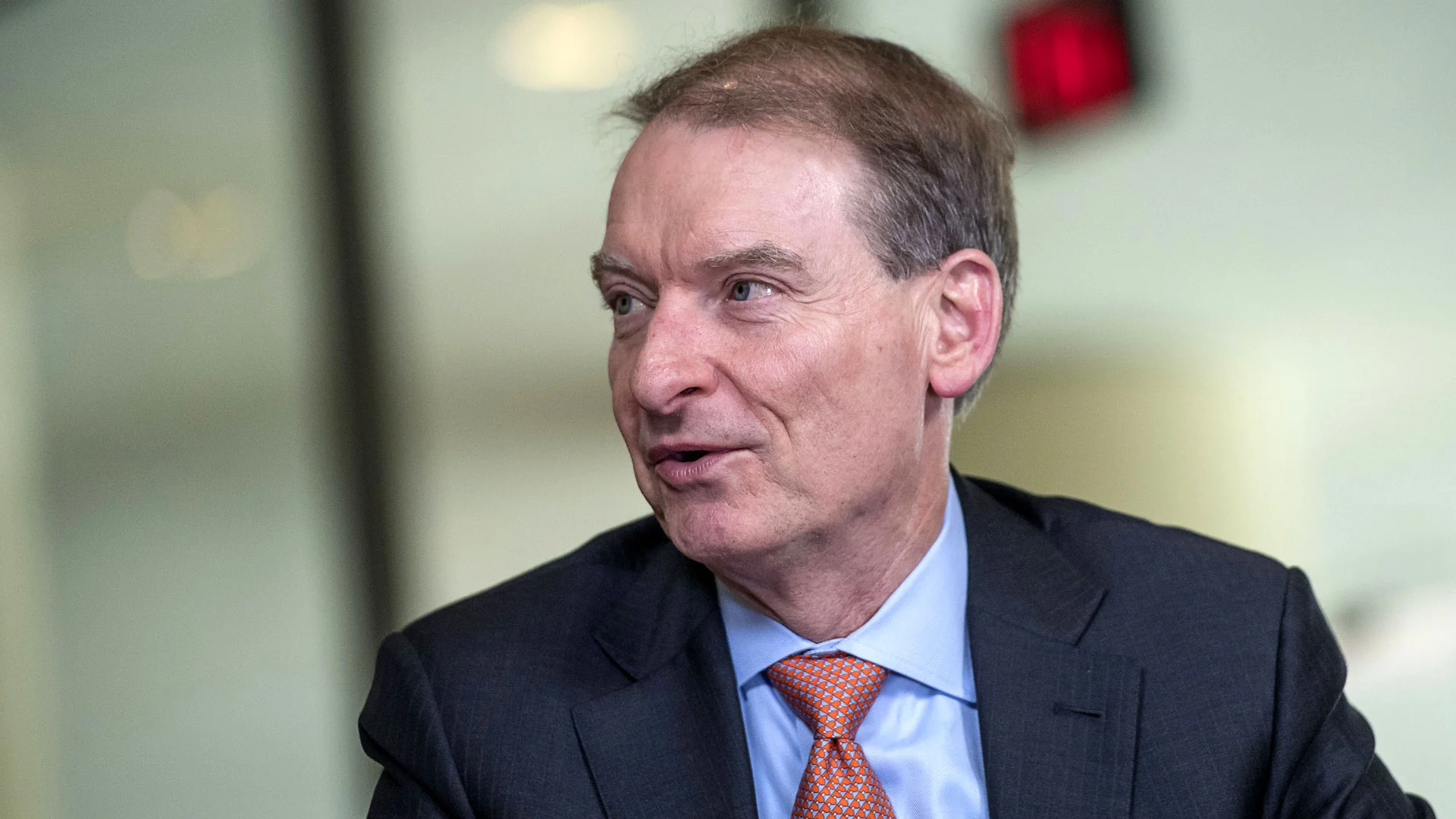
SEC Chairman Paul S. Atkins stated in a press release, "We are moving towards a new day—and a new night—for the U.S. stock market. As overnight trading expands, I look forward to the U.S. stock market aligning with those markets that already have continuous trading, while also achieving a balance between all-hours trading and the crucial protection of investors and customers."
This roundtable may signify a key transition point for the U.S. stock market from traditional hours towards a nearly all-hours (23×5) model. For the crypto industry, especially in the RWA (real-world asset) tokenization sector, this change compresses some differentiated narratives while opening up deeper integration opportunities.
U.S. Stock Trading Embraces Change
Since 1985, the regular trading hours for exchanges such as the New York Stock Exchange and Nasdaq have been fixed from 9:30 AM to 4 PM Eastern Time, Monday to Friday. This arrangement has persisted for over forty years.
The long-standing maintenance of regular trading hours in U.S. stocks benefits price discovery and lowers operational costs, but in today's highly electronic global capital flow, this arrangement has become outdated. Asian and European investors wishing to trade U.S. stocks during their local daytime often have to rely on futures or thinly traded pre-market and after-hours sessions, which do not offer the same smooth experience as trading crypto assets. At the same time, retail investors have become accustomed to placing orders via mobile apps at any time and are increasingly impatient with the "waiting sense" of not being able to trade immediately after significant news releases.
Outside of regular hours, there are limited extended trading windows. Pre-market trading usually starts from midnight until it ends at 9:30 AM; after-hours trading extends from 4 PM until around 8 PM. These extended periods are provided by various exchanges, alternative trading systems (ATS), and brokerage platforms, but liquidity is significantly lower than during regular hours, spreads are wider, and price discovery efficiency is lower. Regulatory bodies like FINRA have repeatedly warned investors that extended hours come with higher volatility and execution risks.
In recent years, some brokerages and ATS have further extended trading into overnight sessions. For example, platforms like Interactive Brokers offer overnight trading from 8 PM on Sunday to around 3:50 AM on Friday (with a brief maintenance window in between), covering parts of the S&P 500, Nasdaq 100 constituents, and ETFs. However, according to public market observations, true overnight trading volume has long accounted for only a tiny proportion of the total market, making it difficult to form deep price discovery.
Overall, U.S. stocks still maintain "concentrated trading during working days" as their core feature, completely closing on weekends and most holidays. This stands in stark contrast to the 7×24, year-round operational model of the crypto asset market, and it has become one of the frequently emphasized differences in the RWA tokenization narrative.
23/5 Trading?
Since 2024, several exchanges and market infrastructure institutions have accelerated their efforts towards nearly all-hours trading.
24X National Exchange is the first national securities exchange approved by the SEC to conduct 23-hour trading (23×5), aiming to officially launch complete 23/5 night trading in the second half of 2026. NYSE Arca plans to extend trading hours to approximately 22 hours, also targeting the end of 2026. Nasdaq has publicly proposed the "Global Trading Hours" plan, intending to add night trading sessions from 9 PM to 4 AM the next day, creating a nearly 23-hour trading day when added to existing hours, with the same target timeframe of the second half of 2026, contingent on regulatory approval and alignment of industry infrastructure. Cboe is also advancing the 23×5 plan for its platforms like EDGX.
Progress at the infrastructure level is even more crucial. The National Securities Clearing Corporation (NSCC), a subsidiary of DTCC, will launch 24×5 clearing services on June 28, 2026, covering trading activities from 8 PM on Sunday to 8 PM on Friday, and providing central counterparty guarantees for overnight transactions, significantly reducing counterparty risks.
These developments indicate that by the end of 2026 to early 2027, U.S. stocks are expected to achieve nearly continuous trading on working days within a regulatory framework. True 7×24 (including weekends) still faces higher thresholds, but the direction of "money never sleeps" has moved from discussion to implementation phases. The roundtable on September 17 will be SEC’s effort to formally convene exchanges, market makers, clearing institutions, brokerages, and investor representatives to publicly align on core issues such as operational resilience, liquidity management, and investor protection before large-scale opening.
Crypto RWA Platforms
The U.S. stock market's move towards nearly all-hours trading directly impacts one of the most frequently used selling points of RWA tokenization platforms——"traditional markets only operate during the day, while on-chain can trade 7×24".
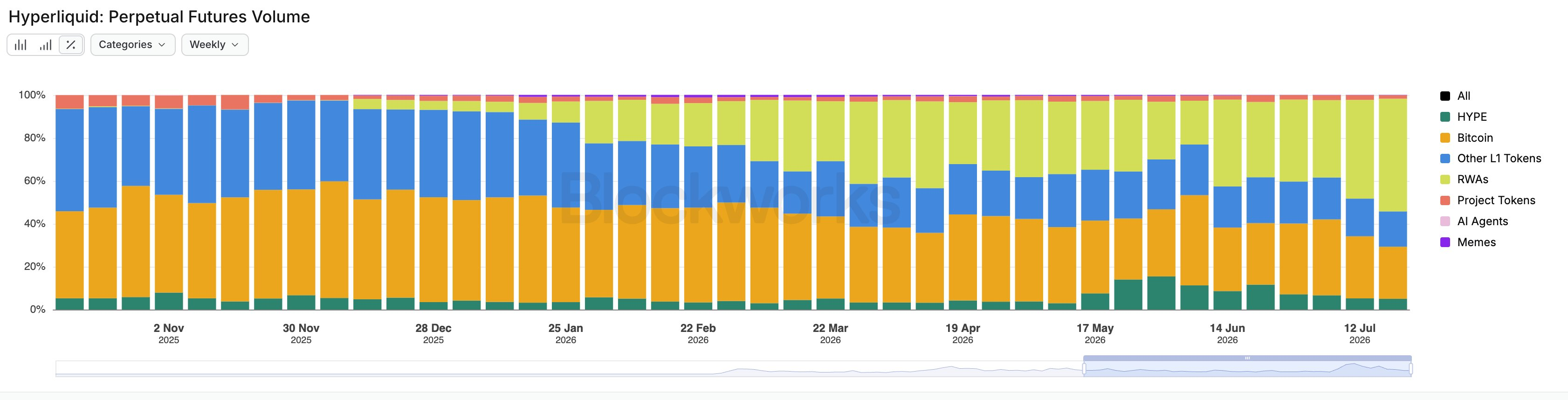
The current RWA market has reached a certain scale, especially with perpetual contract trading volumes. According to the latest data from Blockworks, last week, RWA trading volume on the Hyperliquid platform surpassed crypto asset trading for the first time, accounting for 54% of the platform's total trading volume. Among them, individual stock trading has become the fastest-growing category, surpassing indices and commodities since June, currently accounting for about 61% of Hyperliquid's total RWA trading volume, indicating that the on-chain financial market is expanding from pure crypto asset trading to traditional assets.
After the U.S. stock market extends trading hours, the attraction of simply "being able to trade real stocks during Asian hours or at night" will be diluted. Institutional and cross-border investors will be able to directly complete nearly all-hours transactions on regulated traditional exchanges and ATS without having to rely entirely on tokenization channels. In terms of compliance costs, custody, and clearing certainty, traditional routes remain more attractive to many large funds.
However, the impact is not entirely negative.
True 7×24 and instant atomic settlement remain an advantage on-chain. Even if the U.S. stock market achieves 23×5, there will still be gaps on weekends and holidays, and clearing and settlement still rely on the DTCC system, making it difficult to completely eliminate T+0 and T+1 friction. RWA tokens can achieve near-instant ownership transfer and settlement on a public chain and inherently support programmable logic, including automatic dividends, collateral, and portfolios.
The regulatory environment is evolving in tandem. The SEC under Paul Atkins has clearly included "promoting on-chain trading of tokenized securities" in its 2026 regulatory agenda and is advancing a token classification framework. Tokenized securities are still defined as securities subject to federal securities laws, but discussions on innovation exemptions and related rule adjustments are ongoing. DTCC is also advancing a pilot for tokenized settlement. The experience gained in overnight liquidity management, price protection, and system resilience during the U.S. stock market's extended trading hours can actually provide regulatory practices for compliant RWA secondary markets.
Some crypto platforms have already explored collaborations, such as integrating tokenized U.S. stocks with traditional account systems and global liquidity. On July 10 of this year, Backpack launched the world’s first 7×24 hours real U.S. stock trading market for international investors, allowing users to buy, sell, and hold actual U.S. stocks around the clock, rather than synthetic derivatives,
Ondo’s tokenized stocks are backed 1:1 by underlying securities and are linked to traditional market liquidity through a mechanism for minting and redeeming. Users can trade these tokens directly on crypto exchanges, while non-U.S. users can access U.S. stock exposure more conveniently.
For RWA platforms, the real competitive edge is shifting from "trading time differences" to "settlement finality, cross-border accessibility, DeFi composability, and interoperability with traditional infrastructure." The tokenization of private credit, real estate, alternative assets, and other non-public market assets is less impacted by the changing trading hours of the U.S. stock market and may benefit from the overall increase in tokenization acceptance.
Risks also need to be acknowledged. Initial liquidity during overnight windows will inevitably be thin, making prices more susceptible to movement. If RWA platforms open trading in low liquidity windows, they must simultaneously strengthen risk control, circuit breaker, and market-making mechanisms; otherwise, it may amplify volatility and damage industry credibility. The regulatory pressure faced by purely unlicensed synthetic products may also increase with the extended trading hours of traditional markets, enhancing the value of compliant issuance and ATS/exchange pathways.
免责声明:本文章仅代表作者个人观点,不代表本平台的立场和观点。本文章仅供信息分享,不构成对任何人的任何投资建议。用户与作者之间的任何争议,与本平台无关。如网页中刊载的文章或图片涉及侵权,请提供相关的权利证明和身份证明发送邮件到support@aicoin.com,本平台相关工作人员将会进行核查。


