No matter how to evaluate the quality of this traffic, it solves the problem of the vast majority of new L2s dying due to cold starts.
Written by: Mario, IOSG
Core Judgment
Robinhood no longer rents others' block space; it has built its own L2, holding control over transactions, settlements, collateral, profits, and asset circulation. This is a positive response to Coinbase Base: transitioning from a tenant on others' chains to the landlord of its own settlement layer. The design purpose of the entire suite of tokenized products (24/7 stock tokens, USDG lending, perpetuals) is singular: to keep both users and economic interests within Robinhood's own playground.
This launch unexpectedly gained a marketing machine that no one anticipated: meme coins. Within a week of the mainnet launch, Tenev shifted from publicly disparaging memes to paying attention to the CASHCAT account on X, igniting a speculative frenzy that made Robinhood Chain one of the busiest chains in the crypto world within its first month. No matter how to evaluate the quality of this traffic, it addresses the majority of new L2s' cold start issues (see Section 2 for details).
The First Three Weeks: Memes Arrive Before Stocks
Robinhood built this chain for tokenized stocks, but the first to move in was a meme casino. Three weeks after the launch, the casino still contributed most of the activity, yet the first batch of genuinely interesting RWA native projects also sprouted from here.
As of July 20, 2026, the data:
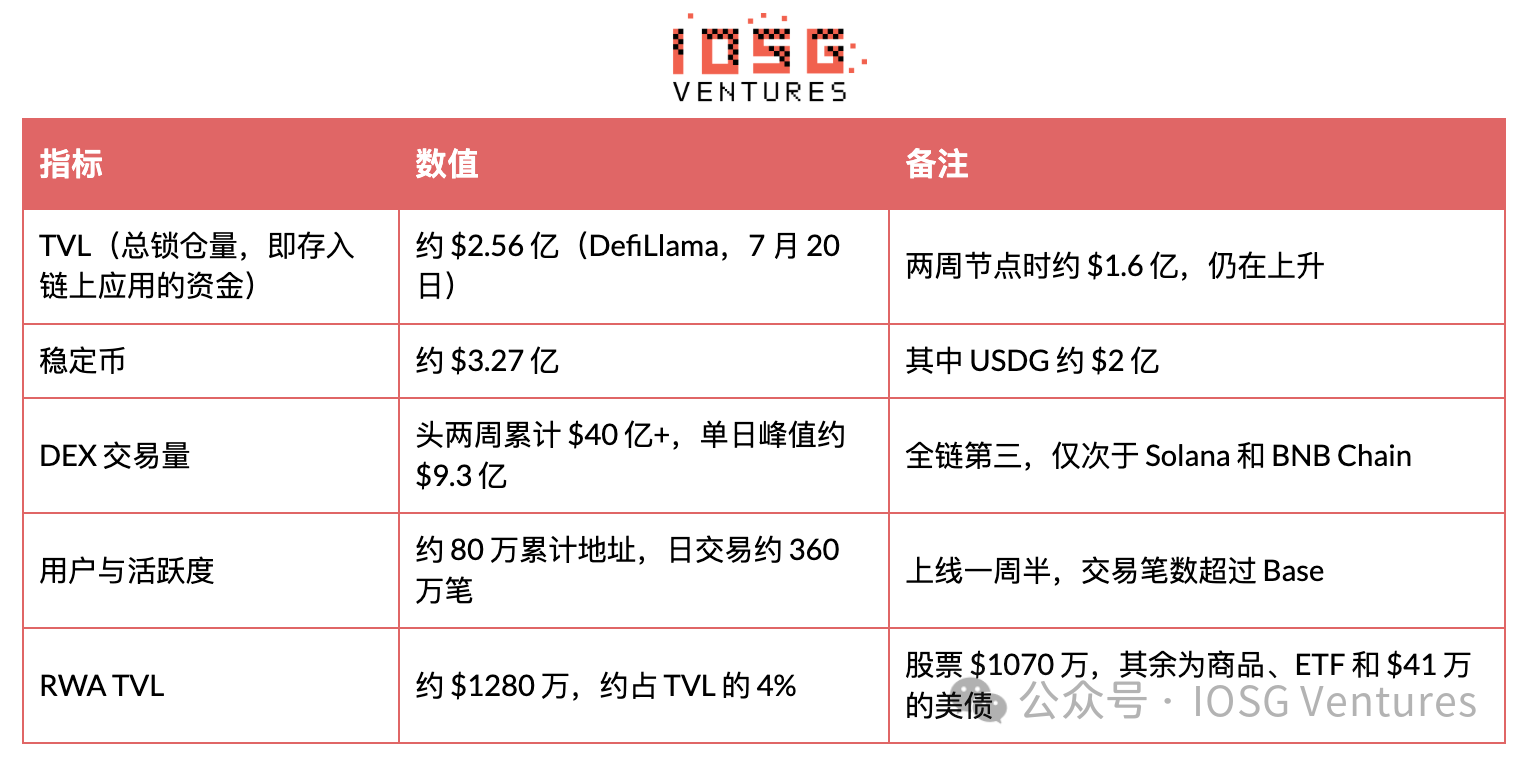
What is truly being traded? Memes. The leader is $CASHCAT, a cat coin named after Robinhood's mascot before its redesign, which soared over 2000% in the first week post-launch, with a market cap reaching approximately $156 million, exceeding all RWA assets on the chain by an order of magnitude. A whole batch of memes (Cash Dog in Hood, Little John, Hoodrat) and supporting launch facilities (NOXA.fun launchpad, basedbot) were all set up within days. The entire meme sector's market cap is around $160 to $200 million.
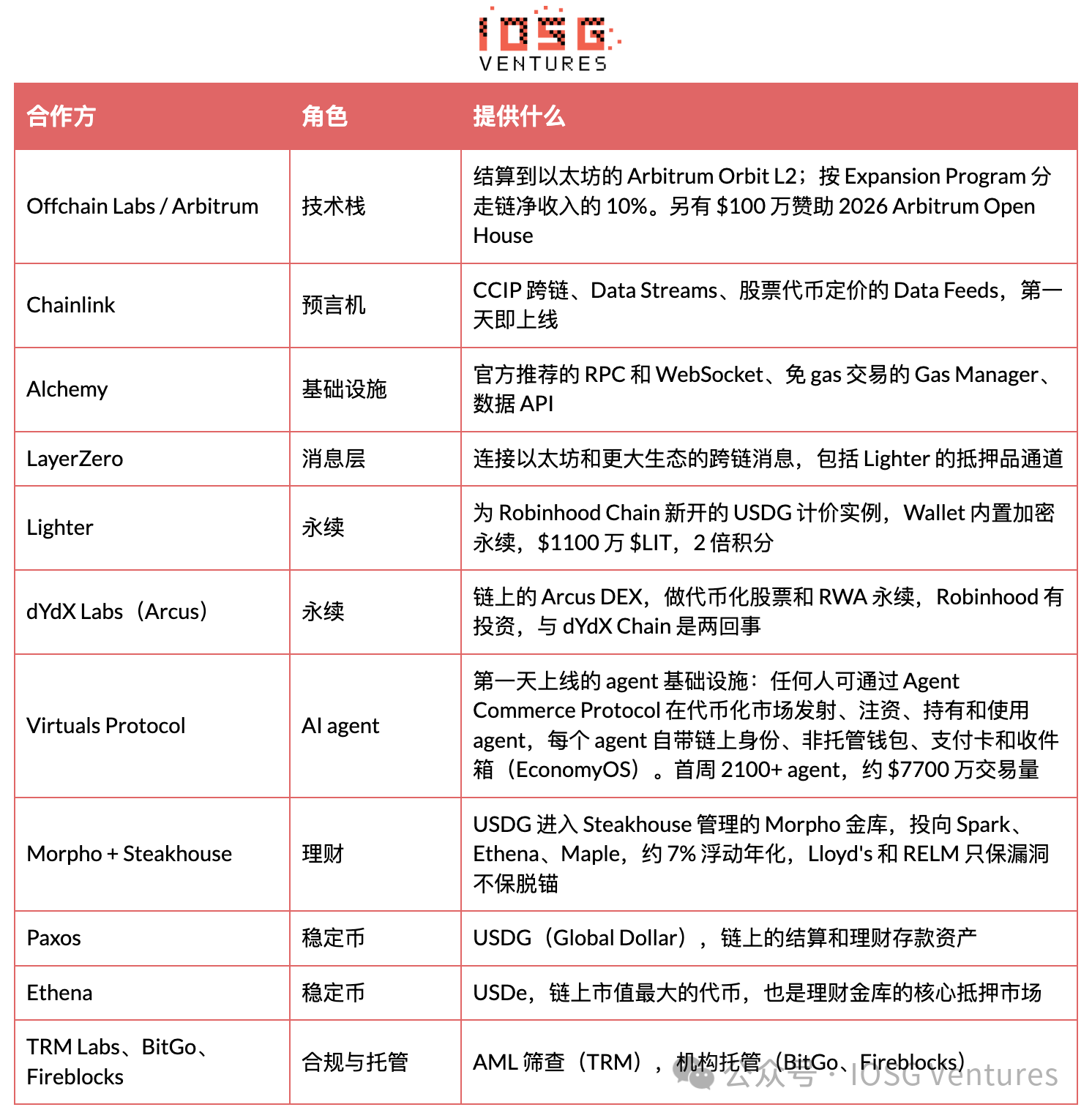
The second flywheel: AI agents. Speculative traffic is not limited to memes. From day one, Robinhood integrated the agent infrastructure from Virtuals Protocol—this is not a supporting role; “Agentic Trading” is right in the title of Robinhood's official release. Tenev was very straightforward in his commentary: in May this year, Robinhood launched Agentic Trading and Agentic credit cards in its brokerage app, stating to CNBC, “Every operation a human can perform, an AI agent will be able to perform,” with the ultimate goal of giving ordinary people access to the “same tools, same computational power, and same capabilities” that high-frequency trading firms have enjoyed for decades. This chain serves as an open sandbox for this argument: through Virtuals' Agent Commerce Protocol, anyone can launch, fund, hold, and utilize agents in the tokenized market, with each agent carrying an on-chain identity, non-custodial wallet, payment card, and inbox (Virtuals calls this EconomyOS).
The growth curve of agents is steeper than that of memes. In the first week: over 2100 agents with approximately $77 million in trading volume, developers made $1.3 million. Agent trading volume grew from $0 to $100 million in two weeks, and from $100 million to $150 million in just three days. By July 17, there were over 4500 agents, with trading volume exceeding $150 million, and developers had raised a total of $2.3 million. The distribution channels were also expanding: starting July 18, all Virtuals agents on Robinhood Chain could be found in Binance Wallet's Meme Rush. No dominant agent token has emerged; the real major player at this stage is Virtuals itself, as an infrastructure layer, with $VIRTUAL rising about 20% on partnership news. To be frank: today, most agent token trading behavior is essentially memes dressed in an AI shell, and these trading volumes should be viewed as speculative until agents generate sustained income.
What do these agents look like specifically (examples from Virtuals on Robinhood Chain):
- Monvera ($MONVERA) is the most typical native RWA case: an AI broker that went live on July 14, directly interfacing with on-chain tokenized stocks, wrapping around about 95 tokenized Robinhood stocks behind one agent, conducting research, pricing, and routing trades on behalf of users. This is a combination of agents with stock tokens, rather than with memes.
- Quiver Protocol ($QUIV) claims to be the first on-chain AI-driven yield aggregator: in the LP vaults, agents perform position rebalancing, reinvesting, and stop-losses on-chain, but are prohibited from withdrawing user funds by architecture.
- Grid Arena transforms price charts into prediction arenas: locking in grids within Nvidia, Tesla, or Apple, each grid having its own real-time odds multiplier.
- Hyperium ($HYP) is a multi-terminal trading/development environment for traders tired of switching tabs back and forth.
- Root Edge is a self-sustaining perpetual trading agent (Hyperliquid), entering beta after about 8 months of development, issuing rootAI “Skill” NFTs to early users.
Reading through this list clearly shows differentiation: the two projects that have emerged have integrated RWA (Monvera with stock tokens, Quiver with on-chain yields), which is precisely what an RWA chain needs in its agents; the rest still resemble memes dressed in an AI shell. They follow the same pattern as the earlier batch of tokens.
Then the meme faucet was turned off. In less than two weeks, NOXA deployed over 60,000 tokens (about 75% of the total tokens issued on the chain), collected nearly $12 million in fees, and suddenly stopped new token launches on July 11, citing that bots were continuously generating imitation tokens every hour. Two days later, it completely vanished, the domain was lost, leaving only an IPFS interface without any timeline for reopening. Regardless of the initial intentions, the objective result is that meme issuance was forcibly cooled off, and the liquidity and attention originally chasing new tokens began to shift towards RWA-related tokens.
This was the more interesting twist in the second week: the tokens emerging were no longer purely memes but began to integrate with stock tokens:
- Arrow Finance ($ARROW) is a CDP (Collateralized Debt Position) protocol, the first project to accept tokenized stocks and ETFs as collateral to mint its stablecoin aUSD. In simple terms: deposit your AAPL token, and you can borrow dollars without having to sell. It also operates a launchpad (Arrow Pad). $ARROW increased from about $0.15 at launch on July 7 to about $1.79 (market cap around $16 million), a tenfold increase in less than two weeks.
- $INDEX uses transaction fees to purchase on-chain stock tokens and distribute them to holders, essentially building a rudimentary dividend mechanism atop the stock token ecosystem. After Tenev publicly encouraged developers to create applications integrating tokenized stocks and RWAs, it surged by about 150% in one day, reaching a market cap in the tens of millions.
Tenev's personal attitude is worth reading closely, as it changed rapidly. On July 2, the day after the mainnet launch, he told CNBC that meme coins had essentially led the market into a dead end, and that assets without utility cannot create lasting value; issuing hundreds of such tokens is meaningless, and tokenized RWA is the lasting direction. Six days later, when the market cap of CASHCAT approached nine figures, he posted on X: “We are building Robinhood Chain into the best RWA chain... but it also works great for running memes,” while following the CASHCAT account. By July 14, he was again publicly encouraging developers to build applications integrating stock tokens and RWAs, and it was this post that caused INDEX to spike by 150% in one day. Looking at the timeline, this shouldn't be seen as a position shift but more like a strategy: maintaining RWA identity with regulators and institutions while also capturing the current bill-paying meme traffic.
Our judgment: This is a replay of the Base script. Memes serve to ignite liquidity and as customer acquisition channels; they stress tested the infrastructure and deepened DEX market-making, allowing this chain to experience a heartbeat that pure RWA traffic cannot provide in its first month. The real signal worth tracking is not the market cap of memes but that the first batch of emerging practical projects all integrate stock tokens into DeFi primitives (Arrow as collateral, INDEX for yield distribution), which is precisely the behavior that an RWA chain needs to grow, and the Robinhood team is clearly amplifying this. The unresolved question: RWA assets still only account for about 4% of TVL. If the scale of stock tokens does not keep up with the user influx brought by memes, this chain will end up being just a casino under the guise of a brokerage. Base didn't really solve this conversion back then either.
How the Chain is Built and Who is Involved
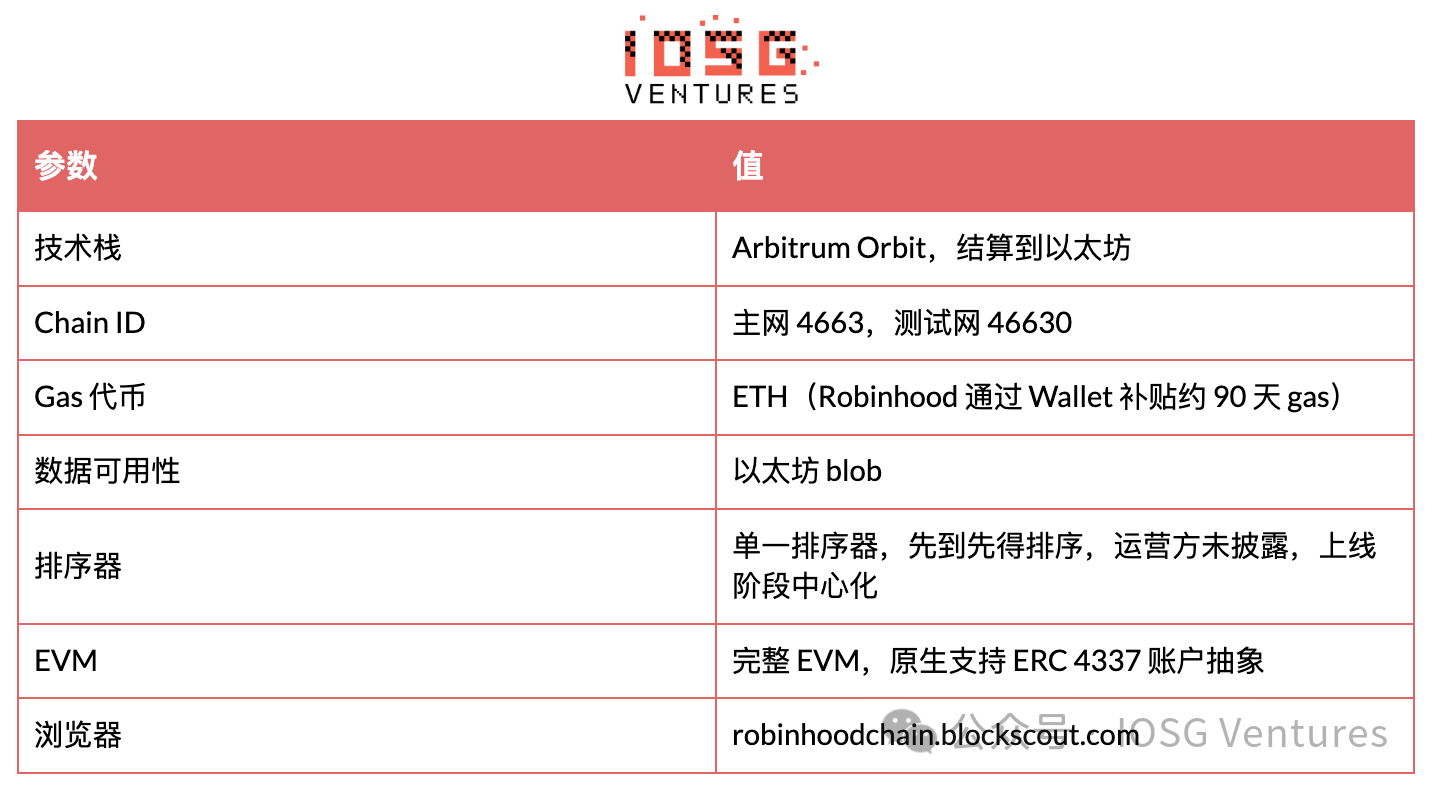
To put it plainly: Robinhood Chain is a rollup. It produces blocks itself, quickly and cheaply, and then relays transaction data back to Ethereum, with Ethereum acting as the final record court. Robinhood controls the sequencer (the machine that queues transactions), which is why this chain is called Robinhood. For details, see the table below.
Another economic detail worth knowing: as an Arbitrum Orbit chain that does not settle on Arbitrum One, Robinhood Chain is subject to the Arbitrum Expansion Program, requiring 10% of net protocol (sequencer) income to be fed back to the Arbitrum ecosystem: 8% goes to the ArbitrumDAO treasury, and 2% to the Developer Guild. This is not niche knowledge: on July 9, this chain had a single-day trading volume of $568 million, and ARB rose 19% that day thanks to this revenue-sharing logic. The remaining 90% of income and the entire tech stack's control belong to Robinhood.
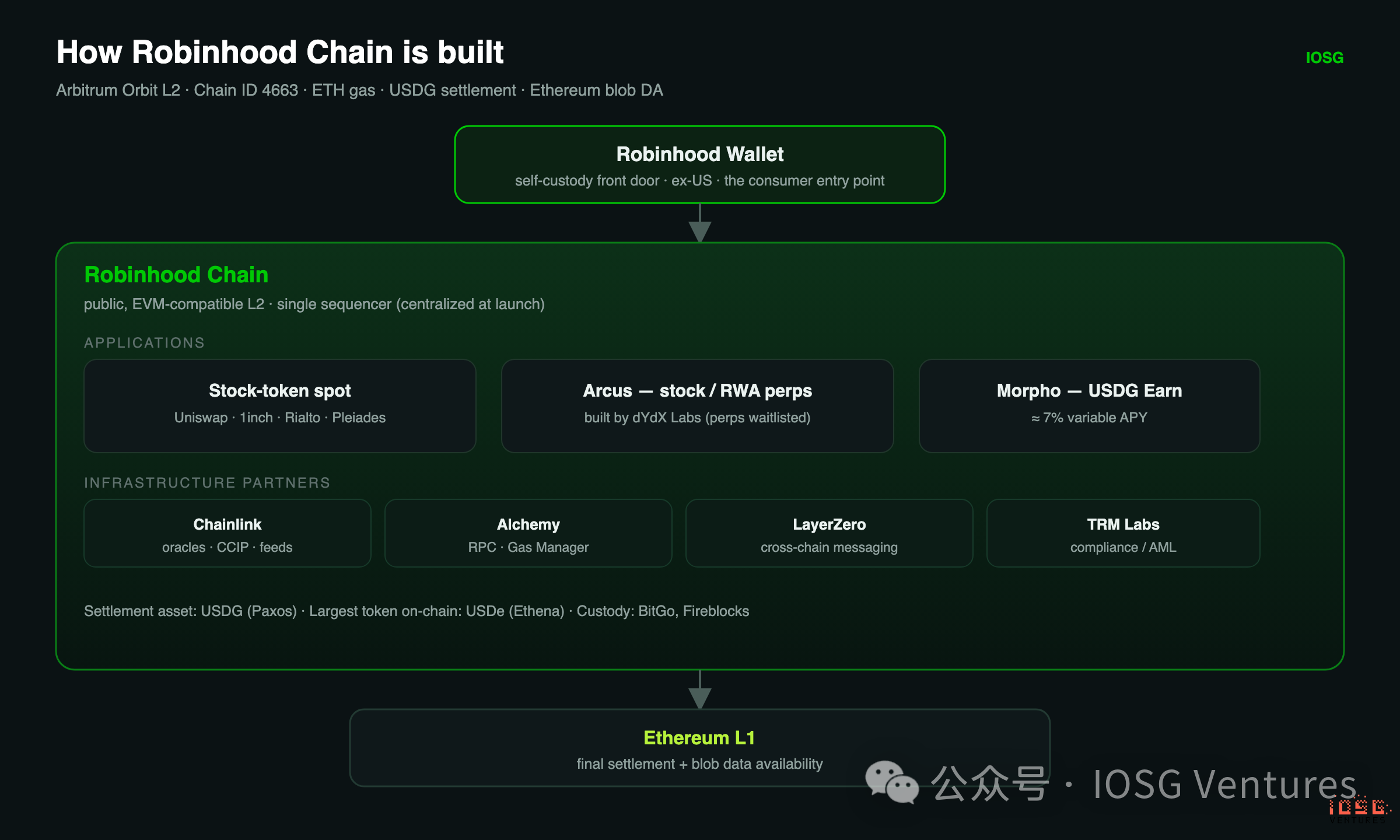
▲ Robinhood Chain Architecture
This chain is not being built by just one company. Key partners and their respective roles:
Two Types of Dollars: USDG and USDe
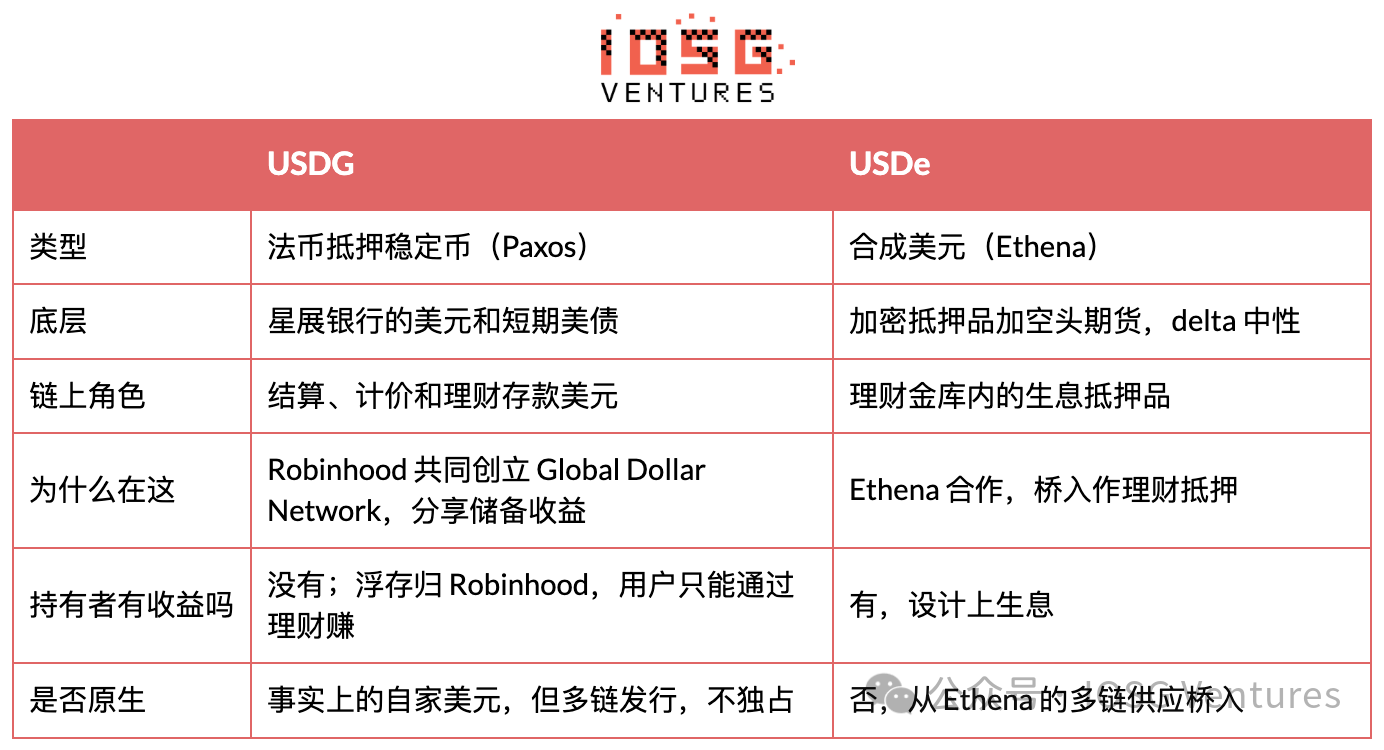
This chain runs two different types of dollars with distinct roles, which cannot be confused.
USDG is the chain’s own dollar. It is a fiat-backed stablecoin issued by Paxos, set to launch at the end of 2024, pegged 1:1 to dollars and short-term U.S. treasuries held at DBS Bank. On Robinhood Chain, it serves as the settlement and valuation asset: the unit for financial deposits, margin and valuation asset for Lighter perpetuals, and the dollar flowing between Wallet and the chain. Gas is still paid in ETH, so USDG is money, not fuel, and it is not exclusive to this chain (it is natively issued on Ethereum, Solana, Ink, and X Layer, relying on the LayerZero standard for interoperability).
Why does Robinhood promote it: Robinhood is a founding member of the Global Dollar Network, which returns about 97% of reserve earnings to partners driving adoption. Setting USDG as the default dollar of its own chain means Robinhood earns not just trading fees, but also the entire reserve income. From an economic interest and default usage perspective, USDG is the closest thing to a native stablecoin for this chain, even though technically it is multi-chain.
USDe is the yield and collateral dollar, not the settlement dollar. It is a synthetic dollar from Ethena, supported by crypto collateral and hedging short positions (delta-neutral basis positions), designed inherently to generate yield. It has the largest market cap on the chain, but this number is mainly driven by collaborations and collateral, not by natural retail funding. Ethena is a partner, and USDe is bridged into the chain, placed in Robinhood’s wealth management treasury, serving as one of the collateral markets generating about 7% yield. Therefore, USDe’s large figure reflects its introduction to support wealth management, not that everyone uses it as everyday currency. In short: USDe is the yield engine, USDG is the checking account.
Three Product Layers: App, Chain, Wallet
Having discussed the chain and money, let's examine the differences among the three user-facing entrances. They are often mixed up but are actually three different layers.
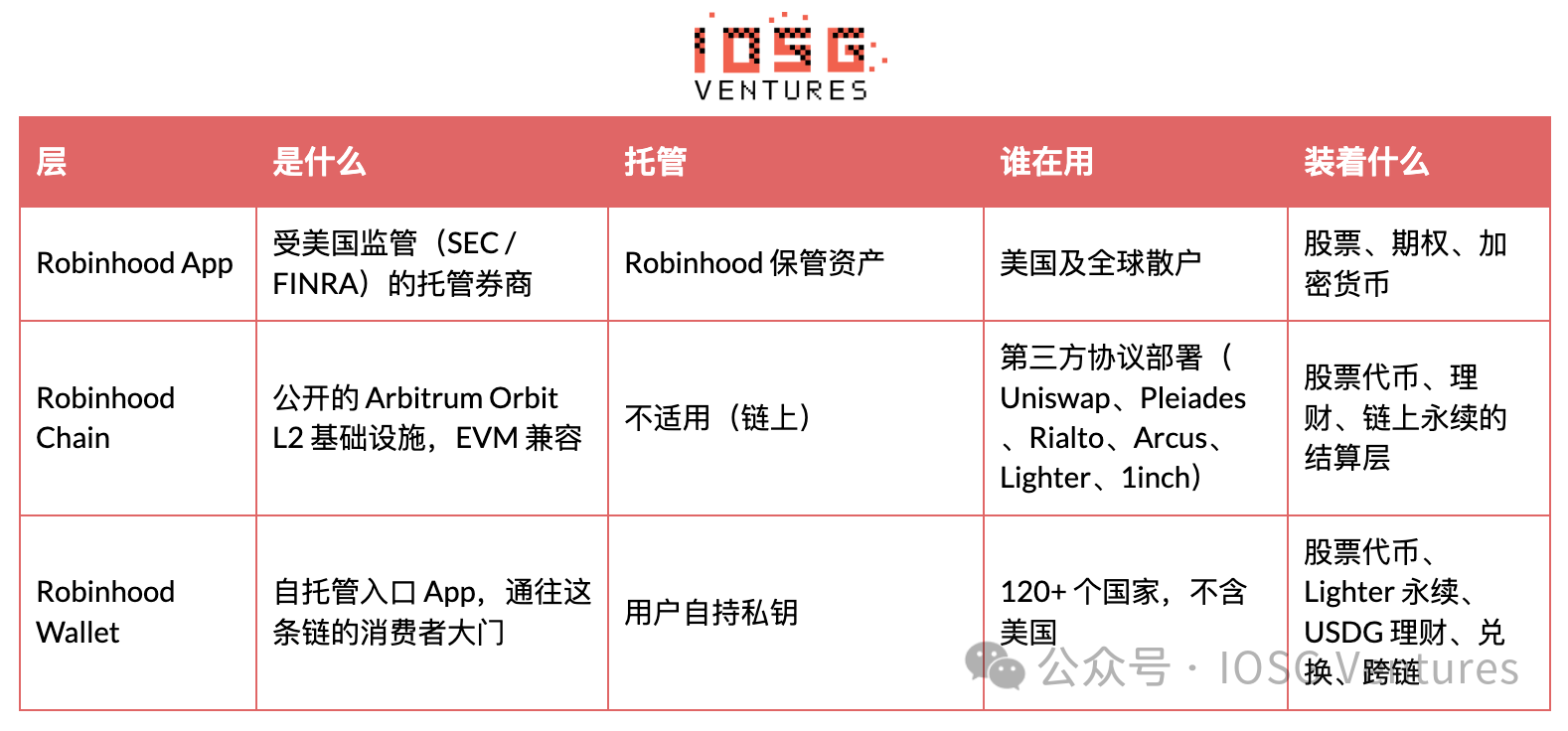
How they connect: Wallet is the user layer, Chain is the settlement and infrastructure layer, and the brokerage App serves as an independent custodial world (mainly acting as a fiat deposit channel). USDG is the dollar flowing between them.
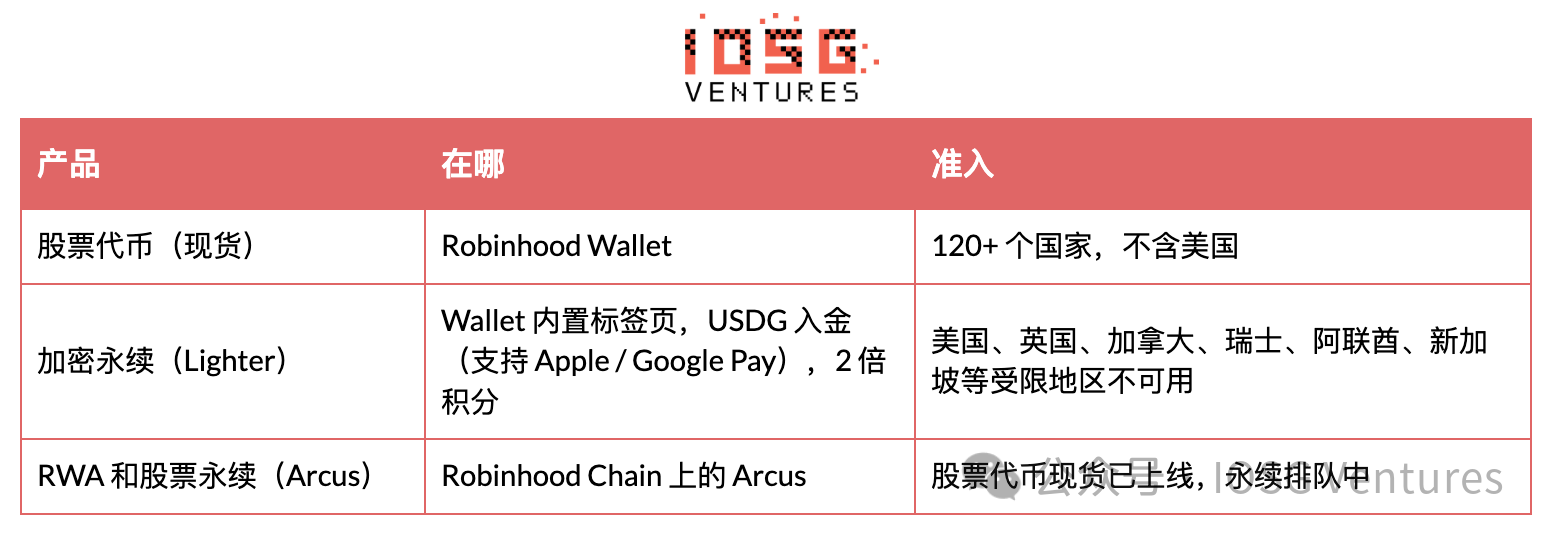
Who can use what:
Perpetuals: Two Venues, Two Sets of Machines
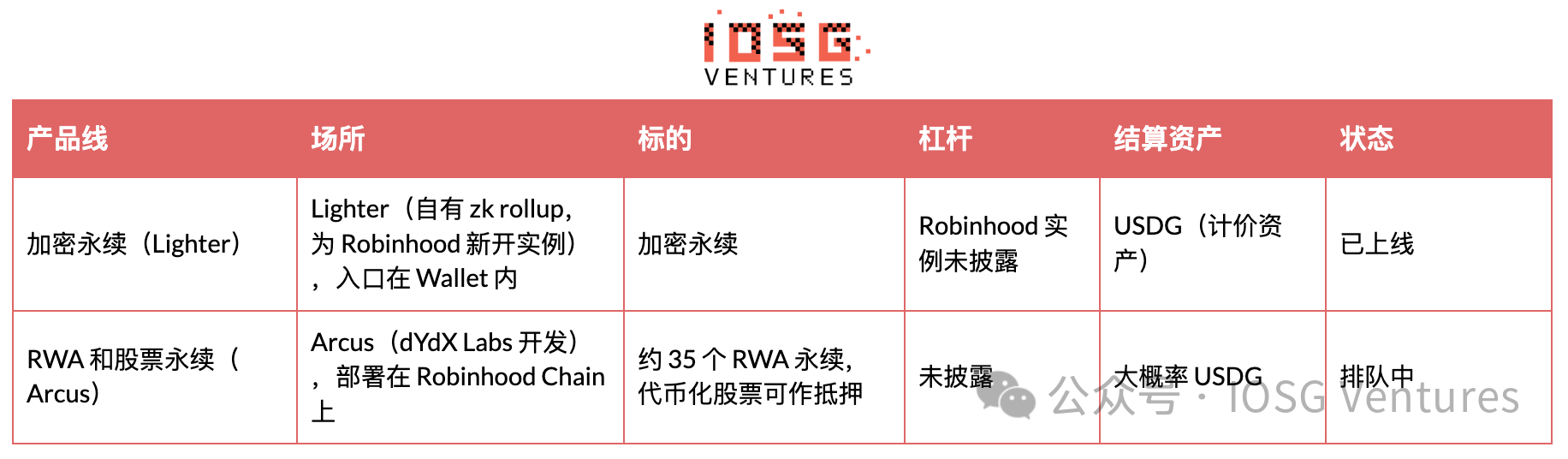
There is no single "Robinhood Perpetual." The two on-chain venues are doing two different things: Lighter does crypto perpetuals, while Arcus does stock and RWA perpetuals, which can easily be confused. This section clarifies these two venues, the operations of Lighter, and the differences between them. (Robinhood also has a custodial-compliant perpetual product in its EU brokerage app, which is not on-chain and is outside the scope of this article.)
Two Venues
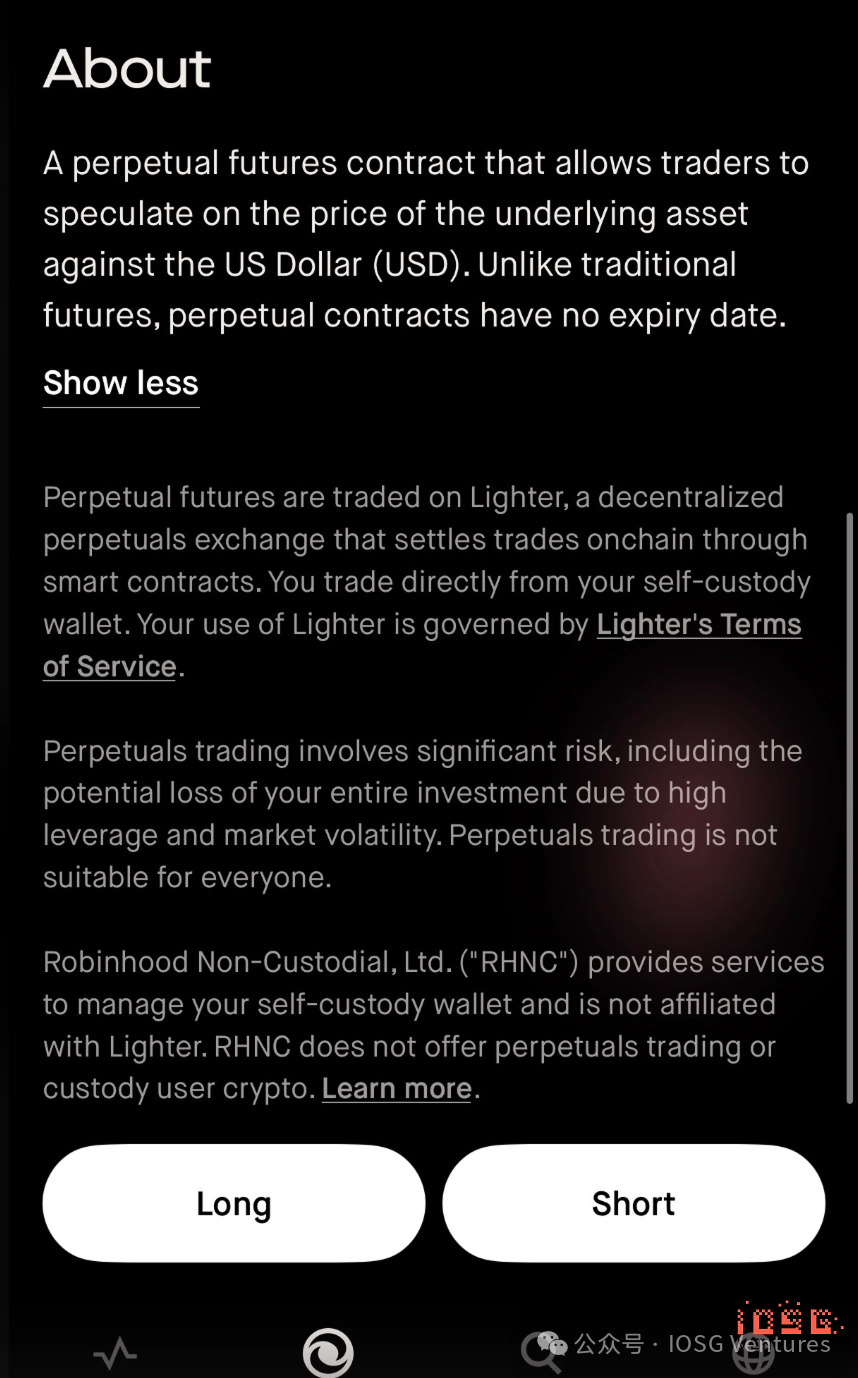
How Robinhood and Lighter Collaborate with Two Chains
This is the part that is easiest to misunderstand. Lighter is not a pool on the Robinhood Chain; it is another chain, with the two collaborating via cross-chain collateral. One can imagine two banks that have signed a wire transfer agreement: your money is custodied in one (Robinhood Chain), while trades occur in the other (Lighter), with messages synchronizing the ledgers on both ends.
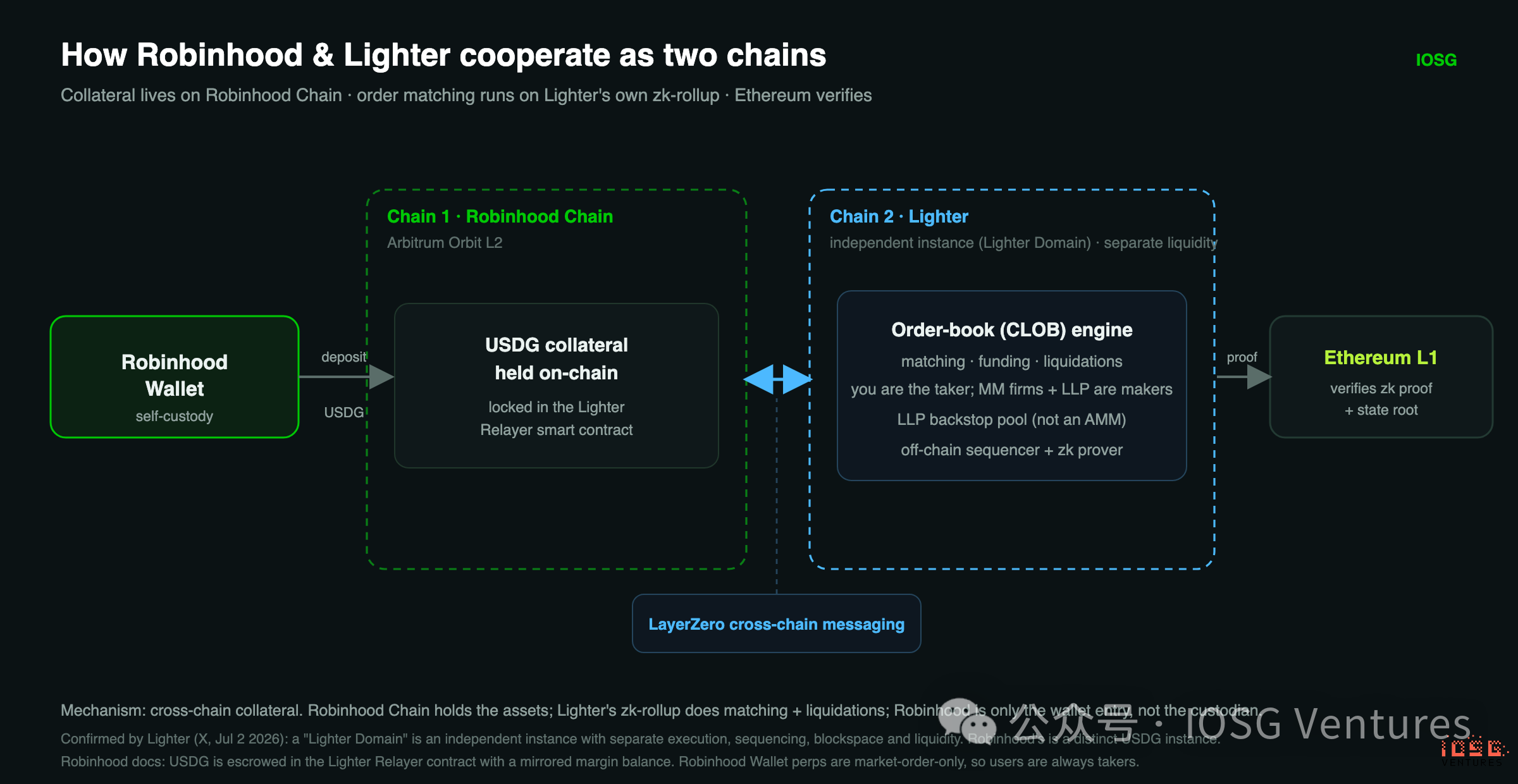
▲ Collaboration Between Robinhood and Lighter's Dual Chains
How to read this diagram:
- Lighter is a Central Limit Order Book (CLOB) perpetual DEX, not an AMM, and has no exchange pools. Your counterparties can be either limit or market orders, or the LLP (Lighter Liquidity Provider) vault, which provides two-sided quotes and underpins clearing.
- Users deposit USDG as margin from Wallet. According to Robinhood documentation, USDG is transferred to and locked in the Lighter Relayer smart contract on Robinhood Chain, and Lighter records the equivalent margin on the trading interface. The Wallet is self-custodial; Robinhood merely acts as an entrance, not a custodian.
- Matching and settlement run on Lighter's own zk rollup, an independent execution layer: off-chain sequencers plus zk provers perform real-time quotes from market makers.
- LayerZero is the cross-chain messaging layer maintaining synchronization between the two environments.
- Lighter sends the final state root and zk validity proof back to Ethereum L1, where the state is finalized only after proving verification.
Key details about liquidity have been confirmed by Lighter itself. In an X post on July 2, 2026, Lighter clarified that Robinhood integration is a Lighter Domain: a standalone instance of Lighter, with execution, ordering, block space, and liquidity all separated, which is intentional to allow different markets to serve varied ecosystems, partners, and regulatory requirements.
Thus, Robinhood's USDG market is a genuine independent instance with its own liquidity pool, not the USDC main market of Lighter. Its depth must be nurtured from zero by market makers in that instance (zero fees, 90-day gas subsidies, 2x points, and $11 million in $LIT are doing just that), rather than inheriting from the main market of around $39 billion. Robinhood users do not encounter the main market's depth. Data from DefiLlama also confirms this: after the announcement, the trading volume of Lighter’s main market barely changed, while the token prices rose.
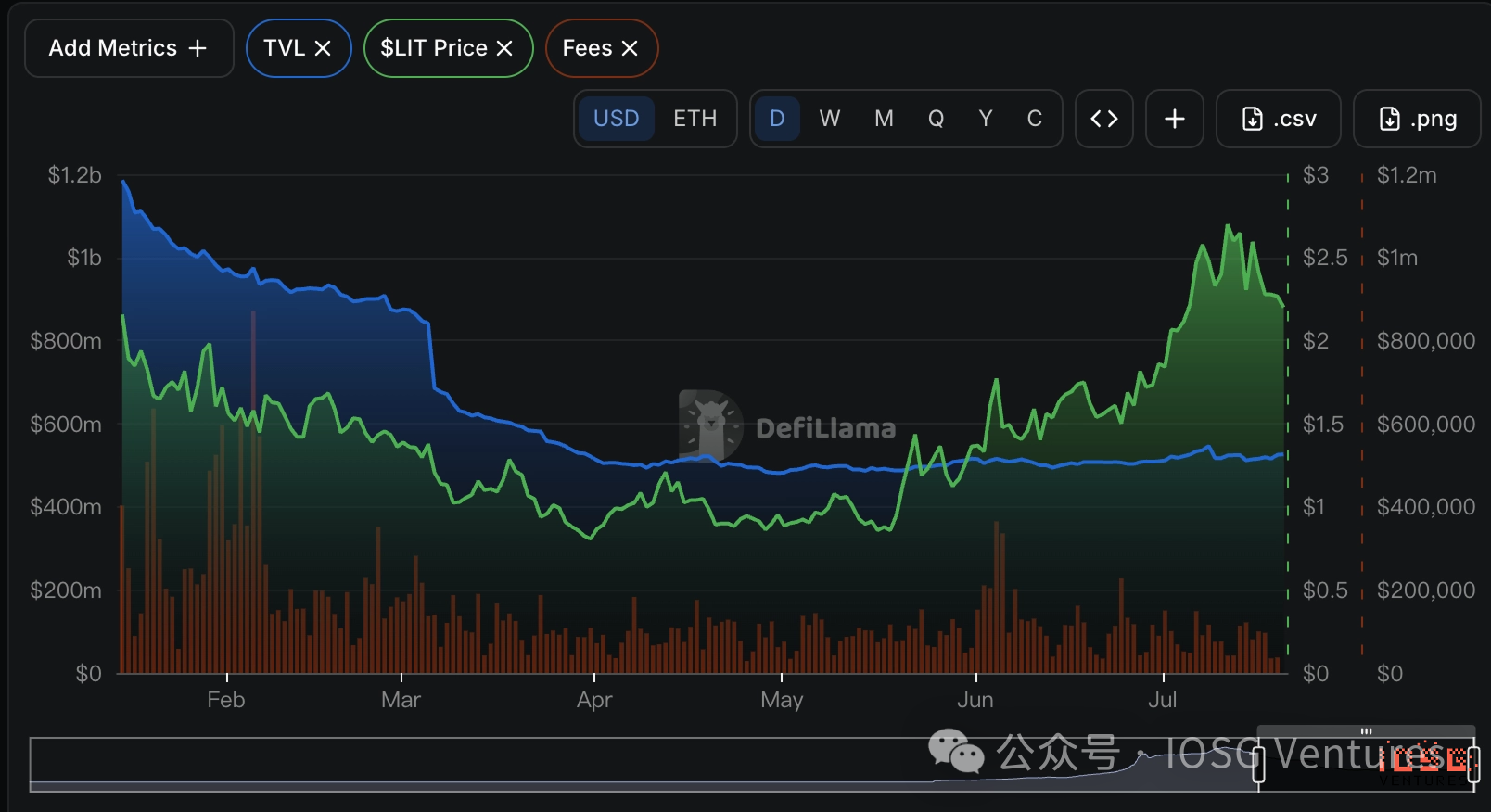
Trading paths and counterparties. Perpetuals in the Wallet can only be market orders, so Robinhood users are always takers. Your market order enters the Lighter Domain matching engine and consumes the best limit orders based on price-time priority. The order side comprises professional market-making institutions and Lighter's own liquidity vault: the LLP that quotes two-sided quotes and underpins clearing, and XLP (Experimental Liquidity Provider) for pre-market and RWA. Because Lighter Domain's liquidity is isolated, these market makers are specifically configured for the USDG instance, not sharing from the USDC main market. Note that Robinhood's proprietary market maker Pleiades serves the spot stock token AMM, not the Lighter perpetual market. Thus, your counterparties are market makers or LLPs, never another Robinhood retail user, and Lighter does not act as the house. Your USDG remains locked in the Lighter Relayer contract on Robinhood Chain, while your position operates within the Lighter instance.
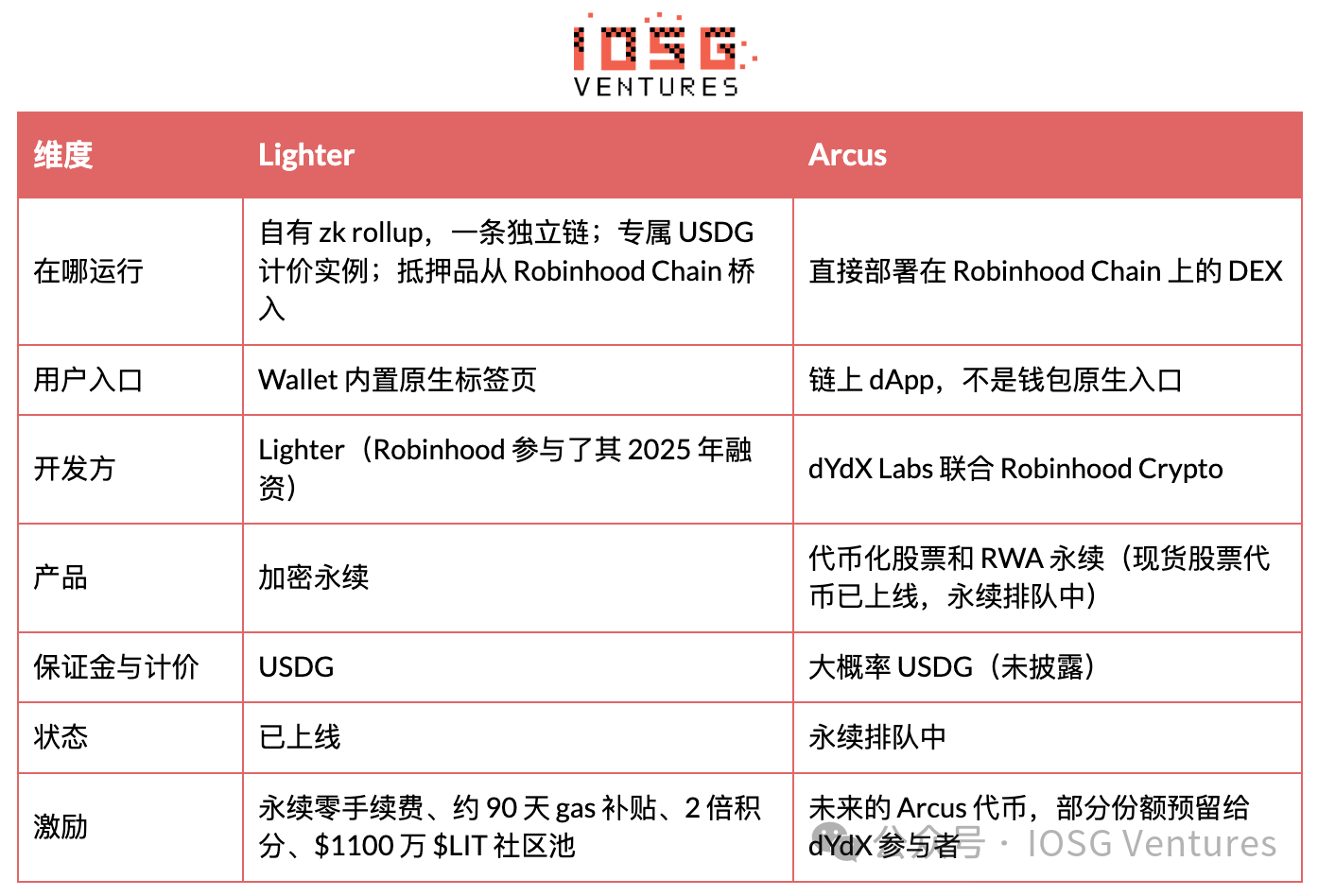
Lighter Compared to Arcus
Both are perpetual venues within the Robinhood ecosystem, but structurally completely different.
What Underlies Stock Tokens
To put it plainly: stock tokens are an IOU issued by Robinhood's Jersey entity (a debt security, a payment promise, not the asset itself), tracking the corresponding stock's price. What you receive is price exposure, not actual stocks. Details and considerations are as follows.
Robinhood Stock Token is a tokenized debt security issued by Robinhood Assets (Jersey) Limited (RHJ). Legally, it is a type of equity-linked debt instrument, similar to traditional market ETNs (Exchange Traded Notes). Holders only obtain economic exposure to the corresponding stock, including price fluctuations and associated economic benefits, without any legal or beneficial ownership of actual shares, nor shareholder rights such as voting. In simple terms, if you buy an AAPL token, you are essentially holding a debt note issued by the Jersey entity RHJ. You are a creditor to RHJ, not a shareholder of Apple.
Robinhood's design goal is for each stock token to be approximately 1:1 hedged by U.S. stocks or ETFs held in custody by its associated entity, so that the token price closely follows the underlying stock price. However, the tokens themselves remain a claim against RHJ's debts, not a direct representation or trust entitlement in the underlying shares. The official documentation does state that stock tokens are “1:1 backed” (the underlying shares are held by a U.S.-licensed broker-dealer/custodian, with Alpaca serving as custodian and broker for the series), but this is merely a unilateral statement from the issuer: there is neither a public proof of reserves nor regular third-party audits to validate it, and third parties generally describe it as “nominally 1:1 backed.” Additionally, tokens for private companies are explicitly stated not to be 1:1 backed and are not redeemable. This is a key consideration at the ownership level: whether the tokens can ultimately be redeemed largely depends on the credit and risk management of RHJ as the issuer.
Dividend and corporate actions are also handled differently from traditional stocks. Cash dividends are not directly distributed but are adjusted through an on-chain multiplier mechanism under the ERC-8056 standard: when the underlying stock dividends or splits occur, the system adjusts up the economic share ratio for each token, automatically updating the intrinsic value of the tokens, while user token balances remain unchanged until redemption. This keeps the on-chain operations simple while maintaining economic continuity.
Overall, the underlying structure of stock tokens is a hybrid of “RHJ debt obligation + Robinhood entity custodial hedge against the underlying stock.” This design trades off the full characteristics of standard ERC-20 (transferability, wallet interoperability, DeFi composability) for a smooth issuance and global distribution within a regulatory framework, but the cost is that users bear not only pure stock risk but also the synthetic exposure layered with issuer credit risk. Compared to directly holding stock or fully isolated custody RWA products, this model has notable advantages in liquidity and innovation, but the embedded credit and operational risks necessitate careful consideration on the user's part.
How Robinhood Compares with Other Major Stock Tokens
Robinhood is a latecomer, as this market already exists. The on-chain tokenized stock market has about $1.2 billion in scale, dominated by two issuers: Ondo Global Markets (about half the market, the first to surpass $1 billion in TVL, with over 260 stocks) and xStocks by Backed Finance (most holders, about 162,000 compared to Ondo's 70,000, with cumulative trading volume exceeding $25 billion, operating on Kraken, Bybit, and Solana DeFi). When Robinhood entered, its share was almost zero (with on-chain stock TVL around $10.7 million), but it held a distribution weapon that competitors lacked: a consumer-grade app covering over 120 countries, plus its own chain.
CEXs are also entering the market, with Binance being the one to watch most closely. In June 2026, it launched zero-commission trading for over 7000 U.S. stocks and ETFs for non-U.S. users, subsequently announcing bStocks: converting users' holdings into 1:1 pegged tokens on BNB Chain, supporting 24/7 trading, initially including Nvidia, Tesla, Circle, Micron, and SanDisk. The flow of funds has already illustrated this issue: the new tokenized stock funding on Binance in the first 30 days was over $300 million, while xStocks saw $33 million, and Robinhood saw $13 million.
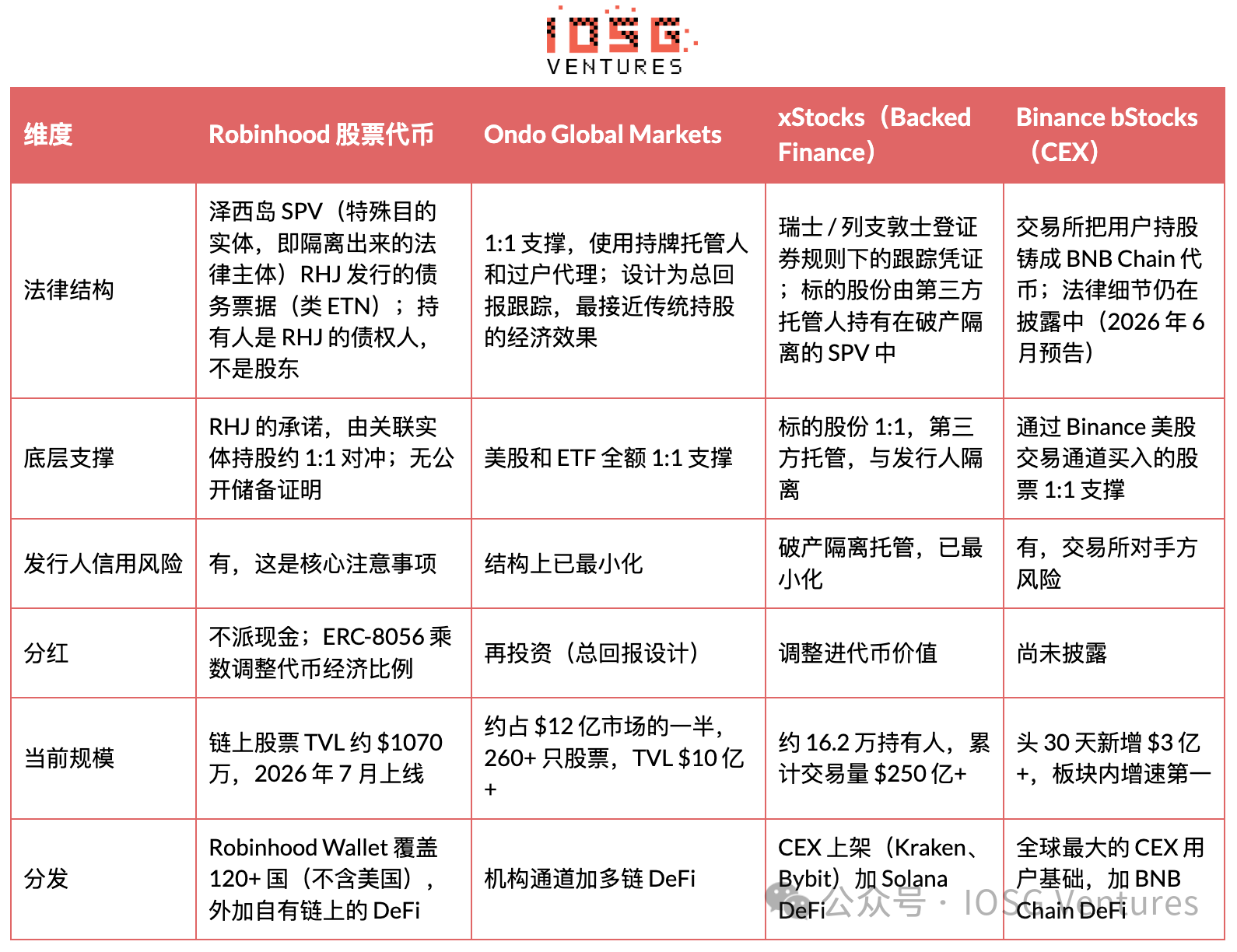
To summarize: among the three on-chain players, Robinhood's underlying structure is the weakest (debt with no proof of reserves, compared to the 1:1 custody model of the other two), but its consumer-grade distribution is the strongest. It is betting that the app funnel and its own chain are more important than legal purity, while Ondo and Backed are betting the opposite. Binance is a variable: it plays the same distribution card as Robinhood, but its funnel is much larger, and the fund flow of bStocks has already outpaced everyone. Who gets it right will be revealed in the RWA TVL numbers over the next two quarters.
Risks, Unresolved Issues, and Conclusion
- Perpetuals have only launched halfway. Arcus's RWA and stock perpetuals are still pending; only Lighter crypto perpetuals were usable on the first day.
- Perpetual liquidity starts from zero. Lighter integration is a dedicated USDG market, and its depth must be incentivized; it cannot inherit the main market of USDC from Lighter, resulting in early thin markets posing a genuine risk.
- The underlying of stock tokens. The approximately 1:1 hedge is merely a statement with no verified proof of reserves; private company tokens are explicitly not 1:1 and are not redeemable.
- Regional restrictions. Both perpetuals and stock tokens exclude the U.S.; Lighter perpetuals also exclude the U.K., Canada, Switzerland, UAE, and Singapore, effectively cutting out the largest retail market.
- Centralization. A single, undisclosed operator's sequencer, proprietary internal market maker (Pleiades), and no published decentralization roadmap.
- Wealth management returns. About 7% annualized returns are variable and demand-driven, coming from loan interest in the Spark, Ethena, and Maple markets; the higher the yield, the higher the risk, with insurance covering only gaps and not dislocations or market volatility.
- Activity quality. Early trading volume and users are mostly meme turnovers; RWA assets only account for about 4% of TVL. The bull case logic requires meme liquidity to convert into stock tokens and wealth management balances; this conversion has yet to be proven. Base did not effectively achieve it back then.
Our conclusion: The math on this infrastructure is feasible. Robinhood retains 90% of chain revenue, controls the sequencer, profits from USDG reserves, and the cold start was personally amplified by its CEO's meme trend. The suspense remains whether this chain will ultimately be an RWA chain or merely a casino disguised as a brokerage. Three things will provide answers: (1) whether the RWA TVL can rise from approximately 4% to a meaningful scale, with leading indicators such as whether stock token DeFi like Arrow can continue to grow; (2) whether the Lighter USDG market can retain real depth after zero-fee and point incentives taper off; (3) whether Robinhood will provide reserve proof for stock tokens because compared to Ondo and Backed's 1:1 custody model, its debt security structure is its weakest flank. This chain has no tokens, so any viewpoints can only be expressed through the ecosystem: ARB (revenue sharing from the chain), Lighter, and early ecosystem tokens.
免责声明:本文章仅代表作者个人观点,不代表本平台的立场和观点。本文章仅供信息分享,不构成对任何人的任何投资建议。用户与作者之间的任何争议,与本平台无关。如网页中刊载的文章或图片涉及侵权,请提供相关的权利证明和身份证明发送邮件到support@aicoin.com,本平台相关工作人员将会进行核查。


