The wise adapt to circumstances.
Written by: Eric, Foresight News
Perhaps many people still perceive Avalanche as a public blockchain focused on gaming. While it's not accurate to say that it has abandoned gaming entirely, it is evident that the currently popular RWA tokenization and payments have become Avalanche's hallmark.
According to data from RWA.xyz, the total value of tokenized RWA assets on the Avalanche network has reached $2.1 billion, ranking just behind Ethereum, BNB Chain, Solana, and Stellar.
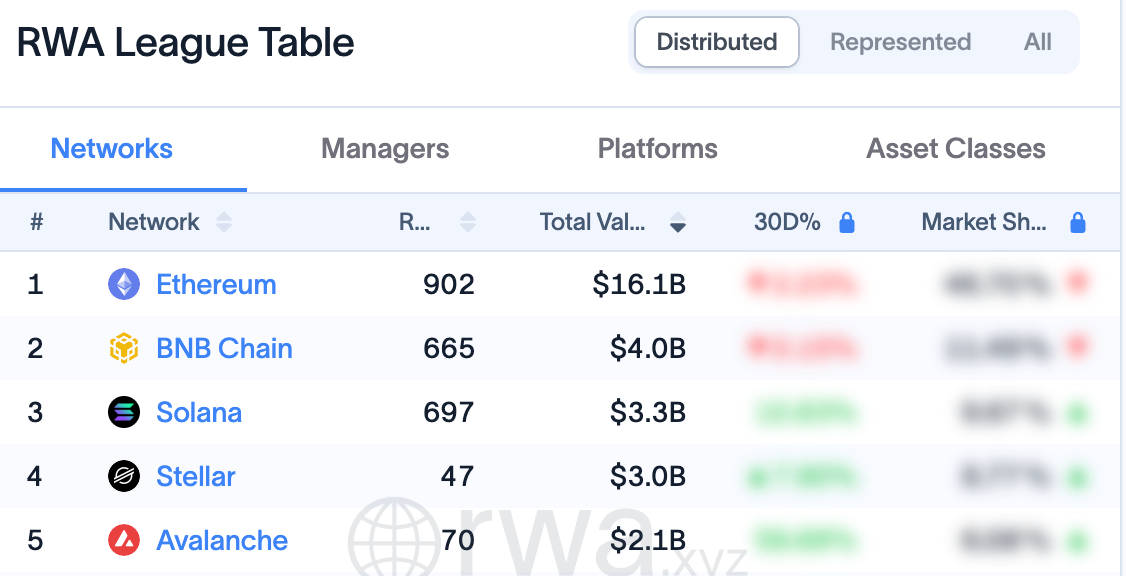
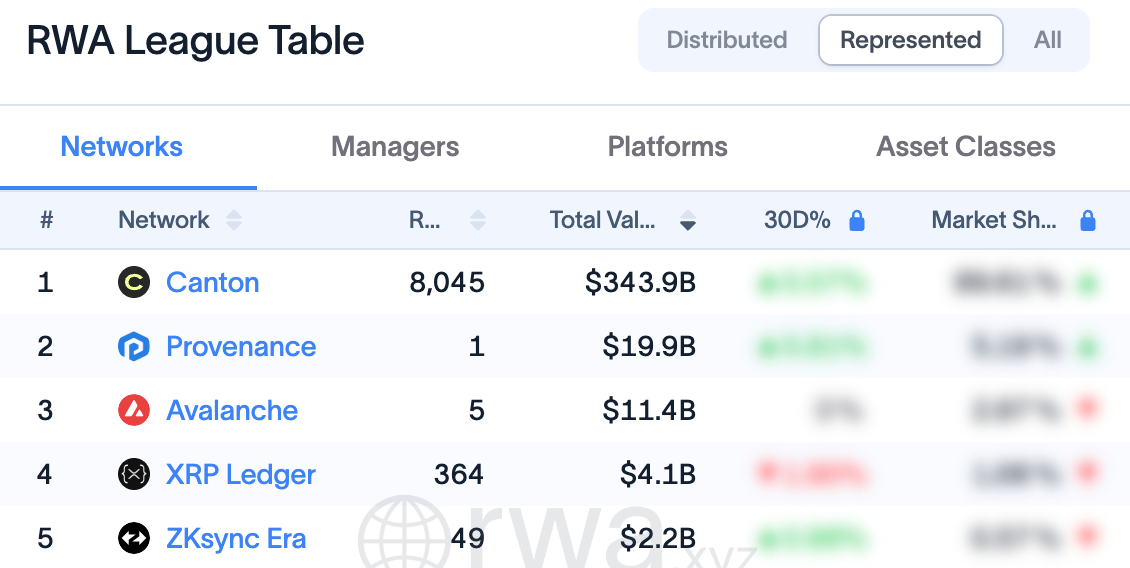
However, this ranking only accounts for the data of these chains as "distribution networks," meaning the situation where tokenized RWA assets are directly issued on the main net of these chains. If we calculate the situation where the chain merely serves as a "settlement network," Avalanche's ranking rises to third place.
Due to its unique subnet mechanism, Avalanche has become the preferred choice for many traditional financial institutions. This all began with an upgrade at the end of December 2024.
In December 2024, the Avalanche9000 upgrade was officially activated on the Avalanche main net. The core changes of this upgrade mainly include:
Redefining subnets as independent Avalanche L1s;
Removing the staking requirement of 2000 AVAX for L1 validators, replacing it with a subscription fee of approximately 1.33 AVAX per month;
Reducing the minimum base Gas fee on the C-Chain from 25 nAVAX to 1 nAVAX (a reduction of about 96%).
Previously, to establish an Avalanche subnet, each validator needed to stake 2000 AVAX. If a subnet had 20 validators, it would require staking 40,000 AVAX. With the new subscription fee model of 1.33 AVAX per month, the same 20 validators now only need to pay 26.6 AVAX per month, which would take over 125 years of continuous payments to reach the scale of 40,000.
As a result, the cost and autonomy of building a dedicated chain based on the Avalanche stack have significantly increased. Before this, in addition to staking 2000 AVAX, subnet validators also needed to participate in the consensus of the main net's X-Chain, P-Chain, and C-Chain, which enforced synchronization of the main net and subnet states; after the update, L1 validators only need to synchronize the latest P-Chain state, aimed at tracking their validator weight (used for consensus) and verifying ICM (Interchain Messaging) messages.
Of course, the drawbacks of this approach are also clear; Avalanche L1 needs to ensure its own security, with the main net becoming a coordinating layer without providing security support, similar to the relationship between Ethereum and sidechains. However, this trade-off has facilitated the explosion of RWA tokenization and payments.
A year after the completion of the Avalanche9000 upgrade, Avalanche completed the Granite upgrade, introducing dynamic block times, biometric login, cheaper cross-chain messaging, and achieving sub-second finality.
With the infrastructure upgrade completed, Avalanche began its rapid integration with traditional finance.
In November 2025, Securitize was authorized under the EU DLT pilot mechanism, enabling it to issue, trade, and settle tokenized securities at the market infrastructure level and connect with its brokers, digital transfer agents, and alternative trading systems in the U.S. For this system deployment, Securitize chose Avalanche.
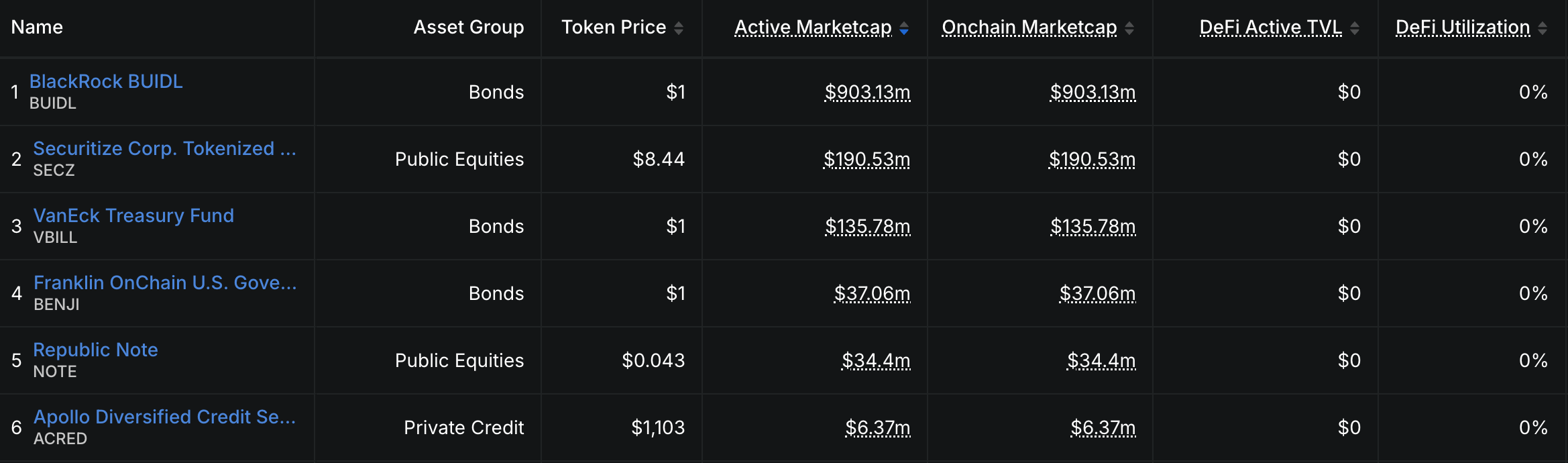
Securitize, which premiered on the New York Stock Exchange earlier this month, chose Avalanche back in 2020. On the day of its listing, Securitize simultaneously launched a tokenized version of its stock on both Avalanche and Solana. In addition, tokenized assets based on Securitize, such as the BlackRock BUIDL fund, ParaFi's tokenized hedge fund, and the Apollo ACRED fund, have formed the major sources of the $2.1 billion in tokenized RWA assets on the Avalanche main net.
Besides Securitize, Galaxy also issued a total of $75 million in tokenized collateralized loan obligations (CLO) "Galaxy CLO 2025-1" on Avalanche in early 2026. Fuxing Wealth’s Web3 brand FinChain also launched a yield-generating RWA stablecoin, FUSD, on Avalanche at the beginning of the year.
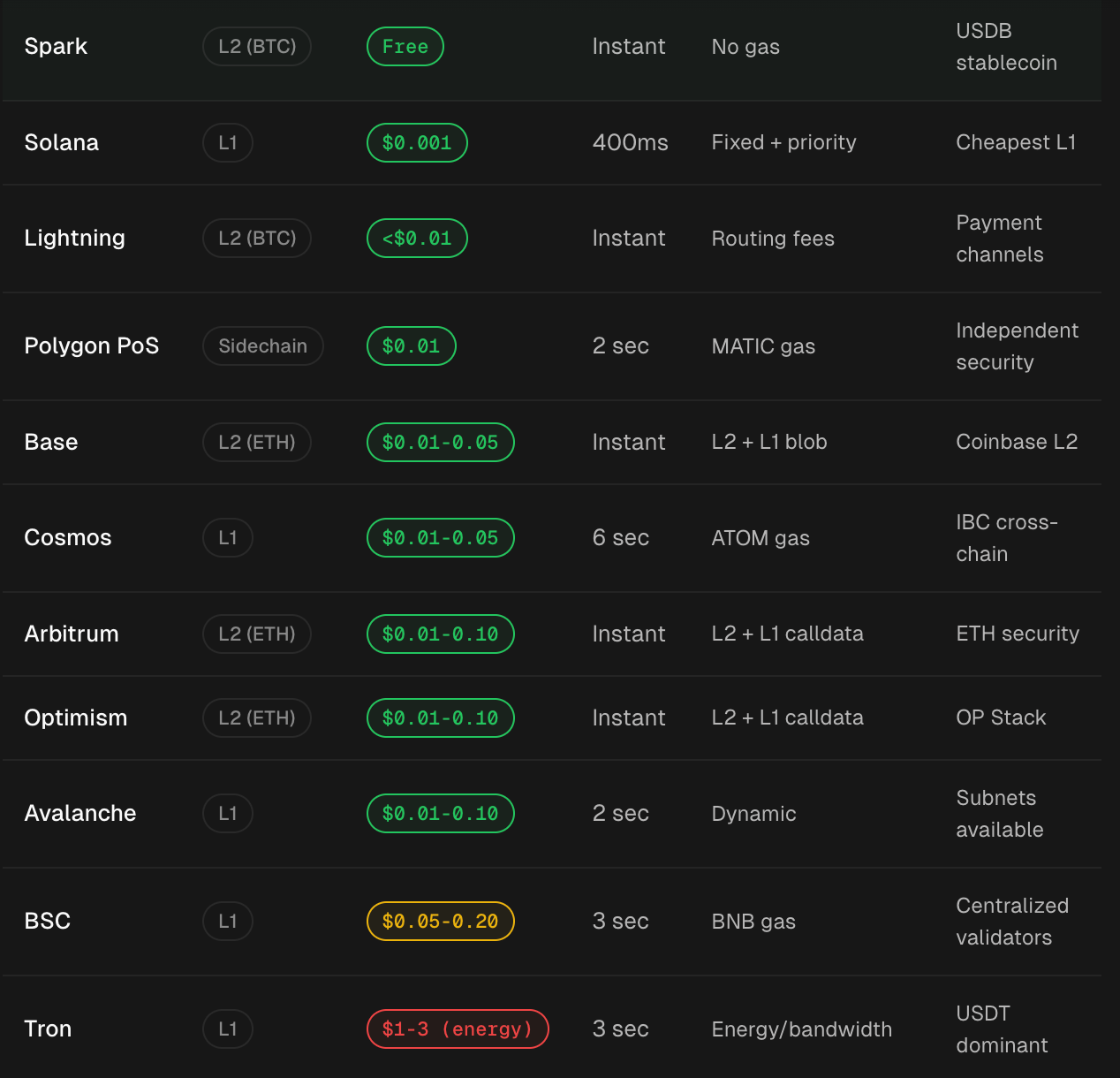
From the perspective of Gas fees, Solana can be said to hold a superior position, but many institutions choose Avalanche because it offers the best cost-effectiveness in the realm of EVM-compatible chains.
How do we understand "cost-effectiveness"? Base, Arbitrum, and OP Mainnet are also native EVM environments, with costs comparable to Avalanche, and even have certain advantages; however, the final confirmation of these L2 transactions requires waiting for L1 to produce a block, which makes Avalanche have a clear advantage in transaction "finality" as an L1. Compared to Ethereum and BNB Chain, Avalanche also has cost advantages.
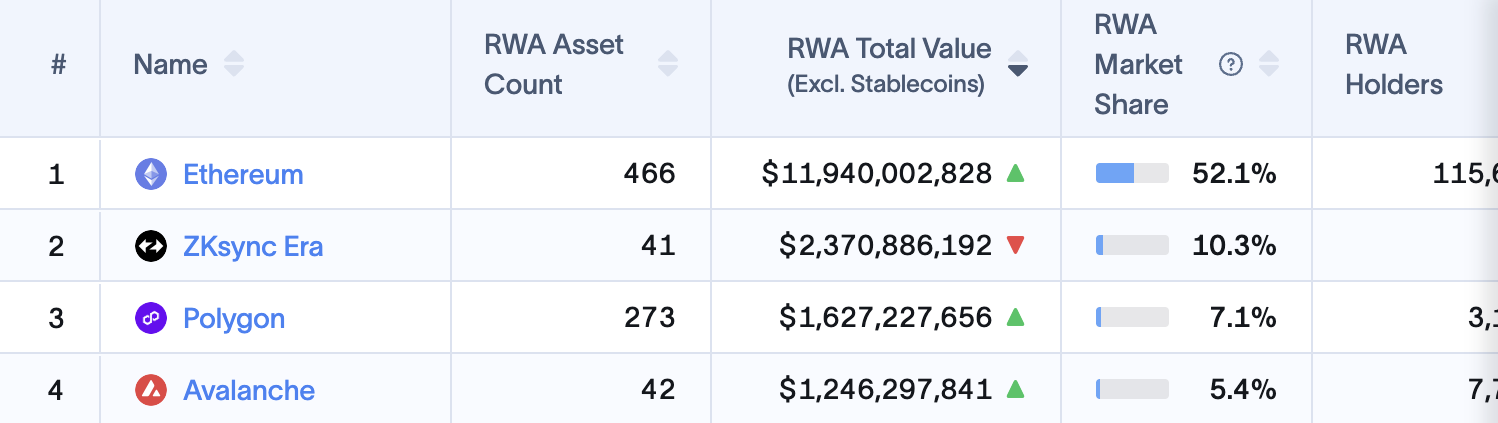
This advantage in "finality" and settlement speed once allowed Polygon and ZKsync to seize the initiative. Polygon, as a sidechain, is more independent, while ZKsync's ZKP can almost guarantee "finality" before the transaction is confirmed on L1. By the end of 2025, ZKsync and Polygon ranked just behind Ethereum in terms of the total volume of tokenized RWA assets, and performed better than Avalanche.
After discussing the advantages of the main net, let's move on to the Avalanche subnets, which are essentially the updated Avalanche L1.
Avalanche L1 provides partners with a comprehensive development stack and a high degree of freedom, allowing participants to build personalized L1s at a low cost to meet different needs. In April of this year, South Korean payment service provider NHN KCP signed a memorandum of understanding with Ava Labs to jointly build an L1 network for payment scenarios based on Ava Cloud.
In July, Nippon Electric Company and Japan's largest security token platform Progmat also turned to Avalanche. Nippon Electric hopes to explore on-chain services that combine NEC's biometric digital identity technology with Avalanche's multi-chain architecture, with the core feature being that biometric data does not go on-chain, only successful verification proofs are submitted on-chain, mainly serving in-store stablecoin payments for foreign tourists visiting Japan; Progmat is moving from a Corda 5-based consortium chain to a dedicated Avalanche L1, involving active tokenized assets worth over 452 billion yen (approximately $2.7 billion).
On June 18, the Avalanche Payments Collective was officially launched, with 28 institutions including Franklin Templeton, VanEck, WisdomTree, Paxos, and Kraken joining, aimed at establishing an ecosystem covering settlement, stablecoins, funding infrastructure, foreign exchange, asset management, compliance, and global payments.
Less than a month after the organization's establishment, Hyundai Motor America (HMA) and Hyundai Motor Mexico (HMM) completed the first enterprise-level cross-border settlement proof of concept (POC) on the Avalanche network through the Axiym platform. In this test, HMA converted $20,000 into USDT and transferred it to HMM, then converted it back to dollars; the entire cross-border transfer and verification process took an average of 7 minutes, whereas traditional interbank transfers typically require over 3 to 4 hours.
Looking back now, Avalanche has built a system of "main net + Avalanche L1" that can almost cover all aspects of demand from tokenized RWA to payment fields. Correspondingly, Aave has also made Avalanche the first stop for Aave V4's multi-chain deployment, pointing to the potential of the combination of traditional finance and DeFi.
In this wave of enthusiasm, Avalanche's speed of transformation and adaptation has been remarkably fast, carving out a path without the hype of Solana or the resources of BNB Chain. However, what does not quite match the actual progress is that the price of AVAX has returned to the levels of late 2020 and early 2021.
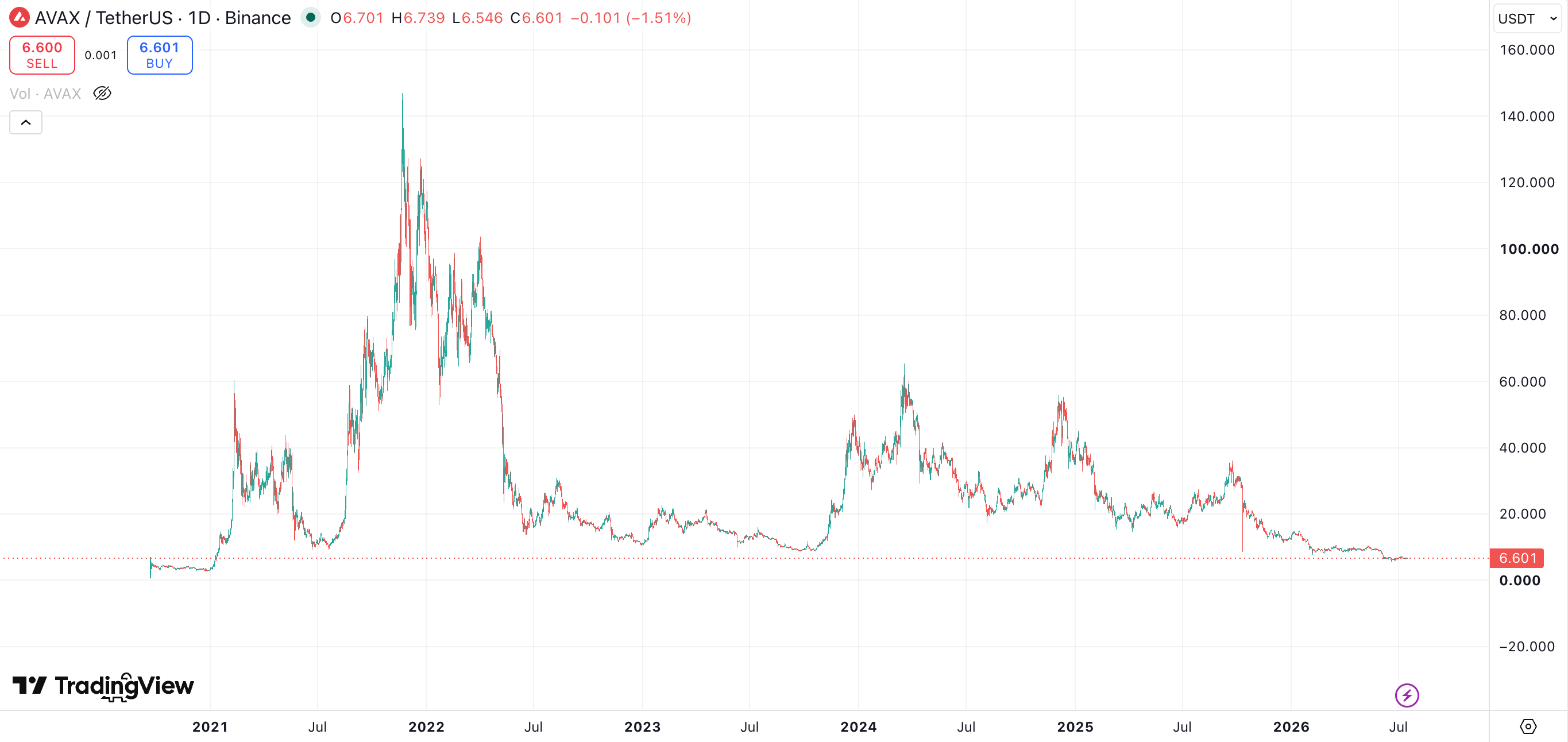
The economic model of Avalanche's token has not seen major adjustments recently, nor has it introduced measures such as buyback and burn to stimulate token prices. Avalanche L1 is a relatively independent chain and does not require AVAX as Gas fees; the activity level of the Avalanche C-Chain has also not qualitatively changed, with fees burned based on EIP-1559 only reducing nearly 5.1 million AVAX, less than 1% of the total 720 million.
But as previously mentioned, for such an execution-capable team, this may only be a temporary trade-off. Reducing the economic burden on partners and giving them more autonomy to increase Avalanche's activity is a more important direction right now. Rushing to introduce buyback and burn might reduce the financial flexibility of the protocol team, forcing the foundation or Ava Labs to sell large amounts of tokens to maintain operations, which would be detrimental to the long-term development of the protocol.
免责声明:本文章仅代表作者个人观点,不代表本平台的立场和观点。本文章仅供信息分享,不构成对任何人的任何投资建议。用户与作者之间的任何争议,与本平台无关。如网页中刊载的文章或图片涉及侵权,请提供相关的权利证明和身份证明发送邮件到support@aicoin.com,本平台相关工作人员将会进行核查。


