Author: Climber, CryptoPulse Labs
Recently, Progmat, Japan's largest security token platform, officially completed its migration to Avalanche Layer1, with all security token assets valued at over 452 billion yen (approximately 2.7 billion USD) fully migrated on-chain.
Compared to a regular technical upgrade, this represents a significant iteration of Japan's financial infrastructure. As traditional financial institutions begin to migrate their core businesses to more open and high-performance blockchain networks, it also signifies that the tokenization of securities is entering a new phase of development.
1. Behind the major migration, Japan's security token market enters a new stage
Progmat is not an ordinary blockchain company, but one of the most important infrastructures in Japan's security token market. It was initially incubated by Mitsubishi UFJ Trust and Banking Corporation (MUFG) and became independently operated in 2023.
It has received support from numerous Japanese financial institutions, including Mizuho Bank, Tokyo Stock Exchange, and SBI, occupying 53% of the Japanese security token market share and accounting for 64.6% of total security token issuance, covering multiple asset classes such as real estate and corporate bonds. It can be said that most security token assets in Japan operate on this system.

The most noteworthy aspect of this migration is that Progmat abandoned its previously constructed permissioned chain based on Corda 5 and opted for Avalanche's dedicated Layer1 as the new underlying architecture.
In recent years, Corda has been widely adopted by the global banking industry as a consortium blockchain solution, boasting strong privacy protection, comprehensive permission management, and ease of meeting regulatory requirements; therefore, many financial institutions selected it as their preferred choice for blockchain pilot projects.
However, as the scale of security tokens continues to grow, the limitations of such consortium chains have gradually emerged. A closed ecosystem means it is challenging for assets to interconnect with other blockchains, and developing new applications requires repeated large investments, making it difficult to share the continuously evolving innovative outcomes of the entire Web3 ecosystem.
Hence, this migration by Progmat is not merely a replacement of the underlying system but also represents an adjustment in the technological route.
After all smart contracts are migrated to the EVM environment, the platform maintains its original business logic, but the speed of asset rights transfer has increased by 3 to 5 times, and the final transaction confirmation time has been reduced to under 2 seconds. Additionally, it will be able to support the access of more blockchain networks in the future, achieving a truly multi-chain architecture.
More importantly, the entire migration process did not affect the normal operations of any financial institution, which also proves that the blockchain infrastructure is capable of supporting large-scale financial operations.
2. Why has Avalanche become the new base for financial institutions?
For a long time, financial institutions have faced a core question regarding blockchain: should they choose a completely closed consortium chain or an open public chain ecosystem? The biggest advantage of consortium chains lies in controllable nodes, private data, and high security, which has made them popular among banks and securities institutions.
However, as the blockchain industry has developed, it has gradually been realized that the true driving force behind innovation more often comes from open ecosystems. Whether it is smart contracts, stablecoins, DeFi, or RWA applications, nearly all significant innovations have first emerged within the EVM ecosystem, rather than closed consortium chains.

The dedicated Layer1 that Avalanche has launched in recent years perfectly provides financial institutions with a new solution that balances openness and compliance.
On one hand, each institution can have its own independent network, customizing validation nodes, gas mechanisms, and permission management to meet regulatory requirements for KYC, data isolation, and business compliance.
On the other hand, it can be compatible with the EVM ecosystem, interconnecting with a wide array of mature development tools, smart contracts, and applications globally.
This means that financial institutions can maintain their traditional requirements for security and controllability, while also benefiting from the innovative capabilities and network effects brought by an open ecosystem.
Globally, this is also becoming the developmental direction for more and more large financial institutions. Compared to the past when each built their closed consortium chains, today, more institutions are looking to create a new generation of financial networks that can interconnect.
Because what will truly hold value in the future is not an isolated blockchain, but an open infrastructure that can connect banks, securities firms, exchanges, asset management institutions, and more financial products.
The migration undertaken by Progmat reflects the development trend of global financial digitization.
3. RWA competition escalates, Japan takes the lead in the financial infrastructure era
If this migration merely completes the upgrade of the security token platform, then the new plans that Progmat will announce next reveal a larger strategic layout for Japan.
In May of this year, Progmat, in collaboration with banks, securities firms, and asset management institutions, established a working group for the tokenization of Japanese government bonds and on-chain repurchase (Repo), hoping to explore new models for on-chain government bonds, 24/7 trading, and T+0 real-time settlement.
This means that Japan has begun attempting to move its most core financial assets onto blockchain networks.
Government bonds are regarded as the most important underlying asset in modern financial markets; they are not only investment products but also widely applied in bank liquidity management, collateral financing, and repurchase transactions. If government bonds can achieve tokenization in the future, the operational efficiency of the entire capital market could change.
The traditional bond market is restricted by trading times, while on-chain assets can facilitate trading at all times; traditional securities settlement usually requires a certain settlement period, while on-chain smart contracts can achieve real-time delivery, significantly reducing capital occupation and transaction risks.
Simultaneously, the processes of asset issuance, registration, custody, and clearing can also be automatically completed through smart contracts, reducing a substantial amount of manual operations and improving the operational efficiency of the entire financial system.
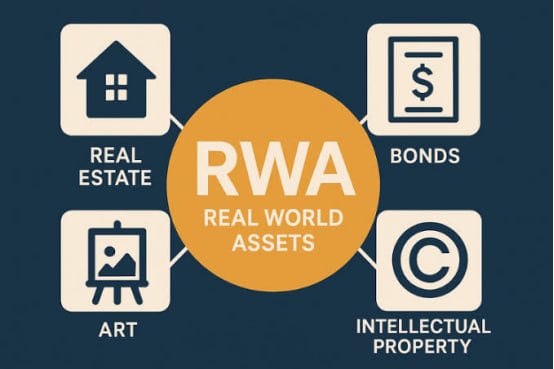
In fact, the tokenization of securities is just the first step in the development of RWA. In the future, real estate, fund shares, corporate bonds, private equity, and even more real-world assets may adopt a unified on-chain infrastructure for issuance, trading, and management.
In recent years, major international financial institutions, including BlackRock, JPMorgan, and Goldman Sachs, have been actively advancing related layouts, and more countries globally are beginning to enhance their regulatory frameworks for tokenized assets.
Japan's proactive push for the upgrade of the security token platform and exploration of government bond tokenization may be seeking to secure a leading position in the future global RWA competition.
Conclusion
Progmat's completion of the asset migration worth 2.7 billion USD may seem like just a technical upgrade, but it actually reflects a fundamental change in traditional finance's positioning of blockchain. Blockchain is evolving from serving encrypted assets to becoming a new type of financial infrastructure that carries securities, bonds, and other real-world assets.
As more and more financial institutions join the RWA race, the focus of future industry competition will shift from who has the higher-performing public chain to who can truly become the underlying infrastructure of the next generation of global financial markets. Japan's step taken this time may just be the beginning of the full on-chain transformation of global finance.
免责声明:本文章仅代表作者个人观点,不代表本平台的立场和观点。本文章仅供信息分享,不构成对任何人的任何投资建议。用户与作者之间的任何争议,与本平台无关。如网页中刊载的文章或图片涉及侵权,请提供相关的权利证明和身份证明发送邮件到support@aicoin.com,本平台相关工作人员将会进行核查。


