Author: Anthropic
Translation: Deep Tide TechFlow
Deep Tide Introduction: When AI is asked to answer subjective questions like "Should I change jobs?", its responses reflect certain values. Anthropic compressed the over 3000 values exhibited by Claude in 700,000 real conversations into four axes, discovering that Opus 4.7 is more risk-averse and candid than other versions, and that Claude conversing in Arabic is warmer than when conversing in English. This method allows us to quantify for the first time how "AI personality" changes with training methods and cultural contexts.
When someone asks Claude a question with no standard answer—such as whether to accept a new job or how to handle a conflict with a friend—Claude's response inevitably reflects certain values. We hope the values Claude reflects have high-level summaries in its constitution, but no document can foresee every possible value that might arise in the millions of conversations on Claude.ai each day. Instead, we seek to cultivate "sound judgment and good values that can be applied contextually" in Claude's responses.
How do we actually study the values expressed by Claude and how they change in different contexts? In previous work, we analyzed 700,000 anonymous Claude.ai conversations, identifying over 3000 different values in Claude's responses and the frequency with which it expresses them. However, such a large list of values is difficult to comprehend. In this work, we made studying these values feasible by compressing these thousands of values into a few axes that capture key patterns in Claude's responses. Each axis is a number line between two groups of values—for example, on one end are values related to emotional warmth, and on the other end are values related to rigor—where Claude's position on this line tells us which values it tends to lean towards.
We apply this method to measure how the values expressed by Claude change across two factors. First, we compared how the values expressed by Claude vary across different models. Each Claude model reflects slightly different personality training methods and many other tuning decisions. Since our value axis method quantifies key differences between models, it may ultimately allow us to link changes in the values expressed by Claude to different training decisions.
Secondly, we want to understand how users’ experiences differ when conversing with Claude in different languages. Our previous research indicated that Claude behaves differently in various languages. We applied the value axis method to understand how the values expressed by Claude change across the top 20 languages on Claude.ai.
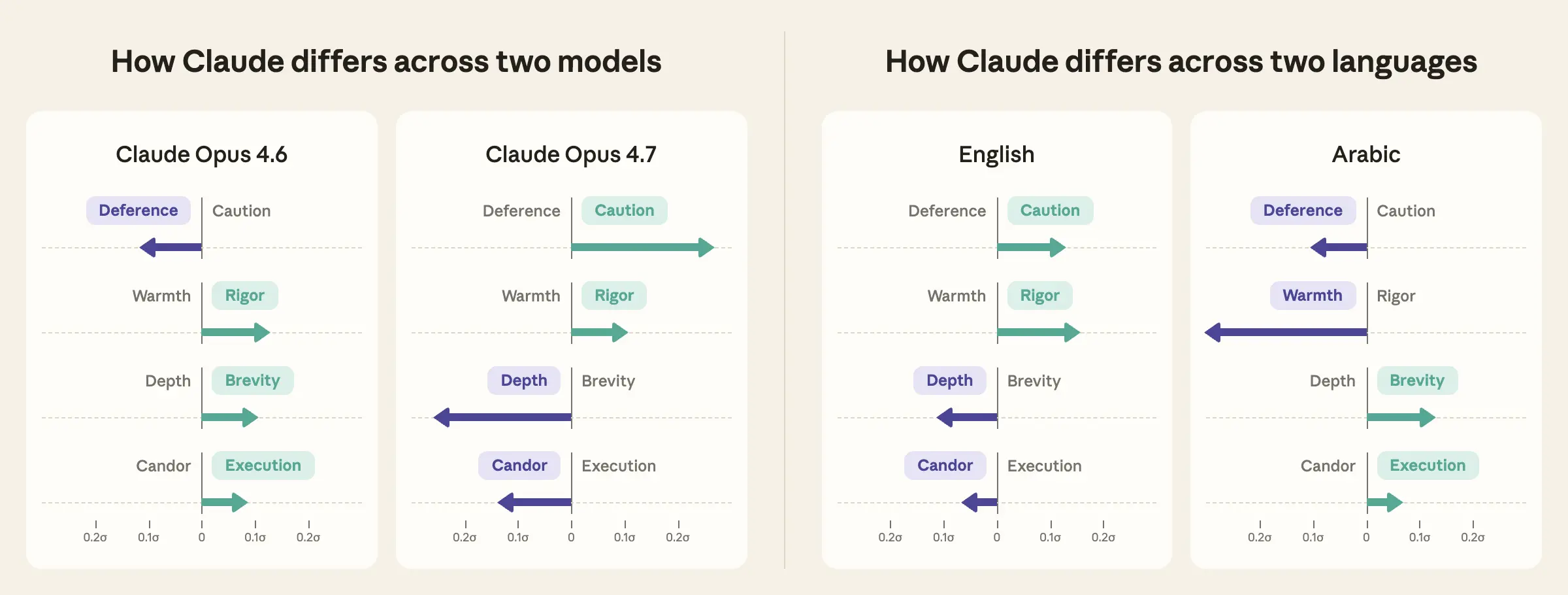
Figure 1: The values expressed by Claude differ between Opus 4.6 and Opus 4.7, as well as between English and Arabic versions. Opus 4.6 tends to express values related to humility, rigor, conciseness, and execution, while Opus 4.7 leans towards values associated with caution, rigor, depth, and candor. In the English version, Claude tends to express values related to caution, rigor, depth, and candor, while in the Arabic version, it tends to express values related to humility, enthusiasm, conciseness, and execution.
Four key axes capture 15% of the variance in Claude's values:
Compliance vs Caution: Does Claude tend to satisfy what others want, or to guard against potential risks and harm?
Warmth vs Rigor: Does Claude tend to express positivity and caring, or emphasize accuracy and precision?
Depth vs Conciseness: Does Claude tend to explain in depth, or only do what is asked?
Candor vs Execution: Does Claude tend to highlight its uncertainties, or produce more refined and confident answers?
The value profiles on these axes correspond to the perceived personalities of the models. Sonnet 4.6 is considered particularly warm, while Opus 4.7 is known for its rigor. We found that the value profiles of each model reflect these subjective assessments: Sonnet 4.6 tends to express more compliance and emotional warmth towards users, while Opus 4.7 reflects greater concern for accuracy and precision and guards against misuse.
The values expressed by Claude vary across languages. When Claude speaks English, the emphasized values differ compared to when it speaks Portuguese, Indonesian, or Chinese. The largest variations are seen on the warmth vs rigor axis, where Claude is most inclined to express warmth-related values in Arabic and Hindi, and most inclined to express rigor-related values in English and Russian.
Through this method, we can start to question why values change across different models and languages, and better test how factors like behavioral training or cultural context affect the values expressed by Claude.
How do we interpret the vast value space?
Ultimately, our goal is to have a method to empirically understand the values expressed by Claude, and how these values change in different contexts. In this work, we particularly focus on how values change across models and languages. But our previous work, "Wild Values," identified over 3000 values expressed by Claude. Comparing these thousands of values one by one would be cumbersome and obscure broader trends.
To make comparing values easier, we built value axes that reduce these thousands of values to a few fundamental dimensions based on which values tend to co-occur in real conversations. For instance, responses from Claude described as "warm" are also often described as "inspiring" and "positive." These "warm" responses are less frequently described as "rigorous" and "accurate." Constructing an axis from warmth to rigor allows us to organize these related value groups—warmth-related values on one side, rigor-related values on the other—and capture an important aspect of how Claude interacts with humans in conversations. If Claude expresses more warmth-related values than rigor-related values in a conversation, then that conversation skews towards the warmth side on this axis, and vice versa. This does not mean that the value groups at either end of the axis are mutually exclusive—Claude can express both warmth and rigor in the same conversation. However, in practice, the more values Claude expresses on one side of the axis, the fewer it tends to express on the other side. These axes enable us to compare the most significant value groups expressed by Claude without tracking the changes of thousands of individual values.
To construct the value axes, we started with the 3307 values identified in "Wild Values" and manually clustered values with similar meanings, resulting in a shorter list containing 339 high-level values. Next, using our privacy-preserving analysis tools, we sampled 309,815 conversations where users gave Claude subjective tasks. Our samples typically included three models (Sonnet 4.6, Opus 4.6, Opus 4.7) and the 20 most commonly used languages on Claude.ai, providing roughly 5000 conversations per model-language pair. For each conversation, the tool marked each of the 339 high-level values as present or absent based on Claude's responses. We followed the same process to identify the values expressed by users, as well as the tasks and themes of the conversations. We then applied dimensionality reduction techniques, which is a method that compresses the marked values into axes based on how strongly Claude tends to express certain values together.
This left us with four axes that capture the main ways the values expressed by Claude change from one conversation to another:
The compliance vs caution axis contrasts values like adapting and respecting preferences with values like responsible guidance and reducing harm.
The warmth vs rigor axis contrasts values like positive framing and encouragement with values like accuracy and transparency.
The depth vs conciseness axis contrasts values like nuance and critical thinking with values like conciseness and compliance.
The candor vs execution axis contrasts values like honesty and transparency with values like results orientation and optimization.
To ensure we are measuring the values expressed by Claude—rather than differences in users’ inquiry contents or ways of asking—we controlled for the task, theme, and values expressed by users in each conversation.
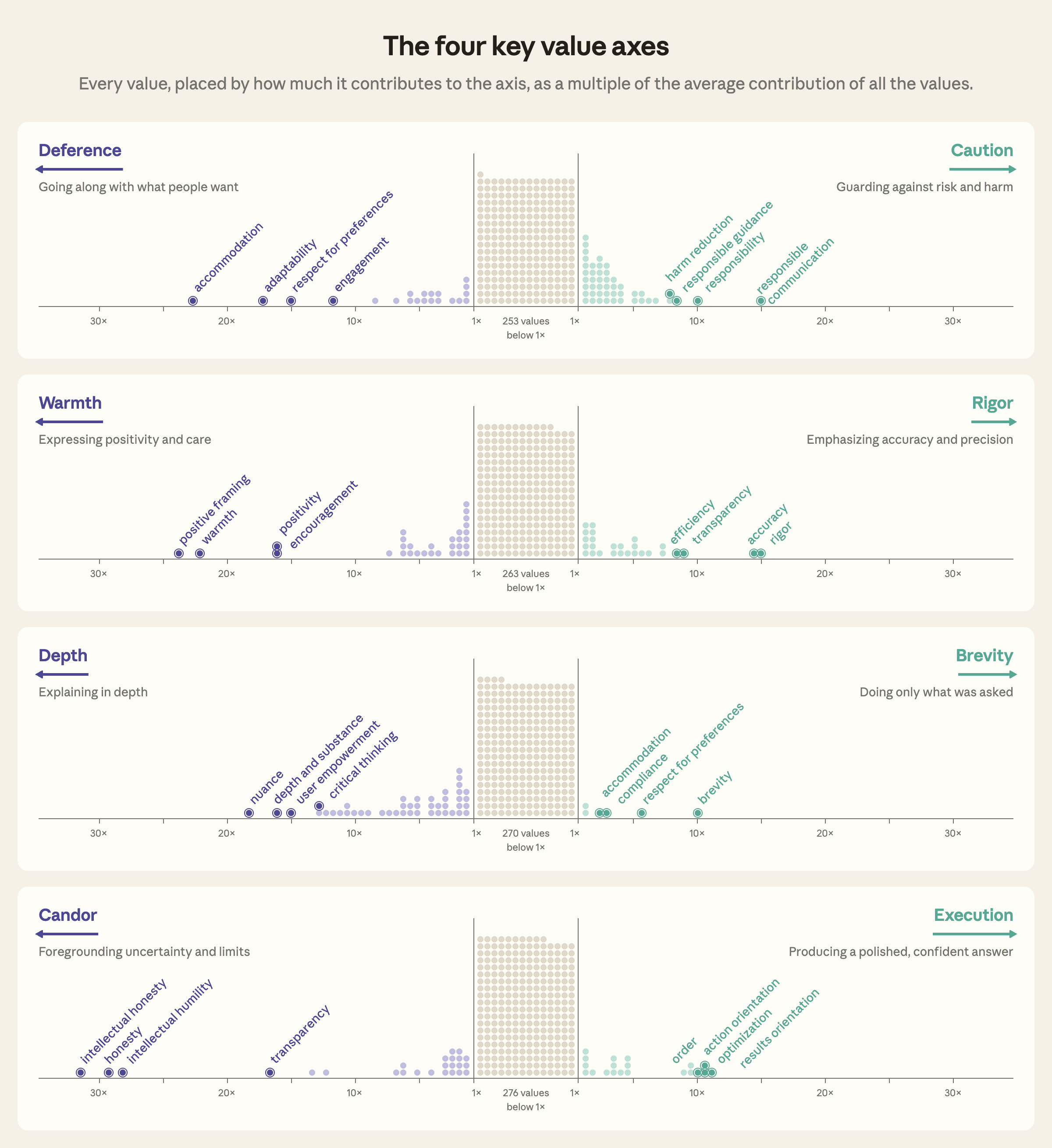
Figure 2: The four value axes representing the greatest differences in Claude's values. Each axis is a number line connecting two groups of values. The position of each value on each axis depends on how many times its contribution exceeds the average contribution for that axis, with the highest contributing values labeled. Most values contribute less than the average, indicating that each axis is driven by a small number of key values (labeled in the figure).
Do different Claude models express different value profiles?
In this section, we compared the values expressed by different models. For each model, we averaged its positions across all conversations along the four axes, giving an overall position for each axis. The result is a high-level picture showing which value groups each model tends to express more than others. These differences are small relative to the variability between conversations, but they are structured and detectable.
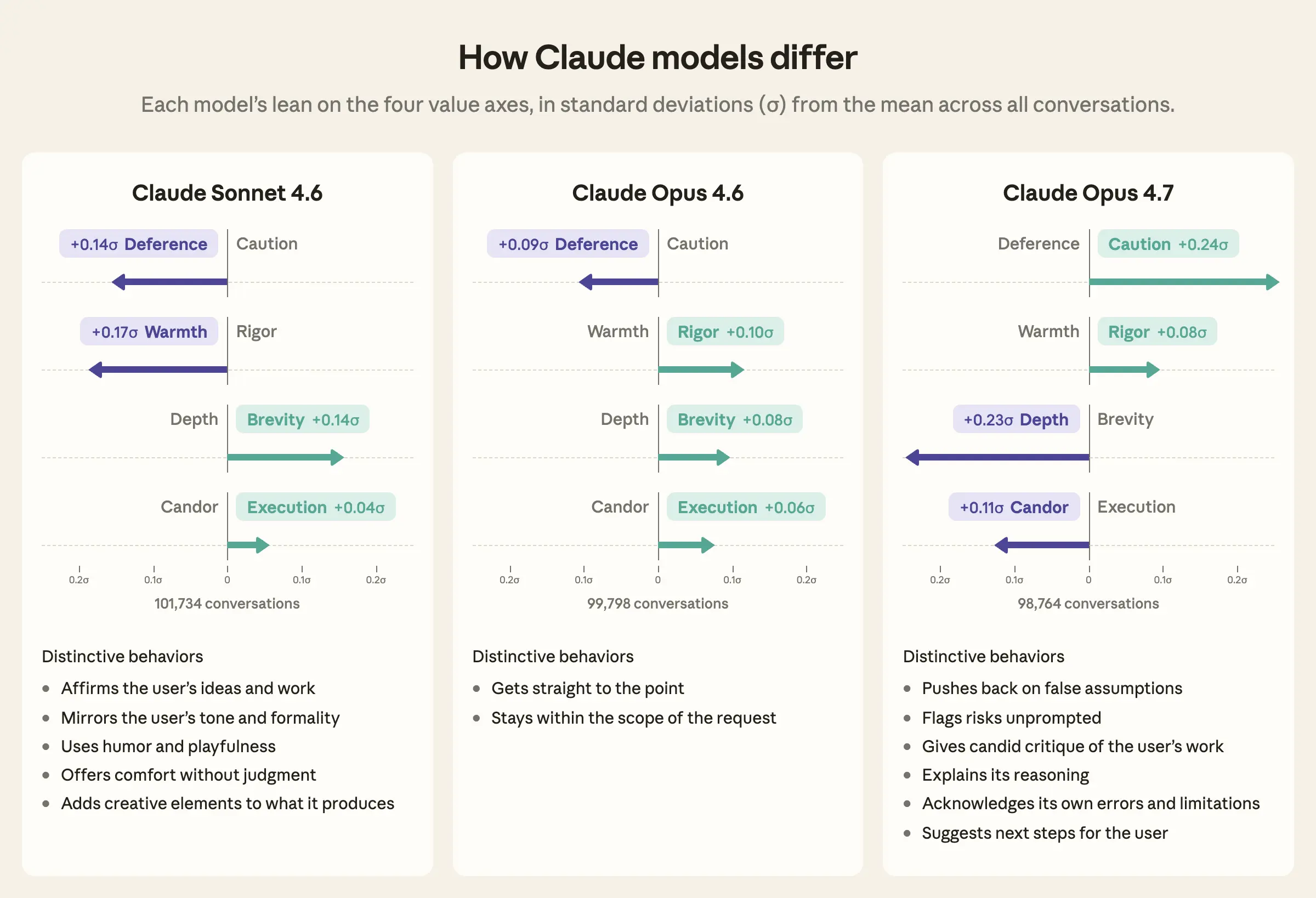
Figure 3: The average positions of each model on the four value axes (expressed as standard deviations from the mean across all conversations) and their unique behaviors. Sonnet 4.6 tends to be enthusiastic, respectful, and concise, while Opus 4.7 tends to express rigor, caution, and depth. Opus 4.6 tends towards rigor, respectfulness, and conciseness.
To see what these differences look like in practice, we magnified the specific values with the greatest differences among models. Each time we marked a value in a conversation based on Claude's privacy-preserving tool, it also wrote a short description of how Claude expresses that value. We grouped descriptions reflecting similar behaviors within value groups and summarized them as follows, giving a more specific view of how the models differ:
Compliance vs Caution. Sonnet 4.6 is most inclined to express compliance relative to caution, often affirming users' ideas and work. Opus 4.7 is most inclined to express caution, frequently warning users of risks proactively.
Warmth vs Rigor. Sonnet 4.6 is most inclined to express warmth, often comforting users through humor and jokes, and without judgment. Opus 4.7 is most inclined to express rigor relative to warmth, more likely to challenge users' assumptions and candidly criticize their work.
Depth vs Conciseness. Opus 4.7 tends to display depth by showing the reasoning behind its conclusions, while Opus 4.6 and Sonnet 4.6 tend towards conciseness. Opus 4.6 is particularly inclined to get straight to the point.
Candor vs Execution. Opus 4.7 tends to be candid by acknowledging its limitations, while Opus 4.6 tends to be execution-oriented, more likely to stay within the scope of users' requests.
These findings align with perceptions of these models, both within Anthropic and online. Users of Claude.ai have remarked that Opus 4.7 sets conditions on its answers more frequently than other models. Anthropic employees have described Opus 4.7 as expressing relatively more transparency, honesty, and humility, while describing Opus 4.6 as expressing more conciseness. We also described Sonnet 4.6 in its release blog post as warm, honest, and prosocial. The fact that our axes restore these impressions indicates that our method of marking and comparing the values expressed by Claude is capturing some real aspects of the models’ actual behaviors.
In many conversations, users may encounter different combinations of values when interacting with different Claude models. For example, Opus 4.7 tends to provide candid criticism of users' work or proactively warn of risks, while Sonnet 4.6 leans towards encouragement and humor. This difference in values between models may be shaped by personality training decisions (and other factors), and our value axis method highlights the key differences in the values expressed by Claude, which we may ultimately be able to trace back to these training choices.
Do the values expressed by Claude differ across languages?
We expect the values expressed by Claude to vary based on the language of the conversation for several reasons. First, Claude's training data differs across languages, which may shape the values it expresses. Secondly, the model evaluations we share in the system card have already identified differences in what Claude knows and how it handles sensitive requests in different languages. Measuring how much the values expressed by Claude vary between languages is the first step in determining whether the differences across languages reflect meaningful variations or are something that should be addressed in training.
We used the same method as in the previous section to calculate how Claude's value profiles differ across the 20 most commonly used languages on Claude.ai. Below, we plot the value profiles of Claude in the top languages on the platform, starting with the languages where Claude exhibits the greatest differences in values.
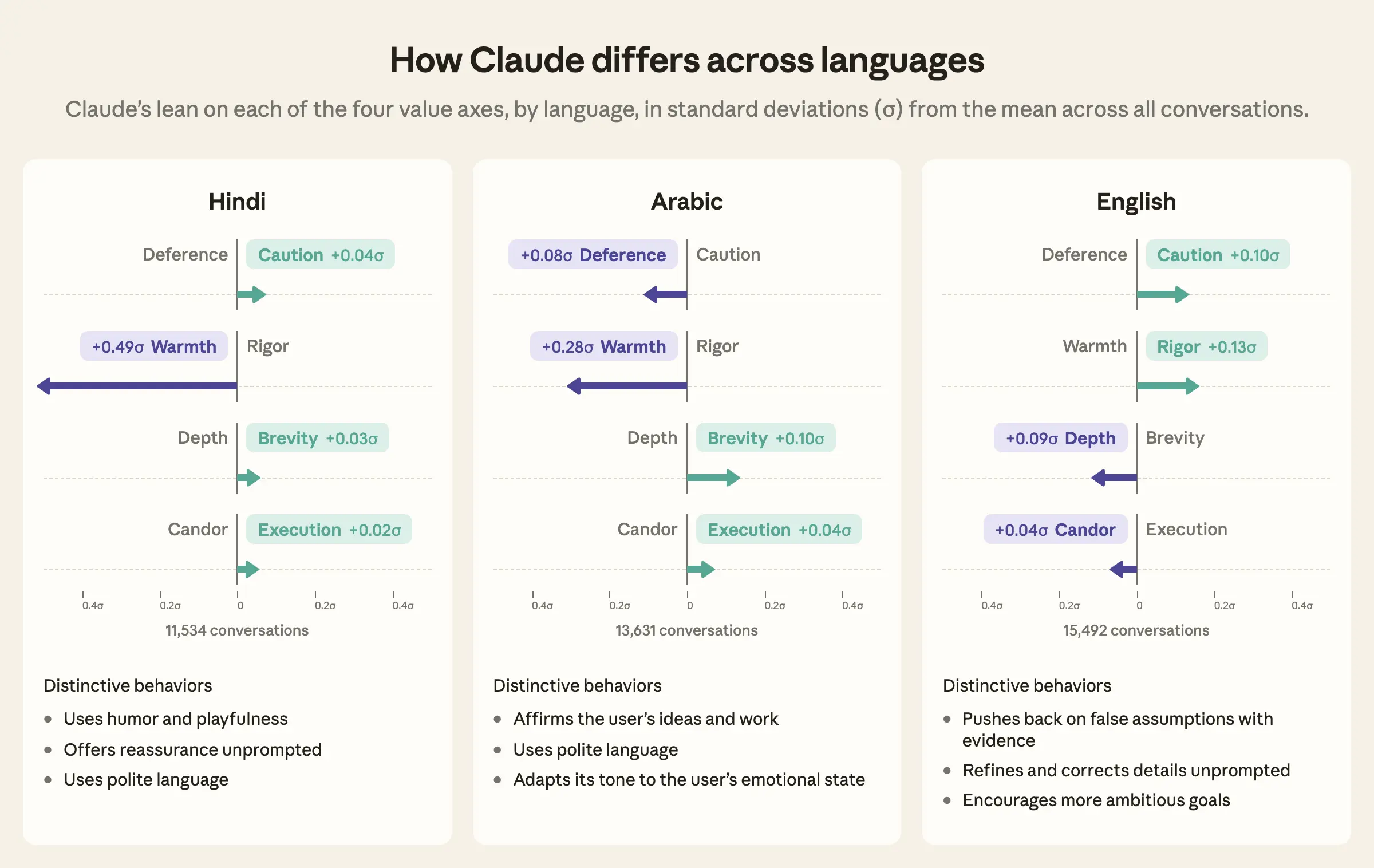
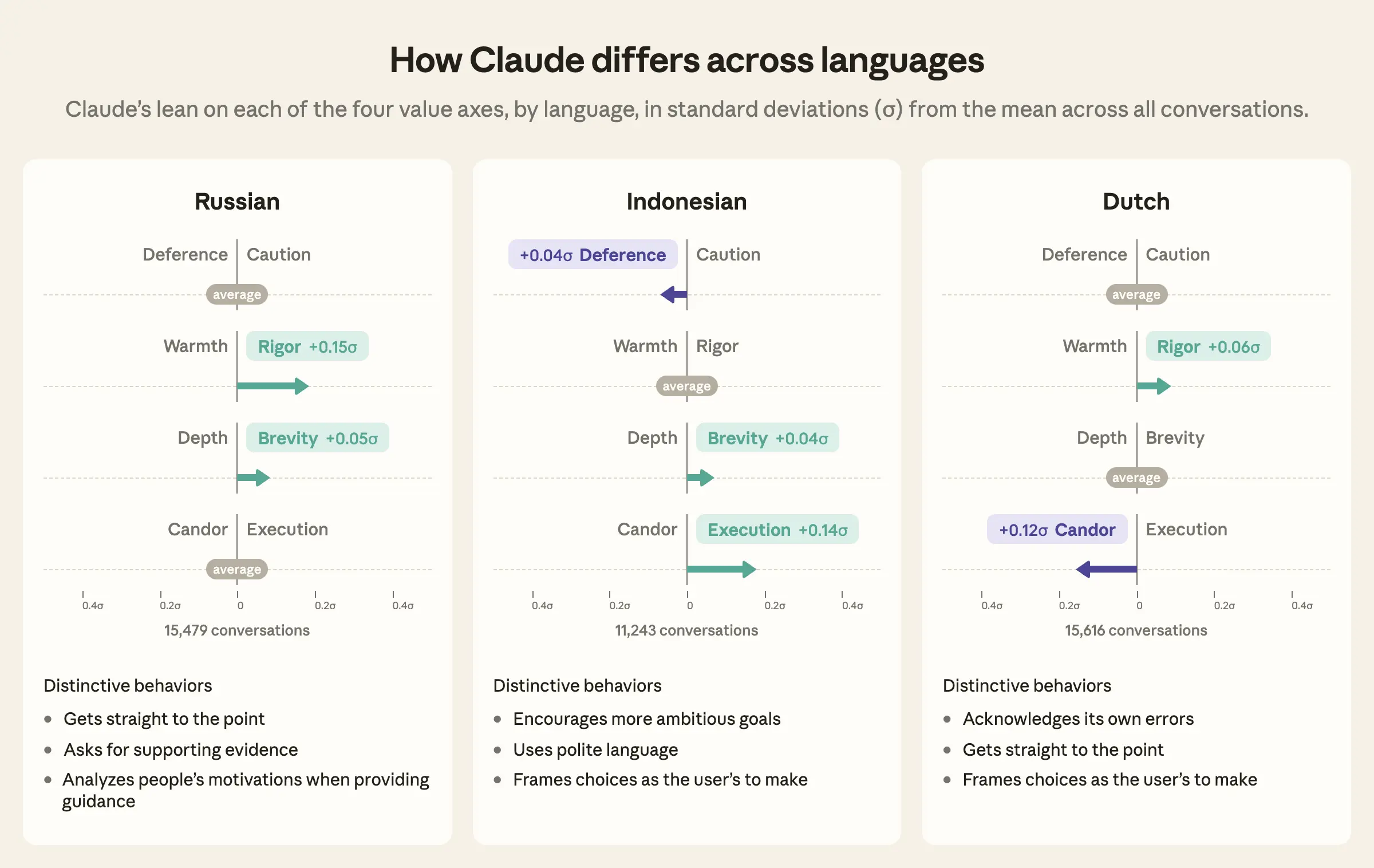
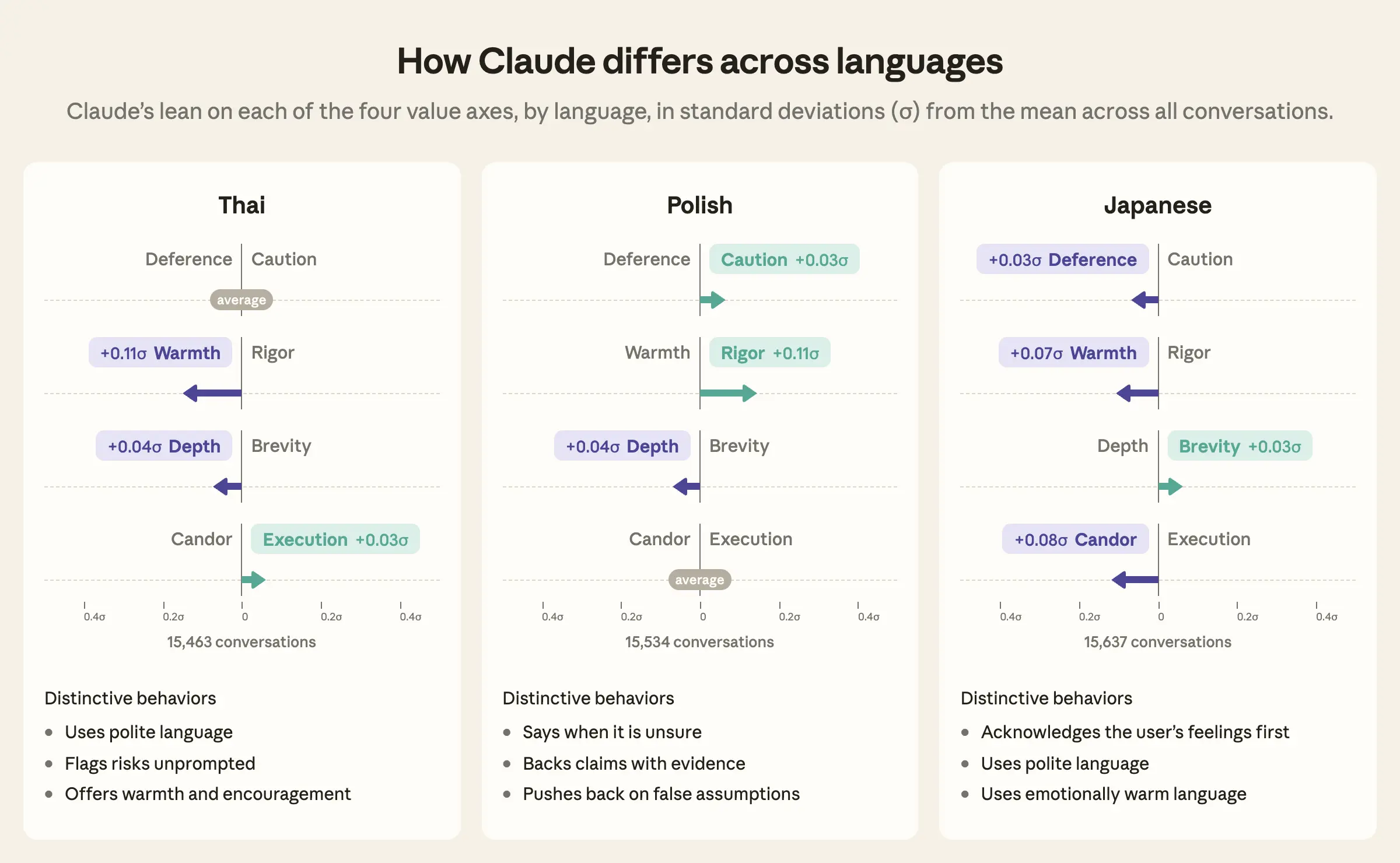
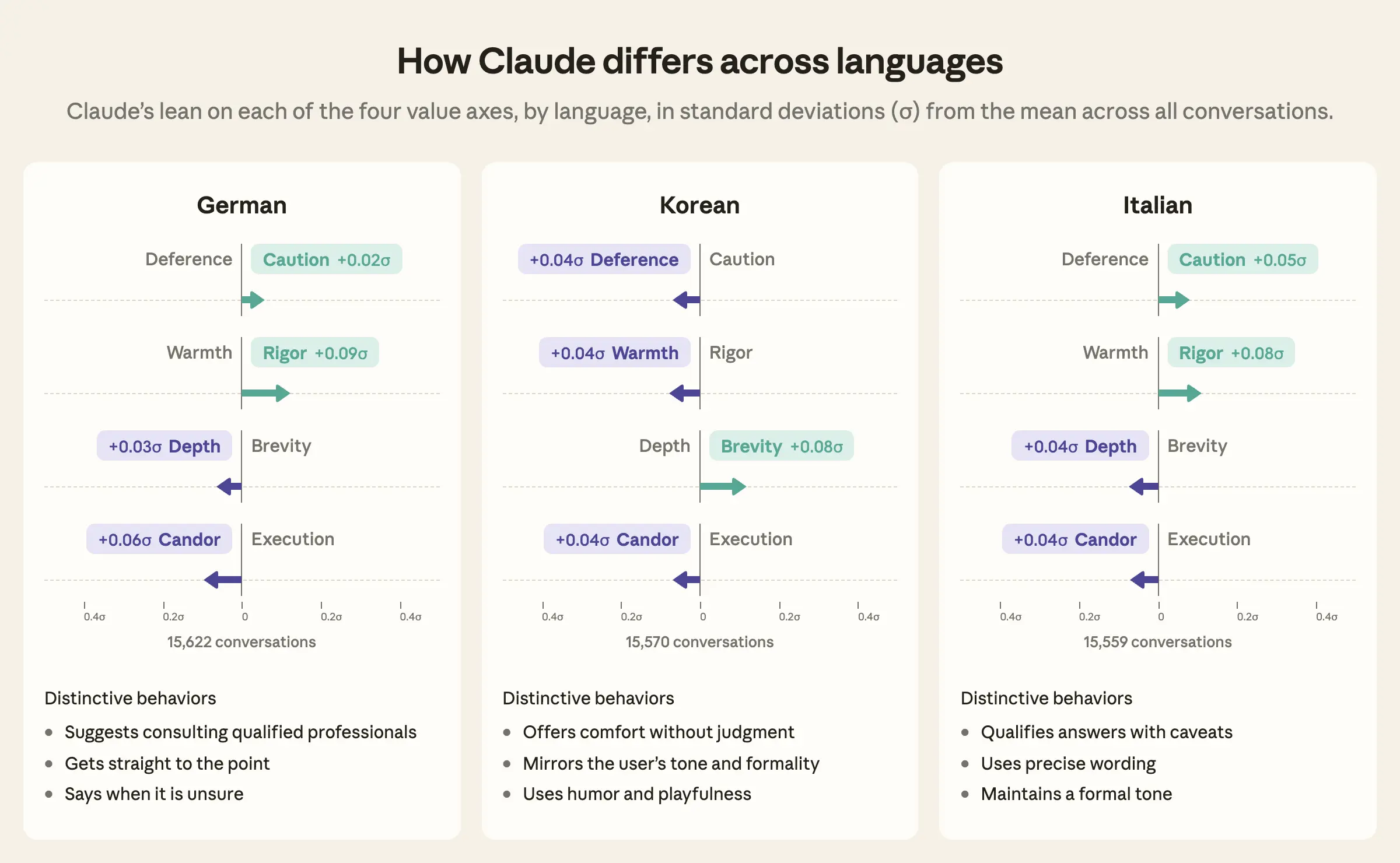
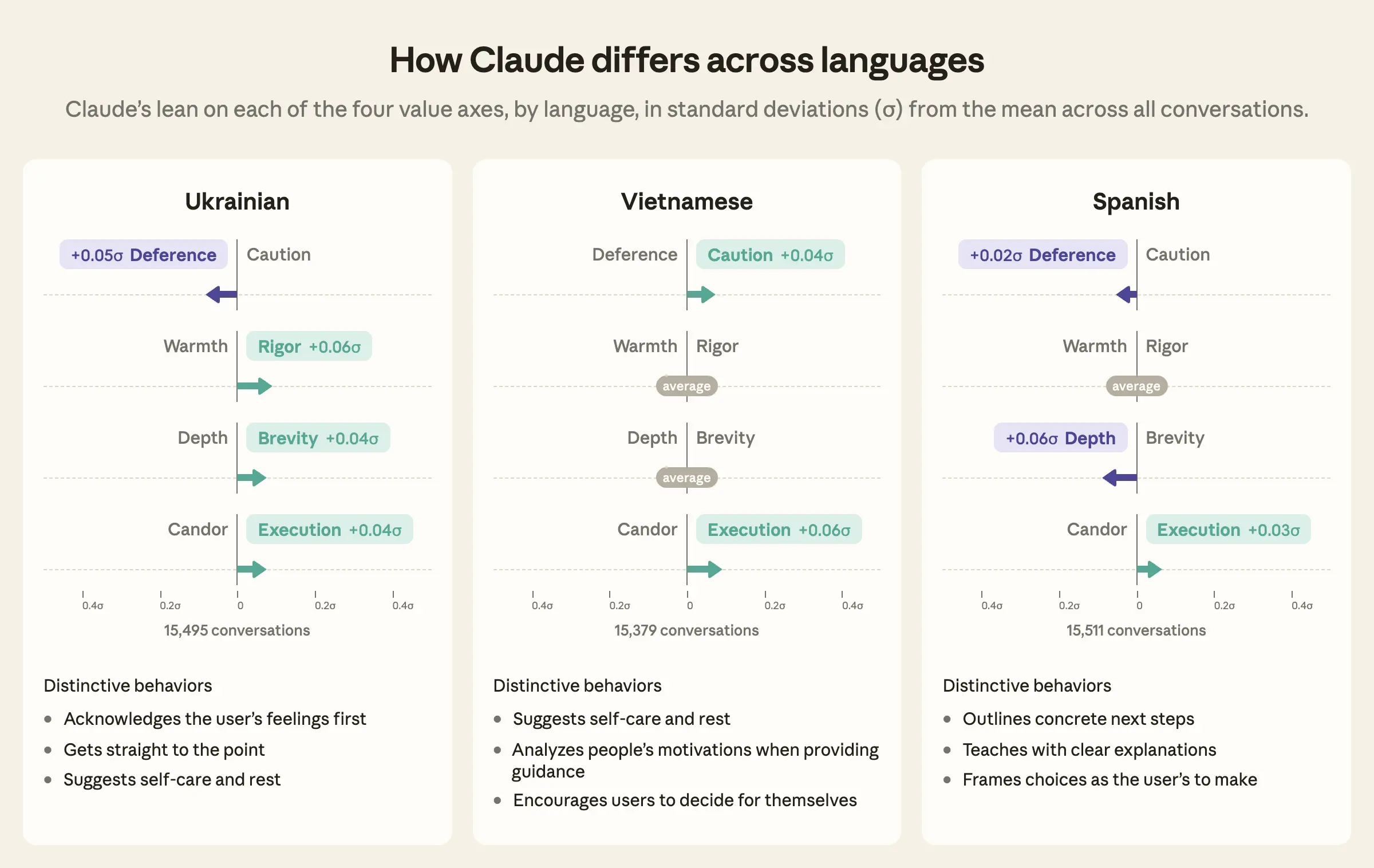
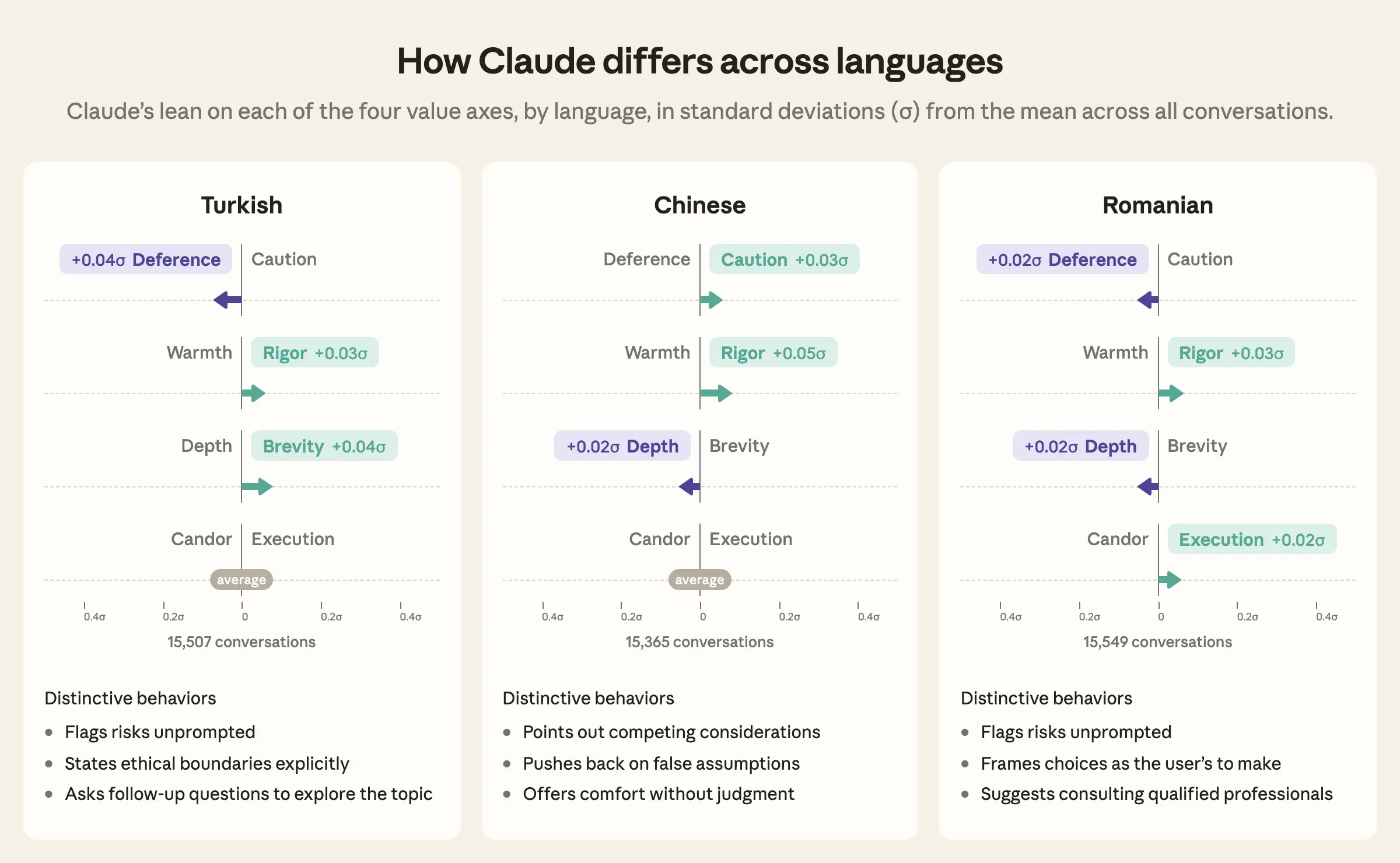
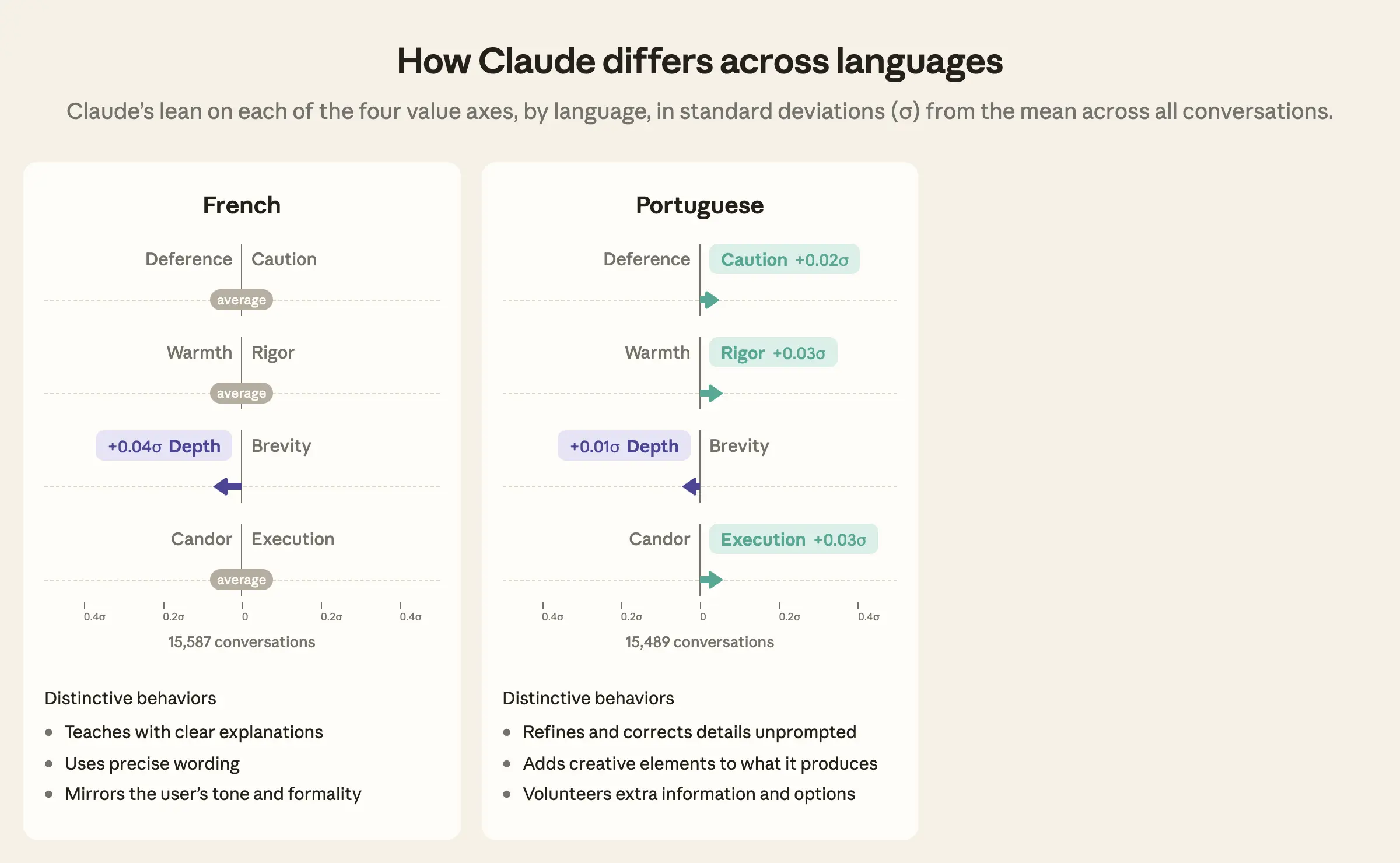
Figure 4: The average positions of Claude in conversations in each language on the four value axes (expressed as standard deviations from the mean across all conversations), along with Claude's unique behavior in each language. Claude tends to be most enthusiastic in Hindi, while it tends to be most rigorous in Russian. Claude tends to be oriented towards execution in Indonesian and most candid in Dutch. Claude tends to express respect and conciseness in Arabic, and caution and depth in English.
The greatest differences in Claude's value expression across different languages are seen on the warmth vs rigor and candor vs execution axes, while the respect vs caution and depth vs conciseness axes show the most stability.
Respect vs Caution. Claude expresses the most respect in Arabic and the most caution in English.
Warmth vs Rigor. Claude expresses the most warmth in Hindi and Arabic, characterized by polite language, humor, and affirmation of others' ideas and work. Claude is most inclined to express rigor in English and Russian, characterized by questioning assumptions, correcting details, and requesting evidence.
Depth vs Conciseness. Claude tends to show depth in English, elaborating and correcting details, while it tends towards conciseness in Arabic.
Candor vs Execution. Claude tends to be candid in Dutch, acknowledging its errors, while it tends to prioritize execution in Indonesian.
Overall, these results suggest that the values expressed by Claude change meaningfully with the language of the conversation. Faced with the same request, Claude is more inclined towards warmth and respect in some languages and towards rigor and caution in others. This introduces significant implications that we have only begun to explore. For example, two people seeking feedback on the same business plan, one in Hindi and one in Russian, may have different impressions of the quality of the plan because Claude expresses different values in its evaluations.
We are still unclear about which characteristics of the training data drive these differences. One possibility is that our training data is unevenly distributed across languages. Some languages have much larger data volumes than others, and in data-rich languages, training Claude to express consistent values may be more effective. The composition of the data also varies. For example, some languages may be overrepresented in professional writing, which may reflect different values. These imbalances in quantity and composition may collectively lead to Claude expressing different values in different languages.
We are also unsure how much of this variation is desirable. Different languages carry different conversational norms, and Claude may respond with different values based on these norms. Claude may also perform closer to our expected behaviors in some languages, leading to discrepancies in Claude's effectiveness across language communities.
This method begins to clarify which characteristics of the training data drive these differences—and whether such variation is desirable.
Looking to the Future
We have demonstrated that the values expressed by Claude can be compressed into a few axes, and that Claude's position on these axes changes with models and languages. This allows us to track these changes during model evaluations and post-deployment monitoring. However, we still do not understand why these changes occur, and what they mean for those interacting with Claude. Below, we outline what we believe are the most promising future directions.
Where do these value differences come from?
Knowing that Claude's values change with models and languages does not tell us why. Some changes may stem from differences in pre-training and fine-tuning data across languages. Our four axes highlight which value differences should be carefully examined in the training data. Tracing these differences back to specific data sources, training stages, or context factors can inform us where to intervene if we want to shape Claude's behavior more finely.
What do these differences mean for users?
We have measured which values Claude expresses differently and their associated behaviors, but we have not measured the impacts of these on users. Using tools like Anthropic Interviewer, we can ask users about their well-being, trust in Claude, or the quality of Claude's decisions, and then associate these impacts with the values Claude expresses. This would allow us to directly connect value differences to user outcomes, enabling us to prioritize addressing the value differences that truly affect users.
How should Claude's values change across different languages?
Claude's constitution describes the core values it should express, such as warmth, caution, and honesty, but it does not specify how these should change across different languages. Our results show that users of different languages are already experiencing Claude in different ways, but we do not know what kind of changes those interacting with Claude in those languages want. Determining how Claude's values should change across different languages involves understanding and weighing the perspectives of people who speak those languages.
What other factors drive differences in the values expressed by Claude?
Language and model are unlikely to be the only drivers of what values Claude expresses. Values may also be influenced by demographic signals such as age, occupation, or geographic region, whether through explicit cues in user-written content or through subtle differences in topics, tone, and style relevant to the inquirer. Understanding which of these signals are significant, and whether the resulting changes serve users well, is the next step supported by our method.
Can we reliably guide the values expressed by Claude?
With a method for measuring value profiles in models, a natural question arises: How reliably can we guide the values expressed by Claude? One way we might test this is by attempting to guide values through role training adjustments or system prompt changes, and then using our value axis method to verify whether the values expressed by the model shift as expected.
Can value profiles become part of our assessment and monitoring of models?
The value axis method provides us with a straightforward way to summarize the behavioral tendencies of models in open-ended conversations, and we could build this into the evaluation process. Running value profile analyses both before and after model release could highlight unexpected changes in the values expressed by Claude. We could also identify correlations between value profiles and problematic behaviors (such as non-compliance with Claude's constitution), utilizing what we learn to improve Claude's behavior.
Claude expresses values in millions of conversations each day, across dozens of languages, and until now, these values are something we can shape in training but cannot reliably observe in deployment. Now that we have a method to measure them, we can begin to see how the values expressed by Claude change in ways we did not deliberately choose, and we can study why they change and whether such changes serve users. Understanding this variation and deciding how to respond is work we will continue to pursue.
Matt Kearney, Miranda Zhang, Shan Carter, Judy Hanwen Shen, Kunal Handa, Jerry Hong, Saffron Huang, Miles McCain, Thomas Millar, Michael Stern, Mo Julapalli, Suzanne Wang, Devin Kuokka, Andrea Vallone, Shaoyi Zhang, Jim Baker, Kevin Troy, Matt Botvinick, Hanah Ho, Monika Tuchowska, Sarah Pollack, Jake Eaton, Deep Ganguli, Esin Durmus
Acknowledgments
Thanks to the following individuals for providing feedback at different stages of this work: Amanda Askell, Joe Carlsmith, Jack Clark, Ishita Dasgupta, Andrew Lampinen, Shayne Longpre, David Saunders, Taylor Sorensen, Heather Whitney.
Available here.
We define values as normative considerations, such as honesty or caution, that are stated or demonstrated in Claude's responses. When we refer to the values expressed by Claude, we mean the values reflected in Claude's behaviors and outputs. We do not imply that Claude holds values internally.
See the different language rejection rates for benign request evaluations on page 56 of our Claude Opus 4.7 system card.
After controlling for the task, theme, and values expressed by users in conversations, these four axes accounted for 15% of the total variance in values across conversations.
Any mention in this article of results from Claude without specifying model names is based on dialogues from all three models we studied: Sonnet 4.6, Opus 4.6, and Opus 4.7.
Data was collected from two weeks of conversations starting May 2026.
We removed 18 values that appeared in over 80% of conversations (e.g., helpfulness, clarity, following instructions). Otherwise, these nearly universal values would dominate the analysis and tell us nothing about variations in values across conversations.
See the GMMLU evaluation results on page 215 of our Claude Opus 4.7 system card and the different language rejection rates in the benign request evaluation on page 56.
免责声明:本文章仅代表作者个人观点,不代表本平台的立场和观点。本文章仅供信息分享,不构成对任何人的任何投资建议。用户与作者之间的任何争议,与本平台无关。如网页中刊载的文章或图片涉及侵权,请提供相关的权利证明和身份证明发送邮件到support@aicoin.com,本平台相关工作人员将会进行核查。


