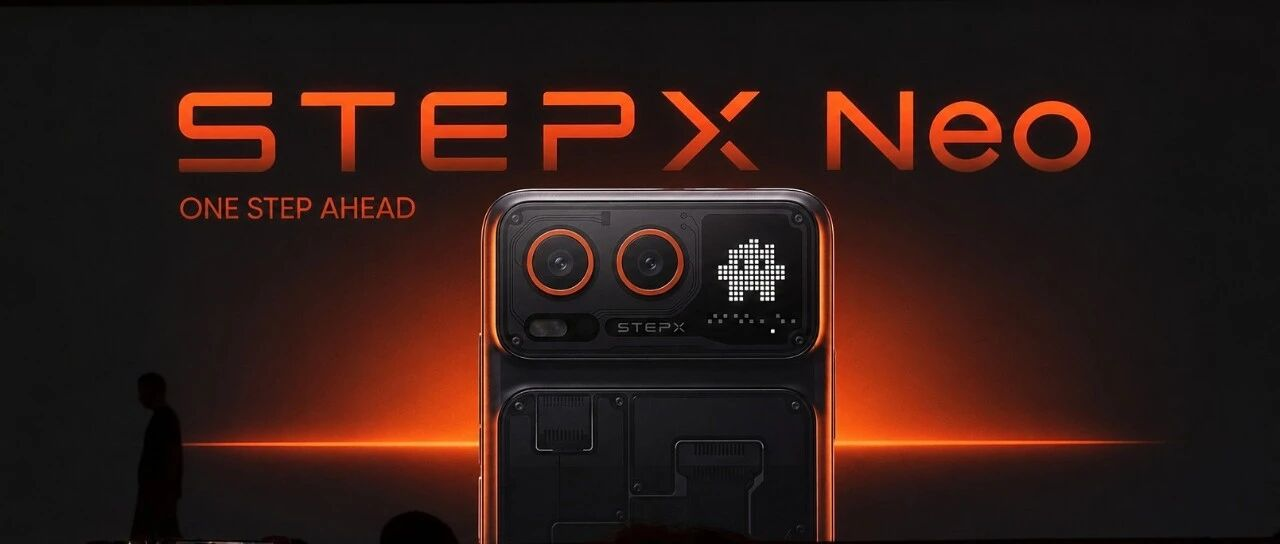
On the evening of July 13, 2026, Leap Star released the world's first large model native intelligent agent smartphone, STEPX Neo. At the press conference, Leap Star's Chairman, Yin Qi, candidly stated that he had consulted many friends in the terminal industry, and everyone advised them not to touch hardware. They actually wanted to heed the advice but ultimately decided to go ahead. This statement reveals the underlying anxiety of large model companies stepping into hardware. Just six months prior, ByteDance's Doubao phone assistant faced regulatory restrictions after forcibly crossing the WeChat ecosystem's walls. The two products represent two entirely different paths for AI phones to operate across applications. Can STEPX Neo really break the long-standing walls of the App ecosystem?
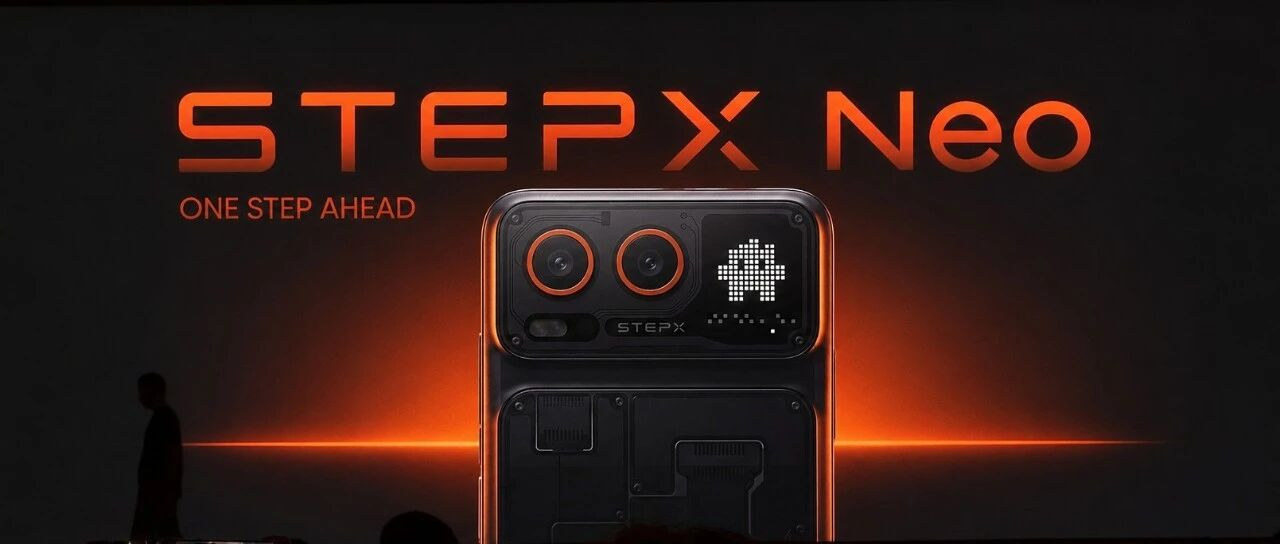
Leap Star's first intelligent agent smartphone STEPX Neo launch conference main visual
Not Just a Parasite in Apps
To understand why Leap Star insists on making smartphones, one must first comprehend the flow of capital and monetization dilemmas in the large model industry. According to information from the investment sector, in January 2026, Leap Star completed over 5 billion yuan in Series B+ financing, breaking the record for the highest single financing in the large model sector in nearly 12 months. Founded in April 2023 and led by founder Jiang Daxin, the company has accumulated a strong technological foundation in the multimodal large model field. Holding substantial capital yet choosing to venture into the lengthy supply chain of hardware, the core reason lies in the difficulty of monetizing large models in the cloud, creating an urgent need for a super entry point on the device side.
Currently, most large model applications exist as independent apps or mini-programs. Whether it's Leap Star's Step model or others, once they are parasitized in existing mobile operating systems, they can only be constrained by the permissions distribution and traffic allocation rules of system vendors. Without mastering system-level entry, Agents will always remain as parasites within apps, unable to truly reshape users' workflows. By personally venturing into making smartphones, large model companies are essentially trying to start from the underlying system to gain access to hardware entry and system-level permissions, allowing the intelligent agent to become the core hub of the operating system.
STEPX Neo is equipped with the Step AOS system and features the built-in intelligent agent Amoo. According to reports from Financial Associated Press, this device is manufactured by Huajin Technology and features an interactive secondary screen on the back, which will debut at the World Artificial Intelligence Conference on July 17. Specific hardware configurations and pricing have yet to be disclosed. From the product's design, the interactive secondary screen may be aimed at providing a persistent intelligent agent status display and quick interaction entry, further reinforcing its position as native intelligent agent hardware. Leap Star aims to demonstrate through integrated software and hardware that large models can not only serve as cloud-based brains but can also become super managers on the device side.
System-Level Permissions Are Not a Universal Key
To assess the tool value of STEPX Neo, one must first review the lessons learned from Doubao's wall-bumping experience. In December 2025, ByteDance released the Doubao phone assistant. According to media reports at the time, the assistant was first launched on the ZTE Nubia M153, priced at 3499 yuan. The core selling point of this product was the ability to simulate clicks using system-level permissions to achieve cross-application operations. Users only needed to give Doubao commands, and it could automatically open other apps, bypassing splash ads and going straight to information streams or transaction pages.
This unobstructed simulated clicking technology belongs to an external operational approach. Initially, it indeed provided impressive demonstration effects, allowing users to see the possibilities of cross-application automation. But it soon hit a wall. In early December 2025, a large number of users reported that the Doubao phone assistant triggered security controls when operating in WeChat, leading to abnormal exits or login failures. Consequently, Doubao removed this capability.
This was not merely a technical failure; it was a direct conflict with the commercial ecosystem. The core interests of super apps lie in traffic distribution and advertising displays. Doubao's simulated clicks bypassed these intermediaries directly, violating WeChat's bottom line. From a technical perspective, simulating clicks involves forcibly reading screen pixels and mimicking human finger actions, which can easily be detected as abnormal behavior by app security systems. App vendors can simply update UI layouts or add verification steps to easily intercept simulated clicks.
Legal experts have also pointed out that AI agents relying on unobstructed services to forcibly cross applications pose risks of unfair competition, making confrontational paths unsustainable. Doubao's collision declared that simply relying on brute-force cracking routes would lead to a death sentence in the commercial ecosystem. System-level permissions are not a universal key; forcibly prying open others' doors will ultimately invite tighter lockdowns.
Turning Hostility into Cooperation with GUI-MCP
Faced with the same cross-application operation dilemma, Leap Star has proposed a different solution. STEPX Neo chose not to simulate clicks but instead launched the Step Edge device-side model and the GUI-MCP protocol. According to Leap Star's open-source documentation, this protocol features a layered dual-stack architecture, supports high privacy modes, retains original screenshots locally while only uploading semantic summaries to the cloud. The open-sourced GUI proprietary model has a parameter count of 4B, claiming support for local recognition and operation across over 200 apps.
This protocol-based approach fundamentally differs from Doubao's external route. Simulated clicking involves forcibly taking over the user interface, while the GUI-MCP protocol aims to standardize interfaces, encouraging app vendors to voluntarily concede capabilities. Leap Star hopes to shift from confrontation to cooperation, making apps providers of skills for the intelligent agents rather than objects to be cracked.
Under the layered dual-stack architecture, the device-side model is responsible for processing visual screenshots and local operations, while the cloud model handles high-level planning and complex logical reasoning. This design of edge-cloud collaboration ensures response speed while reducing cloud computation costs. Importantly, the privacy protection mechanism that retains original screenshots locally and only uploads semantic summaries alleviates users' concerns about data leakage and provides a secure foundation for app vendors to open interfaces.
From the perspective of tool evaluation, protocol-based interfaces far outperform simulated clicks in execution efficiency and stability. Through standardized interfaces, intelligent agents can directly call core functions of apps without blindly searching for buttons on the screen. This means that when handling complex multi-step tasks, STEPX Neo can theoretically provide a smoother experience. However, the premise of all this is that app vendors are willing to adopt the GUI-MCP protocol.
The Essence of Breaking Walls is Reconstructing Profit Distribution
The differences in technical routes ultimately point to the competition within the commercial ecosystem. The first batch of ecological partners announced by Leap Star includes Meituan, WPS, Jianying, Ctrip, Gaode, Alipay, Baidu, Didi, JD.com, and more. These partners cover core scenarios like food delivery, office work, travel, and payments. Leap Star hopes to pull in these leading applications to establish standardized open protocols.
However, the essence of breaking down ecological walls is not technological breakthrough but profit distribution. The core value of AI agents is to eliminate the need for apps, allowing users to access the task settlement page directly. This directly disrupts the cake of super apps. Without a reasonable revenue-sharing mechanism, super apps will still combat agents by modifying code and upgrading verification processes.
There is indeed another path in the industry, whereby apps actively package their capabilities as Skills or MCPs for agents to access. This proactive openness can avoid confrontation, but the prerequisite is that app vendors believe the benefits of opening outweigh the losses of a closed moat. Many of Leap Star's initial partners are business-oriented applications that require orders and traffic, making them willing to explore new entry points. However, whether giants like Tencent, which have walled gardens, are willing to integrate this standardized protocol remains unanswered officially.
Whether Leap Star's ecological alliance strategy can truly convince all giants remains a significant question mark. If it lacks support from national-level applications like WeChat and Taobao, STEPX Neo's cross-application capabilities will be significantly hampered. Establishing a dual authorization mechanism and a reasonable profit-sharing model is the necessary path for AI phones to break through ecological walls.
From Parameter Stacking to Workflow Reshaping
As a tool, what impact does STEPX Neo have on the actual workflow of ordinary users? As the ultimate tool carrier, whether the intelligent agent attribute of the AI phone can execute complex tasks across application islands is a core criterion for assessing its tool value. This goes beyond simply stacking hardware parameters and addresses the practical pain points of AI tools.
OmniTools believes that the real tool value lies in seamless integration into workflows. STEPX Neo aims to reduce the frequency of app switching for users, allowing them to directly complete cross-application multi-step tasks through the Amoo intelligent agent. For instance, a user can simply say, "Help me book a flight to Beijing tomorrow and get a ride to the office," and the agent can automatically call the interfaces of Ctrip and Didi to complete the booking and hailing process. Once this experience is achieved, it will fundamentally change the way people interact with their smartphones.
However, there still exists a gap between ideals and reality. Currently, STEPX Neo has only appeared at the launch event, lacking real-world test data in complex scenarios. In extreme situations involving pop-ups, verification codes, and payment controls, the stability of the GUI-MCP protocol still requires validation at the WAIC debut. Additionally, hardware supply chain management capabilities remain a shortcoming for large model companies. While Huajin's manufacturing can ensure mass production, it lacks the offline channels and after-sales capabilities of traditional smartphone manufacturers.
The launch of STEPX Neo marks the beginning of large model companies transitioning from cloud services to device-side services, from the application layer to the system layer. It proposes an ecological cooperation path different from brute-force cracking with the GUI-MCP protocol. However, whether it can truly break down the App ecological walls depends not only on the maturity of technology but also on the reconstruction of profit distribution mechanisms. Before the WAIC actual product debut, all of this remains a suspense.
免责声明:本文章仅代表作者个人观点,不代表本平台的立场和观点。本文章仅供信息分享,不构成对任何人的任何投资建议。用户与作者之间的任何争议,与本平台无关。如网页中刊载的文章或图片涉及侵权,请提供相关的权利证明和身份证明发送邮件到support@aicoin.com,本平台相关工作人员将会进行核查。


