Author: Artemis Analytics
Translation: Deep Tide TechFlow
Deep Tide Preview: On its launch day, Robinhood Chain connects to DeFi protocols like Uniswap, and stock tokens for Apple and Nvidia are globally tradable; 140 institutions, including Google, Visa, and BlackRock, jointly launched Open USD stablecoin, directly targeting the $260 billion market of USDT. This is a key week for traditional finance to reconstruct itself using blockchain.
Market Overview
In the first week of July, global risk assets rose, but beneath the stable indices, there was a sharp shift in capital flow. The Dow Jones Industrial Average broke above 53,000 points for the first time and set a new record, marking an 8.9% increase for the Dow and a 9.6% rise for the S&P 500 in the first half of the year, a 12.8% increase for Nasdaq, and a 22% rise for the Russell 2000 (the best first half since 1991). The macro environment is warming: Weak employment data in June, coupled with Federal Reserve Chairman Kevin Warsh's statement about reduced inflation risks, reignited hopes for interest rate cuts, reversing months-long expectations of "higher for longer." A geopolitical hedge factor emerged: Attacks in the Strait of Hormuz and the U.S. withdrawal from Iran sanctions pushed oil prices and 30-year government bond yields higher (returning above 5%), raising discount thresholds for long-duration growth stocks just as the second-quarter earnings season began. This tension later triggered a real crash in chip stocks: Samsung's record quarterly guidance on July 7 did not stop semiconductor stocks from being sold off, with the Nasdaq wobbling and the broader market barely holding on.
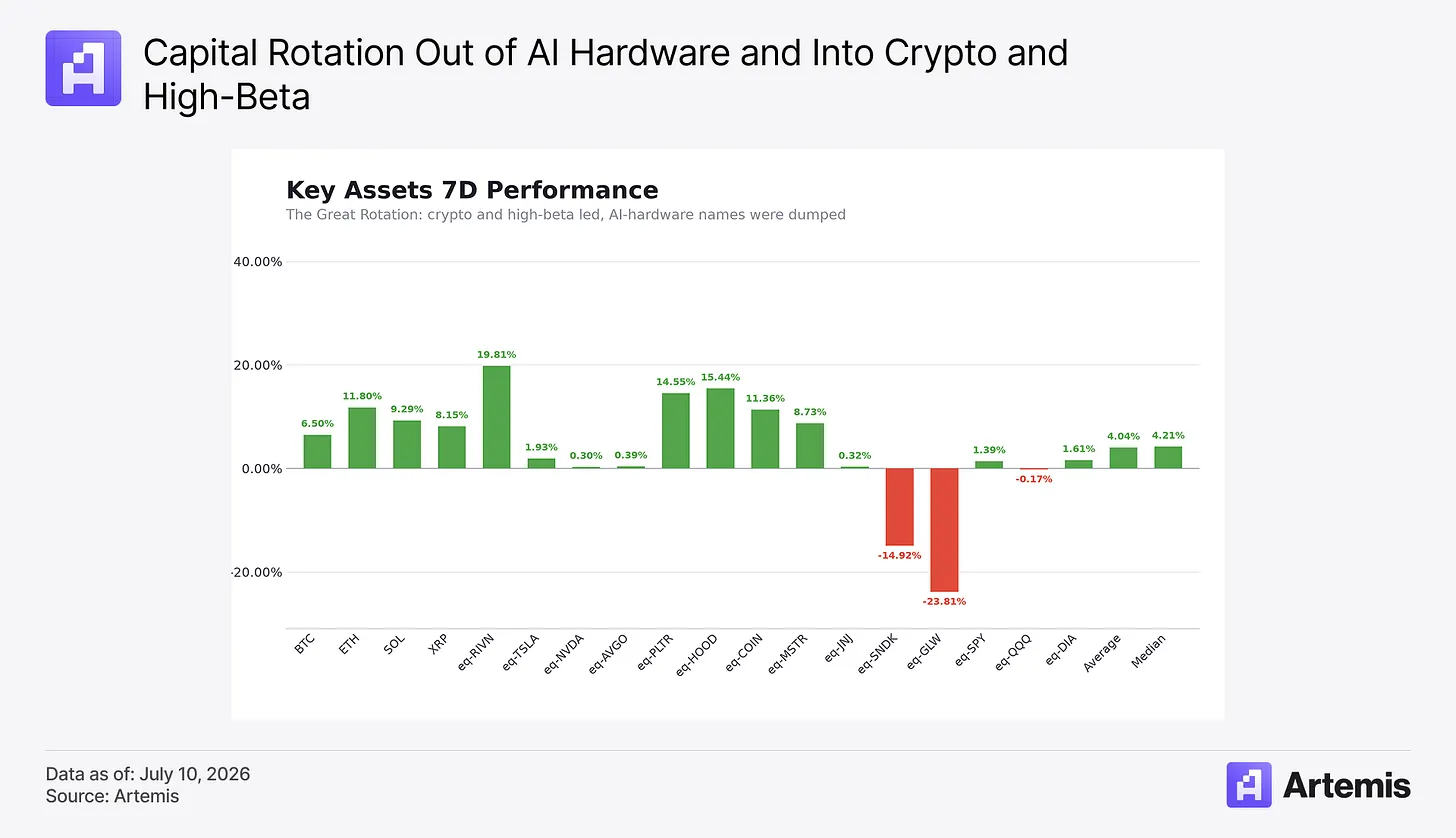
This week's leaderboard clarifies the rotation story in one image. The biggest single stock winners were not AI hardware leaders but recovering high-beta and crypto concept stocks: Rivian up 19.8%, Robinhood up 15.4% (benefiting from the launch of Robinhood Chain), Palantir up 14.6%, Coinbase up 11.4%, Strategy up 8.7%, alongside a strong rebound in cryptocurrencies (ETH up 11.8%, BTC up 6.5%). The benchmark indices only rose slightly (Dow +1.6%, S&P 500 +1.4%, Nasdaq 100 -0.2%). The hardest-hit areas focused on AI capital expenditure supply chains: Corning down 23.8%, SanDisk down 14.9%, even as mega AI stocks (Nvidia +0.3%, Broadcom +0.4%) went sideways—textbook "sell crowded leaders, rotate into everything else" market actions.
This Week's Highlights
Big Rotation: AI Crash, "Boring Stocks" Rise
The most important market story this week is that capital is rotating from AI hardware into those value and defensive sectors that missed out on the 2025 growth. The direct reason is that investors increasingly seek to see actual returns from record AI capital expenditures. Major tech companies' AI capital expenditure is expected to increase by about 50% to well over $600 billion by 2026, and the gap between investment and revenue has now surpassed the 2001 telecom bubble, as capital expenditure growth outpaces revenue by about 46%. As US tech/AI valuations approach EV/EBITDA of 25 times, the market has begun to punish spending—even if operational performance exceeds expectations—due to concerns about delayed monetization leading to margin compression.
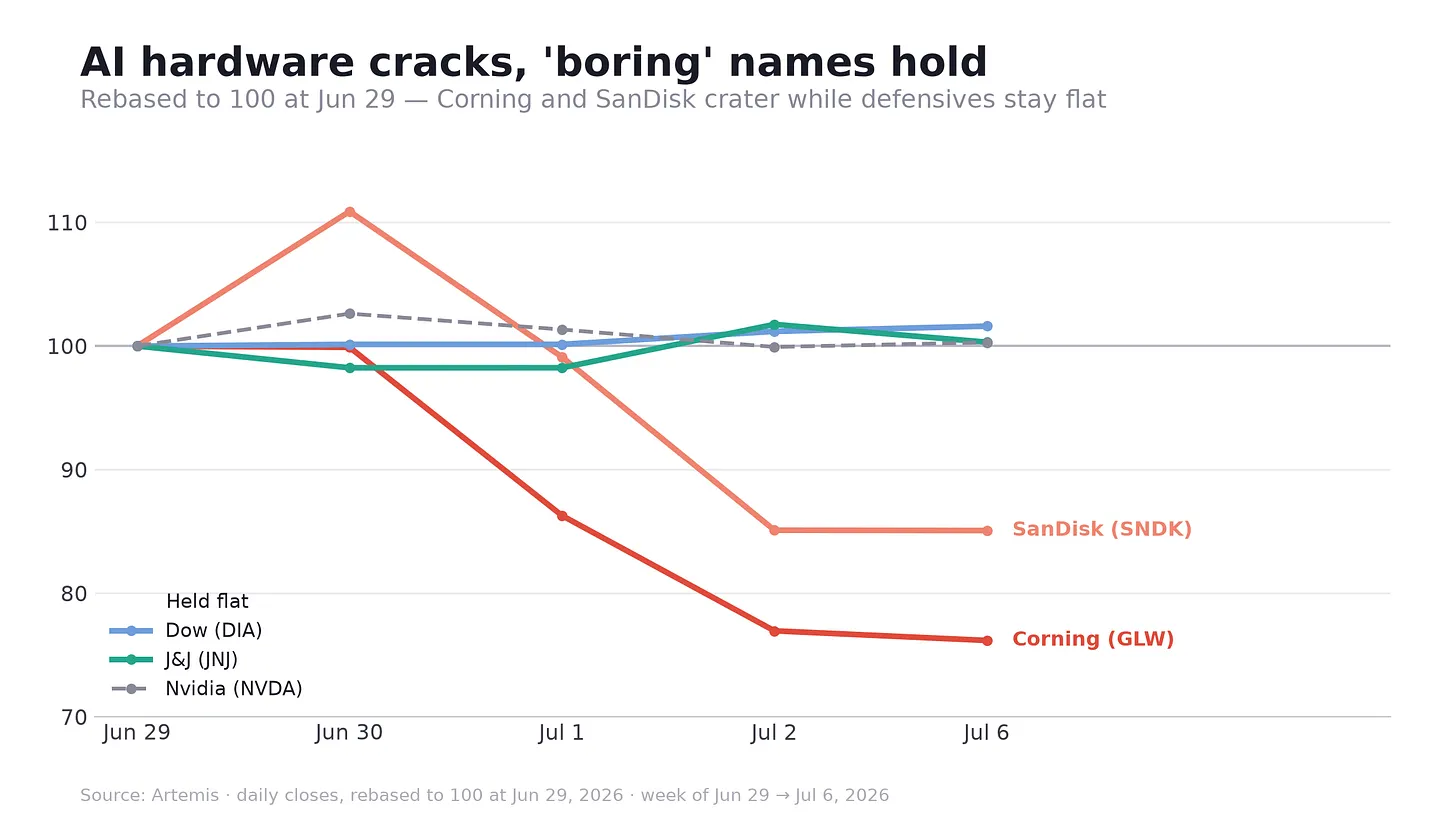
Corning fell 23.8% for the week, SanDisk down 14.9%, while Nvidia and Broadcom remained flat, and Samsung was sold off even after its record quarterly report. This is indicative of profit-taking rather than demand collapse: market breadth remains positive, equal-weight indices outperforming market cap-weighted indices, with leading sectors shifting to finance, insurance, healthcare, consumer staples, and midstream energy. The Dow set a new record while Nasdaq 100 declined.
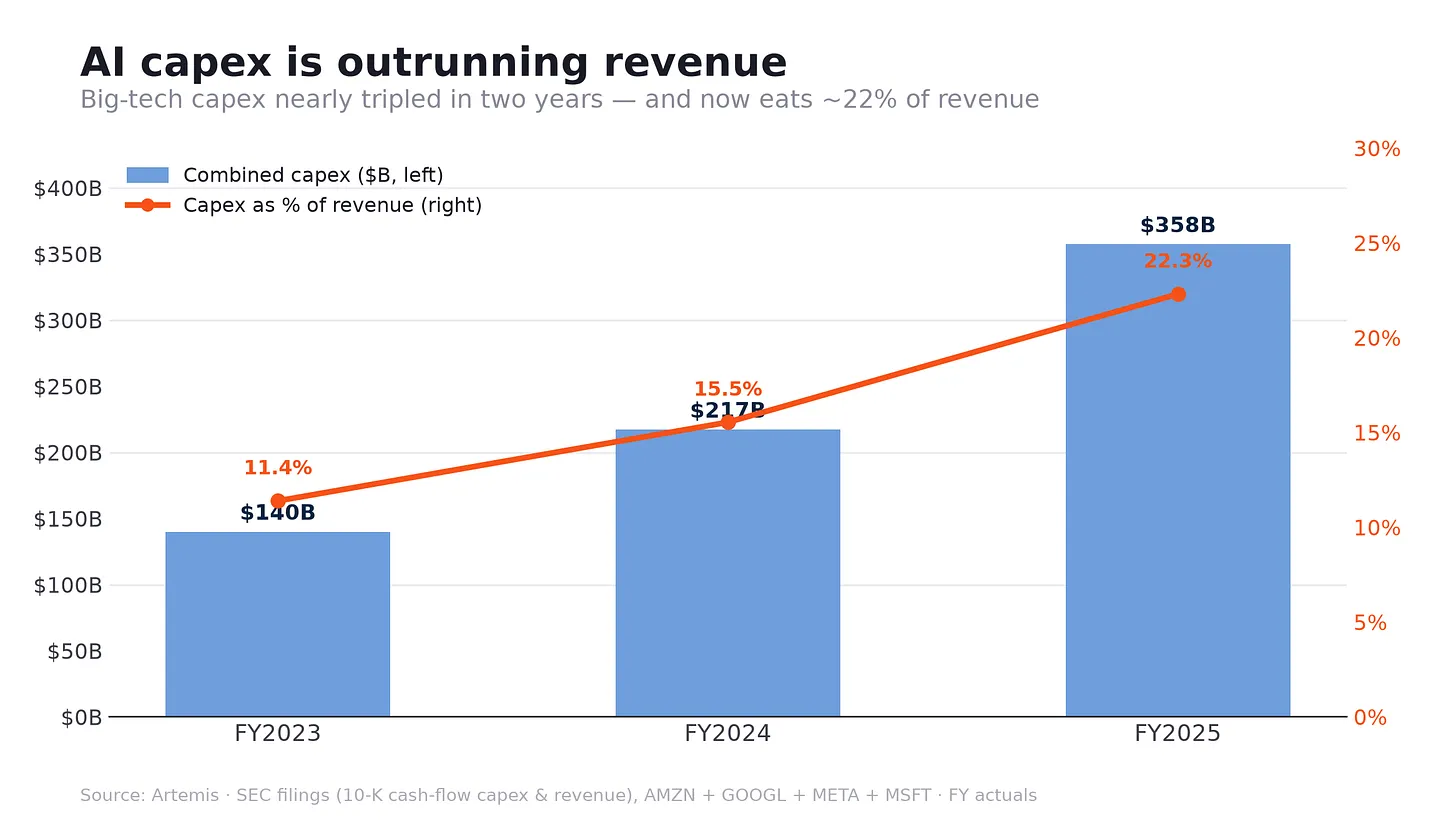
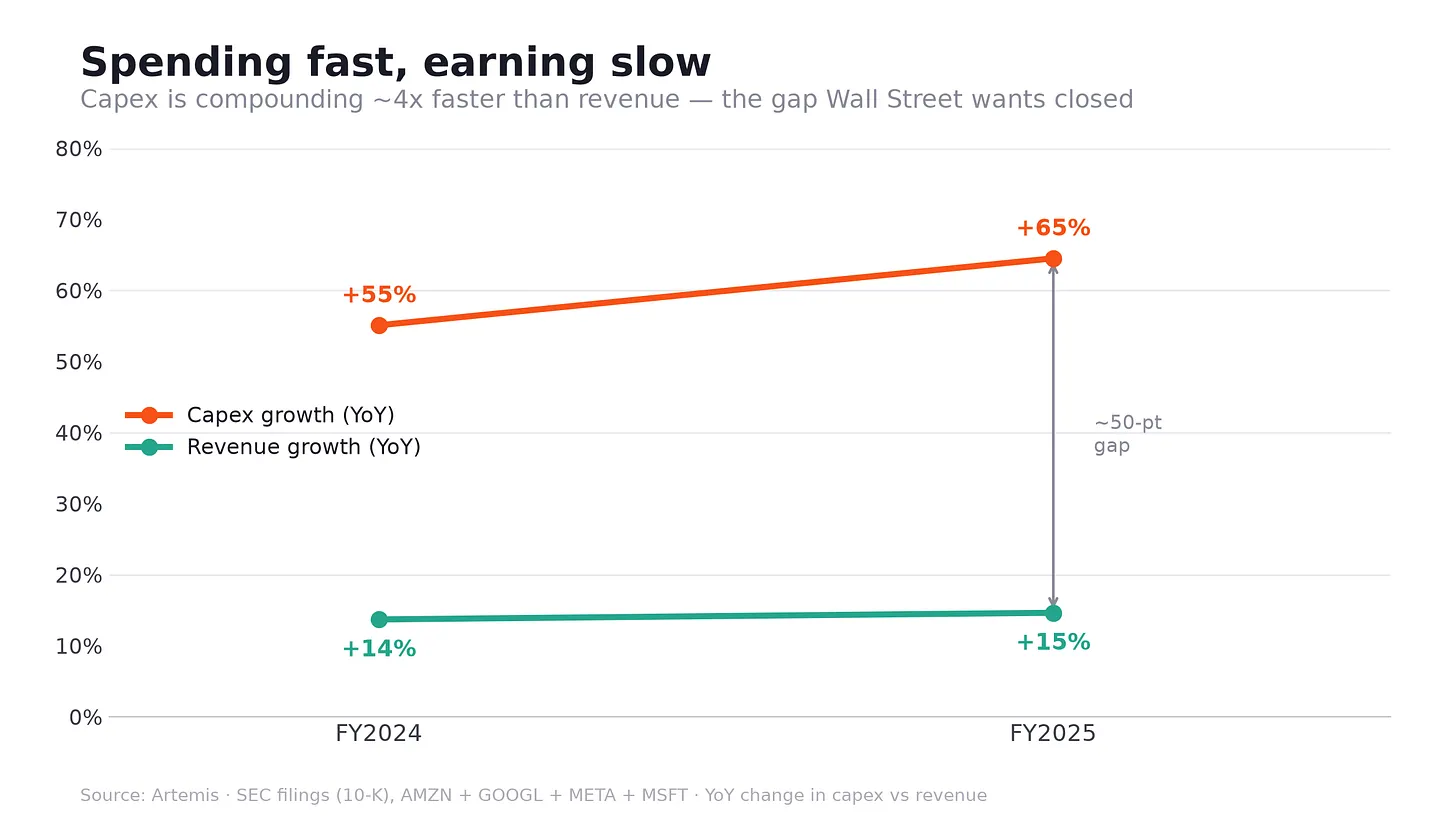
The Federal Reserve and the U.S.-Iran conflict restart are catalysts. After hawkishness in June (PCE around 4.1%, Goldman raising the next rate cut to 2027), the shift to dovishness in early July has repriced interest-sensitive value stocks upward; additionally, the Strait of Hormuz has pushed oil prices and long-term bonds higher, mechanically raising the thresholds for long-duration AI winners at a terribly bad timing.
Robinhood Chain: From App to Infrastructure
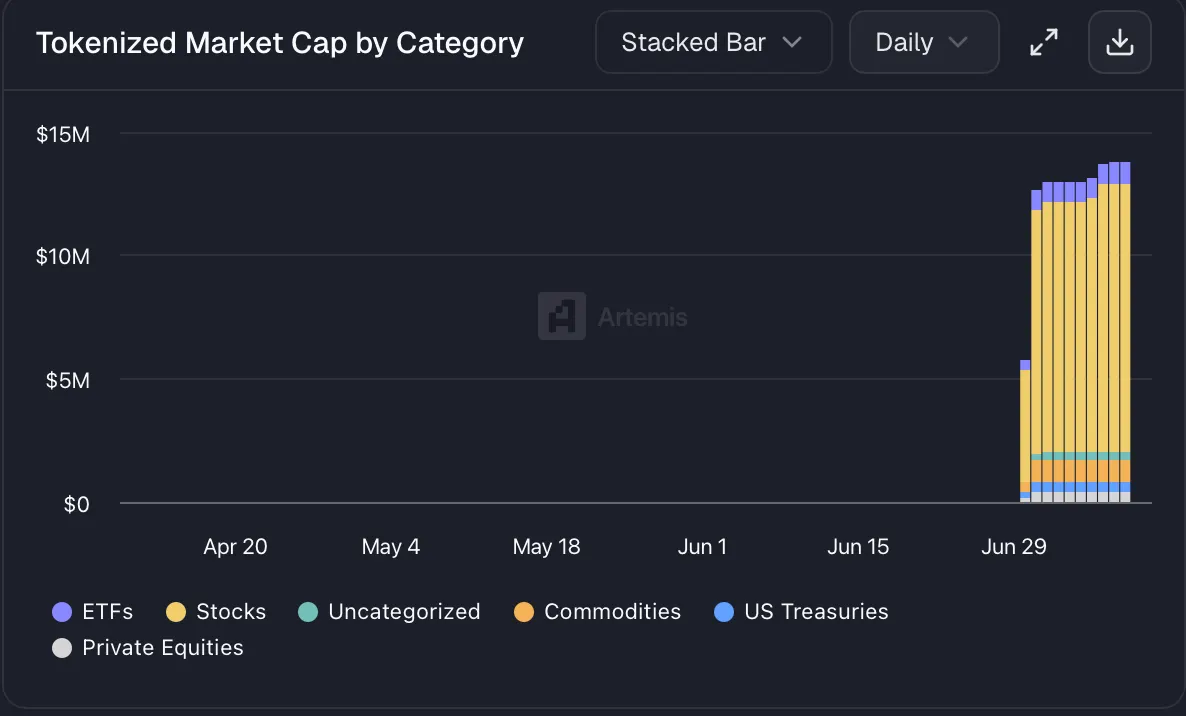
On July 1, Robinhood launched the mainnet of Robinhood Chain, a Layer-2 Ethereum built on the Arbitrum tech stack designed for 24/7 trading that directly integrates tokenized real assets into DeFi. The core product is stock tokens: on-chain exposure to stocks like Nvidia, Apple, and Google, structured as tokenized debt securities (economic exposure rather than legal ownership), available via the Robinhood wallet in over 120 countries, excluding the United States. Unlike common corporate chain announcements, it featured a complete DeFi stack on the first day: Uniswap (a dedicated AMM as the main liquidity provider), Lighter, 1inch, Rialto and Arcus (from the dYdX team), with Chainlink serving as the official oracle. Robinhood also launched Earn, a lending product based on Morpho, with an annual target yield of around 7% for USDG.
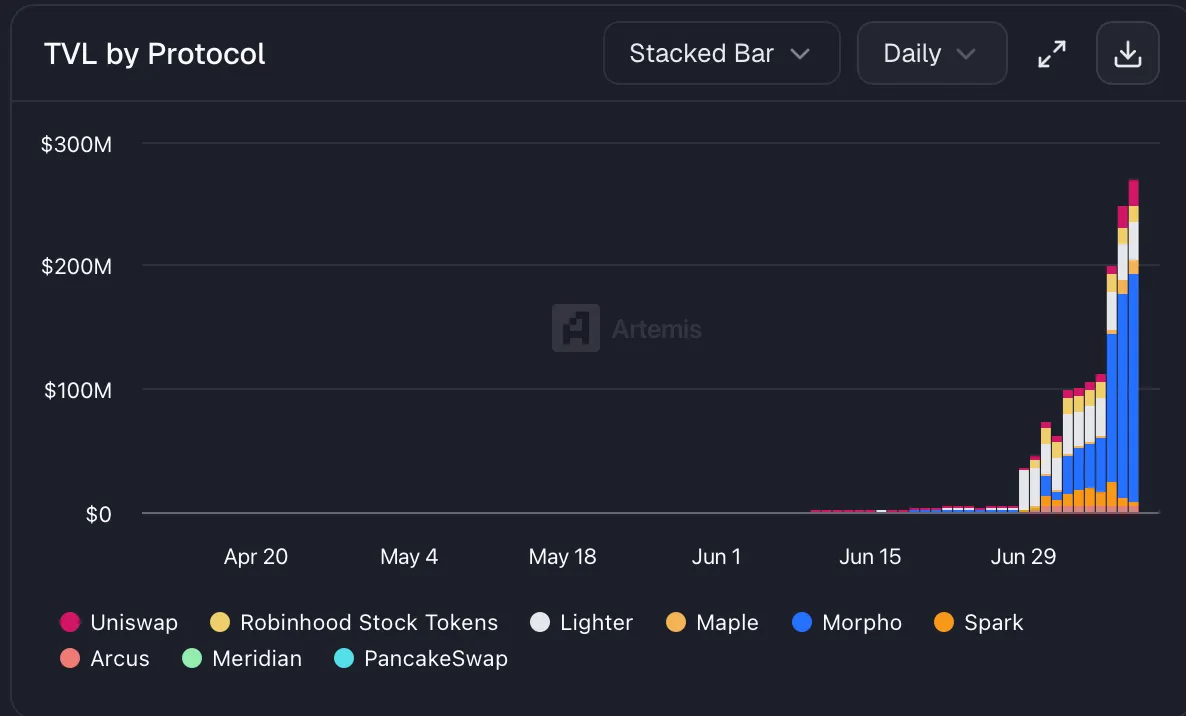
The strategic interpretation is that this is the peak of Robinhood's 2025 acquisition frenzy (Bitstamp, WonderFi, European tokenized stock pilot), combining into a vertically integrated on-chain brokerage—assets tokenized on their network, traded through their wallet, financed via integrated lending, hosted on their tech stack. The market likes it: HOOD is one of the biggest winners of the week, up 15.4%. The unanswered question is regulation; the line between compliant synthetic tools and unregistered securities varies widely across jurisdictions, and multiple regulatory bodies (including the SEC, which just included crypto rulemaking in its July agenda) are drawing the line.
Open USD: Consortium Stablecoin
The biggest fintech headline this week is the launch of Open USD, a new stablecoin by Open Standard, supported by about 140 partners, a list comparable to a who's who of tech finance: Google, Samsung, IBM, Coinbase, Solana, BlackRock, Standard Chartered, Bank of America, American Express, BBVA, Visa, Mastercard, BNY Mellon, led by former Coinbase product head Zach Abrams. It is positioned as "a new stablecoin for global capital flow… built for the internet economy," with plans to launch later this year.
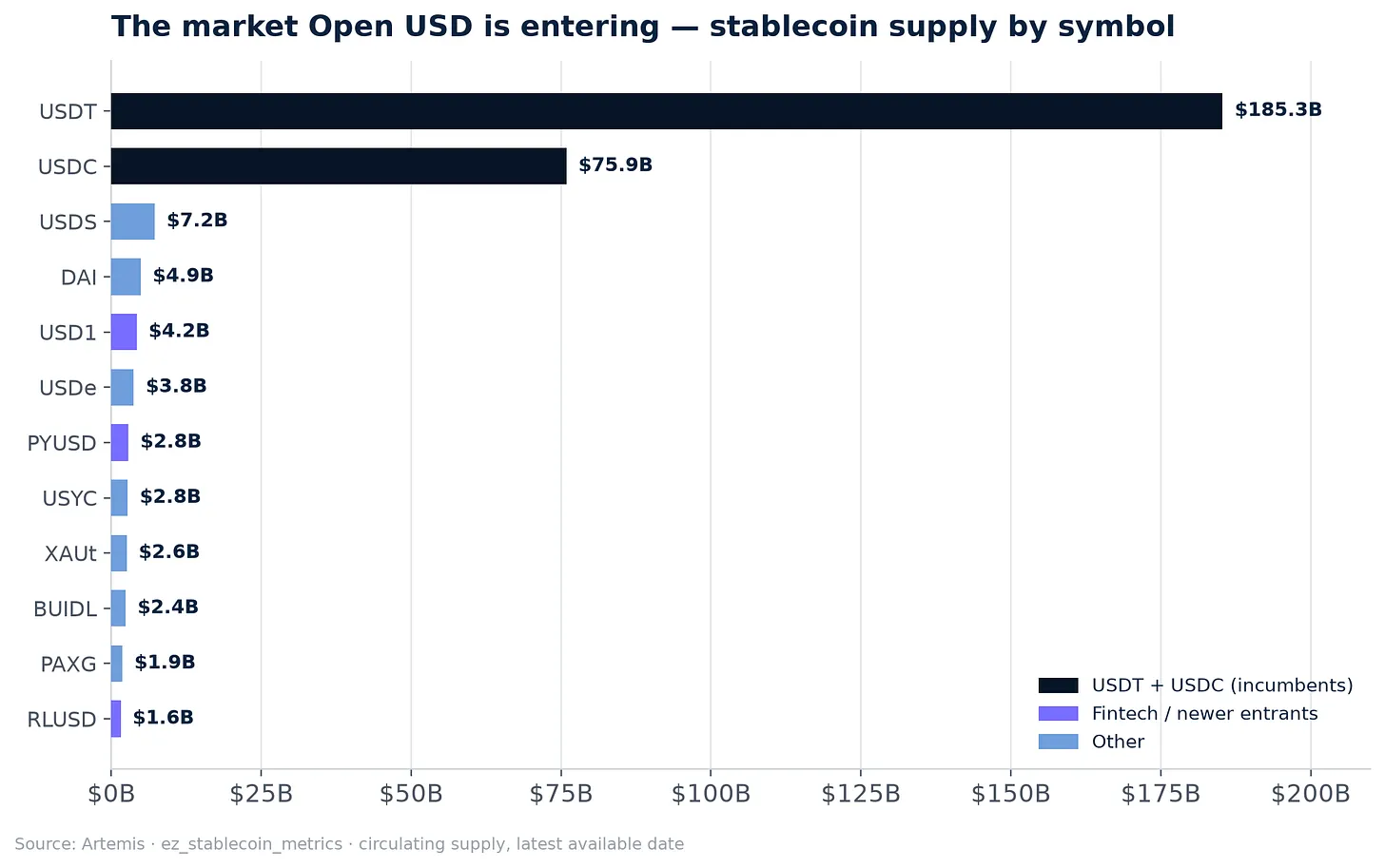
Ambitious; the advantages it must overcome are equally massive. Stablecoin supply remains highly concentrated: according to Artemis data, USDT (about $185 billion) and USDC (about $76 billion) collectively account for most of the over $295 billion tracking supply, even as well-funded fintech entrants remain small—PYUSD is nearing $2.8 billion, Ripple's RLUSD is nearing $1.6 billion, USD1 is nearing $4.2 billion. Open USD will start from the low end of this distribution. The difference lies in distribution: a consortium spanning card networks, banks, and major tech can direct real-world payment flow into the stablecoin from day one, which has been the "monetization model" fintech companies have long been plotting. This is also the clearest signal that stablecoins have become indispensable—within the same week, Standard Chartered enabled institutions to mint/redeem USDC directly through Circle, and PayPal converted PYUSD into a natively issued token on Polygon.
This Week's Charts
Other News Worth Noting
DTCC began limited production trading for tokenized Russell 1000 stocks, ETFs, and U.S. Treasuries in July, with over 50 companies (BlackRock, Goldman Sachs, JPMorgan, Circle, Ondo) supporting it, with a full launch scheduled for October; unlike Robinhood's synthetic model, DTCC will tokenize already custodial assets, hence the tokens carry actual legal ownership.
The MiCA transition period closed on July 1, and Binance was locked out of the EU after withdrawing its application in Greece on June 24; capital is flowing to licensed operators, as SBI’s acquisition of Japanese exchange Bitbank for about $289 million proves—nine-digit purchases for "licenses."
免责声明:本文章仅代表作者个人观点,不代表本平台的立场和观点。本文章仅供信息分享,不构成对任何人的任何投资建议。用户与作者之间的任何争议,与本平台无关。如网页中刊载的文章或图片涉及侵权,请提供相关的权利证明和身份证明发送邮件到support@aicoin.com,本平台相关工作人员将会进行核查。


