As quantum threats loom, QIZ Security creates enterprise encryption posture management and PQC readiness solutions.
Written by: Grok
Assisted by: AididiaoJP, Foresight News
The potential threat of quantum computing to existing encryption standards is moving from theory to reality.
Enterprise encrypted assets are scattered across cloud, on-premises systems, application code, and network transmission, often lacking unified visibility and governance capabilities. This situation of "invisibility leading to immobility" makes post-quantum cryptography preparedness a board-level priority.
QIZ Security was born to address this pain point, focusing on encryption posture management and PQC readiness, helping enterprises transition from chaos to quantum era security resilience. In simple terms, QIZ Security is a company specifically solving the problem of "invisible, unmanageable, and immovable encryption assets" for enterprises.
It focuses on two things:
- Encryption posture management: Conducting a comprehensive check-up + continuous monitoring of all "keys" and "locks" in an enterprise to identify where risks exist and which are most critical.
- PQC readiness (Post-Quantum Cryptography): Helping enterprises transition to a new generation of encryption technology that can withstand quantum computer attacks in advance.
The ultimate goal is to enable enterprises to smoothly transition from the current chaotic state of "encrypted mess with potential quantum takeover" to a resilient state capable of securely operating in the quantum era.
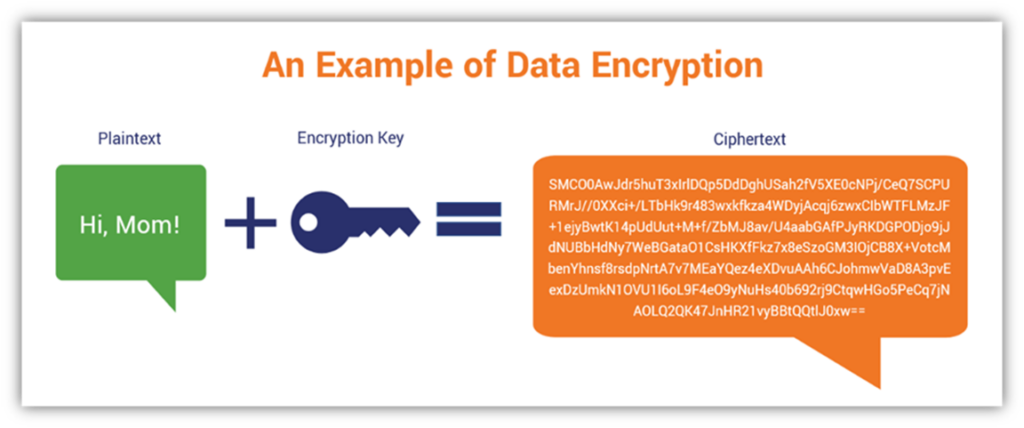
Note: Cryptographic Assets refer to all digital elements related to encryption in an enterprise's IT environment, primarily including: digital certificates, encryption keys, encryption algorithms, and other components. If enterprise data is likened to money in a vault, then cryptographic assets are all the locks, keys, and the vault itself. QIZ is a specialized system for managing these "locks and keys." Note that the "cryptographic assets" mentioned by QIZ Security refer to the encryption technology components used by enterprises to protect data, and not cryptocurrencies in the blockchain domain. While both involve "encryption," the former is security infrastructure, and the latter is a digital asset.
Around July 9, 2026, QIZ Security completed a $17 million seed round funding, co-led by Bessemer Venture Partners and Merlin Ventures, with participation from Evolution Equity Partners, Qbeat Ventures, Singtel Innov8, and Qino Cyber Capital. This funding will be used to accelerate product development and market expansion. The platform has landed applications in industries such as finance, telecommunications, healthcare, and critical infrastructure, and has established partnerships with Cisco, AWS, Google, CrowdStrike, Deloitte, EY, and IBM.
The funding announcement indicates that QIZ is positioning itself as an "action system" for encryption governance, rather than merely a recording tool. It helps enterprises discover full-stack cryptographic assets, assess quantum-related risks, and drive remediation actions. In the context of the increasing proximity of quantum threats, this end-to-end capability has quickly garnered market attention for QIZ.
Product Mechanism
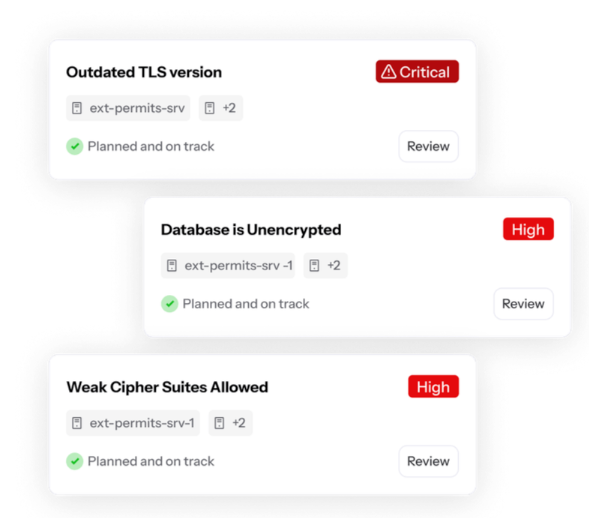
The QIZ Security platform is built around core capabilities for the entire lifecycle of cryptographic assets. The platform continuously scans the enterprise's full-stack environment, including cloud, on-premises deployment, data transmission and static storage, application code, and network layer. It not only lists cryptographic instances but also contextualizes the findings with business context, thus distinguishing truly critical risk exposures.
On this basis, the platform implements policies of standards frameworks such as NIST and CNSA 2.0, and directly drives remediation processes. This "discover - assess - govern" closed loop enables enterprises to achieve crypto-agility, allowing flexible switching or upgrading of encryption algorithms without interrupting business. The platform has established a crypto-agility collaboration with Google Cloud (now live on the Marketplace) and is cooperating with SafeLogic to achieve end-to-end PQC discovery and remediation.
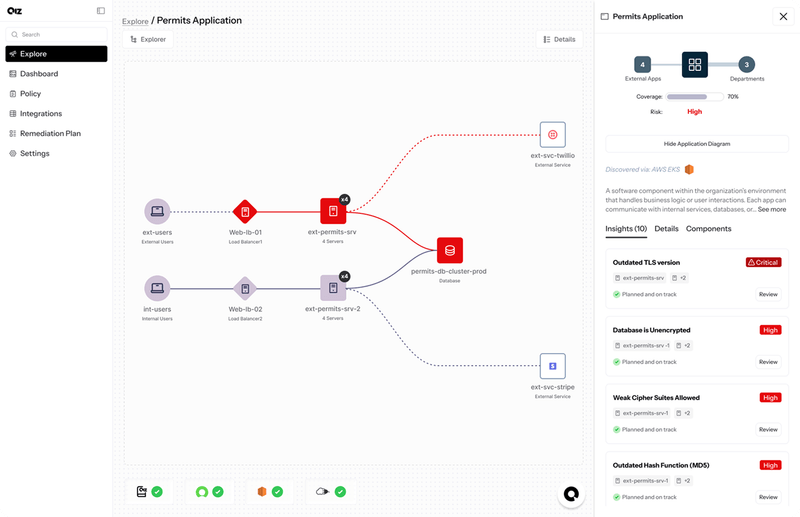
The overall architecture emphasizes scalable deployment, covering continuous visibility and action capabilities in hybrid environments. Unlike one-time scanning tools, QIZ provides continuous monitoring and automated governance pathways, helping security teams transform quantum readiness from projects into daily operational processes.
Use Cases and Competitive Analysis
In the finance sector, QIZ helps institutions uncover encrypted assets throughout core systems and assess the decryption risks posed by quantum computing. By linking to business context, the platform prioritizes marking key assets involving customer funds or compliance data, driving timely remediation. Similar processes are used in the telecommunications sector to protect communication encryption links, ensuring long-term security for 5G and future network infrastructure.
In the healthcare sector, the platform supports hospitals and health systems in governing patient data encryption to meet strict privacy requirements while preparing for PQC migration. In the critical infrastructure sector, users leverage QIZ to discover legacy encryption instances in industrial control systems and develop phased upgrade pathways.
Collaborations with ecosystem partners such as Cisco, AWS, Google, CrowdStrike, Deloitte, EY, and IBM further amplify application scenarios for the platform. For example, integration with Google Cloud enables enterprises to achieve encrypted agile management directly in the cloud environment. These use cases collectively illustrate how QIZ transforms quantum readiness into actionable daily security practices.
In the encryption posture management and post-quantum cryptography readiness space, direct comparable projects to QIZ Security include QuSecure, Fortanix, Entrust, and IBM Quantum Safe. QuSecure's QuProtect platform focuses on PQC software solutions and crypto-agility, particularly in the federal and enterprise compliance segments. Fortanix provides key discovery and management through PQC Central, emphasizing an end-to-end PQC readiness process.
Entrust utilizes the Cryptographic Center of Excellence toolkit to assist enterprises with certificate and key management and migration planning. IBM Quantum Safe series includes discovery, visibility, policy execution, and remediation capabilities, covering hybrid environments and code analysis.
The core difference between QIZ and these competitors lies in its positioning and implementation path. It emphasizes continuous discovery across the entire enterprise stack and closely associates results with business context, thus prioritizing the handling of truly critical risk exposures. The platform not only reports issues but also directly drives policy execution and remediation actions, forming a closed loop of "systemic actions."
In contrast, some competitors focus more on a single protocol layer or infrastructure component, while QIZ demonstrates stronger practical implementation capabilities in scalable crypto-agility and end-to-end governance.
Overall, the PQC and encryption management market is still in its early stages. QIZ strengthens its differentiated advantages in actual enterprise deployment through deep integration with ecosystem partners such as Google Cloud and SafeLogic. Different tools can complement each other in various scenarios, jointly driving the industry towards quantum security transformation.
Token Economics
QIZ Security is a traditional cybersecurity company and has not yet launched a token or disclosed any information related to token economics. The $17 million seed round funding is equity financing, co-led by Bessemer Venture Partners and Merlin Ventures, not a token sale or public offering. Neither the official website nor any of the funding reports mention tokens, staking, governance tokens, or related incentive mechanisms.
As a non-token-driven infrastructure platform, QIZ focuses on providing enterprises with deployable encryption governance and PQC readiness capabilities. If there are any future ecosystem incentive arrangements, they will be disclosed separately.
Team and Founder Introduction

Note: Left: Ben Volkow (CEO & Co-founder, serial entrepreneur); Middle: Itan Barmes (CSO & Co-founder, former leader of Deloitte's Global Quantum Cybersecurity Preparedness Team); Right: Lenny Ridel (CTO & Co-founder, technical expert)
The founding team of QIZ Security combines the execution capability of serial entrepreneurs with depth in quantum security expertise. CEO and Co-founder Ben Volkow is a serial entrepreneur who previously founded Otonomo (listed on Nasdaq via SPAC, later merged into Urgent.ly), Traffix Systems (acquired by F5 Networks), and Sedona Networks. This is his fourth company backed by Bessemer Venture Partners, with over 20 years of experience as a CEO and chairman.
CTO and Co-founder Lenny Ridel co-founded Traffix Systems with Ben Volkow, and is described by Bessemer as "one of the strongest technical experts." He has extensive experience in enterprise technology architecture and security platform development, responsible for the core technology engine of the QIZ platform.
CSO and Co-founder Itan Barmes holds a Ph.D. in Physics. He previously led Deloitte's Global Quantum Cybersecurity Preparedness Team for about six years, focusing on cryptography and quantum security capability building, and collaborated with large global organizations on quantum security readiness and strategic development. He also serves as a researcher on relevant projects at the World Economic Forum, sharing insights on quantum cybersecurity at industry conferences.
The backgrounds of the three founders are complementary: executive experience, technical depth, and domain knowledge collectively support QIZ's positioning in encryption governance and PQC transformation. The overall emphasis of the team is on the actual implementation capability from "chaos" to "resilience."
Risk Summary
Any early-stage cybersecurity infrastructure project faces multiple real-world constraints. QIZ Security is still in the growth phase. Although it has completed a seed round and received support from well-known institutions, scalability adoption will take time, particularly as traditional enterprises gradually accept ongoing encryption governance processes. Standards in the PQC field are still evolving, and there is uncertainty about the timeliness of quantum computing threats, which may impact enterprises' migration pace and budget allocation.
In terms of competition, QuSecure, Fortanix, Entrust, and IBM have established presences, and QIZ needs to continuously prove its unique value of full-stack continuous discovery and action-driving capabilities. At the technical execution level, the platform needs to stay updated with standard updates and the complexities of hybrid environments.
However, the partner network and industry deployment examples already demonstrated by QIZ provide a foundation for addressing these risks. Encryption governance and PQC readiness are long-term trends, and the current path of the project shows responsiveness to market demands.
Reference Article Links:
- Bessemer Venture Partners Official Blog (Funding and Platform Mechanism)
- SiliconANGLE (Funding Details)
- The Quantum Insider (Funding and Team Overview)
- Official Website (Product Positioning and Functionality)
- Official Company Page (Team Background)
- Deloitte Related Profile (Itan Barmes History)
免责声明:本文章仅代表作者个人观点,不代表本平台的立场和观点。本文章仅供信息分享,不构成对任何人的任何投资建议。用户与作者之间的任何争议,与本平台无关。如网页中刊载的文章或图片涉及侵权,请提供相关的权利证明和身份证明发送邮件到support@aicoin.com,本平台相关工作人员将会进行核查。


