Author: Viktor
Translation: Deep Tide TechFlow
Deep Tide Preface: The June monthly report from crypto trader Viktor. The MSTR system faced the most severe trust crisis in this cycle, with EV mNAV falling below 1 for the first time, and STRC plummeting to $72 at one point; however, BTC refused to break down after repeatedly testing the $58,000 mark. ZEC exposed an infinite issuance vulnerability, halving in one day before quickly recovering. HYPE and LIT, two major perpetual DEXs, reached new highs against the trend, while WLD doubled on OpenAI IPO expectations before fully retracing. A monthly panorama from a trader's perspective.
June Highlights
The new coins at the June TGE include: BTW, ZEST, RE, SLX, ARX, O, $CAP. BTW's trend closely resembles a pump coin, squeezing from a $200 million FDV to $2 billion. RE is a DeFi protocol based on reinsurance, following a typical TGE pump route, soaring from a $400 million FDV to $1.1 billion before falling back 50%. $SLX surged over 4 times, likely putting many unlock hedgers in trouble.
SPCX IPOed on June 12, opening at $150, and over three trading days exhibited a classic "low circulation, high FDV" squeeze trend, reaching $220 before returning to $150. Considering the upcoming large unlocks, it is likely to trade sideways with a bearish trend for several months.
On June 14, the United States and Iran announced a preliminary peace agreement, signing a formal memorandum on the 17th. The stock market had already risen some, but crude oil (CL) fell from $84 to $70 within a week.
$TON announced on June 1 that it would be renamed $GRAM, rising 17% within 2 hours, and then plummeting 35% from the peak.
On June 2, $ONDO announced it would launch RWA perpetual contract DEX, rising 20% on the same day, but that also marked the month’s peak.
On the same day, Coinbase announced a partnership with Ethena and invested in its token. $ENA rose 40% in a day before giving back all its gains and hitting a new low. A cursed asset in a bear market.
$TRUMP began to rally on June 12, with the market reacting to expectations around Trump's birthday and the June 14 UFC event at the White House. It rose 36% in two days, then entered a prolonged downtrend.
The Claude Mythos / Fable 5 model was banned outside the United States on June 13, immediately driving a brief rally in the "decentralized AI" concept: $TAO rose 30%, and $VVV rose 20%.
Standard Chartered Bank began covering two DeFi assets in June: following news on June 14, $UNI rose 50%, and after news on June 24, $AAVE rose 35%.
On June 17, $ASTER announced that 99% of the platform's income would be used to repurchase ASTER. It rose 22% within hours, only to give back everything within a day.
MSTR Panic Escalates, but BTC Holds the Line
The main narrative of BTC in June was the trust crisis of MSTR.
The situation began in May—Saylor used the $2 billion raised through STRC to buy BTC above $80,000, then utilized dollar reserves to repurchase $1.3 billion in convertible bonds. This brought the dollar reserves down to a level sufficient only to cover six months of dividends, causing market panic. On June 1, MSTR announced the sale of 32 BTC, clearly a test sell, but the market reacted violently—BTC dropped from $74,000 to $59,000 within four days.
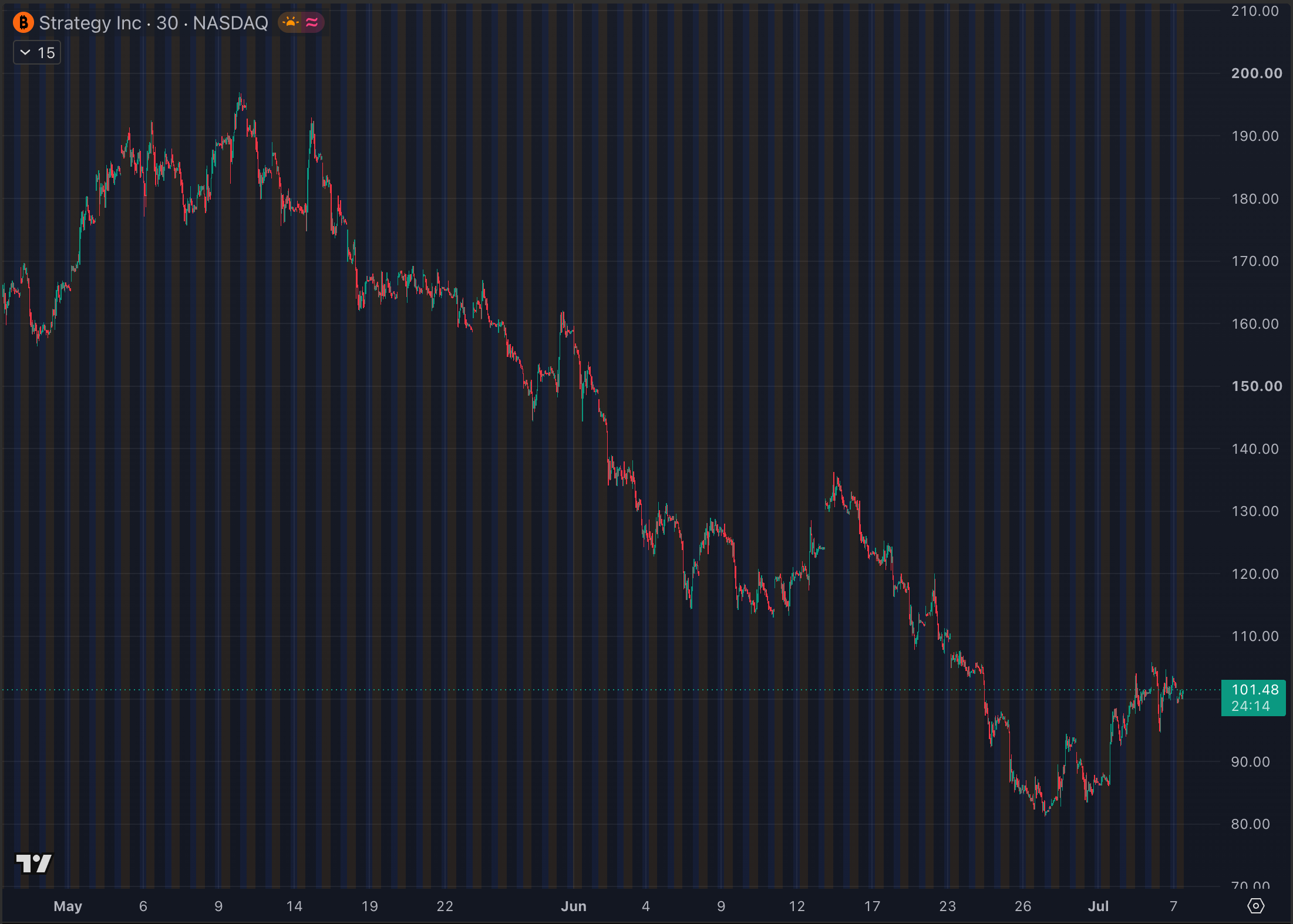
Caption: BTC price trend, rapidly falling from $74,000 to $59,000 at the beginning of June.
STRC also began to decouple at the start of June, falling to about $96, and failed to return to par before the ex-dividend date in mid-month. Both STRC and MSTR provided good shorting opportunities as market fears over whether the MSTR system could pay STRC dividends escalated. Saylor's subsequent actions involved selling $200 million worth of MSTR stock weekly, with half buying BTC and half replenishing dollar reserves. This signaled to the market that MSTR stock itself would be the biggest victim, causing the MSTR/BTC ratio and mNAV to decline significantly.
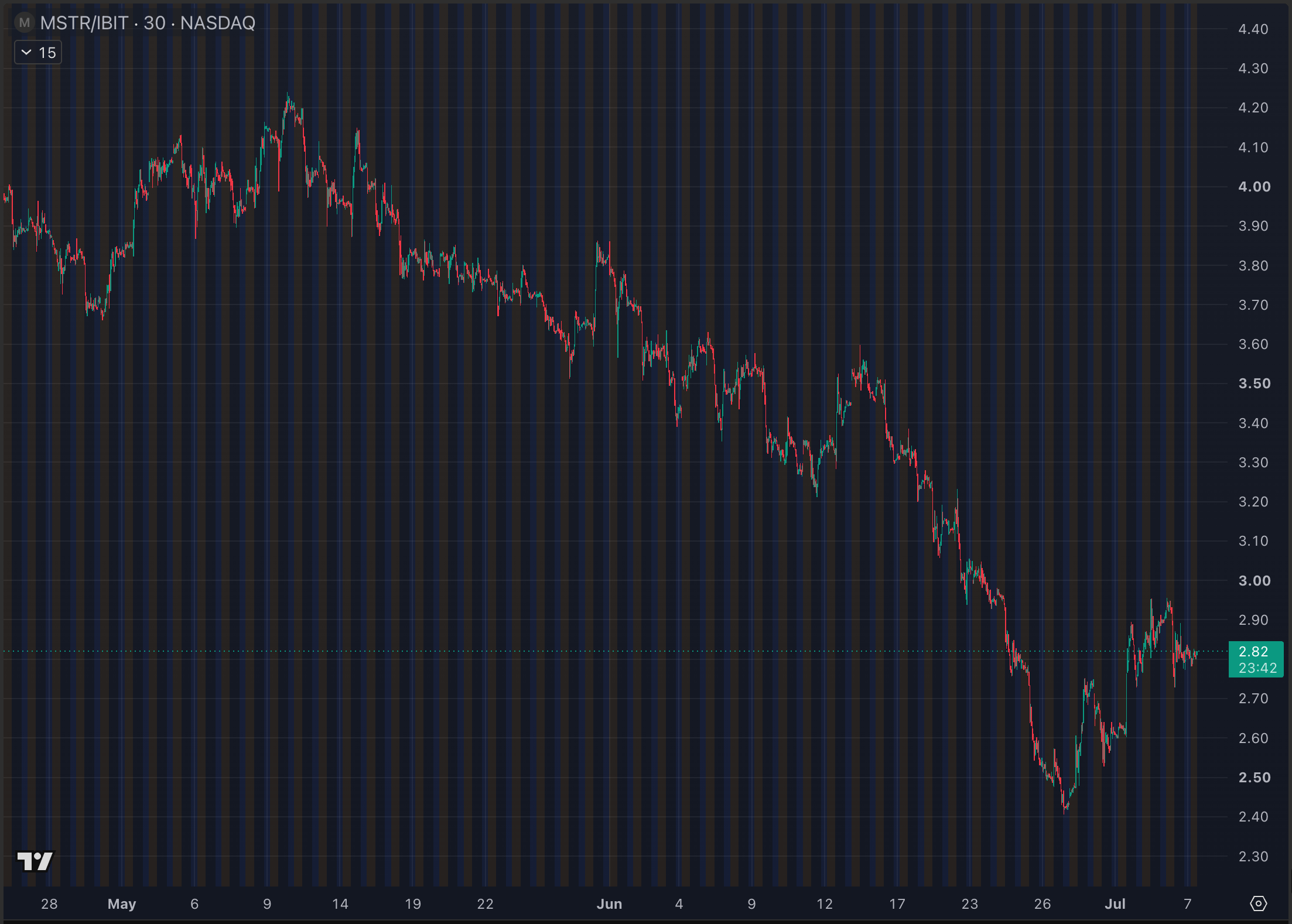
Caption: MSTR/BTC ratio trend, continuously declining in June.
Starting June 15, MSTR and STRC accelerated their declines, with panic peaking on June 26—MSTR's EV mNAV fell below 1 for the first time in this cycle, and STRC hit a low of $72. The drop in STRC outpaced BTC itself, making it the most unreasonable market segment. On June 29, Strategy announced it had sold $1.1 billion in MSTR stock to replenish dollar reserves, which temporarily alleviated STRC panic, returning it to $90 within days.
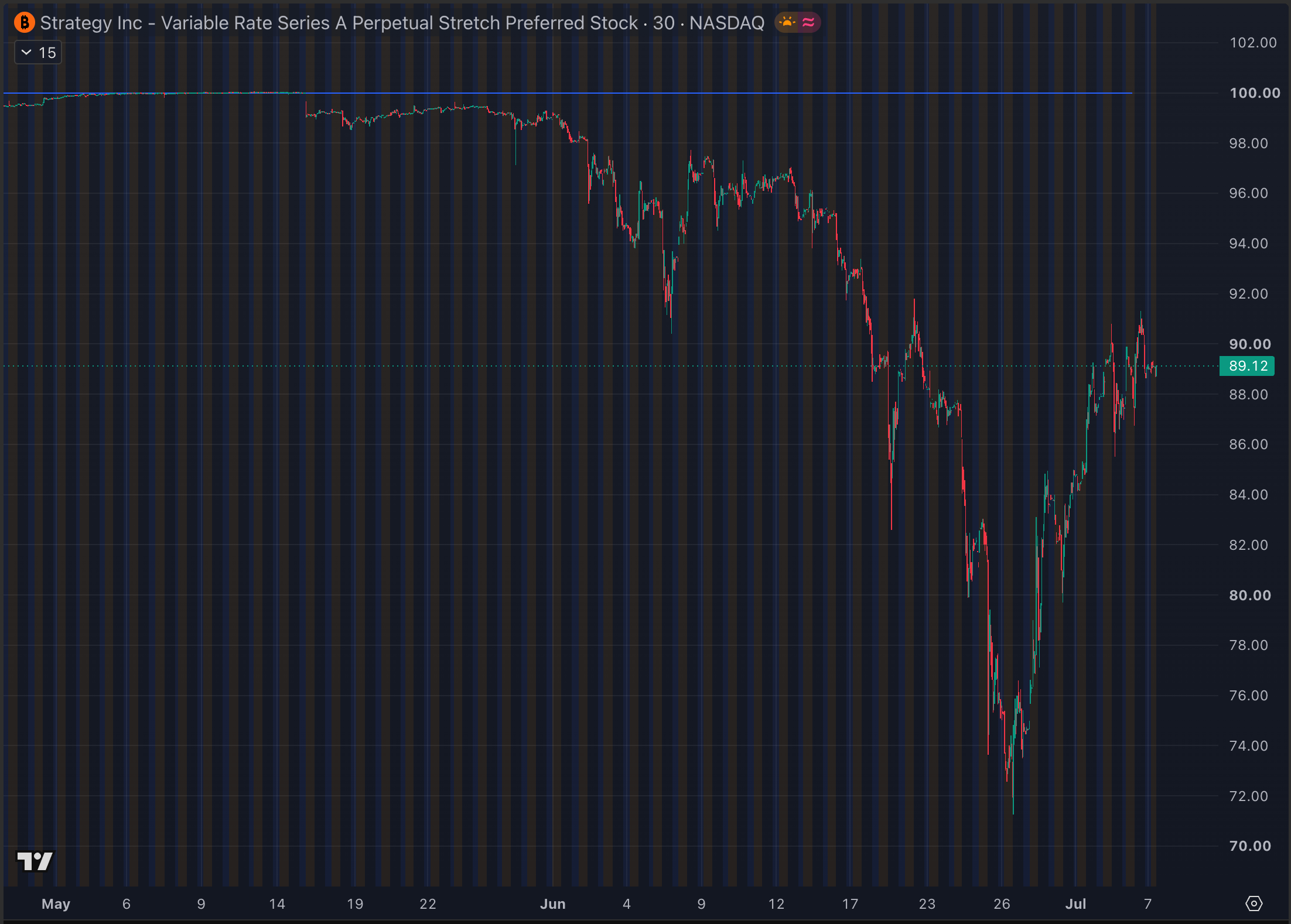
Caption: STRC price trend, rebounding to $90 after hitting a low of $72.
$BTC demonstrated remarkable resilience under such intense FUD. In late June, it repeatedly tested the $58,000 low but never broke below it, indicating a high probability of a short-term rebound; $58,000 could very well be a phase bottom.
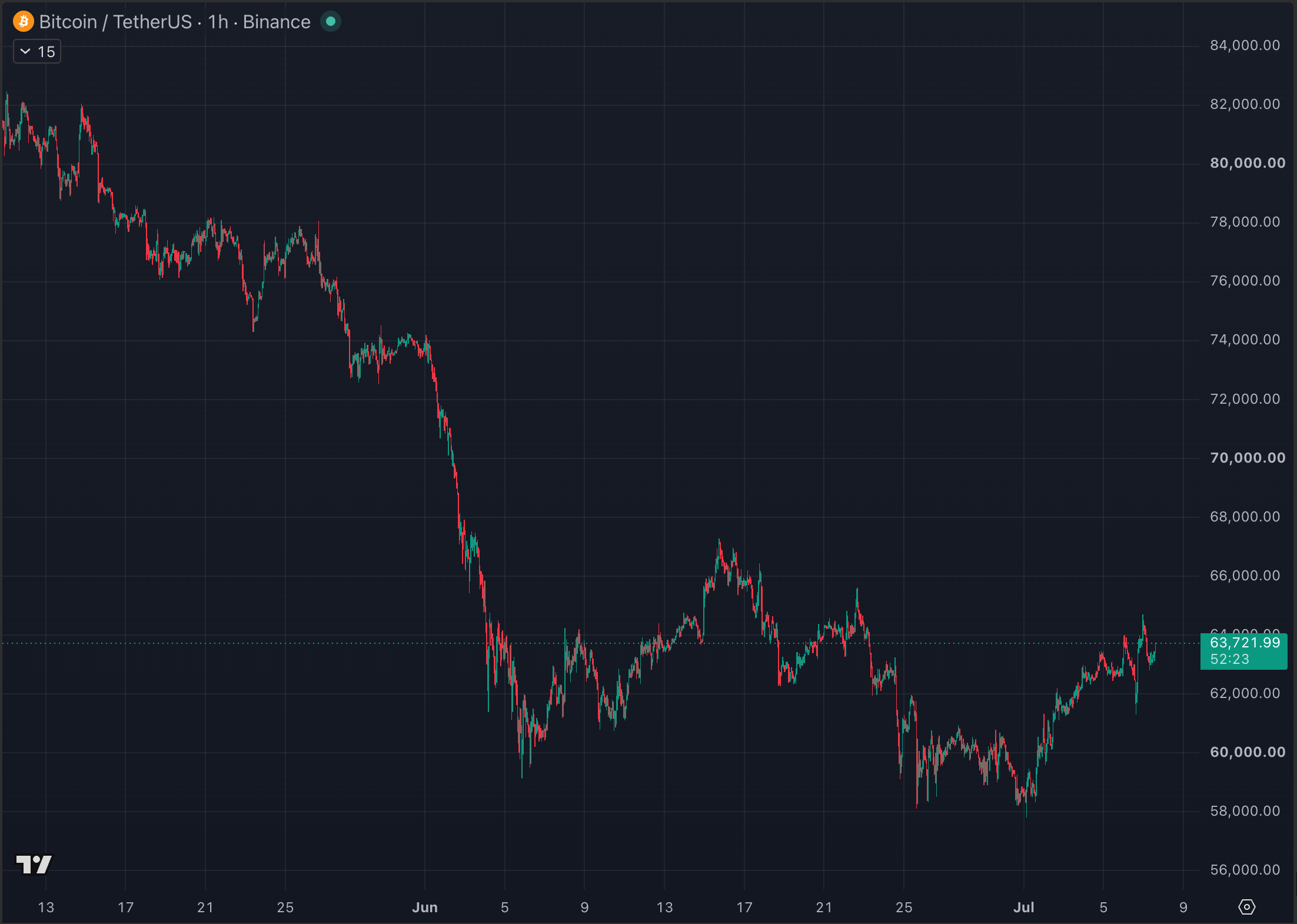
Caption: BTC tested support near $58,000 multiple times without breaking it.
ZEC Vulnerability Triggers New Drop
On June 4, ZCash was revealed to have a vulnerability that allowed for infinite token issuance. The market reaction was delayed by a few hours, but subsequently, $ZEC plummeted from $625 to a low of $250, a 60% fall in less than a day. However, it then strongly rebounded, nearly doubling within four days, reaching $540 a week later. The overall market digestion of this news was relatively calm, showing no inclination to continue selling off. However, ZEC has since been in a descending structure of lower highs.
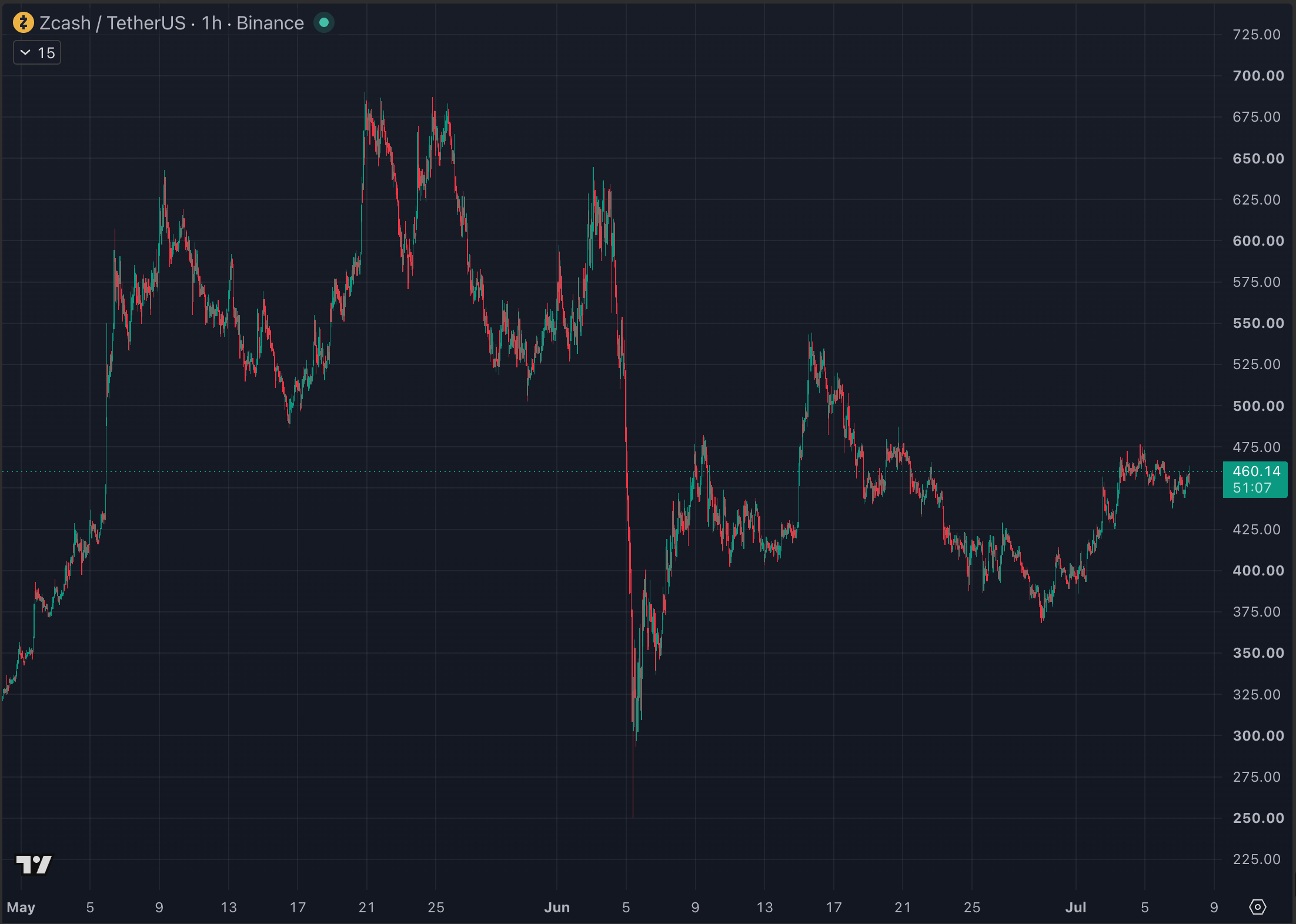
Caption: ZEC price trend, rebounding after a flash crash but continuing to make lower highs.
HYPE and LIT: A Strong Month for the Top Two Perpetual DEXs
June was a good month for the two major perpetual DEXs.
$HYPE first doubled to a new high of $75, retracing to $53 before immediately surging again, reaching a high of $77. HYPE's chart relative to the altcoin market remains extremely clean—with only very shallow retracements and consistently higher lows.
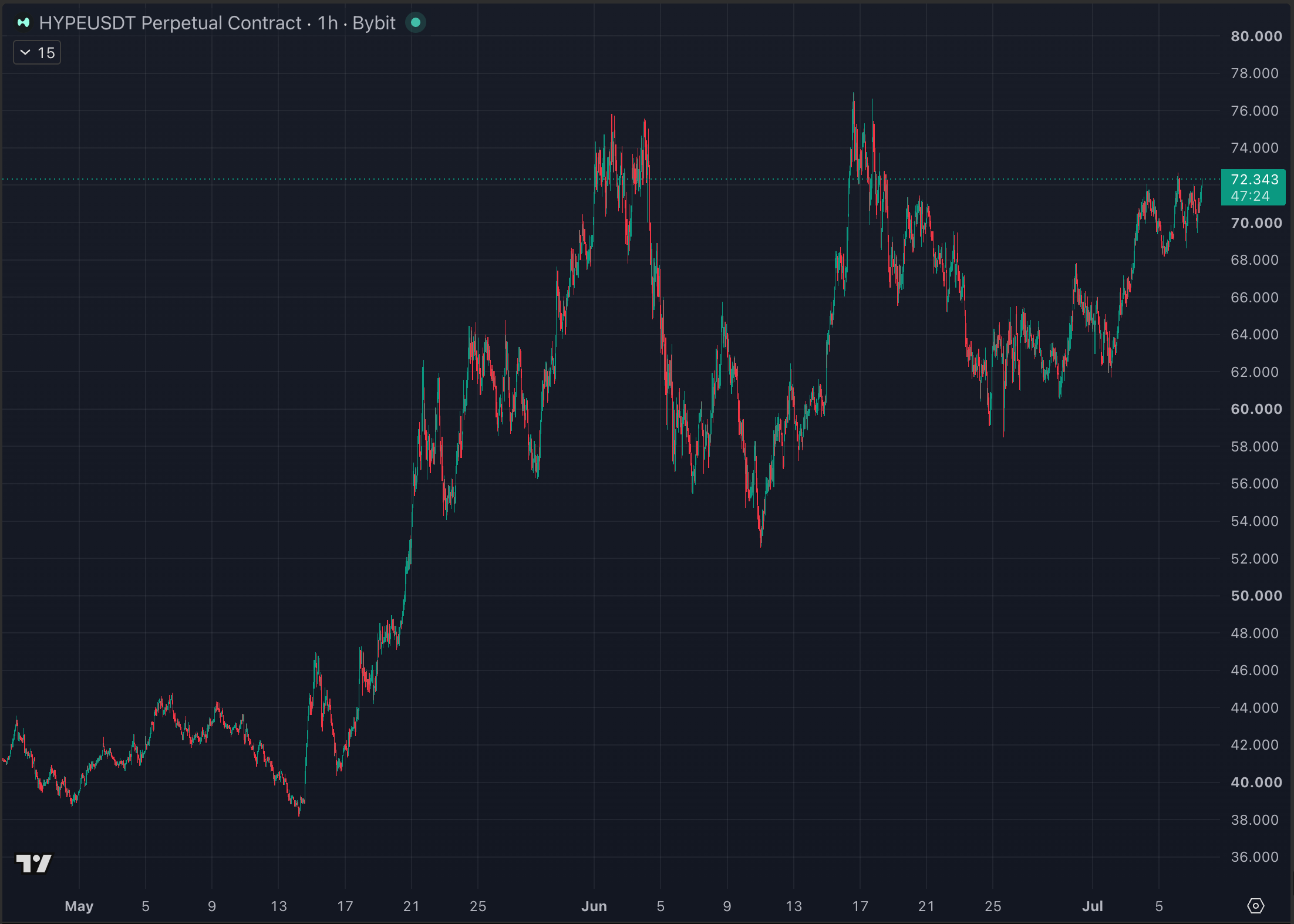
Caption: HYPE relative to the altcoin market, showing sustained higher lows.
$LIT benefited from the valuation comparison logic with HYPE ("isn't it worth 1/40th of HYPE?"), consistently making higher highs throughout the month, although it was rejected three times at the $1.8 resistance level. On July 1, after Robinhood announced Lighter as its on-chain perpetual DEX, LIT broke through $2.
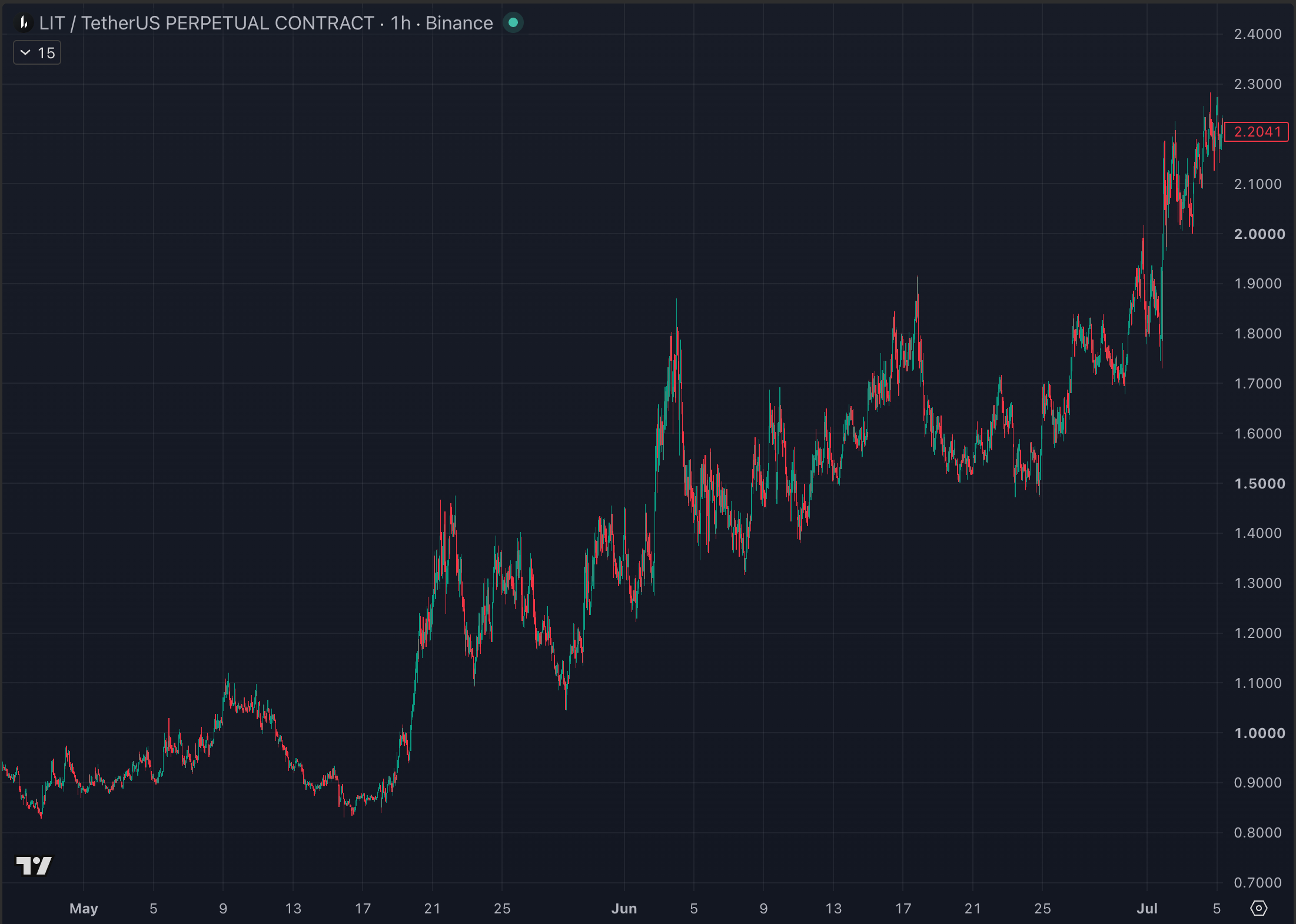
Caption: LIT price trend, breaking through $2 after three rejections at $1.8.
WLD Surges
$WLD was one of the strongest coins in June. The main catalyst was the anticipation of OpenAI's IPO (SpaceX also had an IPO this month), coupled with rumors that the July token unlock might be reduced. $WLD surged from $0.35 to above $0.7, doubling, which was quite impressive. However, it fell sharply in the last week of June, fully retracing the entire increase.
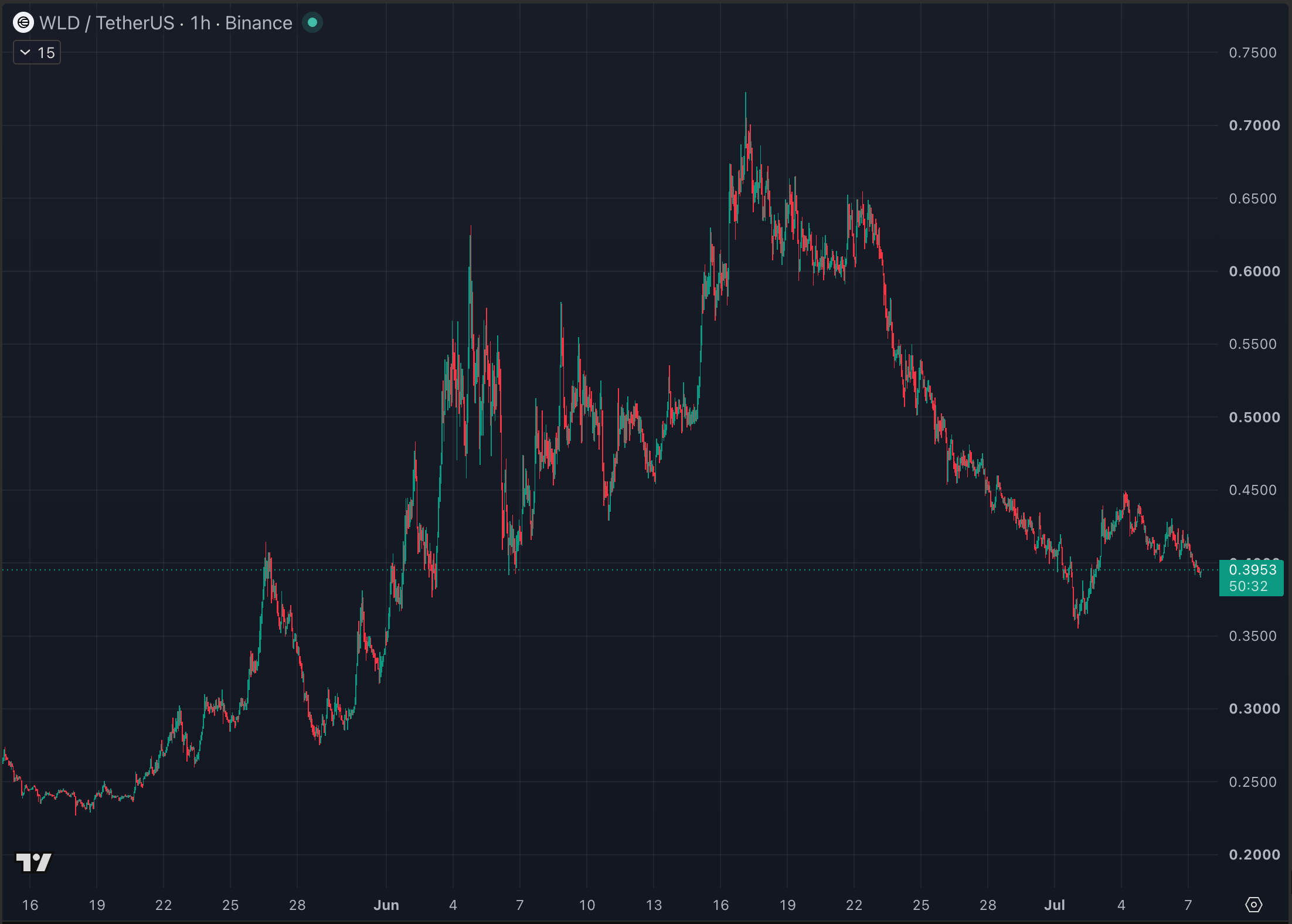
Caption: WLD price trend, doubling and then fully retracing.
June's 'Whale Coins'
As per usual, whale coins were one of the best performers of the month:
$LAB continued its May momentum, peaking at a $25 billion FDV, ranking alongside MYX/RAVE as an S-class crime coin. It then fell back to a $7 billion FDV before rebounding to $20 billion. Many saw staggering floating profits, but due to extreme volatility and frequent negative rates, they simply couldn't lock in those profits.
$BEAT is a manipulative coin, pushed to a $5 billion FDV in December 2025, crashing to $150 million FDV in February 2026, before soaring 8 times in the following four months. It opened in June at a $1 billion FDV, peaking at $11 billion during the month, then significantly retracing.
$VELVET was pumped 20 times to a $2 billion FDV, crashing 80%, then hit new highs before falling back.
$H experienced a "hacker dump," falling 93% from an $8 billion FDV, then increasing 10 times from the low.
$STG rose nearly 5 times from its May low. It is now essentially a low market cap meme coin, listed on all major perpetual exchanges, and users are unable to migrate back from ZRO to STG.
Is the SOL Ecosystem Warming Up?
$SOL regained attention in June, with many publicly bullish on the Solana ecosystem. The best-performing ecosystem coins include $JTO (Jito), $MET (Meteora), and $BP (Backpack). SOLBTC rose 30% from bottom to peak during the month, and SOL re-established itself in the $80 range after deviating to $60.
$JTO continued to strengthen based on the rising trend of the previous two months, catalyzed by the upcoming JTX trading platform.
Someone posted a $ANSEM meme coin on Pumpfun, with Ansem himself holding 60% of the supply. He fully embraced this meme coin, skyrocketing from $0 to a $400 million market cap by early July. Like all celebrity memes, it ultimately went to zero.
$PUMP has been weakening since January, falling 35% again in June, hitting a low of $0.00115, against the backdrop of an upcoming token unlock and rumors of potential lawsuits against Pumpfun. There was some rebounding from the lows at the end of June.
USELESS
$USELESS remains one of the best-looking meme coins. At the beginning of the month, it broke through the $80 million market cap resistance, soaring to $110 million, and after a retracement, continued to grind higher relative to the altcoin market. Bonk Guy will continue to promote this coin to keep it relevant and establish a real Shearing Point, so below a $100 million market cap, the risk-reward ratio remains favorable.
XPL: Plasma One Catalyst
Plasma announced on June 11 the upcoming launch of Plasma One, just as $XPL emerged from a double bottom at $0.06. After the news, it soared 40% in a day, and after a few days of consolidation, surged another 30% upon the official launch of Plasma One on June 17. The final spike was fully retraced, but a convincing bottom has overall been established.
What Else Happened in June?
$EIGEN gained strength in June, with the narrative being "successfully transformed into AI," doubling in two weeks.
$DYDX started hinting at significant announcements from June 22, pushing the price that had been stuck at $0.12 to $0.24 by July 1. The announcement revealed that dYdX would be rebranded to Arcus and would create a stock trading platform on the Robinhood chain. After the announcement, it was sold off.
$AERO showed strong performance in the latter half of June, rising 60% in a week. The catalyst was the merger of Aerodrome and Velodrome, with the merged Aero DEX set to deploy on the ETH mainnet.
$SYN is the token for the Synapse protocol, originally a cross-chain bridge, now transitioning to an options protocol on Hyperliquid. It’s unclear why there’s so much excitement, but SYN surged 25 times from bottom to peak.
Other strong squeeze events: $PORTAL peaked on June 1 after a rapid rise of 7 times; $BICO had a $240 million market cap squeeze over two days; $SLX rose nearly 5 times from bottom to top.
免责声明:本文章仅代表作者个人观点,不代表本平台的立场和观点。本文章仅供信息分享,不构成对任何人的任何投资建议。用户与作者之间的任何争议,与本平台无关。如网页中刊载的文章或图片涉及侵权,请提供相关的权利证明和身份证明发送邮件到support@aicoin.com,本平台相关工作人员将会进行核查。


