
Author: Climber, CryptoPulse Labs
Recently, Micron Technology announced the official groundbreaking ceremony for an advanced storage chip factory in Hiroshima, Japan, with a total investment of approximately 1.5 trillion yen (about 9.3 billion USD). The factory will focus on producing AI-critical chips like HBM (High Bandwidth Memory), with shipments expected to begin around 2028.
At the same time, new factories in regions such as the United States, Japan, Singapore, and Taiwan are also advancing simultaneously, covering core products like DRAM, HBM, and NAND Flash.
This is not just an ordinary expansion but a competition for speaking rights around AI infrastructure for the next decade. In the coming years, those who possess greater advanced memory capacity may hold the core speaking rights of the AI industry chain.
1.From Consumer Electronics to AI Computing Power: The Memory Market Welcomes Structural Transformation
Over the past few decades, the storage industry has been one of the most cyclically obvious areas in semiconductors. DRAM and NAND products are highly standardized, and the industry has long followed the classic cycle of rising demand, expansion, oversupply, price collapse, and reduction in production.

As a result, Micron has rarely made such aggressive large-scale capital expenditures in the past, preferring to adjust capacity based on market conditions. However, the emergence of AI has completely changed this logic.
Previously, whether for personal computers or smartphones, the demand for memory capacity grew relatively slowly, and adding a few GB of memory to a device sufficed for upgrades. However, the data processing methods in the era of large models are entirely different.
The new generation of AI, represented by large language models like GPT, Gemini, and Claude, requires tens of thousands or even hundreds of thousands of GPUs working together, and each GPU requires a large amount of HBM as a cache. Without sufficient HBM, even the strongest GPU computing power cannot be fully utilized.
Therefore, HBM has gradually become one of the scarcest components of the entire AI server.
Industry data shows that the value of HBM required for a high-end AI GPU is nearing or even exceeding the price of traditional server CPUs. As GPUs continue to be upgraded, the required HBM capacity for each generation of products is also increasing, driving the HBM market into a high-growth phase.
Moreover, AI is also driving a simultaneous increase in the demand for traditional DRAM and NAND.
New applications such as AI PCs, AI smartphones, autonomous driving, edge AI servers, and intelligent robots are continuously emerging, pushing the entire storage market into a structural upgrade cycle. Micron estimates that the supply-demand tension driven by AI will last at least until after 2026, while substantial new capacity will not be released until around 2027 to 2028.
This means that in the next two to three years, the global high-end storage market will continue to experience a supply-demand imbalance. For this reason, Micron has chosen to lay the groundwork early, hoping to seize a larger market share in the next industry cycle rather than rush to expand production after demand explodes.
From a business logic perspective, this resembles building a highway for the AI era in advance, rather than simply adding a few production lines.
2.Global Manufacturing Landscape Reconstruction: Micron Builds the Supply Chain for the AI Era
Upon closer examination of this expansion layout, a distinct characteristic emerges. Micron has almost entirely re-planned its major manufacturing bases worldwide, with the United States at the core of this expansion.
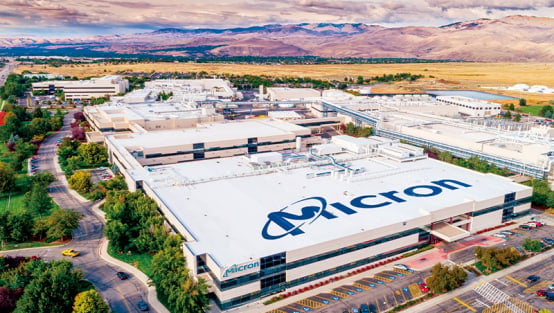
At the Manassas plant in Virginia, Micron has achieved mass production with a 1α-nanometer process and through a $2 billion expansion project, has quadrupled its DDR4 wafer supply capacity, focusing on the automotive electronics, industrial control, and defense markets.
More importantly, the company is re-establishing advanced DRAM manufacturing capabilities in the United States.
The new factory in Boise, Idaho has an investment scale of $50 billion, making it one of the largest semiconductor manufacturing projects in the U.S. in recent years. At the same time, Micron also announced that its overall investment in the United States would increase to about $200 billion, including advanced manufacturing and R&D system construction, along with the addition of a second wafer fab.
In addition, the Clay super wafer fab project in New York has reached the scale of tens of billions, with plans to build multiple wafer fabs to aim for establishing one of the largest DRAM manufacturing bases globally by around 2030.
Behind these investments, an important keyword is supply chain localization.
In recent years, the U.S. has continuously pushed for the return of chip manufacturing to its shores, aiming to reduce dependence on Asian supply chains. The introduction of the CHIPS and Science Act has provided substantial financial subsidies and tax incentives for companies, including Micron, while also reducing the cost pressures of building factories in the U.S.
Meanwhile, Micron has not abandoned Asia.
The Hiroshima factory in Japan, which will primarily produce HBM, is considered one of the most strategically valuable projects in this expansion. Japan has a mature semiconductor materials, equipment, and packaging industry chain, and with government subsidies in place, it has once again become an important base for advanced storage manufacturing.
Singapore will undertake advanced NAND manufacturing tasks. The area has a complete electronic manufacturing ecosystem, a stable policy environment, and international logistics advantages, making it suitable as a global supply center.
The acquisition of TSMC's Wafer factory in Taiwan will enable Micron to rapidly expand its DRAM manufacturing capacity and shorten the construction cycle of new factories.
It can be seen that Micron's global layout is not merely about maximizing capacity, but strategically deploying different products in various regions to achieve risk diversification, supply chain security, and cost optimization.
This way of layout is also increasingly becoming the new norm among global semiconductor companies.
3.In the AI Era, Can Micron Become the Biggest Winner in the Storage Industry?
The most pressing question in the capital market is actually one: can such a massive investment pay off in the future? The answer largely depends on whether AI demand can be sustained, and currently, the outlook seems optimistic.
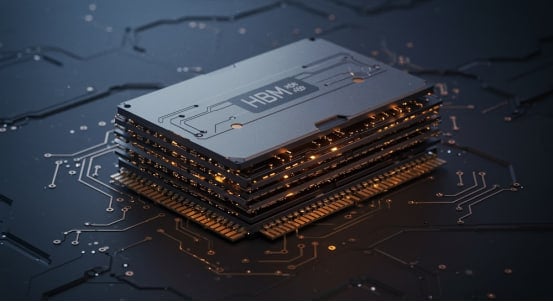
Global cloud computing providers continue to expand AI capital expenditures. Tech giants like Microsoft, Google, Meta, and Amazon invest billions of dollars annually to build AI data centers.
At the same time, an increasing number of traditional companies are also beginning to deploy AI computing power infrastructure.
With the emergence of new applications such as AI Agents, multimodal models, video generation, autonomous driving, and humanoid robots, demand for high-performance storage continues to grow rapidly.
Compared to the GPU market, which is mainly dominated by a few manufacturers, the HBM market is still in a rapid expansion phase.
In the past, the high-end HBM market was long dominated by SK Hynix, followed closely by Samsung Electronics, while Micron entered relatively late. However, in recent years, Micron has successfully entered the mainstream AI supply chain with products like HBM3E and gained important customer certifications, rapidly increasing its market share.
In the coming years, HBM may become one of Micron's fastest-growing profit areas.
Of course, risks still exist.
The biggest characteristic of the semiconductor industry is its cyclical fluctuations. If AI investment slows in the future or if global new capacity is released intensively, the prices of DRAM and NAND may still enter a downward cycle.
Moreover, Samsung Electronics and SK Hynix are also continuously expanding, leading to more intense competition in the future market. Advanced processes, packaging capabilities, yield control, and customer certifications will determine who can truly win orders in the AI era.
However, unlike the past reliance on consumer electronics, the current AI demand is changing the entire business model of the storage industry.
More and more high-end storage products are adopting long-term supply agreements, forming more stable partnerships with cloud computing providers and AI chip companies. This indicates that future price fluctuations in the industry are expected to be more moderate than in the past, and corporate profitability may also become more stable.
For Micron, this round of expansion is not only about increasing capacity but also about redefining its role in the global semiconductor industry—transitioning from a traditional storage chip manufacturer to an important supplier of AI infrastructure.
Conclusion
GPUs determine the computing power of AI models, while HBM, DRAM, and NAND dictate whether data can be quickly stored, called, and transmitted. Without high-performance storage, even the most powerful AI models cannot realize their full potential.
Therefore, Micron's global expansion spanning the United States, Japan, Singapore, and Taiwan is not merely a manufacturing investment plan but a strategic layout revolving around the AI infrastructure for the next decade.
It is foreseeable that in the coming years, the global storage industry will welcome a new round of capital investment, technological upgrades, and market competition, and the global expansion plan Micron has initiated may just be the beginning of this AI storage battle.
免责声明:本文章仅代表作者个人观点,不代表本平台的立场和观点。本文章仅供信息分享,不构成对任何人的任何投资建议。用户与作者之间的任何争议,与本平台无关。如网页中刊载的文章或图片涉及侵权,请提供相关的权利证明和身份证明发送邮件到support@aicoin.com,本平台相关工作人员将会进行核查。


