Compiled & Edited: Shenchao TechFlow
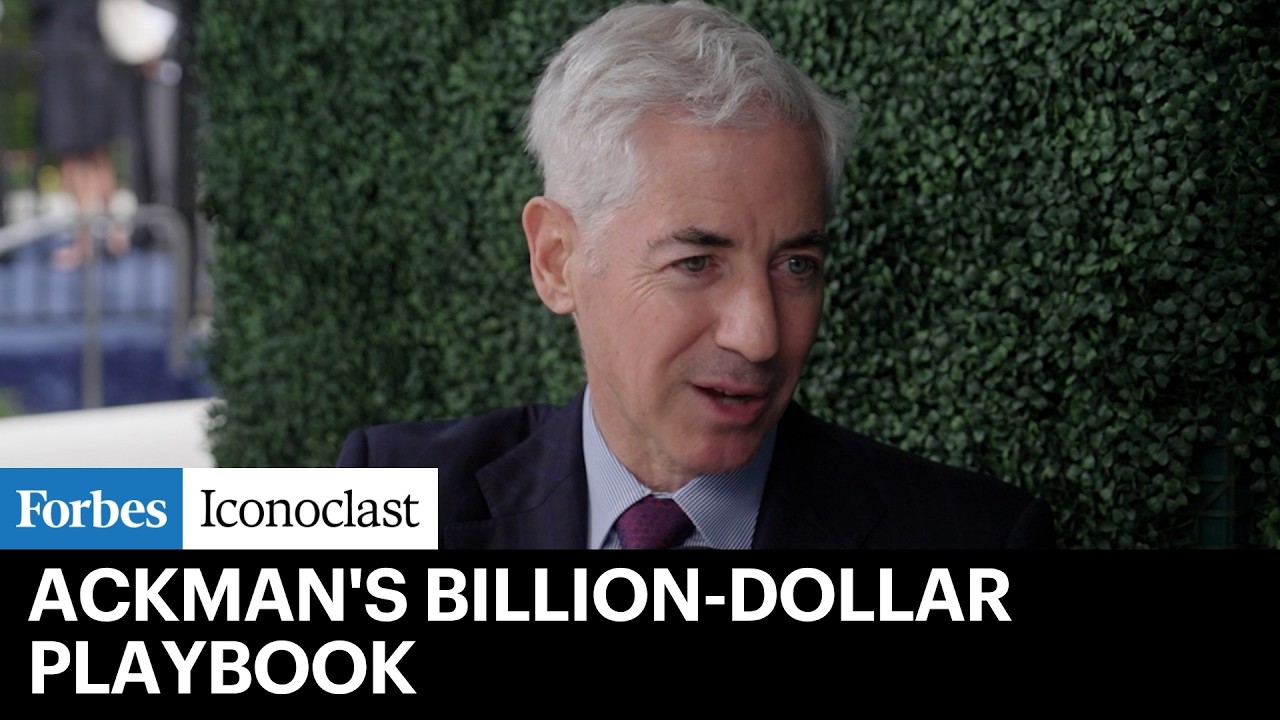
Guest: Bill Ackman, CEO & Founder of Pershing Square Capital Management
Host: Maneet Ahuja, Forbes Editor at Large, Founder of Iconoclast
Podcast Source: Forbes Iconoclast
Original Title: Billionaire Investor Bill Ackman Shares His Blueprint For The Next Decade of Wealth
Air Date: July 2, 2026
Key Takeaways
In this interview, Bill Ackman revealed several specific investments: he has a 38% position in Alphabet, Amazon, and Meta—while the market fears the hundreds of billions in capital expenditures from these companies, he sees instead a buying window of declining valuations and accelerating growth. He is transforming Howard Hughes Holdings from a real estate company into a "mini Berkshire," completing the acquisition of the insurance company Vantage next month, following Buffett's path from 60 years ago with float money. Regarding Universal Music Group, he provided a specific price judgment: the current stock price of around 17 euros could become 30+ euros after his proposal (relocating to the NYSE, canceling 17% of shares, restructuring the board, monetizing Spotify holdings). There is also an intuitive judgment that AI drives explosive growth in music, but this makes record labels more important than ever, as breaking through has become more difficult.
Highlights
IPO and Retail Allocation
- "I want to allocate full shares to every retail investor because I want to lean towards those who are on the rise."
- "Retail investors have become accustomed to applying for more shares than they actually want—some apply for 10,000 shares but only want 1,000. I gave them 10,000 shares."
- "You can buy cash at a discount, and then I help you with compounded growth. The initial trading performance in the first few days after an IPO has never been a reliable predictor of long-term success."
Transformation into "Mini Berkshire"
- "The capital cost for real estate development and landholding companies is too high—if the stock price is to rise, you need to earn returns above the capital cost."
- "I read a complete financial history of Berkshire Hathaway...it makes it very clear how asymmetrical the proportion of insurance is in value creation."
- "Berkshire Hathaway started as a textile company, which wasn't particularly good. But it generated a lot of cash, and Buffett redeployed that cash into higher-return businesses. We start as a real estate company, which essentially will self-liquidate."
Big Tech and AI Capital Expenditure
- "The market reacted very negatively to these companies' hundreds of billions in capital expenditures, with investors worried about whether they can earn enough returns— we are not worried at all."
- "These companies' valuations have decreased significantly, while growth rates are accelerating—this is where real opportunities are created."
- "It's uncertain which frontier model will win, but one thing is clear: all these companies need massive computing power, and the cloud is the most scalable and secure place to obtain that power."
AI and the Music Industry
- "AI allows everyone to write songs, and you will see an explosive growth in creativity and new music. But in a world of mass proliferation of music, breaking through has become more difficult."
- "More than ever, if you are a top artist wanting to become a global artist, you need a record label to help you break through."
- "Even some AI artists are signing contracts with record companies—without the endorsement of a record label, you cannot open for Taylor Swift."
Geopolitics and the Market
- "No one likes being in a war. The situation in Iran, its impact on energy prices and inflation, and its influence on the Fed—these are all tied to the direction of this war."
- "Our internal judgment is that this war will not last for months—it may resolve in four to six weeks."
- "Once the uncertainty of war dissipates, the powerful forces driving the economy and ultimately the stock market will come into focus."
Investment Beliefs and Permanent Capital
- "You do a lot of research, place a bet, and then the facts start to contradict your original argument—you have to rethink."
- "Having capital that does not leave is a huge investment advantage—you can take action during a market meltdown without worrying about the flow of funds, just focus on investing itself."
- "The best eight years in our 22-year history came after having a foundation of permanent capital—we should have done this earlier."
IPO Reversal—Retail Investors Get Full Allocation, but Short-term Discount of 14%
Maneet Ahuja: Four days ago, you rang the bell, and your IPO went public. The next day, you increased your position. Can you talk about that experience?
The NYSE celebration was fun. But this is just the beginning of a very long story—we took 22 years to get the company public. This issuance is essentially an IPO for management, the general partners, similar to the business models of Blackstone or Apollo. At the same time, this is our first investment company listed in the U.S.—you can buy a share for $43, follow our investments, and get the best terms we offer to investors. We look forward to potentially having millions of shareholders in the future.
Maneet Ahuja: I know you are a believer. The next day you doubled your position. What was the investor feedback?
We are our largest investors—management has invested about $500 million in this new entity. Our goal is to grow at a respectable pace in the long run. Most of the investors recruited through the IPO plan to hold long-term.
Maneet Ahuja: What did you learn during the IPO process?
My goal is to ensure every average person has a good outcome. So we did something almost the opposite of a conventional IPO—usually, large institutions receive the optimal allocation, while retail investors might only get 10% of what they apply for. I said, I want to allocate full shares to every retail investor because I want to lean towards those who are on the rise.
As a result, retail investors received a lot more shares than expected. They have become accustomed to applying for more shares than they actually want—some apply for 10,000 shares but only want 1,000. I gave them 10,000 shares. So on Wednesday afternoon, they found themselves holding ten times their expected position, and the closed-end fund's trading has not performed well in recent days—currently about a 14% discount.
But this is precisely the opportunity for those entering today—you can buy cash at a discount, and then I help you with compounded growth. The initial trading performance in the first few days post-IPO has never been a reliable predictor of long-term success.
This IPO has a different aspect: cornerstone investors already dominate because we gave away the management company's equity for free—equivalent to a "buy one get one free." Today the entire portfolio is down a few percentage points from the IPO price, but I still believe this is a very good long-term investment.
"Mini Berkshire" Blueprint—Howard Hughes + Vantage Insurance
Maneet Ahuja: We have referred to you as "Baby Buffett" on the cover of Forbes. Buffett's evolution has always been your blueprint. Now you have Pershing Square Inc. trading on the NYSE, and Howard Hughes is being transformed into a modern version of Berkshire through Vantage. Both compounding engines are yours; how do they fit together?
The core strategy of Pershing Square has always been to buy minority stakes in large companies and help them become more successful—this is what Pershing Square USA and the offshore fund Pershing Square Holdings do. Pershing Square Inc. is a company that charges management fees.
Howard Hughes follows the model from the article I wrote for Forbes back then—the subtitle was probably, "Howard Hughes Will Become Our Version of Mini Berkshire." We have finally put the idea from Forbes into practice.
Howard Hughes is an interesting company—it owns these small cities, like The Woodlands, Summerlin (Las Vegas). We hold all the residential land, the vast majority of commercial land, and a lot of revenue-generating assets. Additionally, there’s the condo business at the Hawaii beach. It’s more like a family business, not a public company, and Wall Street has not paid much attention to it.
Now we are building according to Buffett's model. A real estate company essentially self-liquidates—selling land to developers generates hundreds of millions in cash flow each year, with real estate generating cash flow assets, along with condo sales—there are currently about $4 billion in contracted condos to be sold in the coming years. We are not reinvesting that cash back into real estate but are buying an insurance company—Vantage. The deal is expected to close next month.
We will manage Vantage like Buffett manages insurance—he writes insurance very prudently, essentially allocating the float in treasury bonds, and then invests the insurance company's surplus into common stocks. We intend to follow the same path. The goal is to create a compounding vehicle—invest it for 50 years, and it will become a large and valuable company. Howard Hughes will buy companies and invest in insurance while being a smaller holding company. The Pershing Square fund will buy minority stakes in large companies.
Maneet Ahuja: Vantage is a $2 billion specialized insurance platform with real float and underwriting. When did insurance "click" for you?
I have always followed Buffett and read Berkshire's annual reports closely. But we were always discussing the exit strategy for Howard Hughes—continue as pure real estate? Privatization? Its biggest problem as a public company is: the capital cost for real estate development and landholding companies is too high. If the stock price is to rise, you need to earn returns above the capital cost, but the capital cost is too high.
So, privatize or transform. I read a book—the complete financial history of Berkshire Hathaway, the kind that only Buffett enthusiasts read. But it tells the story of Berkshire very clearly, allowing you to understand how asymmetrical the proportion of insurance is in value creation. We thought, let’s follow the same path. Berkshire Hathaway started as a textile factory, which wasn't very good. But it produced a lot of cash, and Buffett redeployed the cash into higher-return businesses. We start as a real estate company, which will self-liquidate—we do not need to reinvest all the cash back into real estate, there will be excess cash that can be invested in insurance.
Big Tech is the Safest AI Track
Maneet Ahuja: You are one of the most notable activist investors of our generation, but currently, 38% of your position is in Alphabet, Amazon, and Meta. Why do you believe these traditional giants of the Magnificent 7 are the safest and most undervalued plays in the AI revolution?
We have always appreciated these companies, but they were never cheap enough—or let's say we missed their cheap window. The market reacted very negatively to these companies' hundreds of billions in capital expenditures, with investors worried about whether they can earn enough returns. We are not worried at all. These companies' valuations have significantly declined while growth rates are accelerating—this is where true opportunities exist. We have confidence in the management teams; they claim to have earned very attractive returns on these investments, which makes sense to us.
It’s uncertain which frontier model will win—OpenAI was leading, then Google and Anthropic caught up. But one thing is clear: all these companies need massive computing power, and the cloud is the most scalable and secure place to obtain that power. This explains the stories of Amazon and Google.
Maneet Ahuja: I want to ask a side question—what AI tools are you personally using? OpenAI? Claude? Gemini?
I am a user of Claude and Grok. I use Grok partly because I am a small investor in xAI and a user of X—Grok is very convenient, with a significant portion of its training data coming from X, providing very timely information. I also use Claude; my company has an enterprise version with most models available, but I tend to default to Claude or Grok.
Maneet Ahuja: Do you find it helpful? Do you use it for daily tasks or for investments as well?
I use it for both. For example, when I want to understand a topic.
UMG Proposal—AI Makes Record Labels More Important
Maneet Ahuja: Another major topic—Universal Music Group, one of your largest positions, owning the world's most valuable music catalog ranging from Taylor Swift to the Beatles. You recently proposed an initiative that would increase Pershing Square's stake, relocate the company back to the U.S., and change board members. At a moment when AI is reshaping every creative industry, why is UMG the right bet?
AI allows everyone to write songs—you will see an explosive growth in creativity and new music. But in a world of mass proliferation of music, breaking through has become more difficult. As long as intellectual property is protected, we have great confidence in Universal's management team. More than ever, if you are a top artist wanting to become a global artist, you need a record label to help you break through. Even some AI artists are signing contracts with record companies—without the endorsement of a record label, you cannot open for Taylor Swift.
Maneet Ahuja: What are the economics of UMG's IP that the market doesn't fully understand?
Universal does a great job of growing revenue and cash flow—maintaining a strong market position and signing the best global artists. This is the core operational engine of a music company, and they do it well. But they haven't done well enough at being a public company. Maintaining a reasonable balance sheet structure, capital allocation that instills confidence in shareholders, and communicating in a way that the market truly understands this business—these are all lacking. The company is still listed on the wrong exchange—it should be in New York, not Amsterdam.
This proposal aims to: relocate Universal Music from Amsterdam to the New York Stock Exchange; use the low price as part of the transaction while canceling 17% of shares; reorganize the board with Michael Ovitz as chairman—who is well-versed in this industry and has a long-standing relationship with Lucian (UMG CEO Lucian Grainge); and monetize something that the market does not value—Spotify holdings. Then establish future balance sheet and capital allocation strategies to maximize capital returns while not creating any financial risks for shareholders.
These steps can turn a stock priced at over ten euros into one that we see as being worth over thirty euros.
Maneet Ahuja: Have you had constructive dialogues with management? Have they agreed?
The current status is that the board is working on a process and has recently hired advisors to evaluate our proposal. We expect to hear back from the company, but they took several weeks to form a team.
Geopolitics and the Next Decade
Maneet Ahuja: Everyone is trying to interpret the next 12 months—interest rates, geopolitics, AI, capital expenditure. What do you see as the biggest disconnect between today's market prices and reality?
No one likes being in a war. The situation in Iran, its effects on energy prices and inflation, and its impact on the Fed—these are all tied to the trajectory of this war. Our internal judgment is that this war will not last for months—it may resolve in four to six weeks. Once the war is resolved, people will focus more on the fundamental drivers of the economy.
Maneet Ahuja: So are you generally optimistic about the current market sentiment?
Yes. Once uncertainty dissipates, the powerful forces driving the economy and ultimately the stock market will come into focus, and companies are also reporting very strong earnings—we are still in the middle of earnings season.
Maneet Ahuja: If you had to put all your capital into one asset class, excluding your own fund, what would you choose for the next decade?
Stocks. Liquidity, long-term growth—I would probably choose an index fund. I would not buy bonds.
The Power of Investment Beliefs and Permanent Capital
Maneet Ahuja: You have led many activist investment actions, some very successful, some less so. What is the hardest lesson you've learned about beliefs?
I try to base beliefs on facts. A key point: if you do a lot of research, place a bet, and then facts begin to contradict your original argument—you have to rethink.
Maneet Ahuja: You did not set a performance fee for this IPO, which is a fundamental change for the industry in decades. You mentioned the goal is to allow people with $50 to enter, not just institutions. What signal does this send to the industry?
To be honest, it's hard for other companies to launch such a vehicle. What we can do is because the capital base is permanent—if someone sets up a new fund without incentive fees, everyone will leave their funds with incentive fees. Our structure is more stable, so we can do this. I am not sure if this is the beginning of a trend in the industry.
But I do believe that closed-end investment vehicles are an excellent company structure—it's just that it has not been fully utilized. We intend to make full use of it. We have investors who have written checks for $500 million and others who only buy one share—we are happy to represent everyone.
Maneet Ahuja: I have one more question. If you were to start Pershing Square over today, what would be one thing different and one thing exactly the same?
Pershing Square is my second act in the hedge fund industry, and I have the opportunity to redo many things. One thing I would do differently is to return external capital earlier and focus solely on managing a permanent capital structure. Having capital that does not leave is a huge investment advantage—you can take action during a market collapse without worrying about the flow of funds, just focus on investing itself. The best eight years in our 22-year history came after having a foundation of permanent capital—we should have done this earlier.
免责声明:本文章仅代表作者个人观点,不代表本平台的立场和观点。本文章仅供信息分享,不构成对任何人的任何投资建议。用户与作者之间的任何争议,与本平台无关。如网页中刊载的文章或图片涉及侵权,请提供相关的权利证明和身份证明发送邮件到support@aicoin.com,本平台相关工作人员将会进行核查。


