Author: Climber, CryptoPulse Labs
Recently, an internal leak from Meta revealed the "Claudeonomics" leaderboard. Data shows that over 85,000 Meta employees have consumed more than 60 trillion tokens in the past 30 days. Roughly calculating based on the public price of Anthropic Claude Opus, this portion of tokens could correspond to costs as high as $900 million.
On the surface, this appears to be a kind of "AI competition game" among Silicon Valley engineers, but from the perspective of the capital market, Meta is upgrading AI from a research and development tool to a core capital expenditure project, while token consumption is becoming a new operational metric.
This reflects not only a change in Meta's internal culture but also a broader restructuring of balance sheets across the tech industry.
1. Meta is entering the "Ultra High CapEx Era": AI becomes a new capital-consuming machine
To understand Meta's AI strategy, one must first look at their financial statements.
Meta Platforms has long had an extremely high-quality business model. As one of the world's largest social advertising platforms, its core revenue mainly comes from advertising, with super apps like Facebook, Instagram, and WhatsApp. Furthermore, the advertising business has a huge advantage with its high profit margins.
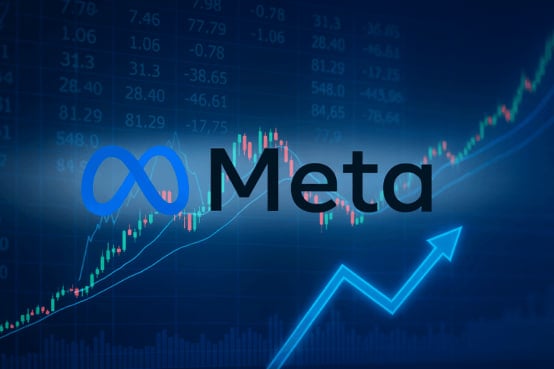 In recent years, Meta’s operating profit margin has remained high among tech giants, and its free cash flow capability is very strong. This cash flow advantage gives Zuckerberg enough confidence to invest in high-risk long-term projects, such as the metaverse, and now AI.
However, the biggest difference between AI and traditional internet businesses lies in its capital-intensive nature. The expansion of social platforms primarily relies on servers, bandwidth, and research and development manpower, while AI expansion requires GPU clusters, data centers, power infrastructure, model training costs, inference costs, and more.
In other words, AI is a typical heavy asset investment industry.
In the past, capital markets often used CapEx (capital expenditure) to evaluate cloud computing companies. Now, this metric is becoming a key variable in measuring the competitiveness of AI companies. Meta has clearly entered an "ultra high CapEx cycle."
If the disclosed token usage is seen as a reflection of internal inference costs, the market needs to reassess Meta's cost structure. The greatest variable affecting profit margins in the future may no longer be employee compensation, but rather AI inference costs.
This suggests that Meta is transforming from an "advertising cash cow" to a "computing power consumption giant."
Capital markets usually express two completely different views on this. Optimists believe Meta's short-term profit margins are under pressure, but AI will bring a productivity revolution and long-term competitive advantages. Pessimists, however, believe AI investments may repeat the metaverse story—massive investments, delayed returns, and pressured valuations.
The core of the issue is not how much money Meta has spent, but whether that money can generate sustainable returns.
2. Where did the burned money go: Analyzing Meta's AI investment return on investment
The capital market is always concerned with one question: return on investment (ROI). For Meta, ROI from AI investments can be calculated from three dimensions.
 First is the improvement in internal research and development efficiency. Meta CTO Andrew Bosworth has mentioned that top engineers' token consumption is already close to their salaries, but productivity increases up to 10 times.
This data is crucial. Assume a senior engineer has an annual salary of $500,000, if the AI tool cost reaches $250,000, the total cost rises to $750,000. It seems that costs have risen by 50%, but if productivity increases by 5–10 times, the cost per unit output actually decreases significantly.
For instance, completing a large feature in the past required 10 engineers and took 6 months. With AI, it may only need 3–4 engineers and take 2 months.
This means reduced labor costs, reduced time costs, and increased product iteration speed, where speed often equates to profit in internet competition.
Secondly, there is enhanced monetization of the advertising business. Meta's core revenue still comes from advertising, and AI's impact on the advertising system mainly reflects in more precise recommendations, higher click-through rates, higher conversion rates, and stronger automation delivery capabilities.
Even if the advertising conversion rate only increases by 1%–3%, the immense revenue base of Meta means the profit contribution is considerable. This is why Zuckerberg has continuously emphasized the importance of AI recommendation systems in recent years.
From a capital market perspective, this is an easier story to tell than the metaverse. Because AI can directly enhance the main business's cash flow rather than create distant concepts.
Furthermore, there's potential for future new business income. AI Agents are likely to become Meta's next growth curve.
Imagine a future where Meta not only sells advertising but may also provide enterprise-level AI Agents, developer AI services, AI SaaS products, AI social assistants, and so on, which will help Meta transition from an advertising company to an AI platform company.
The valuation multiples of platform companies are generally higher than that of single advertising companies.
3. From MAU to Token: New valuation metrics for tech companies
Why is the capital market willing to tolerate short-term profit declines for tech giants? The answer is simple: the market is buying future monopolies, which is particularly evident in the AI era.
Whether it's Microsoft, Alphabet, Amazon, or Meta, everyone is doing the same thing, seizing the entry to AI infrastructure.
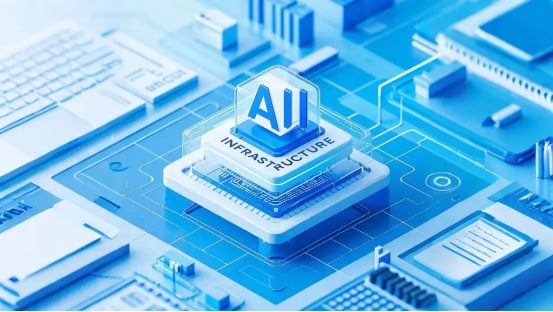 The reason lies in the distinct economies of scale of the large model industry; the more data there is, the stronger the model, the more users, the faster the feedback, the more inferences, the quicker the optimization, the stronger the computing power, and the higher the barriers, creating a typical flywheel effect.
Therefore, AI competition may ultimately evolve into a winner-takes-all situation.
In this context, Meta's high investments receive a new explanation. Zuckerberg is not simply chasing the AI craze but is defending against the risk of future valuation collapse.
What would happen if Meta fell behind in the AI race? The capital market might redefine Meta, shifting from a growth-oriented tech company to a mature advertising platform, and if AI lags in the future, it could become a low-growth internet company, leading to a significant decline in valuation multiples.
Conversely, if Meta successfully builds an AI competitive moat, the market may award a higher premium.
Thus, Meta's AI investments are essentially a valuation defense battle. The "Claudeonomics" leaderboard appears to be merely an internal curiosity, but it reveals a trend in the capital market.
In the past, we measured tech companies based on MAU (monthly active users), ARPU (average revenue per user), and Revenue Growth. In the future, we may need to add new metrics like Token Consumption, Inference Cost, and AI ROI, which will gradually enter analysts' models on Wall Street.
Conclusion
Meta burned through 60 trillion tokens in 30 days, a figure that seems exaggerated, even absurd. But from the capital market perspective, this is not "waste," but rather an investment in the infrastructure of the AI era.
Zuckerberg is betting not just on AI tools, but on a more radical future, allowing AI to directly participate in coding, product development, and even business decision-making.
For Wall Street, the real question has never been how much Meta has spent. It is whether this multi-billion dollar bet on AI can ultimately secure the monopoly on growth for the next decade.
免责声明:本文章仅代表作者个人观点,不代表本平台的立场和观点。本文章仅供信息分享,不构成对任何人的任何投资建议。用户与作者之间的任何争议,与本平台无关。如网页中刊载的文章或图片涉及侵权,请提供相关的权利证明和身份证明发送邮件到support@aicoin.com,本平台相关工作人员将会进行核查。


