On July 1, Robinhood held a press conference and announced a series of new products all at once.
The Layer 2 public chain Robinhood Chain officially launched its mainnet, which is a network built on Arbitrum, aimed at tokenizing real-world assets and DeFi applications.
Users can trade tokenized stocks on decentralized exchanges such as Uniswap, Rialto, Lighter, and 1inch on Robinhood Chain, and use these assets in DeFi scenarios, including as collateral for loans or depositing into liquidity pools to earn returns.
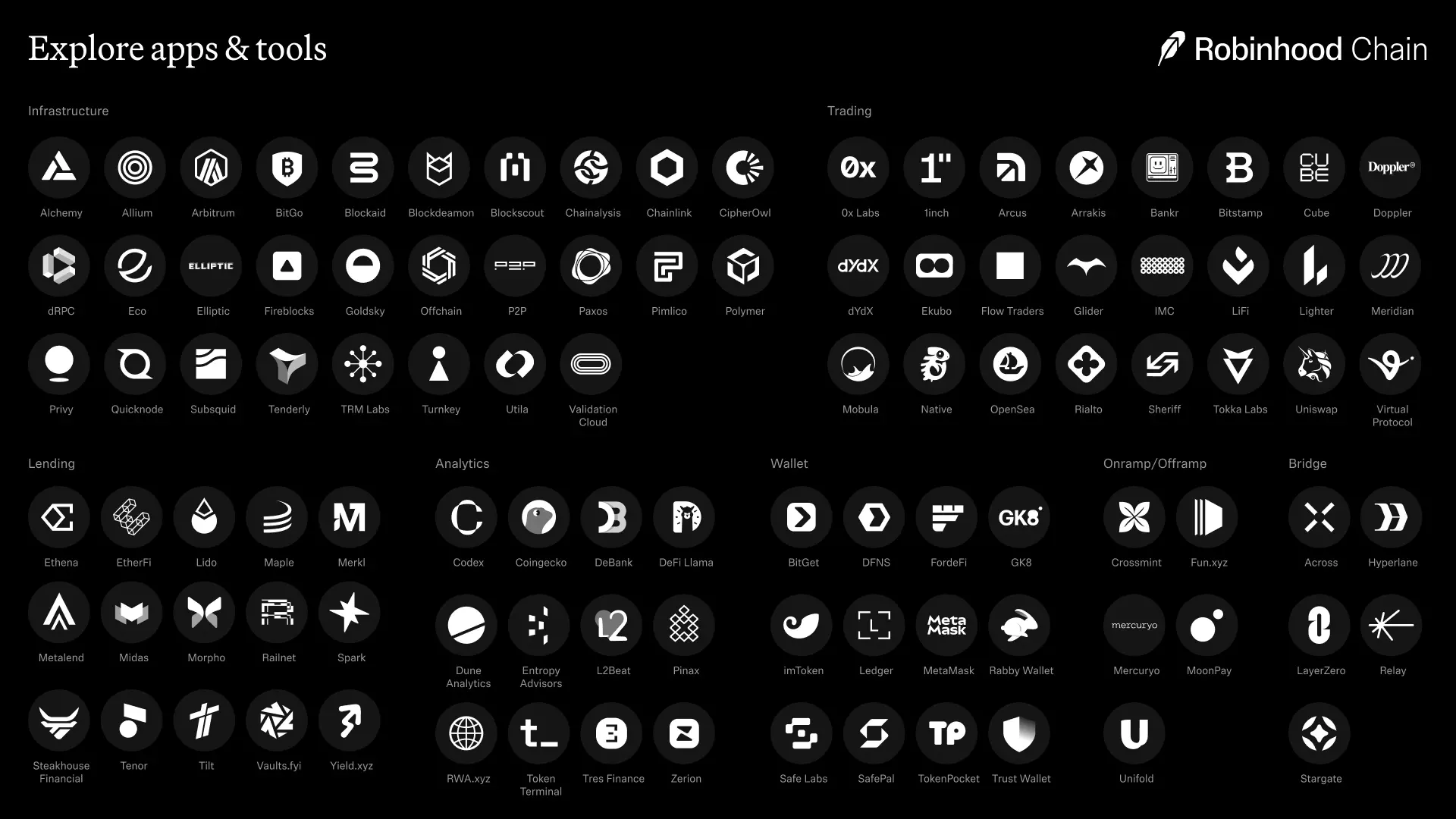
With the launch of the mainnet, Robinhood's Stock Tokens are also fully available. Users can utilize related products via Robinhood Wallet in over 120 countries, with specific availability varying by jurisdiction.
Additionally, Robinhood introduced Robinhood Earn. This product allows users to lend out USDG stablecoins through self-custody wallets, with an expected annual yield of around 7%. The underlying lending infrastructure is provided by Morpho, with DeFi protocols such as Steakhouse, Ethena, Spark, and Maple participating in support; the official statement also mentions the introduction of an insurance mechanism to reduce risk exposure.
Moreover, Robinhood announced the expansion of European perpetual futures products, covering commodities, ETFs, and the forex market, and plans to launch crypto trading in the UK. After acquiring WonderFi, Robinhood's services have also entered the Canadian market.
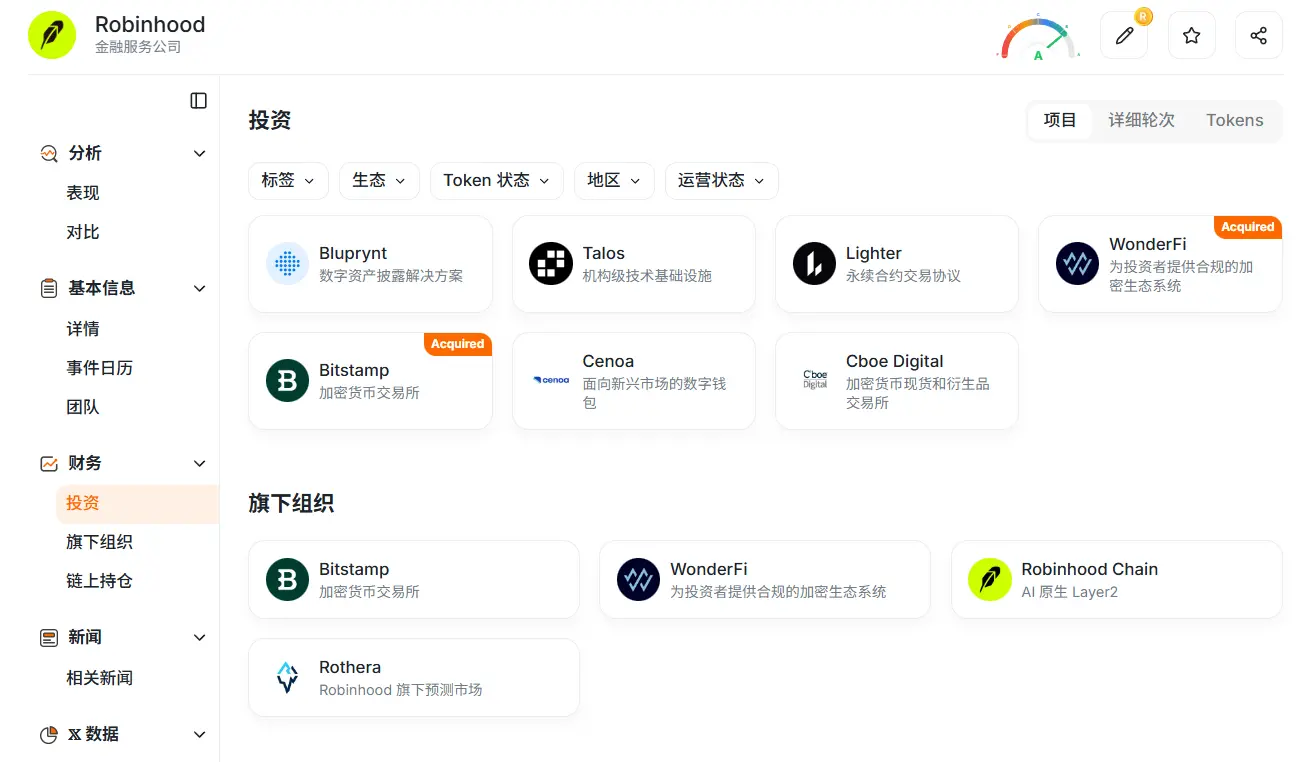
ImageSource:RootData
In the US market, Robinhood launched Agentic Accounts for crypto users. Eligible users can connect AI models to Robinhood's trading infrastructure while retaining control over fund allocation and trading parameters.
On the day of the press conference, Robinhood's stock price rose by 8.35%, and continued to rise in after-hours trading.
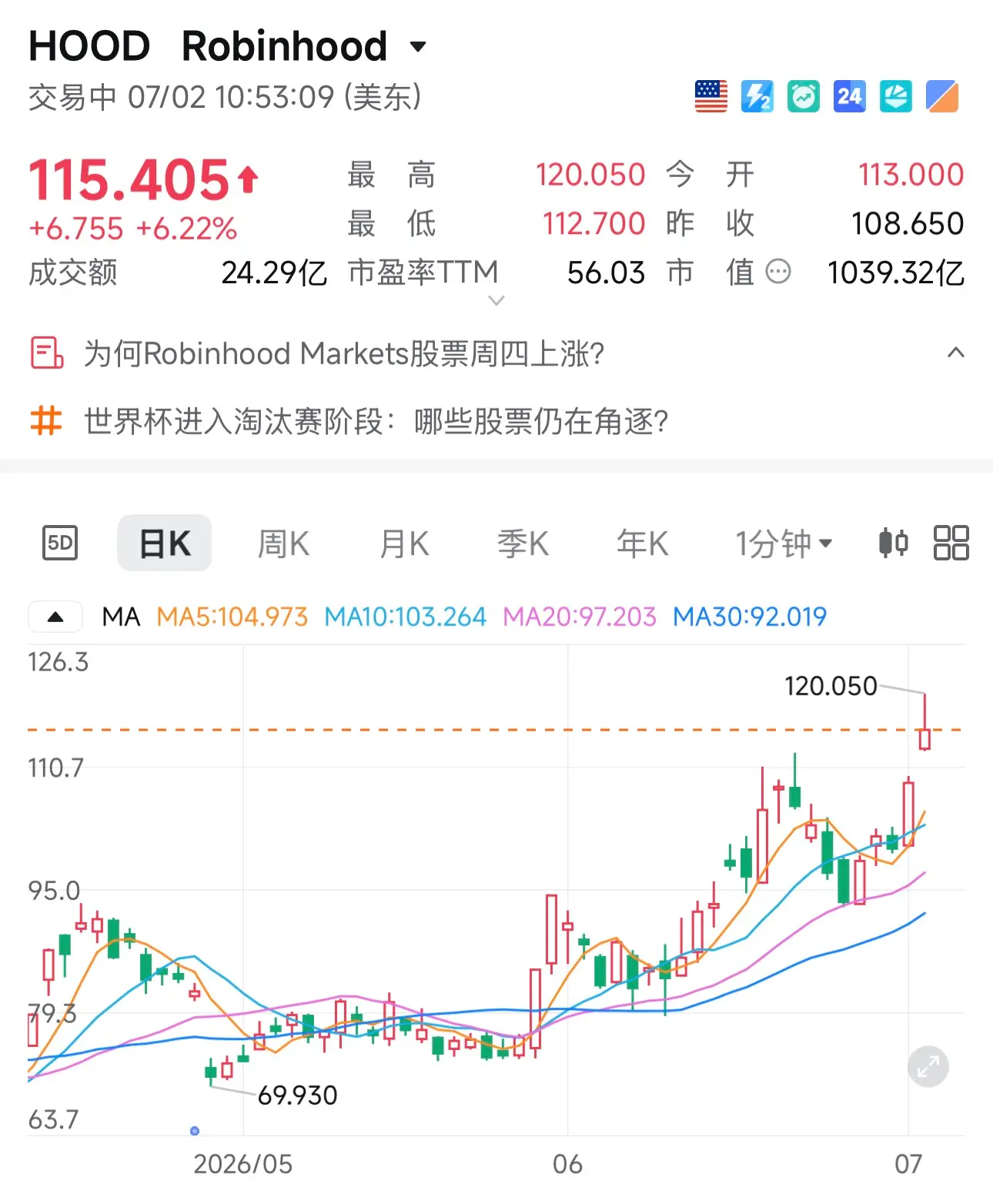
This is not just an ordinary crypto product update. Robinhood is gradually integrating stocks, cryptocurrencies, tokenized assets, stablecoin yields, perpetual futures, and AI trading tools into the same financial account system. The company's previous core identity was a commission-free brokerage, but now it seems to be approaching the concept of everything exchange.
The significance of Robinhood Chain is here as well. It is not just another Layer 2; more importantly, Robinhood does not want to remain only as a front-end on others’ chains in the long term.
In recent years, financial companies entering the crypto industry often do so by accessing existing public chains, with platforms responsible for users, interfaces, and product packaging, while the underlying settlement, gas, liquidity, and DeFi applications occur on external networks.
This model allows for a quick startup and can leverage existing ecosystems. However, for financial platforms that already have a significant number of user entry points, they will eventually face a critical issue: users operate within their own app, yet assets and settlements take place on someone else's territory.
This issue is particularly sensitive for Robinhood. It has nearly 28 million funded accounts, and users have formed trading habits in stocks, options, and crypto. This means that Robinhood is no longer just a stock trading app but is evolving into a comprehensive financial entry point covering multiple asset classes and various trading forms.
Against this backdrop, launching its own chain becomes a natural extension.If Robinhood merely directs users to external DeFi, it remains just a channel provider.If tokenized stocks, USDG borrowing, AI agent trading, and more RWA products operate on its own chain, it can attain deeper control over trading, settlement, collateral, yields, and asset flow.
The transition from being an interface provider to owning financial rails represents a more profound change.
After the launch of Robinhood Chain, protocols like Uniswap, 1inch, Lighter, Morpho, Chainlink, BitGo, Ethena, and EtherFi have successively connected, covering aspects such as trading, liquidity, lending, oracle, custody, and cross-chain.
More notably, the new DEX Arcus launched by dYdX chose to deploy on Robinhood Chain rather than on dYdX's own chain. This decision sparked controversy within the dYdX community and also indicates that the competition for institutional chains is not just about end-users but also involves protocols, liquidity, and product attention.
This is also why more and more financial companies are beginning to launch their own chains. Circle launched Arc, as the stablecoin issuer wants to tighten control over the circulation and settlement of USDC. Coinbase launched Base, as the exchange aims to keep users, assets, and developer activities within its ecosystem. Robinhood Chain represents brokerages and retail trading platforms starting to compete for the on-chain settlement layer of tokenized assets.
Their asset endowments vary, yet they face the same issue. Without establishing their own settlement layer, they risk transitioning from being the owner of user and asset entry points to becoming tenants on someone else's chain.
This wave of chain launches also differs from the previous round of public chain hype. In the last round, the market was more focused on TPS, ecosystem incentives, and funding narratives. Now, financial companies launching chains focus more on stablecoin payments for gas, compliance privacy, RWA issuance, on-chain collateral, AI agent trading, institutional settlement, and yield internalization.
However, for Robinhood, the real concern may not only be Robinhood Chain.
Just last month, Robinhood announced a layoff of 10% of its staff, about 290 people, estimating around $20 million in severance and benefits restructuring costs, along with about $8 million in stock-based compensation expenses. CEO Vlad Tenev stated that the company's business is performing very strongly currently, but it is essential to avoid excessive hierarchy and maintain a lean and highly focused team.
While shrinking organizational costs, Robinhood is intensely rolling out new businesses, sending a clear signal: it does not want to only be a commission-free broker nor just a gateway for crypto trading; it aims to retain more trading, issuance, settlement, and yield processes within its own system.
The backdrop to all this is that, due to a shrinking institutional trading volume, Robinhood's cryptocurrency trading revenue is significantly declining, dropping nearly to $134 million in Q1 and is expected to fall below this figure in Q2.Currently, the company's revenue growth largely depends on the surge in predictive market income.
According to analyst Dr. Crossroads' estimates, as of June 25, Robinhood's event contract trading volume for Q2 has reached approximately 12.3 billion contracts. Calculating based on a 1 cent share per contract, this business's quarterly revenue is expected to reach at least $123 million, with annualized revenue possibly hitting $500 million, likely making it the first time this business's revenue exceeds its cryptocurrency trading revenue.
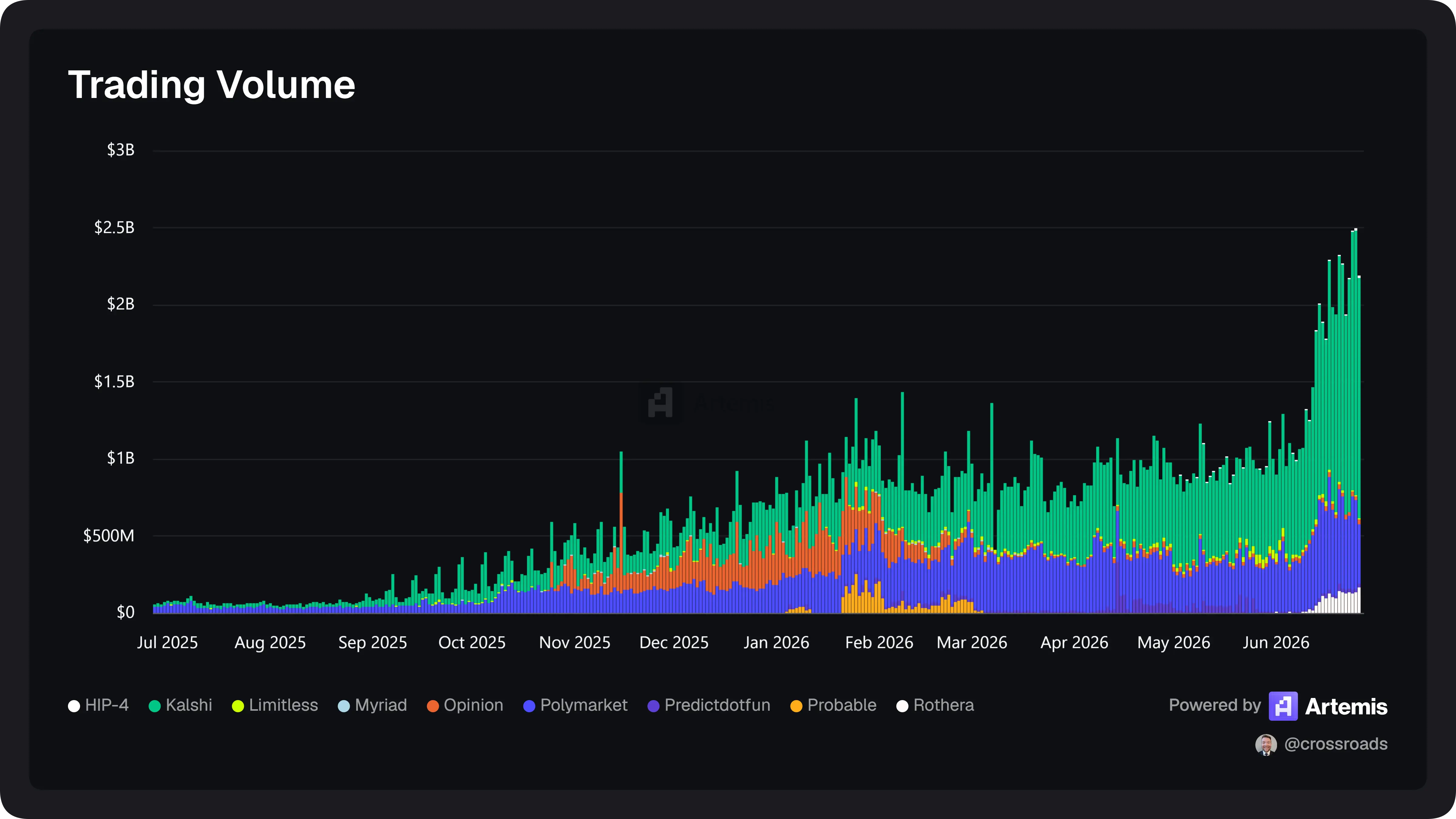
Its newly launched predictive market platform Rothera has already surpassed 900 million contracts in trading volume within its first week of launch, bringing nearly 60% of the potential contract trading increment to the company. At the same time, the company also plans to cut the fee from 2 cents per contract to 0.6 cents, using price advantages to retain trading volume and revenue within its own ecosystem.
Ultimately, the conference discussed ambition, while the financial report reflects reality. How many developers Robinhood Chain can attract is undoubtedly important, but whether the predictive market can continuously fill the revenue gap left by crypto spot trading will also impact the market's reassessment of this company.
For Robinhood, the real issue is no longer just whether it can launch a chain, but whether it can integrate stocks, crypto, predictive markets, tokenized assets, stablecoin yields, and AI trading into a sustainable business within the same account system.
免责声明:本文章仅代表作者个人观点,不代表本平台的立场和观点。本文章仅供信息分享,不构成对任何人的任何投资建议。用户与作者之间的任何争议,与本平台无关。如网页中刊载的文章或图片涉及侵权,请提供相关的权利证明和身份证明发送邮件到support@aicoin.com,本平台相关工作人员将会进行核查。


