Author: Think AI
The storage chip industry has operated under one rule for decades: shortages lead to price increases, overproduction causes price drops to clear inventory.
Last night, Micron's Q3 results shattered this rule completely.
Revenue reached $41.456 billion, more than tripling year-on-year. Gross margin soared to 84.9%, setting a new record in the company's 48-year history.
Net profit for the quarter hit $28.24 billion (equivalent to 192 billion yuan), compared to just $1.89 billion in the same period last year.
This translates to earnings of 24,700 yuan per second and total daily earnings of 2 billion yuan—this is insane.
It even surpassed Nvidia and Meta.
What does this mean? A company that sells memory sticks has a higher gross margin than one selling GPUs.
"Long-term contracts lock prices, cyclical stocks turn into infrastructure."
Micron has locked contracts for five years, signing a total of 16 agreements and securing 20% of DRAM and 30% of NAND shipments.
These long-term contract clients include Nvidia, Anthropic, Microsoft, and Google Cloud. The contracts specify minimum prices and minimum shipment volumes.
According to the contracts, future guaranteed revenue has piled up to $100 billion.
This kind of play has not been seen in the memory industry before. Multi-year contracts with locked prices were previously only available to chip design companies and cloud providers.
Now it’s the turn of a memory stick seller.
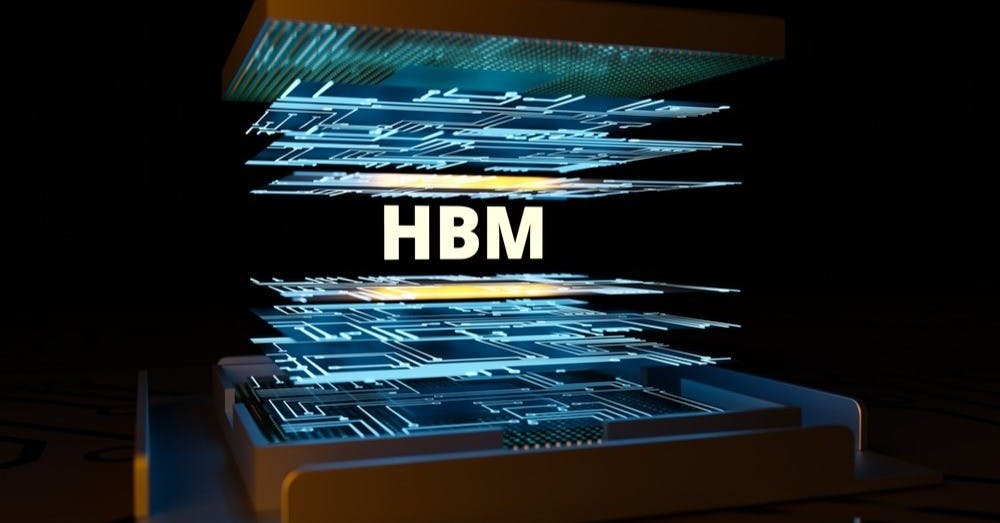
"HBM sold out for the year, shortage seen until 2027."
Micron's HBM production capacity is fully booked through 2026. The amount requested by clients can only satisfy half to two-thirds of demand.
New production lines will not be released in large scale until the second half of 2027.
The reason is straightforward. The memory used in one AI server is 6 to 8 times that of a standard server.
The combined capital expenditures for the four largest cloud vendors globally this year total $725 billion. AI server shipments are doubling.
High-end wafers are fully converted to HBM, while general memory is being pushed up in price due to demand.
This is the siphoning effect of AI on hardware. When one segment booms, the entire chain follows suit.
The gross margin for ordinary consumer memory maxes out at 30 to 40 percentage points. HBM's gross margin remains stable at over 85%, with unit prices being 10 times that of regular memory.
Micron is desperate to shift its capacity towards HBM. Overall gross margin has been pulled directly into the 85% range.
This profit margin used to belong only to chip design companies. A wafer manufacturer has squeezed into the profit tier of design companies thanks to AI demand.
"How should we look at what’s next?"
In the second half of 2027, new capacity from Samsung and SK Hynix will flood the market. These two companies have total HBM capacity 2 to 3 times that of Micron and at lower costs.
Once the growth rate of AI computational capital expenditure slows, maintaining an 85% gross margin will be impossible.
There is another layer of risk. Micron products cannot basically enter the mainland Chinese market.
The world's second-largest market for computing power demand can only watch. In the next two years, over $50 billion in capital expenditure will rely on overseas clients for digestion.
Honestly, Micron’s performance today is impressively good. This is precisely because it is positioned in the middle window where AI demand is exploding and new capacity has not caught up yet.
This window lasts at most one or two years.
The transformation of the storage industry from cyclical products to infrastructure is indeed happening. An 84.9% gross margin is the best evidence.
However, permanently elevating a storage company to the valuation level of AI chips requires more than just a few quarters of good performance.
It needs continuous explosions in AI computing demand, and it must not stop.
免责声明:本文章仅代表作者个人观点,不代表本平台的立场和观点。本文章仅供信息分享,不构成对任何人的任何投资建议。用户与作者之间的任何争议,与本平台无关。如网页中刊载的文章或图片涉及侵权,请提供相关的权利证明和身份证明发送邮件到support@aicoin.com,本平台相关工作人员将会进行核查。


