Text|Sleepy
On June 17, SK Hynix released a recruitment announcement. For core technical positions in chip design, devices, and research and development, which previously only recruited candidates with at least a bachelor's degree, all educational requirements were cancelled starting that day. High school graduates can now apply for research and development positions. This round of recruitment is for hundreds of positions, with a deadline of June 23. The educational restrictions for production positions will also be adjusted in the future.
In a country where the entire society has spent seventy years betting its fate on the two words "diploma," the number one company says diplomas are no longer useful.
According to a report by the Korea Herald, this company ranked first for the first time in the list of companies that South Korean university students most want to work for in 2025.
The reason is simple: SK Hynix pays exceptionally well. In September last year, they signed an agreement with the labor union that 10% of annual operating profits would be allocated for bonuses, with no cap. In 2025, profits reached 47 trillion won, and year-end bonuses amounted to 2964% of monthly salary, resulting in about 700,000 yuan for average employees. In the first quarter of 2026, the profit margin was 72%, higher than Nvidia's. If this trend continues throughout the year, the average bonus could break 3 million yuan.
SK Hynix employees have gained a status in the South Korean matchmaking market that rivals that of traditional high-income occupations like doctors and lawyers. According to a matchmaking agency representative speaking to the media, since the semiconductor industry entered a supercycle, engineers with income far exceeding expectations have become even more popular than lawyers.
A detail reported by the Korea Herald: Someone posted a union vest from SK Hynix on the second-hand platform Karrot, priced at 40,000 won, with the product description stating "dating battle uniform." The post quickly trended.
There’s a joke going around. Hynix employees going on blind dates say modestly that they work at Samsung. Only when they meet someone good do they admit that they actually work at Hynix.
Samsung is really bleeding. In four months, at least 200 engineers have jumped to Hynix. Those who moved say their income has tripled. The Samsung union president's expression soured when he revealed this number to reporters because Samsung cannot offer the same pay; Samsung is too big, and in the same quarter when semiconductors are making huge profits, mobile phones and home appliances are still in the red.
When SK Hynix announced it would eliminate educational barriers, it provided a set of justifications. It stated that in the AI era, one should not only look at education but also at creativity and potential. SK Group chairman Choi Tae-won mentioned three words: analytical thinking, adaptability, and empathy.
All are good words.
A Single Plank Bridge Fixed for Seventy Years
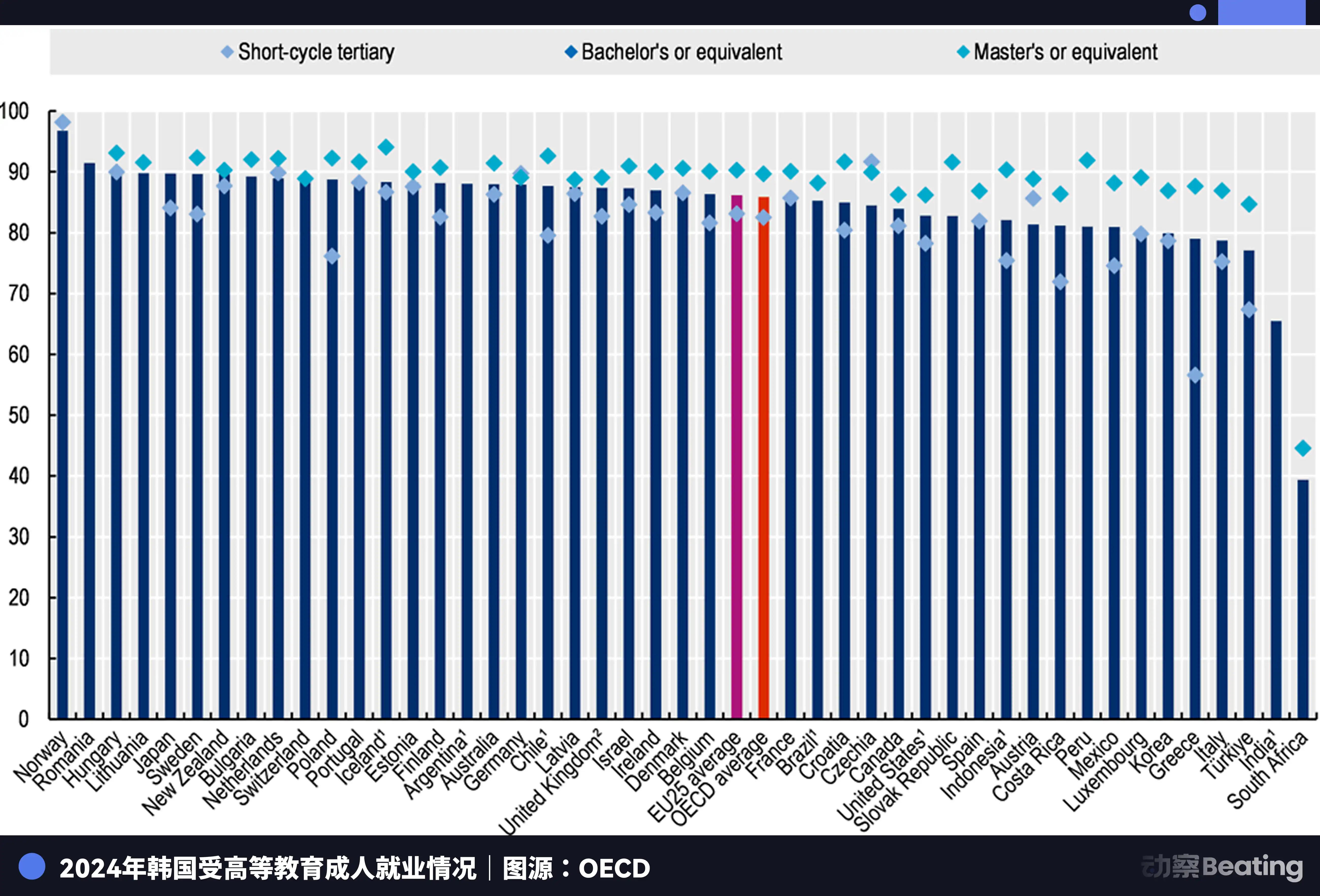
South Korea is the country that has taken the matter of "diploma" to the extreme. The OECD has reported that among South Koreans aged 25 to 34, 71% hold a university degree, the highest in the world. On the day of the college entrance exam, flight routes are adjusted, the stock market opens late, and police cars escort late students. This isn't because South Koreans particularly revere knowledge, but because a university admission notice in Korea is almost equivalent to a visa, a visa from the lower class to the middle class.
Without it, you can't go anywhere. With it, at least you can line up.
How did this visa become so important? We have to look back sixty to seventy years.
During Park Chung-hee's era, South Korea tied its entire economic lifeline to a few large conglomerates. Samsung, Hyundai, LG, and SK dominate the most profitable businesses, offer the highest salaries, and provide the most stable jobs. The wages offered by small and medium enterprises are about 60% of those in conglomerates. 81% of the workforce is employed in small and medium enterprises, yet everyone’s eyes are fixed on the less than 1% of opportunities in conglomerates. In Korea, a graduate's first job basically determines their lifetime income.
What does it take to enter a conglomerate? A university diploma, specifically a diploma from a good university.
Families across the country began to squeeze into this pathway. The Bank of Korea has conducted research showing that for students with similar talents, parental financial strength impacts the likelihood of admission to prestigious universities by as much as 75%. One-third of new students at Seoul National University come from Seoul, with the Gangnam district alone accounting for 12%.
Young Koreans have developed a self-mocking notion called "spoon theory." Those with over 2 billion won in family assets are called golden spoons, while those with less than 50 million won are called dirt spoons. Seventy to eighty percent of South Koreans feel that social mobility has become irrelevant to them.
Someone wrote online about their family situation. The gist is that my mom ran a small restaurant, working non-stop for ten years to save enough for my college tuition. I attended a nondescript university out of town, majoring in the liberal arts. Now I work as a waiter in a café, earning 1.8 million won a month. My sister is about to graduate high school, and I told her not to go to college but to learn a trade. But my mom disagrees. She says it’s precisely because we lack education that we live like this.
In small towns in South Korea, such families abound.
In towns of Chungcheong-do, Gyeongsang-do, and Jeolla-do, the tutoring centers' lights stay on until eleven at night. Stepping outside, the streets are deserted, even the convenience store clerks are dozing off. Sixteen- or seventeen-year-old kids walk home, with all their knowledge of Seoul coming from their phone screens. Parents send hundreds of thousands of won to tutoring centers each month, which feels like flesh being cut for families running small restaurants or fried chicken stores. Yet they still send their children because without doing so, their children wouldn’t even have the qualification to line up on the single plank bridge.
Koreans often use the term "fried chicken conjecture" to self-deprecate. No matter what you do now, whether a programmer, architect, or engineer, the last likely outcome is owning a fried chicken store. Because the number of spots in conglomerates is limited, those who cannot secure a spot will eventually fall to the same place. Young town residents resonate most with this conjecture because they are the furthest from that spot and fall the fastest.
Someone once said that living in Seoul is the closest to hell they can imagine. But what about not going to Seoul? The job market in the regions is quieter than hell. So quiet that even hell finds it too desolate.
So they still go. Squeezing into Seoul, moving into study rooms, which are hardly larger than a bed, with thin partitions that allow you to hear your neighbor turning over, and public restrooms at the end of the corridor. During the day, they attend classes or prepare for interviews, and at night they study TOEIC vocabulary under a desk lamp. Young people in their twenties live in a four-square-meter cubicle to gather enough resources for a "large enterprise job applicant" ticket: diplomas, English scores, certificates, internship experience, volunteer activities; Koreans call this entire set of things "spec," just like adding attribute points to characters in a game, every item requires time and money to accumulate.
In the 1970s and 1980s, mom was right. Back then, the whole society was like riding an elevator; a diploma was the elevator ticket, and getting it meant going up.
The elevator has been stopped for a long time.
When 71% of young people hold university diplomas, diplomas no longer prove your capabilities; they only prove you haven't fallen to the bottom. Everyone has one, which is tantamount to no one having one. The real identifiers are the additional qualities that emerge based on the diploma. Experiences like studying abroad, extracurricular competitions, networking referrals, and interview training classes; each one requires money to obtain.
This single plank bridge has come this far, with children walking on it while the family's wealth is carried beneath it.
The People Dismantling the Bridge Stand at the Other End
SK Hynix declared that the bridge is no longer necessary. High school graduates can come to work in chip research and development. Focus on capability, not paper.
I tried to think about this from another angle.
If diplomas are no longer considered, then what is being looked at? The company mentioned a few words: growth potential, creative problem-solving ability, cultural fit.
College entrance exam scores are clear-cut, a national standard; you may question the brutality of this standard, but can do nothing about it. "Growth potential" is not such a thing. Its shape is defined by the interviewer. "Cultural fit" is even more nebulous; it can be almost anything or nothing at all.
A child from a small-town high school sits at the interview table at SK Hynix's Icheon campus. He grew up in a small city in Gyeongsangbuk-do, three hours by car from Seoul. His high school has no semiconductor lab, no programming club, and the library might have books on chips published ten years ago. He's smart, but no one has ever shown him what a silicon wafer looks like.
Now, the person across him must determine within an hour whether he has "flexible thinking." This judgment relies on how he speaks, his posture on thinking through problems, and the particular aura he displays during the conversation. These elements are related to talent but depend even more on the atmosphere in which a person has grown up, the books read, the people met, the places visited, and whether anyone has taught him how to articulate his thoughts clearly to strangers.
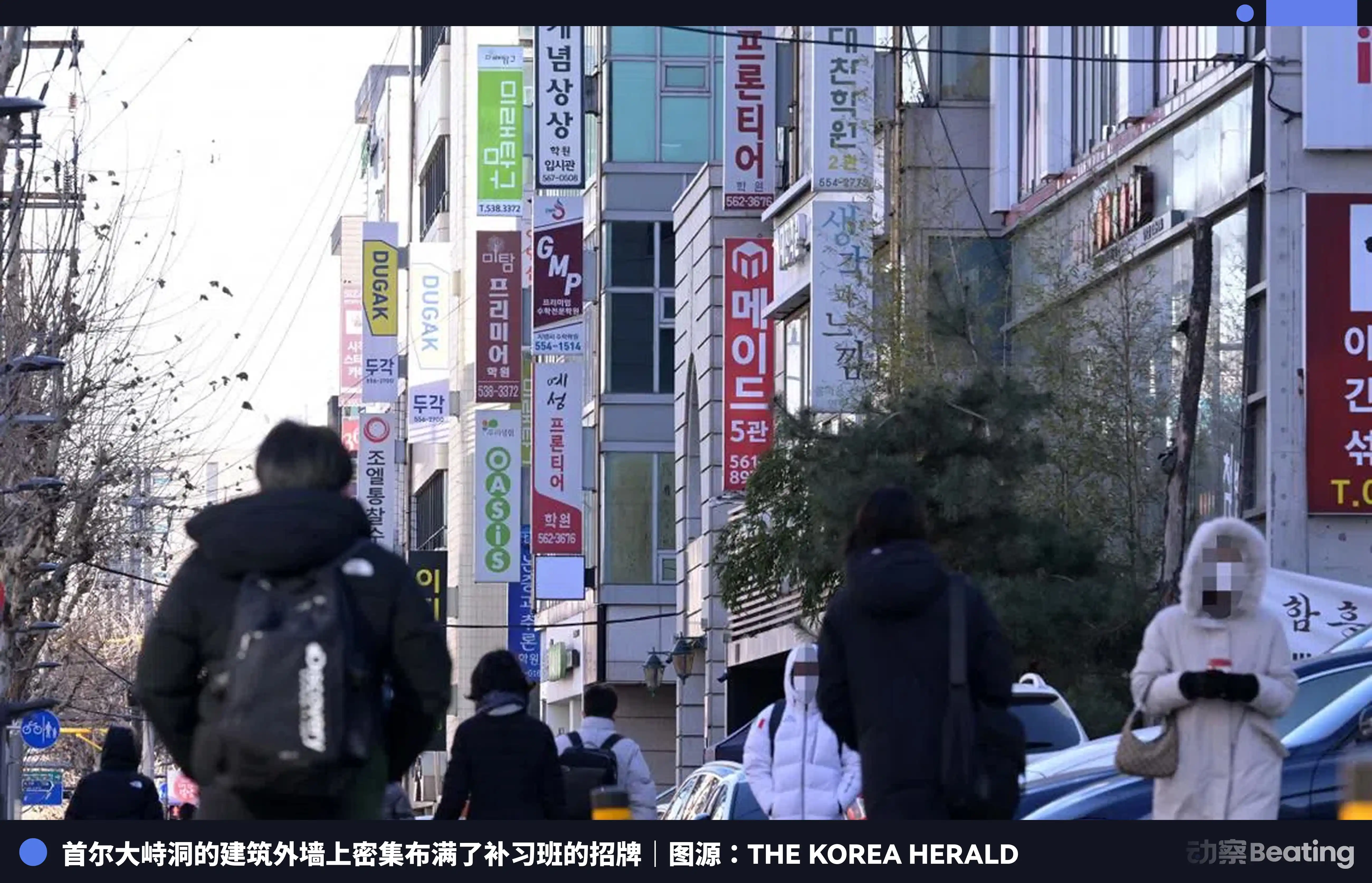
Meanwhile, the interview prep classes in Gangnam won't close; they will just change their curricula. Business will not be affected; in fact, it may even improve.
The old rules are rigid but straightforward. If you meet the score, you meet it; no one dares to disqualify you face-to-face without reason. The new rules are flexible and respectable, filled with goodwill. But the softer the ruler, the easier it is to bend, and which way it bends depends on whose hand holds it.
That mother, who ran a restaurant for ten years to support her daughter's university education. She only holds one card, which is that diploma. Not because that paper has any magical power. But because in this game, that is the only card she can afford.
Children from Gangnam do not rely on this card. They learn coding in elementary school, spend summer vacations in Silicon Valley, and their extracurricular activity lists can fill three pages. Whether it’s a diploma or not is irrelevant. The same card means everything to one group of people, while for another, it is merely a dispensable ornament.
As the rules change, the very first card removed from the table is the only one possessed by the poor.
A New Single Plank Bridge
SK Hynix's removal of educational requirements, when solely considering recruitment efficiency, is a good thing. They are in the best year in company history, with HBM orders booked two years out, urgently needing capable workers. If a high school graduate can actually do chip design, there is no rationale for that rule standing in their way.
But SK Hynix is the top choice for South Korean university students; its declaration that diplomas are unimportant will echo across campus walls into every tutoring center. Every high school student still doing problems under the lamp will have a moment of doubt.
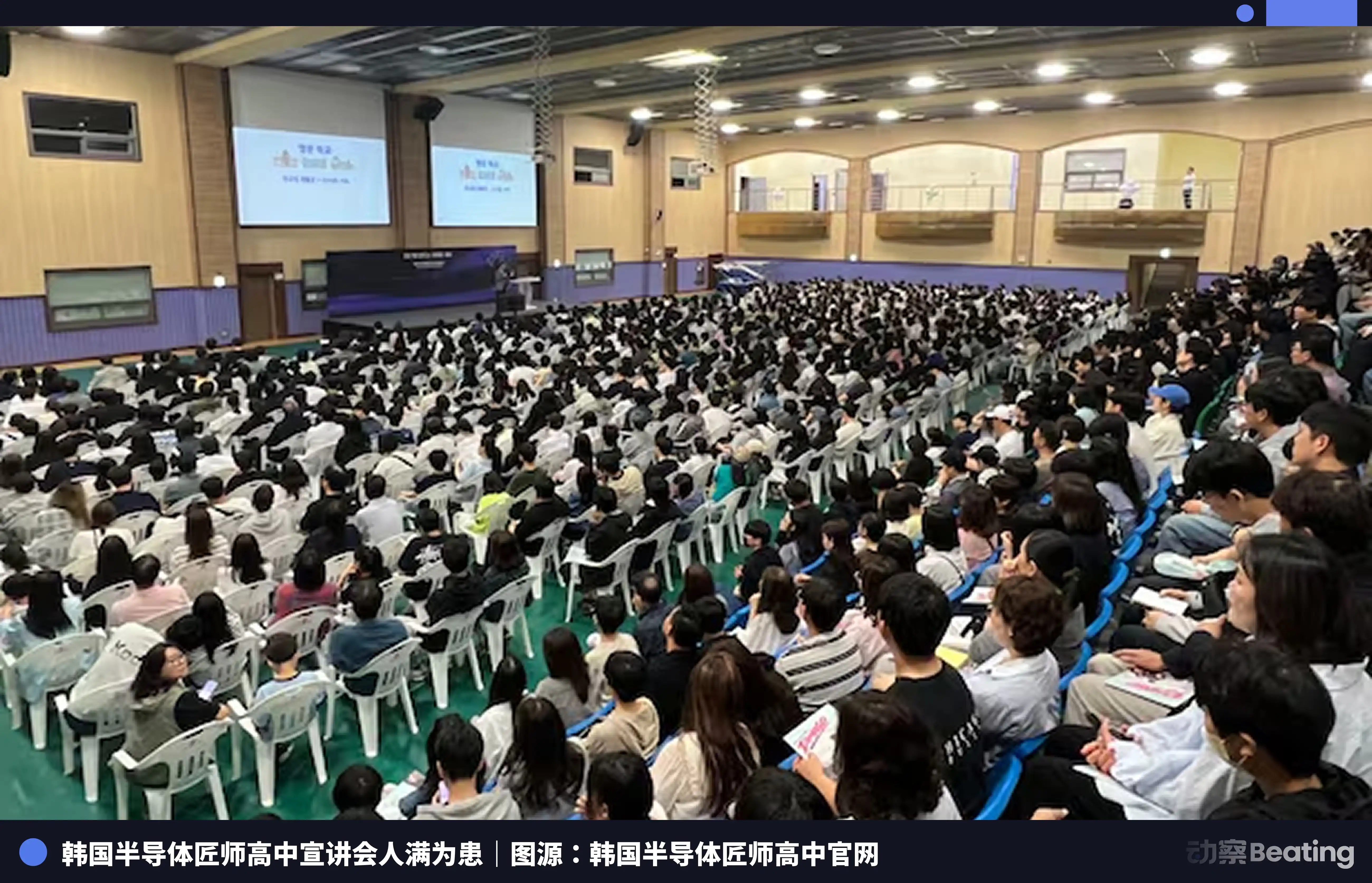
South Korea already has vocational high schools for semiconductors. One called "Korea Semiconductor Master High School" recently held its first recruitment information session, packed with attendees. A graduate who joins Hynix's production line could earn as much in a year as their father does in a lifetime.
In the same month, data from the Korean Statistical Office showed that employment numbers decreased by 40,000 year-on-year in May, marking the first negative growth in seventeen months. Employment in the manufacturing sector has declined for twenty-three consecutive months. Only semiconductors are on the rise; all other industries are falling.
A new single plank bridge has been built. But this time, at the other end is not a university, but a company.
No matter how competitive universities become, there are still hundreds to choose from, with thousands of majors and various directions. If the entire next generation of young Koreans shifts their bets from "getting into a good university" to "joining a good company," they are still gambling; they just have a different dealer.
Hynix says it no longer looks at educational background, while thousands of Samsung employees are striking to negotiate pay. Only when both events are combined do they form a whole. It is not a self-renewal of the educational system. It is simply that money has become so strong that even the systems blocking profits have to step aside. The rules follow the money.
The river has always existed. Over the decades, several bridges have been built across it. Imperial examinations, college entrance exams, university diplomas; this time it has changed to "comprehensive quality assessment."
That river is the wage gap between conglomerates and small companies, the resource disparities between Seoul and the regions, and the line between golden spoons and dirt spoons, which is sealed at birth.
Yoo Mi-ri wrote about a man in her book "At Ueno Station Park." He came from Fukushima to Tokyo to help build the venues for the 1964 Olympics. He worked hard, sent money home, never complained, never stopped, and did everything required of him. When the venues were completed, Tokyo no longer needed him, and he ended up sleeping on a bench in Ueno Park, next to the stadium he had helped build. People came to stroll, some came to take pictures. No one noticed him.
He did nothing wrong. It’s just that what he did was no longer needed the moment it was completed.
When I read this book, I kept thinking about that mother who ran a small restaurant. She must have seen the news about SK Hynix today.
I guess she won't change her mind; her sister will still go to university.
Not because she doesn’t understand. But because she understands and can't dare to admit it. If she admits it, the previous ten years would have been in vain. Those days of working non-stop, those days of splitting every cent of profit in half, those days of refusing to close the restaurant even when sick, were all for her daughter to get that piece of paper. If that paper truly isn't important anymore, what does that make her efforts?
So she will continue to support, continue to save, continue to send money to tutoring centers. Her little daughter will sooner or later occupy that four-square-meter cubicle in the study hall.
免责声明:本文章仅代表作者个人观点,不代表本平台的立场和观点。本文章仅供信息分享,不构成对任何人的任何投资建议。用户与作者之间的任何争议,与本平台无关。如网页中刊载的文章或图片涉及侵权,请提供相关的权利证明和身份证明发送邮件到support@aicoin.com,本平台相关工作人员将会进行核查。


