The four-month battle is over, and the capital market finally breathes a sigh of relief.
Written by: ChandlerZ, Foresight News
On the night of June 15, Bitcoin rebounded to a high of $67,255, marking the first return to around $67,000 since it fell below $60,000 on June 6; Ethereum reached a high of $1,848, currently quoted at $1,791; Sol is currently at $73.95, rebounding over 23% from a previous low of $60.
Currently, its fear index is at 22, and market sentiment remains fearful.
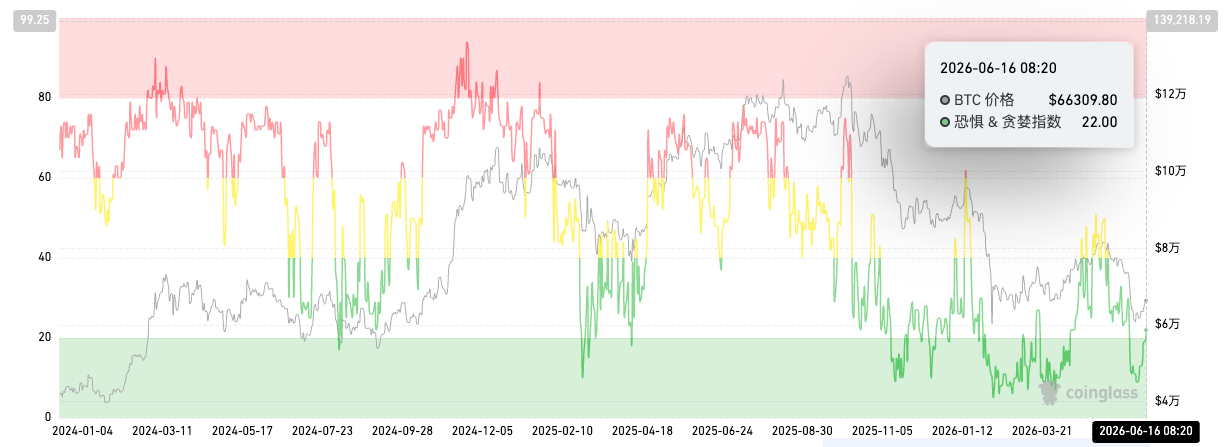
Coinglass data shows that in the past 24 hours, the total liquidation across the network amounted to $488 million, with short positions liquidating $366 million. Among them, Ethereum liquidations totaled approximately $175 million, while Bitcoin liquidations were about $113 million.
The driving force behind this rebound has almost entirely come from the macro level, as the electronic signing of the US-Iran Memorandum of Understanding has been completed, with a formal signing ceremony scheduled to be held in Switzerland on June 19. Crude oil prices fell approximately 5% in one day, and the Dow Jones index hit a historic high. In addition, SpaceX saw a one-day increase of 20%, with its stock price soaring for the second consecutive trading day, sustaining enthusiasm in the US stock market; gold recorded three consecutive gains, breaking through $4,300. Against the backdrop of a broad strengthening of global risk assets, Bitcoin, as a high-beta asset, benefited simultaneously.
At the same time, a report released by Glassnode indicates that the conclusions drawn from on-chain and derivative data suggest that the current situation is closer to a technical repair following a deep oversell and has not yet constituted a trend reversal.
The US-Iran agreement takes effect, and crude oil plummets reshaping inflation expectations
On June 14, the United States and Iran confirmed a ceasefire agreement through mediation by Pakistan and Qatar, with both parties announcing the immediate termination of all military actions. The core terms of the agreement include the reopening of free passage through the Strait of Hormuz and the lifting of the US maritime blockade on Iranian ports. Trump subsequently confirmed that he had authorized the end of the blockade. The formal signing ceremony is scheduled for June 19 in Geneva, Switzerland.
This is the first substantial signal of ending the conflict after nearly four months since the US and Israel launched military actions against Iran on February 28. The market reacted quickly and violently, with Brent crude oil dropping below $83 per barrel during trading on Monday, hitting a two-month low, down more than 20% from the 2026 peak. WTI also fell about 5%.
The Strait of Hormuz carries about 20% of global oil transportation; during the blockade, global energy prices remained high, intensifying inflationary pressures. The reopening of the strait means the removal of the biggest bottleneck on the supply side, greatly improving oil supply expectations. For the crypto market, the drop in oil prices, the cooling of inflation expectations, and the opening of space for Fed rate cuts → the revaluation of risk assets is the core macro support for Bitcoin breaking through $67,000.
US stocks strengthen across the board, SpaceX continues to lead
The Dow Jones Industrial Average gapped up on Monday, setting a new all-time high during trading, with tech stocks leading the way. The S&P 500 and Nasdaq Composite Index also saw significant increases. The turning point in market sentiment was the implementation of the US-Iran agreement, as the reduction of geopolitical risks released suppressed risk appetite.
The most noteworthy stock remains SpaceX (SPCX), which landed on Nasdaq on June 12 with an issuance price of $135. After underwriters fully exercised their over-allotment option, the total fundraising reached $86.2 billion, setting a record for global IPO scale. On Monday, it closed at $192.46, rising 42% from the issuance price, adding $412 billion in market value in one day and pushing SpaceX's total valuation past $2.5 trillion, ranking among the top six globally.
Data from Vanda Research shows that the number of SpaceX shares bought by retail investors in the first two trading days after the IPO is equivalent to the retail buying volume across the entire US stock market in the previous week. Musk’s holdings in SpaceX make him the world's first trillionaire, with a net worth more than three times that of the world's second-richest person, Larry Page. However, the A-shares issued in this IPO account for only 4.3% of the total market value, leading to an extremely tight initial free flow. After the Q2 earnings call at the end of July, approximately 10% to 15% of early insider shareholders will face the lifting of restrictions.
SpaceX US stock spot token rSPCX rose to a high of 229.86 USDT early in the morning, currently quoted at 217.58 USDT, with a 24-hour increase of 28.82%.
Rebound, liquidation, and capital rotation
From the price trend, Bitcoin has continued to fall since hitting a cyclical peak of $91,323 at the beginning of 2026, accelerating downward after breaking the key support level of $82,733 in May. It once fell below $60,000 on June 6, hitting a low of around $59,000. Since then, the price has repeatedly built a bottom in the range of $59,000 to $64,000, and on the night of June 15, it saw a rapid surge under the concentrated release of macro favorable factors, rebounding about 14% from the low in a week. From a technical perspective, the $67,000 area serves as a short-term resistance level in the previous declining channel, and the price quickly retreated after reaching it, indicating that selling pressure remains above.
In terms of capital structure, the crypto market is undergoing a significant reallocation.
In recent weeks, the Bitcoin spot ETF has experienced the most severe capital outflow since its listing. In early June, the net outflow in one week reached $3.4 billion, setting a record for the highest weekly outflow since the ETF listing in January 2024. Since mid-May, the cumulative outflow from Bitcoin ETF has reached approximately $3.75 billion, marking the longest continuous redemption period in history. However, a turning signal appeared on June 12, when the Bitcoin ETF saw a net inflow of $85.9 million in one day.
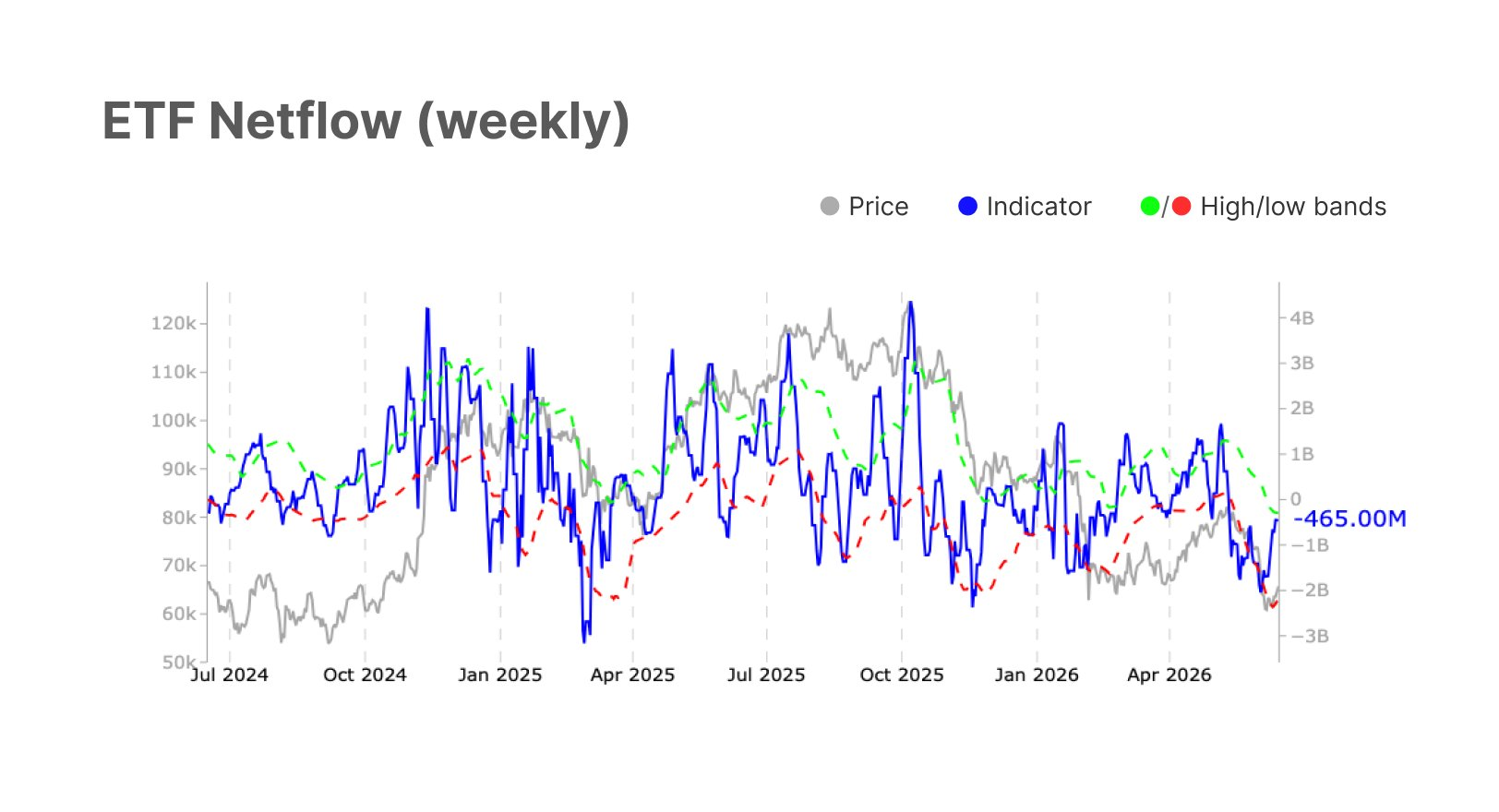
Glassnode data shows that as of the week of June 15, the ETF's weekly net outflow has narrowed from the previous week's $1.3 billion to $465 million, an improvement of 65.5%. The ETF MVRV has risen to 1.06, with institutional holdings overall re-entering a small profit range. However, the weekly trading volume has shrunk simultaneously by 38.1% to $11.1 billion, reflecting that institutional participation has yet to show signs of recovery.
Meanwhile, the current supply ratio between short-term holders and long-term holders has dropped to 13.8%, breaking below the statistical lower bound of 14.6%, indicating that short-term speculative chips have been significantly cleaned out and the holder structure is shifting towards long-term holding. The Hot Capital Share has decreased to 16.3%, and the proportion of newly entering capital in the past three months continues to decline. Panic has begun to dissipate, but the market lacks sufficient new belief and institutional reinvestment to drive prices into a trend rise.
At the same time, altcoin ETFs are taking up the baton. The XRP ETF approved in March accumulated a net inflow of $1.37 billion by mid-May. The Solana ETF, which started trading on May 26, is even stronger, accumulating a net inflow of $1.118 billion in less than three weeks.
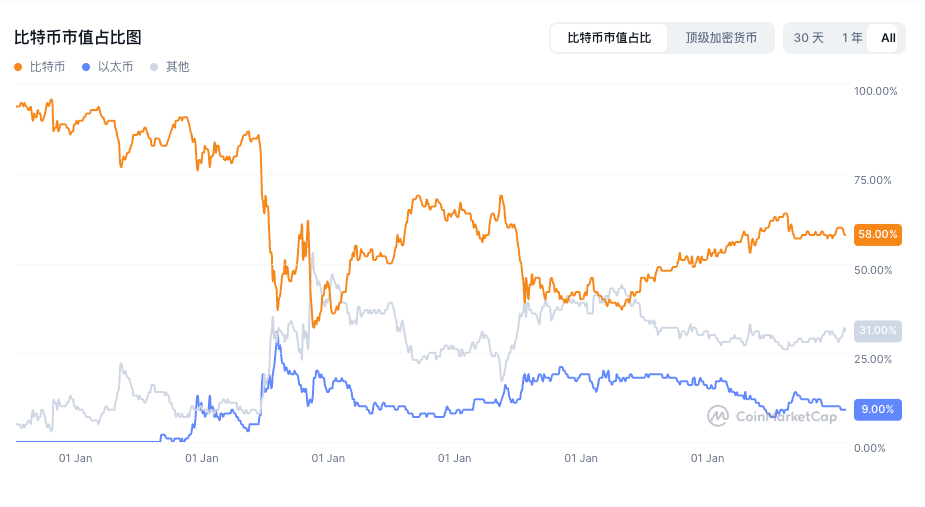
Bitcoin’s dominance has dropped to 58%, with funds rotating from BTC and ETH to emerging ETF categories.
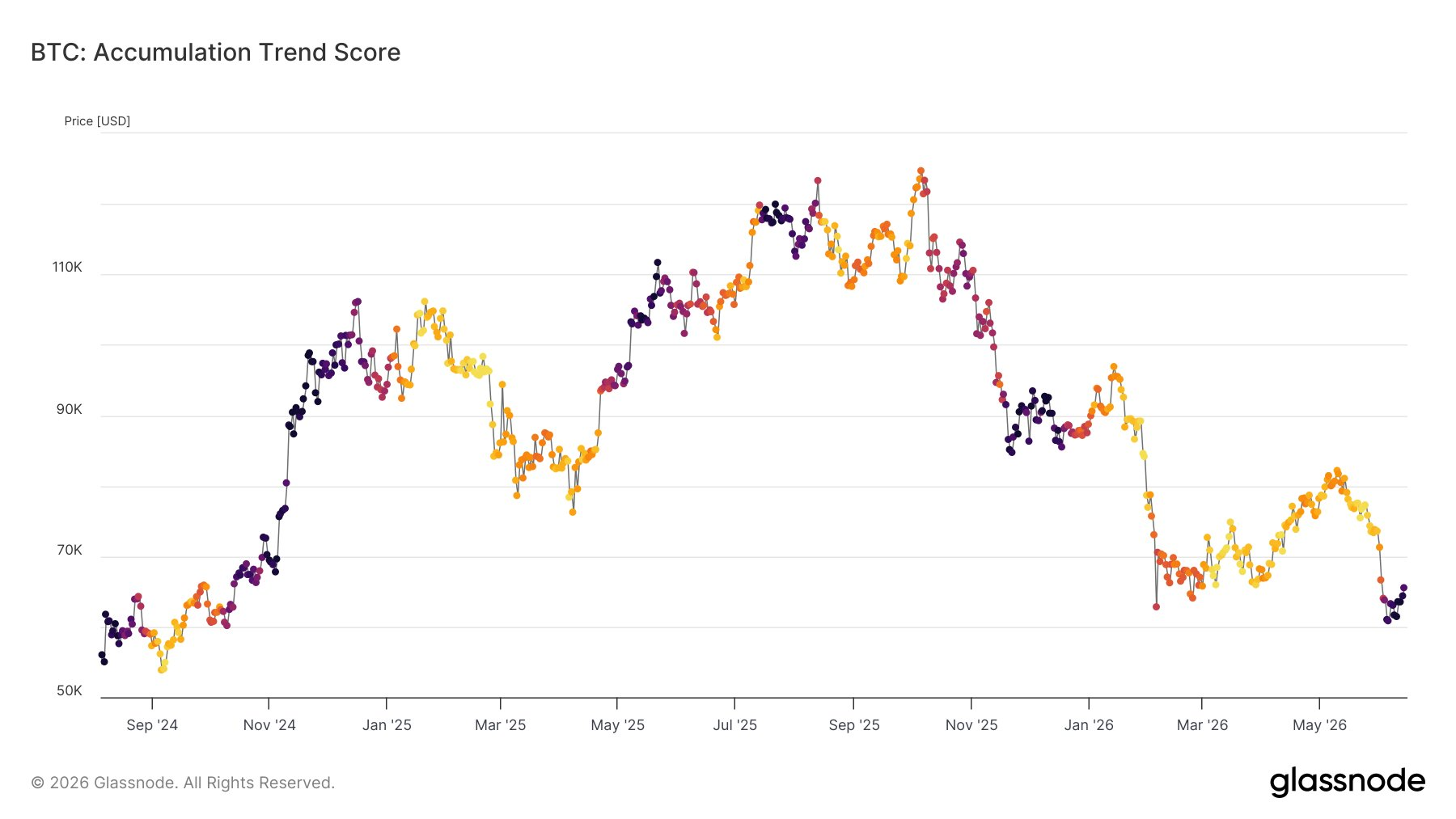
However, it is also analyzed that the Accumulation Trend Score measures the relative scale of entities that actively increase their on-chain assets, with values close to 1 indicating widespread accumulation; values close to 0 indicating dispersion. After the price broke the $60,000 threshold in early June, the comprehensive scores across various sectors began to shift towards accumulation. This structure aligns with the general trend of buying on dips, where on-chain demand increases as prices decline, rather than ongoing selling.
免责声明:本文章仅代表作者个人观点,不代表本平台的立场和观点。本文章仅供信息分享,不构成对任何人的任何投资建议。用户与作者之间的任何争议,与本平台无关。如网页中刊载的文章或图片涉及侵权,请提供相关的权利证明和身份证明发送邮件到support@aicoin.com,本平台相关工作人员将会进行核查。


