Author: Deep Tide TechFlow | June 2026
The old rule in the stablecoin race is, whoever has the bigger table has the say. USDT has made itself the default option in this industry over ten years; newcomers can only find a seat at the table.
But USD1 might be an exception.
Launched in March 2025, it is reported by CoinDesk to be the fastest-growing stablecoin in crypto history, with its circulation once surpassing 5 billion dollars in February this year. According to DefiLlama data, its current circulation is about 4.35 billion dollars, ranking fifth among all stablecoins.
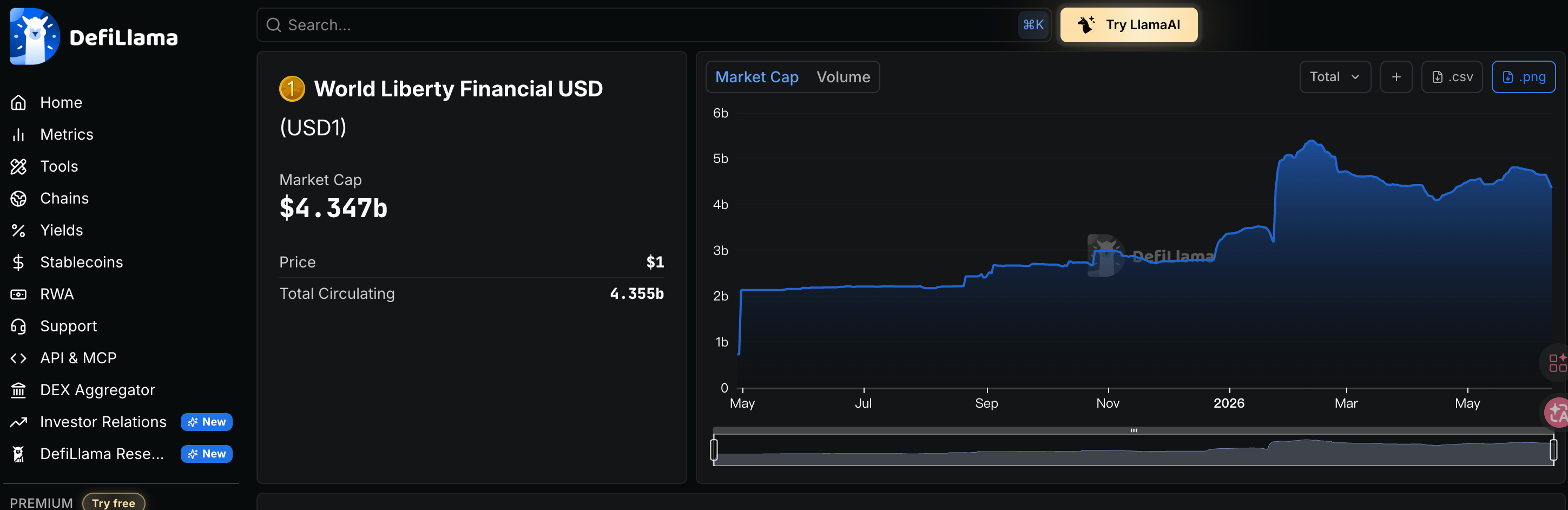
To achieve a circulation of 4.5 billion dollars for a stablecoin, the conventional next step is to further penetrate the human market, adding more exchanges and payment channels. However, USD1's three actions in the past six months point in a different direction.
In March, WLFI released the AgentPay SDK, an open-source tool that allows AI to hold and spend USD1; in May, Binance launched Binance x402 for machine payments, which includes it among the four stablecoins natively supported on the BNB Chain; in the same month, the ecosystem produced WorldRouter, a platform allowing developers to call various AI models in one place, settling only in USD1...
The tools are built by them, the protocols are cooperatively developed, and the scenarios emerged from the ecosystem itself. These three actions point in the same direction; this issuer wants to sell dollars and payment services to machines.
As for why machines need dollars, we need to start from a rare influx in the last nine months.
Human wallets are locked down while machine wallets are just opened
The path to USD1's 4.5 billion market cap is recognizable in nearly every piece.
According to multiple media reports, last year, Abu Dhabi's sovereign fund MGX invested 2 billion dollars in Binance, using it for settlements, marking the largest amount for a stablecoin settlement in crypto history.
Binance has tagged its wealth management products with annualized returns, while Gate and MEXC have been taking turns organizing promotional events; according to official announcements, these events have offered annualized returns as high as 20%.
This kind of event and the growth brought by it is real, but each step requires being at the negotiating table. Each settlement requires negotiation, each investment position requires discussion, and each event requires negotiation.
USDT does not need negotiation. Trading pairs on global exchanges default to it, quotations for off-exchange currency conversion use it, and it continues to run through various cross-border transfer channels. According to CoinGecko data, USDT's circulation is nearly 190 billion dollars, while the second, USDC, amounts to about 76 billion. Reserves can be put together by anyone; what is hard to gather is the habit built over ten years of use. The habit of using money is non-existent; USDC, despite its compliance halo, has been around for so many years, yet its market cap is still less than half of that of USDT.
The situation for newcomers in the stablecoin sector regarding the human market is probably like this.
However, the premise of this moat of habit is that it protects humans.
Machines have no habits. Which stablecoin an Agent uses to make payments depends on what is listed in the profile. Swapping USDT for any other coin is as simple as changing a line of text, with no migration cost or ten years of muscle memory. The first-mover advantage that USDT accumulated is reset for the first time in front of machines. All stablecoins, new and old, big and small, stand again on the same starting line in this market.
Many more than just WLFI see this starting line.
In the past nine months, notable players in the global payment system have entered the field one by one:
In October last year, Visa and Cloudflare introduced the Trusted Agent Protocol, creating identity verification for machine-initiated payments. In January this year, Google released the Agent Business Protocol UCP, with Visa and Mastercard among the first list. In March, Stripe integrated agent payments into its payment system. In April, Coinbase donated the x402 protocol to the Linux Foundation, bringing machine payments a neutral industry standard.
Then on June 10, Mastercard released Agent Pay for Machines, allowing AI Agents and connected machines to make autonomous payments; according to their official press release, there are over 30 initial partners, including Coinbase, Stripe, and the Solana Foundation.
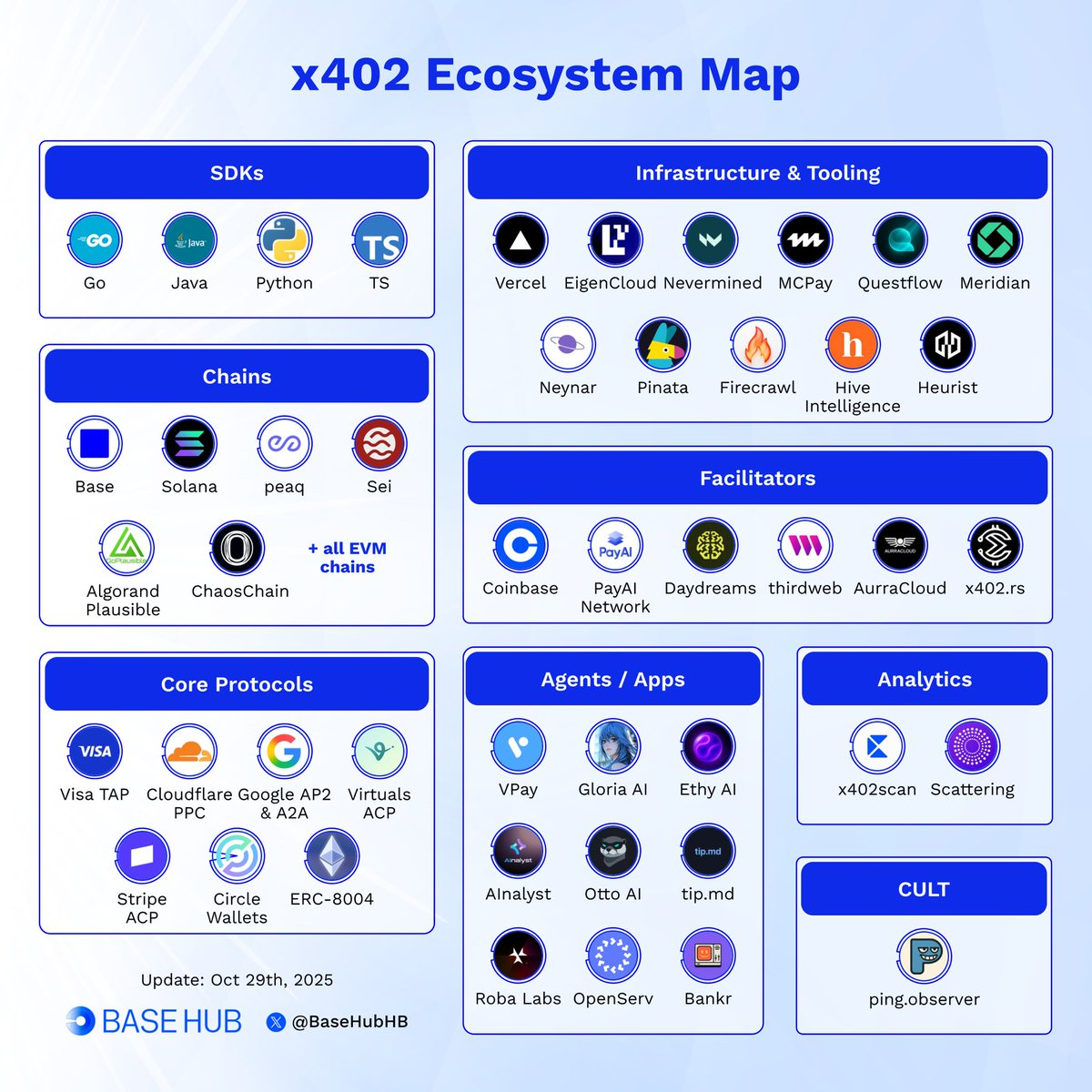
In nine months, five milestones were established without any major player being absent. According to Juniper Research's projections from April this year, spending by AI Agents is expected to be about 8 billion dollars in 2026, and rise to 15 trillion by 2030.
Regarding AI Agent payments, today’s market might seem unattractive, but everyone is positioning themselves before it becomes larger.
The table is new, the seats are level, and money has yet to be placed on the table. The next question becomes very concrete: how does USD1 plan to play this hand?
Targeting AI, the three layers of USD1's bet
For machines, or rather AI, to spend stablecoins freely in future scenarios, three problems need to be solved ultimately.
The first is, who will open a wallet for the machines?
Agents have no ID and cannot go to a bank; someone needs to create a tool that allows them to hold and spend assets.
The second is, how does money flow from machines to merchants?
The human payment chain has evolved from credit cards to acquiring institutions to bank settlements over sixty years; machines need their setup.
The third, often overlooked, is where can machines spend the stablecoins they hold in their wallets?
These three questions are actually progressive. Without a crypto wallet, there can be no stablecoin payments; without a payment method, there can be no scenarios. WLFI's actions over the past six months appear independent when viewed separately; however, together they correspond to the aforementioned three layers.
The growth of USD1 in data seems more like a breakthrough in existing dimensions, while targeting the higher-dimensional aspects of AI Agent payment, you must integrate them to see the nuances.
First, let's talk about the wallet.
The AgentPay SDK released in March is dedicated to creating wallets for Agents. However, there are two ways to create a wallet.
One way is to make it a custodial service, where the Agent’s money remains with the platform, which manages it for them; this route is the fastest and least troublesome, and relies on the intuition of most Web2 payment companies.
But WLFI chose another way, open-source and self-custody. The private keys remain on the user's machine, inaccessible to WLFI’s servers; according to official documentation, this tool does not perform telemetry and does not upload any usage data.
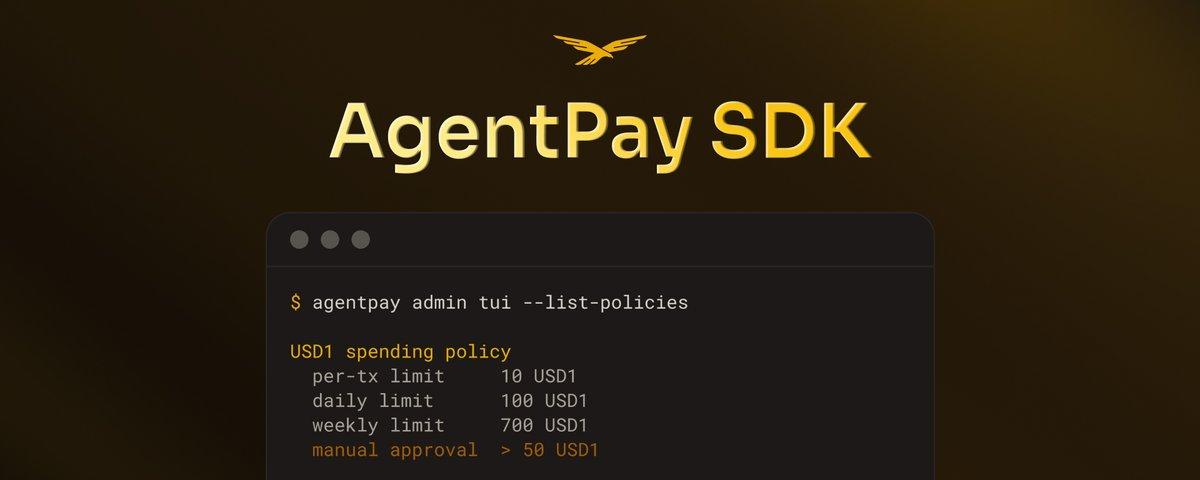
This choice is not about technical purism but is more about seeking greater trust.
Stablecoin issuers hold the on-chain freezing rights, which is not a secret in the industry. If the same issuer also manages the Agent wallet, developers will naturally ask, will you freeze the money in my Agent?
Open-source self-custody effectively transfers this power. For a new issuer that needs to establish trust among developers, this may be the only feasible path.
According to The Defiant, the AgentPay has already been turned into a plugin form, integrated into mainstream AI programming tools like Claude Code, Cursor, and Codex, allowing developers to adapt without changing their workflows.
Although it has only been released for three months, the Agent SDK has accumulated 550 stars on GitHub, offering convenient tutorials and resources for developer integration.
For most crypto projects, often GitHub is just a façade, resembling a performative technical marketing effort; we also checked more recent data, and as of the time of writing, the Agent SDK project is still actively updating, having recently integrated Stripe Link, adding its fiat payment access function.
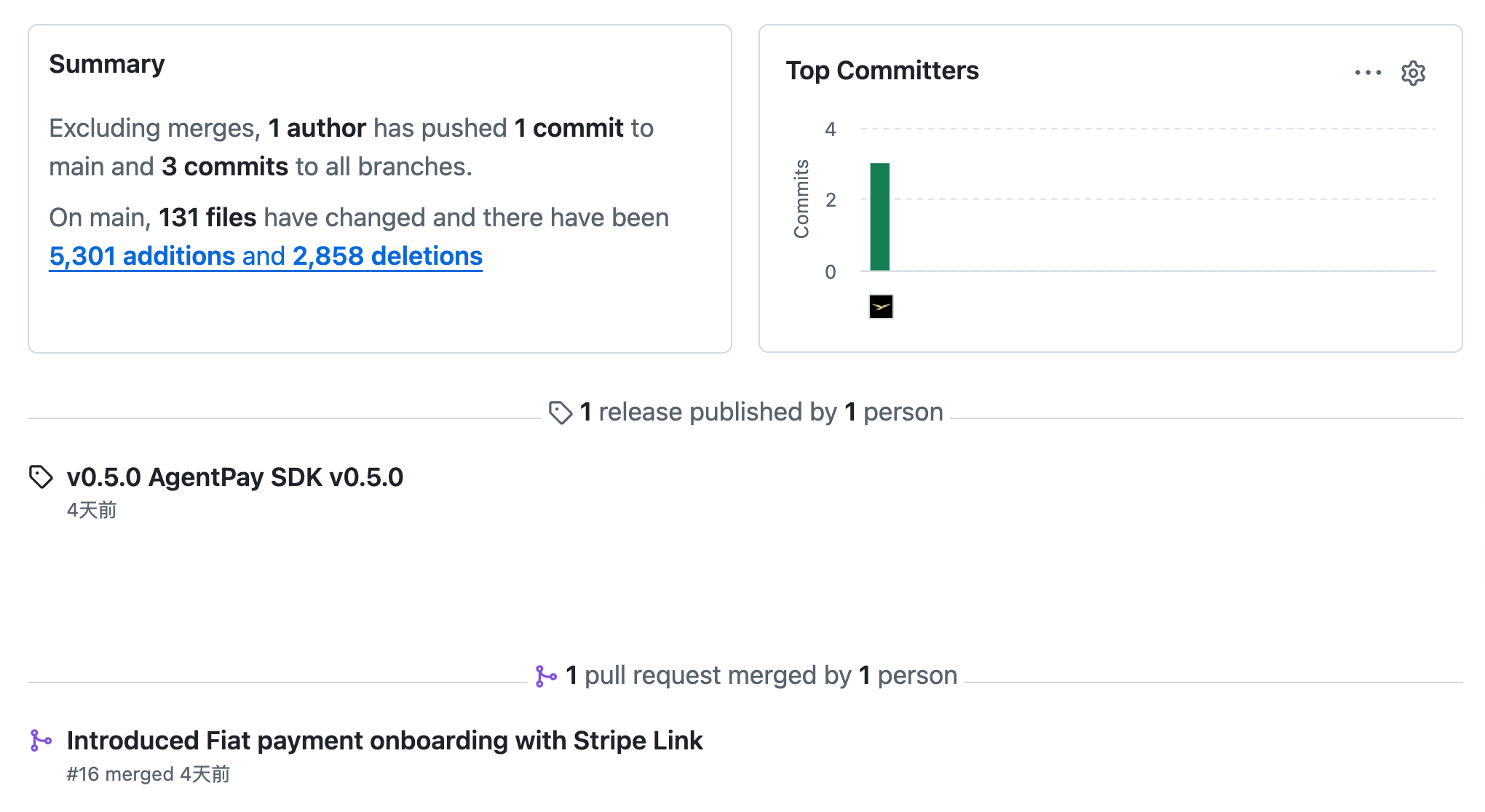
Looking at the details of this SDK, the strategy engine manages each expenditure, with single transaction limits, daily limits, and recipient whitelist; amounts exceeding thresholds are paused until approval.
I believe this design deserves special mention: having a wallet is not difficult for machines; the challenge lies in whether humans dare to allow machines to spend; limits and approval mechanisms do not solve a technical problem but rather a psychological barrier.
With a wallet in place, the next question is how does the money flow out?
In May, Binance launched Binance x402. This protocol allows Agents to obtain authorization off-chain and complete settlements on-chain without needing human oversight for each transaction. There are four stablecoins natively supported on BNB Chain, with USD1 being one of them.
When AI agents or automated workflows request to pay for API, data, or digital services, if the server intercepts and returns HTTP 402 (Payment Required), USD1 can serve as a direct payment substitute for merchants.
Trust Wallet’s AgentKit synchronously integrates, ensuring the private keys also stay on the user's device. For USD1, entering x402 signifies not just another payment channel but importantly, it is no longer merely assets talking among themselves in the WLFI ecosystem; it has become part of the foundational infrastructure for machine payments written by the world’s largest exchange.
In the first month post-launch, although public data on USD1 transactions via x402 is not available, prior statistics from on-chain institutions like Artemis noted that the overall daily transaction count for x402 surpassed 150,000 in a month. However, earlier data included a lot of inorganic arbitrage, and current iterations with Binance B402 Official API 2.0 are gradually aligning with real AI commercial settlements.
With wallets established and channels opened, the last question is the hardest to create, as scenarios cannot be fabricated but must emerge.
WorldRouter launched in May, independently released by the ecosystem team. It aggregates hundreds of AI models behind one account, giving developers a single key to call all models, with pricing about 30% cheaper than direct connections, functioning as a transit project within WLFI's ecosystem.
Its underlying payment infrastructure utilizes the AgentPay SDK, with settlements made in USD1. This is currently the first fully visible product demonstrating a complete loop of "Agent calling model, USD1 automatic settlement."
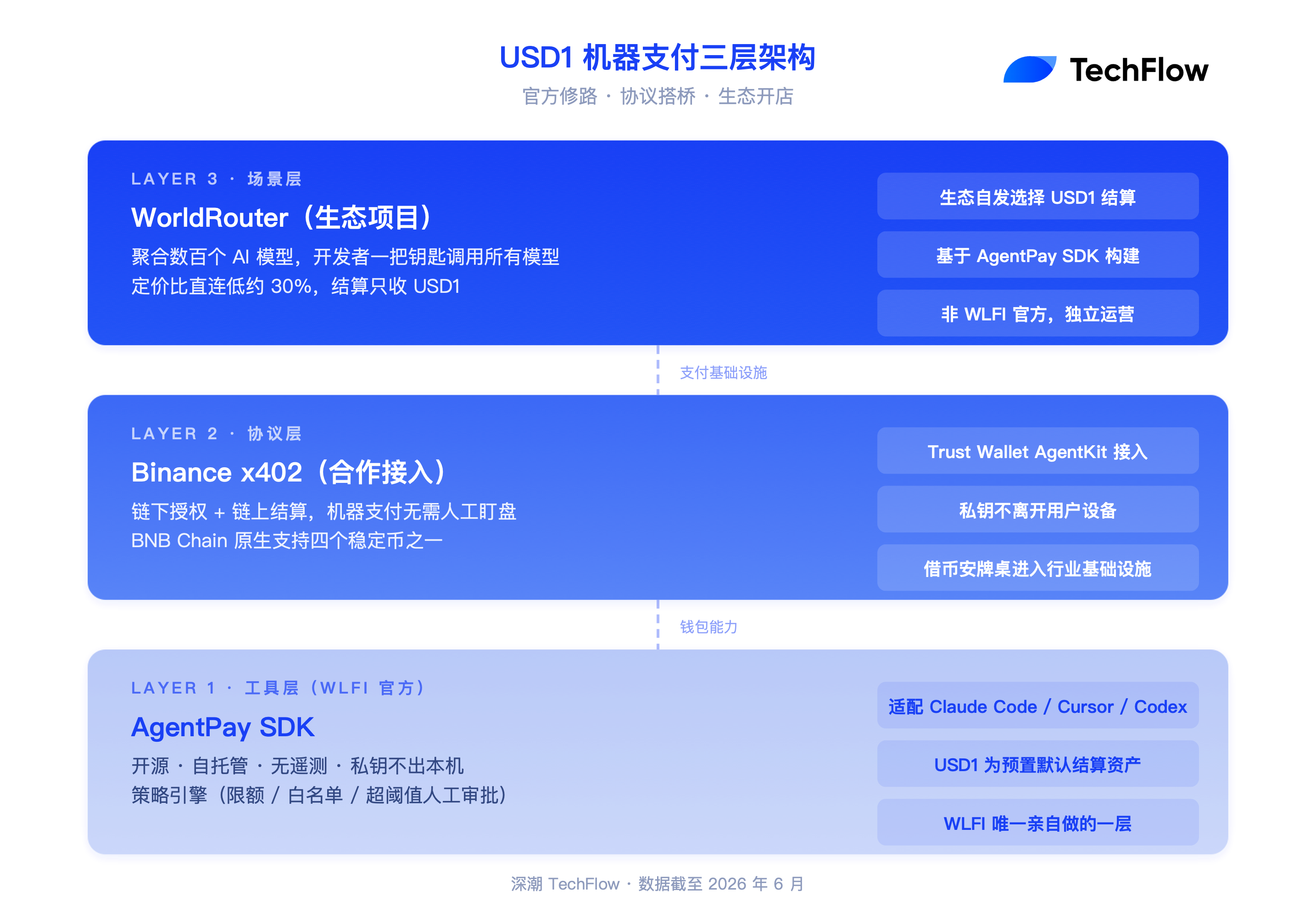
Looking back at these three layers, WLFI's strategy targeting AI shows a very clear choice:
They only hold tightly to the bottom tool layer, the protocol layer borrows from Binance’s poker table, while the scenario layer waits for the ecosystem to grow itself.
This means they have given up full-chain control in exchange for the willingness of developers and ecosystem entities to participate. Whether this choice is correct will have no answer in the short term; its only prerequisite is that the ecosystem indeed grows. WorldRouter is the first, but one is far from enough.
At this point, the question becomes specific. The tools are laid out, the channels are in place, and the scenarios are just emerging; when can this game truly translate USD1's growth into tangible results?
Where will USD1's next 4.5 billion come from?
To be honest, the current size of the machine payment market is smaller than most people expect, and the numbers are more honest.
According to x402 Foundation data, by the end of April, the entire ecosystem had accumulated 165 million transactions, which might sound like a lot, but the total amount is only around 50 million dollars, averaging just a few cents per transaction.
Last December, daily transaction volume peaked at 730,000 due to a wave of meme speculation, but fell back to just 57,000 in February this year after the wave receded, dropping more than 90%.
However, beneath the receding tide, there is a noteworthy change. According to Chainalysis data, the proportion of genuine payment transactions over 1 dollar rose from 49% to 95%. The speculators have left while real spenders have remained.
No one can accurately declare how much this market is worth today. Juniper Research projected in April of this year that AI Agent spending is expected to be around 8 billion dollars in 2026, reaching 15 trillion by 2030. McKinsey's estimation is between 3 to 5 trillion, while eMarketer only offers 144 billion, reflecting a staggering 35-fold difference, with the discrepancy not in the level of prediction but in how each defines the boundaries of "machine payments."
I do not intend to endorse any specific trillion-dollar story, but one point these predictions agree on is that the growth from tens of billions to trillions will happen in the next three to four years.
For USD1, the truly valuable aspect of this market is not the transaction volume, but the demand for holding coins.
Agents need to continuously spend money, so they must keep a balance in their wallets. The more tasks they run, the more money they need to keep. This contrasts sharply with how humans use stablecoins; humans typically use them temporarily— recharge, transaction, withdrawal— with stablecoins staying in wallets for very short durations. Machines have a constant presence; as long as the Agents are running, the balance must be maintained.
The first 4.5 billion of USD1 primarily came from institutional settlements and exchange collaborations, each transaction stemming from negotiations; while growth is real, a ceiling is also visible. The machine market opens a different growth logic for it, relying not on one transaction after another but on the product itself generating demand for holding coins.
Once AgentPay is set up, the default settlement asset is USD1, meaning every Agent wallet using it will always have a USD1 balance. Each settlement for model calls on WorldRouter also returns to USD1. If this path succeeds, growth will follow the number of Agents on its own, without needing to negotiate one by one.
Of course, standing on the opposite side of this path is USDC.
In the x402 protocol, the default settlement asset is USDC; Circle is similarly not an unwelcome presence in the machine payments battlefield. When Coinbase donated the protocol to the Linux Foundation, USDC was already embedded within it. AgentPay’s default is USD1, while x402’s default is USDC, and this default battle is already underway.
Again, in this hot version of AI, the previous generation of stablecoins competed for listings on exchanges, while this generation is contending for that default value in the Agent tool configuration file.
WLFI may be betting that as the size of the machine economy rises from 8 billion to a trillion, USD1 will already be sitting in a sufficient number of Agent wallets.
免责声明:本文章仅代表作者个人观点,不代表本平台的立场和观点。本文章仅供信息分享,不构成对任何人的任何投资建议。用户与作者之间的任何争议,与本平台无关。如网页中刊载的文章或图片涉及侵权,请提供相关的权利证明和身份证明发送邮件到support@aicoin.com,本平台相关工作人员将会进行核查。


