
Author: Nancy, PANews
Originally soaring towards the 9000-point mark, the South Korean stock market has recently turned downward, with continuous corrections leaving many leveraged investors, or the "ant army," walking on thin ice.
Following last week's "Black Friday," the South Korean stock market experienced another major plunge this week. The KOSPI index saw a sharp drop upon opening, triggering a trading suspension, with major market indicators Samsung Electronics and SK Hynix both hitting their daily limits. As a wave of selling engulfed the market, panic sentiment rapidly spread, prompting even Lee Jae-myung and Jensen Huang to engage in "emergency market rescue."
From nationwide celebration to collective panic, the "ant army" is in a state of confusion
On June 8, the South Korean stock market continued the plummeting trend from last Friday.
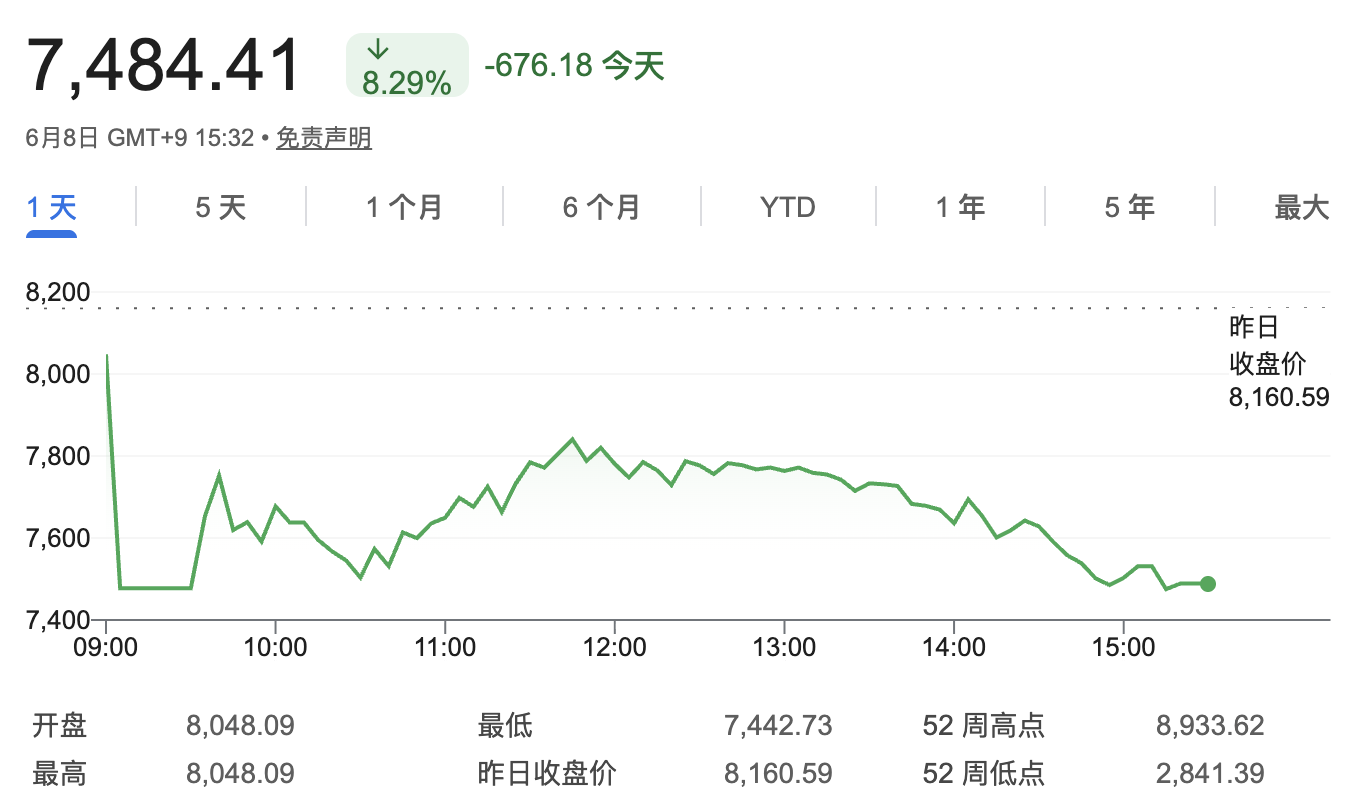
Shortly after opening, the KOSPI index fell by more than 8%, triggering a circuit breaker, leading the Korea Exchange to urgently suspend trading for 20 minutes. Faced with severe market fluctuations, the Korea Exchange held an emergency meeting that morning to assess market risks and consider measures to stabilize market operations.
However, just a week ago, the South Korean stock market was one of the hottest markets in the world. Fueled by the AI semiconductor boom, the KOSPI index continually refreshed historical highs and made an attempt at the 9000-point mark. A large influx of funds flowed into the technology sector, and many "ant army" investors leveraged and borrowed money to enter the market, hoping to ride the AI wealth train.
But just a few days later, the market sentiment reversed sharply, causing the high-entry "ant army" to panic, openly stating they were afraid to check their accounts. In South Korea, retail investors are commonly referred to as ants, similar to how retail investors in the U.S. refer to themselves as apes; while individual strength is limited, their numbers are large, allowing them to "swarm into" the market, affecting stock price movements. This group can mainly be divided into two categories: retail investors buying domestic stocks, known as East-learning ants, and those investing in overseas markets like U.S. stocks, known as West-learning ants.
The trigger for this round of plummeting was the collective correction of tech stocks in the U.S. The South Korean stock market's heavy reliance on the semiconductor industry means that the two chip giants, Samsung Electronics and SK Hynix, have almost become the backbone of the entire bull market. Together, these two companies account for a whopping 54% of the KOSPI index's weight, with their daily trading volume representing about half of the index's total trading volume in May. This year, nearly three-quarters of the KOSPI index's gains are attributed to these two companies. On the very day the KOSPI hit a historical high last Tuesday, only 2.6% of stocks hit new 52-week highs, while 31% of stocks fell to 52-week lows.
To some extent, the South Korean stock market has been a bull market dominated by Samsung Electronics and SK Hynix, with SK Hynix employee uniforms even becoming "solo warrior attire." Therefore, when the U.S. tech stock correction prompted a reevaluation of the AI industry chain's valuations, Samsung Electronics and SK Hynix quickly became targets for selling, with both experiencing single-day declines close to 10%, directly dragging down the overall South Korean stock market.
At the same time, foreign capital outflows and the depreciation of the won further intensified market pressure. Recent U.S. non-farm payroll data significantly exceeded expectations, strengthening interest rate hike expectations and boosting the short-term U.S. dollar, prompting international capital to begin withdrawing from emerging markets like South Korea. Just last week, foreign investors net sold over $10 billion worth of South Korean stocks. This massive capital withdrawal not only hit the stock market but also impacted the foreign exchange market. The won quickly weakened against the dollar, falling to a new low since the 2009 global financial crisis, with the depreciation risking asset shrinkage and leading to further capital exit, creating a dual blow to both the stock and foreign exchange markets.
More importantly, after a long period of rapid increase, the South Korean stock market itself had accumulated a considerable amount of profit-taking. Coupled with a large amount of financing and leveraged ETFs focusing on AI and semiconductor sectors, when leading stocks declined, margin pressures and passive liquidations triggered a stampede effect, further amplifying market volatility.
In response to the severe market fluctuations, South Korean President Lee Jae-myung urgently spoke up, stressing that the South Korean stock market is still undervalued and that South Korea will promote comprehensive applications of AI across various industries, preparing large-scale investment projects related to the chip industry.
In a striking turn of events, just as the South Korean stock market was plunging, NVIDIA CEO Jensen Huang was visiting South Korea, during which he announced a partnership between NVIDIA and SK Hynix and indicated a meeting with Samsung's leadership, which was seen as a confidence vote for the South Korean semiconductor industry.
Leveraged stock trading raises regulatory concerns over "herd behavior"
Just as the cryptocurrency craze swept through South Korea, the same fervor has now been brought to the stock market.
Public data shows that the number of active stock trading accounts in South Korea has exceeded 102 million, while the total population is approximately 51.6 million, meaning an average of nearly two stock accounts per person. Investment enthusiasm has even appeared among minors; in the first quarter of this year, the number of new accounts opened by minors surged nearly tenfold year-on-year, with many parents even opening accounts immediately after their child’s birth to buy ETFs as their first investment.
This investment frenzy has permeated the daily lives of South Koreans. Every day at 3:30 PM, close to market closing, many offices and malls in Seoul often experience a "one seat hard to find" situation in restroom stalls. Many office workers sneak into the restroom to check market conditions and manage accounts; some even take leave to stay home full-time monitoring the market; and tech-savvy individuals have developed a website called "Excel Kospi," disguising stock interfaces as office software, allowing employees to "openly" trade stocks under their bosses' noses.
Driving this nationwide stock trading phenomenon is the astonishing profit-making effect.
According to Shinhan Investment Corp statistics, in the first quarter of 2026, 80% of investors selling South Korean stocks achieved profits, with these profitable investors averaging a gain of 8.48 million won (approximately $4,654). Among them, Samsung Electronics became the biggest cash cow with an average profit of 7.14 million won (approximately $4,654); SK Hynix followed closely with an average profit of about 5.94 million won (approximately $3,871). In contrast, the remaining 20% of loss-making investors faced an average loss of approximately 4.96 million won (approximately $3,232).
The massive profit-making effect further fueled FOMO sentiment in the market. Increasingly more investors worried about missing out on the bull market rushed to enter, even borrowing money to trade stocks.
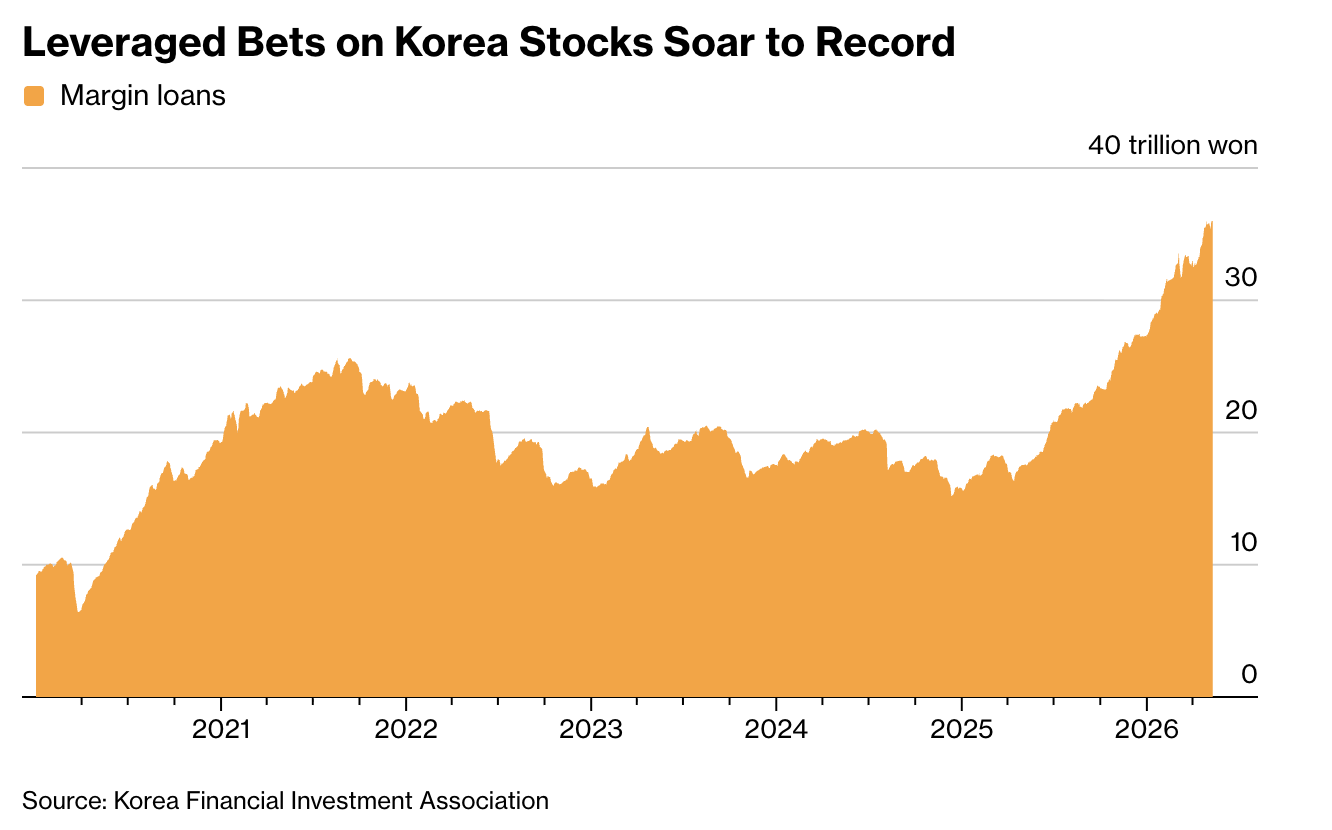
As of the end of May 2026, the balance of margin trading in South Korean brokerages soared to a record 38 trillion won (approximately $24.7 billion), a significant increase from 27.3 trillion won at the end of 2025. Meanwhile, a large amount of new loan funds has not flowed into real estate but is instead moving into the stock market. By the end of May, the balance of personal credit loans from South Korea's five major commercial banks reached 106.99 trillion won, with overdraft account balances rising to 41.93 trillion won, the highest level since 2021. In contrast, housing mortgage loans saw almost no growth during the same period.
Moreover, South Korean retail investors are treating leveraged ETFs as everyday investment tools, heavily leveraging their bets on the market.
For many South Korean retail investors, leveraged ETFs have long ceased to be viewed as high-risk investment tools and are regarded as essential weapons for maximizing returns. Driven by the bull market atmosphere and profit-making effects, more and more investors believe that as long as they bet on the right direction, leverage means faster wealth accumulation.
According to data released by the Korea Exchange (KRX) in April this year, since the beginning of the year, the daily trading volume of 1,093 ETF products in the Korean market totaled 4.483 billion shares, while only 88 leveraged ETFs, inverse ETFs, and 2x inverse ETFs had a daily trading volume of 4.046 billion shares, accounting for 90.49% of the total ETF trading volume. In other words, the trading power in the South Korean ETF market is almost entirely concentrated in high-risk leveraged products.
In South Korea, investors must complete a one-hour online educational course before trading leveraged ETFs; if trading a single stock leveraged ETF, an additional hour of training is required. However, this risk firewall has not dampened investor enthusiasm. According to the Korea Financial Investment Education Institute, the average number of course completions per month was about 7,579 three years ago; this year it has averaged 149,948 completions per month, nearly a twenty-fold increase. Many investors simply open the course video and let it play in the background to meet the account opening requirements, showing little concern for the operational mechanisms of leveraged products and their potential risks.
In response to the soaring demand for market leverage and to attract funds back to the domestic market, South Korean regulators recently approved the listing of the first batch of single stock leveraged ETFs. Eight asset management companies simultaneously launched 16 leveraged and inverse ETFs linked to Samsung Electronics and SK Hynix, hoping to re-attract the "West-learning ants" (Korean retail investors investing in the U.S.) that had previously flowed to the U.S. market back to the South Korean stock market while boosting the performance of Korean stocks and stabilizing the won exchange rate. On the first day of the product's launch, due to overwhelming application numbers, the website of the Financial Investment Education Center of the Korea Financial Investment Association briefly malfunctioned due to a surge in traffic.
According to data from Korea Securities Calculation Company ETF Check, from June 1 to 5, the ETF with the largest net purchases by individual investors was the KODEX Samsung Electronics Leveraged ETF, while the top four ETFs for individual net purchases were all single stock leveraged products related to Samsung Electronics and SK Hynix. At the same time, data from the Korea Exchange shows that in the first five trading days after the launch on May 27, the trading volume of the four most actively traded single stock leveraged ETFs accounted for 21% of the total trading volume of Korean ETFs.
However, while leverage can amplify profits, it can also magnify losses. Especially when increasingly more retail investors concentrate their financing funds and leveraged ETFs on a few popular tech stocks, it can easily trigger even more severe stampede effects. For this reason, South Korea's Finance Minister, Choo Kyung-ho, recently expressed concern over the increase in leveraged stock investments and stated that necessary measures would be taken immediately to address the "herd behavior" in financial markets.
Babies open accounts to buy ETFs, while the elderly withdraw insurance to borrow money for stock trading
In this stock market frenzy, "silver-haired funds" have become an important force in the South Korean stock market.
According to South Korean media Chosun Biz, major brokerage firms in South Korea are crowded with visitors, and among those personally consulting for account openings and orders, the vast majority are elderly people over the age of 60. Some even plan to use their bank overdraft limits to buy popular stocks like SK Hynix. An employee from a brokerage firm lamented, "I really don't know where the clients are getting all this money; it feels like everyone from children to the elderly are trading stocks."
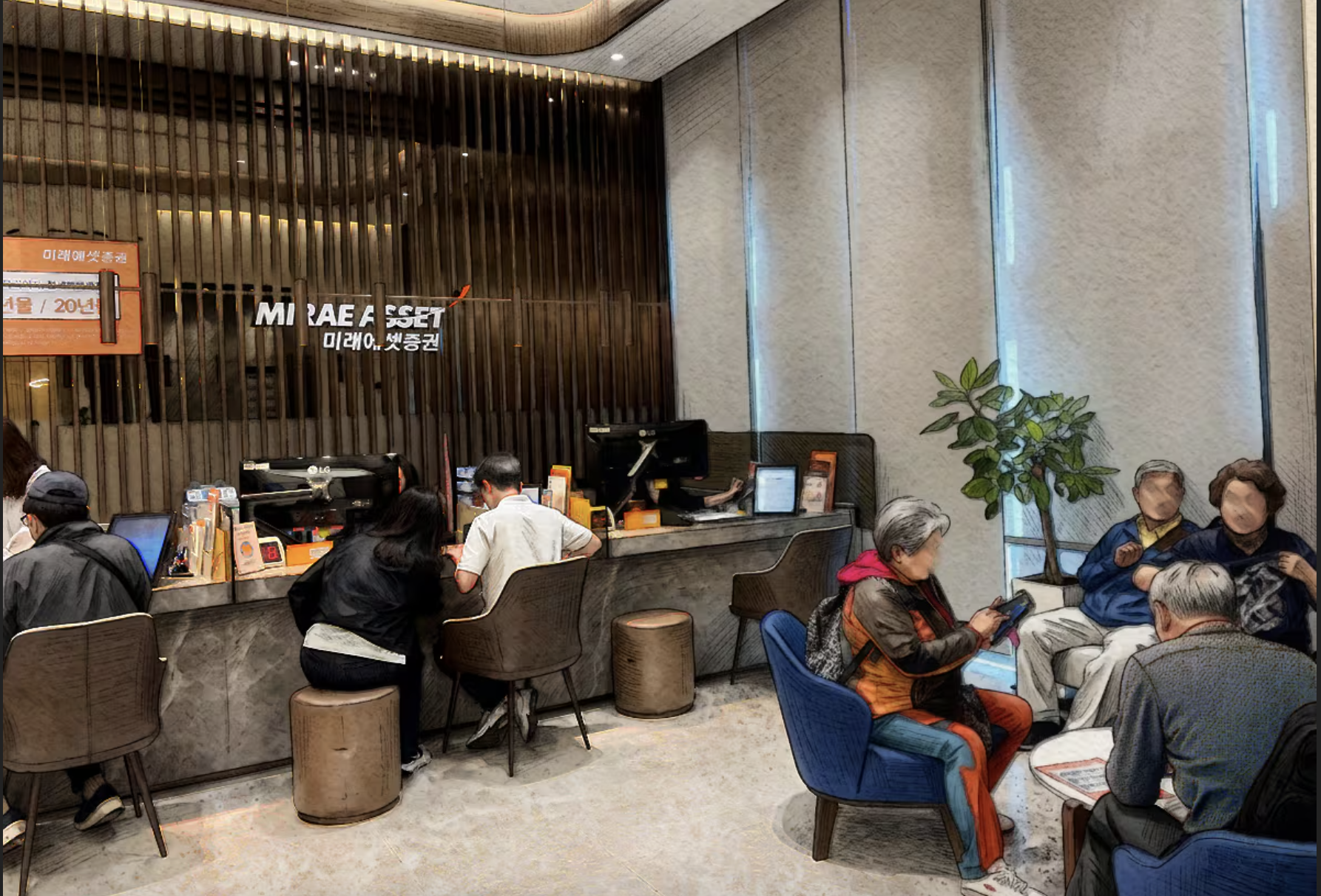
From the financing data, investors aged over 50 account for 62.3% of the total financing amount from the top ten brokerages; the balance of financing for the group over 60 surged from approximately 3.95 trillion won to 8.02 trillion won in one year.
To raise funds, many elderly people are even terminating their insurance products early, redirecting savings originally intended for retirement into the stock market. In Q1 2026, withdrawals from South Korea's three major life insurance companies reached 4.9 trillion won, a 16.3% year-on-year increase, with withdrawals from savings-type life insurance growing over 23.2%.
In fact, in addition to stock trading, an increasing number of elderly South Koreans have also started trading cryptocurrencies. By the end of 2025, the number of investors aged 70 and above among South Korea's five major cryptocurrency exchanges increased from 30,000 in 2022 to 116,000 in 2025, nearly quadrupling in three years.
However, the large-scale entry of elderly investors into the stock market has raised concerns.
Many newly entering senior investors have limited understanding of the basic processes and risks of stock trading, with some even unaware of the funds settlement mechanisms after selling stocks, yet they have already begun to frequently buy and sell stocks; many are not basing their decisions on personal research and investment judgment but are hastily entering the market after hearing friends and relatives profiting from popular stocks like Samsung Electronics and SK Hynix.
免责声明:本文章仅代表作者个人观点,不代表本平台的立场和观点。本文章仅供信息分享,不构成对任何人的任何投资建议。用户与作者之间的任何争议,与本平台无关。如网页中刊载的文章或图片涉及侵权,请提供相关的权利证明和身份证明发送邮件到support@aicoin.com,本平台相关工作人员将会进行核查。


