Author: Shenchao TechFlow | Public Opinion Observation
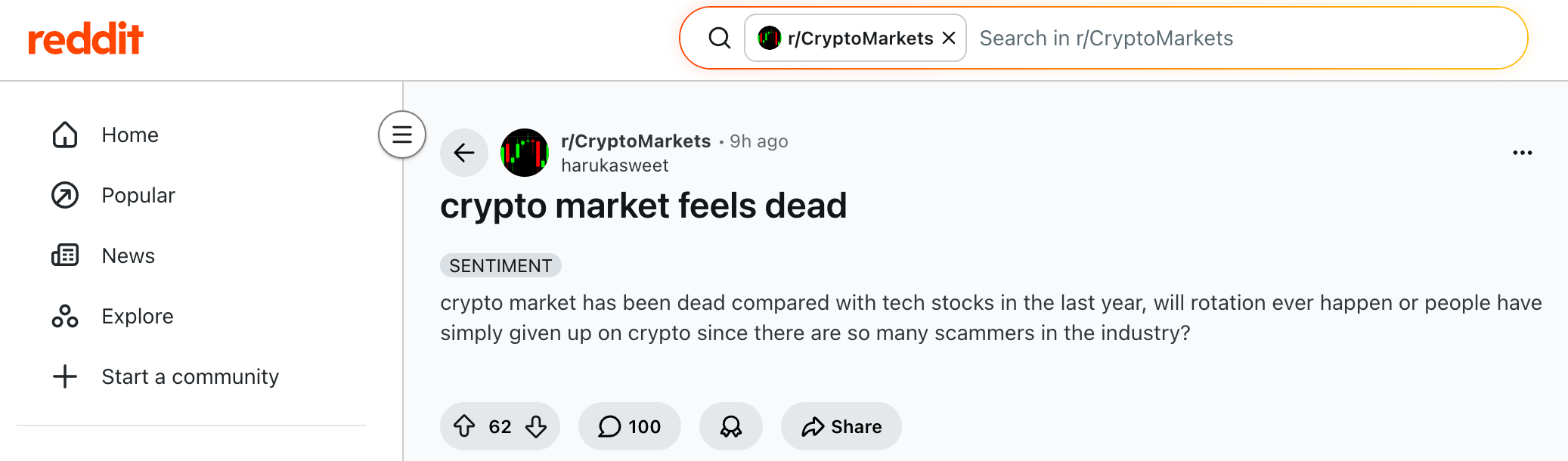
Recently, a post on Reddit r/CryptoMarkets quietly gained traction. The poster harukasweet asked just one question:
"The crypto market feels lifeless. Compared to tech stocks, the crypto market has been very quiet over the past year. Will capital rotation still happen? Or have people given up on crypto?"
This somewhat hopeful yet sorrowful post triggered over a hundred replies. It turns out that not only is the Chinese crypto community discussing this issue, but the reality of crypto stagnation is indiscriminately provoking the emotions of the entire crypto community across all languages.
The intensity of the debate is not because someone has presented new arguments, but rather because each side is using the other's failures to prove their own correctness. This atmosphere of mutually undermining discussions is a reflection of the current emotions within the crypto community.
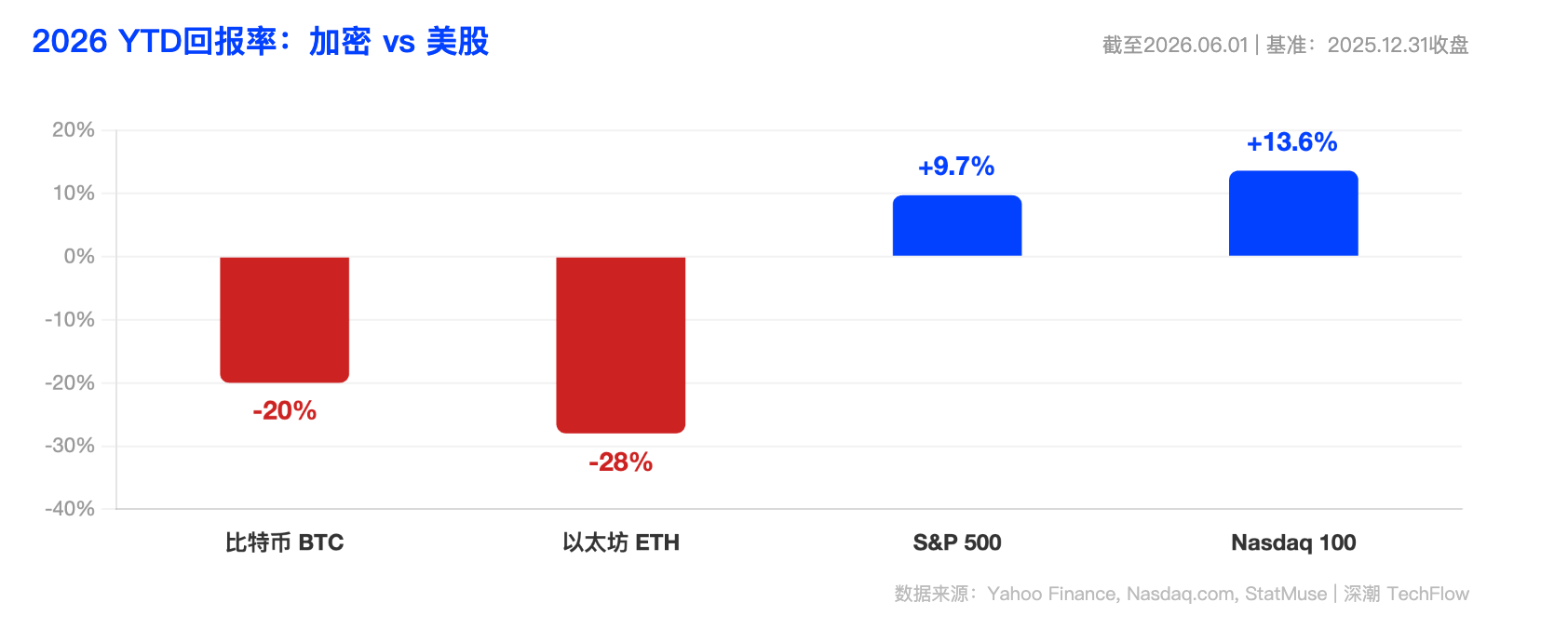
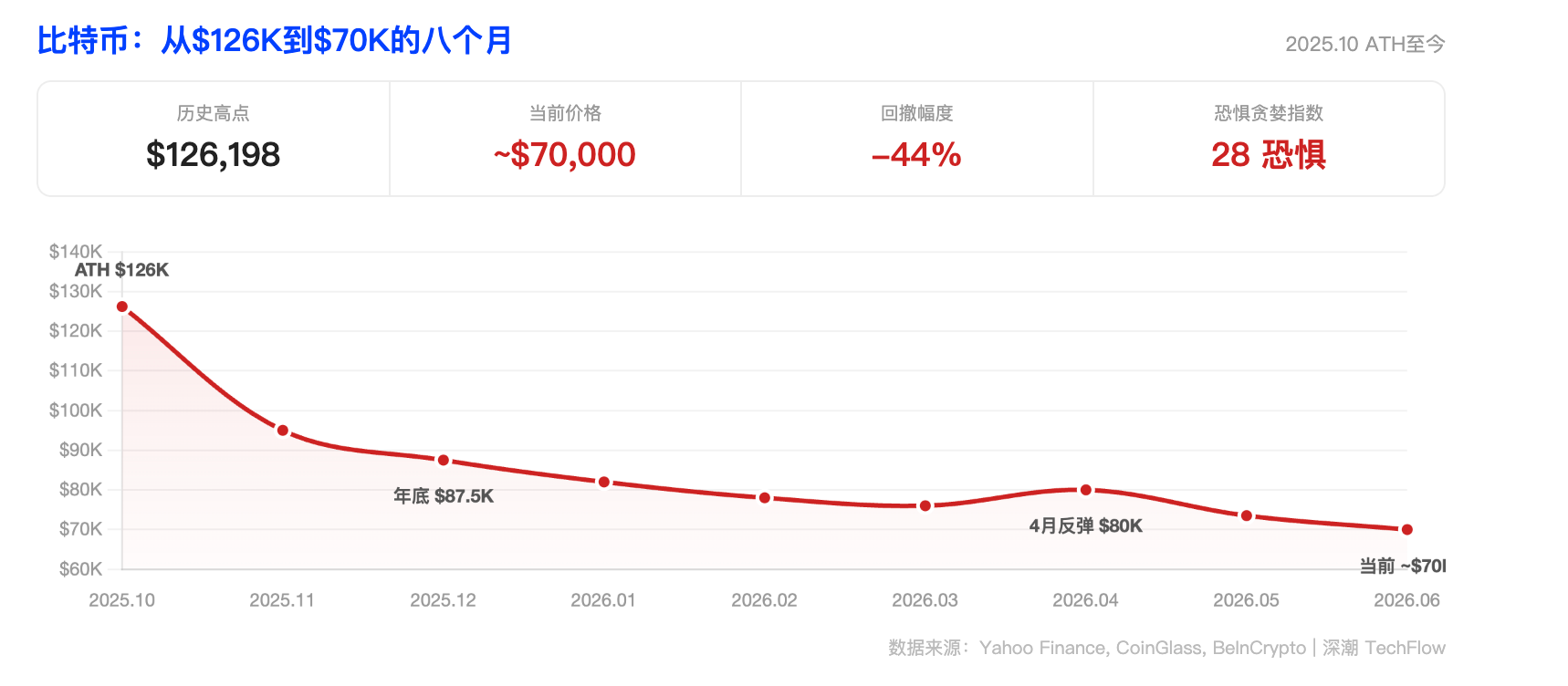
Bitcoin has pulled back from its historical high of $126,198 in October 2025 to about $70,000 now, a decline of approximately 44%; the YTD decline in 2026 is about 20%. During the same period, the S&P 500 has risen approximately 9.7% YTD. The Nasdaq 100 has risen about 13.6%.
The gap between the two curves, one rising and one falling, cannot simply be described as "underperforming."
"Bitcoin has died more than 800 times" vs "This narrative really can’t hold anymore"
The most tense exchange on Reddit occurred between users Giordano86 and think_harder_plz.
Giordano86 is a classic cycle believer: "I am greedy when others are fearful. Markets have cycles. Soon, people will rotate back to Bitcoin." When someone rebutted, he directly threw out data: "Go look at Bitcoin's 17-year history and tell me you haven’t seen cycles. Bitcoin has 'died' more than 800 times, it’s fine."
Another user, Powerful_Respect_400, was even more direct: "I've been here since 2017. Bull markets in 2017, bull markets in 2021, 2025... once every four years. We might have to wait until 2029."
think_harder_plz's rebuttal was equally sharp: the narrative around Bitcoin has always been "upgrading," from peer-to-peer electronic cash, to digital gold, to inflation hedge, to institutional reserve asset. "Every time the old narrative fails, a new narrative is created." His conclusion was: "Cryptocurrencies haven't been around long enough to make such a confident assertion. This is the beginning of the end."
Interestingly, another user, keepitcasualbrah, precisely captured the self-contradiction in this statement:
You said in the first half that "the existence time isn’t long enough to draw a conclusion," and then in the second half you concluded "this is the beginning of the end." This rebuttal received quite a bit of agreement.
AI has taken away the attention, but what crypto has really lost is the "use case"
If it were just the old discussions on cycles and endings, this post wouldn’t have sparked so many replies. What truly hit the nail on the head was the third type of voice: The crypto market hasn't lost to a bear market, but to AI.
User optifree1's comment was widely quoted: "The tech industry is undergoing a once-in-a-decade productivity revolution, and AI is genuinely changing the way people work and live. This wave has siphoned off attention from all other markets, and cryptocurrencies have yet to find any use case that comes close to the impact of the AI wave."
The structural issues within crypto are indeed quite clear. Many users echoed the same judgment from different angles:
The crypto market lacks genuine use case support. User i_am_13th_panic pointed out that although crypto companies are striving to expand applications, most cryptocurrencies only have credible uses for "speculating with it, trading it, or staking it."
User Usually_Sunny presented an even sharper paradox: for a currency to be "useful," its value must be relatively stable, but the core investment logic of Bitcoin is precisely based on price volatility.
The poster harukasweet also acknowledged: "Yes, only stablecoins are considered somewhat useful, DeFi might be a little useful, but there are too many hackers."
Data Perspective: Institutions are withdrawing, it's not just retail investors running away
The discussion on Reddit is on an emotional level, but capital flows provide a colder validation.
According to BeInCrypto data, in May 2026, Bitcoin spot ETFs recorded a net outflow of about $2.3 billion, the largest single-month outflow of the year, and also the largest since November 2025. Previously, there were net inflows of approximately $1.97 billion and $1.32 billion in April and March respectively. The cumulative net inflow of ETFs has dropped from $58.09 billion in April to $55.79 billion.
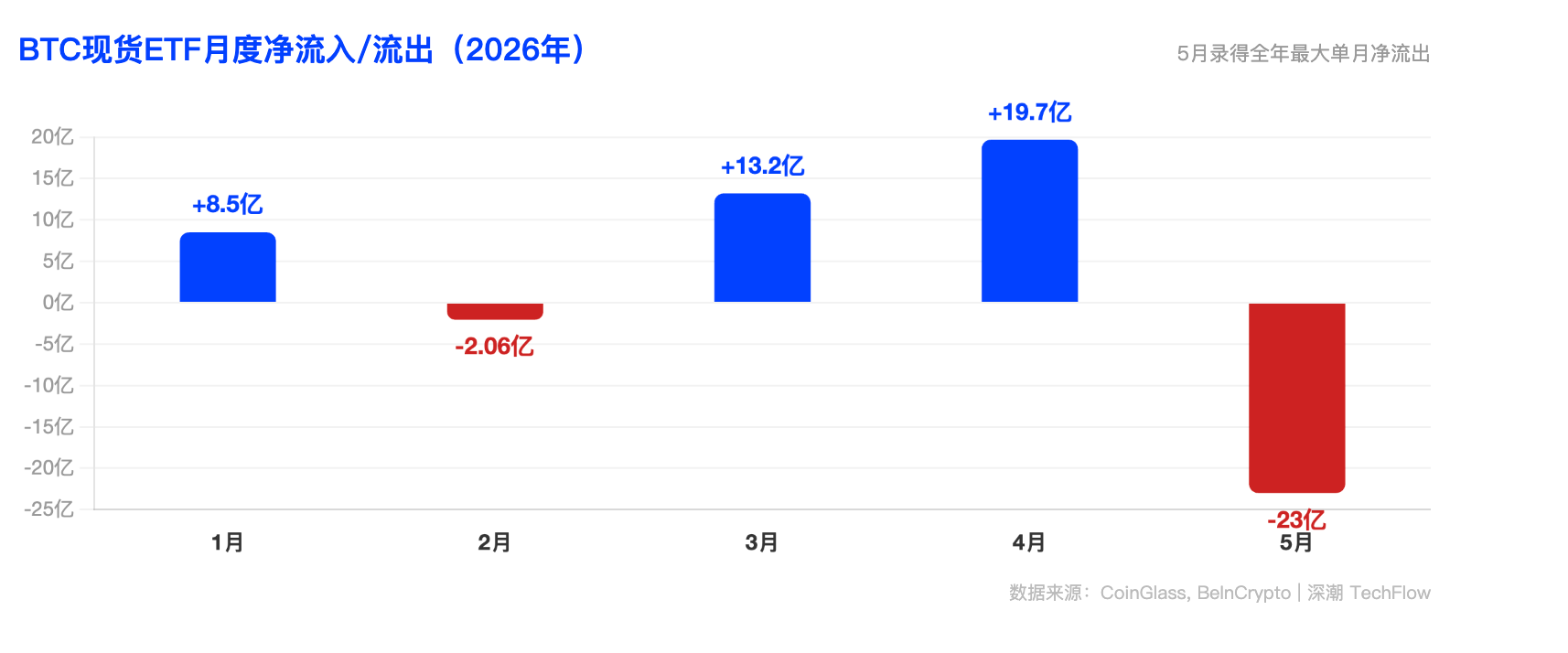
In May, BTC only dropped about 3.7%, but the outflow scale of the ETF was more than ten times the net redemption of $206 million in February. The pace at which institutions are reducing risks is clearly faster than what the price drop itself implies.
Meanwhile, the fear and greed index has dropped to 28 (fear), with market sentiment at its lowest level since 2026.
When will the next rotation come?
The question that the poster harukasweet repeatedly asked is this. The answers received are varied, but the honesty is surprisingly high.
User only_linear_joseph's analysis is more pragmatic: cash and bond yields are currently very competitive, which is rare in the past. As long as the high-interest rate environment remains unchanged, capital has no incentive to move from fixed-income to high-volatility assets. After discussing with the poster, he even self-corrected a contradiction: if inflation remains high, the Federal Reserve will not lower interest rates, and crypto will continue to be left aside.
No one provided a clear answer. However, one comment in the post may summarize the true mindset of most people: user harukasweet replied with two words when asked "What’s the rush?": "Opportunity cost."
Every day money that is not in the crypto market is money that is making profits elsewhere. This is the true source of anxiety within the current crypto community – it’s not "Will it come back?" but rather "During the time it's coming back, what did I miss?"
Data as of June 2, 2026. This article is a public opinion observation and does not constitute investment advice.
免责声明:本文章仅代表作者个人观点,不代表本平台的立场和观点。本文章仅供信息分享,不构成对任何人的任何投资建议。用户与作者之间的任何争议,与本平台无关。如网页中刊载的文章或图片涉及侵权,请提供相关的权利证明和身份证明发送邮件到support@aicoin.com,本平台相关工作人员将会进行核查。


