The crypto derivatives industry is transitioning from rough growth to a new stage of regulated competition.
Written by: Mahe, Foresight News
On June 1, the price of HYPE broke through $70 strongly, reaching a peak of $74, setting a new historical high. Since May of this year, HYPE has taken off vertically from $38, currently with a monthly increase of over 80%, while BTC recorded a decline of 3.5% in May, dropping from $82,000 to around $73,000.
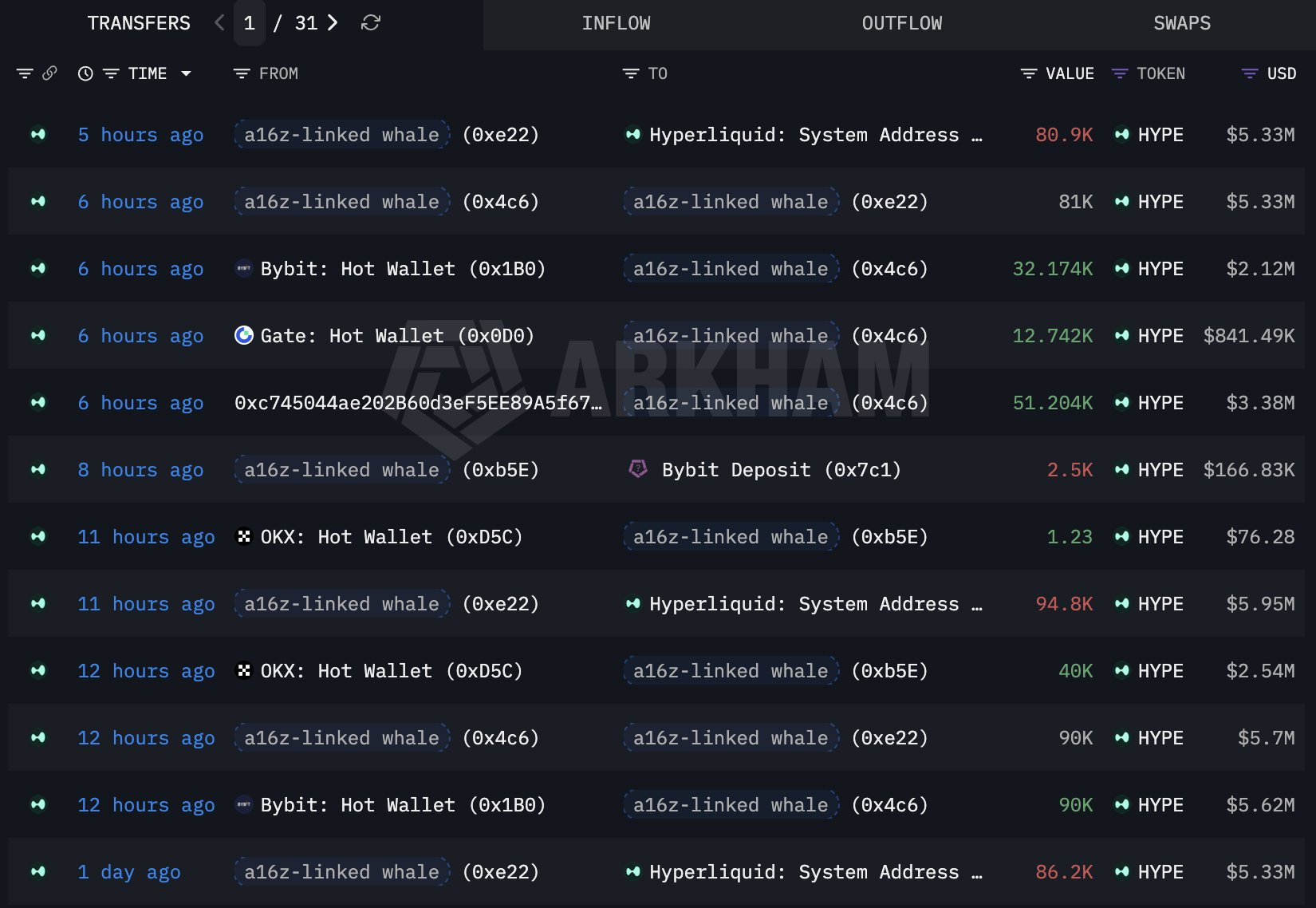
Its market capitalization has quickly climbed to about $18 billion, entering the top ten by crypto asset market value. The trading volume of perpetual contracts on the platform has remained high, with more than $600 billion in trading volume in Q1 2026 alone, dominating the on-chain perpetual field. Venture capital a16z has personally stepped in to buy approximately 3.9 million HYPE at an average price of $49. At the current price of $70, this investment is now worth over $270 million.
Moreover, Hyperliquid's value capture mechanism is real and robust: the total revenue of the protocol has exceeded $1.3 billion, with 99% of transaction fees flowing into the Assistance Fund to continuously buy back and burn HYPE tokens in the open market. The total buyback amount has surpassed $1.3 billion, providing strong buying power for its token price. Furthermore, explorations in predictive markets and Pre-IPO areas have completely opened up its market value's imagination space.
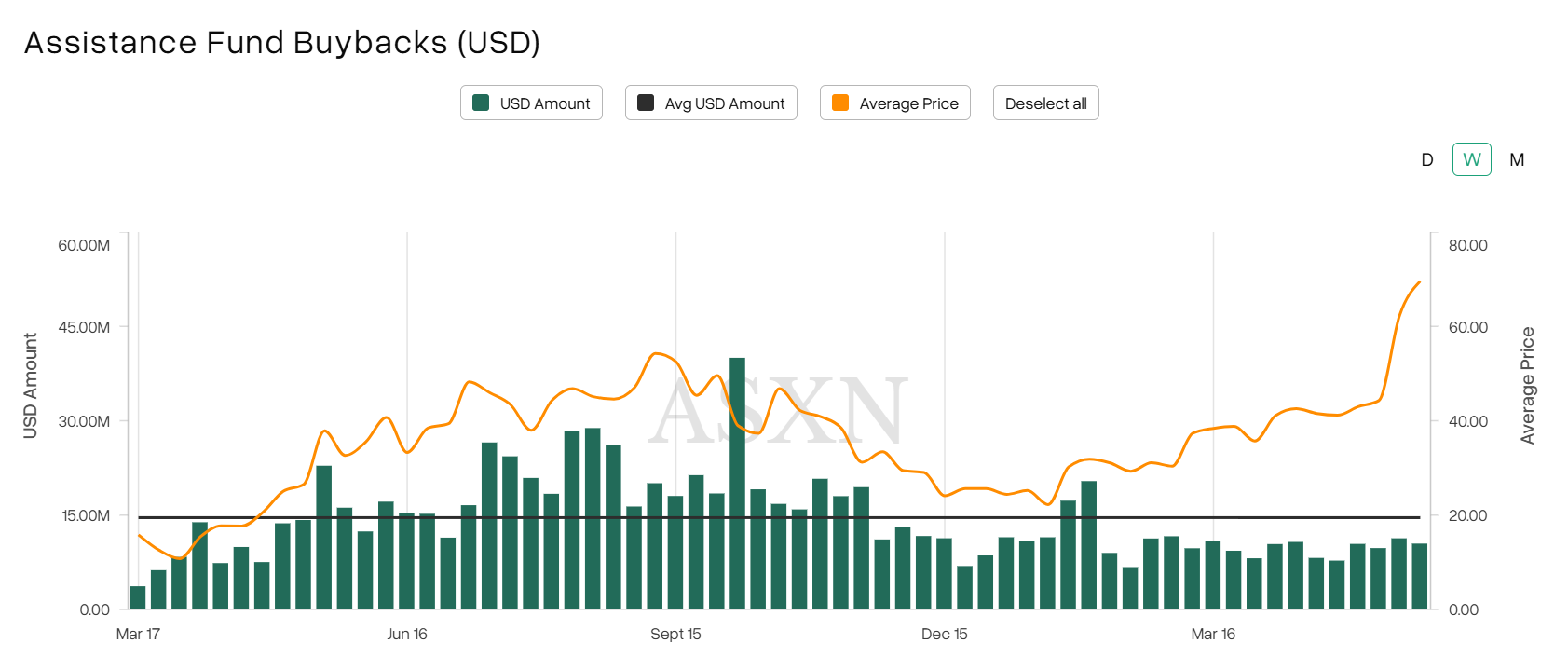
Assistance Fund buyback data
BitMEX co-founder Arthur Hayes stated, "Looking at the current crypto market capitalization rankings, most of them are garbage coins, and he believes HYPE should surpass SOL at least before the current bull market ends." Currently, Solana has a market capitalization of about $48 billion. Assuming its market value remains stable, Hyperliquid will need to increase its token price by at least 2.6 times to surpass Solana.
It is worth mentioning that HYPE's strong price performance has also made the on-chain long and short battle dramatic. According to HyperInsight monitoring, today's largest HYPE bull (0x082e8) has continued to go long, earning substantial returns, with current long positions valued at about $99.77 million, with unrealized gains of about $46 million. It had previously faced losses exceeding $25 million. Meanwhile, HYPE's largest bear "Trader Loracle" has been continuously reducing his HYPE short position in the past few hours, with his five-times leveraged short position decreasing from $102 million to $60.94 million, currently incurring a loss of $22.58 million (-74%).
However, just as HYPE's price and fundamentals are confirming market recognition, an industry figure has raised the sharpest doubt.
Kyle raises doubts, Multicoin is continuously buying
On May 31, Kyle Samani, former co-founder of Multicoin Capital, tweeted consecutively, describing Hyperliquid as "Binance 2.0 without a marketing team," and bluntly stated that its "thousands of architectural design decisions are only suitable for centralized environments and are completely unsuitable for permissionless decentralized environments." He asserted that they are currently lagging behind in the decentralization path and claimed that "no real American company will partner with them."
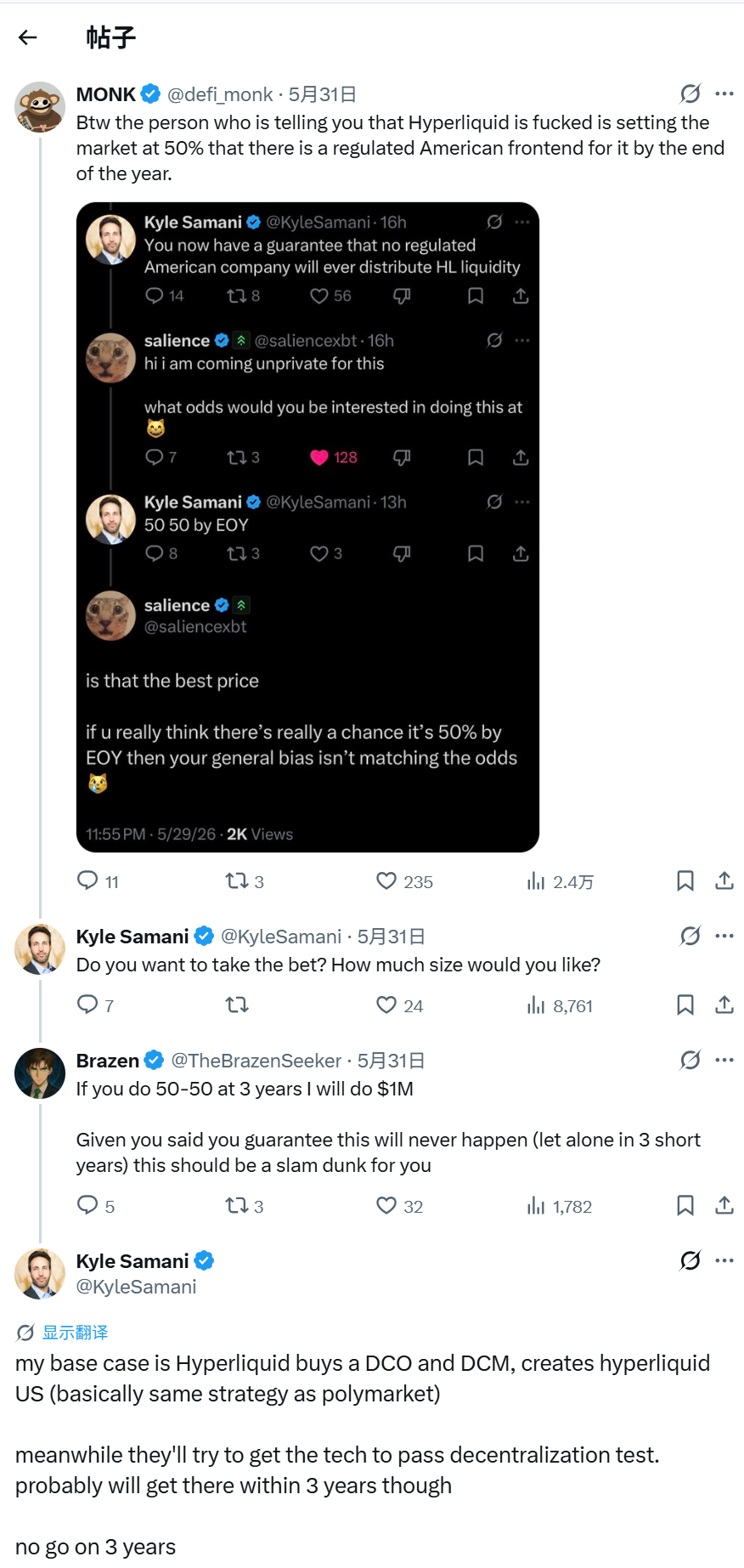
Even more dramatic was the betting event. Community members proposed a $1 million bet: can Hyperliquid launch a US-compliant front end within three years? Kyle responded that his basic scenario would be for Hyperliquid to acquire DCO (Derivatives Clearing Organization) and DCM (Designated Contract Market) licenses, create Hyperliquid US, adopt compliance strategies similar to Polymarket, and simultaneously push core technology through decentralized testing. He believes that "it is highly likely to achieve within three years," but he clearly rejected the "three-year deadline" wager.
Kyle also pointed out that "the DOJ charges facing Hyperliquid are all recorded on-chain," emphasizing that the key changes in the current regulatory environment are the emergence of "regulated CeFi perpetual contracts" and "the framework for distinguishing between centralized and decentralized protocols is becoming clearer."
These doubts certainly have some merit. Although Hyperliquid is positioned as a decentralized perpetual platform, its validating nodes possess permissioned elements, part of its code is closed-source, and its architectural choices are heavily performance-oriented. These are common trade-offs in the pursuit of millisecond execution and extreme leverage experiences in the perpetual track, yet they conflict with the pure ideals of "permissionless, publicly auditable" DeFi.
Interestingly, while Kyle is stern in his words, his previously co-founded Multicoin Capital has been buying heavily. Shortly after Kyle left Multicoin Capital earlier this year, the fund purchased over $40 million worth of HYPE and has continued to buy since. In early May, according to Arkham’s indicators, three Arkham-flagged Multicoin wallets staked about 1.96 million HYPE (valued at $82 million), holding approximately 2.83 million post-staking.
Although Kyle has left, Multicoin Capital's substantial purchases and staking appear somewhat ironic in contrast.
Kyle also labeled Hyperliquid as "Binance 2.0," perhaps pointing to its business ambitions. The moat of traditional giant Binance lies in its extreme matching speed, rich full-category liquidity user experience, and decent customer service reputation.
Hyperliquid is precisely replicating this model on-chain. It encapsulates the matching engine, clearing, and settlement within a hybrid architecture through its self-built customized L1, breaking the performance ceiling of traditional DEX and showcasing a versatile expansion trend in its product ecosystem: from perpetual contracts and spot trading to HIP-4 predictive markets and 0DTE options, it is moving all centralized financial activities onto the chain.
It has long since departed from the simple realm of DEX; its essence is to reconstruct a fully functional, vertically integrated "Binance-style" super financial empire in a permissionless world.
Is compliance the key?
On May 29, the U.S. CFTC historically approved KalshiEX (the CFTC registered designated contract market operated by Kalshi) to list BTCPERP—the first Bitcoin perpetual contract product on a U.S. regulated exchange. CFTC Chairman Mike Selig called this a "historic action," paving the way for perpetual contracts to exist within the U.S. regulatory framework and stated that the U.S. is becoming the "capital of crypto." Simultaneously, a no-action letter was issued allowing platforms like Coinbase to route U.S. clients to offshore platforms like Deribit.
This approval clearly has a double-edged sword effect: it brings BTC perpetual contracts into the U.S. regulatory fold for the first time, ending the long reliance on offshore platforms, and provides a compliant entry point for institutional funds. However, it also significantly raises the competitive threshold—regulated venues will attract funding seeking certainty, while purely decentralized/offshore platforms like Hyperliquid face user access restrictions, institutional partnership barriers, and reputational pressures.
Traditional financial giants have already begun to act. ICE (Intercontinental Exchange) and CME Group are actively lobbying the CFTC and Congress, emphasizing that anonymous, high-leverage, decentralized trading environments like Hyperliquid pose systemic risks. Hyperliquid has previously faced discussions on similar manipulation concerns, although the platform denies it.
The experience of Polymarket provides the most direct reference. The predictive market platform has faced regulatory pressure for a long time due to issues with U.S. users and is currently exploring technical and structural adjustments. ICE has even intervened to assist in modifications to meet regulatory requirements. Kyle's mentioned path of acquiring DCO/DCM to create a compliant U.S. version requires the core protocol to maintain decentralization, with the compliant front-end entity gaining U.S. market access through license acquisitions.
Hyperliquid's real predicament is that launching a fully compliant front-end in the short term is extremely challenging—not only because of the licensing process and the connection with traditional clearing/execution frameworks but also due to potential adjustments needed for core experience (KYC, leverage limits, etc.), which conflict with the current core selling points of "self-custody, no KYC, high leverage, permissionless." Transitioning from the current hybrid model to fully decentralized testing will also require time and engineering investment.
Nevertheless, Hyperliquid has demonstrated a strong product execution capability and income generation ability, and its scale advantage provides resources for compliance layout. HYPE's historical highs and strong buyback mechanisms validate the market's recognition of Hyperliquid addressing real pain points. However, Kyle Samani's criticisms directly target the core contradictions: many projects that claim "decentralization" inevitably introduce centralized/closed-source elements in the pursuit of performance and scale, ultimately exposing their shortcomings when regulations become clearer.
The crypto derivatives industry is transitioning from rough growth to a new stage of regulated competition. This bet and public debate are a microcosm of its turning point.
免责声明:本文章仅代表作者个人观点,不代表本平台的立场和观点。本文章仅供信息分享,不构成对任何人的任何投资建议。用户与作者之间的任何争议,与本平台无关。如网页中刊载的文章或图片涉及侵权,请提供相关的权利证明和身份证明发送邮件到support@aicoin.com,本平台相关工作人员将会进行核查。


