The value capture logic of the cryptocurrency industry is undergoing a reconstruction.
Written by: Jonah Burian
Translated by: Luffy, Foresight News
Many believe that AI entities will become the next billion-user group in the blockchain field. However, few have considered who will actually make money when this era arrives?
All past value capture theories in the cryptocurrency industry have been based on the premise that users are human. The "fat protocol" theory suggests that the protocol layer is best at commercial monetization; whereas the fat application theory proposed by my colleagues and me argues that the monetization capability of the application layer is superior. Now that AI entities have completely transformed the user base, previous classic theories no longer apply.
Fat Protocol Theory
In 2016, Joel Monegro proposed the fat protocol theory. For nearly a decade following that, this theory has remained the mainstream value capture logic in the cryptocurrency industry.
The core idea of this theory is that in the traditional internet, most value flows to the application end (like Google, Facebook), while underlying protocols (like TCP/IP, HTTP) receive almost no revenue. The cryptocurrency industry will completely reverse this pattern. With blockchain data being publicly shared, applications will gradually become homogeneous tools; network operations must use the protocol’s native tokens, and as the ecosystem expands, these tokens will encapsulate all appreciation expectations. Each successful application will drive up token demand, and the growth of the protocol will outpace all its applications.
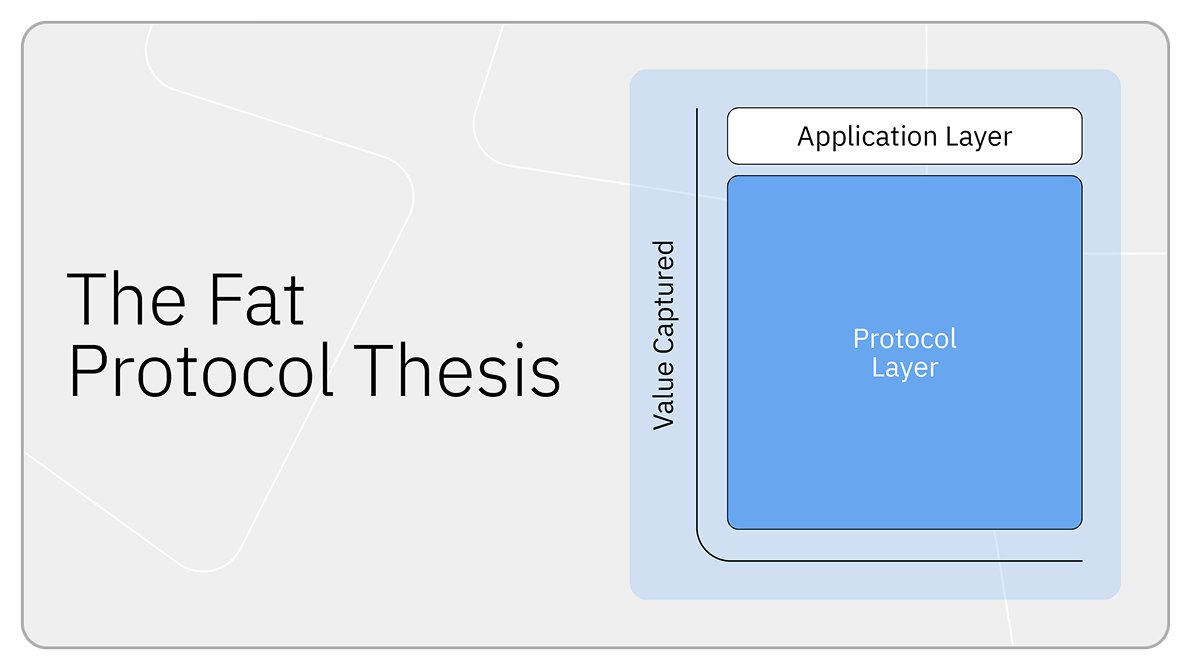
For many years, this logic seemed valid. Bitcoin and Ethereum consistently had market values higher than any projects built on them. This model worked based on the scarcity of protocols at that time: the early public chain research and development had high thresholds and was difficult to replace. In 2017, the public chain sector had very few competitors, and there were not multiple general-purpose underlying chains competing for the same market. At that time, blockchain space was scarce, and holding underlying tokens indirectly meant sharing in the development dividends of all upper-level applications.
Today, the various levels of blockchain infrastructure are flooded with numerous strong competitors. Multiple high-throughput underlying public chains, dozens of Layer 2 networks, and various modular settlement layers and data availability layers are waging price wars. Blockchain space has shifted from scarcity to oversupply; cross-chain bridges and aggregators have significantly reduced migration costs, making the underlying public chains nearly "transparent" for users, with no obstacles in switching links. Infrastructure is gradually becoming homogeneous, and competition in homogeneous areas inevitably falls to the pricing level. The scarcity that used to support the premium for protocols no longer exists, and the ability to price has also been lost.
Fat Application Theory
The market landscape of 2026 has been rewritten, with value flowing mostly to the application end rather than the protocol layer, as exemplified by platforms like Phantom wallet, Coinbase, Polymarket, and Pumpfun. In my view, the most critical asset in the cryptocurrency industry today is user relationships. As long as one controls the user interface and transaction processes, one holds the traffic distribution rights and can monetize all on-chain services that users encounter, such as trading, lending, staking, NFT minting, and fiat currency deposits and withdrawals. This is also the core reason why investment institutions favor new types of digital banks.
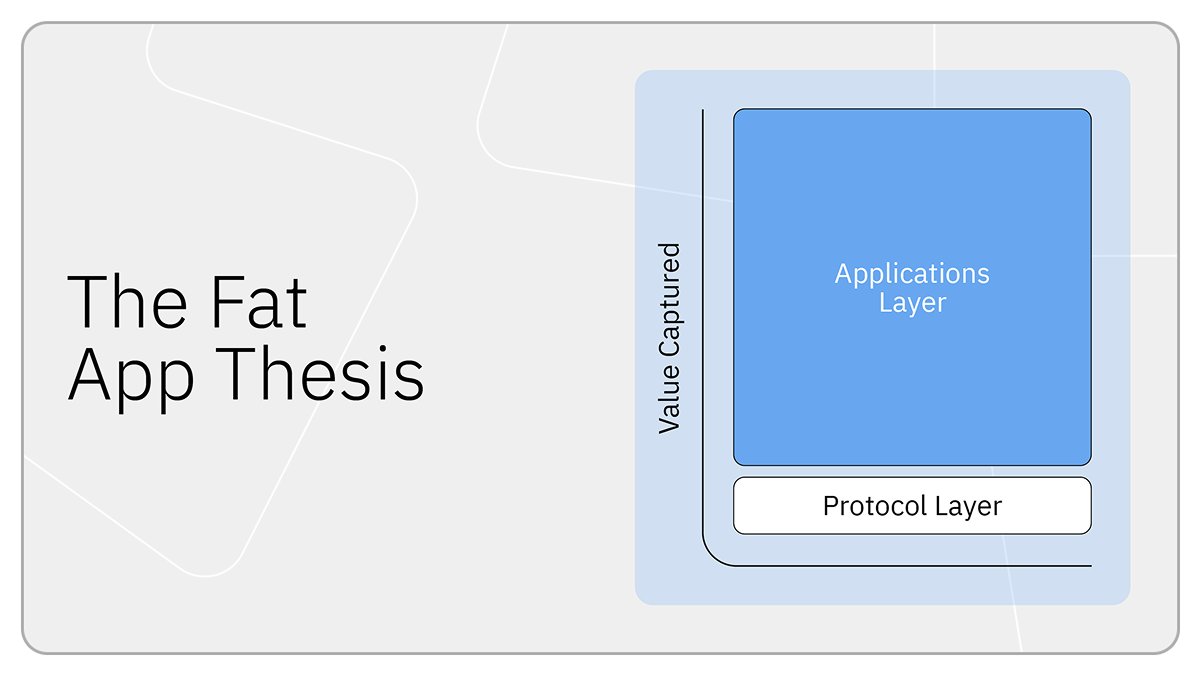
At the same time, the application side is continually pressuring infrastructure into price competition, causing infrastructure profits to be compressed to marginal cost levels. I elaborated on this logic in my article "The Path of Value Capture," and the same trend is unfolding in the stablecoin sector.
Market price movements also confirm this point. Spencer and I define this industry transformation as a great value reassessment: in this cycle, value continuously shifts toward the user layer.
Why AI Entities Disrupt Existing Logic
The validity of the fat application theory is based on the premise that human users care about user experience, brand reputation, and convenience. However, AI entities do not care about these aspects at all; they directly invoke application programming interfaces (APIs), have no brand loyalty, and incur zero switching costs for transaction channels.
When users shift from humans to automated programs, the user relationships painstakingly maintained by companies cease to form competitive barriers, and the front-end advantages relied upon by the fat application theory are also weakened.
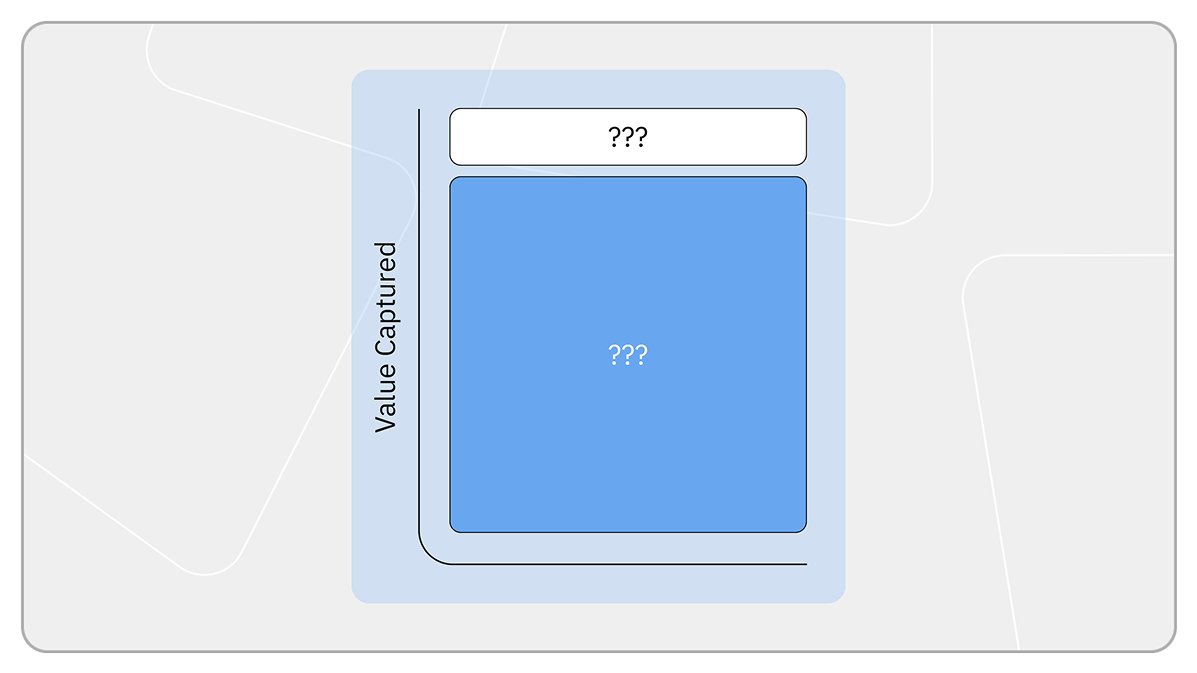
So in the era of AI entities, who will capture the value? The following outlines several different developmental directions.
Direction One: Applications Transform into Interface-less Services, Continuing Advantages
One possible future is that today's leading applications may abandon visual interfaces and continue to lead their fields.
Wallets and aggregators have already completed the most complex infrastructure work: interfacing with massive protocols, constructing routing logic, and perfecting identity systems and deposit/withdrawal channels. The logical next step is to package the entire service as an API interface for AI entities. At that point, when entities invoke these interfaces to complete transactions, it will be similar to how humans currently use Phantom and JupiterExchange to operate on-chain services.
In this scenario, the fat application theory remains valid, just that applications no longer rely on front-end interfaces. Those enterprises that rose during the era of human users will transform into interface-less underlying services. Currently, traditional software service providers like Salesforce are also evolving in this direction.
Direction Two: The Protocol Layer Rises Again
Another possibility is that AI entities completely bypass the intermediary application layer.
If the interface documentation is comprehensive, remote procedure call standards are unified, and execution rules are stable and clear, then entities can fully autonomously carry out operations without needing to pay aggregators. The core advantages of aggregators in the human era were to optimize the user experience and sort out complex routing; however, entities do not require a human-machine interface, and routing scheduling is merely a problem solvable by engineering techniques, with entity capabilities in this area continually improving.
If the industry evolves into this form, the fat protocol theory will experience a resurgence.
Direction Three: Collective Collapse of Pricing Power
There is also a scenario where AI entities drive the whole industry into homogeneous competition.
Entities possess absolute rationality, always choosing the lowest-cost channels to execute operations, with no brand preferences and no migration resistance. The application side can no longer charge humans a premium based on superior experience; aggregators and infrastructure also lose their pricing power, as human users' usage habits can no longer shield them from price wars.
In this model, all links in the industrial chain struggle to earn high profits, with overall revenue compressed to marginal cost levels. Most of the remaining value ultimately flows to the operators of AI entities or the end users that the entities serve. Blockchain will completely degenerate into public infrastructure, and sectors akin to public utilities have always struggled to generate substantial profit margins.
Direction Four: Birth of New On-chain Economic Activities
One simple viewpoint posits that AI entities merely automate and scale up human operations; even if per-transaction profits dwindle, substantial overall revenue can still be achieved through large transaction volumes.
However, I believe there is a more worth discussing logic: AI entities may activate a large number of on-chain business operations that were previously unviable. For example, continuous rebalancing at costs below one cent, machine-to-machine trading between entities, and certain trading rhythms far exceeding human reaction speeds. Such scenarios have yet to emerge in the current on-chain ecosystem simply because existing processes still rely on human involvement.
If entities truly unleash this potential, the core question for the industry will no longer be "how to distribute existing profits," but rather how many entirely new economic activities will emerge on-chain and which sectors can accommodate these new demands.
Unformed New Business Models
In every round of industry cycles, people tend to predict the direction of value flows and habitually believe that existing business models will continue into the future. However, this kind of thinking often overlooks those entirely new business forms that have yet to emerge at present.
In the early development of the internet, no one could foresee the rise of the attention economy. Nobody expected that the mainstream business model would revolve around selling users' attention in fragmented forms to advertisers, nor could one predict that companies would dominate huge shares of the global advertising market based on this model. In hindsight, all of this seems quite logical.
AI can be regarded as one of the most influential technological changes in decades. In a new era dominated by entities, part of the value is bound to flow into entirely new business models that are currently undefined and unexamined; ultimately, the winners may not be the players currently focused on the market.
Future Observational Directions
The industry is unlikely to experience a complete overhaul of old and new models. For a long time to come, humans and AI entities will coexist as the two major user groups in blockchain, and the corresponding value distribution logic for both will be entirely different.
As long as humans participate in on-chain activities, the fat application theory will still hold. Consumers willing to pay for user experience, brand, and convenience will continue to pay a premium to applications that hold user resources. However, the transaction scenarios for AI entities will follow a new set of rules as mentioned earlier.
In my view, for developers deeply engaged in the AI entity sector, the most critical issue to consider is: how to ensure that entities consistently choose your service rather than flowing to the lowest-cost channel? Quality human-machine experience is no longer the answer; liquidity, latency speed, settlement assurance, and other metrics may become the new core of competition.
免责声明:本文章仅代表作者个人观点,不代表本平台的立场和观点。本文章仅供信息分享,不构成对任何人的任何投资建议。用户与作者之间的任何争议,与本平台无关。如网页中刊载的文章或图片涉及侵权,请提供相关的权利证明和身份证明发送邮件到support@aicoin.com,本平台相关工作人员将会进行核查。


