In the past few days, the word privacy has once again been pushed back into the spotlight of the crypto market.
Written by: Fei Xiahao
In the past few days, the word privacy has once again been pushed back into the spotlight of the crypto market.
The Ethereum community is discussing native private transactions, Zcash has once again become the focus of the market, and Arthur Hayes has publicly discussed the importance of currency privacy. Each point alone may seem like ordinary news; when viewed together, they point to the same question:
After the on-chain world becomes increasingly transparent, how much privacy do ordinary users really have?
This is not a new question.
Since the birth of Bitcoin, blockchain has always carried a contradiction: it promises users direct control over their assets while exposing a large amount of transaction traces on the public ledger. Many people think that on-chain addresses are anonymous, but as long as addresses and transaction behaviors are repeatedly linked, the so-called anonymity becomes very fragile.
In the past, this issue was far from the majority of people.
Now, it is different.
Wallets, exchanges, stablecoins, RWAs, on-chain payments, AI Agents, and on-chain data tools are all developing rapidly. More and more assets and behaviors are being moved on-chain, and on-chain analysis is becoming increasingly mature. The transaction habits, asset changes, and interaction paths behind an address are becoming easier to piece together than in the past.
Privacy is heating up again, not just because a certain sector has risen.
What it truly touches upon is a deeper problem: If Web3 ultimately turns into a system where everyone can be tracked, analyzed, and priced, what exactly does it add compared to the old world?
1. Ethereum also starts to seriously face privacy issues
One of the most noteworthy signals in this round of discussion comes from Ethereum.
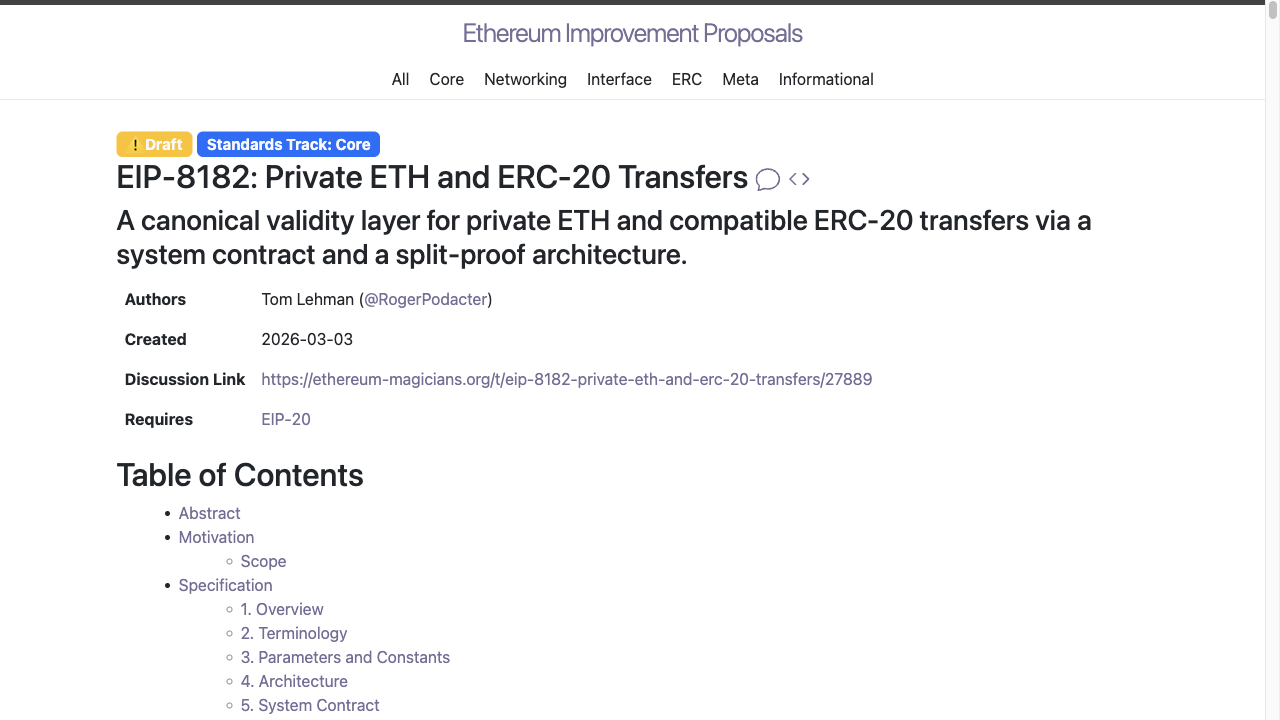
The Block reported that Tom Lehman, co-founder of Facet, proposed to include EIP-8182 in the Ethereum Hegota upgrade. The direction of this proposal is to enable the Ethereum base layer to support private transfers of ETH and ERC-20, rather than relying entirely on external privacy tools.
This matter is important, not because a proposal will immediately change Ethereum.
It is important because privacy has started to re-enter the discussion of "what capabilities infrastructure should possess."
In the past few years, the keywords for public chain competition have typically been speed, cost, throughput, ecology, developers, and L2. Who is faster, who is cheaper, who is more suitable for transactions, who is easier to attract applications have almost become default evaluation criteria.
But if a chain can only carry higher frequency activities but cannot protect ordinary users from being excessively tracked, is it really mature enough?
This question has often been placed on the back burner in the past.
Now, it is being brought back to the forefront.

Vitalik has also recently been reiterating the boundaries and priorities of the Ethereum Foundation. The most discussed aspect by the outside world is, of course, the organizational changes of EF and the pace of Ethereum's development; but viewed over a longer period, what Ethereum cannot avoid are still a few old problems: decentralization, resistance to censorship, security, and privacy.
These terms may not sound as sexy as "high-performance public chains" and are not as easily spread as "AI + Crypto".
But they determine whether a public chain can truly become a long-term infrastructure.
As more and more users begin to manage assets, payments, identities, and business processes using on-chain systems, privacy will no longer be a geek topic, but rather a basic demand.

2. Zcash is being seen again, and it is not just the story of one coin
Another signal comes from Zcash.
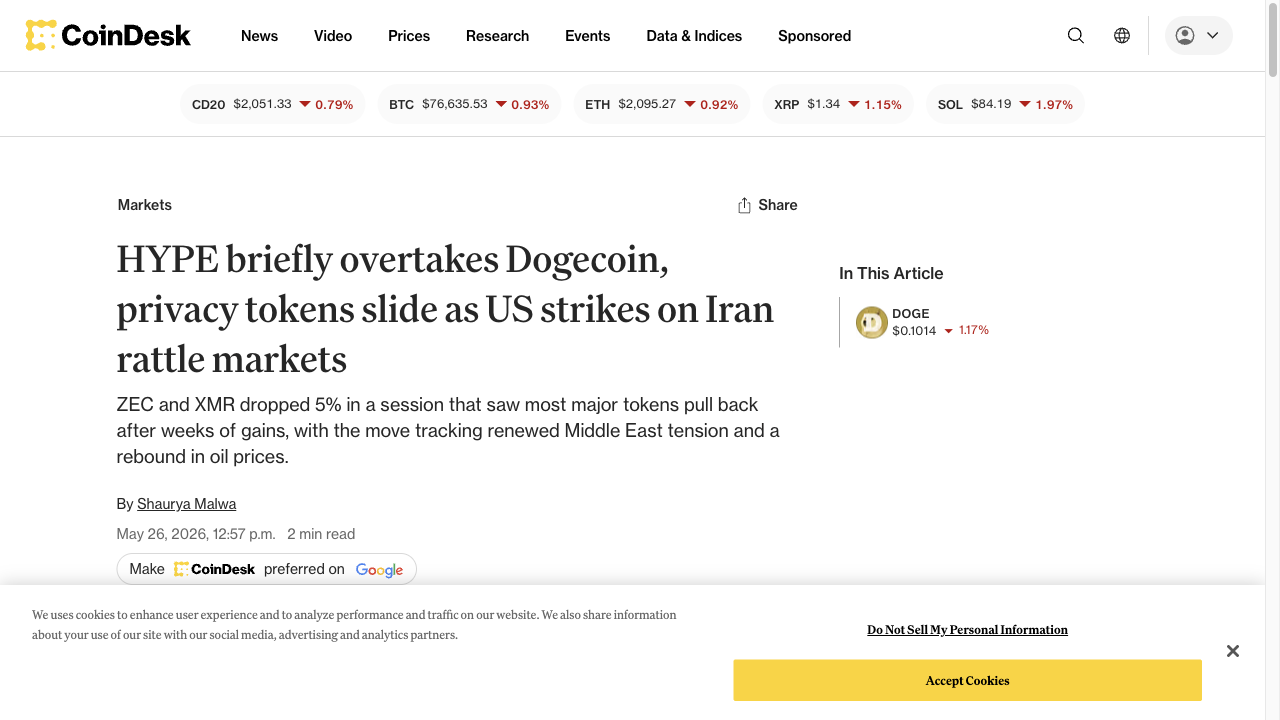
Fei Xiahao news shows that in recent times privacy coins have continuously gained market attention, and Zcash has once again been placed at the center of discussion. Arthur Hayes's statements about currency privacy have also garnered more attention to this narrative.
But if you only understand it as "the market for privacy coins," it is too superficial.
Zcash being seen again actually brings to the surface an old question: Is on-chain transparency an advantage or a burden?
The public ledger of blockchain brings many benefits.
The flow of funds can be verified, contract statuses can be checked, project wallets can be tracked, and exchange reserves can be audited. Many times, on-chain transparency indeed enhances trust.
But transparency also has another side.
An ordinary user may not want others to see their complete asset structure; a project may not want all their business paths to be publicly dissected; and an institution may not be able to accept that every step of fund allocation is exposed to external visibility.
This does not mean they necessarily have a problem.
In the real world, financial privacy is essentially a normal demand. No one would require an ordinary person's bank statements to be publicly available at all times, nor would anyone believe that all of a company's business transactions should be observed in real-time by outsiders.
The on-chain world certainly requires verifiability.
But verifiability should not automatically equate to all information being exposed by default.

The existence of privacy networks like Zcash is precisely because this contradiction has not been completely resolved.
Over the past few years, privacy narratives have often been short-term in the market: packaged as opportunities when it rises, and thrown into a corner when it falls. But what is truly worth discussing is whether privacy technology will become part of the next stage of on-chain infrastructure.
This may be more important than price fluctuations.
3. Why privacy is coming back at this moment
Privacy's resurgence is not accidental.
In the past, many people only realized the importance of on-chain privacy when transactions were attacked, wallets were tracked, or addresses were exposed. Usually, people were more concerned about returns, airdrops, points, transaction experience, and project popularity.
However, the more on-chain activities there are, the harder it is to ignore privacy issues.
On-chain data tools are becoming more powerful. Analyses that only professional researchers and security teams could do in the past are now increasingly being productized. It may be quickly organized into readable information which protocols a wallet has participated in, which addresses it has interacted with, when assets were transferred in and out, and whether it participated in certain projects.
This is certainly valuable for industry research, security tracking, and anti-fraud.
But for ordinary users, this also means individual on-chain behaviors are becoming easier to profile.
On the other hand, regulation and compliance are entering a finer stage.
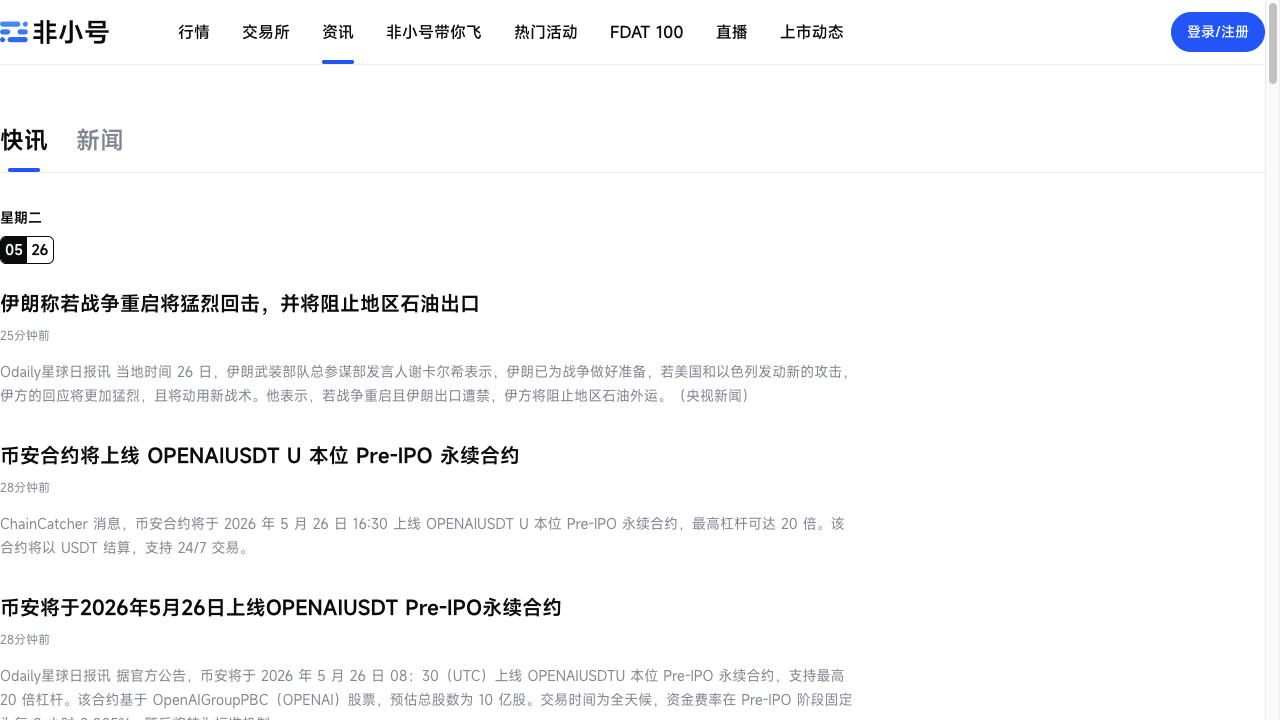
Stablecoins, cross-border payments, RWAs, trading platforms, wallet services, and on-chain securitization are all establishing deeper connections with real financial systems. The further they go towards institutionalization and compliance, the more the system needs identification, auditing, and risk control.
This will bring a new tension:
The on-chain system needs to allow regulators and institutions to trust it while not turning all users into public data samples.
Privacy becomes important in this position again.
It is not to make everything invisible, but to ensure that information that should not be public is not made public by default.
4. True privacy does not equal complete anonymity
Many people, when talking about on-chain privacy, will think of "anonymous transactions."
But the real privacy issue is much more complex than anonymous transactions.
For ordinary users, privacy may simply mean not wanting the other party to see their entire asset during payment; when participating in a protocol, not wanting all historical behaviors to be automatically linked; or when using a wallet, not wanting to expose a complete on-chain profile because of a single interaction.
For institutions, privacy may mean that business paths cannot all be public, fund allocation cannot be tracked in real-time by competitors, and customer behavior cannot be easily stitched together by outsiders.
For public chains, privacy is a more challenging balancing act: how to reduce unnecessary exposure while maintaining verifiability? How to find a middle ground between compliance auditing and user protection? How to ensure that on-chain systems are not only transparent but also sufficiently secure and usable?
These questions do not have simple answers.
But they will become increasingly important.
Because Web3 is evolving from the early stage of asset trading to more complex financial and application systems. As long as what is carried on-chain increases, privacy will not disappear.
It will only return in a different form.
5. The crypto world is filling a gap anew
In the past few years, the market has become accustomed to understanding everything through narratives.
AI is a narrative, RWAs are a narrative, stablecoins are a narrative, L2 is a narrative, and memes are also narratives. Privacy will certainly also be treated as a narrative for trading.
But privacy is somewhat different from these themes.
It is not merely a growth story, nor simply an efficiency story. It is more like a shortcoming that the crypto world must fill as it matures.
Without privacy, the on-chain world would become overly transparent.
Without verifiability, the on-chain world would lose its foundation of trust.
The real challenge is to find a new balance between these two.
This is also why every time privacy narratives return, they seem a bit "dangerous."
It is not easily packaged as a light growth story and is difficult to simply categorize as a technological upgrade. It touches simultaneously on user rights, financial regulation, on-chain security, institutional adoption, and public infrastructure, which are all more complex issues.
But precisely because of this, it will not be just a short-term hotspot.
As more and more assets, identities, payments, and AI Agent behaviors enter the on-chain system, privacy will change from a preference of a few individuals to a reality needed by many.
So, the most "dangerous" narrative in the crypto sphere has returned.
The danger does not lie in whether it will bring about a market trend.
The danger lies in that it forces the entire industry to re-answer a question:
If a network claims to belong to users ultimately makes it easier for every user to be tracked and analyzed, what exactly does it protect?
免责声明:本文章仅代表作者个人观点,不代表本平台的立场和观点。本文章仅供信息分享,不构成对任何人的任何投资建议。用户与作者之间的任何争议,与本平台无关。如网页中刊载的文章或图片涉及侵权,请提供相关的权利证明和身份证明发送邮件到support@aicoin.com,本平台相关工作人员将会进行核查。


