Author: Claude, Deep Tide TechFlow
Deep Tide Overview: The Iranian Ministry of Economy has launched a Bitcoin settlement maritime insurance platform named "Hormuz Safe," aimed at offering "crypto-validated insurance policies" to Iranian shipowners and cargo owners shipping through the Strait of Hormuz. Iranian state media claim the platform could generate over 10 billion dollars in annual revenue. However, whether the platform is actually operational has not been independently verified, and the high volatility of Bitcoin, compliance risk from U.S. sanctions, and the controversial background of the behind-the-scenes figure Babak Zanjani pose serious challenges to its feasibility. This is the most significant attempt by Iran to transform military control over the Strait of Hormuz into a cryptofinancial product.
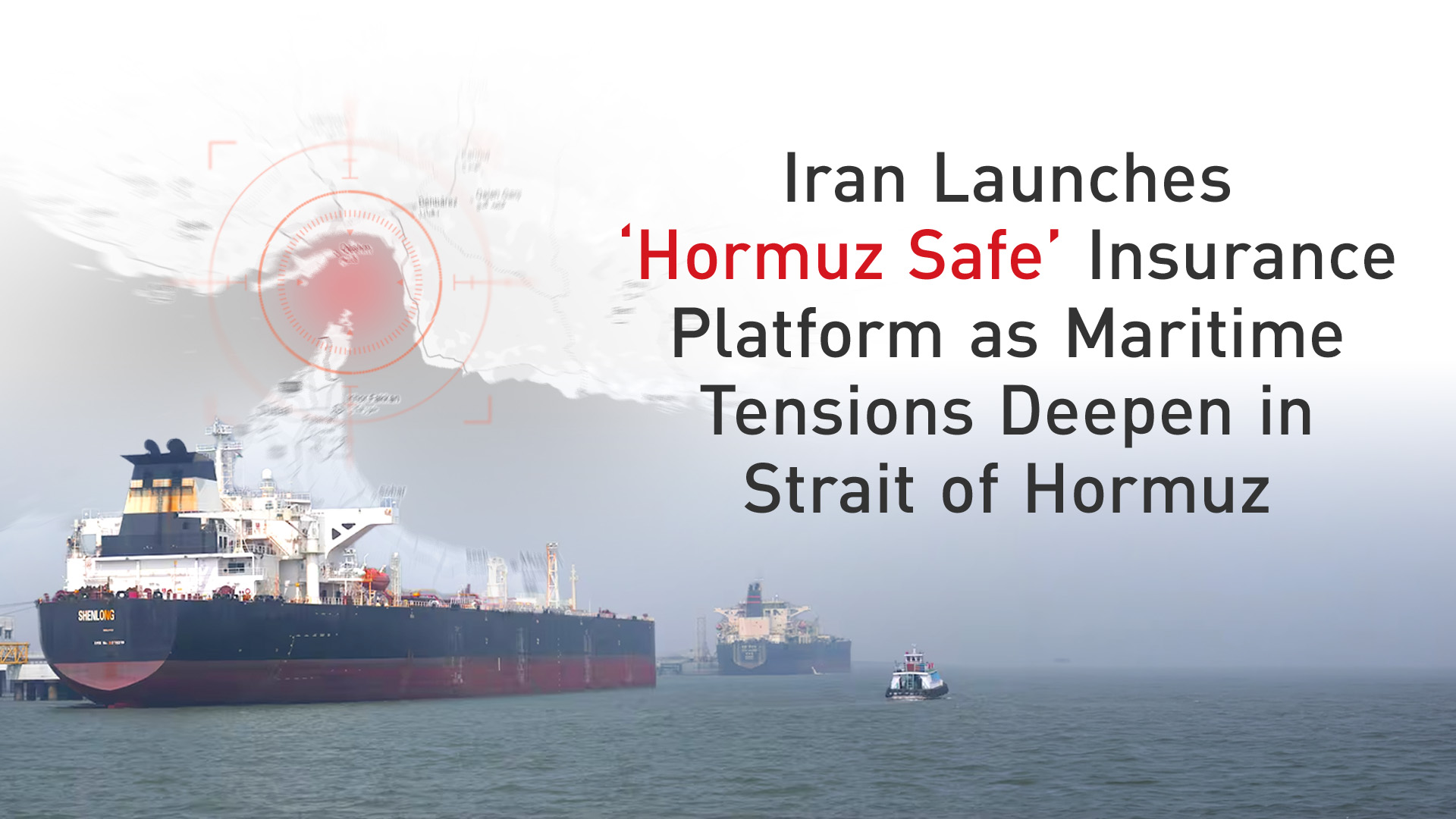
Iran is attempting to turn one of the world's most critical maritime chokepoints into a Bitcoin-settled insurance market.
According to a Bloomberg report on May 18, the semi-official Iranian news agency Fars cited documents from the Ministry of Economy and Finance stating that Iran has launched a Bitcoin-supported maritime insurance service named "Hormuz Safe," intended for Iranian shipping companies and cargo owners wishing to ship through the Strait of Hormuz. Fars claimed that the plan could generate over 10 billion dollars in revenue for Iran but did not provide a timeline or operational details.
Since the U.S. and Israel launched airstrikes on Iran on February 28, Iran has effectively shut down the Strait of Hormuz. This strait carries about 20% of the world's maritime oil trade and 20% of liquefied natural gas exports during peacetime. The Iranian government and the Islamic Revolutionary Guard Corps (IRGC) have since sought to formalize control over the waterway, including imposing fees and other charges. The insurance service is the latest addition to their revenue-generating toolkit.
Crypto-Validated Policies, Instant Bitcoin Settlements
According to screenshots shared by Fars from the "Hormuz Safe" website, the platform claims to offer "fast, verifiable digital insurance" to Iranian shipping companies and cargo owners. According to Bitcoin Magazine, the insurance coverage includes risks such as vessel inspections, seizures, and confiscations, but excludes war damage claims.
Fars cited a description on the website hormuzsafe.ir stating that the platform would provide "crypto-validated insurance policies" for goods traveling through the Persian Gulf, the Strait of Hormuz, and surrounding waters, with payments settled in Bitcoin. Coverage begins from the moment the cargo is confirmed on the blockchain, and cargo owners will receive a signed receipt. The site appears to be inaccessible outside of Iran.
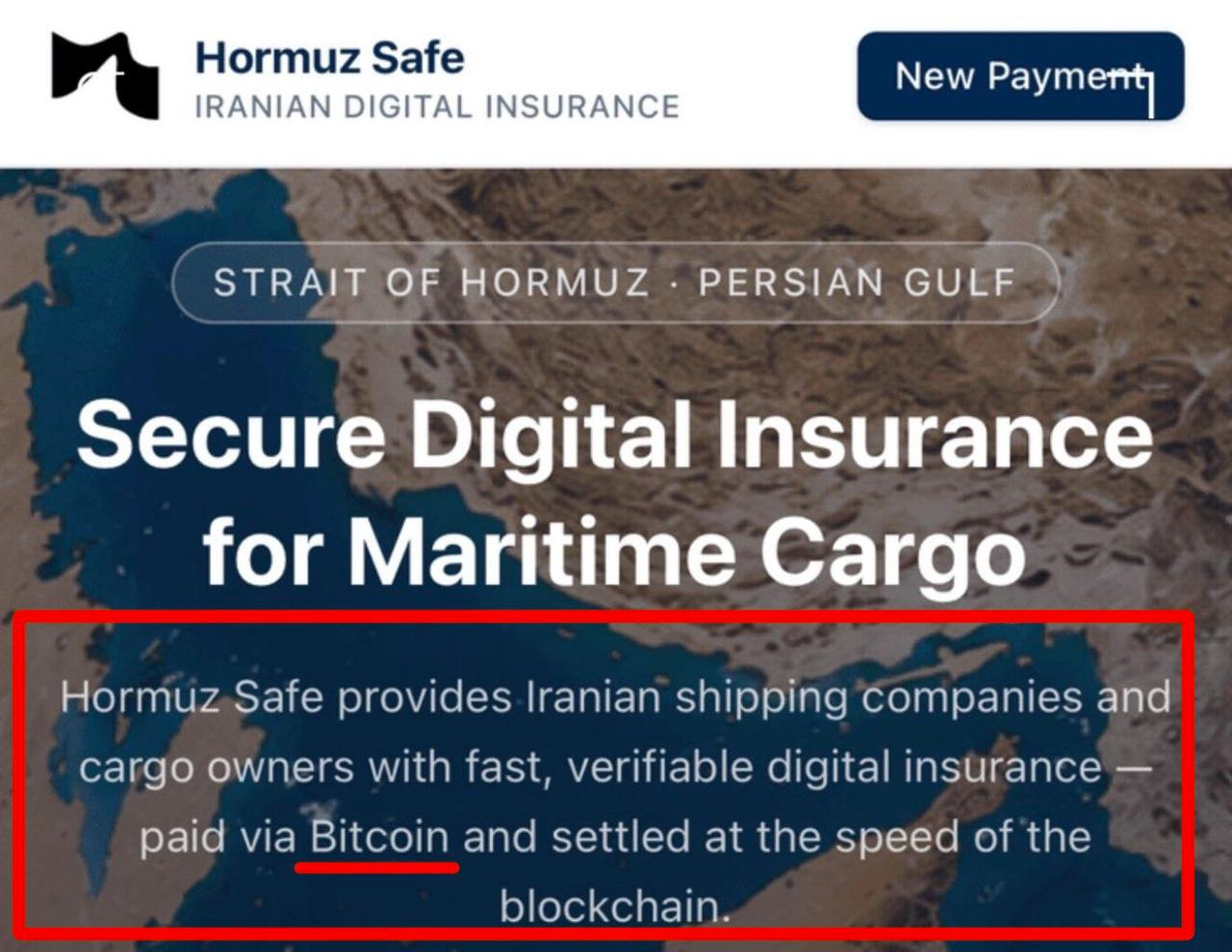
According to Bitcoin Magazine, the Iranian Ministry of Economy has been promoting the insurance scheme since late April (early Ordibehesht in the Persian calendar). In April, Hamid Hosseini, spokesperson for the Iranian Oil, Gas, and Petrochemical Products Exporters Association, told the Financial Times that shipping companies could use non-U.S. currencies such as Bitcoin or Chinese yuan to pay for the tolls in the Strait of Hormuz.
Accelerating Institutional Development: From Toll Fees to Insurance Platform
Hormuz Safe is not an isolated measure but the latest component in Iran's comprehensive institutional framework surrounding the Strait of Hormuz.
According to Bitcoin Magazine, in March 2026, the Iranian parliament passed the "Strait of Hormuz Management Plan," formally legislating the toll system operated by the IRGC since mid-March. Under this framework, the IRGC charges fees to vessels passing through the strait, requiring operators to submit information about vessel ownership, cargo type, destination, and crew to obtain a passage permit code. Fees start at around 1 dollar per barrel of oil, with the maximum charge for fully loaded tankers reaching up to 2 million dollars, and payments accepted in yuan.
On May 18, the Iranian Supreme National Security Council announced the official establishment of the "Persian Gulf Strait Management Bureau" (PGSA) and opened an official account on the X platform.
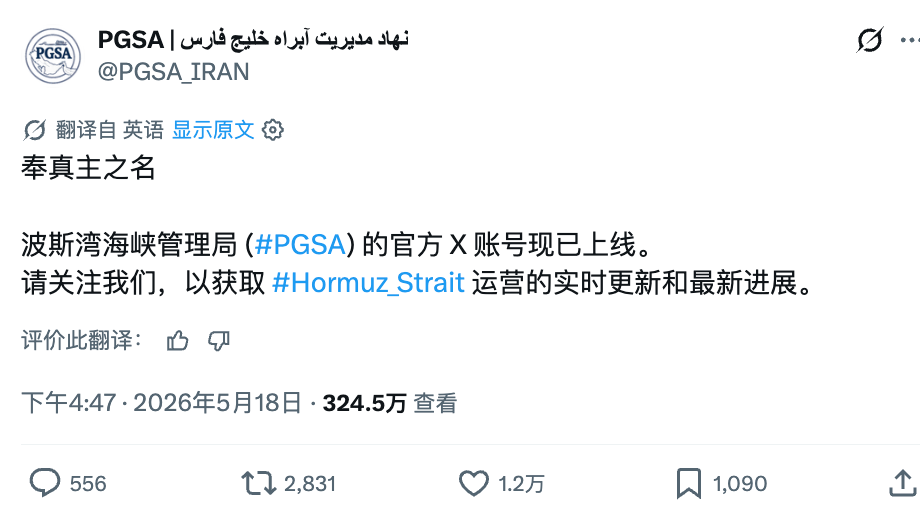
According to Euronews, the agency is positioned as the administrative entity responsible for managing traffic in the Strait of Hormuz and collecting tolls, operating in coordination with the IRGC Navy. Vessels must submit complete information, including ownership, insurance, crew list, cargo declaration, and planned route, through the PGSA official email to obtain passage permission after approval and payment.
Ebrahim Azizi, chairman of the National Security and Foreign Policy Committee of the Iranian parliament, stated on the X platform that only commercial vessels cooperating with Iran would be able to benefit from this mechanism, while parties participating in U.S. and Israeli military actions would be banned from using this route.
According to Windward intelligence analysis, as of May 18, the strait's passage volume remains at about 38% of pre-conflict levels, and the central Qeshm-Larak anchorage has experienced clandestine vessel tracking locks for six consecutive days. About 369 IRGC speedboats are concentrated in a single sea area about 30 nautical miles northeast of Khasab, shifting from coastal patrols to the main body of the strait.
Volatility, Sanction Risks, and Shadows of Fraud
Multiple analysts have expressed doubts about the actual feasibility of Hormuz Safe.
Bloomberg pointed out that unlike stablecoins pegged to the dollar, Bitcoin's price is highly volatile, and its adoption as a payment method has been limited. Foreign shipowners may be reluctant to use this mechanism due to concerns about violating U.S. sanctions against Iran.
Ryan Yoon, a senior analyst at Tiger Research, told Decrypt that the platform’s technical and legal feasibility is "highly questionable," and despite its announced launch, there has been no confirmation of any actual users. Shipping companies using Hormuz Safe risk being "immediately expelled from the global financial system."
Vikrant Sharma, CEO of Cake Wallet, told BeInCrypto that Bitcoin can reduce some payment friction but is not a clean path to bypassing the sanctions system. Liquidity in maritime insurance is a limiting factor, and activities on public chains can be monitored. Any exchanges, brokers, custodians, or counterparties tied to the dollar will present compliance risks.
Sam Lyman, research director at the Bitcoin Policy Institute, explained Iran’s logic from another angle: the core appeal of Bitcoin is that "no one can freeze it."
According to Decrypt, since the outbreak of the war, numerous crypto "safe passage" scams have emerged. Scammers impersonate Iranian authorities, demanding Bitcoin or USDT from shipping operators. Hormuz Safe appears to be an independent national-level initiative, but the lines between reality and imitation are exceedingly blurred in the current environment.
The Bigger Picture: Iran Building a Dollar-De-Dollarized Maritime Financial System
According to Bitcoin Magazine data, Iran's crypto ecosystem is estimated to reach 7.8 billion dollars by 2025, with IRGC-related transactions accounting for about 50% of the country’s total crypto transaction volume (as of the fourth quarter of 2025). The Iranian government has utilized Bitcoin earnings from mining to fund imports and hedge against oil revenue losses, with reports indicating that the national mining cost is around 1,300 dollars per coin.
CoinDesk's analysis is quite accurate: the insurance framework is a more sophisticated method than directly charging tolls. Cargo owners are not merely paying for passage on paper; they are purchasing insurance and financial liability certificates for navigating waters that Tehran claims to ensure safety. This allows Iran to monetize its geographical advantage in a more marketable way.
A comment by Hacker News user everdrive received high votes in the tech community: the post-World War II U.S.-led world order was partially built on the foundation of the U.S. military keeping international waters open. Iran's successful challenge to the U.S. on this level is shocking. Everyone knows Iran has the ability to close the strait when pushed against the wall, but the emergence of this outcome still exposes severe policy failures.
Whether Hormuz Safe can eventually operate at scale, the message it conveys is clear: Iran is building a complete governance and financial infrastructure around the Strait of Hormuz, transforming military blockades into a sustainable sovereign revenue mechanism, with Bitcoin as the settlement layer of this system.
免责声明:本文章仅代表作者个人观点,不代表本平台的立场和观点。本文章仅供信息分享,不构成对任何人的任何投资建议。用户与作者之间的任何争议,与本平台无关。如网页中刊载的文章或图片涉及侵权,请提供相关的权利证明和身份证明发送邮件到support@aicoin.com,本平台相关工作人员将会进行核查。


