Author: Chopper, Tencent Technology
Editor | Xu Qingyang
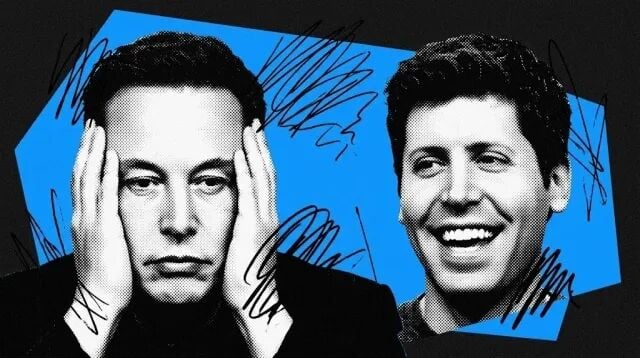
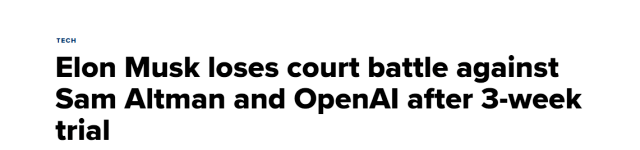
On May 18, U.S. time, a federal judge in Oakland, California, ruled to dismiss all charges filed by Elon Musk against OpenAI and its executives.
This trial, which lasted nearly three weeks, went through the disclosure of hundreds of private texts and emails, as well as several tech billionaires taking turns on the stand, before the nine-member jury entered deliberation. Everyone expected it would be a long wait.
However, they returned in less than two hours.
The jury unanimously ruled that Musk's lawsuit against OpenAI and CEO Sam Altman was time-barred. Presiding Judge Yvonne Gonzalez Rogers accepted the verdict on the spot, dismissing all of Musk's claims.
As OpenAI's legal team hugged and patted each other in celebration inside the courtroom, Musk's two lawyers, upon exiting, only said two brief words to reporters: “Appeal.”
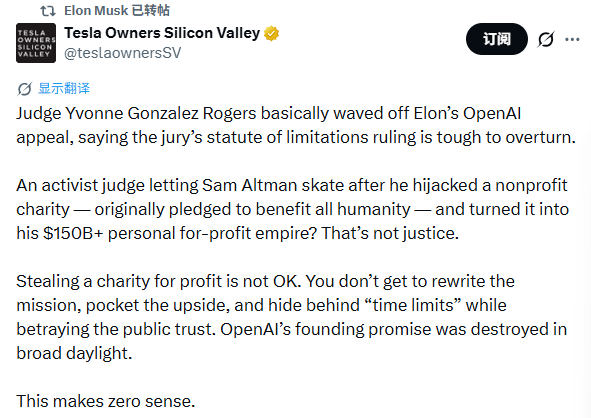
Musk himself also posted on X, calling Rogers a “radical judge,” accusing her of “simply using the jury as a shield,” and claiming the ruling created a “free license for looting the charity.”
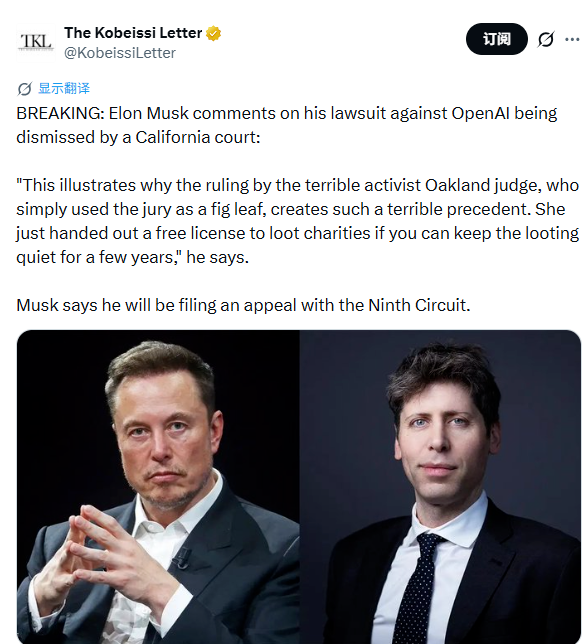
News of the ruling quickly exploded on social media, with responses sharply divided.
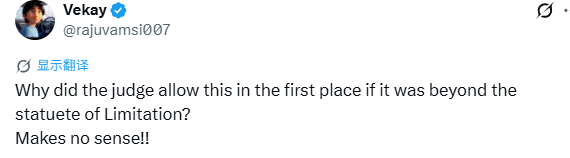
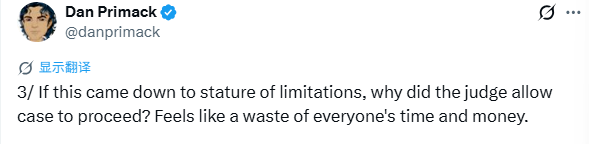
Some comments questioned the validity of the proceedings: If the case was indeed beyond the statute of limitations, why did the judge initially allow it to reach trial? This seems completely nonsensical and a waste of everyone's time and money.
Others expressed regret over the lack of a substantive ruling but were equally perplexed, believing it was quite hasty not to consider the statute of limitations before filing the lawsuit.
Musk's supporters sharply criticized the ruling, claiming it was a radical judge allowing Altman to go unpunished after he transformed a nonprofit organization originally committed to benefiting humanity into a for-profit empire worth hundreds of billions with “statute limitations” betraying public trust.
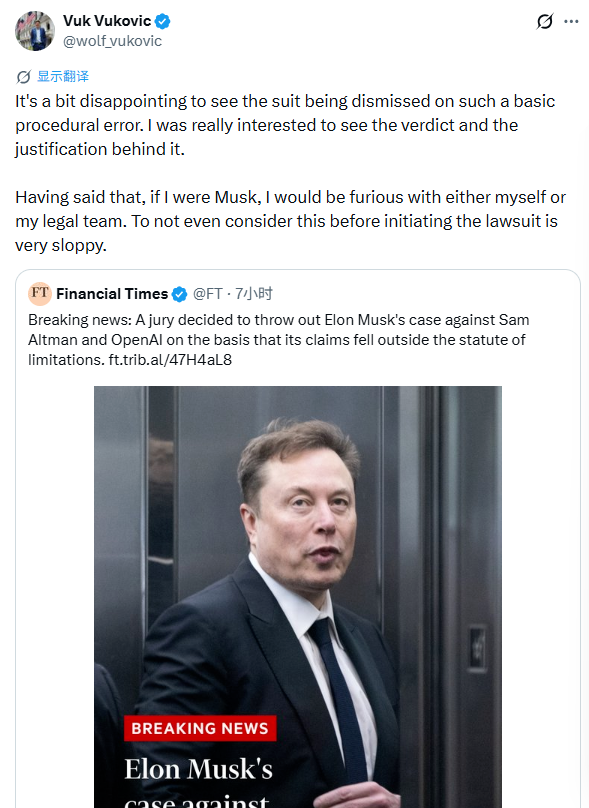
At this point, this lawsuit battle, referred to by multiple media outlets as the “worst feud in tech,” has temporarily come to a close.
01. Core Accusations Ignored
To understand why this lawsuit attracted such attention, one must go back to 2015.
That year, Musk co-founded OpenAI with Altman, Greg Brockman, and a group of AI researchers. It was registered as a nonprofit organization, with a clear mission: to develop artificial intelligence for the benefit of humanity, free from commercial interests. Musk testified in court that he donated approximately $38 million to OpenAI, based on the understanding that it would “develop AI for the benefit of humanity,” not to enrich anyone.
However, the course of events later clearly deviated from the original vision.
In 2018, Musk left the OpenAI board amid a power struggle with Altman. The following year, OpenAI established a for-profit subsidiary and began accepting investments from Microsoft. From 2019 to 2023, Microsoft invested over $13 billion in OpenAI. By the end of 2022, ChatGPT burst onto the scene, and OpenAI quickly became one of the hottest tech companies in the world.
In 2024, Musk filed a lawsuit. His core claim was that Altman and Brockman “stole a charity,” transforming a nonprofit dedicated to public interest into a profit-seeking commercial machine. He requested the court to compel OpenAI and Microsoft to return up to $134 billion of “ill-gotten gains,” remove Altman and Brockman from their leadership positions, and revoke the company’s 2025 reorganization that favored the growth of its for-profit sector.
Musk's lawyer, Steven Morrow, told the jury in closing arguments: “Five witnesses in this case swore that Altman is a liar.” Morrow emphasized that Altman’s integrity was directly related to the core of the case.
This lawsuit also involved Microsoft. Musk claimed the software giant assisted and colluded with OpenAI in violating charitable trust laws. Microsoft CEO Satya Nadella testified, revealing that the company had spent over $100 billion on its collaboration with OpenAI, aiming for a return of $92 billion. By October of last year, Microsoft's shares in OpenAI were valued at $135 billion.
02. OpenAI's Counterattack
In response to Musk's accusations, OpenAI's legal team painted a very different picture.
Their core argument was that Musk not only knew about OpenAI's plans to transition to for-profit status long ago but that he had actively promoted it, provided he could gain control. OpenAI’s chief lawyer, William Savitt, referred to this lawsuit as a “sour grapes” case in his opening statement.
During the three-week trial, OpenAI’s lawyers presented a large amount of evidence to the jury, including private texts and emails, demonstrating that Musk had known and supported the potential for-profit transition as early as 2017. The lawyers claimed Musk had even suggested merging OpenAI with Tesla at that time and had at one point proposed that he should hold 90% of the shares.
From OpenAI's perspective, Musk left because he was unable to obtain control. He filed the lawsuit because OpenAI achieved significant success after the release of ChatGPT while his own competing company, xAI, was unable to keep up.
After the ruling was made, Savitt was more direct in his comments to reporters. He said Musk’s lawsuit was “a post-factum fabrication with no relation to the facts,” a “hypocritical attempt to destroy a competitor.”
OpenAI also emphasized that the nonprofit organization hadn’t disappeared. The foundation still controls the for-profit company and now has assets exceeding $200 billion. OpenAI's lawyers argued that the restructuring was the only way to succeed in the costly competition with Google DeepMind, and Musk's donations made years ago had no restrictions.
Regarding trust issues, another OpenAI lawyer, Sarah Eddy, accused Musk and his legal team of resorting to “flowery language and irrelevant false allegations” in her closing arguments.
03. Jury Selection
In the end, the jury did not make a ruling on the core content of Musk's accusations—whether there really was “theft of a charity.”
They made a judgment on a more fundamental issue: the statute of limitations.
According to the law, the statute of limitations for claims of breaching charitable trust is three years, and for unjust enrichment, it is two years. Musk filed his lawsuit in August 2024. OpenAI's lawyers proved that Musk had been fully aware of the behaviors he later accused years earlier. The jury found that Musk did not file the lawsuit within the required time frame.
Savitt stated to reporters after the ruling: “This is not a technical decision; it is a substantive one. It shows: you filed too late; you did so because you have been treating them as a weapon against a competitor that cannot compete in the market. So we are pleased to get this result.”
Shubha Ghosh, a law professor at Syracuse University, stated that appealing such rulings is likely to be difficult. “These rulings are rarely appealed because usually there is a clear rule. The jury found that he waited too long.”
Musk clearly disagrees with this interpretation. He posted on X: “Regarding the OpenAI case, the judge and jury never ruled on the merits; they simply based it on a calendar technicality. Anyone who closely follows this case knows without a doubt that Altman and Brockman indeed profited by stealing from a charity. The only question is when they did it!”
Musk’s lawyer Morrow reserved the right for the parties to directly appeal to the judge. However, Judge Rogers expressed obvious skepticism, stating she was prepared to dismiss the appeal “on the spot.” She said at the conclusion of the trial: “There is a lot of evidence supporting the jury's ruling.”
04. The Cost Behind the Testimony
Although OpenAI won this lawsuit, the three-week trial came at a price. A large number of internal documents and witness testimonies were made public, revealing the turbulence and some embarrassing details within the world’s hottest AI company.
Most notably, testimony regarding Altman's integrity was called into question. Musk's lawyer Morrow reminded jurors in closing arguments that multiple witnesses questioned Altman’s candor, or directly labeled him a “liar.” More subtly, when Altman was asked during the trial whether he was completely trustworthy, he himself did not provide an affirmative answer.
OpenAI President Brockman’s personal diary was also exposed, in which one entry stated: “Financially, what can get me to $1 billion?” In his testimony, Brockman revealed that his shares in OpenAI are now worth nearly $30 billion.
Although Altman does not directly hold shares in OpenAI, he holds equity in other companies doing business with OpenAI, including a $1.7 billion stake in fusion energy company Helion Energy, $633 million in payment processor Stripe, and approximately $25 million in semiconductor company Cerebras Systems. Former Chief Scientist Ilya Sutskever confirmed that his equity is worth approximately $7 billion.
OpenAI did not miss the opportunity to attack Musk either. Brockman demeaned Musk's understanding of AI technology during his testimony: “Look, he understands rockets, he understands electric vehicles, but he doesn’t understand AI.” OpenAI's lawyers portrayed Musk as an unpredictable person who quickly becomes angry when things do not go his way.
The two sides also revisited the event when Altman was briefly removed from the CEO position in 2023, which Musk's side used as evidence that “even OpenAI’s board did not trust him.”
Wedbush analyst Dan Ives commented: “Although Altman's personal image and leadership have been somewhat affected, the ruling is a huge victory for Altman and OpenAI.”
05. The IPO Race
The timing of this ruling coincided with two key milestones.
OpenAI is advancing towards a potential initial public offering (IPO) that could value the company at $1 trillion, making it one of the largest listings in history.
In the past year, the company has successfully navigated a series of challenges: renegotiating its relationship with Microsoft, obtaining regulatory approval to transition to a for-profit entity, and responding to the rise of competitor Anthropic. In late March this year, OpenAI completed a $12.2 billion financing round at a valuation of over $850 billion, the largest financing in Silicon Valley history. According to the company, annualized revenue from subscriptions, licensing, and advertising is projected to exceed $20 billion by 2025.
Clearly, Judge Rogers's ruling alleviated a significant concern regarding OpenAI's IPO.
On another front, Musk's SpaceX is also racing towards the public market. SpaceX secretly submitted an IPO application in April, with its prospectus potentially being made public this week. Following its merger with Musk's AI startup xAI in February, the company reached a valuation of $1.25 trillion. Musk is expected to soon begin meeting with investors to prepare for SpaceX's IPO.
The competition between these two men is now extending from the courtroom into the capital markets.
06. What This Trial Leaves Behind
The judge's ruling concluded the main part of the three-week trial, but Musk still has cards to play.
Musk's lawsuit also includes antitrust allegations against OpenAI and Microsoft. Judge Rogers chose to break this case into multiple phases, with the antitrust portion being the next phase. However, her statements in court have already signaled: “Competition law protects competition, not individuals. And competition in this industry is fierce.” Implicitly, the prospects for this portion of the accusations do not look favorable either.
What the three-week trial really left behind was a divided portrait of the AI boom in Silicon Valley. Hundreds of private messages, executive diaries, and internal documents were made public, illustrating the trajectory of OpenAI from a cash-strapped startup to a nearly trillion-dollar company. Around this process, two voices emerged in Silicon Valley: one believing that the financial volume needed to develop powerful AI cannot b
免责声明:本文章仅代表作者个人观点,不代表本平台的立场和观点。本文章仅供信息分享,不构成对任何人的任何投资建议。用户与作者之间的任何争议,与本平台无关。如网页中刊载的文章或图片涉及侵权,请提供相关的权利证明和身份证明发送邮件到support@aicoin.com,本平台相关工作人员将会进行核查。


