As stablecoin payments gradually enter everyday consumption scenarios, the connections between crypto assets and traditional payment systems are becoming increasingly direct.
Today, on-chain assets can not only be used for investment and transfers, but are also being utilized in a wider range of consumption scenarios—ranging from e-commerce shopping, life services, to payments on social platforms, and recently the rapidly growing AI tool subscriptions (such as OpenAI, Claude, Midjourney, etc.), with the boundaries of use continuously expanding.
In the past, consumers in these scenarios often had to go through steps such as withdrawals, transfers, and account switching. However, as payment networks like Visa and Mastercard continue to integrate into the crypto ecosystem, on-chain assets can now complete payments directly within the existing system, further simplifying the usage process.
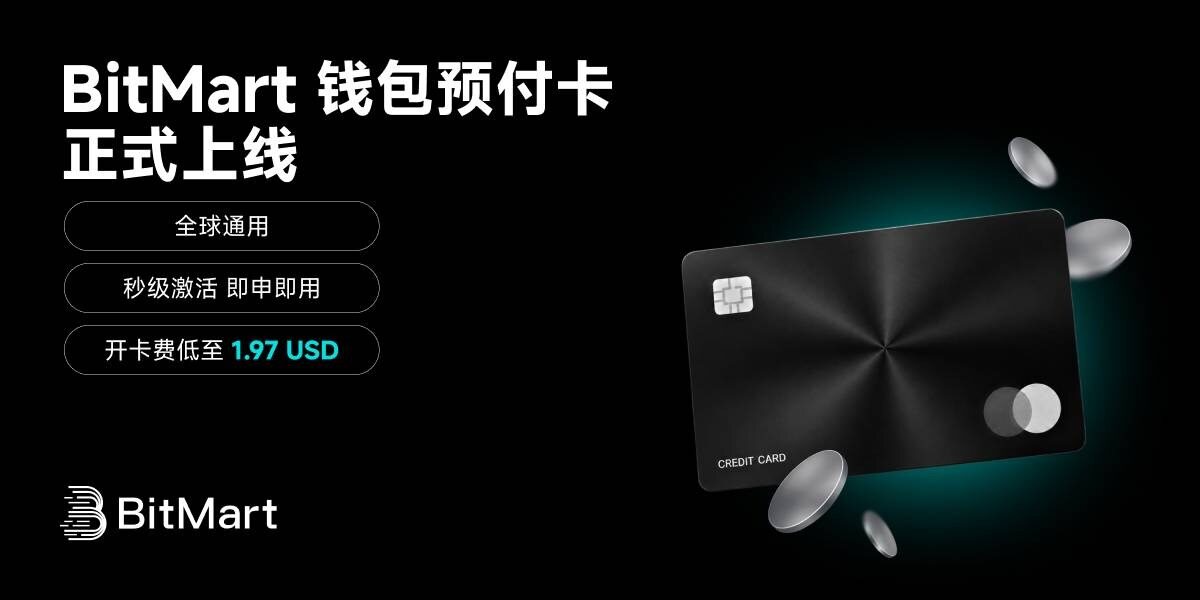
In this context, BitMart has launched the Wallet Prepaid Card feature. After users top up stablecoins into the card, they can complete purchases at global merchants without needing to transfer to a bank account, allowing on-chain assets to seamlessly integrate into everyday use scenarios.
Covering online and offline, multi-scenario consumption + AI subscriptions
BitMart Wallet Prepaid Card supports over 2 million Mastercard / Visa merchants worldwide, covering various consumption scenarios. After completing basic verification, users can directly recharge stablecoins from their wallets into the prepaid card balance for subsequent consumption. The system automatically completes fiat currency settlement during payment, making the overall usage method closer to a regular bank card and a more straightforward operation.
The prepaid card supports both online and offline use. Users can make purchases at offline merchants using the Visa / Mastercard network or link to common payment tools such as Alipay, PayPal, Apple Pay, Google Pay.
In online scenarios, the prepaid card can be used on e-commerce platforms like Taobao, Pinduoduo, Amazon, Walmart, and also supports payments on life service platforms like Meituan; it also covers subscriptions and digital services on social platforms like Douyin / TikTok, X (Twitter), Facebook, Telegram.
Putting payment capabilities into the wallet, not outside of it
In traditional structures, wallets are responsible for asset management, while payment capabilities typically exist outside the wallet. Users need to switch between different systems to complete the entire process from "holding assets" to "actual consumption." This separation is clear functionally, but not efficient in use.
The design concept of the prepaid card is to directly embed payment capabilities into the wallet system. Users don’t need to create independent accounts or transfer assets; they simply need to complete the card opening and recharging operations within the wallet to obtain a balance available for consumption. Different types of wallets (including mnemonic wallets, smart contract wallets, etc.) can use this feature, with the card being bound to the wallet address and used together with the wallet.
This structure does not introduce a new asset system but adds a layer of "spending capability" on top of the existing foundation. After changing devices or re-importing the wallet, the card can still be used normally, and the overall logic remains consistent. Compared to adding new tools, this approach extends the current experience more closely.
Regarding costs and usage thresholds, it remains simple and transparent: zero recharge fee, zero annual fee, and zero cross-border fee for physical cards.
Virtual and physical cards running in parallel, meeting different user needs
In terms of product form, the prepaid card is divided into virtual and physical cards. The virtual card is mainly aimed at online scenarios and can be used immediately after card opening, suitable for e-commerce shopping, subscription services, and various digital payment needs. For users who frequently need to link payment tools, this form is lighter and more flexible.
The physical card further covers offline consumption scenarios. Users can complete payments at merchants that support card swiping and can also perform cash withdrawal operations on supported devices, making the overall experience closer to traditional bank cards. Compared to virtual cards, physical cards have a broader scope of use, suitable for users who need offline payment capabilities.
Both card types are designed based on different usage habits and scenarios, meeting the payment needs of online and offline environments, providing users with more flexible options in a diversified consumption environment.
For many users, the significance of such products is not just to add a payment tool but to bring on-chain assets closer to everyday consumption.
About BitMart
BitMart is a leading global digital asset trading platform with over 13 million users worldwide. BitMart consistently ranks highly on CoinGecko and offers over 1,700 trading cryptocurrencies with competitive fees. BitMart always adheres to the principles of continuous innovation and financial inclusivity, committed to providing seamless trading experiences for global users. To learn more about BitMart, please visit the website, follow X (Twitter), or join Telegram for updates, news, and promotions. Download the BitMart App for trading anytime, anywhere.
Risk Warning:
Using BitMart services bears all risks. All cryptocurrency investments, including financial management, are highly speculative and involve significant loss risks. Past, hypothetical, or simulated performance does not guarantee future results.
The information above is for reference only and should not be considered as advice to purchase, sell, or hold any financial assets. All information is provided in good faith. However, we do not make any express or implied statements or guarantees regarding the accuracy, sufficiency, effectiveness, reliability, availability, or completeness of such information.
All cryptocurrency investments (including financial management) are inherently highly speculative and entail significant risks of loss. Past performance, hypothetical outcomes, or simulated data do not necessarily reflect future results. The value of digital currencies can rise or fall, and buying, holding, or trading digital currencies may involve significant risks. Before trading or holding digital currencies, you should carefully assess whether participating in such investments suits your investment objectives, financial situation, and risk tolerance. BitMart does not provide any investment, legal, or tax advice.
免责声明:本文章仅代表作者个人观点,不代表本平台的立场和观点。本文章仅供信息分享,不构成对任何人的任何投资建议。用户与作者之间的任何争议,与本平台无关。如网页中刊载的文章或图片涉及侵权,请提供相关的权利证明和身份证明发送邮件到support@aicoin.com,本平台相关工作人员将会进行核查。


