Different countries and institutions are approaching the same set of protocols in their own ways based on their respective needs.
Written by: Bipi News
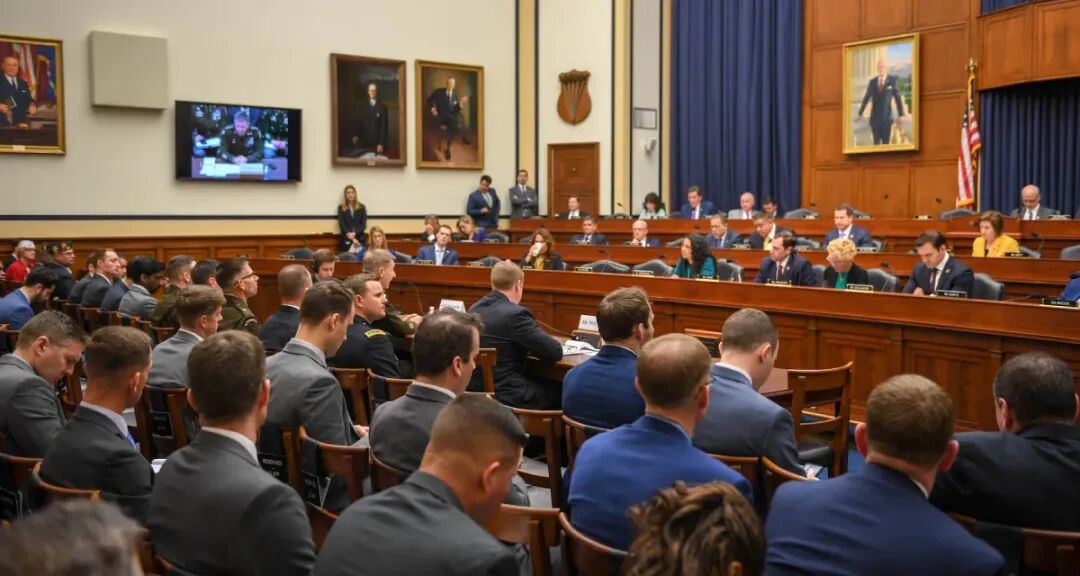
On April 22, 2026, during a hearing of the U.S. House Military Committee, U.S. Indo-Pacific Command Commander, Admiral Samuel John Paparo Jr. was asked about the national security value of digital assets and gave an unexpectedly candid response.
“Currently, we are in the experimental phase. We are running a real-time node on the Bitcoin network. We are not mining Bitcoin. We are using it to monitor and conducting multiple operational tests to leverage the Bitcoin protocol to secure and fortify networks.”
This was the first public acknowledgment by a U.S. active operational command that it has directly connected to the Bitcoin peer-to-peer network.
Key Follow-up Questions at the Hearing
The day before the hearing, on April 21, at a Senate Military Committee hearing, Paparo stated that Bitcoin demonstrates great potential as a tool of computer science. Through the proof-of-work protocol, it essentially imposes a higher cost on attackers than simple algorithmic security, and it is fundamentally a peer-to-peer and zero-trust value transfer network. At that time, he did not disclose any specific actions.
The next day, at the April 22 hearing, Republican Congressman Lance Gooden from Texas asked whether the U.S. should maintain a leading edge in the Bitcoin space like it does with gold and oil, citing comparisons with Chinese and American Bitcoin holdings.
Only then did Paparo reveal details about running nodes.
Interestingly, throughout both days of hearings, Paparo never mentioned reserve assets and did not reference prices at all. His framing was strictly about cryptography, blockchain, and proof of work—a pure computer science language rather than a financial one.
What Running a Node Means
A Bitcoin node is a computer running Bitcoin software. It synchronizes full blockchain data, independently verifies every transaction and every block on the network. It does not create Bitcoin or handle user funds; it simply checks and determines whether the data meets protocol rules—whether it transfers or accepts transactions.
Currently, there are about 15,000 to 20,000 publicly accessible full nodes globally, in addition to an unspecified number of nodes that are not visible externally and run behind firewalls. The Indo-Pacific Command's node is one of them, neither special within the entire network nor having any extra privileges.
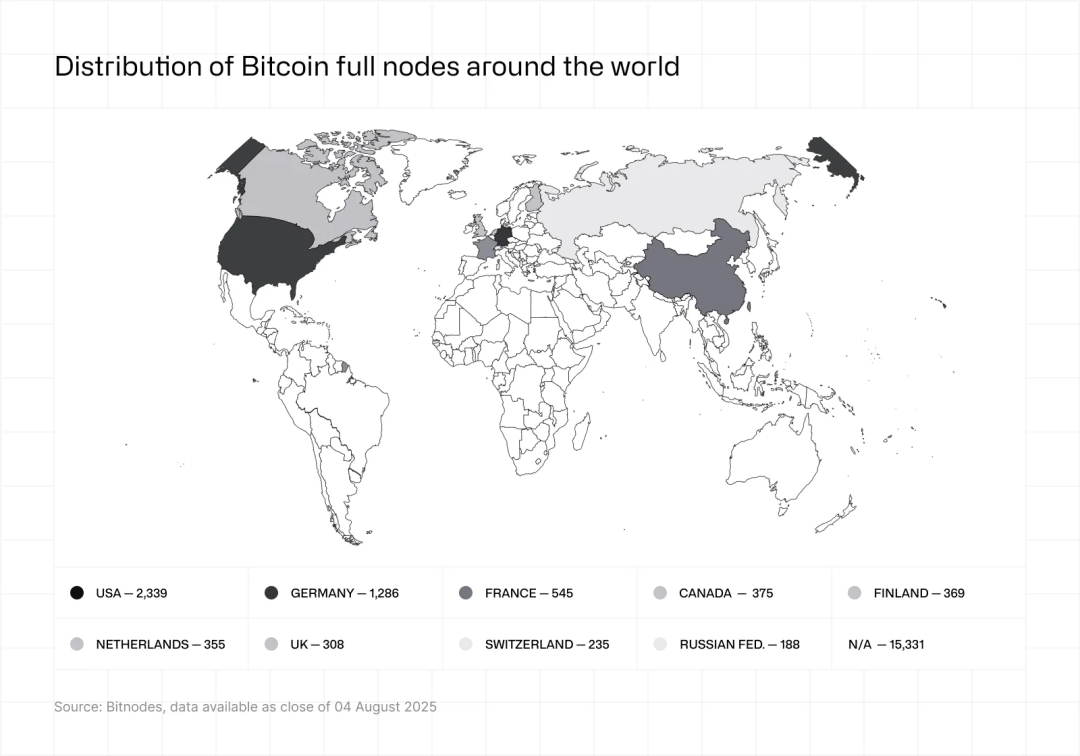
According to real-time data from Bitnodes, as of April 27, 2026, there are approximately 24,000 publicly accessible full nodes. The Indo-Pacific Command's node only provides the military with a firsthand, zero-trust data perspective, and the influence of a single node on the overall network is almost negligible.
What nodes can provide is a different kind of insight—a firsthand data perspective. Operators can see the dynamics of the unconfirmed transaction pool (mempool) in real-time, observe parts of the network topology, and access on-chain data directly without relying on any third party.
The monitoring that Paparo referred to likely pertains to this aspect, rather than conducting secondary queries through analysis service providers like Chainalysis, giving the military a zero-trust data observation point.
The boundaries of the node itself are clear. It cannot see users' real identities, cannot target or intercept any transactions, and cannot modify or control the network. The consensus mechanism of Bitcoin determines that the influence of an individual node is almost negligible. Paparo's wording is “experimental phase” rather than deployment or application.
During the hearing, he also mentioned that the PoW protocol imposes higher costs on attackers. This describes the Bitcoin network's inherent resistance to attacks, and the military is testing whether this mechanism can be adapted for military network defense design. This falls under protocol-level research rather than direct operations on the network itself.
Three Different Approaches
Within the U.S. government, there has never been a unified voice on Bitcoin.
The logic of the Treasury and OFAC focuses on sanctions and compliance, emphasizing the tracking of funding flows and closing off channels used to evade sanctions, with Bitcoin being monitored as part of this framework. The SEC’s role is in asset classification; after the approval of ETFs, Bitcoin is seen in a regulatory sense as being closer to a financial product.
The military’s recent stance represents a third approach, treating the Bitcoin protocol as a technological infrastructure for research, completely differing from the perspectives of the first two departments.
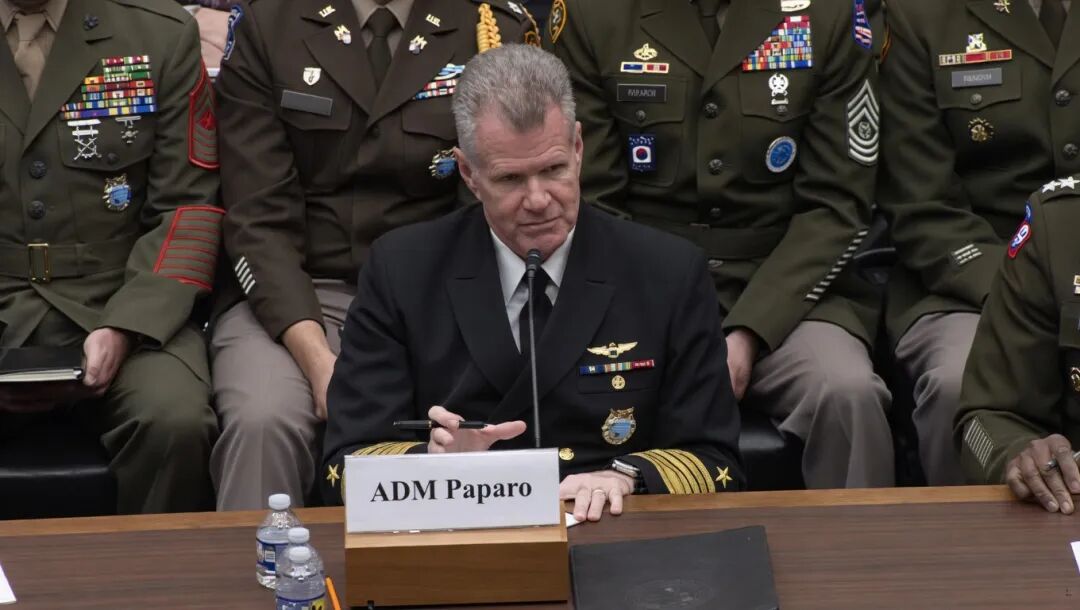
Paparo supported the GENIUS Act in the hearing and mentioned supporting anything that can maintain the global dominance of the U.S. dollar. Thus, the military's technical experiments were framed within the overall direction of U.S. financial strategy, but on the specific execution front, various departments continue to operate on their own tracks.
In China, however, the picture is different. Restrictions on trading and mining have been enforced for years, with concurrent advancements in consortium blockchain technology and the digital yuan system, leading to the development of controllable blockchain applications while excluding open crypto assets.
The divergence in approaches to digital infrastructure between the two countries also formed the backdrop for questions during this military committee hearing: should the U.S. maintain a leading edge in the Bitcoin space like it does with gold and oil?
While Paparo was testifying, in April 2026, during a ceasefire between the U.S. and Iran, Iran began levying tolls on oil tankers fully loaded transiting through the Strait of Hormuz, charging about $1 per barrel of oil, and requiring payment in cryptocurrency, with Bitcoin listed as one of the official payment options.

Reports from blockchain analysis firms TRM Labs and Chainalysis indicate that since mid-March, the Islamic Revolutionary Guard Corps has been collecting tanker fees through intermediaries, with payment methods including RMB, Bitcoin, and stablecoins, among which stablecoins have actually processed the majority of funds.
Iran's holdings of crypto assets reached about $7.8 billion in 2025. On April 24, the U.S. Treasury announced sanctions against several crypto wallets associated with Iran, leading Tether to freeze two Tron network addresses worth approximately $344 million USDT. At this stage, BTC and USDT can be seen as an extension of U.S. dollar hegemony.
In contrast to the U.S. military’s operation of nodes, this represents a completely different usage. The U.S. military is observing technology and testing protocols while Iran is using Bitcoin and stablecoins to circumvent SWIFT and the U.S. dollar settlement system, exchanging passage rights in the Strait of Hormuz for on-chain revenue.
One is entering the network, while the other is completing transactions through the network—two occurrences happening almost simultaneously that serve completely opposing purposes.
Still Evolving
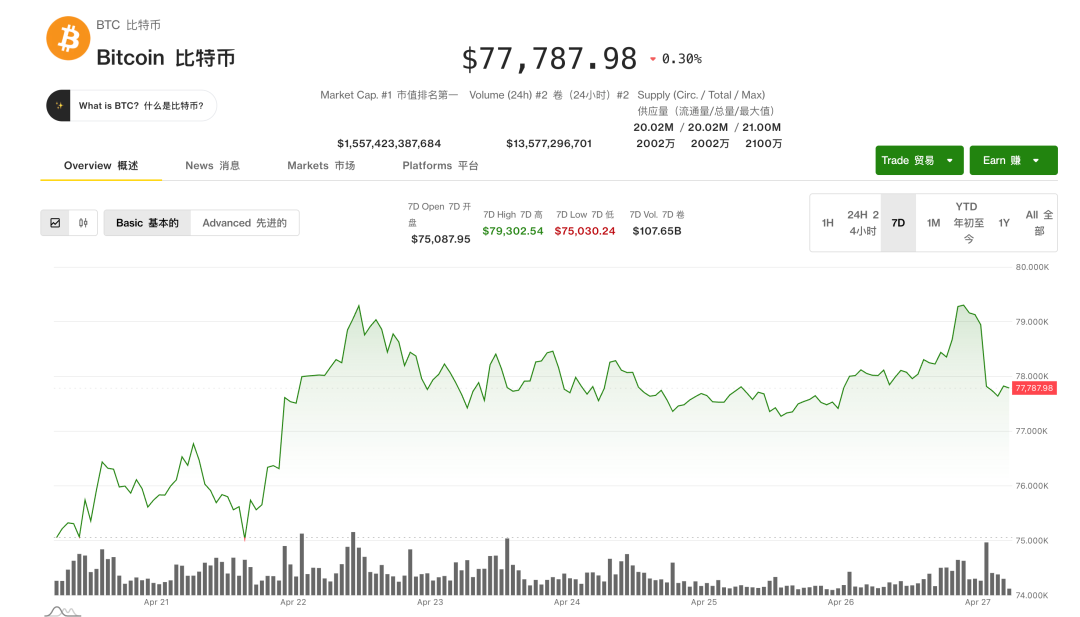
After Paparo’s hearing content was released, the reaction from the crypto community was predominantly positive, with Bitcoin experiencing a slight uptick that day, temporarily surpassing $77,000, but it did not trigger a frenzied market surge. This also indicates that market sentiment is maturing, gradually viewing such technological acknowledgment as normal.
However, the amount of information currently available is very limited. The specifics of running several nodes, for what specific tests, and whether on-chain analysis tools have been integrated, have not been made public.
Paparo has repeatedly emphasized that it is an experimental phase, while discussions about digital assets in the National Defense Authorization Act for FY 2027, spearheaded by Congressman Gooden, are still stuck in Congress.
The U.S. military has historically taken a path of first conducting military tests before spilling over into civilian use for the internet, GPS, and Onion Routing networks. Bitcoin seems to have also embarked on a similar early route.
The military is first studying it seriously as computer science infrastructure, but whether this will profoundly affect broader network warfare strategies remains to be seen.
When looking at the bigger picture, Bitcoin has appeared in increasingly unexpected contexts over the past two years: ETFs, discussions on national strategic reserves, stablecoin legislation, military committee hearings, and the tolls of the Strait of Hormuz.
Different countries and institutions are approaching the same set of protocols in their own ways based on their respective needs.
免责声明:本文章仅代表作者个人观点,不代表本平台的立场和观点。本文章仅供信息分享,不构成对任何人的任何投资建议。用户与作者之间的任何争议,与本平台无关。如网页中刊载的文章或图片涉及侵权,请提供相关的权利证明和身份证明发送邮件到support@aicoin.com,本平台相关工作人员将会进行核查。


