Compilation & arrangement: Deep Tide TechFlow
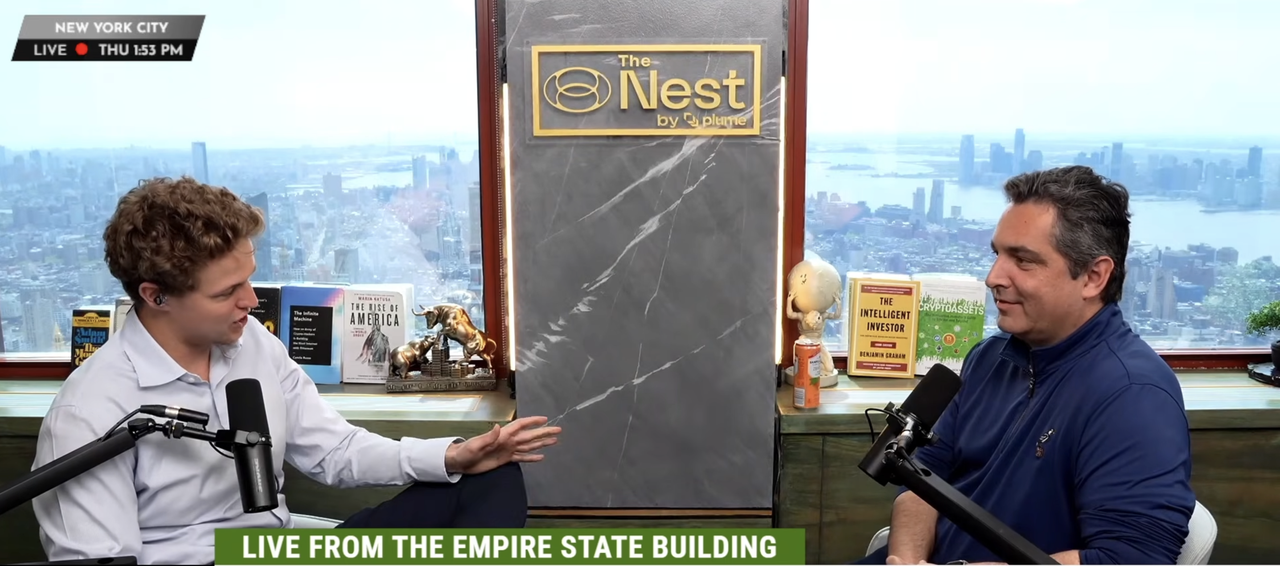
Guest: Mike Dudas, founder and managing partner of 6th Man Ventures (6MV), founder of The Block, former Venmo/Braintree/PayPal executive
Host: Robbie Klages
Podcast Source: The Rollup
Original Title: Why 2026 Will Be An Iconic Year to Invest in Digital Assets
Broadcast Date: April 24, 2026
Editor’s Introduction
In an annual interview summarizing the state of crypto VC, this episode of The Rollup invited Mike Dudas, founder of 6th Man Ventures. He believes that the crypto market is in a contradictory phase where "the fundamentals are rapidly improving, but negative events keep exploding." Meanwhile, he made a sharp judgment about the stablecoin landscape: Circle is essentially "government dollars," and refusing to freeze funds during the Bybit hacking incident is taking the wrong side of history; while Tether has undergone a transformation and far surpasses Circle in key decisions. Companies like Paxos and Bridge will become the next wave of large fintech enterprises. In addition, he revealed that Pump.fun has an annual revenue close to $400 million and believes its tokens are severely undervalued.
Highlights
Current State of Crypto VC Market
- "I am deploying funds in 2026, so I will tell you this will be the best year ever."
- "The current market lacks capital, founders, creativity, and users to an extent, but unexpected events keep hitting every week, like the next hack attack, the next regulatory bad news, or the next person to be arrested."
- "We see that excellent talents are flocking to mediocre ideas or consensus ideas at an unprecedented rate. VCs are not deploying funds because they keep receiving the same pitch."
Pump.fun and On-Chain Consumption
- "Pump.fun is still averaging over $1 million in revenue per day under the current market environment, with an annual revenue close to $400 million. You can't say this market has peaked."
- "The crypto market does not reward fundamentals. It's not that people don’t care about fundamentals; rather, we haven't figured out what kind of fundamentals are important. Tokens are too new; they mean a million different things."
- "Everyone says meme coins are done. But the marginal retail investors who cared about meme coins are not present now. Those people will come back."
Circle vs. Tether
- "Circle's strategy is clear: to be as close to central bank digital currency as possible. They are basically saying: 'Government, we stand completely with you; your rails are our rails.'
- "If North Korea is stealing hundreds of millions of dollars and you have the ability to stop it, you should stop it. Circle has taken the wrong side of history, and they will pay for it."
- "When it comes to key decisions, the gap between Tether and Circle is not that of a professional team versus an amateur team; it's the NFL professional team versus a high school football team."
Dilemmas of New Chains, Application Chains, and General Chains
- "Mega ETH seems more like an application chain to me; it will become a super application. I don't believe you can value Monad like Solana; what matters is the application revenue above."
- "Solana has not clearly expressed why I should use a general public chain for settlement. Is it to resist censorship, speed up, or reduce costs? Frankly speaking, I am less certain about this story than I was a year ago."
Stablecoin as a Service
- "Every company with users and funds should put their money into stablecoins backed by government bonds. They haven't done that yet, but they will. They won't go and get a license to issue dollars themselves. So, this presents a huge market for a few stablecoin-as-a-service providers."
AI, IPOs, and Liquidity Cycles
- "No one cares about crypto company IPOs now. Frankly speaking, they are focused on SpaceX, Anthropic, and OpenAI. AI is sucking all the oxygen out of the room."
- "The Trump meme coin is at the peak; push it two years forward to 2027, which coincides with the IPOs of these companies and the four-year cycle. During that time window, a group of people holding low-cost shares in crypto companies will gain liquidity; many of those people naturally have interest in crypto."
Current State of Crypto VC and Capital Flows
Robbie: This is our annual summary of the crypto VC state. Last year, we did it in Soho, and the market was completely different then. We previously invited Tom Dunleavy from Variant Capital, whose big picture was: VC funding is decreasing, financing rounds are declining, and quality teams are becoming fewer; the whole world has changed. But my thought at the time was: if you have funds and can identify good founders, the competition is actually less; many new founders are entering this field, with backgrounds possibly better than the previous batch. We reached consensus that the years 2025-2026 might be among the best for returns. Do you agree? What's your view on the overall condition of these founders now?
Mike Dudas:
I am a VC, I'm deploying funds in 2026, so of course, I will tell you this will be the best year ever. But LPs should pay attention.
First, the capital in the crypto VC market is ample. Several large funds have already completed fundraising, as everyone can see from their announcements. Many early-stage funds have finished fundraising but have not publicly announced it. There is a lot of capital waiting to be deployed; funding is not a problem.
The second point is: Are there good founders? The answer is yes. Are there good ideas? Of course, you can see a number of breakthrough protocols, many of which were founded years ago or even during the bear market cycle. So, there are ideas, founders, and funds; this is absolutely not a pessimistic time for crypto.
But what’s the problem? Various explosions are happening continuously: hack attacks, founders being accused and arrested for various crimes, Trump-related matters are looking increasingly suspicious, and the regulatory environment in Washington: we expected the bill to have passed or be close to passing, but it hasn’t.
So, the current situation is: the macro level of the crypto industry keeps encountering issues, but at the same time, the fundamentals are improving rapidly. There is no lack of capital, founders, creativity, or usage, but unexpected things happen every week.
Robbie: So has the competition lessened when you are making deals?
Mike Dudas:
Yes. Consensus deals are hotter than ever, prices are being driven very high, I would say irrationally high. Of course, there is always a last buyer, looking back five years from now, some of those bids may seem incredible.
The difficulty is that while there are good founders, they currently lack the confidence to take big risks. Both external changes and internal changes in crypto are happening too quickly. When we assess talent, the data we see shows that excellent talents are flocking to less good ideas or consensus ideas at an unprecedented rate.
This is why you see the speed of VC deployment slowing down. VCs have a higher perspective and can see much more, but they repeatedly receive the same pitch, making it hard to distinguish who is truly excellent. There have not been those crazy, eye-catching founders emerging, nor have there been marginal innovations that spur people to take risks. A classic example is: there are no marginal retail buyers, nor has there been a blockbuster consumer application to motivate everyone.
So, on the surface, the market lacks inspiration. But at a deeper level? The issuance of stablecoins continues to grow, global on-chain usage is astonishing; it’s just that these aren't the focus of media reports. Venture capital funds are flowing into these companies, not those that make headlines, but a large number of startups building on public chains.
Robbie: Indeed, capital flows are clearly shifting. Companies at the intersection of on-chain finance and traditional finance are attracting significant funds. The number of tokenized companies, stablecoin companies, on-chain credit, and new digital banks is exploding. What do you think are the specific investment opportunities at the boundaries of these two worlds merging? Is it about clearly compressible profit margins? Or is it about shortening settlement times?
Mike Dudas:
We are focused on what is entirely new and genuinely innovative across the entire spectrum. This is the DNA of 6MV; we prefer on-chain native things.
When Venmo first came out, people thought it was an alien product. When Polymarket first entered the Asian market, it also felt like an alien product; it took six years to become the mainstream consensus it is today. So, what we are looking for are those "alien ideas" in the markets you mentioned because we believe they will become mainstream in a few years.
The challenge is that often the way to enter these markets is still through regulatory arbitrage. For example, launching oil on Hyperliquid; it might become the most liquid market because anyone in the world can participate in trading, and market makers don’t have to worry about CFTC (Commodity Futures Trading Commission) regulations.
During the VC investment phase, things are chaotic because the CLARITY Act hasn’t been determined. Many emerging entrepreneurs are hesitant about how to take the compliant route now. Companies that took the compliant route too early in past cycles were often punished by competitors.
For example: there are now a bunch of companies doing private equity tokenization, like tokenizing shares in Anthropic. Some structures are relatively standard, while others are just direct YOLO, and the YOLO group is currently growing faster. I'm not sure and don’t believe this model is sustainable.
So this is indeed a very chaotic merging period. We still prefer to find "alien ideas," but when you talk about traditional asset classes, like stocks, structured private credit, etc., those things need backing from big brands, and our "alien model" doesn’t apply so well. Frankly speaking, at the very early stages, we haven’t seen much funding flowing into RWA issues and tokenization companies.
The Misunderstood Value of Pump.fun and Hyperliquid
Robbie: You have consistently had a strong investment direction towards on-chain consumption and have done many deals in this category, with Pump.fun being the most famous among them. I saw you tweeted that they are absorbing selling pressure like crazy, but the market is not reacting. There is a counterpoint to this investment logic circulating in the market, which is now roughly half consensus: the token launch market will not grow like the perpetual contract market, so Pump.fun's buyback or economic model shouldn't be valued like Hyperliquid because perpetual contracts may be a huge category, while the on-chain token launch market may have peaked. Why is this viewpoint wrong?
Mike Dudas:
I don't even want to debate this; it's just wrong. You can't see it now because we are in a brutal bear market. In this environment, some people are still launching tokens; Pump.fun is averaging over $1 million in revenue per day, with an annual revenue close to $400 million.
The more interesting question is, since that's the case, why doesn’t the token price reflect this two-year revenue record and nearly a year of buyback records?
I think part of the reason is the communication strategy of the team; they don’t do traditional investor relations and don’t explain to the market how strong and defensive their business is. I understand their team, but I don’t particularly like their attitude. At the same time, I also understand why they don’t do IR because the crypto market does not reward fundamentals.
To dig deeper, it’s not that people don’t care about fundamentals; rather, we haven’t figured out what kind of fundamentals matter. Stocks as an asset class have valuation systems built over decades. Bonds have a clear, predictable framework. And tokens? Very new, without standards, meaning completely different things to different people.
Therefore, fundamental investors looking at Pump.fun's token, or even at Hyperliquid's token HYPE, have no clue how to value them. The result is these things trade at a significant discount, which makes sense in a bear market, but if Pump.fun continues to deliver, when the bull market comes, it will reflexively swing in the other direction.
As for whether Pump.fun's business is sustainable, I think it is actually more defensible than many businesses. Look at Hyperliquid; the best companies in the world are trying to compete with it, and perpetual contracts are already a highly consensus opportunity. Everyone agrees that perpetual contracts are a superior way to express asset views, and prediction markets will eventually converge in this direction. But because everyone agrees, competition will be extremely fierce. It is still uncertain whether profits will ultimately land at the execution level or the market maker level.
Pump.fun is different. Everyone says meme coins are done, completely out of fashion. Anything on-chain is currently not being appreciated. And they really haven’t launched many new things publicly in the past year. But I think the reason is that the marginal users who care about their product are not in the crypto market right now, but they will come back.
Views on Hot Projects
Robbie: So you still firmly believe that the large direction of on-chain consumption will continue to grow. MegaETH (a high-performance Ethereum L2) just announced a token launch on April 30, and there are many interesting game-like primitives surrounding it. There is now an interesting dichotomy: on one side are products like MegaETH and Pump.fun that are still optimizing on-chain for retail investors, while on the other side are tokenized assets, RWA, and large institutions coming in, believing that these are the future of the industry. Only a few chains and protocols are still serving more retail-oriented on-chain users. What is your outlook on this dichotomy?
Mike Dudas:
Specifically about MegaETH, I like them quite a bit. However, the overall investment logic of the Ethereum L2 track isn't something I completely grasp, and objectively it hasn't performed very well.
I guess MegaETH will eventually become a super application, with the brand being MegaETH, and people using various things on it, generating a flywheel effect. This is somewhat similar to Hyperliquid. Hyperliquid itself is a brand, an application; the trading activities on it feed back to the underlying chain. But this is not the same positioning as general chains like Solana and Ethereum.
When it comes to new L1s, maybe there will be an L1 that makes a crazy innovation, like quantum computing, or something like Bittensor (a decentralized AI network), but we probably won’t foresee it; we will only feel it was obvious in hindsight.
For something like MegaETH, I would value it based on application layer revenue, rather than on infrastructure. I don’t know what applications are on it, but I like this team, and the community seems very active.
Monad (another high-performance EVM-compatible L1 that has received investments from top VCs like Paradigm) is similar. I am an angel investor and also really like their team; I believe they have created great technology. But I don’t believe Monad can be priced like Solana.
Robbie: Is it a matter of timing? Or is it because the era of Solana was different?
Mike Dudas:
The pitch of Monad is too similar to Ethereum and Solana; fast, cheap, and aimed at retail. Bittensor is completely different. So, I think timing is not the main factor; the differentiation in positioning is.
We invested in Plasma (a blockchain centered on stablecoin payments); I believe it will become a super application centered on stablecoins, with a supportive chain around it. This model is valuable, but it is not the same as Solana and Ethereum, and differs entirely from Bitcoin.
Robbie: Speaking of Plasma, our fund also invested in it. Tempo (another stablecoin payment company) recently collaborated with DoorDash (one of the largest food delivery platforms in the USA) to make Agent payments. A year ago, stablecoin chains were the hottest investment direction, and the heat has diminished now, but it is fundamentally different from traditional L1s. What is your investment logic regarding Plasma?
Mike Dudas:
Plasma, Arc, Tempo, don’t think of them as blockchains; they are fintech companies. In the future, they will be like PayPal, Venmo, or Stripe, about merchants, consumers, and other stakeholders choosing whose payment and settlement network to use.
Tempo is just a business; don’t think of it through the "blockchain" framework. They are companies linked with Sequoia, Paradigm; DoorDash is collaborating with them, and the team is extremely excellent. In the short term, fees are not important; the key is whether you can enable people to transact in dollars through your settlement network. Plasma follows the same logic.
Robbie: So you see these companies as payment service-type companies, earning fees and revenue based on transaction volume through stablecoin payments.
Mike Dudas:
That’s roughly it. But in the future, it will change dramatically. I, along with my partners Carl (who previously worked at Paxos and Google Wallet) and Aaron (who focuses on AI and Agent payments), are discussing how people's ways of transacting and payments will be completely different in a few months compared to six months ago. But I really don’t know what it will turn out to be; I’m not being modest.
I can make a safe judgment: AI Agents can’t complete transactions on payment systems that were programmed 60 years ago. The ways we buy things and express financial preferences will undergo fundamental changes. This is the direction Tempo is betting on, and it's also the reason we invested in Plasma.
As for general chains, I feel they are currently at a dangerous moment. By the way, we haven't mentioned Base (the Ethereum L2 launched by Coinbase). I think Coinbase is indeed struggling and seems a bit lost; I'm not quite clear on what they are doing.
Solana has also not clearly expressed: why should I use a general public chain for settlement? Is it to resist censorship, speed up, or reduce costs? Why is this important for companies or individuals in Argentina or India? Frankly speaking, I am even less certain about this story than I was a year ago.
We are in a time of extreme fluidity and chaotics; the market feels incoherent to me. You could do an interesting exercise: count how many significant partnerships Visa has announced with different L1s and L2s in the past 24 months, and how many chains MasterCard has partnered with. It’s completely a blossoming state.
Competitive Landscape of Circle vs. Tether
Robbie: Indeed, I have been in this industry for about the same length of time as you; before 2020, announcements of this magnitude would only happen once a quarter or once a year.
Regarding the recent security incidents, first, Drift (a decentralized perpetual contract protocol on Solana) was attacked, then Aave and Kelp DAO faced cross-chain attacks. The two major stablecoin issuers, Circle and Tether, have taken completely different stands. Circle did not freeze the funds transferred from Solana to Ethereum that were then washed through Tornado Cash. Arbitrum froze 30,000 ETH a few days ago, while Tether froze USDT worth $344 million related to a criminal organization linked to everything from pig butchering to human trafficking, which may also be associated with the Lazarus Group (a North Korean government-supported hacking organization).
The performance of these two companies completely contradicts public expectations. Circle is a publicly traded company, highly compliant, while Tether has always been viewed as operating in a gray area. But Circle has faced massive criticism for not freezing funds, while Tether's freezing of funds is recognized. What’s your perspective on the stablecoin landscape? If the stablecoin supply reaches $1 trillion, will Tether hold 70-80% or will it be more balanced?
Mike Dudas: Circle's strategy is clear: to be as close to central bank digital currency (CBDC) as possible. They are basically saying: "Government, we stand completely with you. We lobby, follow all compliance processes. If we don't receive a subpoena, we don’t freeze funds. Your rules are our rules." I am exaggerating a bit, but Circle, through their actions and silence, is basically telling this story. This aligns completely with their typical tone. They have never been DeFi native.
Circle will have its place. It can make government dollars. Government dollars on the blockchain provide a better experience than what I have in my bank account. Circle has won this market, but I believe it is a market much smaller than the entirety of future markets.
The reason is that the boldest people in the world, the ones creating the future, the entrepreneurs who want to serve these people will not trust Circle. They will think Circle is tied to the government. And the best people in the world, building the largest and most profitable businesses, trust their own judgment. Circle does not align with this spirit. Circle is a suit-wearing bald man, prone to letting a judge tell him what to do to shirk all responsibilities, rather than making a key decision to protect customers from hundreds of millions in losses.
Tether has had conflicts with us in the past; I need to clarify that. But today’s Tether is completely different from the one I strongly opposed seven or eight years ago. At that time, Tether's balance sheet had obvious holes and lacked transparency. They changed their organization later. But what I respect is: they are willing to make difficult decisions.
These companies need to make tough calls. Frankly, no one looks at Tether and USDT and says, "This is a decentralized asset." Once you decide to use them, the expectation should be: I might be censored, my transactions might be interfered with. Based on this premise, over the past month, when handling clear-cut cases, Tether has significantly outpaced Circle. If North Korea is stealing hundreds of millions of dollars and you have the ability to stop it, you should stop it. Circle has taken the wrong side of history, and they will pay for it.
Robbie: Is there still space for other stablecoin issuers?
Mike Dudas:
Without a doubt, there is.
First, we haven't seen any genuine successful scaling with stablecoins outside of the dollar. I believe this will happen.
Second, you will begin to see tokens that generate income steadily, like USDAI. I absolutely believe there will be alternative options outside of fiat. What excited me about Bitcoin years ago will now re-emerge in dollar-denominated forms, pegged to real-world assets. Many will also be tied to computing power in completely different ways than in the past, like GPU financing.
Robbie: The stablecoin-as-a-service sector was extremely hot 18 months ago, but now profit margins seem to be compressing, and initial capital requirements have significantly increased. What do you think these companies' future path will be?
Mike Dudas:
It will, like the blockchain market, first explode and then consolidate. The dollar stablecoin will likely move toward a 70-20-10 pattern.
The market is still unclear on whether to get the OCC license or the New York Financial Services Department (NYDFS) license. Every platform with users and funds should put this money into stablecoins backed by government bonds. But they haven't done this yet because it feels troublesome; they are still hesitating.
When they start to move, they won’t go and get the license to issue themselves. So, for providers like Bridge, Paxos, and Zero Hash offering stablecoin as a service, this is a huge market. Banks won't do this; it's not their core business. Plus, there’s still a massive, completely undeveloped currency market in the international arena.
Robbie: Will Paxos go public?
Mike Dudas:
Good question. I think Paxos is a very valuable company, I have been their advisor, and after selling The Block, I spent some time there. It’s a good business. Each cycle attracts the best partners, first Binance, then PayPal, now Charles Schwab, and there are more unannounced partners in the pipeline. As for Chad (founder and CEO of Paxos) wanting to be a public company CEO, I’m not sure.
The Impact of AI Giant IPOs on Crypto
Robbie: Kraken has already submitted its IPO application. Last year, close to the peak of the cycle, we saw a wave of IPOs. How do you view the significance of crypto companies going public for the industry? We already have ETFs and various products; why do we need more public companies?
Mike Dudas:
In a market that attracts attention, this would be great. When Coinbase, Circle, and Kraken go public, people will say, "What else is there to invest in? Alpha is on the chain."
But it’s not just a crypto issue; SaaS and consumer tech are the same. AI is sucking all the oxygen out of the room. No one cares about crypto IPOs. They are focused on SpaceX, Anthropic, and OpenAI.
But what could be beneficial for crypto is that after these companies go public, many who hold low-cost shares will gain liquidity, and these people overlap significantly with the crypto community. There is a lot of crossover between early crypto and early AI; of course, some of these people are now in prison, not just SBF.
These companies will go public next year. I can’t tell you whether stock prices will rise or fall, as geopolitical variables are too significant. But the key is: crypto companies' market caps are much smaller than those of AI giants, and the amount of capital needed to leverage on-chain assets is much smaller.
Robbie: What do you think the timeline looks like?
Mike Dudas:
The last cycle ended sooner than I expected; I thought it would last until 2026, but it didn’t. The time when Trump was elected was roughly the peak; the Trump meme coin came after that. Push it two years forward, and it's 2027, just in time for the IPOs of these companies and the four-year cycle time window.
I think now is a rather constructive period. What is shocking is that despite so many negative news, prices haven't fallen much. Frankly, I am surprised by this.
Interestingly, the industry is engaging in self-rescue in ways that some believe are unhealthy. Tether supports drift's recovery process, Arbitrum freezes assets. We can discuss whether these practices are right or wrong, but they are stabilizing mechanisms. Most of the issues this cycle have occurred on-chain, but those centralized entities that messed everything up last cycle are instead stabilizing the on-chain ecosystem. The merger you’re speaking of is indeed working from a certain perspective.
So, will the value ultimately belong to centralized entities or on-chain entities? Regardless, I think in hindsight, people will say this period has seen the widest institutional adoption in the industry’s history. The bill has passed, and we’ve weathered the storm of AI IPOs. While crypto has been sidelined during everyone’s mad chase for AI giant IPOs, by Q4 at the latest, once the AI giants go public, crypto may just be at a low point.
For a while, crypto will be completely ignored, and I accept that. Then the bull market logic is: many people with interest in crypto will gain liquidity. Another, more long-term bull market logic is whether the emergence of AI Agents and new trading methods means that the crypto market will be much larger than it is today. The answer is likely yes.
About Vault
Robbie: One last question. I’ve discussed the research you are doing regarding Vault (on-chain asset management vault) with Carl. The recent attack incident at Aave (the largest decentralized lending protocol) occurred within its asset pool lending model, involving defects in Aave’s curation model, the security of Layer Zero, and the entire setup of Kelp DAO. This pooled lending model has affected all types of users. Vault is very friendly to institutions because they want a way to express credit on-chain and initiate new types of credit or RWA products that are manageable and controllable. Morpho (a decentralized lending optimization protocol) has become a de facto Vault layer. What is the specific thesis you are researching for Vault?
Mike Dudas:
The core issue with Vault is that it is quite challenging for ordinary people, even institutions, to figure out what to invest in on-chain, what risks exist, how to evaluate various assets, and how to rebalance over time. Although the concept of Vault has been hot for 18 to 24 months, the level of specialization is far from adequate.
Morpho’s approach is very hands-off. It pushes all difficult decisions onto those listing assets on its platform; I wouldn’t say Morpho is solving problems; more accurately, it is shifting responsibility.
The portfolio company we invested in, Upshift, just announced a partnership with Securitize (a leading compliant tokenization platform) to perform NAV (net asset value) analysis for each Vault on the platform, allowing institutional investors to gain confidence: not only Upshift’s valuation but also the professional valuation done by an independent third party.
This is not a passive response to the recent attack incident. Everyone is clear that to attract more dollars on-chain, Vault is a mechanism: to choose different asset combinations together and start creating structured products. But the last month and a half has served as a wake-up call to everyone that the risk management assessment of asset selectors must be upgraded.
In the Aave case, the exchange rate between rETH (Rocket Pool's liquid staking ETH) and ETH was completely unacceptable relative to its underlying support assets. We are no longer in the phase of shifting blame; this is a series of poor decision-making chains.
What I see now is that the pace of new asset innovation will significantly slow. You will still see large-scale growth, but you won't see anyone opening a $300 Vault with a weak asset, little collateral, and back-end behavior that isn't standardized.
I am very optimistic about the Vault structure, but I am very pessimistic about past behaviors.
免责声明:本文章仅代表作者个人观点,不代表本平台的立场和观点。本文章仅供信息分享,不构成对任何人的任何投资建议。用户与作者之间的任何争议,与本平台无关。如网页中刊载的文章或图片涉及侵权,请提供相关的权利证明和身份证明发送邮件到support@aicoin.com,本平台相关工作人员将会进行核查。


