Summary
In April 2026, the global cryptocurrency market presented structural differentiation and phase recovery amid the interplay of three variables. After the US-Iran temporary ceasefire agreement took effect on April 9, significant disagreements emerged on the first day—while the US claimed the Strait of Hormuz was "fully open," Iran restricted daily transit to about 10 vessels (less than 8% of pre-war levels), and negotiations broke down on April 12, leading to market fluctuations. On April 21, Iran announced a return to negotiations, causing Bitcoin to rebound above $76,000; however, the ceasefire deadline approached again on April 22. From the Federal Reserve, Trump threatened to remove Powell from office, and Kevin Walsh's nomination hearing took place, revealing clear hawkish-dovish divisions within the committee. Meanwhile, Morgan Stanley's spot Bitcoin ETF (MSBT) was launched, raising over $100 million in its first week with a fee of only 0.14%, marking Wall Street's official inclusion of Bitcoin into standardized products. Under the influence of these three variables, Bitcoin exhibited unique resilience in April, but the difficult technical pattern and unresolved geopolitical games made it hard for the market to achieve a directional consensus in the short term.
1. Ceasefire Game: The "Open" and "Not Open" of the Strait of Hormuz
In April 2026, the fate of the Strait of Hormuz once again became a core variable disturbing global risk assets. On April 9, the US-Iran two-week temporary ceasefire agreement officially took effect, leading to an optimistic reaction in global markets: Brent crude oil sharply fell from high levels, with Bitcoin briefly surpassing $71,000, and $427 million in cryptocurrency shorts being forcibly liquidated within 48 hours. However, the "honeymoon period" of the ceasefire lasted only a few hours.
There were fundamental disagreements in the ceasefire agreement's content. The Trump administration announced that the Strait of Hormuz was "fully open"; Iran, on the other hand, promised that vessels must "coordinate with the Iranian armed forces" to pass, limiting daily transit vessels to about 10, compared to over 130 before the war, with a restoration ratio of less than 8%. Hundreds of vessels remained stranded in the area, in a state of factual entrapment.
More concerning is that Iran is advancing a "toll fee" for passing vessels, with a rate of about $1 per barrel of oil, requiring payment in cryptocurrency. This move not only reshapes the global energy transport cost structure but also signifies that Bitcoin is embedding itself into the international energy trade settlement system in an unprecedented way. Analyst Terry Haynes from Pangaea Policy commented, "Regardless of whether an agreement is reached, this will become the new normal."
On April 12, the third round of negotiations in Islamabad declared a breakdown, with both sides leaving the table. As a result, Bitcoin dropped to around $69,000, and the total market capitalization of crypto evaporated by over $100 billion in a single day. However, on April 17, the situation turned again, with Bitcoin surging to a high of $78,000, as nearly 170,000 people faced liquidation amid severe volatility, totaling over $700 million, fully exposing the current market's high leverage and volatility characteristics.

On April 21, Iran announced it would send representatives to participate in the second round of talks, causing Bitcoin to rebound above $76,000. However, as the ceasefire deadline approached on April 22, both sides issued hardline signals: the Iranian Defense Ministry spokesperson emphasized that the opening was "temporary"; US Central Command leader Cooper stated that the blockade would "continue until the president orders its lifting." US stocks dropped significantly, with the Dow Jones down over 290 points, and the crypto market was pressured in tandem. Whether the ceasefire agreement can be extended will be the key external variable for the crypto market in the coming weeks.
2. The Federal Reserve Leadership Crisis: Policy Independence Facing a "Trump Moment"
In April 2026, the Federal Reserve is experiencing one of the most complex political pressure moments in modern history. On April 15, Trump made it clear that if Powell did not resign voluntarily by the end of his term in May, he would "have to" remove him from office. This declaration directly impacted market expectations for the Fed's policy independence, causing the dollar index to soften in the short term, while gold briefly rose above $4,800 per ounce.
The Senate hearing for Kevin Walsh's nomination as Fed chairman was held on April 21. Walsh, who holds over $100 million in fund investments, is seen as a candidate more inclined to cooperate with Trump's interest rate cut demands. Senator Tillis announced he would obstruct the nomination on the condition of "canceling the criminal investigation into Powell," casting a political shadow over the entire succession process.
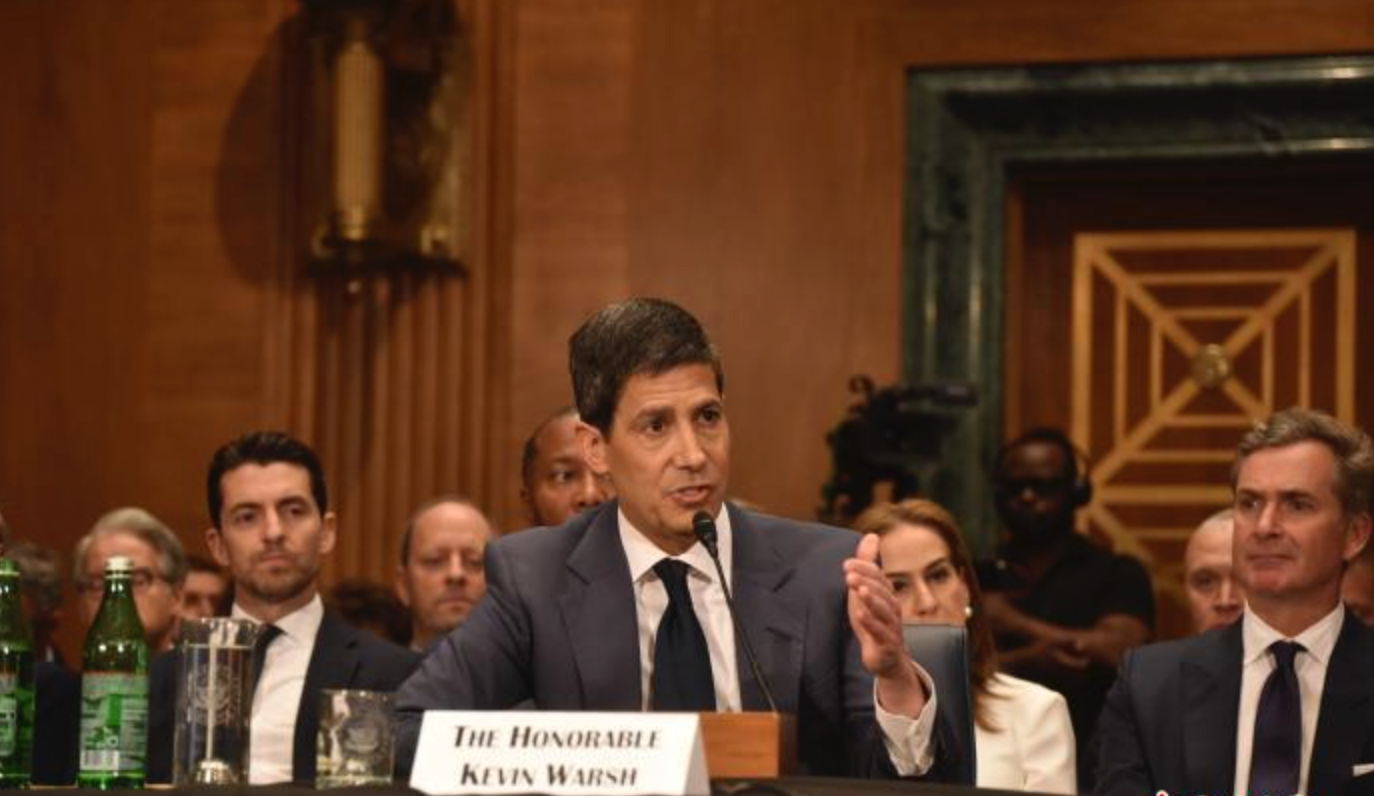
Internal policy divisions within the Fed are also evident. Hawkish Daly warned that if Middle Eastern energy shocks drive inflation further, rate hikes could not be ruled out; Chicago Fed President Goolsbee believes the timetable for rate cuts may be delayed until 2027; dovish board member Milan thinks there should be 3 to 4 rate cuts this year, stating "there's no reason to continue waiting." Neutral member Williams indicated that current policy is "well positioned" and does not require urgent adjustment. The Fed's April Beige Book showed that most districts maintained slight to moderate growth, but energy and fuel costs rose "significantly" across all 12 districts, and businesses generally reduced hiring and capital spending.
In terms of market pricing, a Bank of America survey showed that 58% of institutional investors still expect the Fed to cut rates within 12 months; CME FedWatch data indicated that the probability of a cut in September rebounded from 40% at the end of March to about 55%. For crypto assets, the tension of "anticipating cuts but facing tightening in reality" means the narrative of liquidity recovery still exists, but the timing is likely to be more delayed than previously expected. The uncertainty of the Fed leadership transition will make this process full of variables.
3. Institutionalization Acceleration: The Historic Significance of Morgan Stanley MSBT
On April 8, Morgan Stanley's spot Bitcoin ETF (MSBT) officially listed on NYSE Arca, becoming the first large commercial bank in the US to independently issue a Bitcoin spot ETF product, with a fee of only 0.14%, setting a new low for mainstream Bitcoin ETF fees. This event signifies that Wall Street's core traditional power is officially including Bitcoin into its standardized product system.
On its first day, MSBT recorded an inflow of $34 million, ranking it among the top 1% of ETF issuance performances in history according to Bloomberg ETF analysts. By April 17, MSBT had achieved continuous net inflows for 8 trading days, cumulatively attracting over $133 million, with an average daily net inflow of about $16.6 million. Morgan Stanley has approximately 16,000 wealth management advisors, managing a client base with assets under management of up to $9.3 trillion, and Bloomberg analysts predict that MSBT's first-year AUM will reach $5 billion.
The success of MSBT is the result of multiple structural forces overlapping. BlackRock's IBIT has attracted over $100 billion in asset management since its launch in January 2024, demonstrating the genuine existence and considerable scale of institutional-level Bitcoin ETF demand, providing market validation for later entrants. Morgan Stanley has a mature wealth management distribution network, effectively opening a new distribution channel entirely different from BlackRock's institutional clients. From a regulatory perspective, the trend of the SEC approving multiple bank-based institutions to participate in the Bitcoin ETF market is becoming increasingly clear, with the probability of similar products from major banks like Goldman Sachs and Citigroup significantly rising.
On-chain data also confirms the acceleration of the institutionalization process. Large wallet addresses holding over 10,000 bitcoins saw net inflows in early April for the second time in 2026; Bitcoin market financing rates leveled off to slightly negative values, confirming the current market is driven by spot trading rather than leveraged speculation, conveying the typical institutional-led market characteristic of "large holders accumulating at lower prices while retail investors remain cautious."
However, Ethereum's situation forms a stark contrast with Bitcoin. In April, the Ethereum spot ETF continuously recorded net outflows, with BlackRock's ETHA seeing nearly $70 million in single-week outflows during a specific week, while the price fluctuated within the range of $2,100 to $2,400. According to CryptoQuant data, over 75% of Ethereum held on Binance is leveraged, and this pattern of high leverage combined with capital outflows makes Ethereum more susceptible to cascading liquidation pressures when market sentiment worsens. The continued divergence between Bitcoin and Ethereum in terms of institutional capital flows reflects two distinctly different asset positioning paths—the former is becoming "digital gold," while the latter is still in the long process of building a "digital asset technology infrastructure."
4. Bitcoin's "Dual-Driver" Pricing: The Overlapping Identities of Risk Assets and Scarce Assets
The market trends in April provide a valuable stress test for understanding the essence of Bitcoin as an asset. When the US-Iran negotiations broke down on April 12, Bitcoin fell synchronously with the Nasdaq; however, following the ceasefire news on April 9, Bitcoin rebounded along with crude oil. This series of highly correlated price movements again confirms that Bitcoin at this stage still resembles more of a "risk asset" than a mature "safe haven asset." Yet when extending the analysis to allow for monthly dimensions, Bitcoin's performance has shown remarkable resilient differentiation from traditional risk assets.
By mid-April, Bitcoin had accumulated a monthly increase of about 3% to 5%, while the Nasdaq Composite Index declined over 3% during the same period, with the S&P 500 similarly underperforming. During this round of geopolitical shocks, gold prices fell sharply from a high of $4,800, dropping below $4,780 per ounce, while Bitcoin, despite experiencing several significant fluctuations, remained above its quarterly opening level. This comparison illustrates that while Bitcoin has yet to become an institutionally agreed safe-haven tool, its supply-demand structure has been solidified by the institutionalization process of ETFs, forming a unique bottom support distinct from traditional risk assets.
From a technical analysis perspective, Bitcoin in April exhibited typical characteristics of "range oscillation + directional probing." The core volatility range maintained for about two months is between $62,000 and $75,000, with the lower boundary of $62,000 corresponding to a support level tested twice since February; the upper boundary of $75,000 has repeatedly constrained upward growth. From the moving average structure, the 50-day and 200-day EMAs crossed negatively in November 2025, indicating that the medium-term trend remains within a structural downtrend channel. However, since April, Bitcoin's volatility has dropped to a two-month low, and this low-volatility state often indicates larger directional fluctuations, prompting investors to prepare for dual-direction responses.
On a more macro level, Iran's Bitcoin toll fee policy carries profound structural implications. Requiring payment in cryptocurrency for passing the Strait of Hormuz essentially embeds Bitcoin into the global commodity trade settlement system, albeit currently on a limited scale. If this precedent continues, its long-term driving effect on Bitcoin's transformation from "speculative asset" to "settlement tool" may surpass any influence that individual institutional ETF products can bring.
In summary, Bitcoin's current pricing logic has evolved from purely macro-driven to a composite pricing system dominated by three elements: "macroeconomic liquidity expectations + institutional supply-demand structure + geopolitical risk premium." Short-term prices are highly sensitive to macro events, but the mid-term bottom is being persistently raised by institutional accumulation actions. The halving effect is still being released slowly; the supply compression post-halving, along with the growing demand from ETF channels, constitutes the "hidden floor" of Bitcoin's macro pricing logic.
5. Outlook: Three Scenario Simulations and Key Observational Nodes
Considering the three main lines of geopolitical, monetary policy, and institutional capital flows, the current cryptocurrency market may evolve along the following three scenario paths.
Scenario 1: Ceasefire continues and a change in the Federal Reserve leadership is realized, Bitcoin challenges $80,000. If the ceasefire agreement is successfully renewed on April 22 and US-Iran negotiations enter a formal framework, with the transit volume of the Strait of Hormuz gradually returning to over 50% of pre-war levels; if Walsh is successfully confirmed by the Senate and sends a dovish signal, market expectations for 2026 rate cuts will shift from "0 to 1 time" towards "2 to 3 times," reactivating the narrative of liquidity easing. In this scenario, Bitcoin is likely to test the psychological level of $80,000 in the short term, with JPMorgan even providing a long-term target range of $170,000 to $240,000 based on Fibonacci extensions. The core observation indicators of this scenario include: the announcement time of the ceasefire renewal, the Senate's voting results on Walsh, and weekly capital flow data for BlackRock's IBIT and Morgan Stanley's MSBT.
Scenario 2: Ceasefire breaks down, the situation escalates again, Bitcoin retreats to the $65,000 range. If the parties cannot reach a consensus on extending the ceasefire after it expires, and Iran announces a return to the blockade of the Strait of Hormuz, oil prices return to the $110 to $120 range, sharply raising global inflation expectations. The Federal Reserve will be forced to signal stronger maintenance of high-interest rates, and market pricing for 2026 rate cuts will be completely cleared. Bitcoin may drop below the $70,000 support level, testing the $65,000 to $62,000 range, where the passive liquidation of high-leverage positions could trigger a short-term liquidity crisis. Key aspects to focus on in this scenario include: the number of oil tankers departing from Dubai ports, global tanker freight rates, and whether US gasoline prices break through the critical psychological level of $4 per gallon.
Scenario 3: Geopolitical tensions ease but stagflation shadows continue to suppress, Bitcoin maintains range oscillation. If the ceasefire continues but stubborn core inflation leads the Fed to delay its first rate cut until September or even later, liquidity suppression will counterbalance the improvement in risk appetite brought by geopolitical easing. The most likely trend for Bitcoin is to maintain a wide oscillation between $62,000 and $78,000, gradually narrowing volatility while waiting for the next catalyst. For institutional investors with medium- to long-term layouts, this scenario may be a relatively comfortable accumulation window: the lower boundary of the range provides a clear entry opportunity, while the continued inflow of ETF channels provides support力上扬。
Beyond these three scenarios, the subsequent evolution of Iran’s Bitcoin toll fee policy is a structural variable worth separate attention. If this policy is emulated by other sanctioned countries, it will create unexpected use scenarios for Bitcoin in genuine global trade settlement, potentially giving rise to "Bitcoin settlement demand" trends independent of traditional macro narratives. This potential variable has yet to be fully accounted for in mainstream pricing logic and warrants continuous tracking.
6. Conclusion: Standing at the Intersection of Institutionalization and Geopolitical Games
In April 2026, the cryptocurrency market stands at a historic crossroads. The successive entrance of institutional products like Morgan Stanley's MSBT marks a profound evolution of Bitcoin's foundational holder structure from "crypto-native" to "global mainstream," providing Bitcoin with unprecedented price bottom support and legitimacy. However, simultaneously, the fragility of the US-Iran ceasefire agreement and the political pressure on the Federal Reserve's policy independence create a highly uncertain short-term macro environment, where any single event could trigger severe market fluctuations.
Understanding the key to this phase of the cryptocurrency market lies in distinguishing "noise" from "signal." The back-and-forth of geopolitical events, the hawk-dove battle among Fed officials, and massive daily liquidation data are essentially noise—they impact prices in the short term but cannot change the mid-term trend direction indicated by the accelerated institutionalization signal. Institutional investors are casting their votes through actions: regardless of whether the ceasefire agreement continues, whether Powell remains in office, the net inflow data of spot Bitcoin ETFs has shown high stability, indicating that the long-term allocation logic of institutions toward Bitcoin does not depend on the specific results of any single macro variable.
For investors seeking certainty in this complex environment, the most important discipline is: not to use short-term geopolitical events as the sole basis for position entry and exit, but rather to incorporate them into a broader framework of "institutional capital flows + macro liquidity expectations" for comprehensive assessment. The long-term support near $62,000 for Bitcoin is well grounded in fundamentals, while breaking through $80,000 requires positive catalysts from the three dimensions of geopolitics, currency, and institutions. Until all three conditions are simultaneously met, maintaining patience and position flexibility will be the core strategy to navigate volatility. The geopolitical fog will eventually dissipate, and institutional footprints will not cease, as Bitcoin's historic leap is gradually becoming a visible reality, step by step.
免责声明:本文章仅代表作者个人观点,不代表本平台的立场和观点。本文章仅供信息分享,不构成对任何人的任何投资建议。用户与作者之间的任何争议,与本平台无关。如网页中刊载的文章或图片涉及侵权,请提供相关的权利证明和身份证明发送邮件到support@aicoin.com,本平台相关工作人员将会进行核查。


