Author: iwillpat
Translation: Jiahua, ChainCatcher
Since the era of "Rollup as a Service" (RaaS) began, the outcome has been predetermined. This is a precursor to the execution layer falling into a death spiral and commodification.
What I mean is that general-purpose L1 tokens will continue to trend towards zero, and possibly without exception. I will try to explain why, and how I would change course if I were an L1 operator.
The main factors driving L1 failures are as follows: linear token releases, failed value propositions, poor management, and "leadership" in the industry.
I will briefly elaborate on these points—these are just personal opinions, not conclusions.
The current form of linear staking release has some benefits, such as distribution through liquid staking ("My 7% annual yield!"), but it has failed in several key aspects.
Delegated Proof of Stake (DPoS) makes it easy for those so-called "decentralization purists" to engage in network security, but it does not adequately incentivize insiders, users, and developers. At best, it only incentivizes people to hold tokens, doing nothing to create any actual value.
I have heard the classic argument about PoS: large validators have economic motives not to dump on you. But that hasn't stopped them from selling off every possible unlock amount and block reward.
This leads to my next point: the reason they are selling is that L1 tokens have no long-term value proposition.
Easily Punctured "Tissue"
The arguments regarding "Gas tokens" and "governance" are clichéd and unconvincing—like two Bounty tissues, dissolving upon contact. The value of network tokens depends on what you can buy with them.
Therefore, the goal of all blockchain teams should be to promote their tokens as widely as possible for currency circulation. In the pursuit of higher TPS and lower block times, the industry's vision of "peer-to-peer electronic cash" seems to have gotten lost.
To put it bluntly: throughput, TVL, and low latency will not provide any value to tokens. Liquidity and usage will.
The next point is the most straightforward and the most painful: blockchain "labs" (and various foundations).
Dumping after lock-up periods, discount OTC trades, shockingly high operational expenses, incentive programs that attract hot money, hiring "KOLs"... we can easily name a few.
Ultimately, every penny that Labs spends is a tax levied on token holders. Unless that Lab generates revenue through some service, first-party wallet, or application, it is surviving by selling tokens.
This in itself is not a bad thing—it provides valuable services through engineering resources, browsers, and APIs. But if the Labs do not create net new buying pressure for the tokens and expenditures are unsustainably rising, it will slowly bleed to death.
One of the primary goals of Labs should be to build the network into an independent, permissionless system through "hands-off testing." Eventually, business expansion should be community-driven, and the network should have its own "CTO" in spirit.
Achieving this does not require 400 employees; 30-40 excellent individuals along with those developing first-party applications and services would suffice.
Finally—after saying all this, I will share my "solution"—cryptocurrency has been misled by many large capital allocators and advisors.
Setting aside FTX, Celsius, and Luna, we have been force-fed by the largest players in the industry: short-term narratives, excessive leverage, "maximizing extraction," like force-feeding a sad and bloated retail turkey.
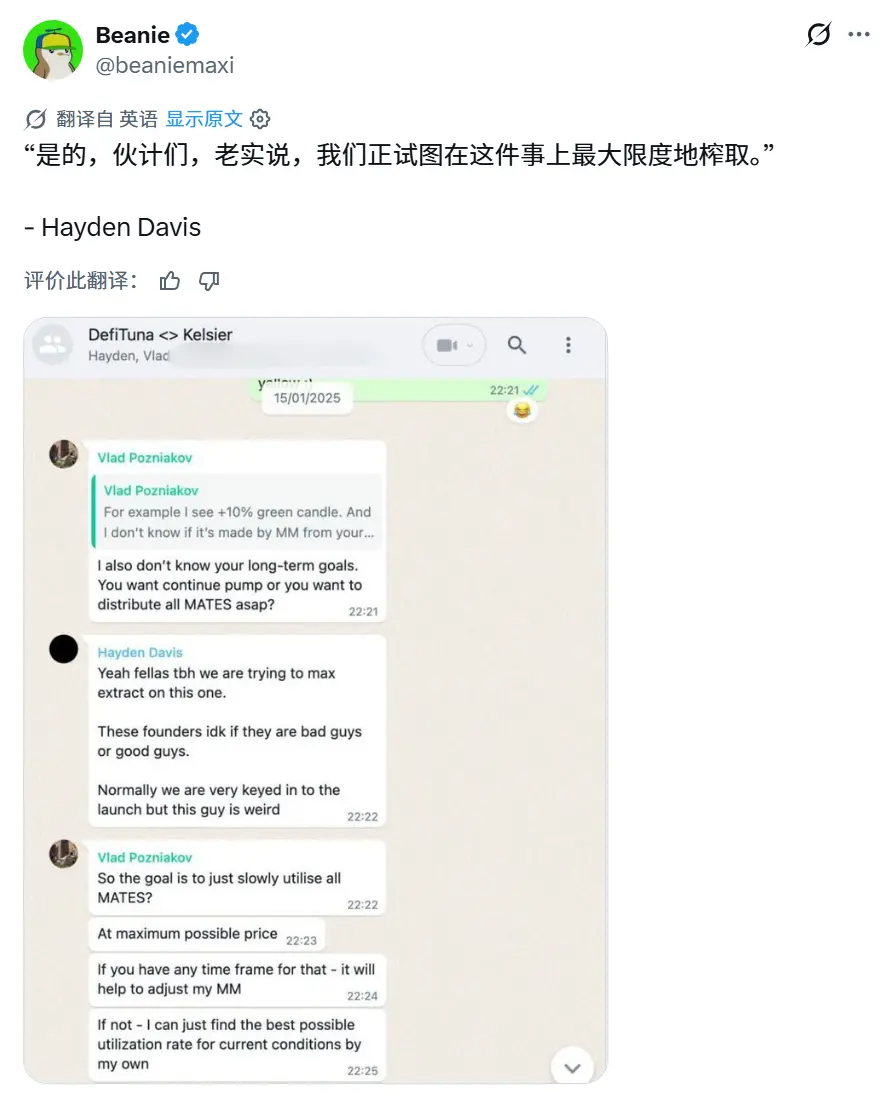
Promoting TPS over smart contract security, investing in the 10th general blockchain, raising funds at absurd valuations, gathering far more than actually needed funds, claiming non-existent security advantages... these are all typical symptoms of severe crypto insanity.
Bold bets on the direction of industry development is one thing—like privacy coins, MoveVM, tokenized IP, decentralized social.
But burning money into another extremely foolish trend or short-term money-grabbing game is entirely another matter: RaaS, data availability, any L1 that issues tokens at unicorn valuations without a product, offering infrastructure solutions for non-existent or unrevenue-generating crypto problems...
(Disclaimer: I do not consider myself an investment genius, but I understand basic math. Buying pressure must exceed selling pressure.)
Where to Go?
Next, I will briefly discuss where the industry should head.
We need new L1 token models, as well as a completely different approach to crypto VC. The current paradigm of "low circulation, high FDV" can still function when there is more capital inflow at lower valuations.
But retail investors are no longer willing to pay a thousand times valuation in the seed round at TGE, nor do they want to bear the burden of massive unlocks and insider staking rewards after 12 months.
L1 does not need hundreds of millions in funding to launch the mainnet—unless I am missing something. It needs only the funding required to build the platform and go to market, after which it can continue to raise funds; everyone will benefit.
Token unlocks should be tied to milestones such as CEX liquidity, payments, and DeFi lending, while on-chain governance should be given higher priority. Foundations should maintain at least a minimum level of transparency with regard to their balance sheets, expenditures, and investments.
Retail investors do not want to pay for network security (i.e., validator rewards). Ultimately, the network should be self-sustaining without relying on any staking rewards.
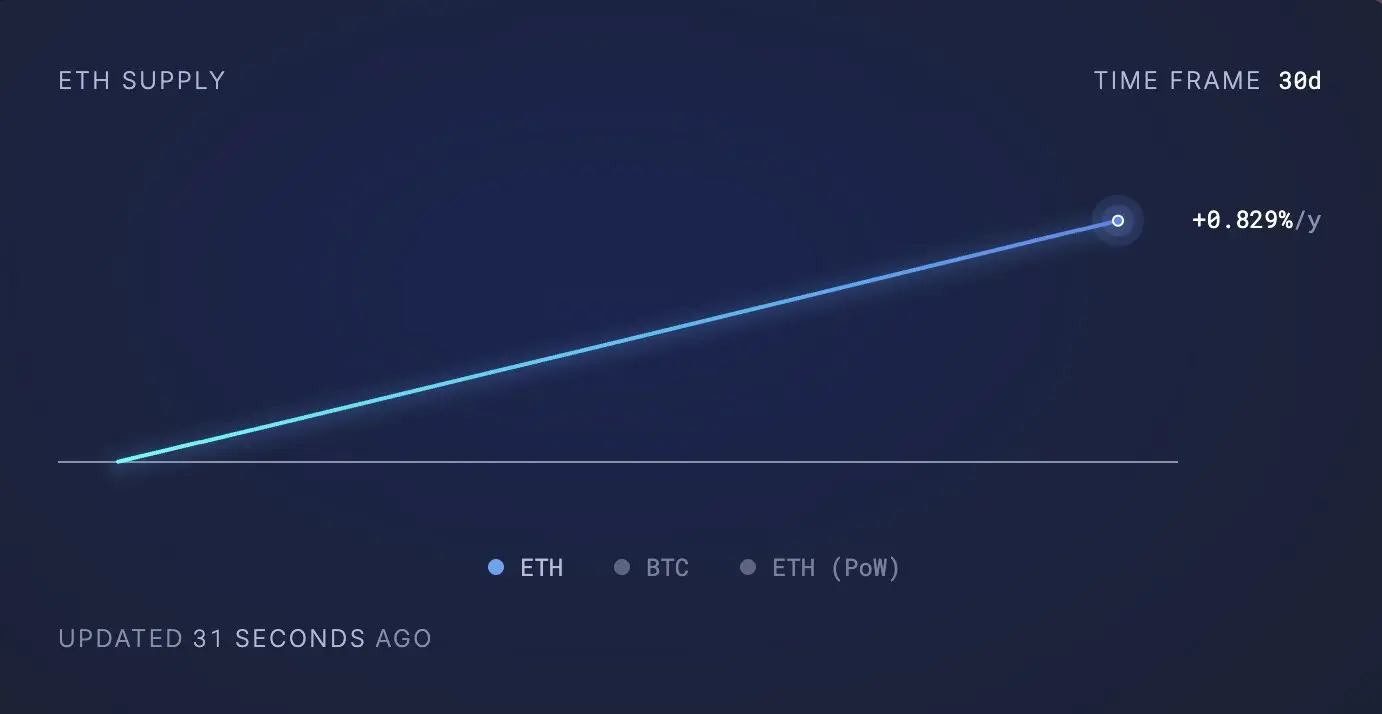
Perhaps staking rewards should never have existed and the revenue of the network or Labs should go directly to the validators. At that point, let’s see how hard validators will work.
Value is increasingly flowing away from the base layer; we should not be investing so much in its development. Gas fees for all chains are trending towards zero, successful applications are migrating to their own chains, and cross-chain bridging has never been easier.
So you can draw this conclusion: it is better to first make an application (or application chain), and then vertically integrate—Hyperliquid, Pump, and others have done this.
I am not saying to stop investing in general blockchains, but I do believe that the core function of network tokens should eventually be a truly useful medium of exchange—permissionless L1 should be the liquidity hub for DeFi and a testing ground for new applications.
These are not new ideas. I feel that many L1 teams have already realized that in order to survive, they need to build their own applications and services. The treadmill on which foundations survive by selling tokens is slowing down.
If what you're doing in these teams does not generate revenue, you may need to start thinking about what value you can create.
Interestingly, retail or institutional usage seems to be less important than building a strong holder community and keeping them happy. When you are confused, ask the community.
Even if their advice is bad, at least you can ask them who they like and dislike the most in your team.
I hesitated for several weeks about whether to publish this article. This is not a well-structured thought piece; it is more like a collection of ideas that came up while showering.
My point is: all L1s are making the same serious mistakes, with the difference being just luck and timing. The best-performing projects tend to survive, often due to stronger leadership and faster delivery, but the issue of sustainable value propositions remains unanswered.
We can continue to tread this long and painful path of value extraction, watching BTC loyalists and the hoarding faction continue to outperform the market; or we can acknowledge the problems with the current L1 models and start building toward slightly fairer outcomes.
免责声明:本文章仅代表作者个人观点,不代表本平台的立场和观点。本文章仅供信息分享,不构成对任何人的任何投资建议。用户与作者之间的任何争议,与本平台无关。如网页中刊载的文章或图片涉及侵权,请提供相关的权利证明和身份证明发送邮件到support@aicoin.com,本平台相关工作人员将会进行核查。


