Author:@Web3Ling;@qiqileyuan
Introduction: When War and Technology Accelerate Simultaneously
Before 2026, the author had never imagined experiencing war scenes so closely. From the first time hearing the evacuation alert to witnessing Iran launch over 200 missiles and thousands of drones at the UAE within two weeks, the author clearly realized for the first time that the underlying operational logic of the world is undergoing profound changes. At the same time, another completely different development curve is rapidly rising: the large-scale application explosion of artificial intelligence (AI), the rapid popularity of tools like OpenClaw, and Bitcoin gradually becoming a strategic reserve asset for some countries. The simultaneous acceleration of war and technology is not a coincidence, but a clear signal: human society is entering a "polarization era," where the trend of polarization will profoundly impact future development patterns.
Lobsters and Personal Data Sovereignty: The Unexpected Breach of the Tech Giants' Iron Curtain
The monopoly of internet giants over the market has lasted for a long time, so long that both users and giants default to the idea that user data naturally belongs to the giants' assets, which is a core quantitative indicator in the financial reports of listed companies, and this perception is even taken for granted. Under this default rule, the premise for users to use platform services is to relinquish personal data ownership; giants only need to shut down interfaces, thereby raising the cost of user migration to unbearable levels. Unless users completely abandon the related services, all information regarding their personal behavior, preferences, and social relationships can only be deposited within the giants' platforms. The "forced consent" mechanism of privacy agreements further reinforces this monopoly pattern—users, even if they disagree, lack effective means of resistance.
For years, countless pioneers have attempted to break this iron curtain, but all have ended in failure. In 2018, the author participated in a seminar for the Solid project initiated by Tim Berners-Lee, the founder of the World Wide Web, aimed at creating “data boxes” for end users to store personal data centrally, requiring giants to obtain explicit authorization from users if they wish to use it. This vision is highly forward-looking and reasonable, but because it directly touches on the core interests of giants, it’s like asking companies to voluntarily handcuff themselves and reduce profits; hence, no giant is willing to accept it, and the project gradually faded from public view. More recently, the Doubao phone, launched last year, claimed to allow free access to all apps on the phone, but shortly after its launch, it faced united resistance from domestic mainstream internet giants, ultimately hastily retreating from the market.
Whether from internal breakthroughs or external shocks, whether for individuals or enterprises, it seems difficult to shake the monopoly barriers of the giants, until the birth of "lobsters" provided ordinary users a chance to break the pattern. The large-scale proliferation of lobsters has mainly benefited domestic large language models, with companies like Minimax seeing their stock prices and valuations reflect market recognition. Its core value lies in the reconstruction of the business model: prior to this, domestic large language models mainly targeted the controllable B-end market, limiting the opportunities for ordinary C-end users to interact with and use their APIs. However, because of lobsters, the author began using domestic large models Minimax and GLM for the first time, expanding the user base for domestic large models to a massive C-end, and addressing the unconscious coding needs of C-end users has vastly improved the business model. Aside from overseas products like ChatGPT and Claude, domestic users are more inclined to use platforms such as Qianwen and Doubao, mainly because these platforms offer unlimited subsidies and unlimited Q&A services, greatly lowering the barriers to user adoption.
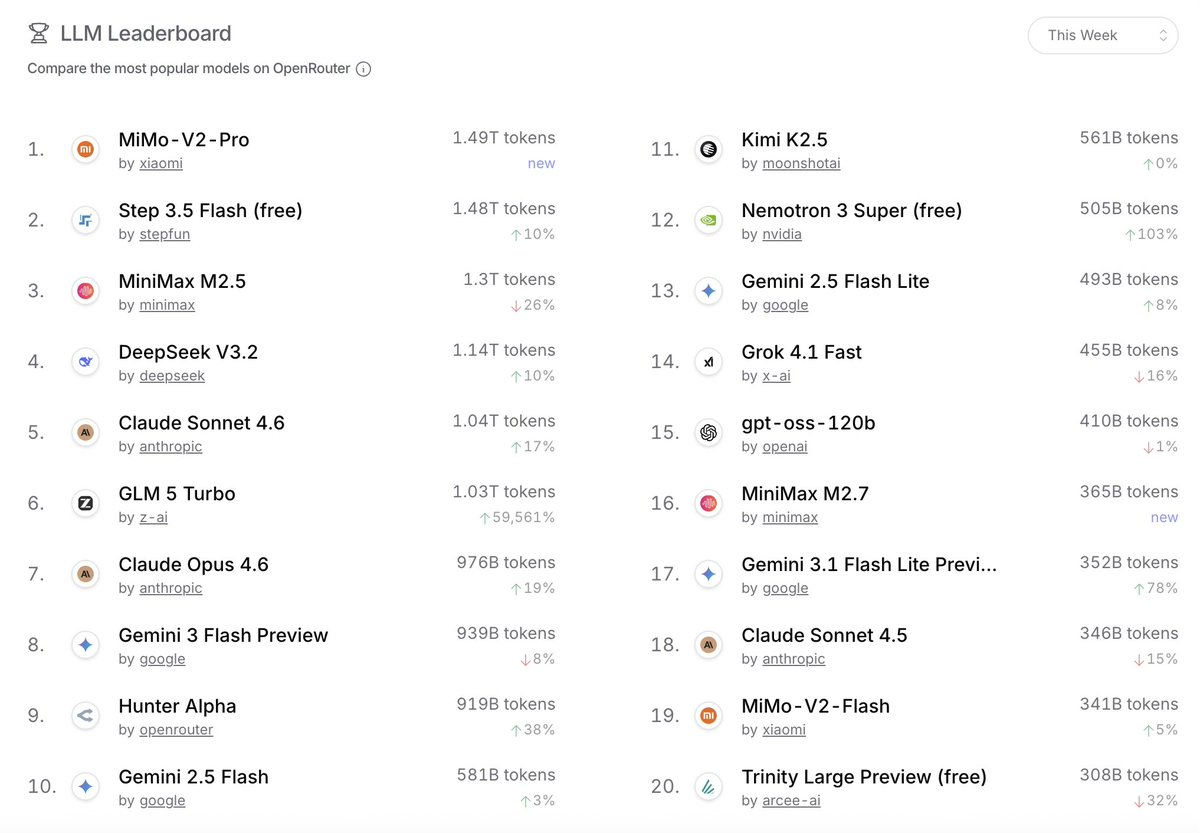
Openrouter has become an important ranking for the appearance of major domestic models
After basic Q&A needs are met, the advent of lobsters further aligns with users’ workflow needs—users want to build complete workflows through it to transform it into an efficient productivity tool. Notably, for ordinary users, basic needs like scheduling and simple task assignments do not require reliance on high-end large language models like Claude; basic models can suffice. Thus, when users choose services, they naturally prioritize cost-effectiveness, forming a consumer logic of "choosing whoever is more economical and efficient." More crucially, lobsters have realized the return of personal data sovereignty; data no longer rests on giant servers but is stored within users' own devices. Influenced by a previous incident involving lobsters deleting emails and media reports, users currently often install lobsters on personal Mac Minis, work computers, or set up independent environments via VPS, using them as a "second brain." This local storage model allows users to switch large language models without needing to readapt—previously, when using ChatGPT, users' conversation records and usage habits were stored on OpenAI's servers, and switching models would mean data could not be migrated, necessitating retraining a new model; however, lobsters store all data (schedules, conversations, work records, etc.) in md format on users' local devices, allowing users to freely choose a more cost-effective model, even leveraging free tokens for multi-model compatibility, which has brought massive C-end users to domestic large language models, promoting their large-scale application and rapid growth.
This growth presents a pattern of "the East rises while the West declines": overseas products like ChatGPT and Claude mostly adopt a subscription model, similar to a gym model, where some users have a low usage rate after subscribing, and platforms can profit through resource allocation; whereas lobsters primarily adopt an API access model, with founders recommending the use of APIs from domestic large language models like Minimax, which better aligns with the consumption characteristics of Asian users who lack a subscription habit. The cost-per-token billing method for APIs also provides a cost advantage and flexibility.
The value of lobsters goes far beyond benefiting domestic large language models; the large-scale proliferation behind them contains a systematic deconstruction of the ecological barriers of the giants. Once users gain personal data sovereignty, they will naturally pursue the diversification of lobster functionalities, prompting hardware manufacturers to layout aggressively. Previously, companies like Xiaomi and Huawei had built their own ecosystems, requiring users to control their smart hardware through proprietary apps; however, now various hardware manufacturers are developing CLI tools and compatibility interfaces for lobsters, allowing users to achieve unified control over smart homes, robots, and other devices through dialogue with lobsters, gradually compressing the premium space caused by the ecological compatibility of large factories.
Regarding the question of whether "giants and hardware manufacturers will refuse to connect with lobsters," when the author connected the Tuozhu 3D printer with lobsters and was able to control the printer using lobsters, they knew the answer was negative, because when purchasing hardware, the ability to integrate with lobsters became an important reference factor.

In the heated competition among Q&A robots like Doubao and Qianwen, lobsters have opened a second battlefield for C-end users' long-term token consumption; major manufacturers cannot sit by as companies like Minimax seize the market, and they will inevitably actively join the "free installation of OpenClaw" initiative, using this traffic entrance to compete for users. Driven by this wave, the coverage of ordinary users for lobsters will reach a very high level, and users will further consolidate their data sovereignty in the process. For hardware manufacturers, the vast user base accumulated by the lobster system will create a reverse pressure effect—first movers can prioritize seizing the user market, while latecomers can only miss the opportunity, thus hardware manufacturers will actively adapt to lobsters, and users will prioritize choosing products that support lobsters when purchasing hardware. This will ultimately form a user-driven positive cycle: users hold data sovereignty, can freely switch models, and flexibly match hardware, thus enabling lobsters to complete the reshaping of personal data sovereignty and systematically deconstruct the ecological monopoly of giants.

Of course, during this process, users’ awareness of data will seek a balance between convenience and autonomy
Tencent's full integration with lobsters has become the largest "model data transfer station" while providing convenience.
Blockchain and Conceptual Armament: Cognitive Weapons Across Versions
Since the birth of Bitcoin over ten years ago, amid continuous skepticism, it has gradually entered mainstream consciousness. Many opinions suggest that in the wake of the AI boom, professionals in the Web3 field may be seen as "riding the coattails" of this trend; however, in the author's view, AI and blockchain are not mutually exclusive, but are the "twin stars" resonating with each other in the era of polarization, intersecting at a crossroads of the times.
As a developer who has been building on Ethereum for nearly a decade, the author has always pondered a question: What is the core competitive advantage of Web3 builders? It is not a stronger theoretical foundation; Satoshi Nakamoto's original Bitcoin white paper has not been recognized by mainstream academia; nor is it a superior engineering implementation capability, as most early stakeholders and developers started from the industry’s bottom, lacking systematic professional training; nor is it "decentralization" itself; in systematic product promotion, decentralization often implies a reduction in user experience, even becoming a hindrance to development. After deep reflection, the author believes that the core competitive advantage of excellent practitioners in the Web3 field lies in having the ability for "cognition across versions," and maintaining this cognitive advantage is key to the industry's sustained development.
What is meant by "conceptual armament" is not achieved through physical force, but is essentially a cognitive weapon that directly reconstructs causal relationships based on established rules, denying traditional logic. As early as 1992, sixteen years before Bitcoin's birth, Hal Finney, a core member of the cypherpunk movement, suggested in an interview on cryptography and personal sovereignty that computers should be tools for liberating and protecting humanity, not means to control humanity; humans should walk a path that returns power to individuals rather than ceding it to governments and corporations. In 2013, Hal Finney further articulated the essence of Bitcoin on the BitcoinTalk forum: "I believe that Bitcoin will ultimately become the reserve currency of banks, playing the role of gold in early banking. Banks can issue digital cash based on it, achieving greater anonymity, lighter transactions, and more efficient trading."
Twelve years later, this prediction has become reality: the United States has included Bitcoin in its national strategic reserves, alongside gold and foreign exchange, explicitly stating it cannot be sold and will permanently be held as a national reserve asset. Since 1970, countless financial assets have emerged globally, but Bitcoin is the only new asset class officially incorporated into the U.S. national strategic reserve system; stocks, bonds, real estate, commodities, etc., were not included. This is the power of "cognition across versions"—the future that Hal Finney envisioned years ago is gradually becoming a reality. For the blockchain industry, leading edge cognition is its core weapon because relying solely on numerical competition will never be able to contend against the curse of currency devaluation brought about by "infinite money printing." Bitcoin, as the first "conceptually armed currency," operates not on physical strength but on established code rules and market consensus.
The value of traditional fiat currency is based on government backing and central bank issuance, supported by credit, state violence, and economic power, which essentially is a contest of economic scale; whereas Bitcoin is entirely different, it has no issuer or headquarters, and its code is the only rule of operation. Over the past decade, centralized institutions have tried various means to suppress Bitcoin, such as banning exchanges, prohibiting trading, stigmatizing it, and launching media attacks, but this only further strengthened market consensus. During the recent war in Iran, the Iranian currency depreciated sharply to almost zero that day, and amid the crisis, a large amount of capital continuously flowed into Bitcoin, making it a safe-haven asset. Physical layer suppression inadvertently enhanced the conceptual weight of Bitcoin, leading to its recognition and accumulation by sovereign states globally, becoming a new type of national reserve asset. This is the core power of conceptual armament: centralized institutions can ban exchanges, forbid related transactions, and launch stigmatizing attacks, but they cannot deny the consensus formed by the market, nor can they alter the established rules in the code—as long as the consensus exists, Bitcoin will continue to exist. This is not metaphysics, but the field in which Web3 builders excel: forecasting the future a decade in advance and through continuous practice transforming foresight into reality.
Aside from Bitcoin, such cases are not uncommon in the Web3 field, and this replicability further proves that "cognition across versions" is the core advantage of the blockchain industry. Even before personal data sovereignty became a hot topic, Web3 practitioners had already explored feasible paths—at the core of data sovereignty is asset sovereignty, achieved through open and transparent technological designs, enabling data to be verifiable and traceable; during the DeFi era, practitioners utilizing smart contracts constructed an automated trading system that required no intermediaries, thereby reconstructing the trading logic of traditional finance; prior to the boom in the metaverse concept, Web3 entrepreneurs had already built various metaverse scenarios ahead of the mainstream market; even before the boom of AI multi-agents, projects like ACT and Virtuals in the Web3 field had already completed practical explorations of multi-agent interaction and collaboration in 2024.
Regardless of the ultimate success of these projects, they clearly demonstrate the core characteristics of the Web3 field: continuously laying out the future in advance and gradually transforming trends into reality. Furthermore, in this process, blockchain is gradually moving toward large-scale application, with payment scenarios in the era of AI multi-agents being an important direction. Currently, human society is gradually entering an era of billions of intelligent agents, where each user may possess multiple intelligent agents responsible for managing daily affairs, collaborative tasks, travel shopping, health management, knowledge learning, and various other scenarios, all of which rely on payment functions—agents need to book hotels for users, pay for rides, and compensate collaborative agents, thus requiring secure and efficient payment capabilities.
However, the reality is whether users are willing to authorize intelligent agents to access their personal bank accounts? Even if users are willing, centralized banks like Citibank, HSBC, Bank of China, and Agricultural Bank find it challenging to support agents like lobsters in directly invoking accounts—risk control, internal audit, legality, ethics, and other factors prevent centralized institutions from allowing agents to directly operate users' bank accounts, as risks such as reckless consumption by agents or being hacked are difficult to manage. This is precisely where blockchain’s advantages lie: over the past decade, the independent account systems built by blockchain and the Web3 usage habits have reduced the cost of creating a new Web3 wallet address by 99.99% compared to setting up a new bank account; at the same time, users can store a small amount of USDT (e.g., 100USDT) in an independent wallet for agent collaboration and planning, keeping risks within manageable ranges. Consequently, the financial infrastructure capable of serving billions of intelligent agents is gradually taking shape at the intersection of blockchain and AI.
Traditional institutions naturally will not sit idly by while this market is occupied by the Web3 field. Stripe, JP Morgan, Ondo, and others are accelerating the establishment of their own blockchain architecture, vying for the future infrastructure market for intelligent agents. They will attempt to hijack the rules back to a centralized system, imitating the concepts and cognitions of Web3, vying for this core weapon, and even planning to integrate all American stocks into the blockchain system, gradually easing media restrictions on blockchain publicity, incorporating Web3’s concepts, thoughts, and technical capabilities into their own systems.
However, it is worth noting that weapons obtained through strong imitation of the weak can never fully unleash their true power. The intrinsic centralized thinking of traditional institutions prevents them from genuinely understanding and implementing the decentralized consensus of Web3, much less mastering the capability of "cognition across versions." Currently, AI has paved a path toward mass adoption, whereas the blockchain and Web3 fields need to accelerate the translation of their technical and cognitive advantages into practical products and services, accumulating a sufficient user base. If the payment scenarios of Crypto + AI can successfully serve future intelligent agents, it will promote leapfrog development for the entire industry; in the new pattern of the polarization era, only by becoming sufficiently strong can one obtain more space for survival and development.
The Future of the Polarization Era: The Twin Foundations of Civilization
Since TT first discussed the concept of the "polarization era" in 2021, the author has personally experienced geopolitical conflicts, financial turbulence, and the outbreak of wars, further confirming a judgment: the trend of polarization in the future world will become increasingly evident. This polarization may take two forms: one being a minority of individuals with top capabilities coordinating a large number of intelligent agents, mastering core productive power, and residing at the top of society; the other ordinary groups relying more on entertainment consumption and universal basic income to sustain their lives, gradually distancing themselves from core production processes.
However, the author has always adhered to technological optimism, firmly believing that even in the polarization era, ordinary people still have opportunities to change their fates. The author has been fortunate to spend a week with Michael Bauwen of the P2P Foundation at a Zukas event; Michael Bauwen received multiple emails from Satoshi Nakamoto in his early years and helped to publicly debut the Bitcoin white paper on the P2P Foundation forum. He proposed that the future world will need a form of "local cosmopolitanism," where, in the context of frequent geopolitical conflicts and wars, people will require community-based physical assistance and peer-to-peer survival modes. At that time, events such as the U.S. bombing of Iran and Iran's attacks on U.S. military bases and embassies had yet to transpire, and looking back now, his insights hold even greater relevance and foresight.
In this increasingly fractured world, the fragility of centralized credit systems has become more apparent: today’s allies might become tomorrow's adversaries; a fiat currency strong today might significantly devalue or even become worthless tomorrow. Blockchain, as an open-source, transparent infrastructure, possesses characteristics that transcend national and factional boundaries—regardless of which country or faction users are part of, they can utilize it equally; even if geopolitical conflicts sever undersea cables, disrupting the global Internet, blockchain nodes can still operate continuously via satellites and radio. It is the only trust foundation that can transcend national and factional boundaries in the polarization era, providing unified rule support for a divided world.
AI provides humanity with unlimited productive potential. In a fractured world order, AI can maximize productivity, helping humanity escape from the internal friction of zero-sum games and creating infinite incremental value in the virtual world. As the author previously stated, in the future, 90% of human activities will occur in the virtual world, where AI assumes the role of the "intelligence core"—responsible for creating infinite content, unleashing extreme productivity, and exploring unknown knowledge; blockchain takes on the role of the "trust core"—responsible for establishing open and transparent rules and returning power to each individual while preventing the virtual world from being monopolized by a few giants.
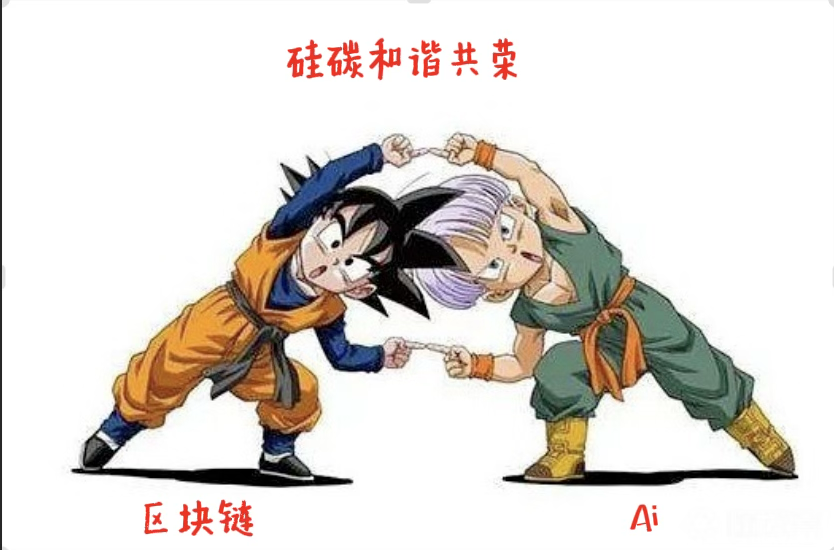
The two complement each other and are indispensable: without AI empowerment, blockchain’s functionality remains relatively single, only capable of basic accounting functions, and cannot support the construction of complex virtual civilizations; whereas without the constraints of blockchain, AI may become a tool controlled by giants, trapping humanity within centralized black boxes and stripping away autonomy. Only when AI and blockchain achieve "twin coexistence" can they collectively support the future form of human civilization.
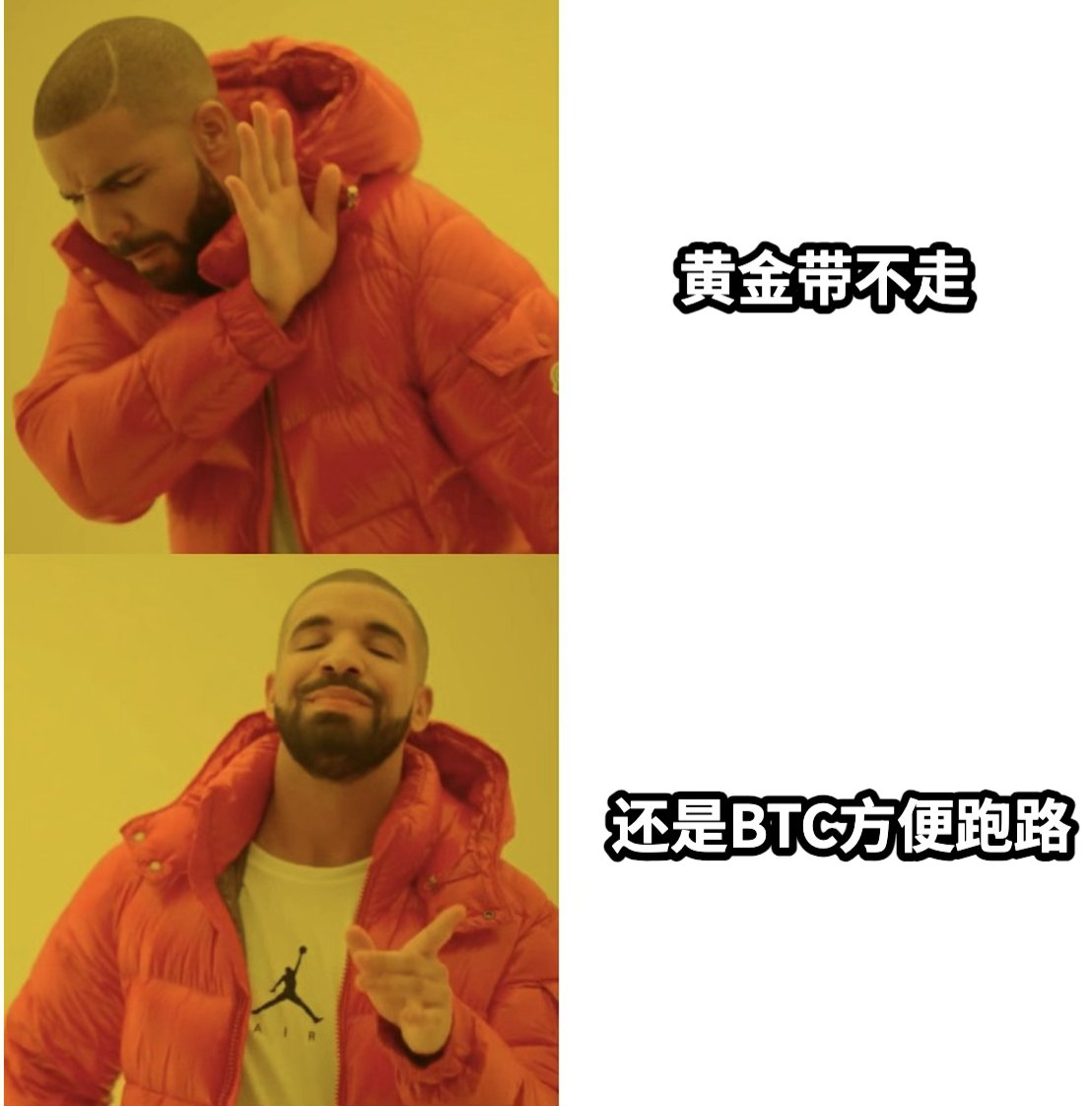
Imagine that when humanity immigrates to Mars in the future, what they can take with them are not the countries, banks, and credit systems of Earth, but only the indispensable AI and blockchain: AI will help humanity establish new productivity systems on Mars, managing the survival and development of this unfamiliar planet; blockchain will assist humanity in establishing new rules and trust systems, allowing people to maintain an order that does not rely on any centralized institution regardless of how far they are from Earth. This is the ultimate value of technological duality in the polarization era—leaving an opportunity for infinite possibilities for the continuity and development of human civilization.
免责声明:本文章仅代表作者个人观点,不代表本平台的立场和观点。本文章仅供信息分享,不构成对任何人的任何投资建议。用户与作者之间的任何争议,与本平台无关。如网页中刊载的文章或图片涉及侵权,请提供相关的权利证明和身份证明发送邮件到support@aicoin.com,本平台相关工作人员将会进行核查。


