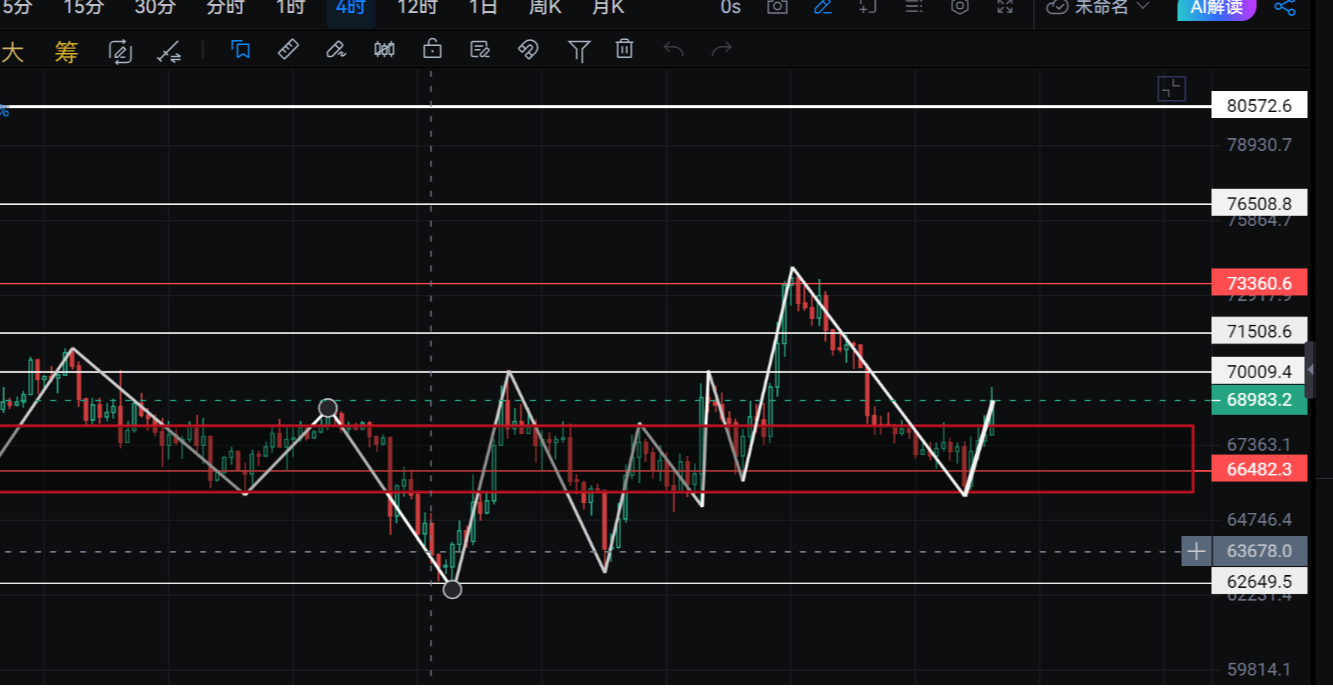
On March 8, 2026, the NASDAQ-listed company Bitmine was reported to have increased its holdings by over 60,976 ETH in the past week, totaling 4,534,563 ETH, which accounts for approximately 3.76% of the total supply of Ethereum. A traditional capital market company has unexpectedly positioned itself as a "super treasury" on the Ethereum blockchain, and its ambitions do not stop there—Bitmine has publicly set a target to hold 5% of the supply. Based on this, the total value of its crypto asset portfolio is about $10.3 billion (of which $1.2 billion is cash), indicating that this is not just a speculative "heavy investment." The conflict lies in: Bitmine's management views the current period as a layout window at the "end of a small crypto winter," whereas broader market sentiment remains cautious and has not made similar bets.
A Key Week from Tentative Exploration to Whale Accumulation
● In terms of increasing holdings, data from a single source shows that Bitmine acquired an additional 60,976 ETH in the week ending March 8 (Eastern Time), bringing its total holdings to 4,534,563 ETH. This set of figures alone does not restore its specific buying rhythm, but it is sufficient to illustrate that the company has shifted from the previous "tentative exploration and gradual accumulation" to large-scale concentrated allocations measured weekly, making transaction behavior closer to that of on-chain whales and ETF-level buy orders in terms of volume and speed.
● Based on current holdings, Bitmine has acquired about 3.76% of the total network ETH supply, transitioning from an ordinary listed company to a "super treasury" that influences the distribution of network chips. Such concentration not only enhances its voice in the Ethereum ecosystem narrative but also changes the chip structure in the secondary market: some funds originally dispersed among institutions and large holders are now locked under the same balance sheet, naturally increasing the market's sensitivity to its future adding or reducing positions.
● Behind this set of Ethereum positions, Bitmine's total value of crypto assets and cash reportedly amounts to about $10.3 billion, with $1.2 billion serving as cash buffer. This means the company is not making a "all-in" bet but is increasing its on-chain exposure while maintaining relatively sufficient liquidity, providing a narrative framework for the board and shareholders that allows for "capitalizing on industry undervaluation while keeping the safety belt," sufficient to support its long-term allocation story in the capital markets.
3 Million ETH Locked: A Dual Game of Annual Returns and Network Structure
● Among its total holdings, approximately 3,040,500 ETH has been staked by Bitmine, representing the vast majority of its ETH position. This large-scale lockup is not merely a technical operation; it binds "being bullish on Ethereum" with "participating in network consensus and earning staking rewards," partially transforming the company from a passive holder into a component of network operations, bringing structural impacts on its own profit model and investor return expectations.
● According to a single-source estimate, this staking position corresponds to an annual income of approximately $174 million, which in the context of a listed company is no longer just "easy-to-reach earnings" but a critical piece that could be considered by the board as a source of stable operating cash flow. For shareholders, this adds a quantifiable return narrative to "holding a large amount of high-volatility assets," even though we cannot dissect specific APY and parameters, staking income itself provides a relatively predictable source of earnings for financial reports.
● On the network level, the concentration of millions of ETH in staking enhances the economic security within the Ethereum PoS mechanism, while also meaning that more chips are entering a long-term locked state, further compressing the short-term circulating supply. This liquidity tightening may amplify price volatility: during an upswing, scarcity may create a "chip shortage" squeeze, while during a downturn, it depends on whether such large staking entities hold their positions; otherwise, once they reduce holdings, it could cause magnified sell pressure reverberations.
Bitcoin Frenzy Buying Counterpart: Multiple Asset Allocation Paths on Wall Street
● In stark contrast to Bitmine's focus on ETH, another listed company, Strategy, invested $1.28 billion last week to purchase 17,994 BTC, continuing its "Bitcoin treasury" route. The two have made entirely opposite strategic directions within the same macro window, treating ETH as the core reserve asset while continuing to bet on the BTC “digital gold” narrative, amplifying the differentiation of crypto asset allocation at the Wall Street level to public financial reports and balance sheets.
● On the other end, Empery Digital chose a completely different action: it reduced its holdings by 102 BTC, using the released funds for stock buybacks. This "sell coins to buy stocks" operation reflects a focus of some listed companies on stock price management and traditional shareholder returns, rather than continuing to expand on-chain positions. The differing choices among the three companies during the same period outline a diversified route for listed companies in crypto asset allocation, rather than a unilateral "collective rush into the same track."
● As more companies emphasize the strategic significance of "treasury assets" in public, the narratives of "BTC treasury" and "ETH treasury" are gradually moving toward direct competition. The former relies on the scarcity of Bitcoin and its "digital gold" label, while the latter emphasizes the application layer activity and staking yield attributes of Ethereum. Secondary market sentiment also sways between these narratives: when a new company announces an increase in BTC, investors are more likely to interpret it as a “value storage bet”; while a substantial increase in ETH holdings by another entity may be seen as a proactive gamble on “betting on on-chain economy and yield curves.”
End of a Winter or a New Round of Misjudgment: The Macroeconomic Background of Timing Bets
● Bitmine Executive Chairman Tom Lee publicly stated that the current ETH price is at the "end of a small crypto winter" and believes that a stage bottom may form between March 8-14. Bitmine's concentrated accumulation of tens of thousands of ETH during this window essentially uses a real asset balance sheet to endorse this time judgment: if correct, the company will lock in a large-scale long-term position near the bottom price; if misjudged, it is tying itself to a roller coaster that has not yet hit the bottom, doubling down on downside risk.
● Corresponding to this "crypto winter narrative" is the macro judgment of traditional financial institutions—Morgan Stanley believes the current S&P 500 correction is nearing an end, and systemic sell pressure on risk assets is marginally diminishing. If this view holds true, then the cross-market risk appetite from US stocks to crypto assets is expected to align in recovery, with Bitmine selecting the time for its accumulation during this potential resonance period, intending to step on the "overall risk assets stabilizing" node to increase its crypto exposure’s win rate, rather than counter-cyclically leveraging during a systemic tightening phase.
● Additionally, oil prices and US dollar movements remain background variables that cannot be ignored in this round of crypto volatility cycle: the strength of oil prices affects inflation expectations and actual interest rate paths, while a stronger dollar tends to squeeze the valuation space of non-USD assets. Bitmine's accumulation actions occurred when these macro variables had not yet fully clarified, and the timing can be interpreted either as an "early mover" layout or as a high-stakes gamble on macro uncertainty—betting that future paths of inflation and interest rates will allow risk assets to re-expand valuations and capital inflows.
Will AI Agents Settle Transactions in Crypto? The Vision of Machine Economy and Treasury Logic
● On a more distant narrative level, Binance founder CZ once expressed the expectation that in the future the number of payments by AI agents will reach millions of times that of humans, and will use cryptocurrency as the settlement medium. This judgment pushes crypto assets from "tools of human speculation and value storage" to the role of "machine economic infrastructure," implying that if machine agents become the main actors in economic activities, the absolute scale of on-chain payments and settlements could far exceed the current imagined range, bringing a new demand curve for underlying assets.
● If this vision of the machine economy partially materializes, and mainstream AI economic entities select ETH and other public chain assets as the settlement and collateral layer, then "ETH treasury" entities like Bitmine would no longer merely be betting on prices but are preparing "system fuel" in advance for the potential era of machine settlements. A large-scale treasury allocation under this logic possesses a more lasting driving force: it is not just about earning staking rewards and potential appreciation but also about pre-allocating bandwidth and chips for possibly explosive on-chain trading demand in the future.
● For listed companies, balancing crypto positions amidst high short-term price volatility and long-term technical narratives poses a realistic governance and valuation dilemma. On one hand, the board and regulatory bodies will focus on how dramatic fluctuations in asset prices within a quarter might impact financial reports and stock prices; on the other hand, if they completely ignore long-term trends like AI and on-chain settlements, they might miss an entire round of industrial-scale asset repricing in the decade-long technological cycle. Bitmine’s choice to deeply bind its book and on-chain assets reflects a slightly aggressive allocation approach, responding to this difficult-to-quantify long narrative risk.
When Listed Companies Become Whales: The Next Question of Ethereum's Decentralization
● From the outcome perspective, Bitmine is accelerating its progress toward the goal of holding 5% of ETH supply; once this figure approaches, it will directly alter the perceived boundaries of Ethereum’s market value structure and decentralization pattern. A company subjected to traditional capital market regulation and shareholder constraints that controls nearly one-twentieth of the supply will symbolize much more than a single on-chain whale concerning network governance, market expectations, and potential selling threats, raising a new practical question on "how a decentralized system accommodates centralized treasuries."
● At the same time, the path differentiation in Strategy, Bitmine, Empery Digital, etc., also indicates that the battlefield for the next round of institutional narratives may clearly divide between BTC and ETH: some companies consolidate Bitcoin’s identity as "digital reserve asset," while others bet on Ethereum’s application and yield attributes, and more entities may opt for proportional allocations between the two. As financial reports and market performance feedback emerge, this narrative contest may drive institutions to constantly adjust their allocations between “single flagship assets” and “multi-asset treasuries.”
● It should be emphasized that the key data on Bitmine’s holdings, accumulation scale, and staking earnings used in this article all come from a single source disclosure and lack more detailed information on buying costs and time distribution, which naturally limits the strength of the conclusions. In the absence of knowledge regarding its specific accumulation rhythm and internal decision details, we can only regard Bitmine as a high-profile sample rather than a definitive conclusion about the overall phenomenon. Whether its “winter gamble” turns out to be an accurate bottom-fishing or a cyclical misjudgment will only be validated by time and the next round of asset cycles.
Join our community, let’s discuss and grow stronger together!
Official Telegram community: https://t.me/aicoincn
AiCoin Chinese Twitter: https://x.com/AiCoinzh
OKX Welfare Group: https://aicoin.com/link/chat?cid=l61eM4owQ
Binance Welfare Group: https://aicoin.com/link/chat?cid=ynr7d1P6Z
免责声明:本文章仅代表作者个人观点,不代表本平台的立场和观点。本文章仅供信息分享,不构成对任何人的任何投资建议。用户与作者之间的任何争议,与本平台无关。如网页中刊载的文章或图片涉及侵权,请提供相关的权利证明和身份证明发送邮件到support@aicoin.com,本平台相关工作人员将会进行核查。