On March 9, 2026, Zcash Open Development Lab (ZODL) announced the completion of over $25 million seed round financing, which stands out particularly in the context of an overall contraction in the cryptocurrency primary market. More notably, this new entity was founded by core members of the Zcash Electric Coin Company (ECC), the longstanding team that represented the privacy narrative, choosing to return under the new identity of an "open development lab." This move brings privacy technology back from a single token narrative to the track of "infrastructure and research," and poses a question to the market: why is the privacy sector still able to attract top capital like Paradigm, a16z crypto, Coinbase Ventures to invest real money against the backdrop of global regulatory pressure, on-chain surveillance expansion, and frequent delistings of projects?
Restructuring of the Former ECC Team: The Migration of Zcash's Voice
● Source Reconstruction: The connection between ZODL and Zcash is first reflected in the team's lineage—the founders come from the core technology and research team of ECC, which means that those who possess the experience of Zcash's native protocol evolution are now directing their main efforts toward an independent new lab. This "departure with all privacy know-how" not only represents a continuation of personal career paths but also seems like a "soft reboot" of Zcash's original corporate structure, attempting to shift from a commercial company to a more open research and public goods framework.
● Governance and Route: When original ECC core members transfer their technology and influence to ZODL, the existing governance structure of Zcash will inevitably face a redistribution of power and voice. Between the foundation, the remaining ECC organization, and the newly established ZODL, who will lead consensus upgrades, the evolution of privacy technology, and the allocation of funds will no longer follow a linear structure. If ZODL becomes a new hub for developers and researchers, the original "single company + foundation" binary structure could evolve into a multipolar game structure.
● Ecological Relationship Restructuring: ZODL positions itself as an "open development lab" rather than a single project entity, which could potentially rewrite the relationship between developers and the Zcash ecosystem. On one hand, it provides independent developers with a more academic, research-driven entry; on the other hand, it may reopen or divert resource pathways between the foundation, community grants, and the new lab. If ZODL becomes the source of technology routes and research topics, the governance focus of the Zcash ecosystem might shift from the token issuer to a higher level of privacy technology public utility.
The New Narrative of Privacy That Paradigm and a16z Bet On
● Capital Genealogy: This round of over $25 million seed funding has brought in institutions such as Paradigm, a16z crypto, Winklevoss Capital, Coinbase Ventures, which have shown a general preference for "early, high-risk, technology-oriented" investments in privacy and Layer 1 (L1) networks. Paradigm has repeatedly bet on zero-knowledge proofs and new L1 research, a16z crypto has long supported protocol-centric infrastructure construction, and the Winklevoss brothers and Coinbase represent perspectives from exchanges and compliance entrances, making ZODL appear as a convergence point of multiple capital veins.
● Scale and Signal: In what Tom Lee has termed the "late stage of the crypto mini-winter," where secondary market sentiment has warmed but primary financing remains cautious, securing over $25 million in a seed round already exceeds the typical funding scale for early-stage projects. This significant counter-trend investment is not only a testament to the team's credentials but also amplifies the signal regarding the privacy direction itself: while most funds are shifting toward AI, compliance infrastructure, and leading blue chips, there are still top institutions willing to lock in chips for the next generation of privacy infrastructure.
● Institutional Perspective: Given the missing details and lack of a clearly disclosed product roadmap, it is certain that these institutions prioritize direction over a single application. Zero-knowledge proofs, as a general technology stack compatible with compliance frameworks, the "selective disclosure" privacy layer, and the potential for future integration with exchanges for settlement and risk control infrastructure are all mainlines they typically focus on. ZODL's ability to gain recognition from such capital fundamentally positions itself in a "long-term public technology stack," rather than in a short-cycle narrative of anonymous asset speculation.
Privacy Coins Under Regulatory Shadow: Gaps in Survival and Transformation
● External Pressure: In recent years, the tightening of global compliance has directly compressed the survival space of traditional privacy coins: mainstream exchanges have repeatedly delisted related assets, KYC and anti-money laundering requirements have become increasingly rigid, and on-chain surveillance vendors are rapidly expanding, attempting to minimize "black-box funding flows." Privacy assets, once on a narrative high ground, have been squeezed into a compliance gray area, with most teams choosing to operate discreetly or even transform, while the market pricing remains in a continuous discount state.
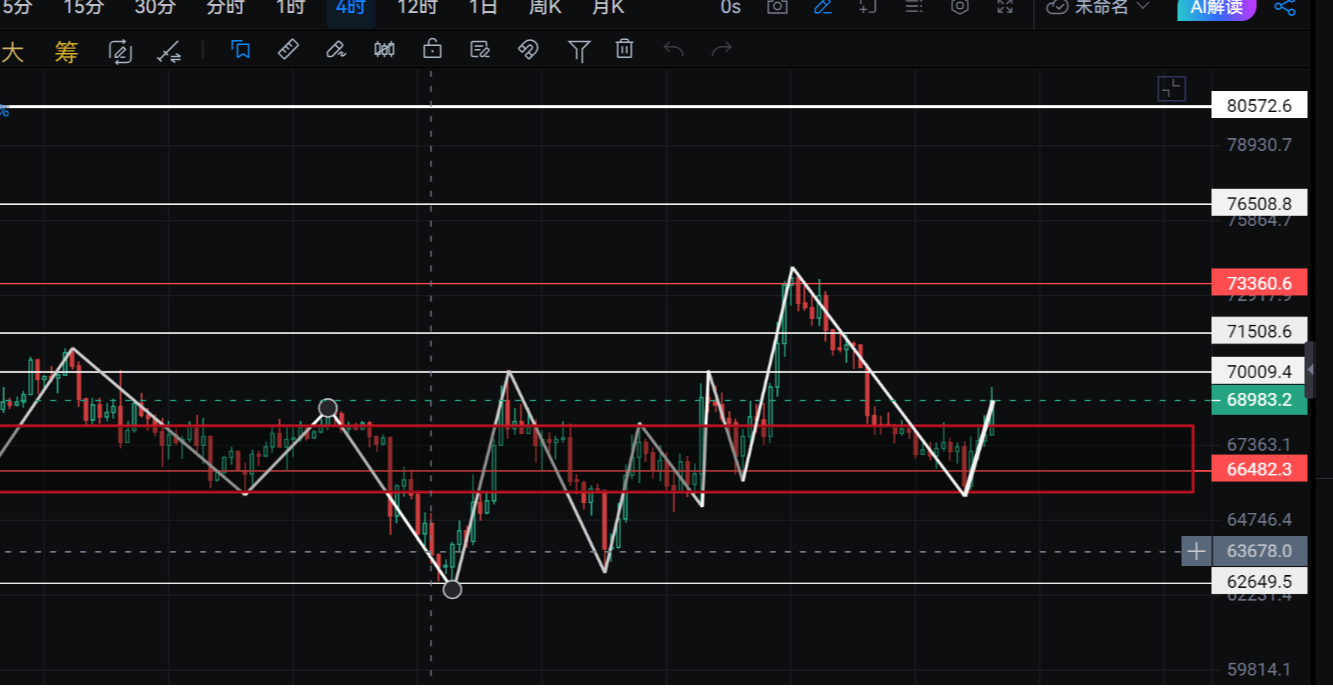
● Disparity in Risk Preference: In stark contrast, on March 9, 2026, the price of Bitcoin briefly surged past $69,000 on HTX data, along with a synchronized rally in US cryptocurrency-related stocks: Coinbase up about 2%, MicroStrategy up about 3%, Circle up about 9%. The risk appetite for mainstream assets and compliance sectors has clearly warmed, while privacy narratives remain marginalized, with market capitalization and liquidity significantly lagging behind sectors like AI and new public chain narratives, making ZODL's high-profile financing appear particularly "counter-current."
● High-profile Entry Game: At a time when the "political correctness" of privacy is at its lowest, ZODL has chosen to announce a large financing, with the underlying logic of the game leaning towards two bets: one is betting on future regulations becoming more refined and layered, allowing for "compliant privacy" to exist legally within a framework of "auditable + selective privacy"; the other is laying the groundwork for the next round of decentralized narratives—when centralized compliance infrastructure reaches its limits, the market's demand for truly censorship-resistant and strong privacy tools may be amplified once again.
Countertrend Financing at the End of a Mini Winter: Who Pays for High Risk
● Differentiation Pattern: Tom Lee's so-called "late stage of the crypto mini-winter" sees a rebound in the prices of Bitcoin and leading assets on one end, while the scale of financing in the primary market and the number of projects has significantly contracted on the other. Funds are withdrawing from early experimental projects, concentrating on a few targets with strong teams and compelling narratives, forming a situation where "leading projects secure funding against trends and long-tail projects are rapidly cleared." ZODL appears precisely at this point of differentiation, securing large seed funding centered on privacy as a typical "quality and scarce target" logic.
● Macro Warmth: Concurrent with ZODL's financing, signals of recovery in traditional finance and compliance sectors are also strengthening. The synchronized rise in stock prices of Coinbase, MicroStrategy, Circle indicates a renewed valuation of compliant trading entries, Bitcoin balance sheet strategies, and payment infrastructure by capital markets; meanwhile, Cboe has announced the launch of an innovative prediction market product framework, leaving a testing ground for cryptocurrency native products within a strict regulatory framework. These developments collectively sketch a picture: traditional finance is selectively embracing "compliant crypto innovation."
● High Risk and Return Expectations: At the end of a cycle, funds typically prefer assets with clearly defined certainties—Bitcoin, compliant companies with profit models, and infrastructures closely bound to regulations. The fact that the privacy sector can still secure seed rounds of around $25 million at this time means that investors are willing to accept higher volatility and policy uncertainties in exchange for potential non-linear returns. Once "compliant privacy" technology gains a foothold, it could become a standard configuration in scenarios such as on-chain identity, institutional trading, and cross-border settlements, which is one of the few narratives that can offer long-term option value at the current valuation levels.
The Next Chapter of the Zcash Ecosystem: Old Stories and New Entrances
● Reallocation of Momentum: The rise of ZODL will inevitably change the momentum structure of the Zcash community. One concern is that Zcash, which is already marginalized, might further "siphon remaining faith" due to the flow of core technology and narrative resources to the new lab; another possibility is that ZODL becomes an entry point for new technologies, new funding, and cross-ecosystem collaboration, feeding research outcomes and infrastructure capabilities back into Zcash, transforming it from an old anonymous coin into a privacy infrastructure node. Which of these paths will prevail remains to be seen based on how both sides define interfaces and boundaries in the coming years.
● Narrative Expansion: In the context where new innovative stories around Bitcoin and the Cboe prediction market framework continuously emerge, if Zcash wants to avoid being eliminated by history, it is hard to remain positioned as a "single anonymous coin." A more realistic path is to leverage labs like ZODL to position itself as a broader privacy infrastructure provider: offering composable privacy components for L1/L2, cross-chain bridges, exchanges, and DeFi protocols, rather than an independent asset rigidly opposing mainstream compliance systems.
● New Round of Game: As privacy technology teams, regulatory agencies, exchanges, and institutional capital reconfigure around this sector, the red lines and cooperation boundaries for the next stage will also be redrawn. Regulations are likely to focus more on using standards and interfaces to constrain the scenarios in which privacy tools can be used, exchanges will continuously fine-tune between listing, delisting, and surveillance requirements, and institutional capital will only increase exposure after policy predictability improves. Meanwhile, technical laboratories like ZODL will need to find a delicate balance between censorship resistance capabilities and compliance adaptation.
Walking the Tightrope between Regulatory Walls and Hot Money
The privacy sector has not been condemned to death; the primary signal released by ZODL's over $25 million seed financing is that the narrative is shifting from "absolute anonymity" to a new path of "regulatable, selectively disclosable." Capital is choosing to enter during a phase of maximum compliance pressure and the least favorable mainstream sentiment, fundamentally betting that privacy technology will find new legal forms within a more complex institutional and market environment, rather than retreating underground.
For investors, mid-term observation dimensions include: whether privacy technology can truly integrate into compliant finance and mainstream infrastructure, rather than staying within niche asset circles; whether the regulatory environment evolves toward "refined classification" instead of "one-size-fits-all blocking"; and how laboratories like ZODL balance public goods narratives with capital returns among valuation, token economics (if any), and equity structure. For developers, the more crucial question is: whether ZODL can provide stable, long-term research funding and an open collaborative environment, and whether Zcash and the broader privacy ecosystem can create sustainable developer incentives, rather than relying solely on the price of a single token.
Next, several focal points will determine the success or failure of this $25 million bet: when ZODL will publicly disclose clearer technological directions and priorities, how to delineate power and responsibility boundaries with the Zcash foundation and remaining ECC structures, and whether regulatory attitudes toward privacy tools will shift from "simple blocking" to "conditional release." Between regulatory walls and hot capital, privacy technology is seeking to redefine balance, and ZODL is merely the first test sample pushed to the forefront in this long-cycle game.
Join our community, let's discuss, and grow stronger together!
Official Telegram community: https://t.me/aicoincn
AiCoin Chinese Twitter: https://x.com/AiCoinzh
OKX福利群: https://aicoin.com/link/chat?cid=l61eM4owQ
币安福利群: https://aicoin.com/link/chat?cid=ynr7d1P6Z
免责声明:本文章仅代表作者个人观点,不代表本平台的立场和观点。本文章仅供信息分享,不构成对任何人的任何投资建议。用户与作者之间的任何争议,与本平台无关。如网页中刊载的文章或图片涉及侵权,请提供相关的权利证明和身份证明发送邮件到support@aicoin.com,本平台相关工作人员将会进行核查。