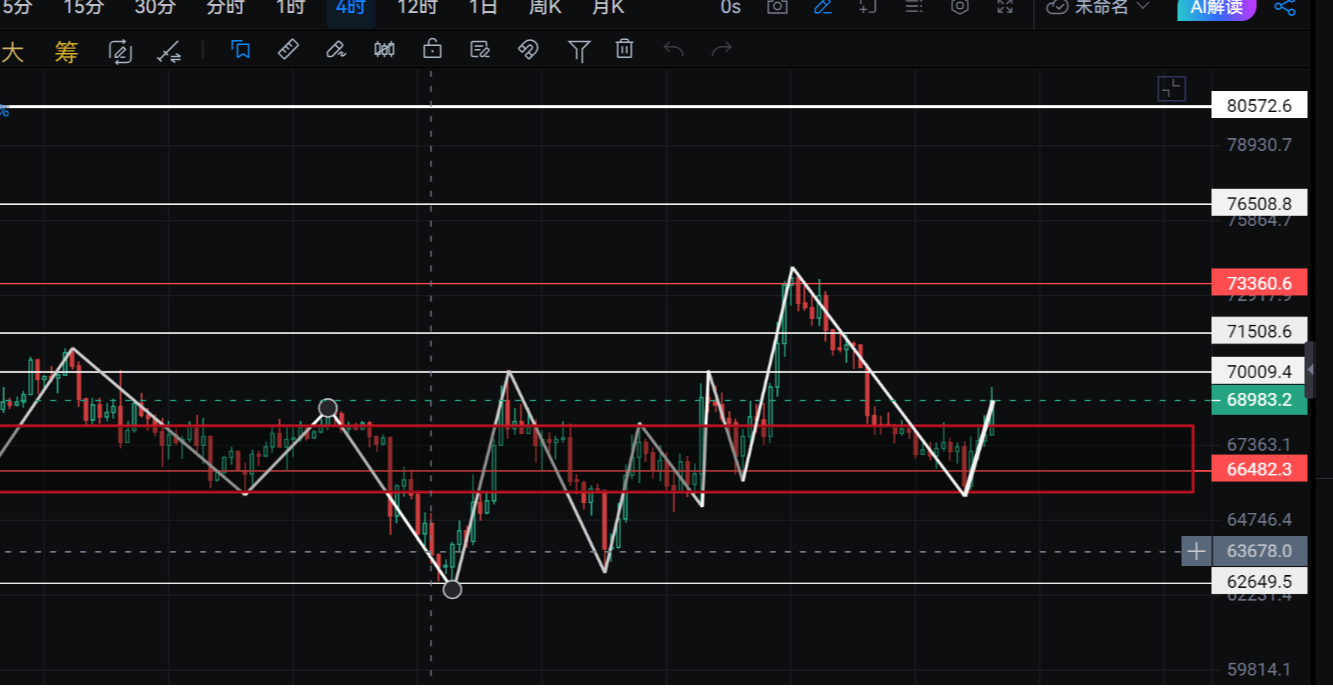
In early 2027, NASDAQ and Kraken announced a collaboration to develop a trading framework for tokenized stocks and ETPs, directly connecting the traditional securities market with on-chain trading infrastructure, positioning it as a compliant tokenized security solution for global investors. Meanwhile, between March 2 to 8, 2026, in the UTC+8 time zone, Strategy spent approximately $1.28 billion to increase its holdings by 17,994 BTC, further amplifying its asset allocation path of "corporate treasury = Bitcoin". Within a time window of less than a year, the core infrastructure of traditional finance extended to the on-chain, while the corporate finance side significantly increased its holdings of native crypto assets, with the overlapping of these two paths in the dimension of time releasing a strong signal of the accelerated integration of traditional capital and the crypto world.
Strategy’s Heavy Bet on Bitcoin
● Core Holding Data: According to public disclosures, Strategy currently holds approximately 738,731 BTC, with a cumulative investment cost of around $56.04 billion, translating to an average holding cost of approximately $75,862 per Bitcoin. Based on this, the newly added 17,994 BTC at the beginning of March was merely an amplification action on its long-term allocation curve, reflecting more of a "deepening of existing strategic positions" rather than tactical short-term trading. Such a large-scale Bitcoin holding has caused its corporate valuation to be highly correlated with BTC prices.
● Sensitivity Range for Book Gains and Losses: Taking $75,862 as a watershed, each upward or downward fluctuation of Bitcoin prices at the ten-thousand-dollar level amplifies into book gains or losses worth billions of dollars on Strategy's balance sheet. When the current market price oscillates around this cost level, the company’s book gains and losses are more likely to amplify at the quarterly reporting level, forming a sensitive range that puts pressure on both stock prices and management communications. This also implies that if the price stays above the cost line for a long time, it will significantly reinforce the narrative of the "success of its Bitcoin treasury strategy".
● Asset Allocation and Holding Cycle: Judging from the execution cycle of over 5 years and the recent single increase of $1.28 billion, Strategy is more leaning towards using Bitcoin as a "long-term strategic reserve asset" rather than a cyclical trading product. Its rhythm characteristics are: maintaining a net increase in BTC in the mid-to-long term, gradually raising the allocation ratio through price fluctuations in multiple macro and crypto cycles, rather than pursuing short-term trading price differences. This allocation method implies the assumption that Bitcoin is regarded as a core treasury asset that can traverse multiple business cycles without a defined timeline for reduction.
● Demonstration Effect and Peer Pressure: Strategy’s practice of continuously incorporating Bitcoin into its treasury and binding BTC performance to market value management has created a demonstration and pressure effect on other listed companies and institutional asset allocations. On one hand, it proves that enterprises can hold Bitcoin on a large scale within regulatory frameworks and include it in mainstream capital market narratives through information disclosure and accounting treatment; on the other hand, it forces more corporate finance departments to reassess whether "holding only cash and treasury bonds" remains the optimal strategy, providing real-world examples for exploring "partial treasury allocations in Bitcoin or other on-chain assets" for more companies in the future.
Tokenized Stocks Debut: NASDAQ
● Cooperation Framework and Role Division: In this collaboration, NASDAQ is responsible for providing mature securities market infrastructure and compliance frameworks, including listing, trading rules, and regulatory connections; Kraken, leveraging its experience in crypto trading, on-chain custody, and wallet technology, will undertake tokenized issuance, on-chain trading access, and a front-end gateway for global crypto users. The framework jointly built by both parties allows traditional stocks and ETPs to be represented as tokens on-chain and traded and settled within compliance boundaries, reserving standardized pathways for the subsequent migration of more traditional assets on-chain.
● From Blockchain Settlement Tests to Roadmap Upgrades: NASDAQ had previously conducted internal tests of blockchain settlement systems, but at the time, it focused more on verifying technology to enhance settlement efficiency. The clear collaboration with Kraken to develop a "tokenized stock and ETP trading framework" signifies an upgrade from "using blockchain solely in the background to enhance efficiency" to "directly tokenizing the securities themselves," marking a transition from technical tools to the reconstruction of asset forms. For this reason, the collaboration is seen as a substantial strategic contraction and re-launch for NASDAQ in the direction of blockchain and crypto.
● Impact on Trading Models and Brokerage Business: Once tokenized stocks take shape, they will demonstrate advantages in 24/7 trading hours, seamless cross-border circulation, and high flexibility in asset division, making the traditional model of "limited trading hours, country market isolation, and minimum trading unit restrictions" face a rewrite. For traditional brokerages, this means not only that the trading matching and clearing aspects may be partially replaced by on-chain infrastructure, but also that their account systems, commission structures, and cross-border business models will have to be reconstructed, transitioning more towards "compliance entry and comprehensive service providers," rather than relying entirely on licensing monopolies for trading matching and custody values.
● Regulatory Path Still Highly Uncertain: Currently, the tokenized stock framework lacks public details on key elements such as specific regulatory approvals, product registrations, and timelines for implementation, making it impossible for the outside world to ascertain the timing or pace of the launch of the first batch of products. Therefore, current discussions can only remain at the level of technology and business logic, conducting directional analysis of potential impacts, but predictions or projections on specific implementation timelines cannot be made. This uncertainty means that even if the technical path is basically clear, the rhythm of truly changing market structures still depends on the positions and collaborative efficiency of regulatory agencies in various jurisdictions.
Clearing and Settlement Rewritten: Traditional Securities
● Differences in Clearing Cycle and Capital Occupation: The traditional securities market mainly uses T+2 or T+1 clearing, which creates a time difference between the completion of the transaction and the final settlement of funds and securities, requiring clearinghouses and brokers to provide substantial credit intermediation and margin support, causing capital to be highly occupied within the system. In contrast, in an on-chain tokenized framework, it is theoretically possible to achieve quasi-real-time or even real-time settlement, completing the exchange of funds and assets in the same on-chain transaction, significantly compressing credit exposure and intermediary links. This contraction in the time dimension directly reduces systemic liquidity occupation and settlement risks.
● Reconstruction of Custody and Clearing Concentration: In the traditional model, centralized clearinghouses and large custodial banks hold absolute bargaining power and control of data, forming the core "hub node" of the existing securities market structure. If tokenized stocks are registered and transferred on-chain, custody could partially decentralize to on-chain addresses and specialized custodial institutions, and clearing functions could be embedded and executed through smart contracts, potentially weakening the concentration of existing clearinghouses and custodial banks. They will have to shift from merely "managing assets and data" to providing compliance, risk control, and value-added services as integrated infrastructure operators.
● Challenges of KYC and On-Chain Identity Integration: Even if real-time settlement is technically feasible, securities tokenization still must meet strict KYC and investor suitability requirements in various countries. How to securely and verifiably bind KYC results to on-chain identities while maintaining the anonymity and privacy of on-chain addresses is a significant technical and compliance challenge. This requires a deep transformation of existing account systems, investor identification processes, and regulatory reporting mechanisms, introducing on-chain identities, verifiable credentials, and other infrastructures, while ensuring sufficient mutual recognition and standard compatibility between different jurisdictions.
● Position in the Global Tokenization Race: As The Block evaluates, this is "one of the most representative collaborations to date." The partnership between NASDAQ and Kraken is not just a single project but a landmark example in the global competition of securities tokenization. On one hand, it provides a reference collaboration paradigm for other large exchanges and custodial firms; on the other hand, it conveys that traditional leading markets are no longer satisfied with being "blockchain settlement laboratories" and are willing to pursue institutional-level innovations in asset forms. This statement alone is enough to accelerate the discussion and follow-up on the tokenization pathways for securities globally.
Oil Prices and New Crypto Assets: Risk Appetite Switch
● Macro Risk Asset Linkage: According to insights from Binance Research, when Brent crude oil prices maintain a range oscillating around approximately $110 as a "risk price", the sentiment towards global risk assets tends to stabilize and may actually alleviate the downward pressure on the crypto market. The rationale is that the sustained lack of unilateral surging of oil prices means that inflation and monetary policy expectations are relatively controllable, stabilizing the market's expectations for discount rates on overall risk assets, leading to a decrease in the aversion sentiment toward high-volatility assets, providing a relatively mild macro environment for assets such as Bitcoin.
● Crude Oil Derivatives Entering Crypto Scenes: As crude oil derivatives enter on-chain trading scenarios through platforms like Sun Wukong, crude oil contracts with leverage of up to 20 times begin to serve as new speculative and hedging tools for crypto traders. On one hand, traders can manage risk exposure across BTC, tokenized stocks, and crude oil derivatives within the same account system, while on the other, the high-leverage feature also amplifies short-term volatility and risk of forced liquidation, transplanting the volatility logic of traditional commodity markets into the crypto market ecosystem.
● Trade-offs in Cross-Asset Allocation: From the perspective of risk-return characteristics, crude oil is more strongly driven by geopolitical and supply-demand cycles, exhibiting significant macro and event risk attributes; Bitcoin, under the premise of relatively inelastic supply and highly volatile demand, more reflects being an amplifier of liquidity cycles and institutional allocation sentiments; while tokenized stocks encapsulate both the performance sensitivity of equity assets and the liquidity and divisibility advantages brought by on-chain infrastructure. In an environment of macro uncertainty and high-interest rate oscillations, the allocation of funds between commodities and crypto assets is likely to present a structural distribution of "using Bitcoin and tokenized stocks as high Beta risk assets, while using crude oil derivatives as supplementary hedging or short-term trading tools".
Wall Street and On-Chain Capital: A Two-Way Journey
● Two-way Embrace of Asset and Infrastructure: On one end is Strategy’s continued promotion of its "Bitcoin treasury" strategy for over five years, elevating Bitcoin as a core reserve asset from the perspective of the corporate balance sheet; on the other end, NASDAQ and Kraken are driving the tokenized securities roadmap, reshaping asset forms and trading rules at the level of exchanges and clearing infrastructure. These two lines, one internal and one external, represent Wall Street’s synchronous embrace of the crypto world from both the asset allocation layer and market infrastructure layer, forming a collective force towards on-chain migration from both asset and system perspectives.
● Fund Flow Diversification After Tool Variability: When traditional institutions can simultaneously utilize spot Bitcoin, tokenized stocks, and crypto crude oil derivatives among various tools, their fund flows and risk exposure structures will become significantly more complex. On one hand, institutions can use tokenized stocks for more flexible on-chain asset allocation and cross-border configuration, while on the other hand, they can participate in the crypto cycles using BTC as a highly elastic risk asset and use derivatives like crude oil for partial macro hedging. This multi-tool combination means that a more frequent and two-way capital flow will form between traditional funds and the on-chain market, shifting away from a simple one-way "buy Bitcoin" exposure.
● Competitive Pressure and Expansion of Asset Categories: The collaboration between NASDAQ and Kraken, along with many firms incorporating Bitcoin into their treasuries, poses substantive competitive pressure and "lagging anxiety" to other exchanges, custodial institutions, and corporate finance departments. Within the bounds of regulatory allowances, more exchanges may be forced to explore their own tokenized bonds, tokenized fund shares, and even tokenized commodities; on the corporate side, there might also be attempts to allocate small portions of top crypto assets or on-chain crude oil derivatives besides Bitcoin. The expansion of asset categories will not happen overnight, but the proactive steps taken by leading institutions have already opened narrative space for "more assets moving on-chain".
The Next Turning Point for Bitcoin and Tokenized Securities
The continuous increase of Bitcoin on Strategy's balance sheet and NASDAQ's promotion of the tokenized securities framework, these two main lines point towards a long-term trend: on one hand, Bitcoin is gradually transitioning from a "speculative target" to a "core asset of corporate treasury"; on the other hand, traditional securities are shifting from "ledger records" to "native on-chain assets", embodied as the treasurization of Bitcoin and the on-chain securitization of assets advancing simultaneously. This dual-line evolution shifts the narrative of the crypto market from single asset stories to a more macro narrative of financial infrastructure restructuring.
In terms of implementation pathways, regulatory uncertainty, technological maturity cycles, and liquidity migration speeds will be the three major variables affecting the rhythm in the coming years. The tightening or loosening of regulations determines whether tokenized products can be compliantly issued and traded on a mass scale; the technological ability of on-chain identities, compliant custody, and high-performance settlements to truly support traditional market scales; and liquidity migration will determine the pricing efficiency and volatility characteristics of these new asset forms, which in turn affects institutional willingness to participate and entry rhythms. These three factors influence each other and collectively shape the upper and lower limits of short to medium-term market fluctuations.
For investors, when observing these two main lines, several indicators are worth long-term tracking: first, changes in institutional Bitcoin holdings, especially the disclosures of holding scale and cost changes by publicly traded companies like Strategy, which can reflect the firm’s commitment to the trend of treasurization; second, the progress of tokenized products at major exchanges, including NASDAQ and other leading markets in expanding product lines for tokenized stocks, bonds, and funds; third, evolution of cross-asset correlations, particularly the linkages of Bitcoin, tokenized stocks, and commodities like crude oil under macro shocks, which will determine how to balance returns and risks within portfolio allocations more finely.
Join our community for discussions and to grow stronger together!
Official Telegram community: https://t.me/aicoincn
AiCoin Chinese Twitter: https://x.com/AiCoinzh
OKX Welfare Group: https://aicoin.com/link/chat?cid=l61eM4owQ
Binance Welfare Group: https://aicoin.com/link/chat?cid=ynr7d1P6Z
免责声明:本文章仅代表作者个人观点,不代表本平台的立场和观点。本文章仅供信息分享,不构成对任何人的任何投资建议。用户与作者之间的任何争议,与本平台无关。如网页中刊载的文章或图片涉及侵权,请提供相关的权利证明和身份证明发送邮件到support@aicoin.com,本平台相关工作人员将会进行核查。