On March 9, 2026, BlackRock transferred a large amount of Bitcoin and Ethereum to Coinbase, the Bank Policy Institute (BPI) is poised to confront the Office of the Comptroller of the Currency (OCC) regarding national bank charters, and Nasdaq collaborates with Kraken to promote stock tokenization. Together with the geopolitical and energy uncertainties in the Middle East, these factors form the key narrative framework of the current cryptocurrency market. In terms of specific data, 2200 BTC (approximately 149 million USD) and 2417 ETH (approximately 4.84 million USD) were transferred on-chain, Hyperliquid had less than 5 billion USD in transaction volume over the weekend, and Iran transports approximately 11 to 12 million barrels of crude oil daily through the Strait of Hormuz, providing measures for the flow of institutional funds, derivatives activity, and macro risk appetite. Around these verifiable facts, an unavoidable question arises: In the context of escalating competition between traditional finance and regulation, through what paths will institutional funds continue to deepen their on-chain layouts, and is tokenization becoming a new compromise solution?
Discrepancy Between Exchange Custody and OTC Volume
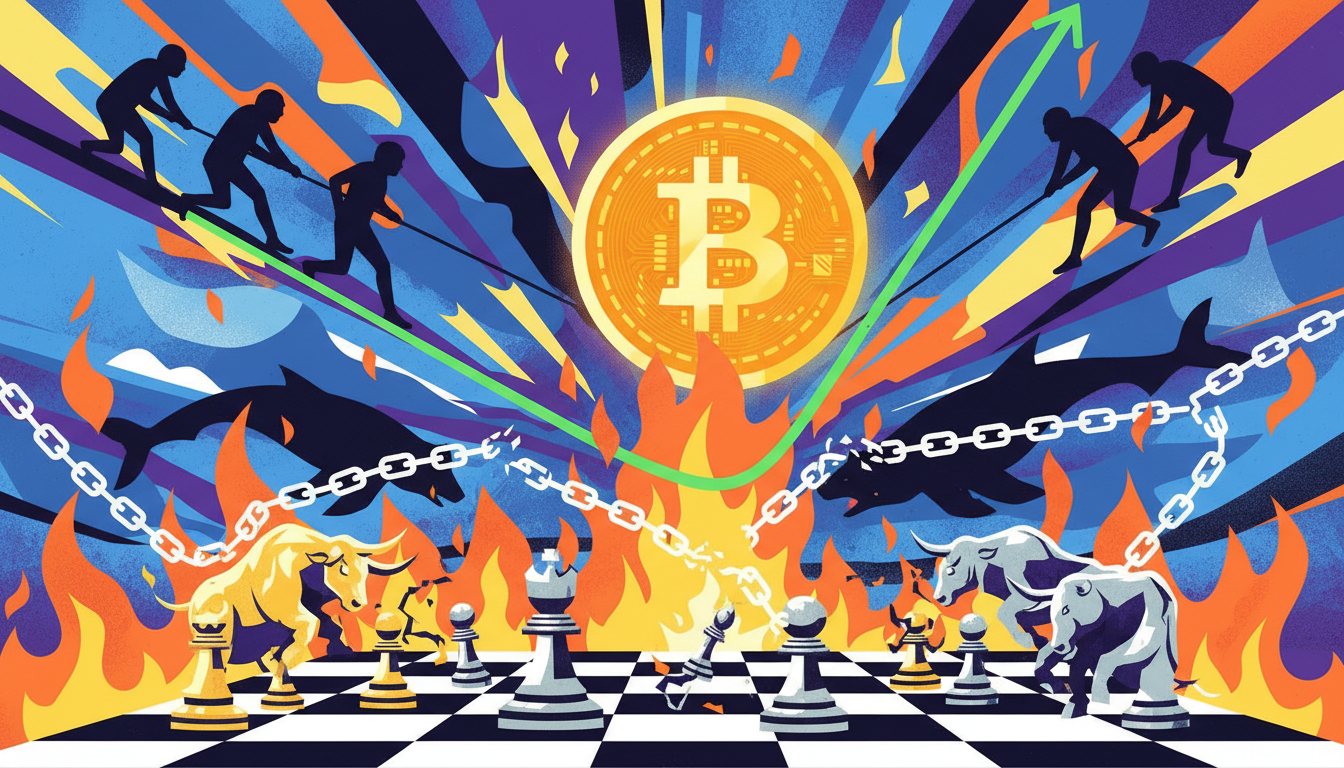
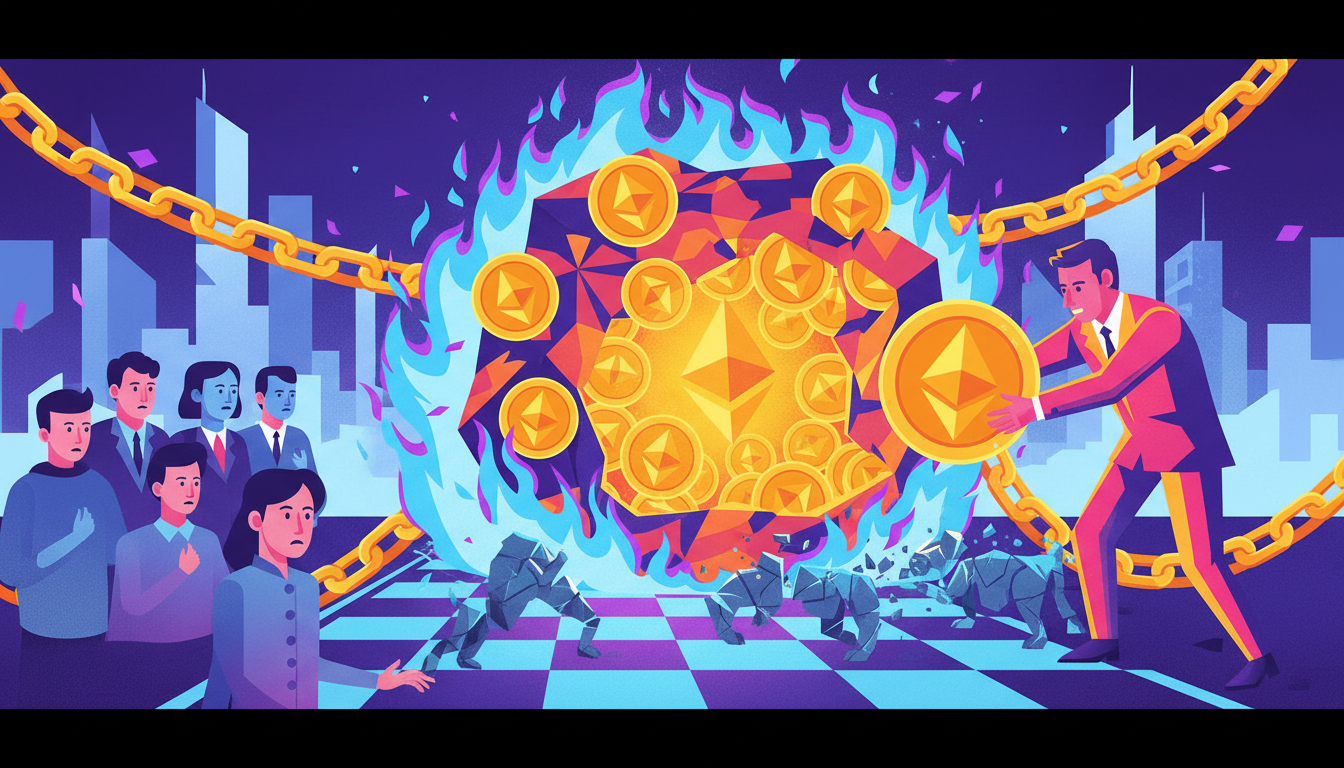
● Fund Dispatch Overview: On March 9, 2026, according to a single on-chain tracking source, BlackRock transferred 2200 BTC and 2417 ETH to Coinbase, corresponding to approximately 149 million USD and 4.84 million USD in nominal fiat currency scales. Currently, it can only be confirmed that this is a one-time, verifiable single-source event, with no public data available regarding any subsequent transfers. Thus, this text does not extend interpretations related to continuity and rhythm, nor does it speculate on specific investment or trading strategy motives.
● Relative Volume Assessment: With a total transfer of approximately 154 million USD, compared to the recent average daily net inflow scale common among mainstream exchanges, it is evident that it is significantly elevated, but it has not yet reached the scale that could “rewrite the entire market structure.” Combining the data that Hyperliquid had less than 5 billion USD in weekend trading volume, one can roughly perceive: a on-chain dispatch in the scale of millions of dollars is already comparable to the visible slice of daily transactions from mid-sized derivative platforms, which creates an indicative meaning for sentiment pricing in both the spot and derivatives markets.
● Use Cases at the Scenario Level: Based on publicly verifiable information, funds transferred to compliant exchanges may theoretically align with various scenarios such as compliance custody arrangements, liquidity buffers, or support for trading and redemption of products like ETFs. For instance, asset managers may concentrate their assets at leading compliant exchanges to facilitate subsequent market-making hedges, product subscription and redemption settlements, or executing OTC agreements. However, in the absence of internal guidance or announcements, these can only be listed as neutral uses and cannot be interpreted as BlackRock’s subjective judgment or directional allocation decisions.
● Discrepancy Between OTC and On-Exchange: By contrasting this approximately 154 million USD on-chain transfer with the less than 5 billion USD from Hyperliquid's overall trading volume, a clear misalignment between “OTC decisions and on-exchange reactions” emerges. The individual institution-level dispatch on-chain occupies a non-negligible proportion of the weekend derivative transactions, and when the overall trading on the weekend is relatively light, such actions amplify emotional effects, suggesting that investors need to track the discrepancies between OTC institutional fund flows and on-exchange short-term trading activity when observing price fluctuations.
Bank Charter Disputes and Institutional Conflicts in Crypto Entry
● Litigation Intent and Stance: Also on March 9, according to information disclosed by a single source, the Bank Policy Institute (BPI) is considering suing the OCC, with the core demand being opposition to the OCC issuing national bank charters to cryptocurrency companies. The BPI represents the interests of a group of large banks. This action is not aimed at any single individual company, but addresses the systemic nature of questioning the pathways for all cryptocurrency entities to obtain national charters, indicating a strong resistance from traditional banking to the prospect of crypto companies “upgrading to national banks.”
● Meaning of Federal Charters: The federal bank charters issued by the OCC represent a simultaneous elevation of the ability to operate across states and the compliance thresholds for crypto companies. Once such a national charter is obtained, the boundaries of cryptocurrency businesses related to payment clearing, deposit and withdrawal channels, and asset custody will significantly expand, and regulation will become more unified, which will directly weaken the prior advantages traditional banks held in interstate transactions and customer acquisition, effectively constituting a potential squeeze on the bank’s deposit and lending, payment, and custody markets.
● Conflict Landscape of Business Structures: From the perspective of business structure, BPI member banks exhibit clear potential conflicts of interest with cryptocurrency companies in segments such as payment channels, custody services, and market making and financing. If cryptocurrency companies provide more competitive payment solutions or digital asset custody options under the national charter framework, they will touch upon the banks' core sources of intermediate business income. However, no specific positions or internal strategies regarding individual banks have been disclosed in the available public information, thus only outlining conflict contours at the industry level without further dissecting the demands of individual institutions.
● Institutional Costs of Uncertainty: It is important to emphasize that regarding the litigation timetable and specific legal clauses for BPI to sue the OCC, we are currently in a state of information deficiency, with no official documents or public procedures available for verification. Looking at past regulatory friction cases, such litigation typically raises compliance uncertainties across the entire industry in the short term, forcing traditional banks and cryptocurrency companies to adopt a more conservative stance regarding charter applications, compliance investments, and business boundaries, thus increasing the implicit compliance costs of the entire cryptocurrency financial system.
Nasdaq and Kraken’s Tokenization Loop
● Cooperation Structure and Role Division: After verification from multiple media and official channels, Nasdaq and Kraken have confirmed a collaboration to develop stock-based tokenized ETP products. In this system, Nasdaq provides mature trading and clearing infrastructure, along with a regulatory framework for securities issuance, registration, and compliance disclosure; Kraken leverages its capabilities in cryptocurrency trading, on-chain custody, and technical integration, acting as a bridge for technology and liquidity between traditional securities and on-chain tokens.
● Tokenization Framework and Governance Automation: Research briefs indicate that Nasdaq plans to launch a complete tokenization framework in early 2027, which will not only include standards for the issuance and trading of tokenized securities but will also introduce automated corporate governance processes. This means that future corporate actions, from the on-chain representation of equity or debt to shareholder voting, dividend distribution, and information disclosure, are expected to operate in a closed-loop manner on a unified smart contract and infrastructure, significantly shortening the various “manual + paper + multi-party intermediary” process chains found in traditional finance.
● Potential Restructuring of Intermediary Institutions: Both parties have emphasized in their public statements that this cooperation aims to “optimize digital asset management and trading business based on stock tokenization”. From the perspective of brokerages, tokenized securities may reshape front, middle, and back office structures, with some traditional clearing and reconciliation processes being replaceable by on-chain settlements; for custodians, the boundaries of asset custody will extend from purely offline to a “mixed on-chain + off-chain” form; while in compliance reporting and auditing, if on-chain data are recognized as a trusted ledger by regulators, there is an opportunity to reduce the costs of repetitive reconciliations and multiple submissions.
● Amplification Effect of Nasdaq-Level Infrastructure: Although there are a few tokenized stock products in the market, most rely on regional platforms or limited-scale pilot projects, with liquidity and pricing transparency constrained by the limited number of participants. The involvement of Nasdaq, a leading global securities market infrastructure, implies that tokenized securities are expected to achieve a qualitative change in liquidity depth, price discovery efficiency, and institutional participation ratio, providing familiar market rules and compliance frameworks for traditional asset managers, thereby lowering the entry barrier for them to attempt tokenized products.
Energy Data and Risk Transmission Under Geopolitical Conflicts
● Scale of Energy Logistics: At the macro level, multiple data sources point to Iran transporting approximately 11 to 12 million barrels of crude oil daily through this key shipping route. From both supply chain security and maritime transportation costs perspectives, this scale is substantial enough to provide foundational support for global crude oil pricing and freight benchmarks; therefore, any geopolitical tension surrounding the region could lead to significant disturbances in commodity price curves.
● Compromised Data Transparency: The co-founder of TankerTrackers.com recently mentioned that due to local conflicts, satellite data has been delayed, indicating that traditional monitoring of energy logistics, reliant on AIS signals and satellite imagery, is encountering unprecedented information blind spots. For traders and risk management teams needing real-time tracking of tanker dynamics and unloading port situations, data delays will directly impair their judgment capabilities regarding spot supply and inventory changes, amplifying emotional trading and pricing behaviors based on “expectations replacing facts.”
● Inflation Expectations and Risk Appetite: As energy prices become harder to predict due to data opacity and supply expectations fluctuations, inflation expectations also grow more uncertain. Historical experience shows that uncertainties in the inflation path often affect the discount rates of risk asset valuations and funding preferences, with multiple asset classes, including commodities, stocks, and crypto assets potentially transmitting sentiment through correlation chains: when oil price uptrend expectations strengthen, some funds may view Bitcoin and others as hedging tools, but when rate hike expectations tighten, it may inversely suppress crypto valuations.
● Framework of Events and Volatility Correlation: As summarized in the research brief, trading activity on-chain and in the derivatives market was relatively muted over the weekend, with Hyperliquid having less than 5 billion USD in weekend trading being a reflection of this. This reminds investors that during periods of intensive geopolitical news and increased macro noise, short-term price fluctuations often present a “correlation rather than causation” misalignment with specific events. When constructing risk frameworks, geopolitical conflicts should be viewed as background factors impacting volatility and risk premiums rather than direct drivers of every price move.
A New Path for Institutional Funds in Regulatory Cracks
● Same Stage, Different Stances: If we place BlackRock's significant on-chain dispatch, BPI’s resistance to OCC charters, and Nasdaq's push for tokenized securities in the same coordinate system, we can see there is an in-play game within traditional finance with divergent positions. On one end, one of the world's largest asset managers makes a substantive move in on-chain funding pathways, while on the other end, an industry organization representing traditional banking interests tries to block the upward channel for cryptocurrency companies acquiring national charters, while exchanges and securities market infrastructures continue to double down on tokenization, seeking compliance for on-chain assets.
● Internal Differentiation in Exposure Preferences: The attitude of traditional finance towards crypto exposure is becoming increasingly differentiated. Buy-side institutions (such as asset managers and family offices) focus more on new revenue sources, portfolio diversification, and liquidity management, thus looking for risk-reward matching points in spot, derivatives, or tokenized products; while sell-side institutions and banks emphasize regulatory red lines, capital adequacy ratios, and charter barriers, hoping to maintain their pricing power in payments, loans, and custodial roles by raising compliance thresholds. This structural differentiation has become a key variable in the institutional environment of the crypto market.
● The Compliance Framework for Tokenization: Under the high regulatory pressure and uncertainty surrounding charters, tokenized securities provide institutions with a layer of “compliance packaging”. Tokenizing traditional stocks, bonds, and other assets allows institutions to gain on-chain transferability and settlement efficiency within familiar securities law and market rules frameworks, thereby bypassing some policy-sensitive areas tailored to “native crypto assets.” For those looking to utilize the advantages of on-chain infrastructure while reluctant to expose themselves directly to the policy gray zones, tokenization becomes a compromise solution balancing regulatory requirements with technical innovation.
● Boundaries Between Facts and Interpretations: In a highly volatile emotional market environment, it is crucial to deliberately distinguish between verifiable facts and secondary market interpretations. For example, the large on-chain transfer by BlackRock is merely a record of a funding path and does not automatically equate to direct positive or negative implications; similarly, BPI’s regulatory action and Nasdaq’s technical layout do not imply that regulatory attitudes will evolve linearly. For investors, the key lies in identifying which institutional changes have direct constraints on current pricing, and which are merely narrative noise amplified by market sentiment.
Cycle Outline from Large On-Chain Transfers to the Tokenization Track
● Three Main Lines of the New Cycle: In summary, the large on-chain reallocations, the bank regulatory games, and Nasdaq’s tokenization layouts collectively outline the emergence of a new cycle of institutional participation in the crypto market. On one hand, global asset managers, represented by BlackRock, are deepening their connections to on-chain assets through compliant exchanges and custody systems; on the other hand, traditional banks are attempting to reshape the access thresholds for cryptocurrency companies through the BPI and OCC confrontation; at the same time, Nasdaq’s collaboration with Kraken builds a bridge between traditional securities and on-chain tokens at the infrastructure level.
● Uncertainty and Information Distortion: In the short term, regulatory uncertainties are likely to recur. Whether it’s the advancement of the BPI lawsuit or the OCC's subsequent response pathways, there is currently a lack of clear visible timelines. Additionally, geopolitical conflicts lead to a decline in transparency of energy and shipping data, coupled with part of the on-chain data being deliberately amplified by short-term funds, indicating that both traditional markets and crypto markets are experiencing rising “distortion of data,” compelling investors to enhance their risk management and information source discernment capabilities to avoid losing direction in second-hand interpretations and emotional amplifications.
● Operational Insights: In such an environment, focusing attention on compliance custody, tokenization infrastructure, and cross-market liquidity bridges as medium to long-term tracks may be more cost-effective than pursuing individual trade events for speculative boosts and bursts. For mid to long-term funds, the key is not to capture the short-term fluctuations stemming from a significant transfer or a single regulatory statement, but to identify which institutional arrangements and technical pathways are building sustainable “legitimacy channels” for institutional participation in crypto assets, and accordingly engage in rhythmic allocations and risk controls.
Join our community to discuss and grow stronger together!
Official Telegram Community: https://t.me/aicoincn
AiCoin Chinese Twitter: https://x.com/AiCoinzh
OKX Welfare Group: https://aicoin.com/link/chat?cid=l61eM4owQ
Binance Welfare Group: https://aicoin.com/link/chat?cid=ynr7d1P6Z
免责声明:本文章仅代表作者个人观点,不代表本平台的立场和观点。本文章仅供信息分享,不构成对任何人的任何投资建议。用户与作者之间的任何争议,与本平台无关。如网页中刊载的文章或图片涉及侵权,请提供相关的权利证明和身份证明发送邮件到support@aicoin.com,本平台相关工作人员将会进行核查。