Source:Culper Research
Translation: Azuma, Odaily Planet Daily
Editor’s note: On March 6, the Wall Street short-selling organization Culper Research suddenly published an article announcing that it is shorting ETH and related securities such as BMNR. The logic of Culper Research is that developers like Vitalik have miscalculated the demand elasticity of Ethereum before the Fusaka upgrade, causing the upgrade to destroy the token economic model of ETH. Culper Research also mentioned that Vitalik is well aware of this and is taking proactive actions to escape, while the obstinate Tom Lee is headed for a dead end.
In response to the huge shorting by this organization, neither Vitalik nor Tom Lee has publicly responded, but Vitalik's father Dmitry Buterin (dima.eth) did respond, stating: "Once you see the phrase 'Vitalik knows this and is selling', you don't need to read any further. They are attention-seeking clowns, not researchers."
The following is the original content from Culper Research, translated by Odaily Planet Daily. The translation of this article does not imply that we agree with Culper Research's views, but is intended to present part of the perspective of Wall Street institutions on ETH and the market incitement.

Latest disclosure, we are shorting ETH and stocks related to ETH, including Bitmine (BMNR).
We believe that after the Fusaka upgrade in December 2025, the token economic model of ETH has been destroyed. Vitalik is well aware and is selling; meanwhile, ETH's staunch bull Tom Lee continues to make ineffective investments. ETH will continue to decline.
Tom Lee's Bitmine has always defended ETH, claiming that "due to increased utility, ETH is not caught in a death spiral." He cited the surge in active addresses and transactions after the Fusaka upgrade as evidence of so-called "fundamental improvement" and institutional adoption, but he is completely mistaken.
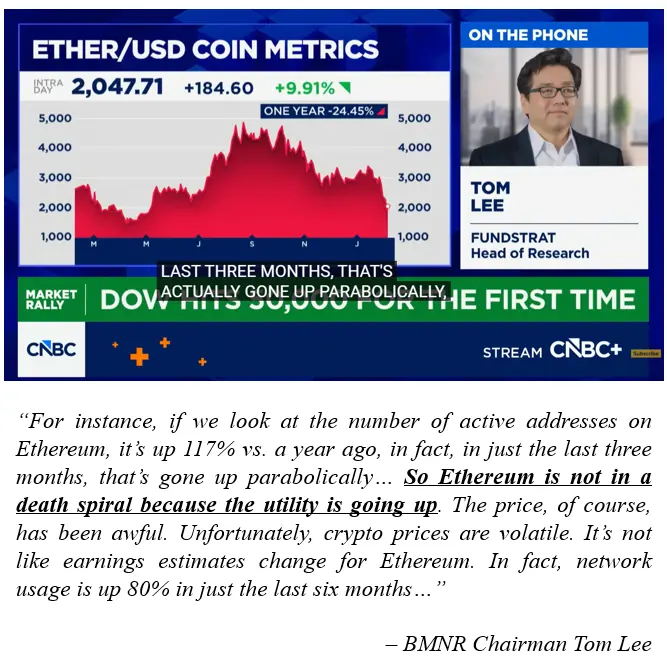
According to Tom Lee's own logic, if Ethereum's on-chain activity does not reflect real usage growth and fundamental improvement, then ETH is indeed in a death spiral.
Our research shows that this is indeed what is happening.
We conducted a comprehensive analysis of on-chain data from January 2025 to February 2026, and the results show that the "institutional adoption led to an increase in Ethereum's activity" claimed by Lee can actually be explained by a high incidence of low-value address poisoning and dusting attacks. These behaviors are triggered by the excess block space following the Fusaka upgrade.
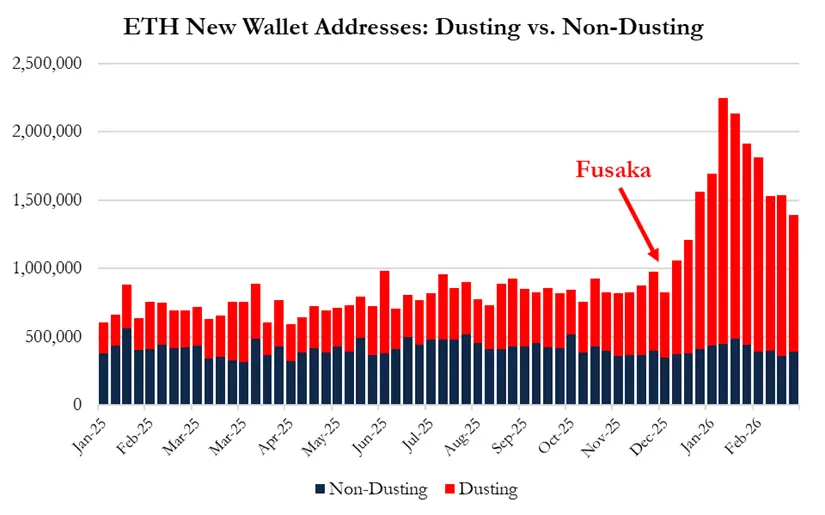
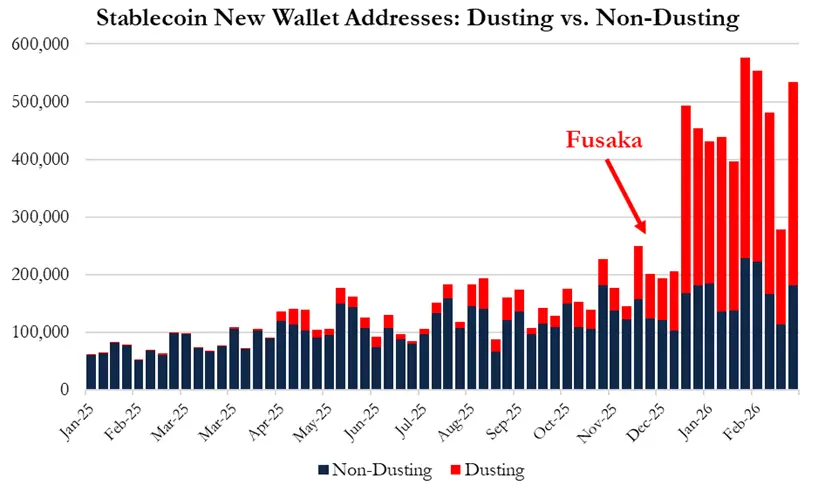
After the Fusaka upgrade:
- 95% of new wallet growth comes from newly created dust addresses;
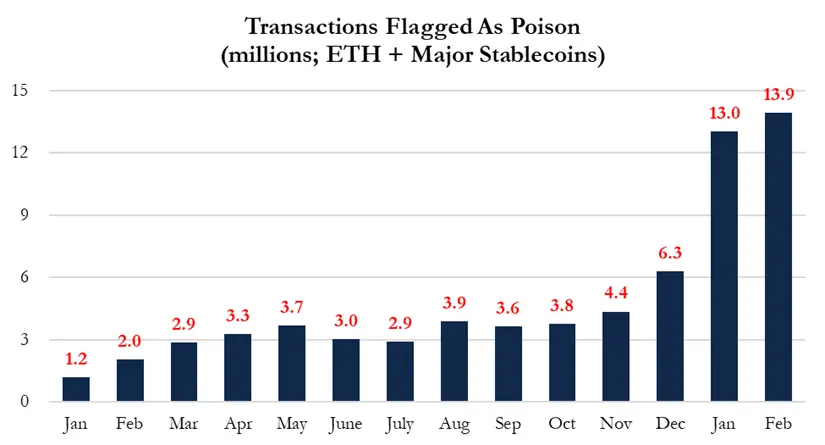
- The number of poisoning attacks has increased more than threefold;
- Poisoning behaviors explain over 50% of Ethereum's transaction growth;
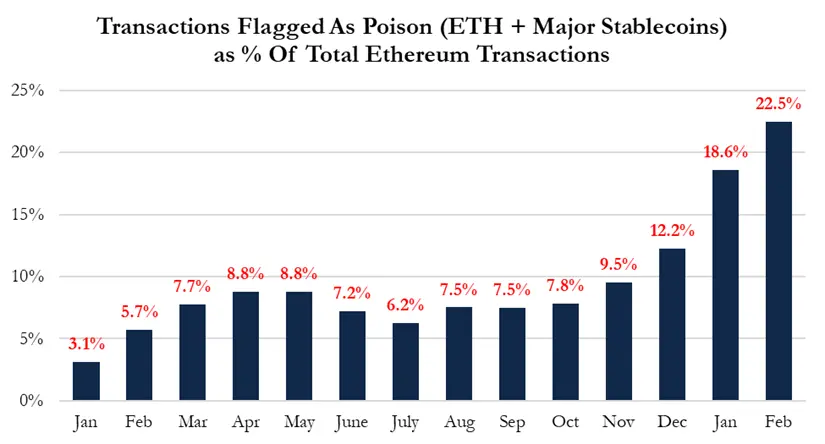
- Currently, poisoning transactions account for 22.5% of all Ethereum transactions;
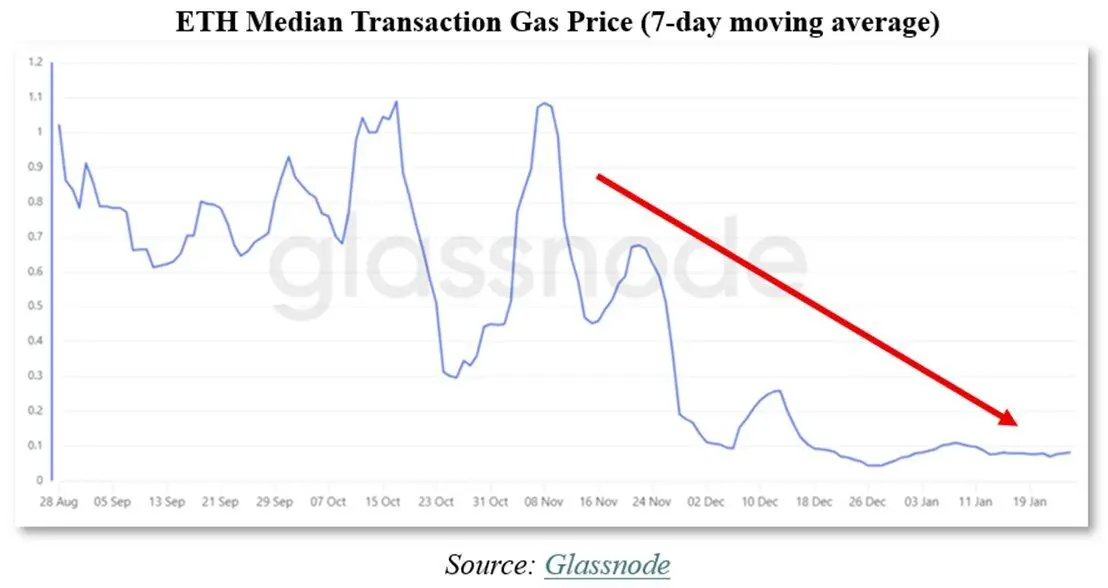
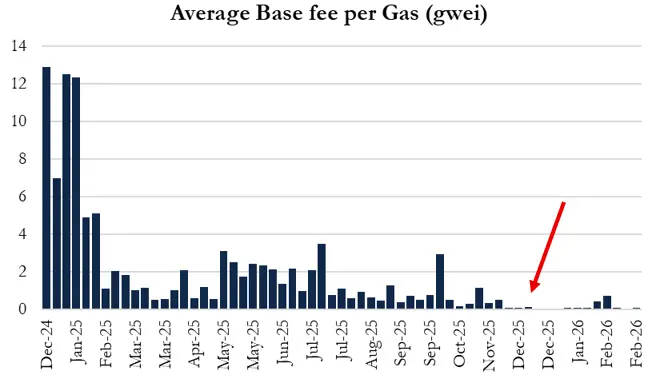
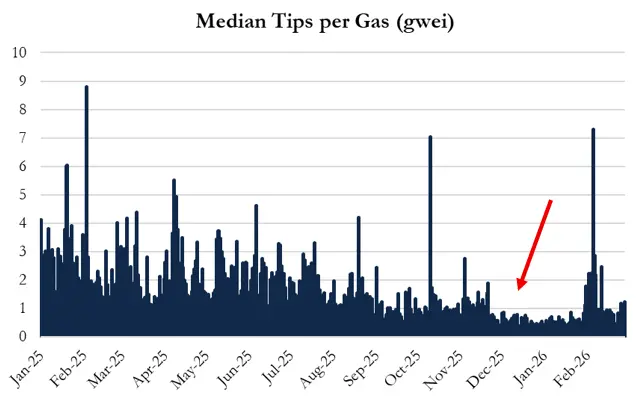
The Fusaka upgrade raised the gas limit from 45M to 60M, aiming to expand the capacity of Ethereum Layer 1. Vitalik and the protocol team previously expected gas fees to drop by 10%–30%, but the reality is that gas fees have dropped by about 90%.

Vitalik and validators have seriously miscalculated the demand elasticity of Layer 1. They used outdated mathematical models (based on assumptions before EIP-1559 and the advent of Layer 2), thus overestimating Layer 1 demand by 3 to 9 times. This is also the reason we believe Vitalik is selling ETH in large quantities. On January 30, Vitalik announced in advance that he would sell 16,384 ETH to fund the Ethereum Foundation's "austerity period," but since then, he has sold over 19,300 ETH and is continuing to sell.
Vitalik understands a point that Tom Lee does not — the token economic model of ETH has been destroyed.
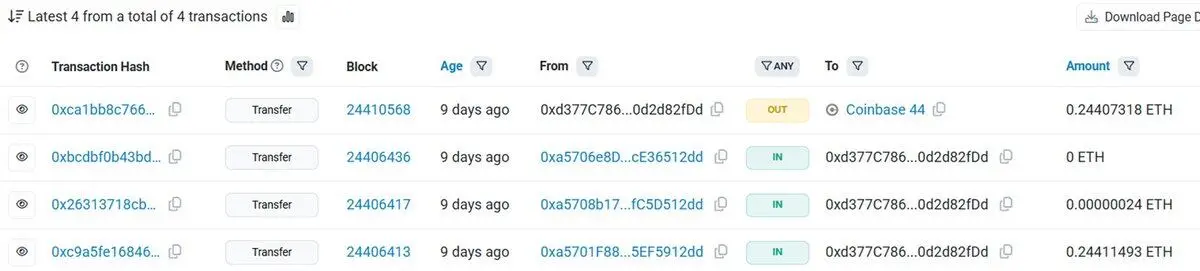
We personally documented instances of address poisoning on the Ethereum network. We created two new addresses and transferred between them. Within 5 minutes, we were subjected to address poisoning attacks. We encourage readers to verify this phenomenon themselves. Currently, the rate of losses caused by poisoning attacks has increased more than eightfold compared to before the Fusaka upgrade.
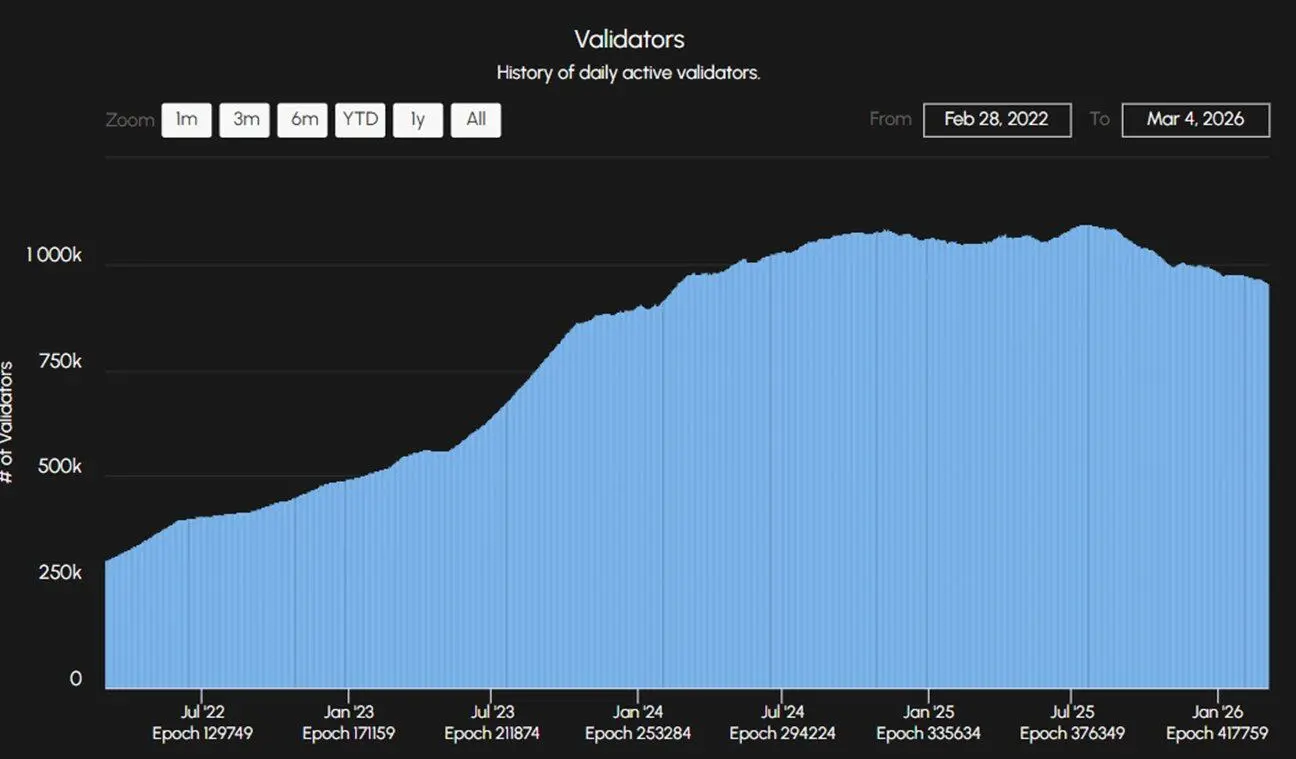
Moreover, the increase in gas limit has also hit the validator community of Ethereum, with validators now earning 40%–50% less in tips per gas unit. The decline in yields will weaken staking demand and high-value transaction activities, further undermining institutional adoption. This flywheel has now begun to operate in reverse.
Meanwhile, Ethereum continues to lose market share, flowing to Solana and its own Layer 2 networks.
- The number of Solana developers grew by 29% in 2025;
- Ethereum developers grew by only 6%;
- Talent is leaving the Ethereum ecosystem;
- Institutions like Visa and Citigroup chose Solana for DeFi applications;
- The trading volume of Solana DEX has exceeded twice that of Ethereum.
During the internet bubble era, Netscape and Nokia dominated the market for over 10 years, but ultimately it was Google and Apple that reaped the real rewards. We believe Ethereum's situation is similar — we believe that Ethereum's token economic model has collapsed, Tom Lee is trapped in his own stance, and the price of ETH will continue to decline.
免责声明:本文章仅代表作者个人观点,不代表本平台的立场和观点。本文章仅供信息分享,不构成对任何人的任何投资建议。用户与作者之间的任何争议,与本平台无关。如网页中刊载的文章或图片涉及侵权,请提供相关的权利证明和身份证明发送邮件到support@aicoin.com,本平台相关工作人员将会进行核查。


