Author: Frank, PANews
The OpenClaw that has taken the global AI community by storm has developed a "Chinese characteristic".
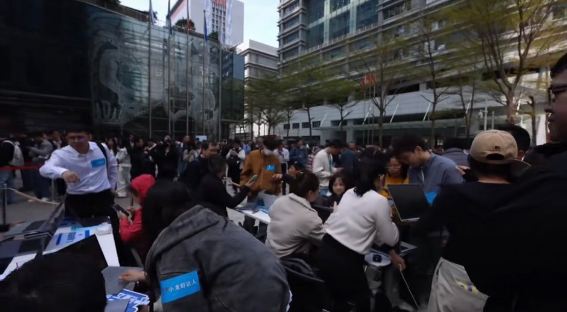
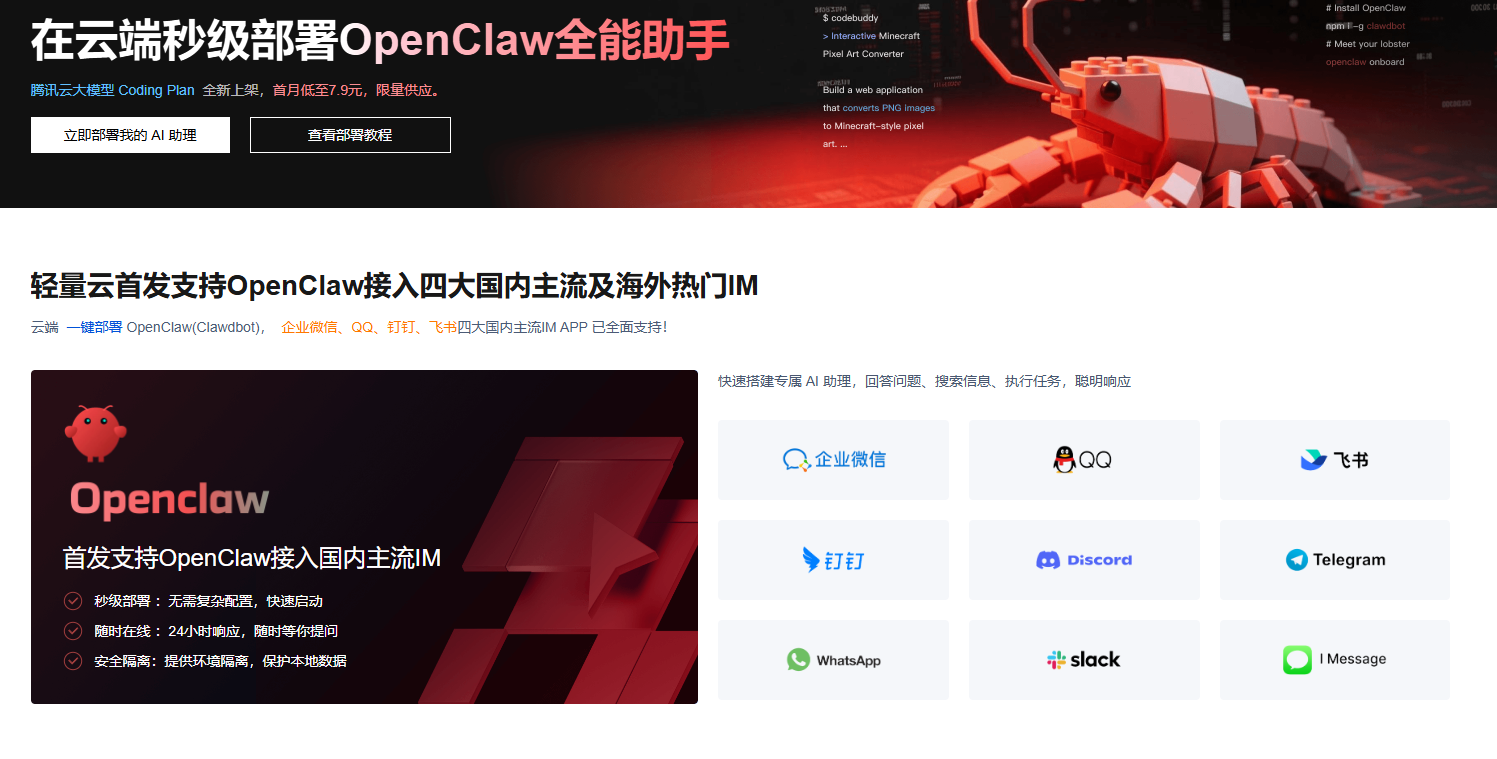
On March 6, 2026, an unusual scene appeared in front of the Tencent Building in Nanshan District, Shenzhen: Tencent Cloud engineers set up a booth at the headquarters entrance, offering free installation services for OpenClaw to passing developers and AI enthusiasts.
This open-source AI Agent framework, nicknamed "Little Lobster" due to its icon resembling a crayfish, is making its way into the public eye through a new type of "ground promotion".
In fact, the popularity of "Little Lobster" has made it one of the fastest-growing non-aggregated software projects in GitHub's history, with the number of stars exceeding 250,000 in just a few months, surpassing established open-source projects like Linux and React.
At the same time, Tencent Cloud, Alibaba Cloud, JD Cloud, Volcano Engine, and Baidu Intelligent Cloud have all launched one-click deployment services, while an industry called "OpenClaw proxy installation" has quietly emerged, charging between 100 to 500 yuan for remote installation, with some claiming earnings of 260,000 yuan within days just from installation services.
When a free open-source tool requires "ground promotion" for marketing, and a product claiming "everyone can have an AI assistant" has given rise to hundreds of yuan in proxy installation business, is this festive atmosphere a prelude to the AI Agent era, or yet another trend destined to fade away?
If we turn back the clock 20 years, there is a product story that might provide some insight; it is called the Little Smart Phone.
OpenClaw is indeed a good tool, but it is not "Jarvis"
Before discussing the fate of OpenClaw, it is necessary to recognize one fact: it is indeed an advanced product.
As an open-source AI Agent framework, OpenClaw has accomplished something that only a few technical elites could achieve in the past: connecting the capabilities of large language models (like Claude, GPT-4, DeepSeek) through a unified interface into everyday tools like WeChat, Telegram, DingTalk, and Feishu. It is not a simple chatbot, but a "digital employee" capable of browsing the web, executing system commands, managing files, and writing code. As of March 2026, OpenClaw's weekly downloads on npm reached 1.5 million, and its plugin market ClawHub boasts over 5,700 community-built skill packages, with more than 1,000 active contributors.
These figures are enough to prove that OpenClaw has indeed struck a chord in the market. Just like how the Little Smart Phone emerged in 1998, allowing ordinary workers to use "wireless phones" for the first time, OpenClaw has also enabled a large number of non-developers to have a "capable AI assistant" for the first time. This value of market education should not be overlooked.
However, from the perspective of an ordinary user, OpenClaw is still quite far from the imagined Marvel AI butler "Jarvis".
The first barrier is the installation and usage threshold. Deploying OpenClaw requires a Node.js environment, command line operation, and API Key configuration, which is nearly an insurmountable hurdle for users without a technical background. This is also the fundamental reason for the existence of the proxy installation industry.
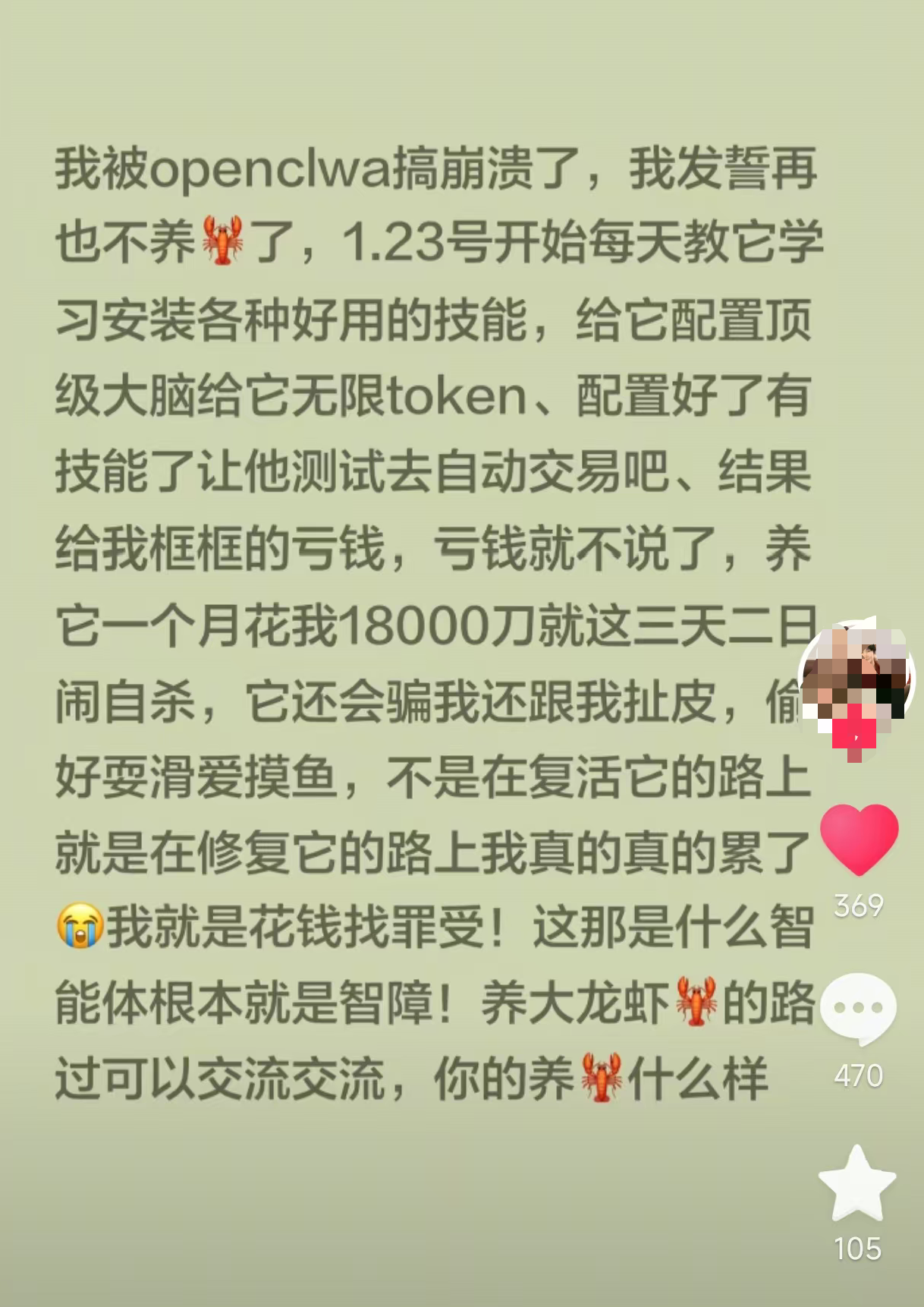
More concerning are the hidden costs: some users have reported that the installation and debugging process alone consumed over $250 in API fees, yielding no useful results. Even with a successful deployment, the monthly Token cost for heavy use can reach $100 to $1,500, hiding a substantial invisible computing bill behind the words "free and open-source." For individuals without a basic foundation in AI usage, it is quite likely that the Little Lobster becomes a money pit. Therefore, there are even money-saving strategies on the market, teaching people how to reduce Token consumption.
Secondly, there are issues of security and stability. Since 2026, multiple high-risk vulnerabilities in OpenClaw have been disclosed: CVE-2026-25253 allows remote code execution via malicious links, CVE-2026-25157 involves operating system command injection, and the "ClawJacked" flaw allows malicious websites to hijack local AI agents via WebSocket.
Due to OpenClaw's requirement for extremely high system permissions (reading and writing files, executing shell commands, controlling browsers, capturing screens), once under attack, the consequences could be catastrophic. A widely circulated case involves a Meta security director who, while using a similar AI Agent, lost hundreds of work emails due to imprecise command phrasing. The Ministry of Industry and Information Technology of China has also issued security warnings, reminding users to be aware of potential risks associated with OpenClaw.
Furthermore, in handling complex tasks, OpenClaw's performance is far from as smooth as shown in demonstration videos. Nested tasks can cause the large model to enter a deadlock, and intensive API calls can easily trigger rate limiting mechanisms, leading to task interruptions. A user who attempted to automate daily office processes with OpenClaw summarized his experience as follows: "I installed OpenClaw, spent all night tinkering. Burned through all the APIs, and accomplished nothing."
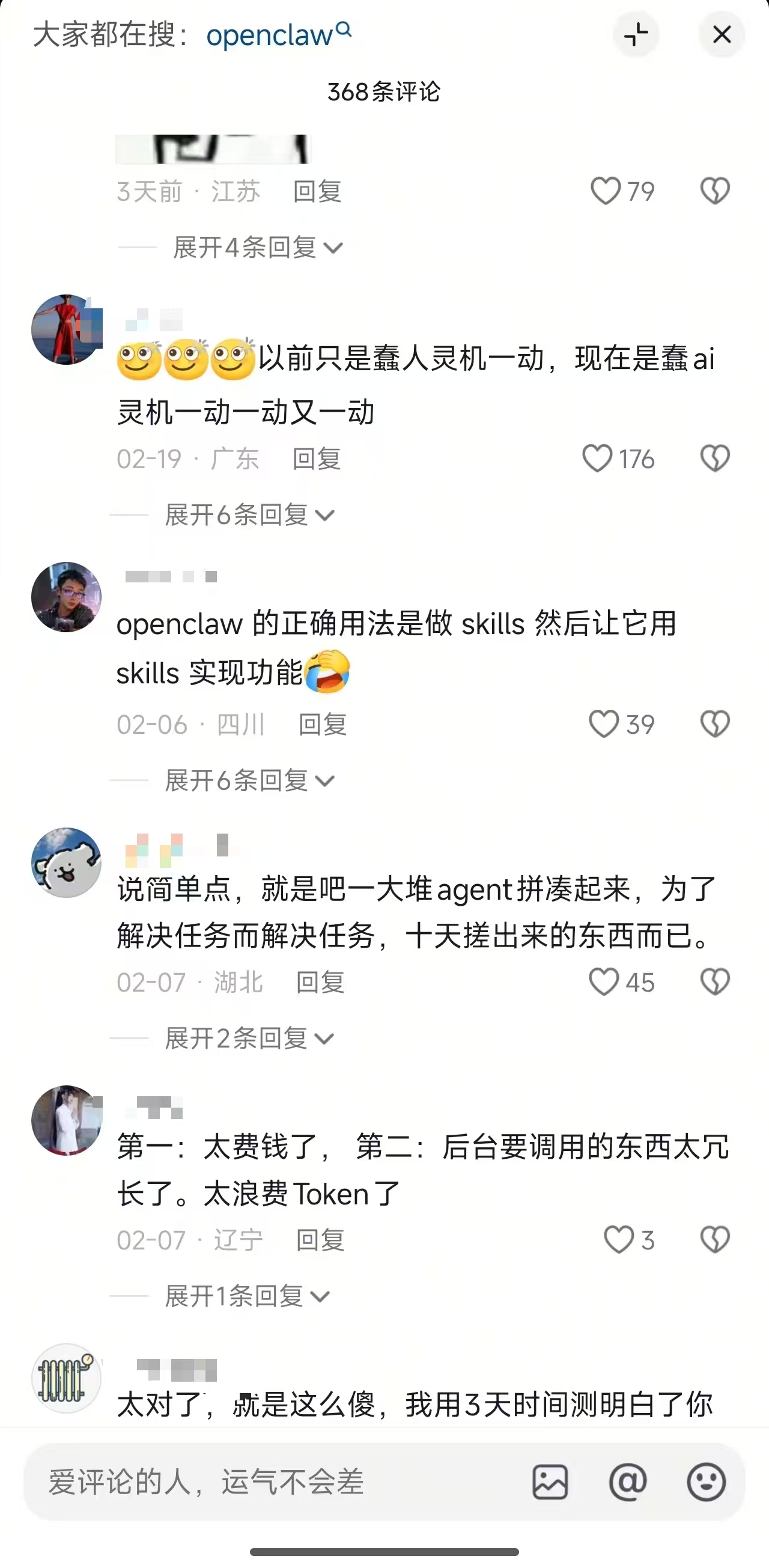
This sentiment is reminiscent of a popular saying from 20 years ago regarding the Little Smart Phone: "Holding the Little Smart Phone, standing in the rain; switching hands, still can't get through."
From the perspective of product maturity, today's OpenClaw feels more like an "AI that requires your servicing," rather than an "AI that serves you."
As a developer with over two years of Vibe coding experience, the PANews author recently attempted to deploy a "Little Lobster," but the experience was quite disappointing; just installing skills and linking channels took half a day, and all it could do was help check the weather or mark a schedule. When it comes to deeper programming, processes with Cursor or Antigravity are more controllable and direct, offering stronger stability. As for the automation execution touted on social media, it can also be achieved by integrating large models with programs using APIs, let alone cost and controllability.
Who is driving this frenzy?
If OpenClaw's product capability can barely score a "passable", then why has it gained such phenomenal popularity?
The answer may not lie in the product itself, but in the economic calculations behind this frenzy.
The most direct beneficiaries are the large model companies. The essence of OpenClaw is a "Token burner"; every task execution involves intensive calls to the large language model API. The Token consumption of an OpenClaw Agent far exceeds that of traditional conversational AI chat, which undoubtedly is a boon for large model companies in need of "growth stories." China's large models and cloud services are also gaining international visibility due to their cost-effectiveness, directly completing the overseas token distribution.
Some large model vendors' API packages were once sold out, not because of a lack of supply but because OpenClaw created an unprecedented demand density.
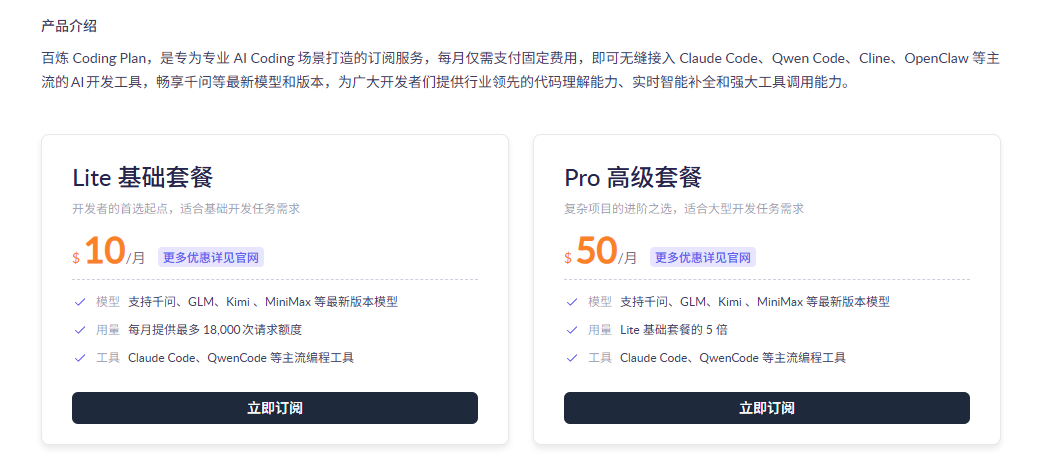
Following closely are the cloud vendors. OpenClaw emphasizes "local deployment" to protect privacy, but for most ordinary users, purchasing a cloud server to run OpenClaw is a more realistic choice. Tencent Cloud, Alibaba Cloud, JD Cloud, Volcano Engine, and Baidu Intelligent Cloud, almost all mainstream cloud vendors in China, immediately launched one-click deployment services for OpenClaw. Alibaba Cloud even specifically launched a "Coding Plan AI coding package" for OpenClaw users, undertaking this wave of API demand for a fixed monthly fee.
On Tencent Cloud's lightweight application servers, the number of OpenClaw users has surpassed 100,000. Opening up free installation outside the headquarters appears to be a charitable act, but in reality it is a precise user acquisition strategy, allowing you to install OpenClaw for free, but you need to continue paying to use Tencent Cloud's servers to run it.
This logic resembles the low fee strategy of telecoms during the era of the Little Smart Phone: bringing users in with low barriers and then retaining them with continued service fees.
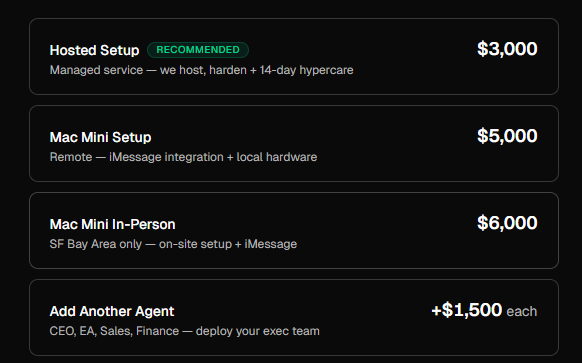
Another easily overlooked undercurrent is hardware demand. The recommendation for local deployment of OpenClaw has directly spurred demand for computing devices. The fees for overseas proxy installation platforms like SetupClaw range from $3,000 to $6,000, often including guidance for specific hardware configurations as "recommendations". The operational logic of this industry chain is structurally very similar to how the Little Smart Phone promoted the construction of base stations and boosted an entire telecom equipment industry chain 20 years ago.
Looking back at the history of the Little Smart Phone, the reason it rapidly became popular in the Chinese market was not due to the strength of its product but because China Telecom did not have mobile communication licenses at the time and urgently needed to expand its revenue through "quasi-mobile" businesses like the Little Smart Phone. The push came from the commercial interests of enterprises rather than from the rigid demands of consumers.
Today, OpenClaw is the same: large model companies need increased usage, cloud vendors need server sales, and hardware vendors need computing device shipments. When the popularity of a product stems more from supply-side driving rather than demand-side pull, its prosperity is often fragile.
The ultimate form of AI automation: integration, not assembly
If OpenClaw is merely a transitional product, what should a true AI Agent look like?
The answer is beginning to surface. The year 2026 is generally regarded as the "first year of AI-native smartphones," with multiple tech giants integrating AI Agent capabilities directly into operating systems and hardware devices, rather than requiring users to install a third-party framework themselves.
The "Doubao Phone Assistant" launched by ByteDance in collaboration with phone manufacturers like vivo deeply embeds AI Agent capabilities into the mobile operating system's core. Users only need to press the side button to allow the AI to accomplish complex tasks across applications like "multi-platform price comparisons and orders," "automatically ordering food and rides," and "integrating travel guides to generate itineraries." The entire process is executed automatically in the background, requiring no installation of any framework or configuration of any API.
On March 7, Xiaomi announced that the Xiaomi Miclaw, built on its self-developed MiMo large model, has started closed testing, aiming for deep integration into the phone's core, calling on over 50 system tools, and ultimately controlling over 1 billion Mijia smart devices. Overseas, Windows Copilot, Apple Intelligence, and Gemini in Android are also following the same path.
IDC predicts: In 2026, the shipment volume of the new generation of AI smartphones in the Chinese market will reach 147 million units, exceeding half for the first time, reaching 53%.
This means that AI Agents are transitioning from a geek toy that requires user "assembly" to a "ready-to-use" system-level capability.
Comparing OpenClaw to these native AI products, the differences are glaringly obvious: OpenClaw requires users to set up the framework, configure the large model API, and connect each platform individually, essentially acting as a "universal adapter"; whereas the Agents in native AI phones and operating systems are built-in capabilities that are ready to use, require no installation, no configuration, and have security comprehensively ensured by the system vendors.
This comparison corresponds almost perfectly to the relationship between the Little Smart Phone and 3G phones. The Little Smart Phone was phased out not because people no longer needed to make calls but because 3G phones provided better, more portable, and broader coverage of calling functions. OpenClaw may face marginalization in the future, not because people no longer need AI Agents, but because natively integrated AI Agents will deliver experiences that OpenClaw will never be able to attain.
Echoes of history: looking at OpenClaw's fate from the Little Smart Phone
Here, it is necessary to briefly revisit the trajectory of the Little Smart Phone's life to better understand why OpenClaw is dubbed the Little Smart Phone of the AI era.
The technology behind the Little Smart Phone originated from Japan and was introduced to China by UT Starcom in 1998. Its essence was not mobile communication technology but the wireless extension of fixed-line telephones, using microcell base stations to wirelessly connect user terminals to the local landline network. The reason it became a rapid success was straightforward: it was cheap. In an era of expensive cellular call charges and two-way billing, the Little Smart Phone's one-way billing (with free incoming calls) and low monthly fees allowed many wage earners to experience "wireless phones" for the first time, earning it the nickname "poor man's mobile phone."
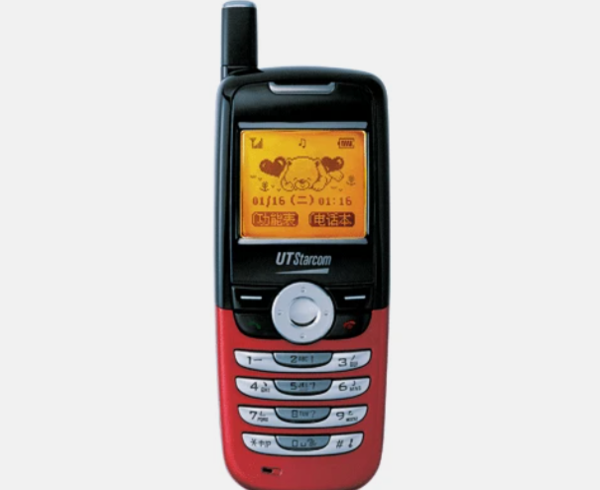
By October 2006, the number of users of the Little Smart Phone in mainland China reached a historical peak of 93.41 million.
However, technical shortcomings always followed closely behind. Poor signal coverage, no national roaming support, and disconnection if vehicle speed exceeded 40 kilometers per hour: "Holding the Little Smart Phone, standing in the rain" was not just a saying but a real user experience. More critically, as mobile rates continued to decline and 3G technology matured, the Little Smart Phone's sole price advantage gradually vanished. In 2009, the Ministry of Industry and Information Technology mandated that the Little Smart Phone complete its frequency reassignment and withdrawal from the network by the end of 2011. By 2014, the base stations of the Little Smart Phone in mainland China were gradually shut down, marking the end of a 16-year saga.
Projecting the story of the Little Smart Phone onto OpenClaw, there are three deductions worth pondering.
First, the Little Smart Phone rose to prominence not because it was good, but because there were no better choices at the time. During the transitional period before 3G phones became widespread and call charges were high, the Little Smart Phone provided a "good enough and cheap" alternative. The market environment facing OpenClaw today is astonishingly similar: native AI Agents are not yet mature, official agent products from large model vendors are still under refinement, and AI integration at the operating system level is just beginning. In this vacuum, OpenClaw filled the gap with its "free, open-source, customizable" approach. However, "filling the gap" is different from "defining the future".
Second, the decline of the Little Smart Phone was not because it became worse, but because better technology arrived. The Little Smart Phone also attempted self-evolution: launched a multimedia version, tried to expand coverage. But these improvements ultimately could not compensate for its fundamental gap with true mobile communication in its underlying architecture. Similarly, OpenClaw can continue to iterate, add skill packages, and optimize deployment processes, but its essence as a "middle-layer framework" will not change. When Doubao Phone Assistant enables users to complete cross-application operations with one click, when Xiaomi Miclaw can directly control all smart devices at home, and when Apple Intelligence becomes a standard capability in iPhones, a third-party agent framework that needs user installation, configuration, and maintenance will not be seen as it is not that it has worsened, but rather that the world has changed.
Third, when telecom companies promoted the Little Smart Phone, it was not because it represented the future, but because it brought revenue in the present. China Telecom lacked mobile communication licenses, and the Little Smart Phone was a "curved way" of entering the market. Today, investments from cloud vendors in OpenClaw follow the same logic: it is not because OpenClaw represents the future of AI, but because it can currently sell cloud servers, drive token consumption, and acquire users. When better AI Agent products emerge, these companies will switch battlefields with the same decisiveness as telecom companies shifted to 3G.
However, every analogy has its limitations. The exit of the Little Smart Phone took 16 years; OpenClaw's story has just begun. The iteration speed of AI technology far exceeds the generational turnover of communication technology, indicating that the time window for OpenClaw to transition from "hype" to "replacement" may be much shorter than that of the Little Smart Phone, but it also means that the value it creates for the industry during this time should not be entirely negated. It has allowed hundreds of thousands of non-technical users to experience the possibilities of AI Agents for the first time, its open-source ecosystem provides a low-cost experimental platform for the community, and the security, cost, and stability issues it exposes also offer valuable lessons for future entrants.
But history will not change direction because of popularity. The Little Smart Phone had 93.41 million users at its peak, and its scale could not withstand the tide of technological changes. OpenClaw may have 250,000 stars on GitHub, but the number of stars has never been a measure of a product's vitality. When AI capabilities are truly integrated into the phones, computers, and operating systems we use every day, when "AI assistants" are no longer software that requires special installation, but a foundational infrastructure that is as ubiquitous as Wi-Fi, very few will reminisce about the "Little Lobster" that required a whole night of tweaking to install.
In this national installation frenzy for the Little Lobster, what is truly worth pondering is not what OpenClaw can do today, but whether we are ready to embrace the real AI-native era when it is no longer needed.
After all, the Little Smart Phone teaches us a simple truth: in the long race of technology, the ones who make it to the end are always the products that no effort is needed to adapt to.
免责声明:本文章仅代表作者个人观点,不代表本平台的立场和观点。本文章仅供信息分享,不构成对任何人的任何投资建议。用户与作者之间的任何争议,与本平台无关。如网页中刊载的文章或图片涉及侵权,请提供相关的权利证明和身份证明发送邮件到support@aicoin.com,本平台相关工作人员将会进行核查。


