This article is jointly published by K1 Research & Klein Labs
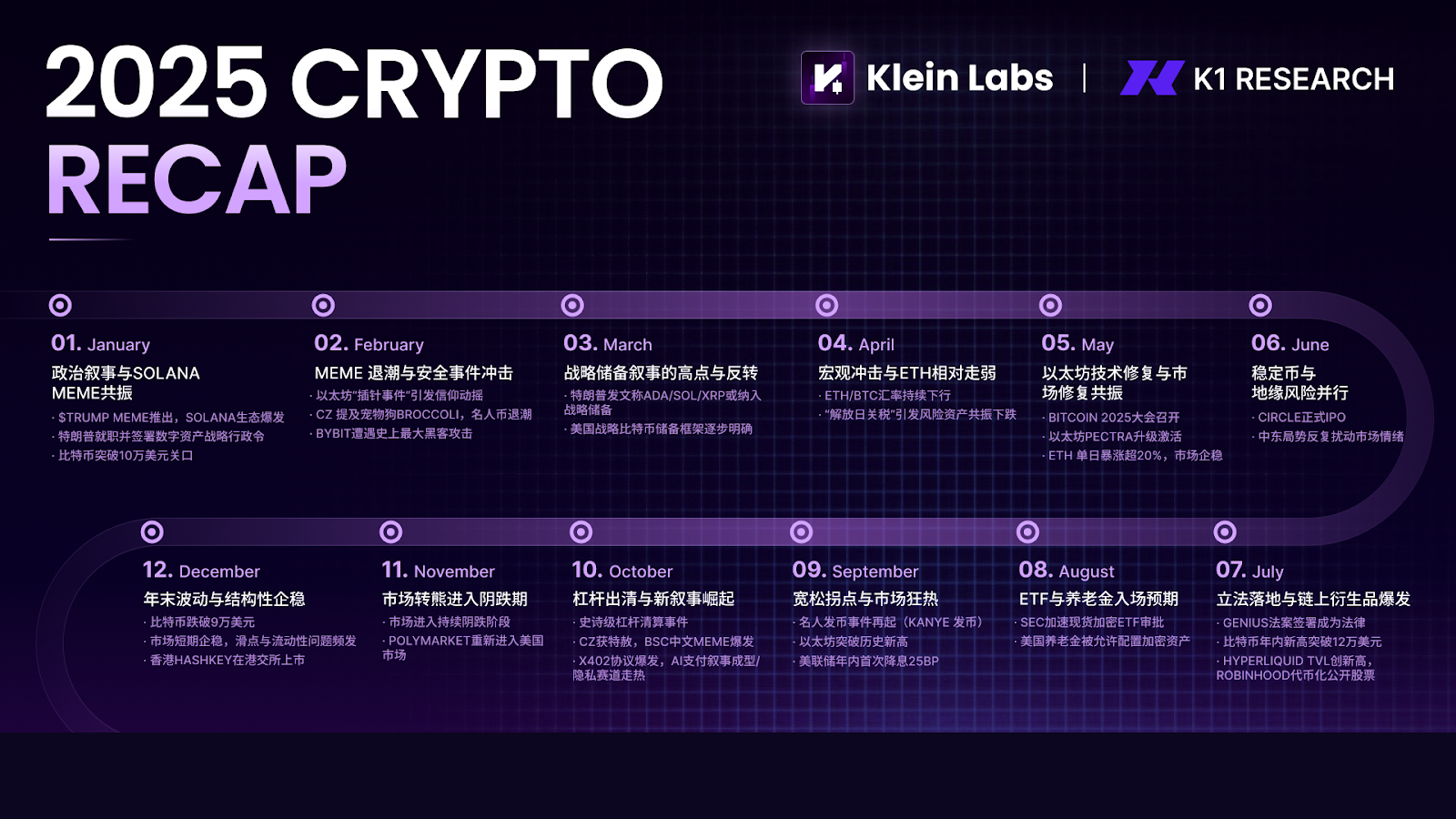
2025 Monthly Event Review Calendar source: Klein Labs
Looking back at 2025, this year was not simply a bull or bear market, but a repositioning of the crypto industry across multiple coordinates of politics, finance, and technology—laying the groundwork for a more mature and institutionalized cycle in 2026.
At the beginning of the year, Trump's inauguration and the executive order on digital asset strategy significantly changed regulatory expectations. Meanwhile, the issuance of the $TRUMP token brought cryptocurrency into the mainstream, rapidly increasing market risk appetite, with Bitcoin historically breaking through $100,000, completing its first leap from a "speculative asset" to a "political and macro asset."
Subsequently, the market quickly faced a backlash from reality. The decline of celebrity coins, the Ethereum flash crash incident, and Bybit's epic hacking attack collectively exposed issues of high leverage, weak risk control, and narrative overextension. The crypto market gradually retreated from its frenzy between February and April, with macro tariff policies resonating with traditional risk assets, prompting investors to reassess the weight of safety, liquidity, and fundamental value in asset pricing.
During this phase, Ethereum's performance was particularly representative: ETH faced pressure relative to Bitcoin, but this weakness did not stem from degradation at the technical or infrastructure level. On the contrary, in the first half of 2025, Ethereum continued to advance on key roadmaps such as gas limits, Blob capacity, node stability, and zkEVM, PeerDAS, steadily improving its infrastructure capabilities. However, the market did not price these long-term advancements accordingly.
As the year progressed, structural repairs and institutionalization processes unfolded simultaneously. The Ethereum Pectra upgrade and the Bitcoin 2025 conference provided support for technology and narrative, while Circle's IPO marked a deep integration of stablecoins and compliant finance. The formal implementation of the GENIUS Act in July became the most symbolic turning point of the year—marking the first clear and systematic legislative endorsement for the crypto industry in the U.S. Against this backdrop, Bitcoin refreshed its annual high, while on-chain derivatives platforms like Hyperliquid rapidly grew, and new forms such as stock tokenization and Equity Perps began to enter the market's view.
In the second half of the year, funding and narratives exhibited a clear divergence. The acceleration of ETF approvals, expectations of pension fund entry, and the initiation of a rate-cutting cycle collectively lifted the valuations of mainstream assets, while celebrity coins, memes, and high-leverage structures frequently experienced liquidation. The large-scale liquidation event in October became a concentrated manifestation of risk release for the year; meanwhile, the privacy sector showed signs of strength, with new narratives like AI payments and Perp DEX quietly taking shape in specific niches.
By the end of the year, the market closed with a high-level decline and low liquidity. Bitcoin fell below $90,000, while traditional safe-haven assets like gold and silver performed impressively, indicating that the crypto market had deeply embedded itself into the global asset allocation system. At this juncture, mainstream crypto assets entered a phase of bottoming out: whether the market would follow the traditional four-year cycle to rebound before entering a bear market decline in 2026, or break the cyclical law to reach new highs driven by continuous institutional inflows and improved compliance frameworks, will become the core research topic for the next phase of market trends.
Macroeconomic Environment and Policy: Structural Changes in 2025
1. Shift in Policy Direction: 2025 is Essentially Different from Past Cycles
Looking back at the various cycles in the crypto industry, policy and regulation have always been important exogenous variables affecting market expectations, but their mode of action underwent a fundamental change in 2025. Unlike the laissez-faire growth of 2017, the relaxed approach of 2021, and the comprehensive suppression from 2022 to 2024, 2025 presented a structural shift from suppression to allowance, from ambiguity to regulation.
In past cycles, regulation intervened in the market more negatively: either interrupting risk appetite at market peaks through bans, investigations, or enforcement, or releasing uncertainty in a concentrated manner during bear markets through accountability. In this model, policies often failed to effectively protect investors or provide long-term development expectations for the industry, instead exacerbating the severe volatility of cycles. However, entering 2025, this governance approach began to undergo structural changes: executive orders took the lead, regulatory agencies aligned their statements, and legislative frameworks gradually advanced, gradually replacing the previous case-based enforcement regulatory model.
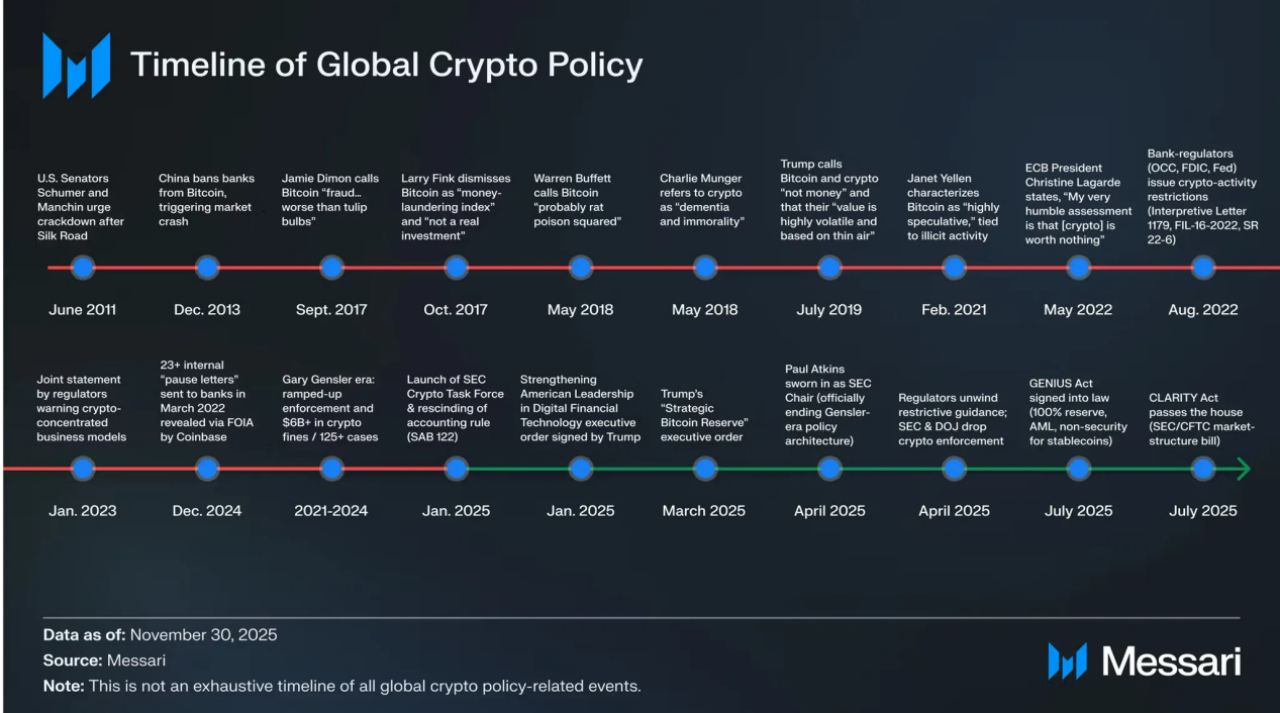
Crypto Regulatory Development Chart source: Messari
In this process, the promotion of ETFs and stablecoin legislation played a key role in "anchoring expectations." The approval of spot ETFs allowed Bitcoin and Ethereum, among other crypto assets, to gain compliant channels for long-term capital allocation through the traditional financial system; by the end of 2025, the scale of ETP/ETF products related to Bitcoin and Ethereum had reached hundreds of billions of dollars, becoming the main vehicle for institutional capital allocation in crypto assets. Meanwhile, stablecoin-related legislation (such as the GENIUS Act) clarified the layering of crypto assets at the institutional level: which have "financial infrastructure attributes" and which remain high-risk speculative products. This distinction broke the generalized pricing of the "crypto whole," prompting the market to begin differentiating valuations for different assets and sectors.
It is important to note that the policy environment in 2025 did not create a "policy dividend-style explosion" similar to past cycles. Instead, its more significant meaning lies in providing the market with a relatively clear lower limit: defining the boundaries of permissible behavior and distinguishing assets with long-term survival space from those that will ultimately be marginalized. Within this framework, the role of policy shifted from "driving the market" to "constraining risk," from "creating volatility" to "stabilizing expectations." From this perspective, the policy shift in 2025 was not a direct engine for a bull market, but rather a structural foundation.
2. Funding First: The "Low-Risk Channel" Constructed by Stablecoins, RWA, ETFs, and DAT
In the crypto market of 2025, a counterintuitive yet crucial phenomenon gradually became clear: funds did not disappear, but prices did not respond. The market capitalization of stablecoins and the scale of on-chain transfers remained high, with spot ETFs maintaining net inflows across multiple time windows, while, at the same time, the prices of most altcoins remained under pressure for an extended period, except for a few mainstream assets. This divergence between funding activity and price performance constitutes the core entry point for understanding the market structure of 2025. 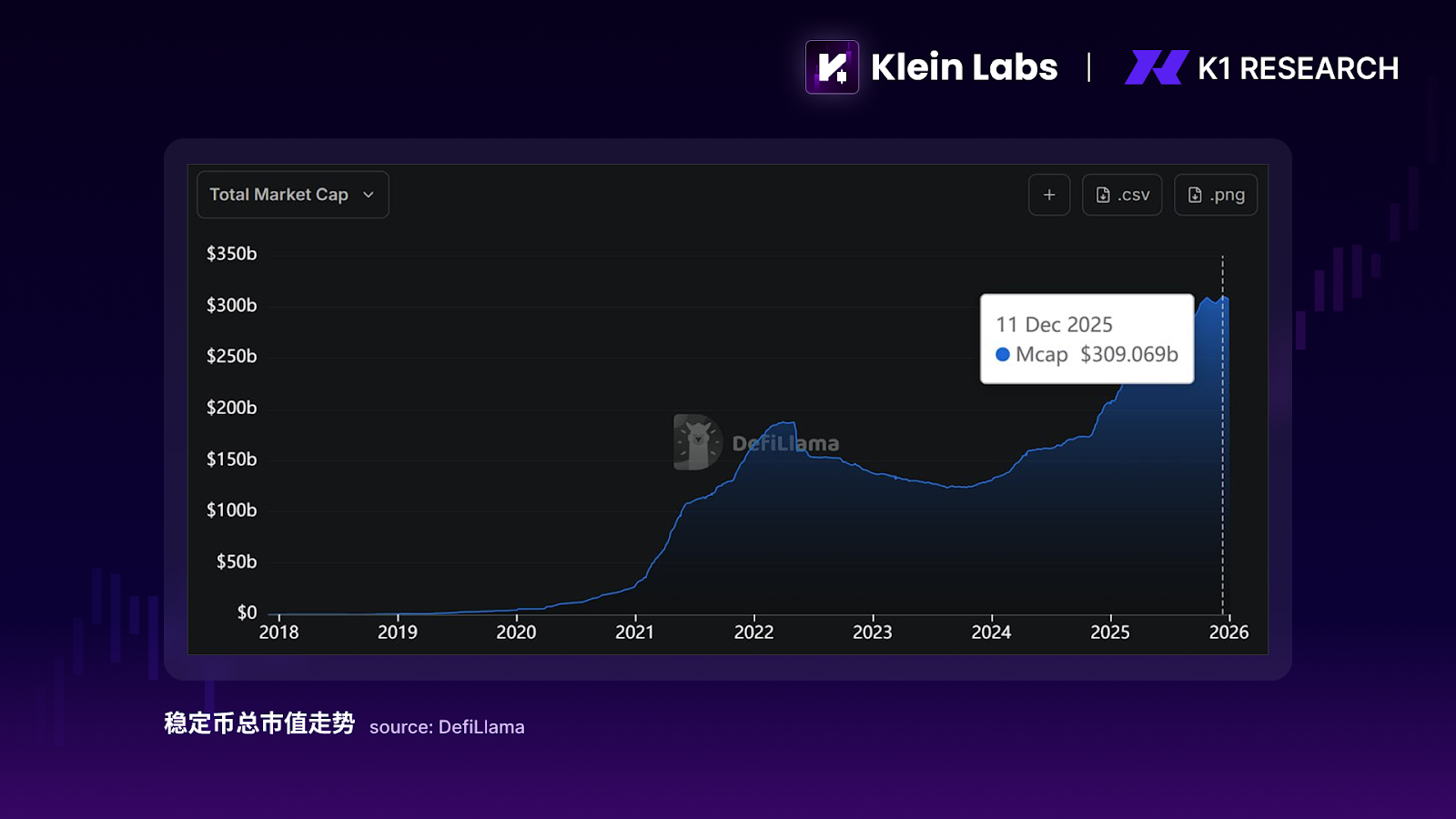
Stablecoins played a completely different role in this process compared to past cycles. In the past, stablecoins were often seen as "intermediary currencies" within exchanges or leverage fuel during bull markets, with their growth often highly correlated with speculative activities. However, in 2025, stablecoins gradually evolved into tools for fund retention and settlement. The total market capitalization of stablecoins grew from about $200 billion at the beginning of the year to over $300 billion by the end of the year, with an annual increment of nearly $100 billion, but during the same period, the overall market capitalization of altcoins did not expand in tandem. Meanwhile, the annual on-chain settlement scale of stablecoins reached several trillion dollars, even nominally exceeding the annual transaction scale of traditional card organizations. Thus, it can be seen that the growth of stablecoins in 2025 primarily stemmed from payment, settlement, and fund management needs, rather than speculative leverage.
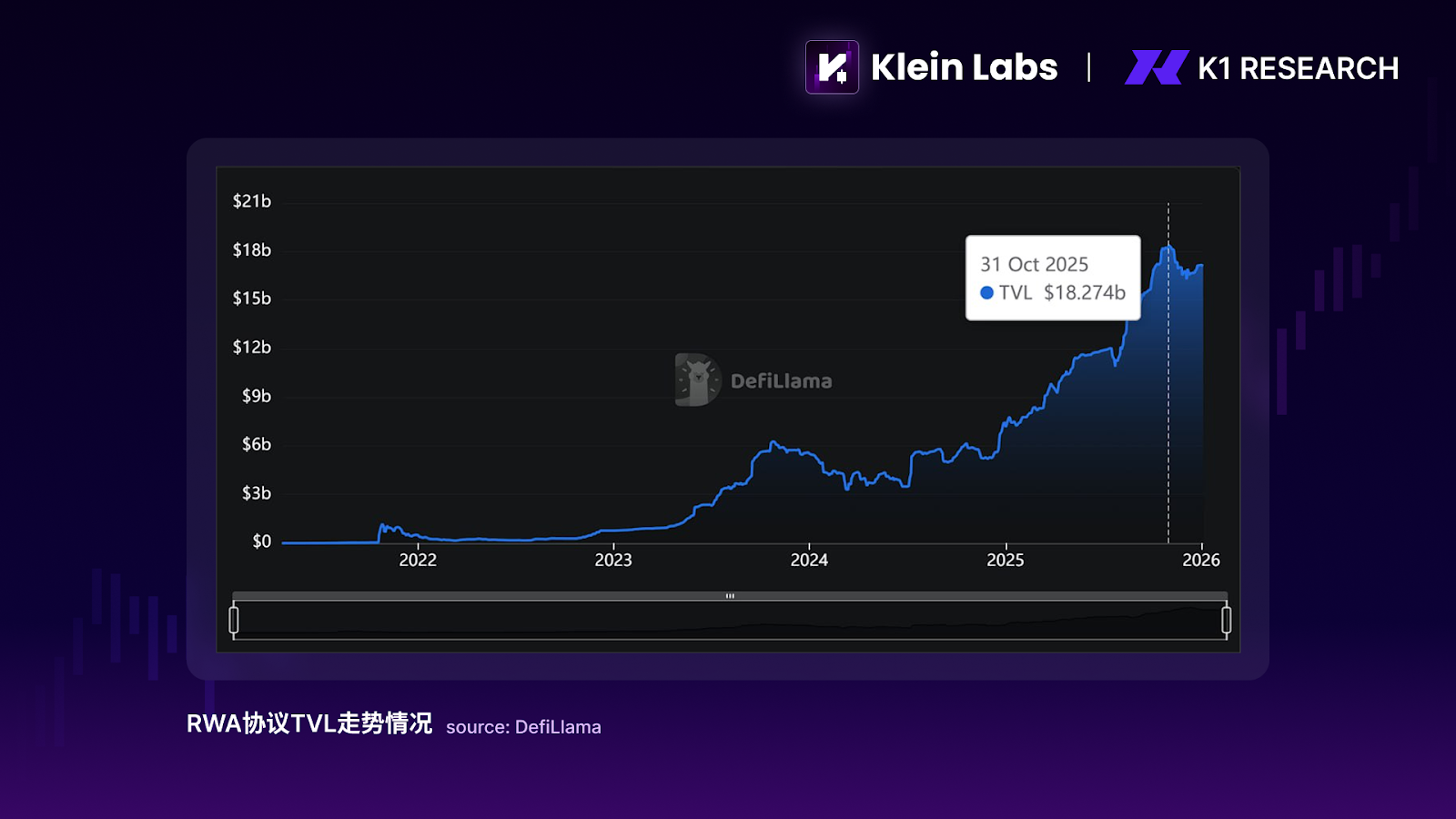
The development of RWA further reinforced this trend. The RWA that truly landed in 2025 mainly focused on low-risk assets such as government bonds, money market fund shares, and short-duration notes, with its core significance not in creating new price elasticity, but in verifying the feasibility of compliant assets existing on-chain. From on-chain data, the TVL of RWA-related protocols began to accelerate growth in 2024 and continued to rise in 2025—by October 2025, the TVL of RWA protocols had approached $18 billion, growing several times compared to early 2024.
Although this scale is still insufficient to directly drive crypto asset prices at the macro funding level, its structural impact is quite clear: RWA provides on-chain funds with a near-risk-free yield parking option, allowing some funds to "stay on-chain but not participate in crypto price fluctuations." Against a backdrop of still attractive interest rates and gradually clear regulatory boundaries, this choice marginally weakened the traditional positive correlation between on-chain activity and token prices, further explaining the structural characteristic of "fund growth but price elasticity decline" in 2025.
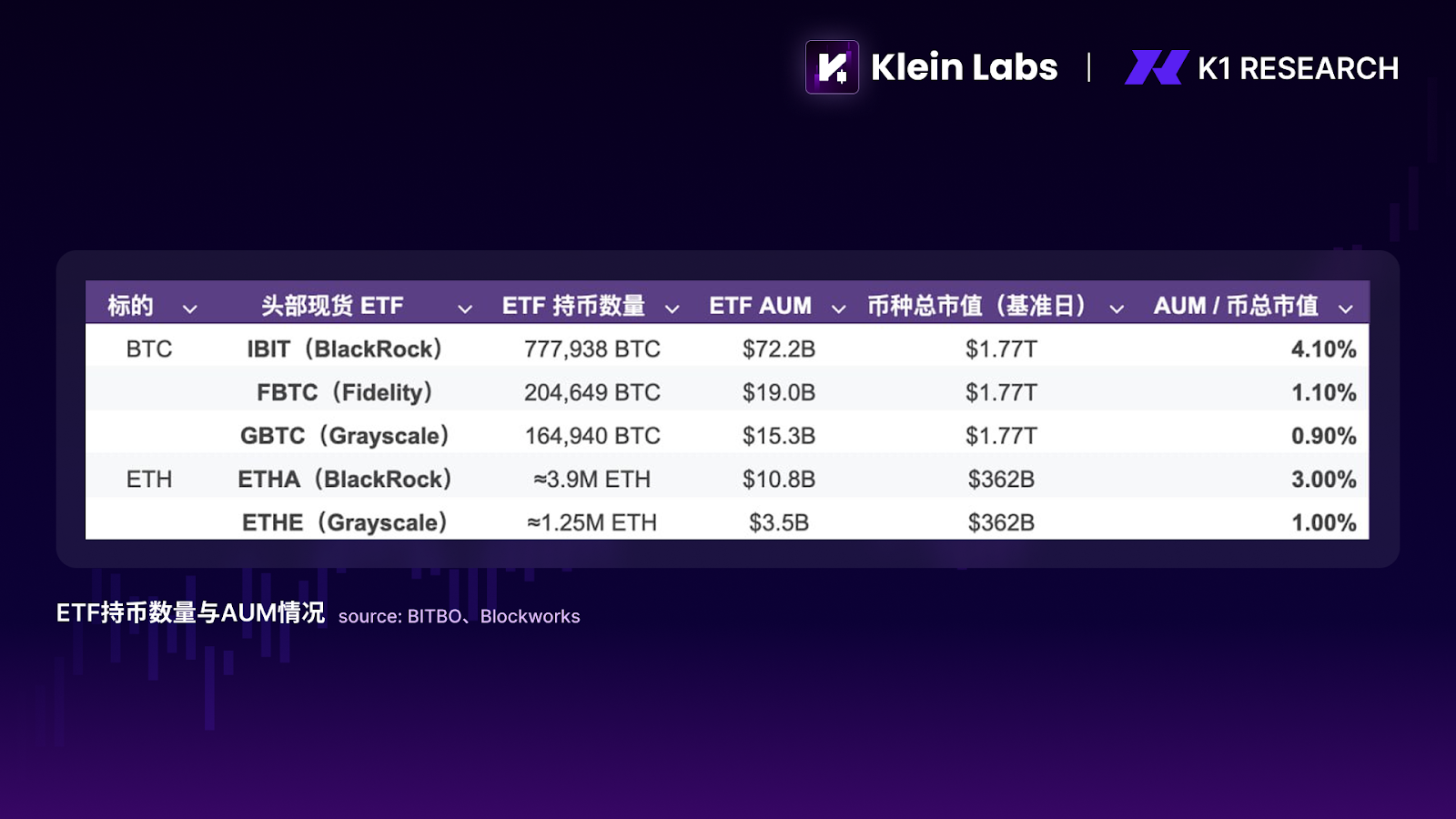
The impact of ETFs is more reflected in the stratification of funds rather than a broad diffusion. Spot ETFs provided compliant, low-friction allocation channels for mainstream crypto assets like Bitcoin and Ethereum, but this funding entry path is highly selective. In terms of actual holding scale, by early 2026, leading BTC/ETH spot ETFs had approached holding over 6%/4% of the total market capitalization of these cryptocurrencies, forming a clear institutional capital absorption in mainstream assets. However, this increment did not spill over to broader asset tiers. During the ETF promotion period, BTC Dominance (the ratio of Bitcoin's market capitalization to the total market capitalization of cryptocurrencies) did not experience the rapid decline commonly seen in historical bull markets, but instead remained at a high level, reflecting that institutional capital had not diffused to long-tail assets (typically referring to tokens ranked outside the top 100). The result is that ETFs strengthened the capital absorption capacity of leading assets, but objectively exacerbated the structural differentiation within the market.

Equally noteworthy is the rapid emergence of the "Digital Asset Treasury Companies" (DAT) phenomenon in 2025: publicly traded companies incorporated BTC, ETH, and even SOL into their balance sheets and used capital market tools such as secondary offerings, convertible bonds, buybacks, and staking yields to shape stocks into "financable, leveraged crypto exposure vehicles." In terms of scale, nearly 200 companies have disclosed adopting similar DAT strategies, collectively holding over $130 billion in digital assets, with DAT evolving from individual cases into a traceable capital market structure. The structural significance of DAT lies in the fact that, like ETFs, it strengthens the capital absorption of mainstream assets, but the transmission mechanism is more "equity-based"—the funds enter the stock valuation and financing cycle rather than directly into the secondary liquidity of long-tail tokens, further exacerbating the funding stratification between mainstream assets and altcoins.
Overall, the incremental funds in 2025 were not absent but systematically flowed into channels that were "compliant, low-volatility, and capable of long-term retention."
3. Market Outcomes: Structural Layering of Mainstream Assets and Altcoin Markets
From the final price results, the crypto market in 2025 exhibited a highly counterintuitive yet logically coherent state: the market did not collapse, but the vast majority of projects were in a continuous decline. According to Memento Research's statistics on 118 token issuances in 2025, about 85% of tokens had secondary market prices below their TGE prices, with a median FDV drawdown exceeding 70%, and this performance did not significantly improve during subsequent market recovery phases.
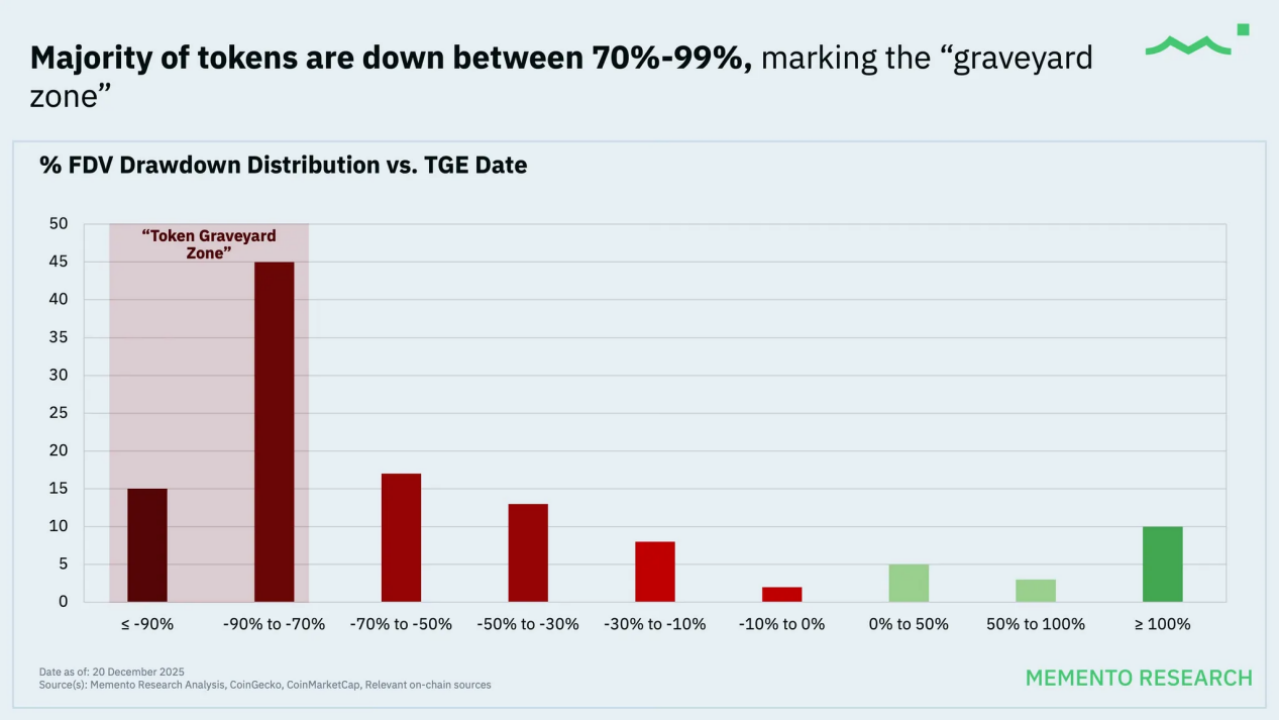
Token Issuance in 2025 source: MEMENTO RESEARCH
This phenomenon was not limited to tail-end projects but covered most mid- and small-cap assets, with even some projects that had high valuations and market attention at issuance significantly underperforming Bitcoin and Ethereum. Notably, even when weighted by FDV, the overall performance remained significantly negative, indicating that larger projects with higher issuance valuations actually exerted a greater drag on the market. This result clearly indicates that the issue in 2025 was not the "disappearance of demand," but rather the directional migration of demand.
Against the backdrop of gradually clarifying policies and regulatory environments, the funding structure of the crypto market is changing, but this change is still insufficient to completely replace the short-term dominance of narratives and sentiment over prices. Compared to past cycles, long-term capital and institutional funds began to enter assets and channels with compliant attributes and liquidity depth more selectively, such as mainstream coins, ETFs, stablecoins, and some low-risk RWAs. However, these funds played more of a role as "underlying absorbers" rather than short-term price engines.
At the same time, the main trading behaviors in the market were still driven by high-frequency funds and sentiment, with the token supply side continuing to follow the issuance logic of the previous cycle, expanding under the assumption of a "broad-based bull market." The result was that the anticipated systemic "altcoin season" never materialized. New narratives could still receive short-term price feedback driven by sentiment, but lacking the ability to attract funding that could withstand volatility cycles, price declines often outpaced narrative realizations, leading to a clear phase and structural mismatch in supply and demand.
It is under this dual structure that 2025 presented a new market state: at the macro cycle level, allocation logic began to concentrate on mainstream coins and assets with institutional absorption capabilities; while at the short cycle level, the crypto market remained a trading market driven by narratives and sentiment. Narratives did not become ineffective, but their scope of action was significantly compressed—they were more suitable for capturing emotional fluctuations rather than carrying long-term valuations.
Therefore, 2025 was not the end of narrative pricing but rather the starting point where narratives began to be filtered by funding structures: prices would still respond to sentiment and stories, but only those assets capable of attracting long-term funding retention after volatility could achieve true value accumulation. From this perspective, 2025 resembled a "transition period of pricing power" rather than a conclusion.
Industry and Narratives: Key Directions Under Structural Layering
1. Tokens with Real Returns: The First Track to Adapt to Changes in Funding Structure
1.1 2025 Review: Yield-bearing Assets Become Funding Absorption Targets
In a context where narratives could still dominate short-term prices, but long-term funds began to set absorption thresholds, tokens with real returns were the first to adapt to changes in the funding structure. The reason this track exhibited relative resilience in 2025 was not that its narrative was more attractive, but because it provided a participation path for funds that did not rely on continuous emotional upswings— even if prices stagnated, holding itself still had a clear return logic. This change was first reflected in the market's acceptance of yield-bearing stablecoins. Represented by USDe, it did not rely on complex narratives but quickly gained funding recognition through a clear and explainable yield structure. In 2025, USDe's market capitalization once surpassed $10 billion, becoming the third-largest stablecoin after USDT and USDC, with its growth rate and scale significantly outpacing most risk assets during the same period. This result indicates that some funds have begun to view stablecoins as cash management tools rather than trading intermediaries, starting to remain on-chain in stablecoin form against a backdrop of high interest rates and gradually clarifying regulatory boundaries. Its pricing logic thus shifted from "whether it has narrative elasticity" to "whether the yield is real and sustainable." This does not mean that the crypto market has fully entered a cash flow pricing stage, but it clearly indicates that when narrative space is compressed, funds will prioritize asset forms that can stand without needing to tell a story.
1.2 2026 Outlook: Funds Will Further Concentrate on Core Value Assets
As the market enters a phase of rapid decline or liquidity contraction, the so-called "assets worth paying attention to" are fundamentally not about what narrative they tell, but whether they possess two types of resilience: first, whether the protocol layer can genuinely continue to generate fees/income in a low-risk preference environment; second, whether these incomes can form a "weak support" for tokens through buybacks, burns, fee switches, staking yields, etc. Therefore, assets like BNB, SKY, HYPE, PUMP, ASTER, and RAY, which have "more direct value capture mechanisms," are often more easily prioritized by funds as targets for repair during panic periods; while assets like ENA, PENDLE, ONDO, and VIRTUAL, which have "clear functional positioning but greater differentiation in value capture strength and stability," are more suitable for structural selection during the emotional recovery phase after declines: those who can convert functional usage into continuous income and verifiable token absorption are the ones qualified to advance from "trading narratives" to "configurable targets."
DePIN is an extension of the real return logic over a longer-term dimension. Unlike yield-bearing stablecoins and mature DeFi, the core of DePIN lies not in financial structure but in whether it can transform the highly capital-intensive or inefficient infrastructure needs of the real world into a sustainable distributed supply network through tokenized incentives. The market in 2025 has already completed initial screening: projects that cannot prove their cost advantages or heavily rely on subsidies to maintain operations quickly lost funding patience; while DePIN projects that can connect to real needs (computing power, storage, communication, AI inference, etc.) began to be viewed as potential "income-generating infrastructure." At the current stage, DePIN resembles a direction that is being closely observed by funds against the backdrop of accelerating AI demand but has not yet been fully priced. Whether it can enter the mainstream pricing range in 2026 depends on whether real demand can be converted into scalable, sustainable on-chain income.
Overall, the reason tokens with real returns became the first track to be retained is not that they have entered a mature value investment stage, but because in an environment where narratives are filtered by funding structures and the altcoin season is absent, they first met an extremely realistic condition: providing funds with a reason to continue staying without relying on continuous price increases. This also determines that the key question for this track in 2026 will no longer be "whether there is a narrative," but "after scaling, whether the yield still holds."
2. AI and Robotics × Crypto: Key Variables in Productivity Transformation
2.1 2025 Review: Cooling of AI and Robotics Narratives
If there is a track in 2025 that "failed" at the price level but became more important in the long term, then AI and Robotics × Crypto is undoubtedly the most typical representative. Over the past year, DeAI has seen a significant cooling in investment enthusiasm in both primary and secondary markets compared to 2024, with related tokens overall underperforming mainstream assets, and narrative premiums being rapidly compressed. However, this cooling did not stem from the failure of the direction itself, but rather because the productivity transformation brought by AI is more reflected in systematic improvements in production efficiency, leading to a phase misalignment between its pricing logic and the pricing mechanisms of the crypto market.
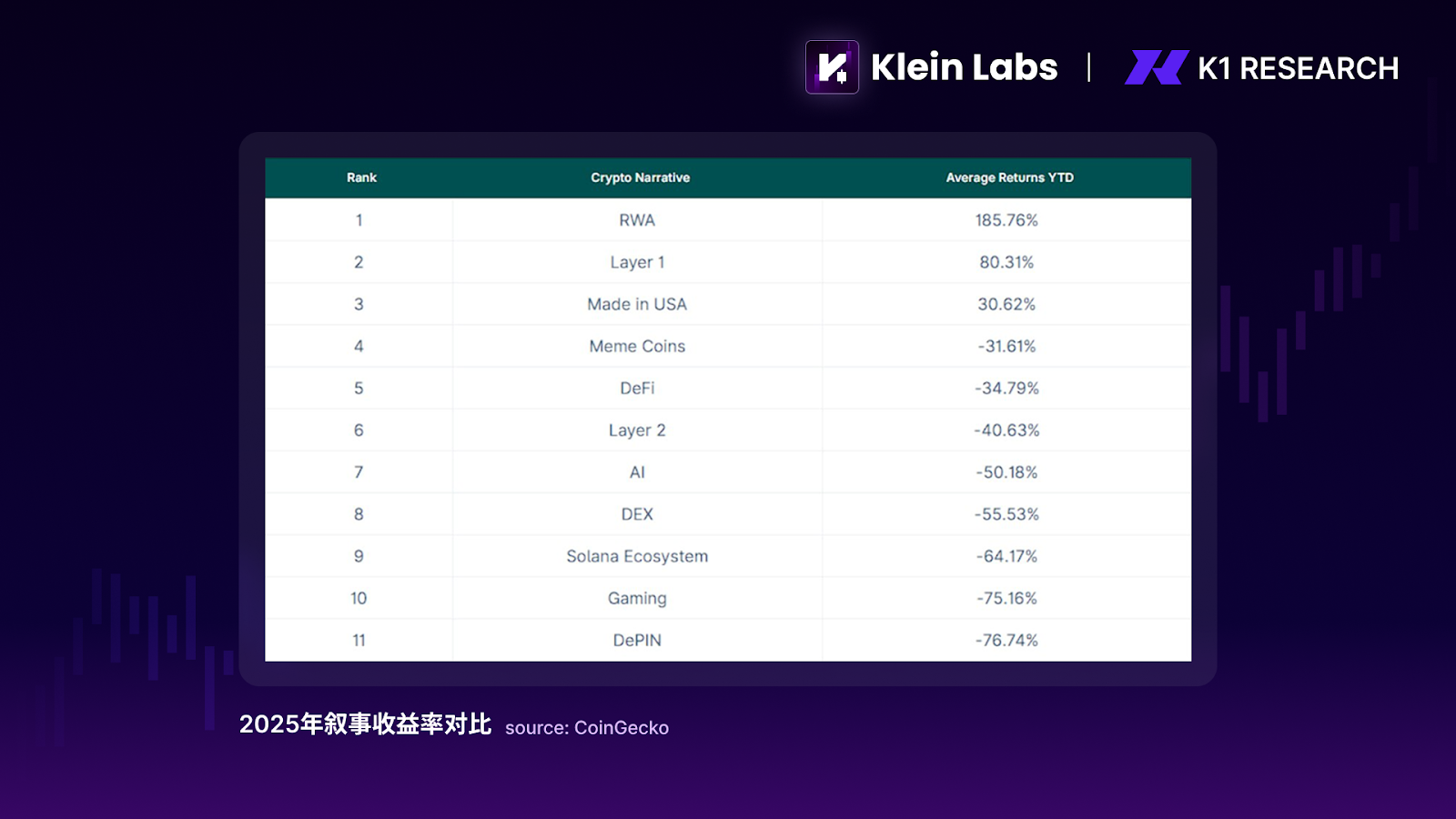
From 2024 to 2025, a series of structural changes occurred within the AI industry: the demand for inference rapidly increased compared to training demand, the importance of post-training and data quality significantly rose, competition among open-source models intensified, and the Agent economy began to transition from concept to practical application. These changes collectively point to a fact—AI is moving from a "model capability competition" to a systems engineering phase focused on "computing power, data, collaboration, and settlement efficiency." And these are precisely the areas where blockchain may play a role in the long term: decentralized computing power and data markets, composable incentive mechanisms, and native value settlement and permission management.
2.2 2026 Outlook: The Productivity Revolution Remains Key to Unlocking Narrative Limits
Looking ahead to 2026, the significance of AI × Crypto is undergoing a shift. It is no longer a short-term narrative of "AI projects issuing tokens," but rather providing complementary infrastructure and coordination tools for the AI industry. The same goes for Robotics × Crypto, where its true value lies not in the robots themselves, but in how to achieve automated management of identity, permissions, incentives, and settlements within multi-agent systems. As AI Agents and robotic systems gradually gain autonomous execution and collaboration capabilities, the frictions of traditional centralized systems in permission allocation and cross-entity settlements begin to emerge, while on-chain mechanisms offer a potential solution path.
However, this track did not achieve systematic pricing in 2025, largely due to the long realization cycle of its productivity value. Unlike DeFi or trading protocols, the commercial closed loop of AI and Robotics has not yet fully formed; while real demand is growing, it is difficult to convert it into scalable, predictable on-chain income in the short term. Therefore, in the current market structure where "narratives are compressed and funds prefer absorbable assets," AI × Crypto resembles a direction that is continuously tracked but has not yet entered the mainstream allocation range.
AI and Robotics × Crypto should be understood as a layered narrative: in the long term, DeAI is a potential infrastructure for productivity transformation; in the medium to short term, protocol-level innovations represented by x402 may become the first to serve as high-elastic narratives validated repeatedly by sentiment and funds. The core value of this track lies not in whether it is immediately priced, but in the fact that once it enters the pricing range, the upper limits it can unlock are significantly higher than those of traditional application narratives.
3. Prediction Markets and Perp DEX: Reshaping Speculative Demand through Institutions and Technology
3.1 2025 Review: Stable Speculative Demand
In the context of compressed narratives and cautious long-term funding, prediction markets and decentralized perpetual contracts (Perp DEX) became some of the few tracks that achieved counter-cyclical growth in 2025, and the reasons are not complex: they cater to the most primal and hardest-to-eradicate demand in the crypto market—pricing uncertainty and the demand for leveraged trading. Unlike most application narratives, these products do not "create new demand," but rather migrate existing demand.
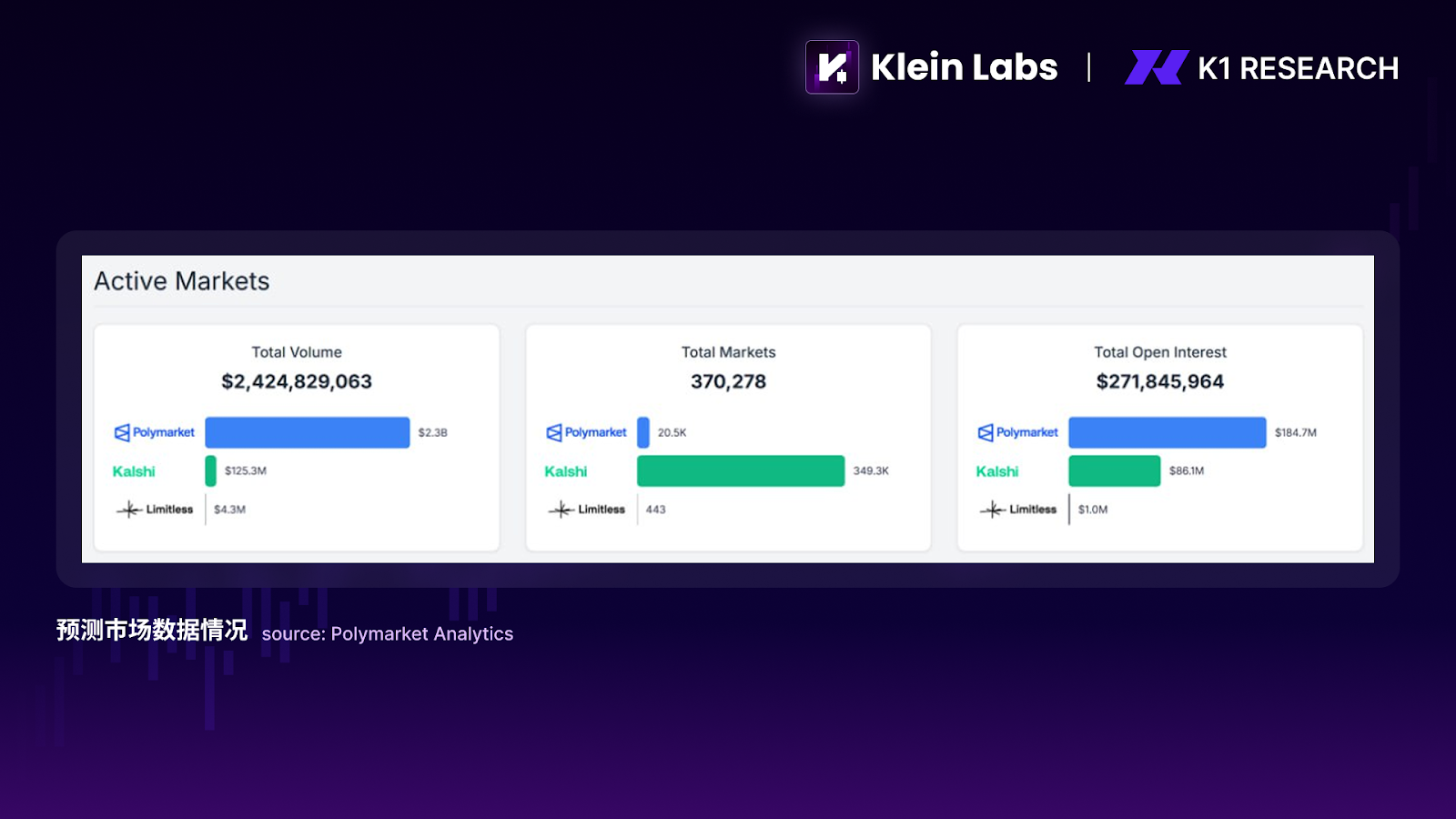
The essence of prediction markets is information aggregation, where funds "vote" on future events through betting actions, and prices approach collective consensus through continuous corrections. Structurally, this represents a naturally existing and relatively more compliant "casino form": there is no house controlling the odds, and the outcomes are determined by real-world events, with the platform profiting solely through transaction fees. The first high-profile appearance of this track occurred during the U.S. presidential election. Prediction markets surrounding the election results quickly gathered liquidity and public attention on-chain, elevating them from marginal DeFi products to narratives with real-world impact. In 2025, this narrative did not fade but continued to ferment as infrastructure maturity improved and multiple protocols anticipated token issuance. From a data perspective, prediction markets in 2025 were no longer niche experiments. The cumulative trading volume of prediction markets exceeded $2.4 billion, while the total open interest across the market remained around $270 million, indicating that this was not short-term speculative traffic but rather genuine funds continuously bearing the risk of event outcomes.
The rise of Perp DEX points more directly to the core product form of the crypto industry—contract trading. Its significance lies not in whether "on-chain is faster than off-chain," but in introducing a transparent, verifiable, liquid, and trustless environment to the opaque and high-counterparty-risk contract market. Transparent positions, liquidation rules, and funding pool structures allow Perp DEX to exhibit safety attributes distinct from centralized exchanges. However, it must be acknowledged that in 2025, the vast majority of contract trading volume still concentrated on CEX, which is not a matter of trust but rather a result of efficiency and experience issues.

3.2 2026 Outlook: Institutions and Technology Determine Whether It Can Become a Cross-Cycle Product
Looking ahead to 2026, the collaboration between Polymarket and Parcl to launch real estate prediction markets presents an opportunity for prediction markets to reach a broader non-crypto user base, potentially becoming a breakout application. Additionally, the World Cup, a globally significant event with inherent betting opportunities, is likely to become the next traffic inflection point for prediction markets. More importantly, the maturity of infrastructure will play a crucial role: continuous improvement in liquidity depth, including market-making mechanisms, cross-event capital reuse capabilities, and the price-bearing capacity for large orders; as well as the refinement of outcome adjudication and dispute resolution mechanisms. These two factors will determine whether prediction markets can evolve from "event-based gambling products" into a probability pricing infrastructure capable of long-term bearing macro, political, financial, and social uncertainties. If the above conditions gradually mature, the upper limit of prediction markets will extend beyond short-term traffic to whether they can become one of the few core application forms in the crypto system with cross-cycle viability.
The sustainability of Perp DEX's expansion hinges not on "whether it is decentralized," but on whether it can provide incremental value on the demand side that centralized platforms cannot temporarily offer. For example, further enhancing capital efficiency: by deeply integrating unutilized contract margins with DeFi protocols, allowing participation in lending, market-making, or yield strategies without significantly increasing liquidation risks, thereby improving overall capital utilization. If Perp DEX can further unlock such structural innovations on a secure and transparent basis, its competitiveness will no longer be merely "safer," but "more efficient."
From a more macro perspective, the commonality between prediction markets and Perp DEX lies in their reliance not on long-term narrative premiums, but on repeatable and scalable speculative and trading demands. In an environment where narratives are filtered and the altcoin season is absent, these tracks are more likely to gain sustained attention. They may not be the first choice for long-term allocative funds, but they are likely to become the core stage where emotional funds, trading funds, and technological innovations intersect repeatedly in 2026.
Summary
Looking back at the overall picture, 2025 was not a "failed bull market," but a deep reshaping of the pricing power, participant structure, and value sources surrounding the crypto market. On the policy front, regulatory logic gradually shifted from a highly uncertain suppression state to a clearer delineation of boundaries and functions; on the funding side, long-term capital did not directly flow back into high-volatility assets but instead established compliant, auditable, low-volatility absorption channels through structural tools like ETFs, DATs, stablecoins, and low-risk RWAs; on the market side, the pricing mechanism underwent substantial changes, with narrative diffusion no longer automatically triggering linear upward feedback, the broad-based altcoin season gradually losing effectiveness, and structural differentiation becoming the norm.
However, this does not mean that narratives themselves have exited the market. On the contrary, in shorter time scales and more localized tracks, narratives and sentiment remain the most important trading drivers. The repeated activity in directions such as prediction markets, Perp DEX, AI payments, and memes indicates that the crypto market is still a highly speculative, decentralized information and risk gaming field. The difference is that these narratives are increasingly difficult to solidify into long-term valuation foundations across cycles; they resemble phase-based opportunities that are continuously filtered, rapidly validated, and quickly cleared by funding structures around real use cases, trading demands, or risk expressions.
Therefore, as we enter 2026, a more realistic and actionable framework is taking shape: at the macro cycle level, the market will continue to concentrate on mainstream assets and infrastructures with real utility, distribution capabilities, and institutional absorption capacity; at the micro cycle level, narratives remain worth participating in but are no longer worthy of blind faith. For investors, the key is no longer to bet on the arrival of "the next comprehensive bull market," but to pragmatically assess which assets and tracks can survive in an environment of market contraction, regulatory constraints, and intensified competition, while also being the first to gain elasticity and pricing power during phases of emotional recovery and risk appetite release.
免责声明:本文章仅代表作者个人观点,不代表本平台的立场和观点。本文章仅供信息分享,不构成对任何人的任何投资建议。用户与作者之间的任何争议,与本平台无关。如网页中刊载的文章或图片涉及侵权,请提供相关的权利证明和身份证明发送邮件到support@aicoin.com,本平台相关工作人员将会进行核查。


