Author: Green But Red
Translation: Ken, ChainCatcher
The cryptocurrency space is primarily composed of two types of tokens:
Those backed by hundreds of millions in venture capital
And those supported by users
Both have the potential for appreciation.
Only one side consistently determines who wins and loses, whose share gets diluted, and who gets eliminated first.
This series of articles does not compare different narratives.
It contrasts community-funded MetaDAO issuance with its VC-backed competitors to identify the true factors driving long-term token performance: structure, incentives, dilution, and who captures the upside.
1. Solomon vs. Ethena: The Yield Battle
Solomon (community-funded) and Ethena (venture capital-funded) are at the intersection of the three dominant forces shaping today's crypto finance:
The growing demand for "yield-bearing dollars"
The search for safer, more sustainable leverage
The migration of on-chain bond-like yields
Both aim to create efficient digital dollars, but their design philosophies are starkly different. One is synthetic, market-driven, while the other is backed by reserves and treasury-managed.
Two Models, Two Yield Engines
Ethena uses a delta-neutral structure to build its synthetic stablecoin. By hedging futures positions, it creates an asset pegged to the dollar that can generate floating yields directly tracking the financing rates of the derivatives market.
Research from both academia and industry consistently shows that these strategies can yield extremely high returns when market conditions are favorable. However, they are also highly dependent on liquidity and financing cycles. When financing dries up or negative yields occur, returns can plummet—sometimes dramatically.
In contrast, Solomon issues USDv, a reserve-backed stablecoin supported by a diversified on-chain treasury. Its yields come from a combination of staking, lending, and basis strategies, rather than perpetual futures.
The result is a lower nominal annual yield, but greater yield stability. Architecturally, Solomon resembles a tokenized digital asset management platform rather than a trading engine.
Market Perception Divergence
On the surface, both protocols promise the same thing:
A globally accepted crypto dollar.
However, the market positions them quite differently:
Ethena's trading is characterized by speed, high liquidity, and significant yield volatility.
Solomon's trading strategy is based on trust, capital preservation, and slow compounding.
Their long-term trajectories may ultimately answer a deeper question in the cryptocurrency market:
Will capital continue to chase the allure of synthetic yields, or will it turn towards the patience of on-chain reserves?
Token Comparison Snapshot — $SOLO vs. $ENA
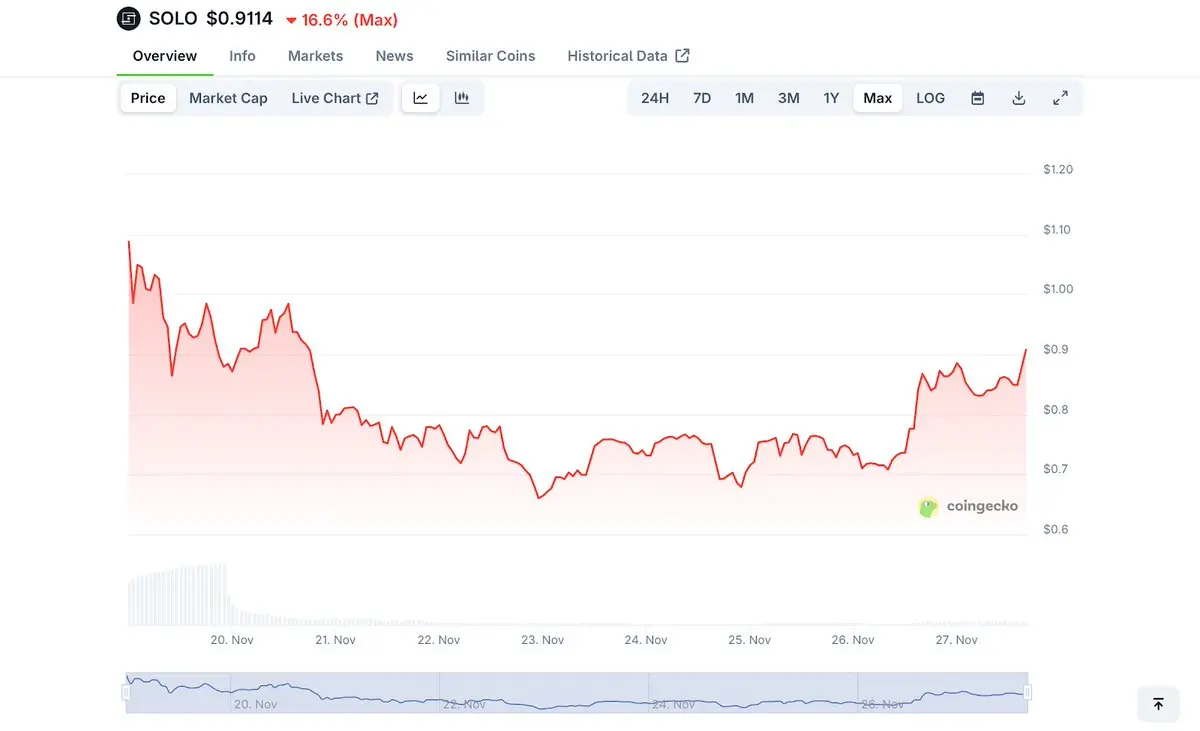
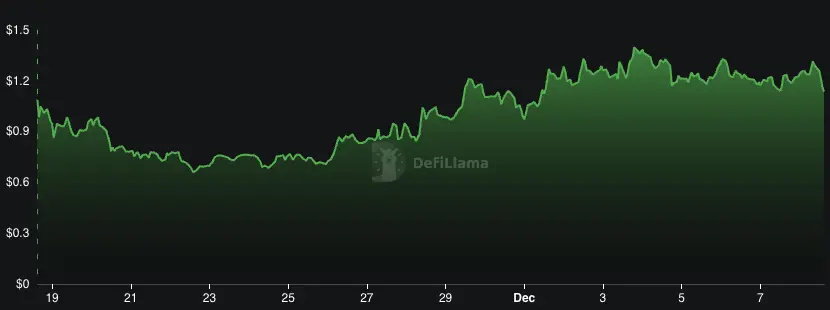
$SOLO (Solomon)
Issue Price: $0.800
Current Price: $0.780
Performance: -2.5%
Largest Supporter: MetaDAO ($8 million)
Listing Status: DEX only (Solana)
TVL: N/A
Annual Revenue: N/A
Circulating Supply: 100%
Market Cap / FDV: $32 million / $32 million
CMC Ranking: Unranked
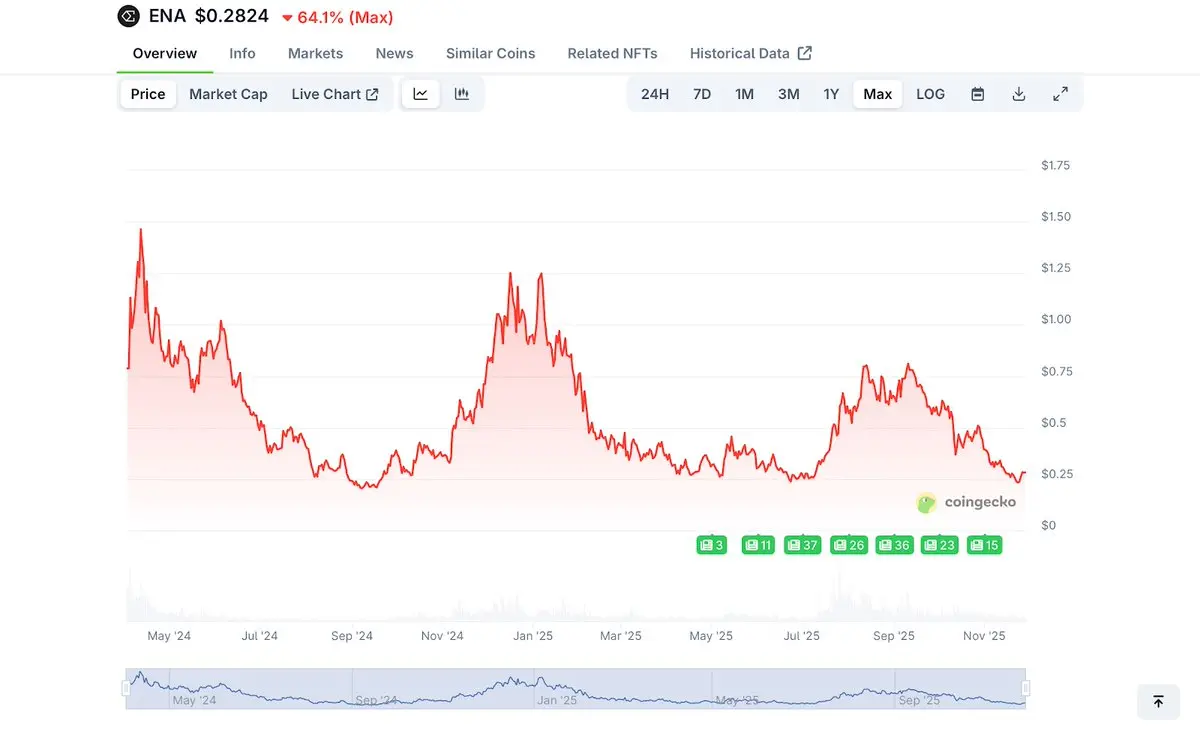
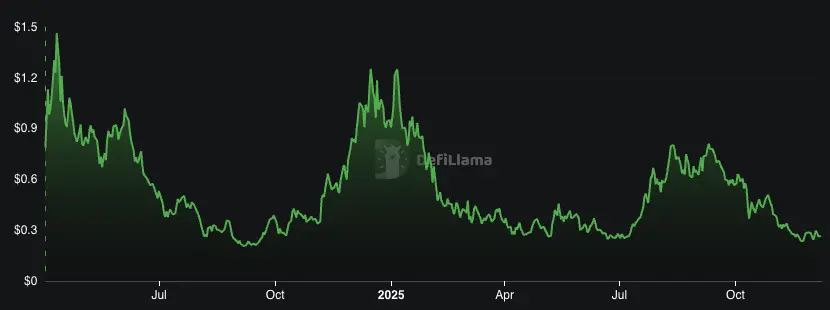
$ENA (Ethena)
Issue Price: $0.78
Current Price: $0.28
Performance: -64.1%
Largest Supporters: Dragonfly, Polychain, Pantera Capital (totaling $165 million)
Listing Platforms: Binance + multiple CEXs
TVL: $6.9 billion
Annual Revenue: $98 million
Circulating Supply: 51%
Market Cap / Final Price: $2.1 billion / $4.1 billion
CMC Ranking: #40
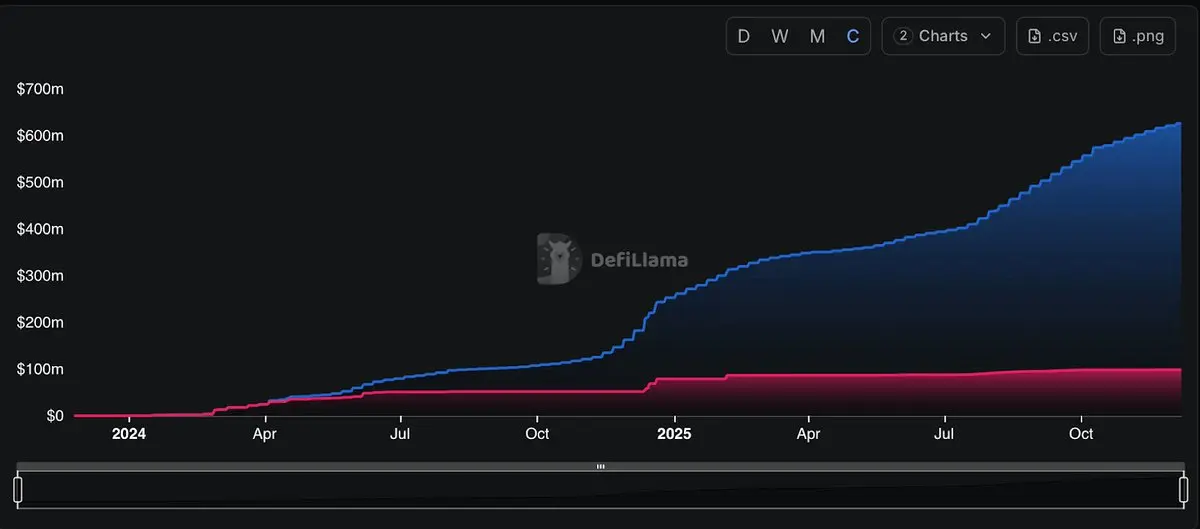
Conclusion
Ethena dominates in liquidity, exchange access, and raw trading volume—but at a cost, having suffered significant capital retracement and token dilution risk post-TGE.
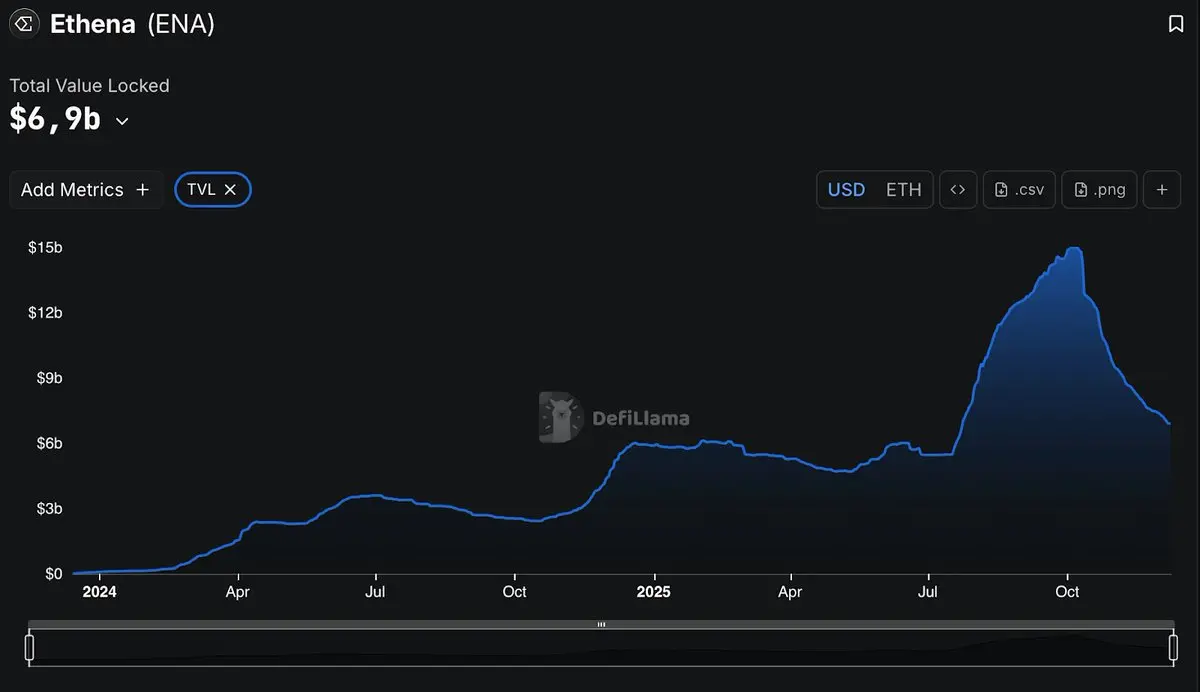
Meanwhile, Solomon's liquidity market size is much smaller, with limited price discovery and currently no significant revenue—but it benefits from a fully circulating supply and structurally lower reflexive pressure.
This highlights the core contradiction between venture capital-scale stablecoin engineering and community-scale reserve finance—setting the tone for the comparisons to follow.
2. Paystream vs. Kamino Finance: The Liquidity Optimizer Battle
Paystream and Kamino operate as the routing layer of DeFi, abstracting the cumbersome manual operations of lending, liquidity mining, and incentive mining into streamlined automated products.
Their true advantage lies not just in higher nominal APYs.
It’s the risk-adjusted yield:
Venue diversification
Dynamic rebalancing
Automated liquidation and incentive management
In the same vertical.
Completely different heavyweights.
Kamino: The Heavyweight Optimizer
Kamino is the primary, on-chain native yield engine for Solana:
Deeply integrated with money markets and LST for large-scale throughput
Advanced automated concentrated liquidity
Intentional loans tailored for treasuries, funds, and structured vaults
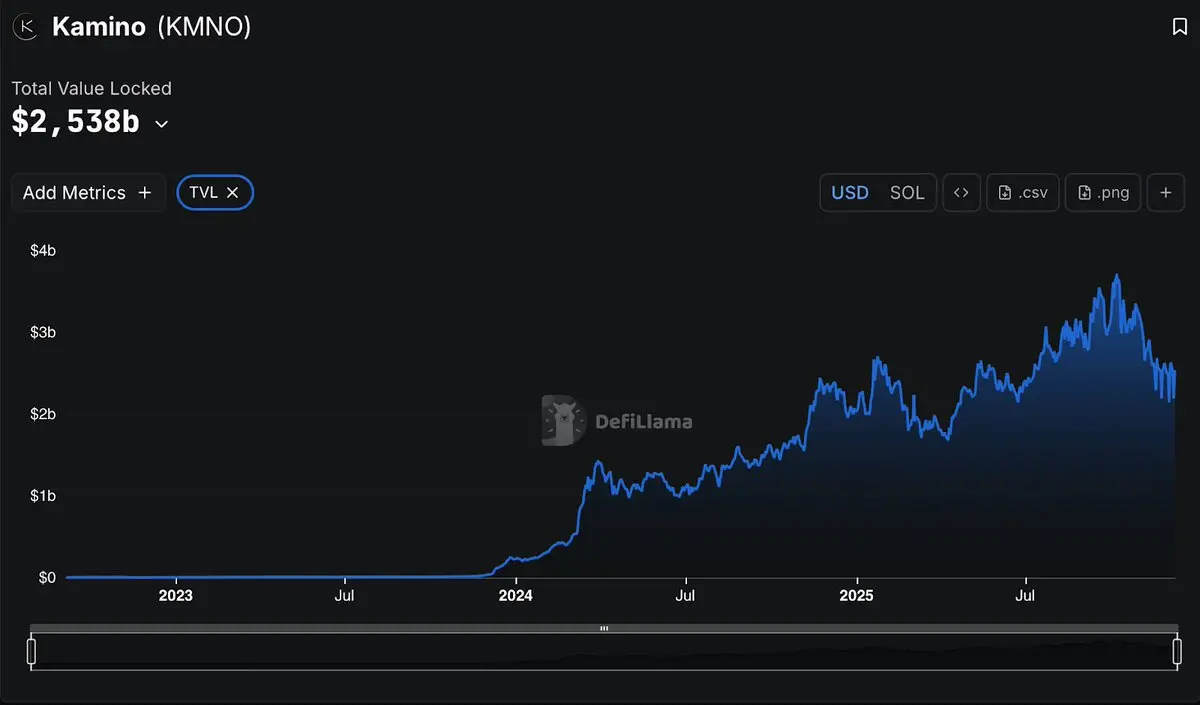
It not only optimizes yields—it industrializes yield. Billions of assets are now flowing into Kamino, effectively turning Solana itself into a yield processing machine.
This is what it looks like when venture capital-scale infrastructure reaches escape velocity.
Paystream: The Lightweight Streamer
Paystream completely disrupts traditional architecture by embedding yield routing directly into the payment process:
Every bit of idle capital in the stream is immediately deployed into carefully curated strategies.
Lean design optimizes P2P efficiency and leveraged vaults
Actively shifts idle base liquidity from protocols like Kamino into higher turnover matches
Paystream does not own a balance sheet; it rides on top of it.
It does not aim to be the base layer.
It seeks to be the spread extractor.
Stack dynamics vs. market realities
Unlike the competition with stablecoins, this is not a winner-takes-all battle.
They can stack:
Kamino = VC-backed base layer
Huge TVL
Emission-driven growth
Institutional-level liquidity depth
Paystream = Community-funded routing layer
MetaDAO growth of about $750,000
Post-ICO retracement
Experimental but capital-efficient design
Kamino wins with scale and gravity.
Paystream competes on capital turnover and efficiency per dollar.
Broader Signals
This combination illustrates the actual development direction of DeFi yields:
From:
Manually flipping vaults
Chasing emission rewards
Static strategy sets
To:
Middleware battles
Strategic intelligence
Automated risk control
Native wallet and new bank integration
Kamino expands the base.
Paystream sharpens the edge.
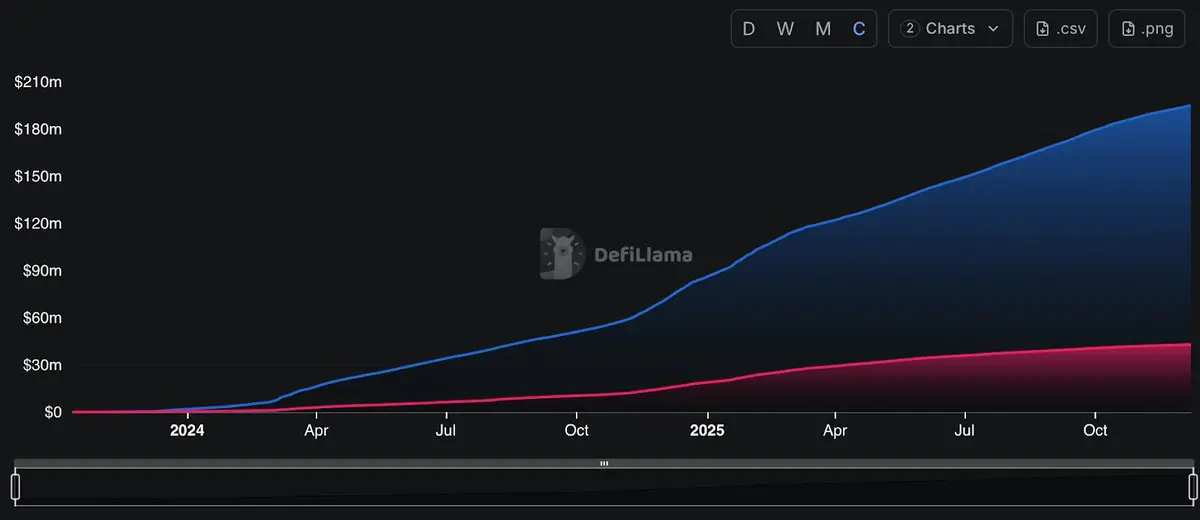
Token Comparison Snapshot — $PAYS vs. $KMNO
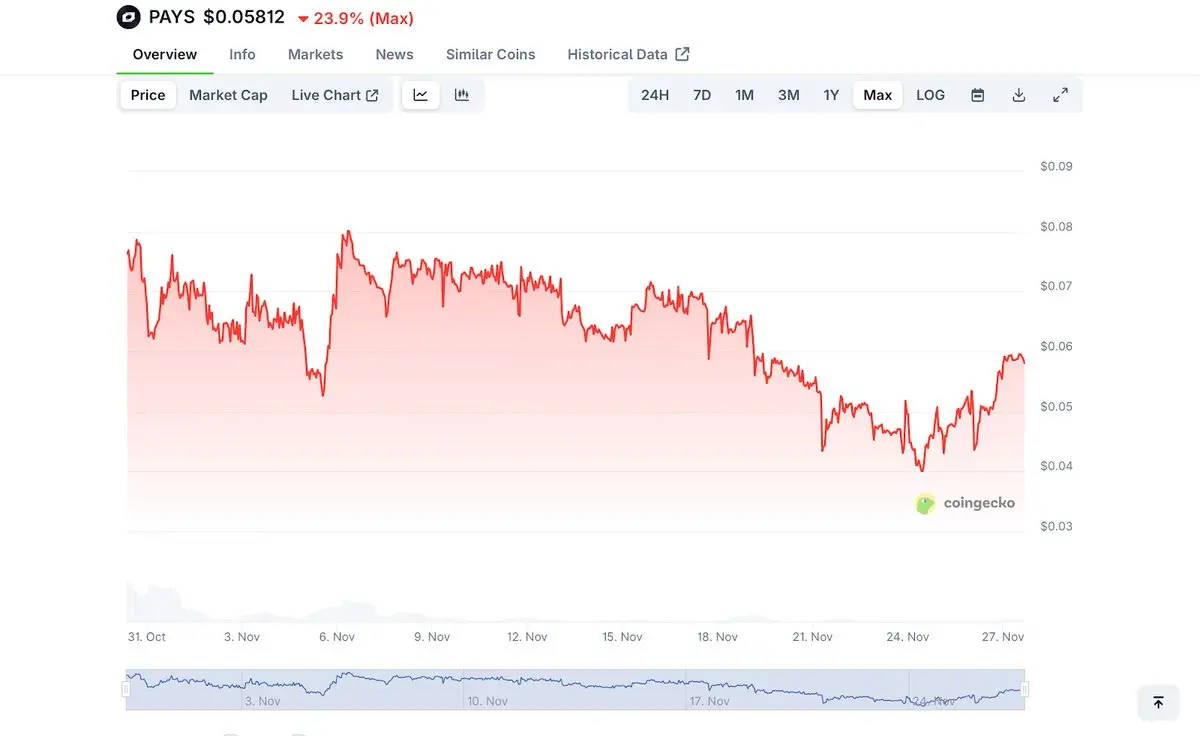
$PAYS (Paystream)
Issue Price: $0.075
Current Price: $0.051
Performance: -32.3%
Largest Supporter: MetaDAO ($750K)
Listing Status: DEX only (Solana)
TVL (Total Locked Value): N/A
Annual Revenue: N/A
Circulating Supply: ~100%
Market Cap / FDV: $0.9M / $1.7M
CMC Ranking: Unranked
$KMNO (Kamino)
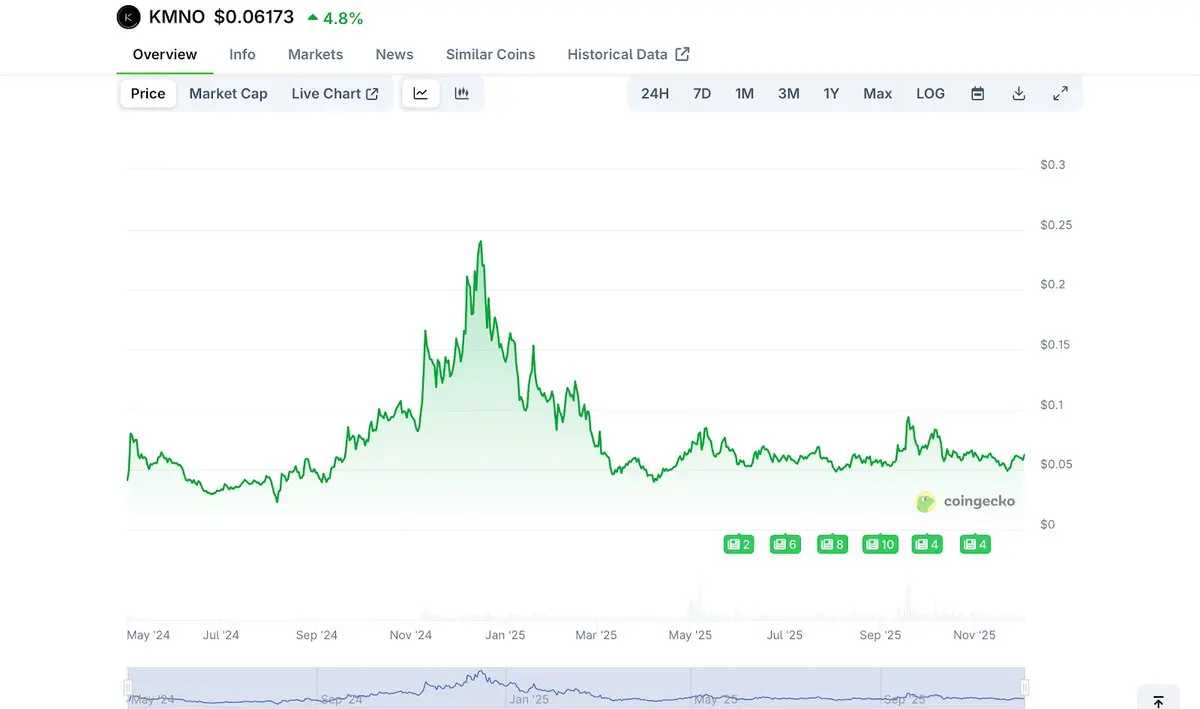
Issue Price: $0.04
Current Price: $0.06
Performance: +50%
Largest Supporter: Delphi Ventures, LongHash Ventures ($6M+)
Listing Status: Binance, MEXC, Gate + DEXs
TVL (Total Locked Value): $2.53B
Annual Revenue: $42.7M
Circulating Supply: 34%
Market Cap / FDV: $221M / $647M
CMC Ranking: #155
Conclusion
$KMNO wins significantly in terms of scale, liquidity, revenue, and institutional adoption—but still bears the heavy risks of unlocking and FDV ceiling.
$PAYS operates in a less liquid niche but benefits from:
Full circulation
Extremely high capital efficiency
And the asymmetric upside potential if embedded yield in payments becomes a true distribution wedge
The key to this showdown is not who can win today, but whether the routing layer can ultimately extract meaningful economic benefits from the yield giants.
3. ZKLSOL vs. Starknet: The Zero-Knowledge Battle
ZKLSOL and Starknet both rely on ZK—but they apply the technology to completely different problems.
One is built for transaction anonymity.
The other for scalable computational infrastructure.
The same mathematical principles.
Completely opposite priorities.
ZKLSOL: The Native Privacy Mixer for Solana
ZKLSOL provides transaction-level privacy protection directly on Solana:
Deposits are fragmented into a shielded pool
ZK circuits can prove the validity of transfers without exposing the sender, receiver, or amount.
Offers mixer-style anonymity and staking-style yield mechanisms for DeFi users
Conceptually, it is a combination of Tornado Cash and Solana's native liquidity hooks—purely expressing the argument that, regardless of regulatory pressure, private capital flows will always exist.
This is not a strategy taken to scale.
It is a bet against censorship on financial privacy.
Starknet: Scalability-First ZK Infrastructure
Starknet achieves zero-knowledge from the opposite direction:
General scalability, rather than default privacy protection.
Validity proofs generated by Cairo for Ethereum L2 execution
Privacy is an emerging feature of applications, not a core protocol guarantee.
The system hides the computational process, not user identities.
Starknet is designed as industrial ZK infrastructure—a settlement layer that can build both private and public applications, but never presupposes anonymity.
It pursues developer freedom and throughput, rather than financial confidentiality.
Broader ZK Divide
This showdown reflects the most profound divides in today's zero-knowledge research field:
Application-Level Privacy
Mixers, shielded pools, strict user anonymity
Maximum sovereignty, maximum regulatory pressure
Infrastructure-Level Zero-Knowledge
Aggregation, validity proofs, correctness guarantees
Developer flexibility, regulatory compatibility
ZKLSOL represents a permissionless privacy layer.
Starknet represents a fully zero-knowledge proof-based L2 architecture focused on scaling Ethereum itself.
Both are "ZK."
They just address different political and economic issues.
Token Assessment: Efficiency vs. Capital Flood
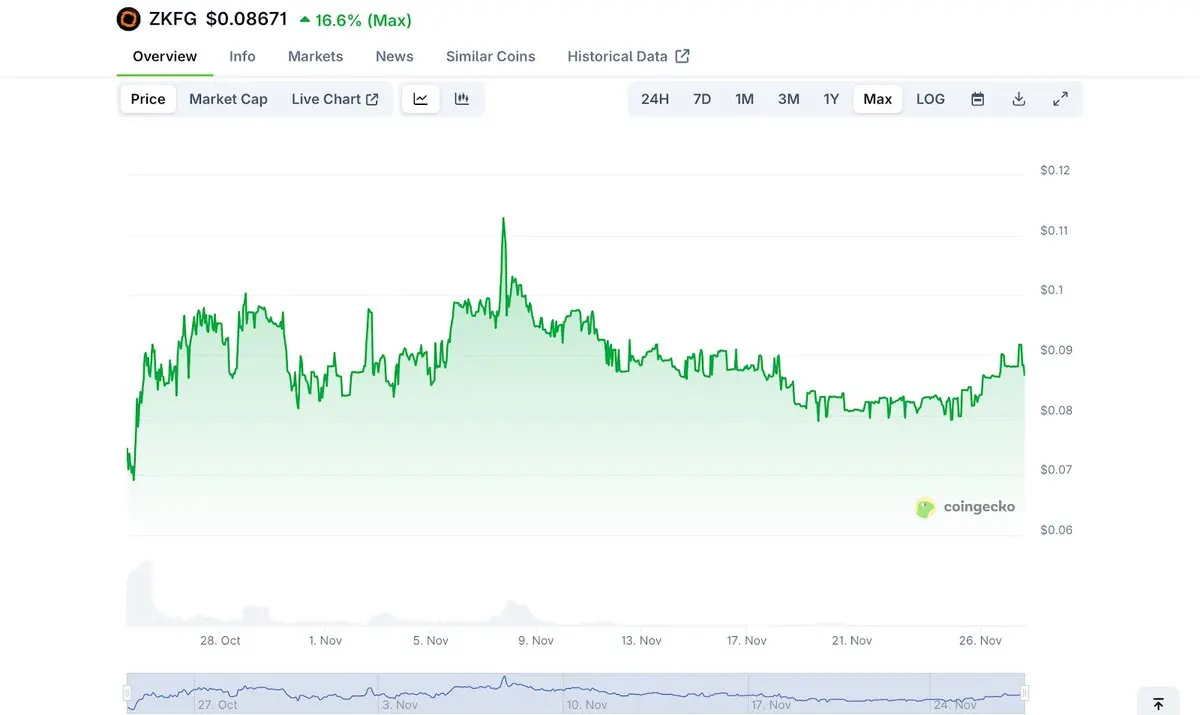
$ZKLSOL, despite receiving less than $1 million in funding, has only dropped 11.9% from its issue price of $0.097.
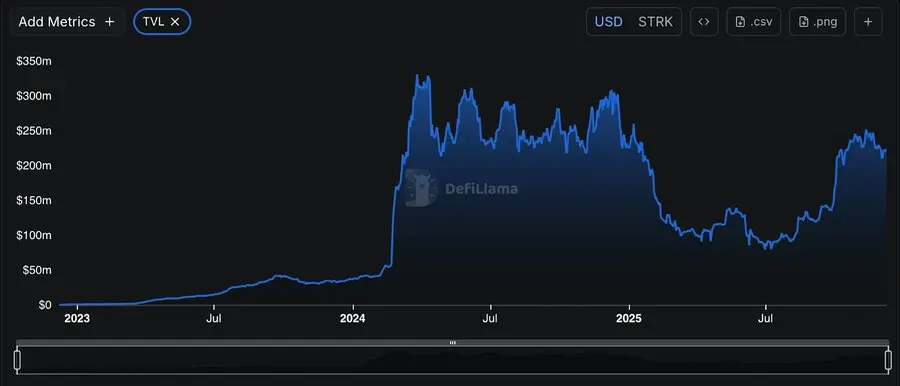
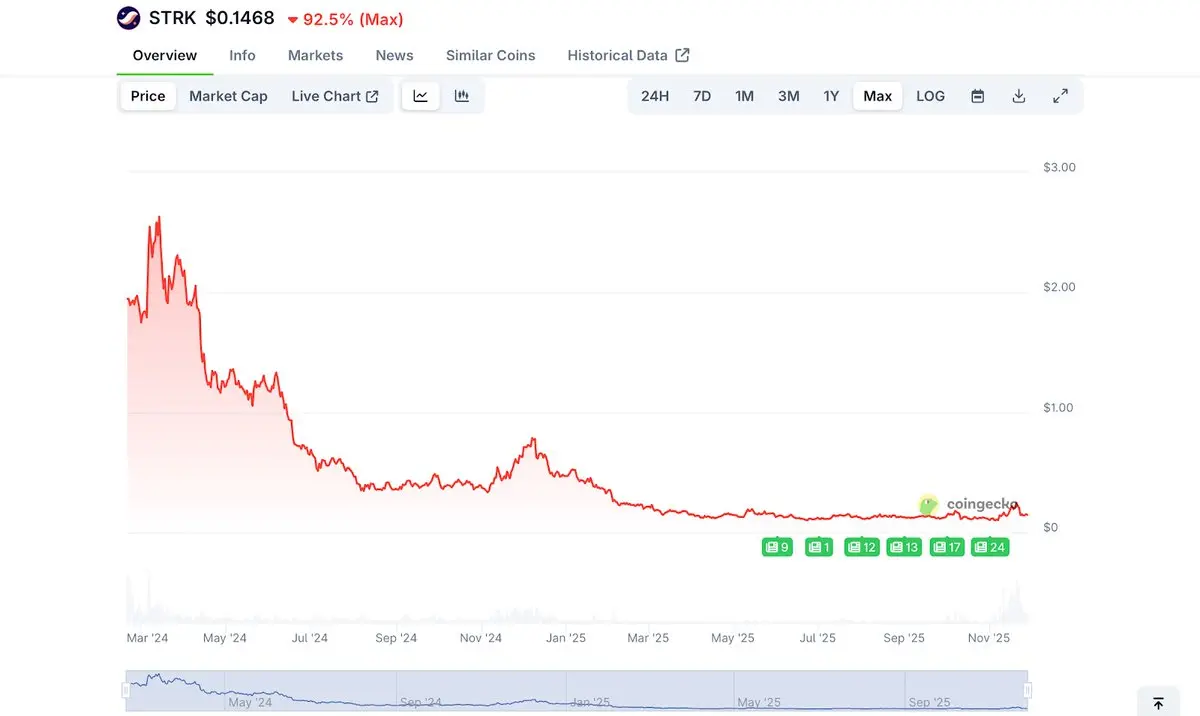
In contrast, $STRK, despite absorbing $282.5 million in venture capital (nearly 300 times its funding amount), has dropped 93.6% from its issue price of $2.34.
Here are the original results:
A streamlined capital structure retains options.
Significant early sell pressure from venture capital.
Scale advantages do not protect tokens from the effects of oversupply.
For now, privacy flows outperform bloated infrastructure betas.
Token Comparison Snapshot — $ZKLSOL vs. $STRK
$ZKLSOL
Issue Price: $0.097
Current Price: $0.085
Performance: -11.9%
Largest Supporter: MetaDAO / IDO (~$970K)
Listing Status: DEX only (Solana)
TVL (Total Locked Value): N/A
Annual Revenue: N/A
Circulating Supply: 50%
Market Cap / FDV: $1.05M / $2.1M
CMC Ranking: Unranked
$STRK (Starknet)
Issue Price: $2.34
Current Price: $0.15
Performance: -93.59%
Largest Supporters: Paradigm, Sequoia, etc. ($282.5M)
Listing Status: Binance, Bybit + DEXs
DeFi TVL: $222.45M
Annual Revenue: N/A
Circulating Supply: 48%
Market Cap / FDV: $545M / $1.13B
CMC Ranking: #88
Conclusion
$ZKLSOL remains a robust, streamlined privacy investment with minimal dilution pressure.
$STRK is a classic example of what happens when the scale of venture capital funding meets weak demand on the token side:
Massive infrastructure, real usage rates—and a catastrophic post-launch supply shock.
In the ZK market, capital efficiency currently trumps capital dominance.
4. Loyal vs. Arkham: The Intelligence Protocol Challenge
Crypto intelligence is becoming an independent asset class.
Not yield.
Not block space.
But raw information.
Loyal and Arkham represent two diametrically opposed ways of monetizing on-chain intelligence:
One views intelligence as a public utility owned by users.
The other sees it as proprietary institutional alpha.
The same market.
Opposing power structures.
Loyal: User-Centric AI
Loyal is building on-chain conversational agents to interpret wallets, protocols, and social dynamics without routing sensitive behavior through centralized Web2 intermediaries.
AI assistants optimized for user privacy and autonomy
Conceptually aligned with decentralized analytics like Ritual, Bittensor, and Dune
Intelligence is viewed as a connected public service, not a closed garden.
The stakes are simple:
If data is user-generated, then the intelligence layer built on that data should also belong to the users.
Loyal is not trying to invest more in data labeling than existing companies.
It is trying to surpass them in trust.
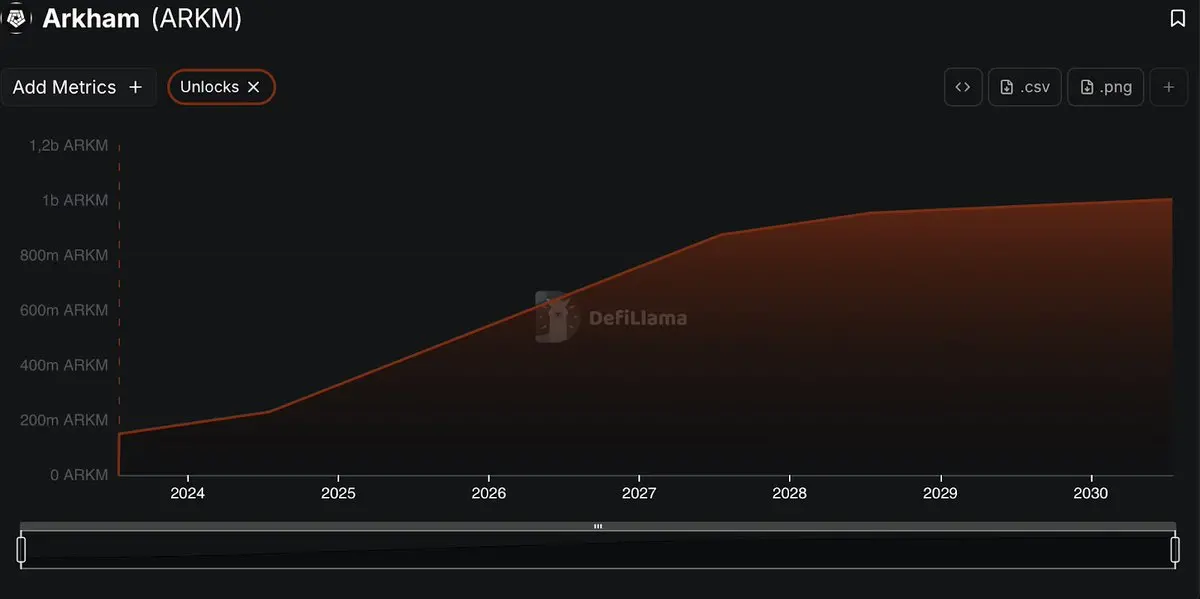
Arkham: Surveillance-Level Analysis
Arkham takes the opposite approach:
Maximum tagging, maximum attribution, maximum extraction.
Proprietary entity graphs
Active de-anonymization bounty markets
Transforming wallet behavior into institutional dashboards for the following metrics:
Trading advantages
Compliance tools
Investigative intelligence
This places Arkham in the same commercial lineage as Nansen, Chainalysis, and TRM Labs—monetizing blockchain transparency as a premium surveillance product.
Loyal attempts to protect identity information,
Arkham is designed to make them collapse.
Core Research Themes in Crypto Intelligence
This showdown reveals three structural truths about the intelligence market:
The real moat is data, not models
Address labels, entity graphs, and behavioral clustering are more important than LLM wrappers.
There is always a tension between the two:
Intelligence as a public good → open, user-owned, anti-censorship
Intelligence as alpha → closed, exclusive, monetized for institutions
Token value reflects attention and trust, not always TVL.
Adoption by influential users, perceived neutrality, and revenue consistency are more important than sheer sales.
This is the little-known battlefield behind most "AI x cryptocurrency" narratives.
Market Structure Conflict
This is not just a distinction between decentralization and centralization.
It is a conflict between the following two sides:
User-First Intelligence
→ Slow to monetize, hard to scale, high trust ceiling
Institutional Surveillance Intelligence
→ Quick to monetize, high compliance requirements, low trust tolerance
Both will exist.
But they will attract completely different capital and user bases.
Token Comparison Snapshot — $LOYAL vs $ARKM
$LOYAL (Loyal)
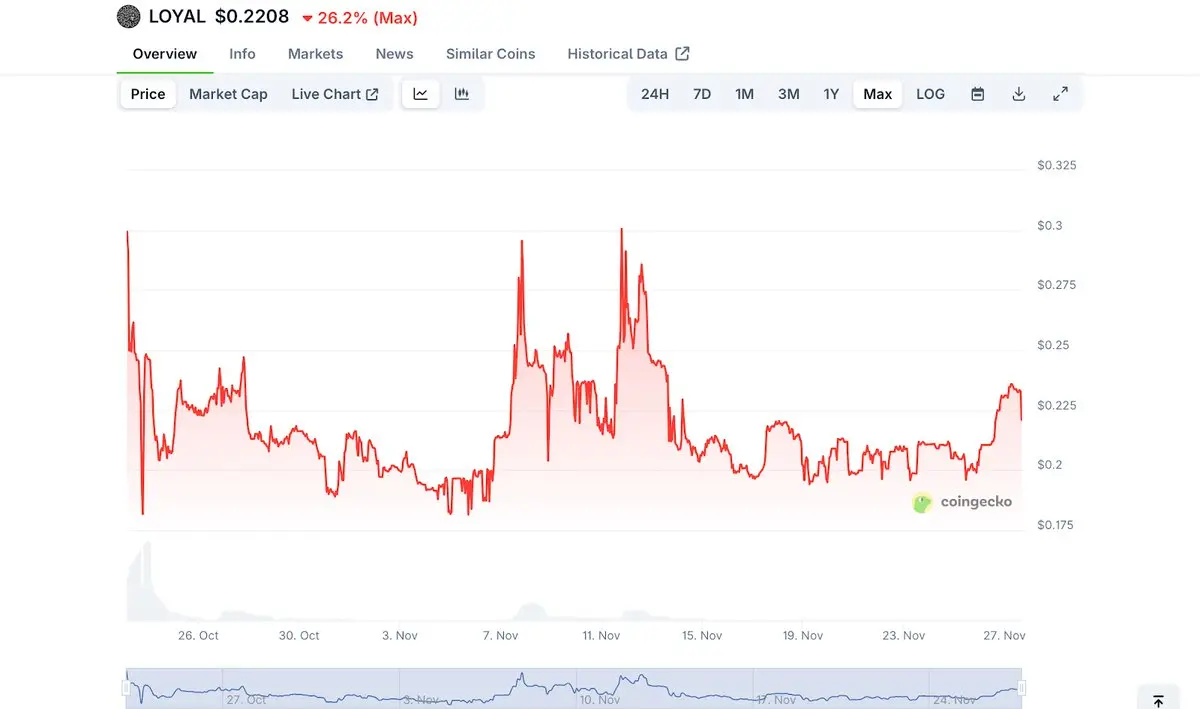
Issue Price: $0.250
Current Price: $0.212
Performance: -15.2%
Supporters: Community / IDO ($2.5M)
Listing Status: DEXs only
TVL: N/A
Annual Revenue: N/A
Circulating Supply: 100%
Market Cap / FDV: $2.3M / $6.09M
CMC Ranking: Unranked
$ARKM (Arkham)
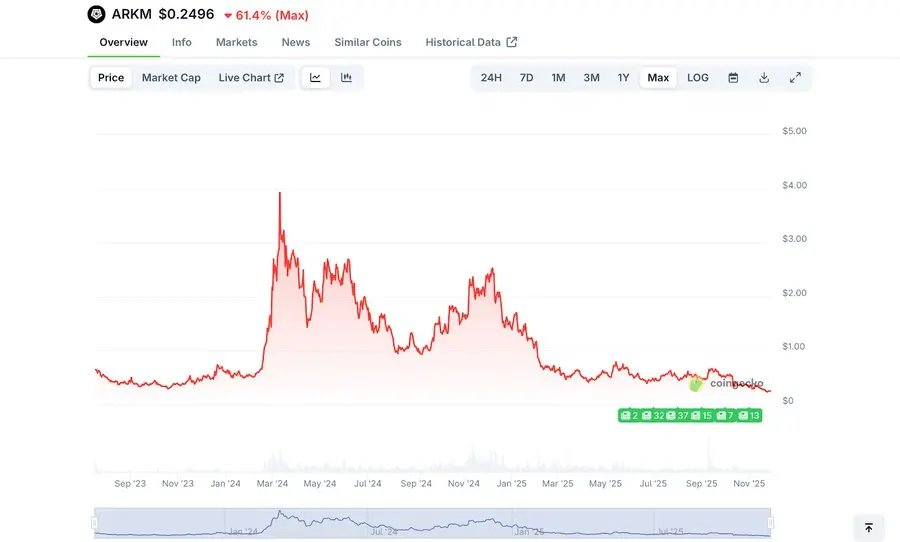
Issue Price: $0.65
Current Price: $0.248
Performance: -61.85%
Supporters: Ribbit Capital, Coinbase Ventures ($14.5M)
Listing Status: Binance, Gate, Bybit + DEXs
TVL: N/A
Annual Revenue: N/A
Circulating Supply: 23%
Market Cap / FDV: $51M / $226M
CMC Ranking: #426
Conclusion
$ARKM aims to expand institutional-level alpha and compliance intelligence—but with only 23% of the supply in circulation, it carries extremely high FDV and release excess risk.
$LOYAL remains a streamlined, fully circulating decentralized intelligence investment project—lower liquidity, slower monetization, but with higher structural consistency among users, data, and tokens.
This is not a debate about dashboards.
This is a war for control over the collective intelligence layer of cryptocurrency.
5. Avici vs Plasma: The Victory of Infrastructure
Web2 neobanks like Revolut and N26 encapsulate traditional banking systems in beautifully designed mobile applications.
The trend in cryptocurrency is quite the opposite.
It is not about perfecting closed systems, but about reconstructing "accounts + cards + yields" as an open on-chain financial stack—where balances, treasuries, and solvency are all publicly verifiable.
This is not a disruption of user experience.
This is an inversion of infrastructure.
Stack Inversion
The operational model of traditional fintech is:
Closed databases
Opaque balance sheets
Slow, permissioned settlements
Extracting yields through obscure money market structures
Crypto neobanks disrupt every layer:
Deposits → Tokenized dollars (USDC, USDT, USDv)
Balance sheets → Public, real-time supply chain transparency
Yields → DeFi protocols, rather than internal funding transparency
Users no longer just hold balances.
They possess auditable financial conditions.
Two Prototypes Emerge
This inversion creates two distinctly different paths to the same ultimate market.
Avici: Protocol-Native Neobank
Avici starts with DeFi and builds a fintech system on top of it:
On-chain governance and fund management
Credit cards, exit mechanisms, and credit scoring as modular add-ons
Capital formation occurs after product validation, not before.
This is a bottom-up banking model:
Protocol first, compliance second, user experience paramount.
It is optimized for:
Capital efficiency
Full token circulation
Direct connection between users and funds
Plasma: Capital-Intensive Fintech Company Transitioning to Cryptocurrency
Plasma takes the opposite path:
First, it raises significant venture capital
Has licenses, rails, and front-end distribution
Then expands into L1 tokens, tokens, and DeFi integration
This is full-stack control:
User experience, custody, compliance, liquidity, and token issuance are all centralized under one company roof—structurally similar to companies like Nexo.
It is optimized for:
Accelerated path to the mass market
Regulatory defense capabilities
Dominance in distribution
The cost is:
High dilution
Slow token supply release
Huge FDV backlog
True disruption: equity-like deposits
The real transformation is not cheaper effects or prettier applications.
It is this:
Yield-bearing stablecoin deposits
Revenue-sharing cards
On-chain solvency visible in real-time to users, regulators, and investors
Deposits no longer operate like liabilities.
They begin to function like productive financial assets.
This will break down the boundaries between:
Banking
Asset management
And on-chain capital markets
Strategic Questions
The focus of this debate is not on functionality.
The key is which capital structure can prevail in the long term:
Lean, community-funded protocol financing (Avici)
Or venture-scale, vertically integrated fintech companies (Plasma)
The former achieves compounding through user consistency.
The latter expands through distribution and regulation.
Token Comparison Snapshot — $AVICI vs $XPL
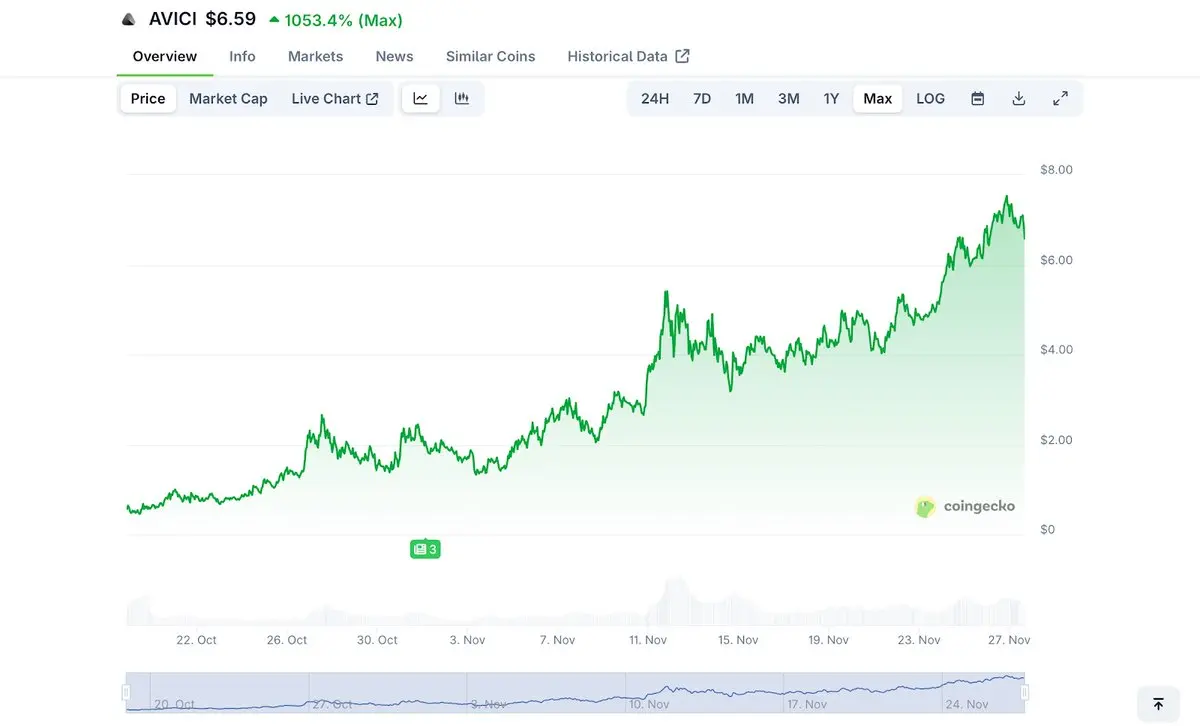
$AVICI (Avici)
Issue Price: $0.350
Current Price: $7.170
Performance: +1,948.7%
Supporters: IDO ($3.5M)
Listing Status: MEXC + DEXs
TVL: N/A
Annual Revenue: N/A
Circulating Supply: 100%
Market Cap / FDV: $70.62M / $70.62M
CMC Ranking: #3651
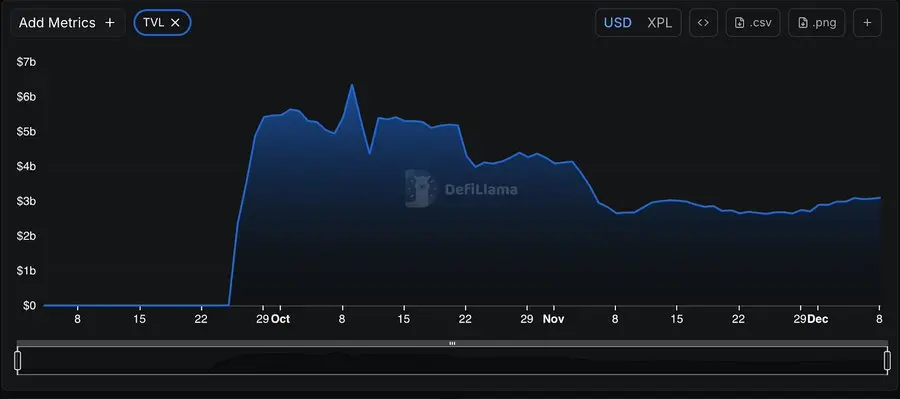
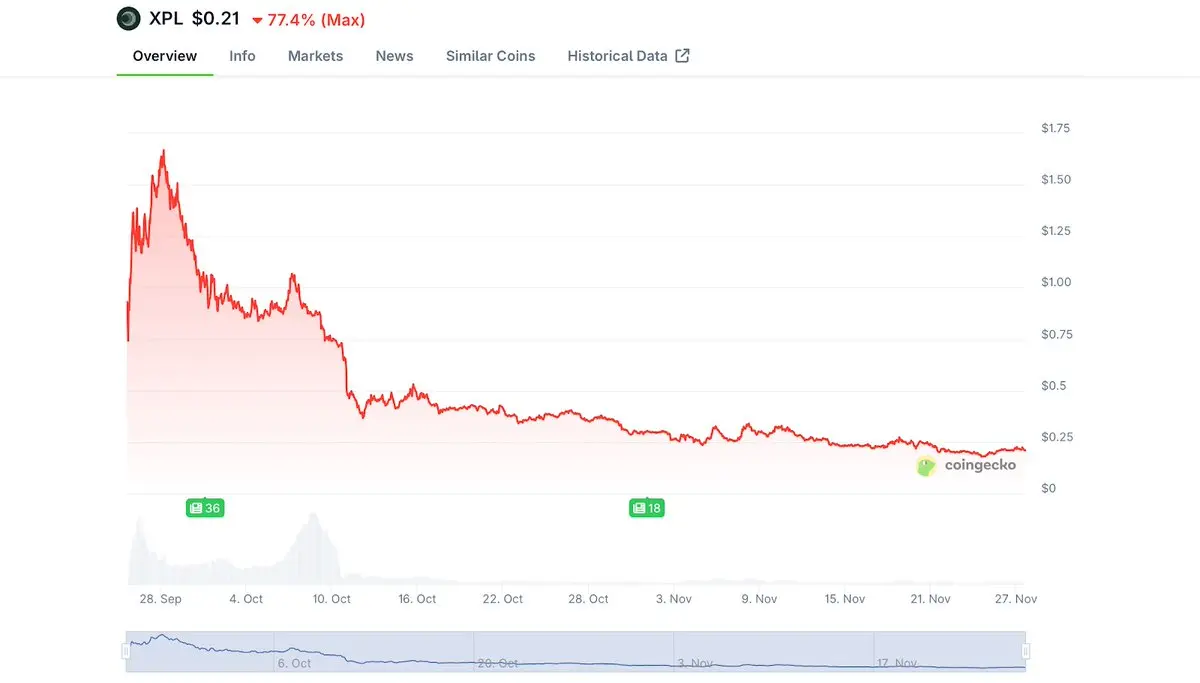
$XPL (Plasma)
Issue Price: $0.83
Current Price: $0.21
Performance: -75.3%
Supporters: Framework Ventures, 6th Man Ventures ($75M)
Listing Status: Coinbase, Binance + CEXs
TVL: $3.1B
Annual Revenue: N/A
Circulating Supply: 18%
Market Cap / FDV: $309M / $1.71B
CMC Ranking: #132
Conclusion
$AVICI is a textbook case of what happens when fully circulating tokens meet real user demand: price discovery is brutal, rapid, and positively reflexive.
$XPL shows the opposite trade-offs:
Huge TVL, strong distribution capabilities, regulatory positioning—but still facing severe dilution ahead, leading to weak token performance.
This is the new banking battle in cryptocurrency:
Transparent protocols vs. closed capital systems.
So far, the market favors alignment with existing strategies over excessive hoarding.
6. Umbra vs zkSync: Privacy and Scalability
Umbra and zkSync both rely on zero-knowledge cryptography, but they apply it to opposite economic goals.
Umbra is optimized for transaction confidentiality
zkSync optimizes infrastructure throughput
The same cryptographic toolbox.
Completely different outcomes.
Umbra: Pure Transaction Privacy
Umbra's sole design intent is to hide who pays whom and the payment amount.
Obscured addresses, viewing keys, and ZK circuits
Disrupting the identity association between sender and receiver during transactions and transfers
Conceptually, it lies between:
Tornado-style mixers
And protected DEX execution
It provides instant, default anonymity at the transaction layer—but also comes with some known trade-offs:
Simplicity that reduces user experience
Regulatory friction
Narrow composability
Umbra's goal is not to scale DeFi.
It seeks to maintain the flow of private capital in adverse environments.
zkSync: Scalability-First ZK Aggregation
zkSync applies ZK proofs to the opposite problem:
How to compress Ethereum at scale.
Validity proofs efficiently verify transactions in batches.
By default, it achieves transparent state through elastic chains and shared sequencers
The priorities of this roadmap include:
Throughput
Cost compression
Modularity
Developer tools
Privacy is not an inherent feature of the underlying architecture.
It may appear through:
Account summaries
Encrypted memory pools
Or higher-level privacy modules
But none of these are the main design constraints of zkSync.
zkSync hides computational costs.
It does not hide user identities.
ZK Privacy Paradox
Academic research is clear on one point:
True aggregate-level privacy requires encrypted memory pools, shielded pools, or trusted hardware—none of which are standard configurations in today's production aggregators.
Thus, this divergence is structural:
Umbra = Narrow, direct secrecy
Privacy is the product
Everything else is secondary.
zkSync = Broad composability and scalability
Privacy settings are optional
And pushed to higher layers
They are not substitutes.
They reflect different threat models.
Non-Converging Convergence
This is a deeper pattern prevalent in the ZK market:
Privacy tools primarily pursue anonymity.
Rollups primarily need throughput.
They may one day be able to interoperate—
But they will never be the same product.
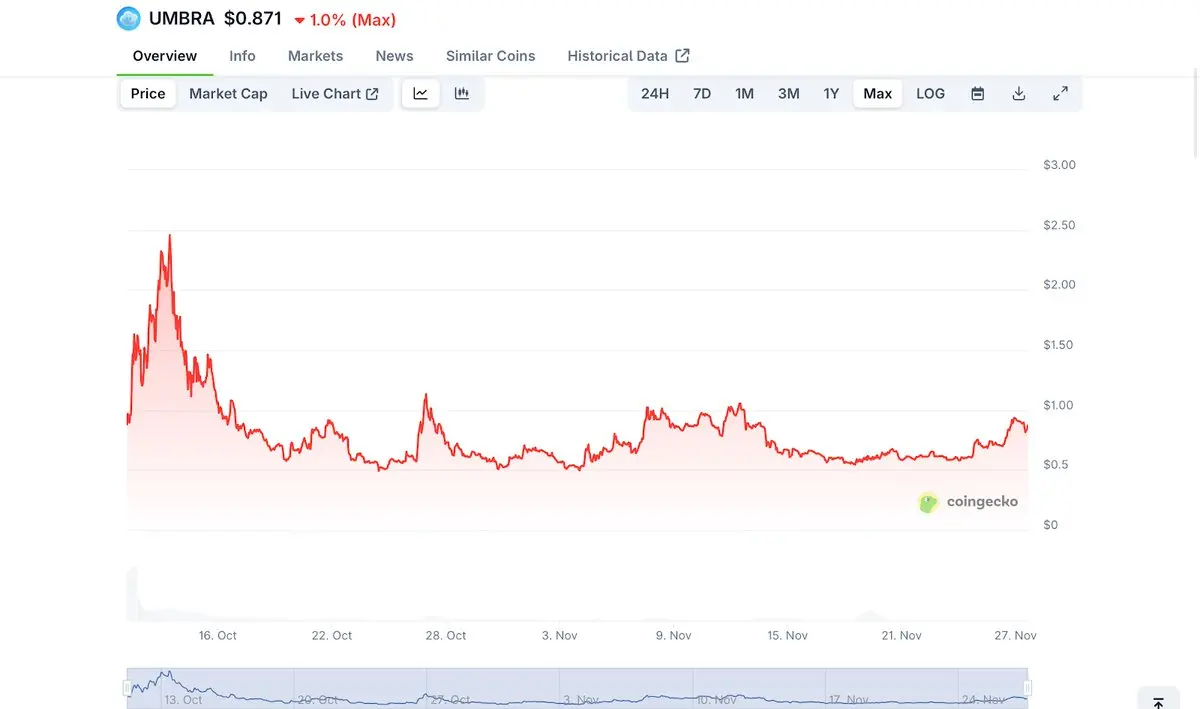
Token Comparison Snapshot — $UMBRA vs $ZK
$UMBRA (Umbra)
Issue Price: $0.300
Current Price: $0.769
Performance: +156.3%
Supporters: IDO ($3M)
Listing Status: MEXC + DEXs (Solana)
TVL: N/A
Annual Revenue: N/A
Circulating Supply: 30%
Market Cap / FDV: $16.7M / $47M
CMC Ranking: #3730
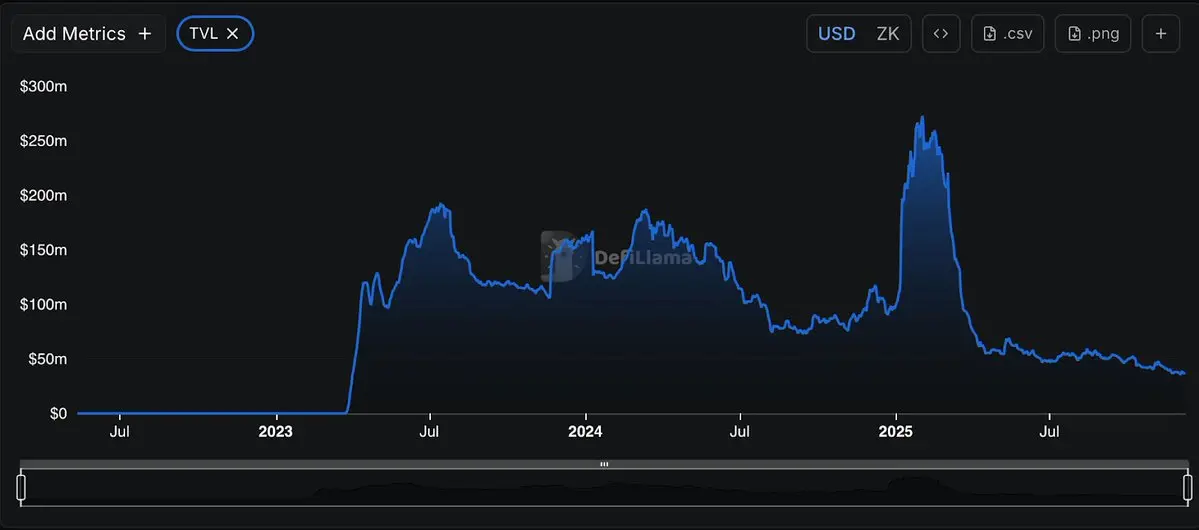
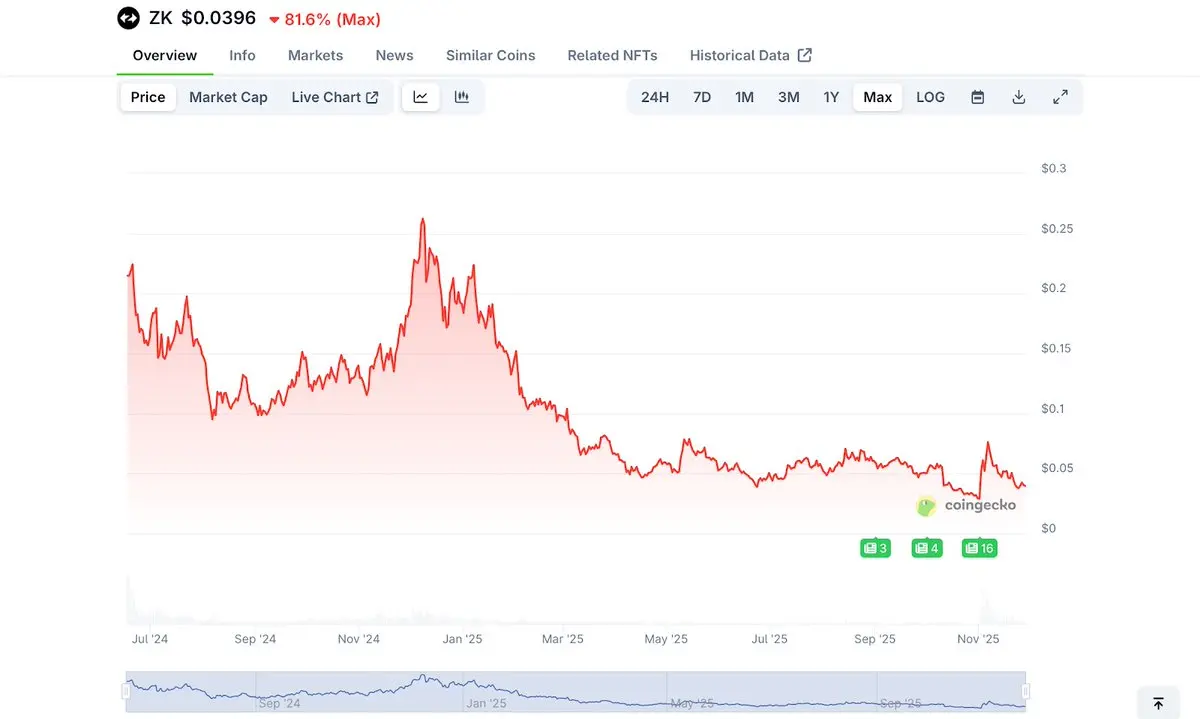
$ZK (zkSync)
Issue Price: $0.32
Current Price: $0.04
Performance: -87.5%
Supporters: Andreessen Horowitz, Dragonfly, Paradigm ($458M)
Listing Status: Binance, Bybit + DEXs
TVL: $37M
Annual Revenue: N/A
Circulating Supply: 35%
Market Cap / FDV: $300M / $700M
CMC Ranking: #136
Conclusion
$UMBRA reflects what happens when a focused, conviction-driven privacy tool meets strong narrative demand: even with limited composability, the token retains asymmetric upside potential.
$ZK reflects the opposite extreme:
Massive venture capital, ambitious infrastructure scale—and a token still overshadowed by oversupply and slow demand formation.
This showdown reinforces the broader ZK theme of this article:
Capital efficiency consistently outperforms capital dominance.
In the privacy market, focus trumps scale—at least for now.
7. Omnipair vs Morpho: Lending Protocol Showdown
Omnipair and Morpho form the core of the next generation of cryptocurrency infrastructure:
Permissionless Credit
They transform DEXs and routers from simple trading venues into seamless lending and leverage channels—without banks, credit committees, or account-based gatekeeping.
This is an evolution from passive yield to native, composable leverage infrastructure.
From Compound to Modern Credit Markets
Early protocols like Compound and Aave created the first generation of on-chain banks:
Permissionless supply and borrowing for whitelisted assets
Risk management:
Over-collateralization
Liquidation bots
Algorithmic parameters replacing manual credit committees
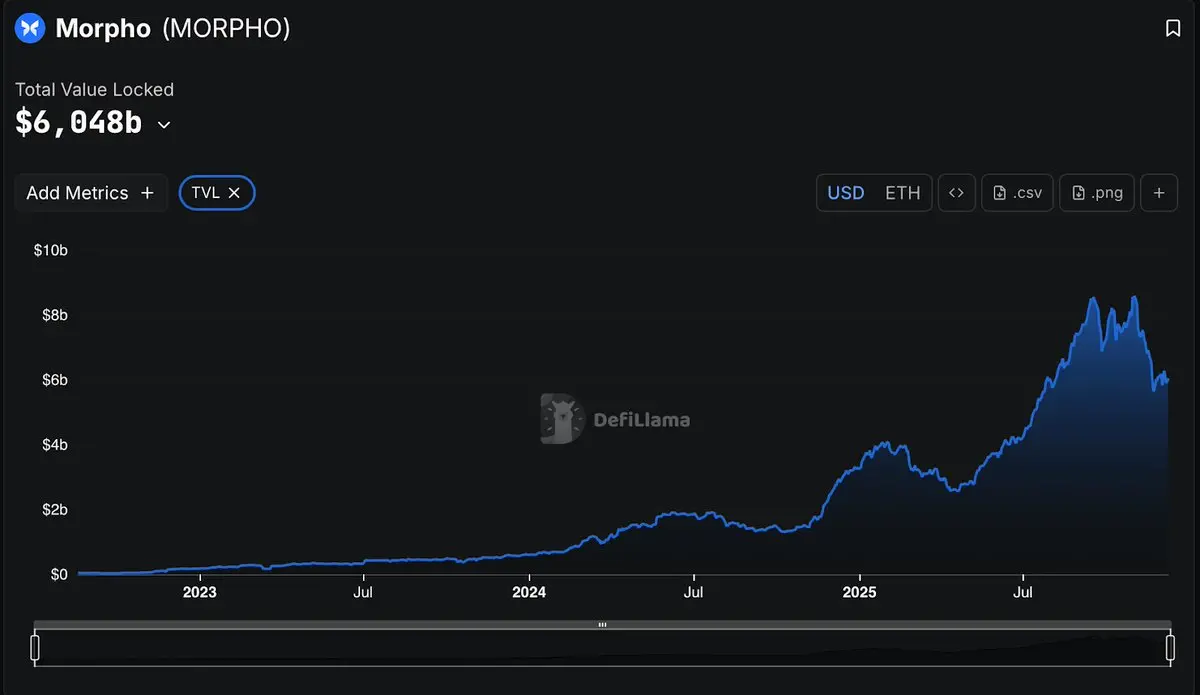
Morpho advances this model by acting as a meta-optimizer for liquidity:
Directing funds to the most efficient trading venues (Aave, Compound, order books)
Retaining open access for retail and institutional users.
Maximizing capital efficiency while minimizing idle liquidity.
Morpho does not compete with money markets.
It transcends them and redefines how capital flows between them.
Omnipair: DEX as the Gateway to Credit
Omnipair disrupts the architecture again—merging spot trading and money markets into a single platform:
Transforming DEX positions into instant credit risk exposures
No accounts, no permissions
Providing composable leverage only at the point of exchange execution
Here, the DEX itself becomes the lending interface.
This transformation is deeper than it appears:
DEXs are no longer:
- Merely price discovery engines
But rather:
- The liquidity absorption valve for the entire credit system
Omnipair does not aim to dominate TVL.
It seeks to capture fee flows at the moment leverage demand arises.
Structural Summary
This showdown showcases the increasing maturity of DeFi lending:
From:
Isolated lending pools
Manual leverage stacking
Fragmented risk exposures
To:
Unified, permissionless credit infrastructure
Where:
Router resource utilization
DEX activates it
Optimizer distributes it
Morpho achieves backbone industrialization.
Omnipair weaponizes the entry point.
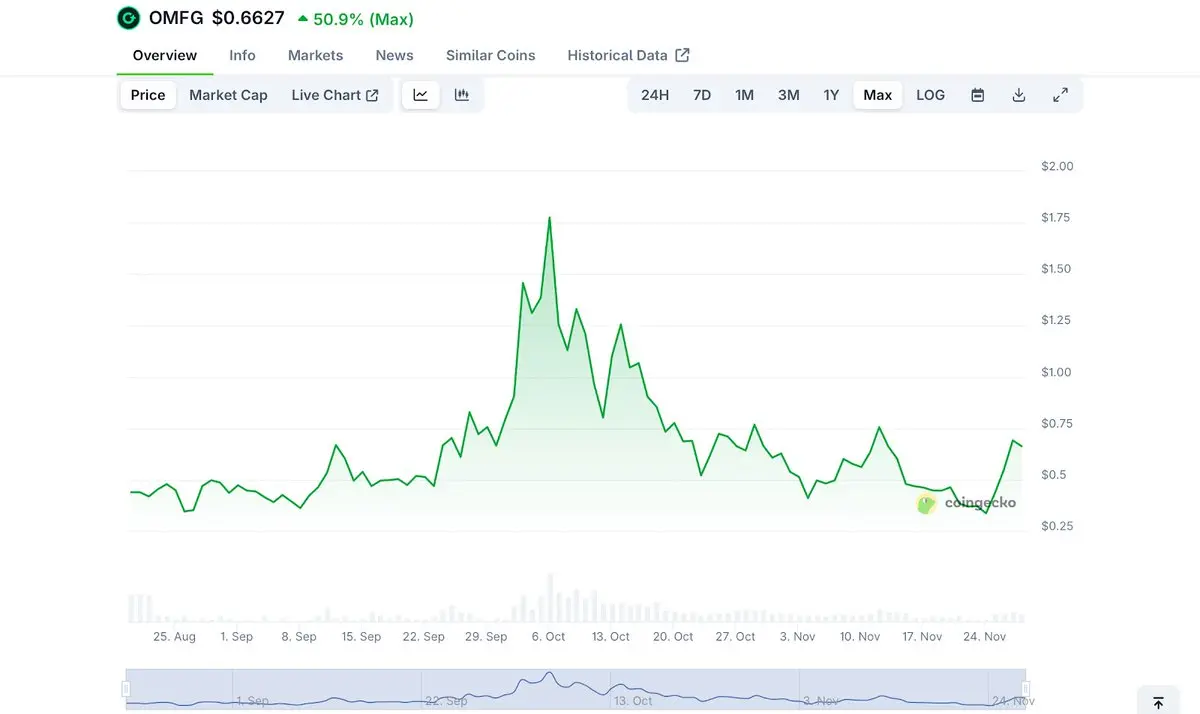
Token Comparison Snapshot — $OMFG vs $MORPHO
$OMFG (Omnipair)
Issue Price: $0.112
Current Price: $0.549
Performance: +389.9%
Supporters: IDO ($1.11M)
Listing Status: DEXs (Solana)
TVL: Growing (active lending pools)
Annual Revenue: N/A
Circulating Supply: 100%
Market Cap / FDV: $12M / $12M
CMC Ranking: #3767
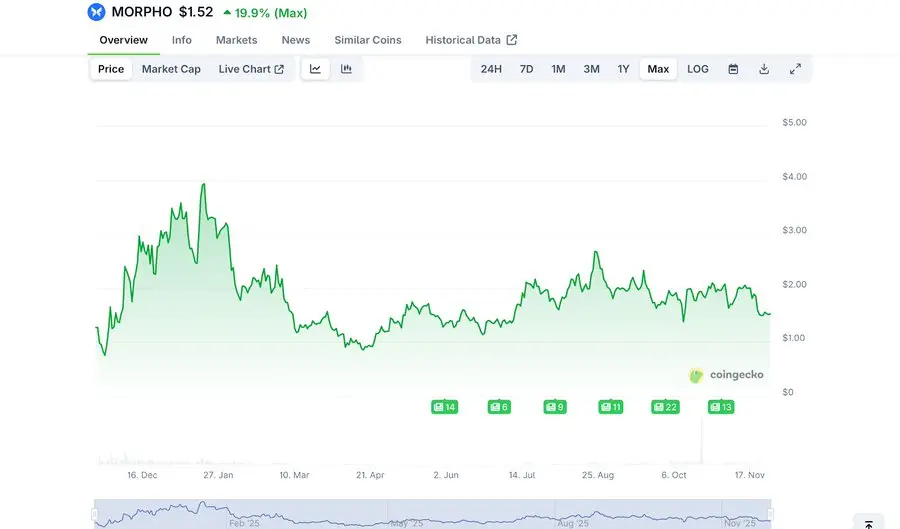
$MORPHO (Morpho)
Issue Price: $1.90
Current Price: $1.50
Performance: -21.05%
Supporters: a16z crypto, Coinbase Ventures, Pantera Capital ($69.35M)
Listing Status: Binance, OKX, Bybit, Coinbase + DEXs
TVL: $6B+
Annual Revenue: N/A
Circulating Supply: 36%
Market Cap / FDV: $458M / $1.22B
CMC Ranking: #100
Conclusion
$MORPHO dominates in scale, institutional adoption, and TVL attraction—but still bears the structural burden of FDV expansion and unlocking risks.
$OMFG is the opposite:
Fully circulating, ultra-lean, and precisely positioned at the most defensible surface of DeFi—the moment leverage is generated.
This reaffirms the financing model that runs throughout this text:
Capital efficiency trumps capital dominance.
Why do community-funded projects continue to succeed (so far)?
Community-funded projects implement a fair price discovery mechanism from the start:
No multi-year lock-up periods
No hidden cliffs
No board-engineered liquidity exits
SOLOMON, Avici, Umbra, Omnipair, and other companies in this study are not designed to achieve a 10x growth in fund size.
Their purpose is to:
Solve real user problems
Align token holders with the protocol's economy
Survive even without financial oxygen masks
This structural trade-off is now evident in the data:
Once-accelerated growth from venture capital has turned into an inherent liability at the token layer:
Large-scale issuance inevitably dilutes future equity.
Each unlocking triggers volatility events
Long-term holders are forced to become counterparties to early investors
In contrast, community-funded teams are compelled to achieve:
Capital discipline
Faster paths to utilization
Closer alignment between users, funds, and tokens
So far, the market has rewarded this constraint.
免责声明:本文章仅代表作者个人观点,不代表本平台的立场和观点。本文章仅供信息分享,不构成对任何人的任何投资建议。用户与作者之间的任何争议,与本平台无关。如网页中刊载的文章或图片涉及侵权,请提供相关的权利证明和身份证明发送邮件到support@aicoin.com,本平台相关工作人员将会进行核查。


