The repurchase market continues to fluctuate, and the differential in term interest rates has intensified concerns about year-end financing tightening, highlighting the underlying fragility of the system.
Written by: Zhang Yaqi
Source: Wall Street Insights
Michael Burry, the prototype of the movie "The Big Short," has issued a stern warning regarding the Federal Reserve's latest bond-buying plan, known as "Reserve Management Purchases" (RMP), which he argues exposes the deep vulnerabilities of the U.S. banking system. He believes that this move essentially reinitiates quantitative easing (QE) and aims to mask the liquidity tightening challenges faced by the banking system, rather than being a routine operation as claimed by the Federal Reserve.
According to a previous article from Wall Street Insights, the Federal Reserve announced overnight that it would begin purchasing short-term government bonds as needed to maintain sufficient reserve supply. The New York Fed simultaneously released a statement planning to buy $40 billion in short-term government bonds over the next 30 days, marking the latest action since officially halting balance sheet reduction last week. This move comes in response to unsettling interest rate fluctuations in the U.S. repurchase market, which has a scale of up to $12 trillion, forcing the Federal Reserve to act more swiftly amid ongoing turmoil in the money market.
However, Burry believes that this action indicates that the banking system has still not recovered from the repercussions of the 2023 small bank crisis. He warns that if the banking system requires "blood transfusions" from the central bank despite having over $3 trillion in reserves, it is not a sign of strength but rather a strong signal of systemic fragility.
Burry further analyzes that each round of crisis seems to compel the Federal Reserve to permanently expand its balance sheet; otherwise, it cannot avoid the outbreak of a banking financing crisis. The subsequent market reaction confirmed the tightening of liquidity, with the yield on U.S. 2-month Treasury bonds jumping while the yield on 10-year Treasury bonds fell. Meanwhile, volatility in the repurchase market persists, raising concerns about year-end financing tightening and forcing investors to reassess the stability of the financial system.
Covert Quantitative Easing and a Fragile Banking System
Burry questions the Federal Reserve's use of the term "Reserve Management Purchases," interpreting it as a covert measure aimed at stabilizing the struggling banking sector. According to FRED data, prior to the 2023 crisis, U.S. bank reserves were only $2.2 trillion, but they have now risen to over $3 trillion.
Burry warns:
"If the U.S. banking system cannot operate without over $3 trillion in reserves or the Federal Reserve's 'life support,' this is not a sign of robustness but rather a sign of fragility."
He adds that the current model seems to have evolved into a situation where the Federal Reserve must permanently expand its balance sheet after each crisis, or else face the risk of a banking liquidity crisis. While this mechanism partially explains why the stock market has performed strongly, it also reveals the financial system's extreme dependence on central bank liquidity.
Market Operation Mismatches and Hedging Strategies
From a specific operational perspective, Burry emphasizes the significant strategic shift between the U.S. Treasury and the Federal Reserve: the Treasury is inclined to sell more short-term securities, while the Federal Reserve focuses on purchasing these securities. This strategy helps avoid pushing up the yield on 10-year Treasury bonds. As the market anticipated, following the Federal Open Market Committee (FOMC) meeting, the yield on U.S. 2-month Treasury bonds rose while the yield on 10-year Treasury bonds fell.
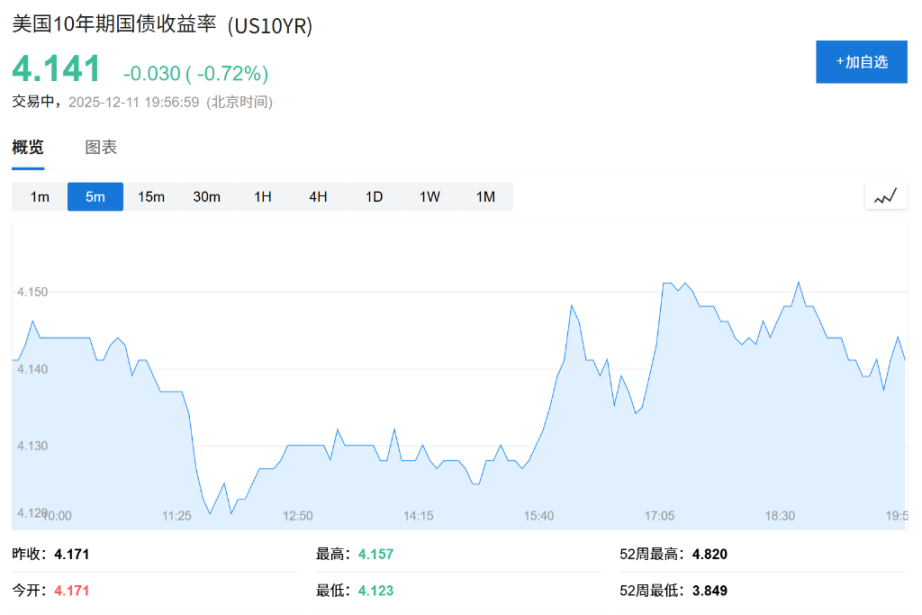
Given the ongoing volatility in the repurchase market, some analysts expect the Federal Reserve may need to take more aggressive actions to avoid a liquidity crunch at year-end. In this context, Burry believes this is further evidence of the underlying weakness in the financial system. He warns investors to be cautious of misleading advice from Wall Street regarding buying bank stocks and reveals that for funds exceeding the Federal Deposit Insurance Corporation (FDIC) limit of $250,000, he prefers to hold Treasury money market funds to mitigate risk.
It is important to note that the primary goal of "quantitative easing" (QE) is to lower long-term interest rates by purchasing long-term government bonds and mortgage-backed securities (MBS) to stimulate economic growth. In contrast, the purpose of RMP is more technical, focusing on purchasing short-term government bonds to ensure there is sufficient liquidity in the "pipeline" of the financial system to prevent unexpected events. Bank of America states that based on experiences from 2019, liquidity injections will quickly lower the secured overnight financing rate (SOFR), while the response of the federal funds rate (FF) will be relatively lagging, creating significant arbitrage opportunities for investors.
免责声明:本文章仅代表作者个人观点,不代表本平台的立场和观点。本文章仅供信息分享,不构成对任何人的任何投资建议。用户与作者之间的任何争议,与本平台无关。如网页中刊载的文章或图片涉及侵权,请提供相关的权利证明和身份证明发送邮件到support@aicoin.com,本平台相关工作人员将会进行核查。
