The door to exploration has just opened.
Written by: Umbrella, Deep Tide TechFlow
On December 2, SEC Chairman Paul Atkins stated in a speech at the New York Stock Exchange that the innovation exemption rules for cryptocurrency companies will officially take effect in January 2026.
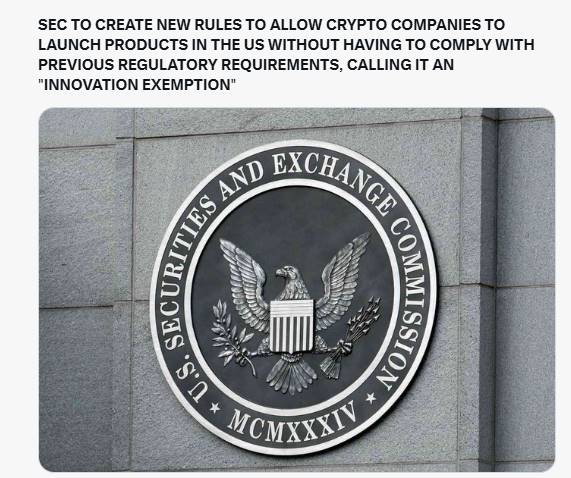
The new innovation exemption rules for cryptocurrency companies can be traced back to the Project Crypto plan from July of this year, but were put on hold due to government shutdowns. Now, they have been mentioned again and confirmed, sparking significant attention and discussion in the market.
However, can this highly anticipated policy really bring spring to the crypto industry?
Core Content of the Innovation Exemption Rules
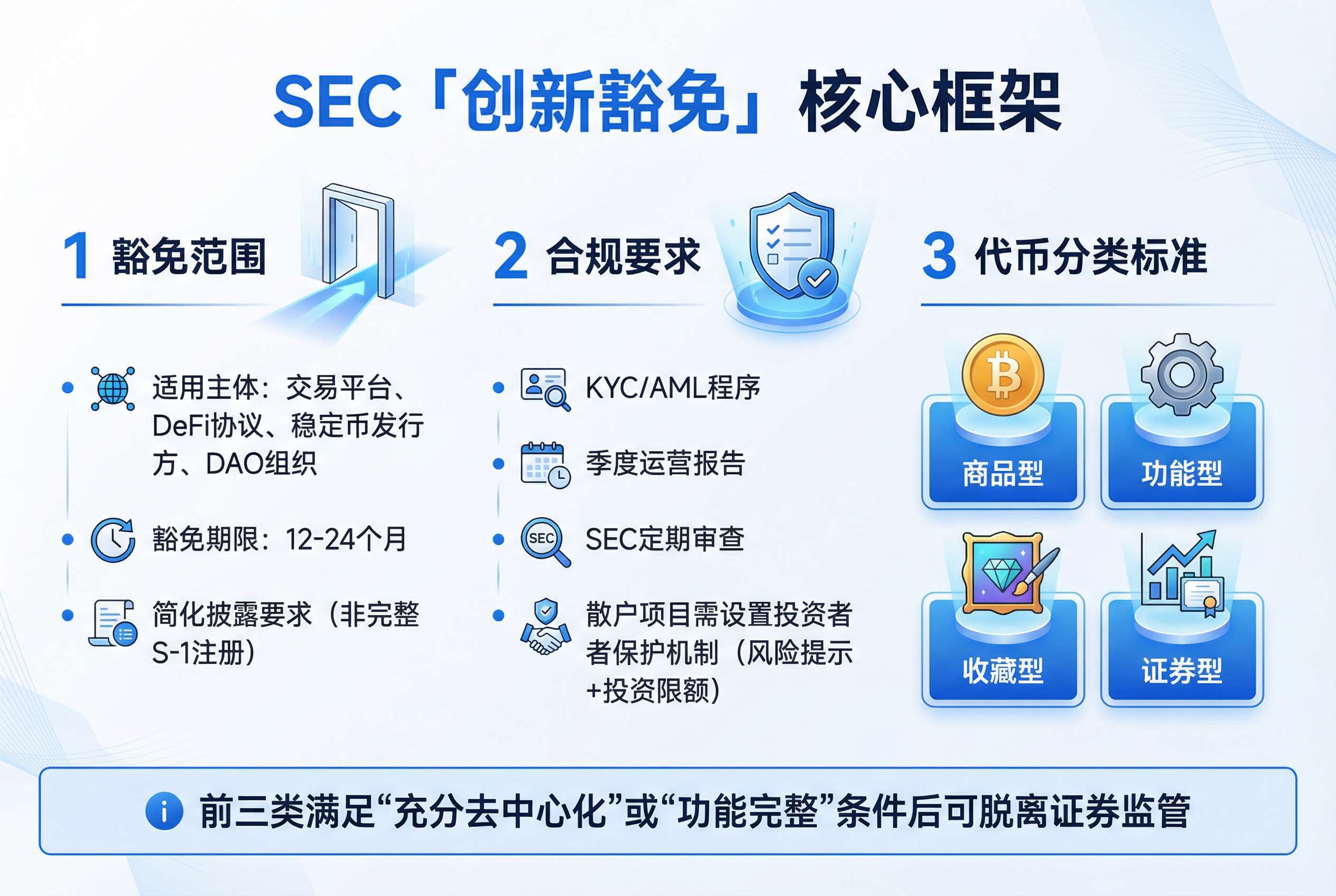
According to the details released by the SEC, the innovation exemption mainly includes the following three key factors.
First is the scope of exemption. Any entity developing or operating cryptocurrency-related businesses can apply, including trading platforms, DeFi protocols, stablecoin issuers, and even DAO organizations.
The innovation exemption period is 12-24 months, during which projects only need to submit simplified information disclosures instead of complete S-1 registration documents.
Second are the compliance requirements. Although enjoying the exemption, projects still need to meet basic compliance standards, such as implementing KYC/AML procedures, submitting quarterly operational reports, and undergoing regular reviews by the SEC.
For projects involving retail investors, investor protection mechanisms must be established, including risk warnings and investment limits.
Finally, there are token classification standards. In this innovation exemption, the SEC categorizes digital assets into four types: commodity-type (e.g., BTC), functional (utility tokens), collectible (NFTs), and tokenized securities.
The first three categories can be exempt from securities regulatory frameworks if they meet the conditions of "sufficient decentralization" or "complete functionality."
Voices of Doubt
The policy requires all projects participating in the exemption to implement "reasonable user verification procedures," which directly conflicts with the decentralized philosophy of the crypto industry and has sparked significant controversy in the DeFi community.
According to the new rules, DeFi protocols need to divide liquidity pools into two categories: permissioned pools for compliant investors and public pools for all users.
Permissioned pools enjoy looser regulations but must verify the identity of every participant. Such requirements undoubtedly traditionalize crypto finance.
Even more concerning may be the technical transformation requirements.
The SEC suggests that DeFi projects adopt compliant token standards like ERC-3643, which embed identity verification and transfer restriction functions in smart contracts.
If every transaction requires a whitelist check, tokens can be frozen by centralized entities. Is DeFi still the DeFi we know?
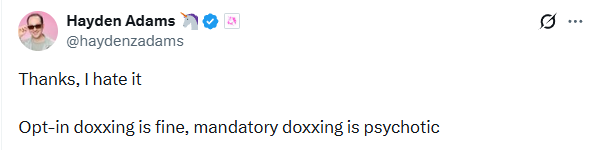
This requirement also contradicts the previous stance of Uniswap founder Hayden Adams against mandatory real-name verification.
Even if compliance requirements are accepted, the policy still faces significant uncertainty in execution.
For the policy that allows sufficient decentralization to receive relaxed regulation, the SEC has not provided clear quantitative standards. No one knows whether this standard is based on the number of nodes or token distribution, among other factors.
This uncertainty gives regulatory agencies significant discretion and brings uncertainty to project teams.
Another issue is the arrangements after the exemption period ends.
At the latest, 24 months later, these exempted projects must either complete registration or prove that they have sufficiently achieved "decentralization." But if the SEC determines that the project still does not meet the standards at that time, will all previous operations be subject to retroactive scrutiny?
The World Federation of Exchanges (WFE) has raised another angle of doubt: why should crypto assets receive special treatment? If every emerging industry demands regulatory exemptions, the fairness and consistency of the entire regulatory system will be challenged.

Image: WFE's letter to the SEC: “Re: SEC Crypto Task Force”
Potential Positive Impacts
Despite numerous controversies, the innovation exemption policy has indeed brought some positive changes to the crypto industry, and the community generally views this as a significant boon for the crypto sector.

Image: Blogger @qinbafrank tweet
In terms of policy, the most direct impact is the reduction of compliance costs.
In the past, a crypto project needed to spend millions of dollars in legal fees and take over a year to operate compliantly in the U.S. Now, through the exemption mechanism, projects can start operations first and gradually improve their compliance systems in practice. This is a significant advantage for cash-strapped startup teams.
In addition, there is also greater room for technological innovation.
A series of new crypto concepts have gained experimental opportunities under the new exemption framework, especially in the popular stablecoin sector this year. With supporting legislative support, it is expected to establish higher regulatory standards, which is significant for the entire payment system.
The Compliance Survival Space for Domestic U.S. Projects
In recent years, many crypto projects originally rooted in the U.S. have chosen to "leave." Ripple moved part of its business to Singapore, Coinbase once considered going public overseas, and more early teams simply registered in the Cayman Islands or BVI from Day 1 to deliberately avoid the U.S. market.
The core reason for this exodus is not overly strict regulation, but rather overly vague regulation. The SEC's enforcement and regulatory model leave project teams at a loss; what is compliant today may receive a Wells Notice tomorrow. Rather than gamble, it is better to leave.
The innovation exemption policy has at least changed this in form: projects can first obtain a 12-24 month "safe period" to operate within a clear framework, rather than anxiously navigating a gray area.
For teams that genuinely want to operate compliantly and serve U.S. users, this indeed lowers the threshold.
However, it is important to temper expectations: this is a different matter from the "return of talent to the crypto industry."
The global talent drain in the crypto market is more due to a crisis of trust within the industry itself. Conversely, if chaos ensues during the exemption period, it may accelerate the further departure of talent.
So a more accurate statement is: this policy opens a window for "projects that want to operate compliantly in the U.S.," but it neither can nor intends to solve the fundamental issues of the crypto industry.
Conclusion
The SEC's innovation exemption policy represents a significant shift in the U.S. approach to crypto regulation. It attempts to find a middle ground between "total prohibition" and "laissez-faire," and while this path may not be perfect and is filled with compromises and contradictions, it at least provides the possibility for the industry to move forward.
The success of the policy will depend on multiple factors, such as the SEC's enforcement standards, the self-discipline of project teams, and technological development. If all parties can find a balance among these factors, 2026 may become a new starting point for the development of the crypto industry.
And now, the door to exploration has just opened.
免责声明:本文章仅代表作者个人观点,不代表本平台的立场和观点。本文章仅供信息分享,不构成对任何人的任何投资建议。用户与作者之间的任何争议,与本平台无关。如网页中刊载的文章或图片涉及侵权,请提供相关的权利证明和身份证明发送邮件到support@aicoin.com,本平台相关工作人员将会进行核查。
