Author: Louis, Trendverse Lab
In life, there are always some things that inexplicably linger in our hearts: a song we've listened to countless times, a movie that accompanied a summer, a vintage flavor, or a sudden decision made by someone. These things are as light as air, yet at certain moments, we feel that their value runs deeper than we can articulate.
Strangely, these most touching things have not belonged to us for a long time. The future of music belongs to record companies, the success of films belongs to capital, the vintage of wine belongs to wineries, and a person's most private and vulnerable future choices belong only to themselves. We fill our lives with them, yet we have never truly owned even a fraction of their value.
Until certain stories unfold, the flow of value begins to quietly change. In the corners forgotten by time, lies the first seam where value is being redistributed. It is not technology, nor terminology, but those quiet moments when value is gently taken from the hands of a few and falls into the hands of many.
Next, let’s start with these small yet bright stories.
1. Music RWA: A classic song brings listeners closer to the future for the first time
 In the winter of 1997, London was damp and cold outside the recording studio, with the air mixed with the scent of tapes, paper, and late-night coffee. David Bowie was preparing for a tour; his music had accompanied decades of life but could never truly belong to him. At that time, copyrights were held by layers of institutions—record companies, funds, distributors—all taking a share, while the true melody writers often found themselves at the very end of the value chain.
That year, Bowie made a decision that stunned the industry: he packaged his royalties for the next ten years into securities and put them on the market, allowing those who wanted to get closer to his music to touch this future in an unprecedented way. The media called it Bowie Bonds, but what more people remembered was not the bonds themselves, but the first time an artist actively opened up their future, allowing listeners to stand alongside.
Among those who bought the bonds were collectors and those who simply loved a particular lyric. They were not seeking investment returns; they just wanted to get a little closer: closer to the creator, closer to the melody that accompanied a part of their lives, closer to a future they thought they could never touch.
For the first time, the value of music flowed to the listeners, not just the company’s accounts.
Bowie did not change the entire industry, but he gently tore open a seam. Music is not a cold asset; it is time, memory, emotion, and companionship. And when this value is opened up, no longer sealed in complex structures, it naturally flows to those who are truly willing to catch it.
If Bowie’s attempt happened today, it might be realized in a gentler way. The future of music does not have to be locked in a company’s vault; it can be broken down like light into many small parts, falling into the hands of listeners around the world.
At that time, you would no longer just be a listener, but a companion in the long life of that melody.
2. Film RWA: When a movie's future first comes close to its creator
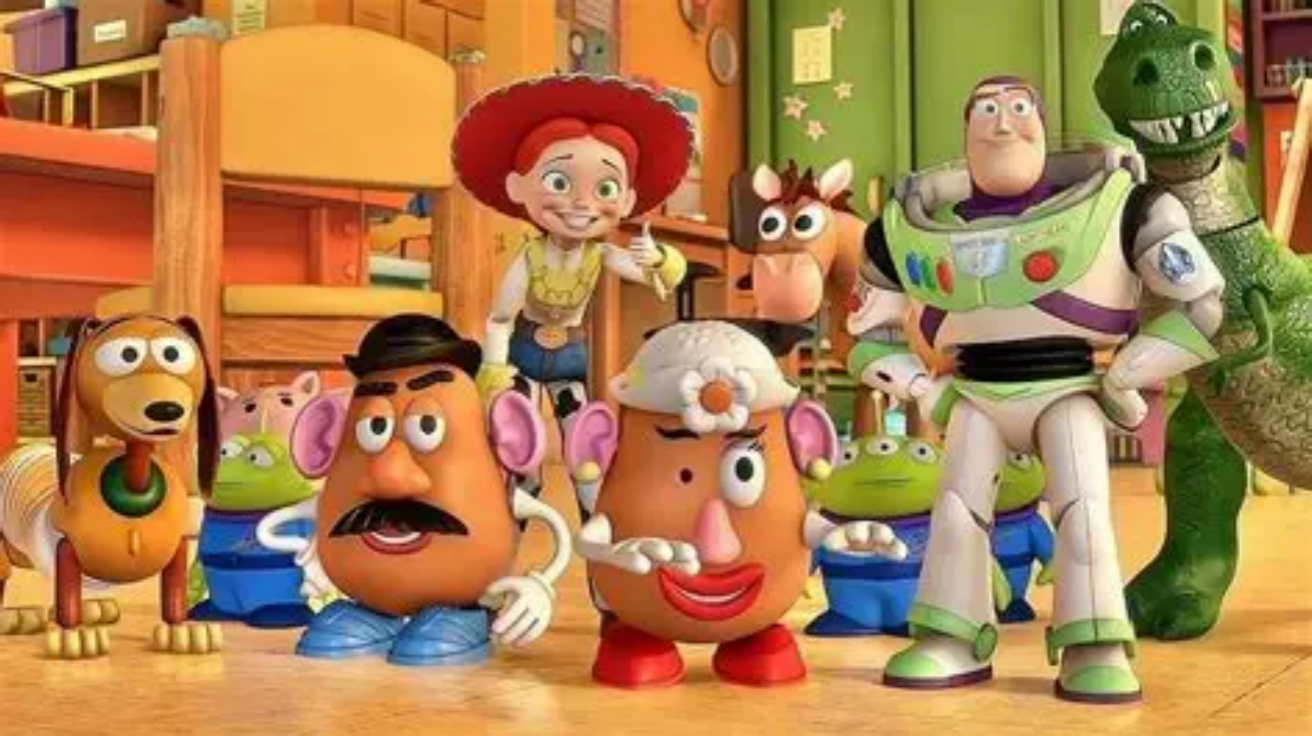 If the crack in music opened up in the recording studio, then around the same time, in an old warehouse in California, film began to show similar loosening. In 1995, before the release of "Toy Story," Pixar was not yet considered a "big company." Animators often stared at unfinished frames late into the night, unsure if audiences would accept a fully computer-animated feature.
At that time, the structure of Hollywood was almost solidified: directors and producers dominated the fate of works, capital held the future, and ordinary creators who truly shaped the story could only flash by in the end credits. When a work succeeded, value naturally flowed upward, with little relation to those who had stayed up late.
Pixar chose a different path. Before the IPO, Jobs allowed a large number of employees to hold company shares—those who wrote code, built models, adjusted lighting, and rendered late into the night were all included in the movie's future. For a company whose main asset was this film, this meant that at the moment of the film's success, they were also present.
The New York Times wrote: "Pixar made a group of animators millionaires." This was a rare crack in the film industry—value flowed horizontally from the hierarchical structure for the first time.
Of course, this sharing was still limited. Equity could only be distributed to employees, unable to reach the audience who loved the film or the broader community of creators. Although value began to loosen, it had not yet truly flowed outward.
If the same thing happened today, the future earnings of works, digital distribution, and licensing income could perhaps be broken down further, reaching a broader and more genuine group of supporters. At that time, film would not just be a work, but a spark of community, becoming more stable because it was supported by more people.
3. Wine RWA: When the future of a barrel of wine is claimed in advance
Compared to the stage lights of music and film, the story of wine always unfolds in quieter places. Over twenty years ago in Bordeaux, the ground of the cellar still held the winter's moisture, and rows of oak barrels sat there, the fate of the vintage slowly fermenting in the wood's aroma. At that time, the structure of the wine industry was old and closed: vintages belonged to wineries, distribution rights belonged to merchants, and ordinary people often only saw that bottle years later.
The emergence of En Primeur caused a slight shift in this path for the first time.
The wine had not yet been bottled, the flavor had not yet been defined, but the winery was willing to entrust its future in advance, allowing people around the world to connect with this vintage before it was truly opened. For the winery, this meant stable cash flow; for the merchant, it was pre-locked inventory; and for those claiming the wine, it was a way to get closer to the vintage's flavor in advance.
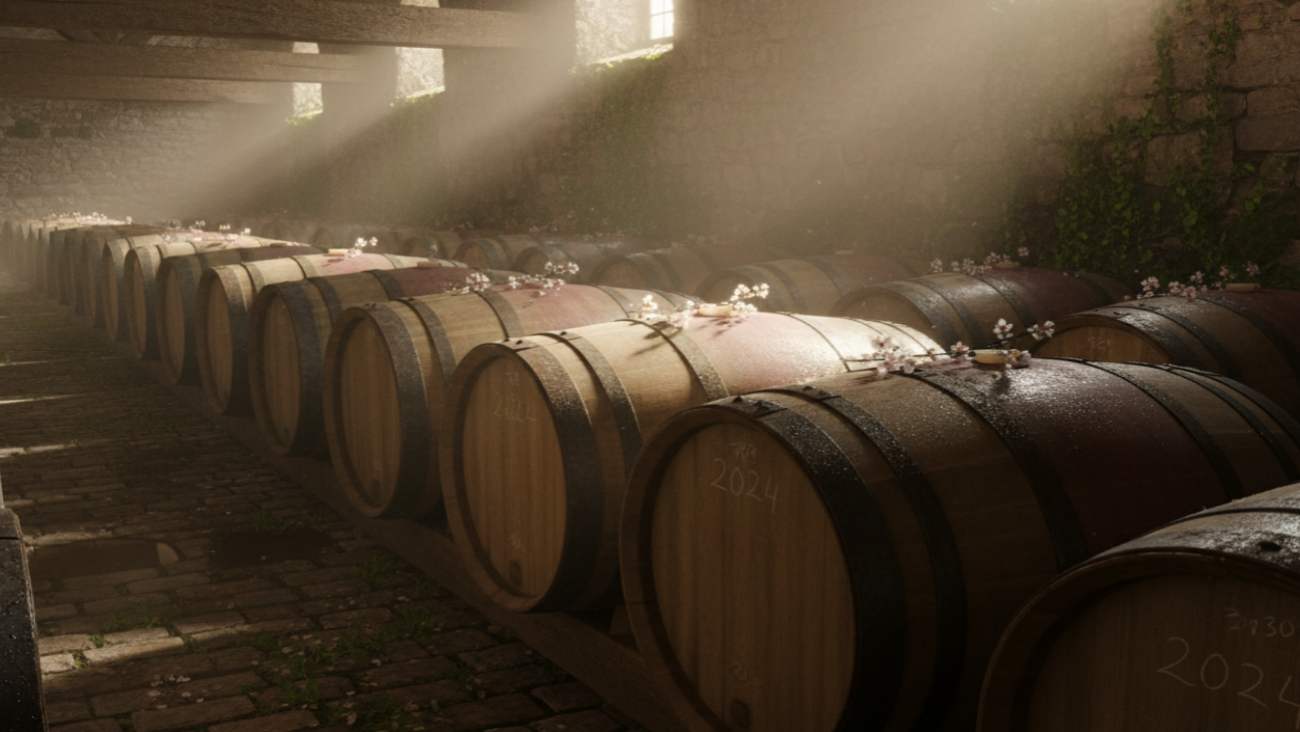 This was not radical financial innovation, but it was the first time value flowed out of a closed system. A barrel of wine was opened up for the first time, no longer belonging solely to traditional channels, but partially falling into the hands of those willing to believe in it.
Of course, this sharing was still limited. Prices were opaque, channels were restricted, and connections determined participation thresholds—En Primeur was like a half-open window, allowing only a sliver of wind to blow in. But the direction was clear enough: value does not need to wait until "completion"; the future itself can be claimed.
If this happened today, vintages might be broken down further, and participants connected more widely. A barrel of wine would no longer just be a drinking experience, but a shared moment in time.
4. Personal RWA: When a person's future is divided into 100,000 shares
If the future of wine was claimed in advance in a barrel, then in 2008, in Portland, the future of an ordinary person was quietly opened up in front of a computer screen. That year, Mike Merrill made an unprecedented decision: he divided himself into 100,000 shares, publicly issued, allowing anyone willing to get closer to him to participate in his future in a new way.
This was not experimental art, nor a joke, but a serious structure he built for his life. Those who purchased his shares could vote on his major decisions—whether to change jobs, whether to start a business, whether to enter a relationship, or even whether to change certain life habits. Those hesitations that should have belonged only to his inner self were gently caught by a strange yet sincere "shareholder group."

Interestingly, this participation did not lead to chaos; instead, it formed a new relationship. Shareholders would discuss his pressures, worry about his choices, and even care more about his future than he did himself. Years later, he recalled: “I entrusted my life to many people, and they showed me a version of myself I never imagined.”
Of course, there were boundaries; it was like a beam of experimentation under the early light of the internet. But it brought to the surface a fundamental question: it turns out that even the most private aspects of life can, to some extent, be opened up, shared, and collectively carried by a group of people.
If this happened today, it might be expressed in a gentler, safer way: time, skills, creative direction could become smaller and clearer participatory rights, rather than the extreme method of "going public with life." It would be a new connection: part of one's fate is in their own hands, while part of the future moves forward with those willing to support them.
Music opens up the future of melodies, film opens up the future of works, wine opens up the future of vintages, while he opens up the future of a person itself. The flow of value first touched the "individual," which is the most difficult and moving boundary.
Conclusion
Looking back at these four stories, they occurred in different eras and places: an old song in a recording studio, the light and shadow of an animation studio, a vintage sleeping in a barrel, and a decision made by a person late at night in front of a computer. They originally had no connection, yet they all gently loosened a little on the same matter—value no longer flows in just one direction, but begins to expand sideways, outward, towards those willing to get close to it.
We tend to think of value as too grand, believing it only belongs to certain institutions, certain industries, or certain people skilled with numbers. But these four stories remind us: value has always been hidden in the softest parts of life—a melody, a creation, the flavor of a year’s terroir, a person's hesitation and choices. They are moving because they show us that those things we thought would forever "belong to others" can be gently opened up, allowing more people to get closer, participate, and support.
Technology is merely a latecomer; it has not changed the essence of these stories, but has allowed those originally small connections, limited to a small group of people, to shine brighter and reach further. Perhaps this slight tremor of "value being redistributed" is the most valuable part of RWA.
What the future holds, no one can say for sure. But at least in these corners forgotten by time, we have already seen a few small yet warm lights: value can be opened up; the future can be shared; and perhaps the relationships between people will become closer than in the past.
The story is not over; it has just begun to reveal its first seam. True change may be quietly happening in places we have yet to see.
免责声明:本文章仅代表作者个人观点,不代表本平台的立场和观点。本文章仅供信息分享,不构成对任何人的任何投资建议。用户与作者之间的任何争议,与本平台无关。如网页中刊载的文章或图片涉及侵权,请提供相关的权利证明和身份证明发送邮件到support@aicoin.com,本平台相关工作人员将会进行核查。


